A Multifaceted Study on Mechanical Strength, Workability and Microstructural Analysis of Zeolite Enhanced Concrete
M. Vishnuvaradhan1 , Dr. Brindha Sathiaseelan2Abstract - The present work offers a thorough exploration of the mechanical and workability features of concrete, accompanied by a meticulous analysis of the microstructural attributes of Zeolite as a novel addition. The research involves a comprehensive experimental programme aimed at investigating the impacts of differentconcentrationsofZeolite on the compressive strength, flexural strength, and durability properties of concrete. Concurrently,sophisticatedmicroscopy and spectroscopic methods are used to examine the morphological and crystallographic characteristics of Zeolite particles and their interactionsinsidethecementitiousmatrix. The results of this study provide valuable insights into the intricate relationship between Zeolite and the components of concrete, therefore expanding our knowledgeofthematerial's capacity for improved performance and environmentally friendly building methods.
Key Words: Natural Zeolite, Microstructural Studies, Compression,Flexure,SplitTensile,Workability
1. INTRODUCTION
Thereisarequirementtoinvestigatesustainabilitywithin the realm of civil construction.[1] Introducing zeolite concrete, an innovative and environmentally conscious constructionmaterialthathasgarneredincreasingattention in recent years. Zeolite concrete is distinguished by the incorporationofzeolites,naturallyoccurringmineralswith remarkableadsorptionandion-exchangeproperties,intothe traditional concrete mixture. Zeolite has a substantial capacity to significantly improve various engineering aspects, including but not limited to shrinkage, chloride infiltration,permeabilitytowater,resistancetocarbonation, and resistance to sulfates[2] This unique integration not only enhances the material's mechanical and durability characteristics but also offers a promising avenue for addressing sustainability challenges in the construction industry
2. OBJECTIVES
Toestablishasuitableratioofnaturalzeolitetouse inplaceofcementinconcretemixessoastoachieve thedesiredpositiveeffects.
Todiscoverthequalitiesoftheconcretethataffect itsworkability.

3. LITERATURE REVIEW
Babak Ahmadi, Mohammad Shekarchi (2009) conducted a study with the objective of investigating and analysing multiplefacetspertainingtotheselectedtopic.Thisresearch paper seeks to evaluate the effectiveness of incorporating locally sourced natural zeolite as a pozzolanic material in enhancing the mechanical and durability properties of concrete.Thestudywillemployathoroughexaminationof pertinent scholarly articles and empirical evidence to achieve its objectives. The present study aims to examine andanalysethepozzolanicreactivityofnaturalzeoliteand silica fume. By conducting a comprehensive investigation, this research seeks to contribute to the existing body of knowledgeonthesubjectmatter.Thepozzolanicreactivity of these two materials will be carefully assessed and compared,sheddinglightontheirpotentialapplicationsin variousindustries.Throughrigorousexperimentationand analysis,thisstudyaimstoprovidevaluableinsightsintothe reactivity of natural zeolite and silica fume, thereby enhancingourunderstandingoftheirpotentialThefindings of this study suggest that natural zeolite demonstrates a notable degree of reactivity, although it is comparatively lower when compared to silica fume. The present study aimedtoconductanexperimentalinvestigationonconcrete mixtures containing different proportions of zeolite and silicafume.Thefindingsoftheinvestigationdemonstrated thattheincorporationofzeoliteintothecompositionofthe concrete mixture resulted in improved performance attributes. The user has provided a numerical reference withoutanyaccompanyingtext.Thislackofcontextmakesit difficult to ascertain the specific topic or purpose of the reference.Inordertoprovideacomprehensiveanalysis,itis necessary to have additional information or context regardingthenumericalreference.[4]
Malek Mohammad Ranjbar et al (2013) Thepurposeof this research was aimed to evaluate the effects of incorporatingnaturalzeolite(NZ)onthepropertiesoffresh andhardenedself-compactedconcrete(SCC).Inthisstudy,a series of self-consolidating concrete (SCC) blends were formulated by introducing varying proportions of nanozeolite (NZ) into the cement matrix. The NZ content ranged from 0% to 20% of the total weight of cement. Additionally,differentwater-to-binderratioswereemployed inordertoinvestigatetheir influenceonthe propertiesof the SCC blends. The results of the study revealed that the
introduction of NZ resulted in improvements in the flowability of SCC, its ability to navigate through narrow gaps, and its overall viscosity. These enhancements collectivelycontributedtothesatisfactoryperformanceof the material. However, as the duration of transportation increased,therewasanoticeabledeclineintheflowabilityof theconcrete,particularlywhenhigheramountsofNZ(New Zealand)werepresent.TheinclusionofNewZealand(NZ)in thecompositionofself-compactingconcrete(SCC)mixtures hasbeenobservedtoyieldpredominantlypositiveeffectson both the compressive and splitting tensile strengths. The aforementionedimpactwasfoundtobemorepronouncedin concretemixesthat exhibitedbothhigherslumpflowand extended mixing durations. In terms of its absorption properties,it wasobserved thattheadditionof NZtoSCC resultedinasignificantreductioninabsorptionovertime, especiallywhencomparedtoconventionalSCCsamples.[5]
Barbara Belen Raggiotti et al (2018) Thepresent study offers a comprehensive overview of the achievement of durability attributes, which were generally found to be satisfactory.Thepresentstudyinvestigatesthe efficacy of zeolite application in combination with conventional Portland cement to determine the optimal conditions for achieving maximum effectiveness. The mechanical propertiesofconcretedemonstrateaprolongedresistance, surpassingthe28-dayperiod.[6]
4. MATERIAL USED
4.1 CEMENT: ThisstudyfocusesontheanalysisofOrdinary Portland Cement (OPC) of grade 53, which adheres to the specifications outlined in the Indian Standard (IS) 12269. OPC is a widely used construction material due to its desirablepropertiesandversatility.Thegrade53designation indicates that the cement possesses a higher compressive strengthcomparedtolowergradevariants.Theadherenceto IS 12269 ensures that the cement meets the prescribed quality standards and can be reliably utilised The present study aimed to ascertain the characteristics of cement through the implementation of a standardised operating method.Theaforementionedcharacteristicsarepresentedin thefollowingtable.Theprimaryfundamentalcharacteristics thatweredeterminedinthisstudyincludeearlyconsistency, normal specific gravity, and final setting time. These parameters were investigated to gain insights into the properties of the material under investigation.
Table -1: PropertiesofCement.
4.2 FINE AGGREGATE: The modulus of fineness of sand typically falls within the range of 2.6. The aforementioned evidencesuggeststhatthesandparticlescarryarelatively smallsizeandarerightlygraded,exhibitingadiverserange of sizes that enhances the workability and strength of concreteblends.
4.3 COARSE AGGREGATE: In the context of concrete and aggregates in India, it is pertinent to note that the Indian Standards (IS) has established a comprehensive set of guidelinesandregulationstoensurethequalityandsafetyof these materials. Among these standards, IS 383 holds particular significance. IS 383, titled "Specifications for Coarse and Fine Aggregates from Natural Sources for Concrete,"servesastheapplicableIScodeforconcreteand aggregatesinIndia.Thiscodeoutlinesthespecificationsand requirements that must be met by the coarse and fine aggregatesusedintheproductionofconcrete.Byadheringto theThepresentdocumentbearsthetitle"Specificationfor Coarse and Fine Aggregates from Natural Sources for Concrete." The utilisation of 20 mm coarse aggregate in variousconstructionapplications,particularlyinreinforced concrete structures like columns, beams, slabs and foundations, is a common practise as per the guidelines outlinedinIS383.Therefore,adiameterof20mmhasbeen selected as the optimal parameter for the purposes of this researchinvestigation.
4.4 SUPER PLASTICIZER: Thepresentstudyfocusesonthe characterization and properties of CONPLAST SP430, a chloride-free super plasticizing admixture. This research paper aims to provide a comprehensive analysis of the aforementioned admixture, specifically its physical and chemicalproperties,aswellasitsbehaviourwhendispersed inwater.CONPLASTSP430isabrownsolutionthatexhibits rapid dispersibility in water. It is widely used in various construction applications due to its super plasticizing properties.Theabsenceofchlorideinitscompositionmakes it an environmentally friendly choice, as chloride-based admixtures can have detrimental effects on reinforced concrete structures. The physical properties of CONPLAST SP430 play a crucial role in its effectiveness as a super plasticizingadmixture.Itsbrowncolorationisadistinctive characteristic, allowing for easy identification and differentiationfromotheradmixtures.Furthermore,itshigh solubility in water enables quick and efficient dispersion, facilitatingitsThematerialinquestionexhibitsremarkable levels of durability andstrength during its initial stages of development.Thereductionofwaterrequiredforconcrete mixinghasbeenasubjectofsignificantinterestandresearch inrecentyears.Thisapproachaimstoachieveasubstantial decrease in the amount ofwater used during the concrete mixingprocess.Thepurposeofthispaperistoexplorethe potentialbenefitsandimplicationsofthispractise,aswellas toexaminethevariousmethodsandtechnologiesthathave been developed to achieve this objective. By significantly reducingthewatercontentincoInthepresentscenario,it
can be observed that CONPLAST exhibits suitability for application in precast concrete structures as well as other situationsthatrequiretheattainmentofhighearlystrength. The present study aims to investigate the potential of enhancing the efficacy of precast and site-mixed concrete whilemaintainingasustainablewaterconsumptionlevel.By exploring various methods and techniques, this research seekstoidentifystrategiesthatcanoptimisetheperformance of concrete without exacerbatingwater requirements. The delivery of enhanced durability in concrete structures is achieved through the implementation of techniques that effectively raise the final strengths and reduce the permeabilityofthematerial.Theutilisationofthistechnology facilitates substantial reductions in the water-to-cement ratio, thereby enabling the production of high-strength concretewithareducedcementcontent.
4.5 WATER: The utilisation of uncontaminated portable water,devoidofacidicelementsandorganicsubstances,for thepurposeofconcretemixingandcuring,isapractisethat offerssignificantbenefits withoutincurringanyadditional costs.
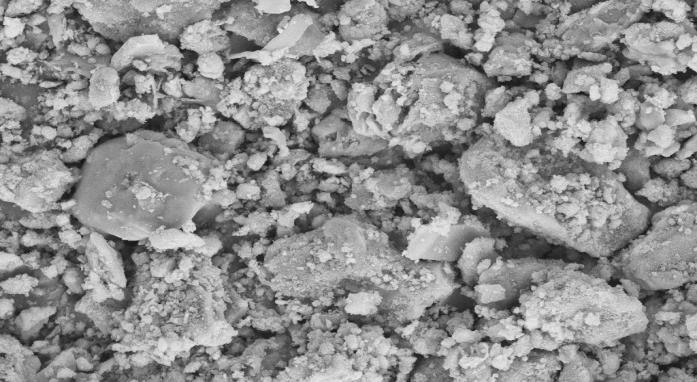
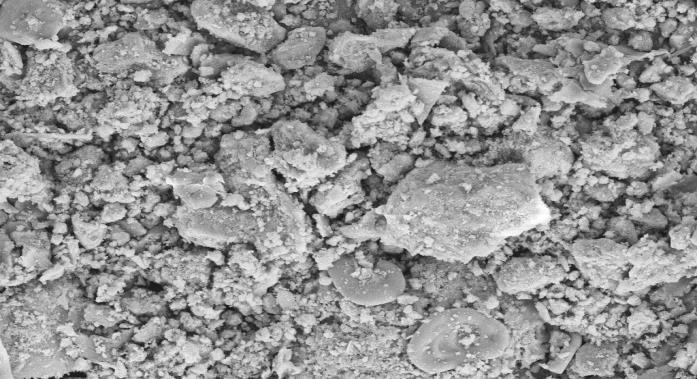
4.6 NATURAL ZEOLITE: Zeolite, a naturally occurring mineral, has garnered significant attention as a promising cementitiousmaterialinthefieldofsustainableconstruction. With its unique properties and characteristics, zeolite exhibits the potential to revolutionise the construction industry by offering a more environmentally friendly alternativetotraditionalcementitiousmaterials.Thispaper aims to explore the various applications and benefits of utilising zeolite in sustainable construction practices. One The utilisation of zeolite as a supplementary cementitious materialisattributedtoitshighcontentofreactiveSiO2and Al2O3,whichenablesittochemicallyreactwithCa(OH)2 generatedduringcementhydration.Thisreactionresultsin the formation of additional aluminates and C-S-H gel[3], thereby enhancing the overall performance of the cementitioussystem.Inthisstudy,weaimtoinvestigatethe effectsofaspecificinterventiononaparticularoutcome.The purpose The present study aims to investigate the microstructuralcharacteristicsofzeolitepowderthroughthe utilisationofscanningelectronmicroscopy(SEM)analysis. The obtained results reveal the presence of irregularly shapedcrystals,exhibitingaroughtexture.Furthermore,the surface morphology of the zeolite powder exhibits visible pore openings. The present study investigates the distribution of particle size, revealing a heterogeneous distributioncharacterisedbyawiderangeofparticlesizes. The observed distribution encompasses both smaller individual particles and larger particles. The observed structureexhibits characteristics ofcrystalline formations, displaying a notable level of porosity. Visual examination revealsthepresenceofvisiblecracks,aswellasvoidspaces withinthematerial.Nosignsofcontaminationaredetected upon inspection. Figure 1 displays the scanning electron microscope(SEM)imageofthenaturalzeolitepowder.
TheutilisationoftheScanningElectronMicroscope(SEM) hasenabledresearcherstoobtainhigh-resolutionimagesof naturalzeolitepowder,therebyprovidingvaluableinsights intoitsintricateandfinestructureatthemicroscopiclevel. The surface and particles of the zeolite exhibit a distinct texture and porosity, which suggests a substantial surface areaandthepossibilityofengagingwithvarioussubstances, includingcementitiousmaterialsfoundinconcrete.
In this study, we present Table 2, which offers a comprehensive overview ofthe chemical properties ofthe zeolite powder acquired from the manufacturer. The table presents a detailed analysis of various chemical characteristicsassociatedwiththezeolitepowder,providing valuable insights into its composition and properties. This information is crucial for understanding the potential applications and performance of the zeolite powder in variousfields.ThecomprehensivenatureofTable2ensures that researchers and practitioners can make informed decisionsregardingtheutilisationofthiszeolitepowderin theirrespectivedomains.Thepropertiesofzeoliteprovide valuableinsightsintoitscompositionandpotentialbehaviour whenusedasanadditiveinconcreteproduction.
Silicon dioxide (SiO2), commonly known as silica, is a prominent constituent of zeolites, accounting for approximately 52% of their composition. Its significant presence in zeolites underscores its importance in understanding the properties and behavior of these materials.Thecontributionofzeoliteparticlestotheoverall
structureandstabilityisa significantaspectthathas been extensivelystudiedinthefieldofmaterialsscience.Zeolites are crystalline aluminosilicate minerals with a porous structure, which makes them highly attractive for various applicationssuchascatalysis,adsorption,andionexchange. Thestructuralintegrityandstabilityofzeoliteparticlesplaya crucialroleindeterminingtheirperformanceanddurability intheseapplication
Aluminium oxide (Al2O3) is a compound that plays a noteworthy role, constituting approximately 46% of the composition.Theanalysisindicatesthatthezeoliteexhibitsa notableabundanceofaluminium,acharacteristicthatmay have significant ramifications for its reactivity and its interactionswithvariousconstituentswithinconcrete.
Ironoxide,alsoknownasFe2O3,isacompoundthatis foundinzeoliteparticlesatarelativelylowconcentrationof 0.6%. This presence of iron oxide in zeolite particles may potentially play a role in their coloration. Based on the available evidence, it is improbable that the given concentrationwillhaveasubstantialeffectontheproperties ofconcrete.
Titaniumdioxide(TiO2)isacompoundthatispresentin the zeolite at a concentration of 0.65%. Although this proportion is relatively small, it is worth considering its potentialimpactontheoverallpropertiesofthezeolite.
Calcium oxide (CaO), also known as quicklime, is a chemicalcompoundthatmayhaveapotentialimpactonthe reactivityofzeolitewhenexposedtowaterandduringthe hydrationprocessofconcrete.Thepresenceofcalciumoxide in zeolite, with a concentration of 0.09%, suggests that it could potentially influence the aforementioned reactions. Further investigation is required to fully understand the extentofcalciumoxide'sinfluenceonthereactivityofzeolite anditsroleinthehydrationprocessofconcrete.
Thecompoundmagnesiumoxide(MgO)isfoundintrace amountsof0.03%inthezeoliteorconcretesamplesunder investigation. Consequently, its presence is considered minimal and is expected to have limited impact on the propertiesofthesematerials.
Sodiumoxide(Na2O)andpotassiumoxide(K2O)aretwo alkali oxides that are found in relatively small amounts, comprising approximately 0.1% and 0.03% of the total composition, respectively. The potential influence of additivesonthebehaviourofzeolitesintermsofreactivity andinteractionwithothercomponentsintheconcretemix hasbeenasubjectofinterestinrecentresearch.
Theamalgamationofthesechemicalpropertiesestablishesa fundamental basis for comprehending the potential interactions between zeolite, cementitious materials, and waterwithinthecontextofaconcretemixture.Thepresence ofasubstantialquantityofsilicaandaluminium,asevidenced
by the SEM image displaying a porous structure, indicates that the zeolite possesses characteristics that have the potentialtoenhancethestrength,durability,andworkability ofconcrete,provideditisutilisedinacarefulanddeliberate mannerwithintheconcretemixture.
Table -2: ChemicalPropertiesofzeolitefromthe manufacturer
5. MIX PROPORTIONS
Table -3: MixProportionsoftheconcreteasperIS 10262:2019
1:2.1:3.77
The table provides comprehensive mix proportions for concreteinaccordancewiththeIS10262:2019standard.For each cubic meter of concrete, it specifies the inclusion of 367.43kgofcement,779kgoffineaggregate,1384.82kgof coarseaggregate,and161.67kgofwater.Thewater-cement ratio, a critical factor affecting the mix's workability and strength,issetat0.43.Themixratioof1:2.1:3.77signifiesthe relative composition of cement, fine aggregate, and coarse aggregate. These proportions and ratios are designed to ensure a balanced combination that achieves the desired strength, durability, and workability of the concrete. By following the IS 10262:2019 guidelines, engineers and construction professionals can create consistent and highqualityconcretemixessuitableforvariousapplications.The specified quantities and ratios play a crucial role in optimizing the performance of the concrete while
maintaining the structural integrity and performance requirementsoftheconstructedelements.
6 COMBINATIONS OF SPECIMEN
Table -4: DifferentcombinationsofZeoliteConcrete
StandardIS:1159–1959,istodeterminehowwellfreshly mixedconcretecanbecompacted.Itispossibletocalculate theconcretemixture'scompactionfactorbymakinguseof the method that is outlined in the standard. Notably, the addition of natural zeolite to the mixture of cementitious materialsusedinthemanufacturingofconcretehasresulted inaconsiderabledecreaseinthecompactionfactor.Thisis animportantdevelopment.Theuseofnaturalzeoliteasan extra cementitious component has been a significant contributor to the success of this endeavour. In this particular setting, the water-absorption capability of the naturalzeolitepowderisanextremelysignificantfactorto take into account, and it is imperative that this aspect be emphasised.ChartNo.2providesagraphicalrepresentation of the percentage of the concrete mixture that can be compactedsuccessfullywiththelaboratoryprocedure.
Compaction Factor
7. TESTING OF SPECIMEN
7.1 SLUMP CONE TEST
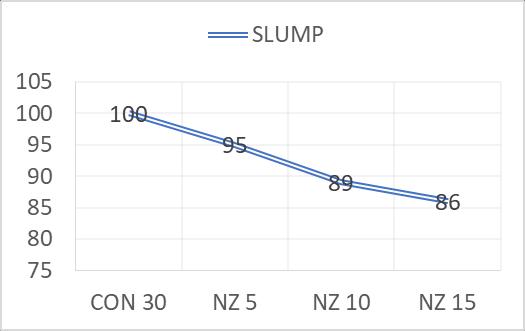
Theobjectiveofthisstudywastoassesstheworkabilityof fresh concrete through the implementation of the slump conetest,followingtheprescribedproceduresspecifiedin theISCode1199-1959.Theanalysisoftheresultsobtained fromtheslumpconetestrevealsacleartrendindicatinga decreaseintheslumpvalueoftheconcreteastheproportion of natural zeolite in the concrete mixture increases. This researchpaperaimstopresenttheresultsobtainedfromthe slumpconetest,asillustratedinChartNo.1.Theobtained testresultsoffersignificantinsightsintothebehaviourand characteristicsexhibitedbythematerialunderinvestigation.
Chart – 2: CompactionProperties
7.3 COMPRESSIVE STRENGTH TEST
Chart – 1: SlumpProperties
7.2 COMPACTION FACTOR TEST
Thegoalofthecompactionfactortest,whichevaluatesthe workability of newly mixed concrete and is carried out in accordance with the requirements provided in the Indian
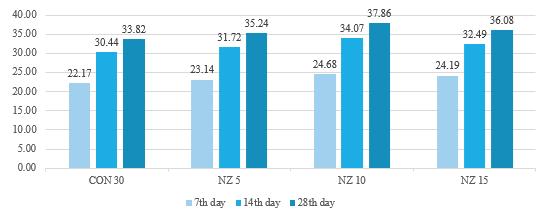
TheIndianStandard516(1959)states150mmx150mmx 150mm cubes are employed to test the compression strength.Thiswasdonewitha servo-controlledUniversal TestingMachine(UTM)thatcouldholdupto3000kN.The cubesamplewastestedoverthecourseof7,14,and28days. In this study work, we show how Chart 3 shows the compressive strength features of concrete examples. The chart shows how the data obtained and analysed for the purposeoftheresearchwereputtogether.Figure2shows how concrete is crushed during a test of its compression capacity. By looking at how concrete changes during a compressive strength test, you can learn a lot about the material'sabilitytofighthorizontalloadsandkeepitsshape when compressed. When compared to other samples, the compressionstrengthofthe(NZ)10exampleshowsaclear rise.Thissuggeststhatthe qualityoftheconcreteandthe wayitwasmixedisbetter.
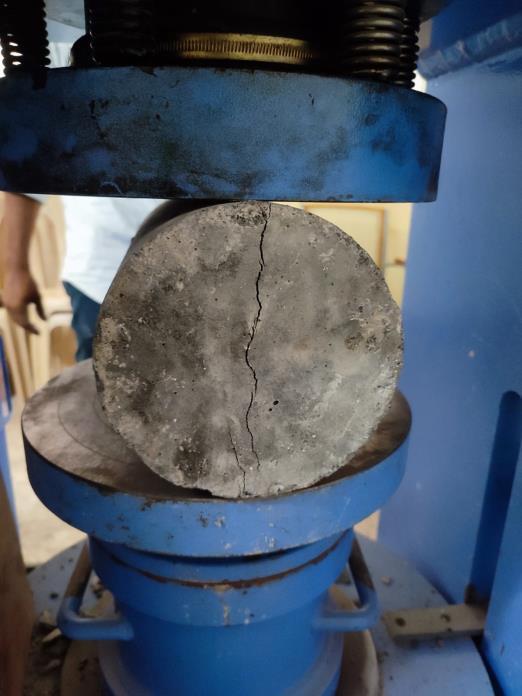
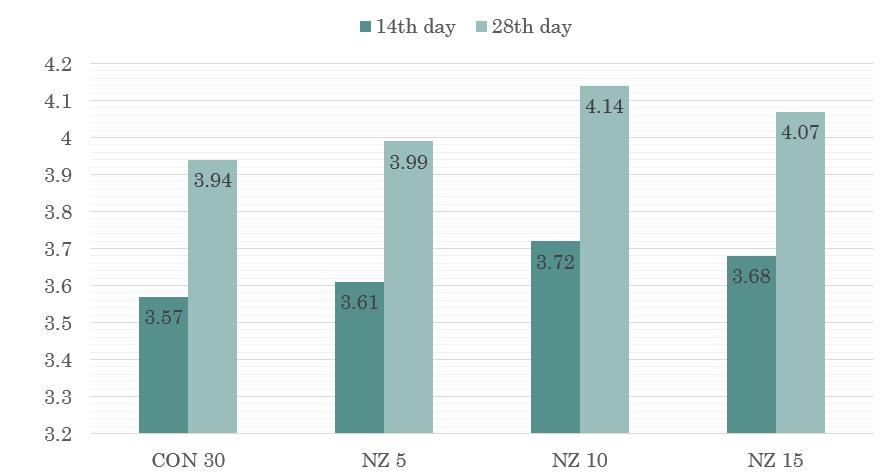
The assessment of split tensile strength involved the utilization of cylindrical specimens measuring 300mm in height and 150mm in diameter. This adhered to the guidelines outlined in IS 516 (1959), employing a servocontrolledUniversalTestingMachine(UTM)withacapacity of3000kN.Thecylindricalspecimensunderwenttestingat both14and28daystoascertainstrengthdevelopmentover time. Chart - 4 graphically represents the split tensile strengthpropertiesoftheconcretespecimens.Notably,the data demonstrates an optimal strength enhancement of 5.2%withtheintroductionof10%zeoliteintothemix.In contrast,adeclineinsplittensilestrengthwasobservedwith a 15% zeolite content Figure - 3 provides a visual representationofhowtheadditionofdifferentpercentages of zeolite impacts the concrete's split tensile strength, highlightingthenotableincreaseatthe10%zeoliteinclusion level and the subsequent decrease at 15%. The results underscorethesignificanceofselectingappropriatezeolite proportions to optimize concrete strength, ensuring the durability and performance of the material in various constructionapplications
TEST
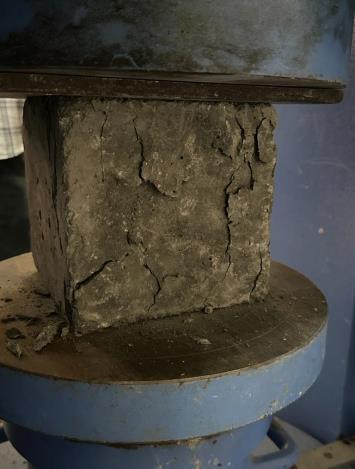
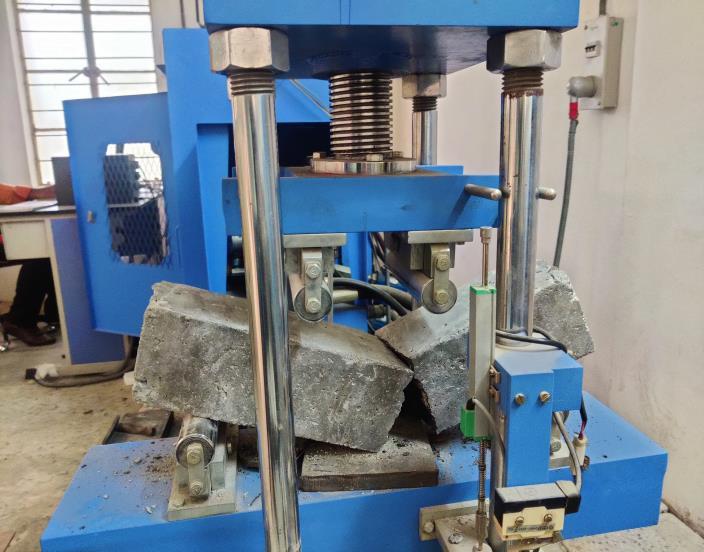
The evaluation of flexural strength involved the use of prismaticspecimensmeasuring100mmx100mmx500mm, adheringtotheguidelinesstipulatedinIS516(1959).The testswereconductedatthe28-daymark,employingthe2pointloadingmethodwithadistanceof133mmbetweenthe tworollerpointloads.Chart-5graphicallyrepresentsthe flexuralstrengthpropertiesoftheconcretespecimens.Itis evident that the specimens experienced failure under flexural loading conditions. Notably, the data portrays a significant enhancement in flexural strength when incorporating 10% zeolite into the mix. This composition yielded a remarkable flexural strength of 4.21 N/mm². Figure - 4, visually illustrates the manner in which the concretespecimensfailedduringtheflexuralstrengthtests. This provides a clear representation of the structural behaviourandfailuremechanismsexhibitedbytheconcrete under flexural loading conditions. This experimental
explorationunderscorestheimpactofzeoliteinclusionon theflexuralstrengthoftheconcretespecimens.Thefindings highlight the potential benefits of incorporating zeolite, particularlyata10%proportion,inenhancingtheflexural performanceoftheconcrete.
noticeable enhancement in compressive, split tensile,andflexuralstrengthsoftheconcrete.This strategicadditionofzeolitecontributespositivelyto theoverallmechanicalperformanceoftheconcrete mixture.
The pinnacle of compressive strength reached an impressive37.86N/mm²,showcasingasubstantial 11.9%improvementoverthestrengthexhibitedby the conventional mix. This substantial gain in compressivestrengthisadirectresultofthezeolite addition's favorable impact on the concrete's structuralproperties.
Specifically in the NZ-10 specimen, the zenith of compressivestrengthattainmentismarkedat37.86 N/mm². This achievement not only demonstrates the potency of zeolite but also underscores an impressive11.9%surgewhencontrastedwiththe strengthoftheconventionalmix.
The highest point of split tensile strength, registeringat3.56N/mm²intheNZ-10specimen, reveals a noteworthy 5.2% advancement in comparisontothesplittensilestrengthexhibitedby the conventional mix. This enhancement emphasizesthepositiveroleofzeoliteinimproving thematerial'stensileproperties.
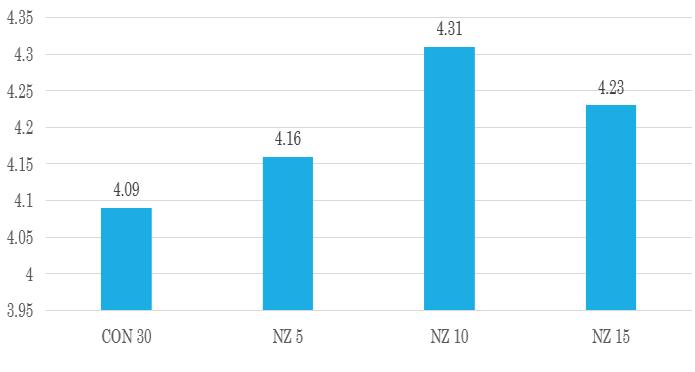
Notably, the NZ-10 specimen stands out by displayingthemostrobustflexuralstrengthof4.21 N/mm².Thisachievementsignifiesacommendable 6.7%increaseovertheflexuralstrengthobservedin conventionalconcrete.Theincorporationofzeolite, particularly at the 10% proportion, evidently contributestothematerial'sflexuralprowess.
REFERENCES
8 CONCLUSIONS
Zeolite functions as a pozzolanic material, enhancing concrete strength through a chemical reaction with calcium hydroxide during the hydration process. This interaction generates supplementarycementitiouscompounds,whichin turn elevate the binding properties and compactnesswithintheconcretematrix.
DespitetheincorporationofplasticizerCONPLAST SP430,themitigatingeffectondecreasedconcrete workabilitycausedbythestrongwater-absorption tendencyofnaturalzeolitepowderislimited.The plasticizer fails to fully counteract the impact of zeolite's water-absorbing characteristics on concrete'seaseofmanipulation.
Theintroductionof10%naturalzeolitepowderasa substitute for cement yields a gradual and
[1] Luanda Lima; Emanuelly Trindade; Luciana Alencar; Marcelo Alencar; Luna Silva; (2021). Sustainability in the construction industry: A systematic review of the literature. Journal of Cleaner Production, doi:101016/j.jclepro.2020.125730
[2] nis, Suman Kumar Adhikary, Fallon ClareManhanga,DeepankarKumarAshishb,Remigijus Ivanauskas, Gediminas Stelmokaitis, Arū Aleksandras Navickas (2020), Journal of Building Engineering. Natural zeolite powder in cementitious composites and its application as heavy metal absorbents
https://doi.org/10.1016/j.jobe.2021.103085
[3] BabakAhmadi,MohammadShekarchi(2009)Cement& Concrete Composites, ELSEVIER, http://dx.doi.org/10.1016/j.cemconcomp.2009.10.006
[4] Malek Mohammad Ranjbar, Rahmat Madandoust, S. Yasin Mousavi, Saman Yosefi, (2013), Construction of Building Materials, ELSEVIER, http://dx.doi.org/10.1016/j.conbuildmat.2013.05.097
[5] Barbara Belen Raggiotti, Maria Josefina Positieri and Angel Oshiro (2018), Natural Zeolite, A pozzolan for structural concrete, Science Direct DOI: 10.1016/j.prostr.2018.11.006
[6] Nasir Kabir , Aminu Sallau , Adamu Umar Chinade (2019) Experimental Study of Conplast SP430 in Concrete Using Selected Brands of Portland cement Book·October2019,(researchgate.net)
[7] P.V.Madhuri,B.KameswaraRao,A.Chaitanya,(2021) Improved performance of concrete incorporated with naturalzeolitepowderassupplementarycementitious material https://doi.org/10.1016/j.matpr.2021.06.089
[8] YenThiTran,JechanLee,PawanKumar,Ki-HyunKim, SangSooLee.(2019)Naturalzeoliteanditsapplication in concrete composite production. https://doi.org/10.1016/j.compositesb.2018.12.084
[9] FereshtehAlsadatSabet,NicolasAliLibre,Mohammad Shekarchi.(2012)Mechanicalanddurabilityproperties of self consolidating high performance concrete incorporating natural zeolite, Silica fume and fly ash https://doi.org/10.1061/(ASCE)MT.19435533.0000621
[10] AliAkbarRamezanianpour,AliKazemian(2012),Useof NaturalZeolitetoproduceSelf-ConsolidatingConcrete withLowPortlandCementContentandhighDurability
[11] Ali Akbarpour, Mahdi Mahdikhani and Reza Ziaie MoayedMechanicalBehaviorandPermeabilityofPlastic ConcreteContainingNaturalZeoliteunderTriaxialand UniaxialCompressionhttps://doi.org/10.1061/(ASCE) MT.1943-5533.0004093
[12] BuraAkshayRamesh,B.Kondraivendhan,Ph.D.Effectof Accelerated Carbonation on the Performance of Concrete Containing Natural Zeolite https://doi.org/10.1061/(ASCE)MT.19435533.0003050
[13] Mohammadreza Pezehkian, Ali Delnavaz and Mohammad Delnavaz. Effect of Natural Zeolite on Mechanical Properties and Autogenous Shrinkage of Ultrahigh-Performance Concrete https://doi.org /10.1061/(ASCE)MT.1943-5533.0002968
[14] Memduh Nas and Şirin Kurbetci (2018) Mechanical, durability and microstructure properties of concrete containing natural zeolite DOI: https://doi.org/10.12989/cac.2018.22.5.449
[15] Hamid Shahrabadi, Sina Sayareh, Hamed Sarkardeh (2016) Effect of Natural Zeolite-Pozzolan on CompressiveStrengthofOil-PollutedConcreteMarine Structures.CivilEngineeringJournals
[16] IS1199-1959IndianStandard,Methodofsamplingand analysisofconcrete
[17] IS:516-1959 Indian Standard Methods of Tests for strengthofconcrete
[18] IS10262:2019ConcreteMixProportioning-Guidelines
[19] IS 12269:2013 Ordinary Portland Cement, 53 GradeSpecification
[20] IS 456 2000 Plain and Reinforced Concrete – Code of Practice