Failure Analysis of Billet Caster Tundish Tilter Bolts
J N Mohapatra1, Rama Rao2,
Maruti Prasad3 and D.
Satish Kumar41Seniror Manager, R&D and SS, JSW Steel Ltd., Toranagallu, Bellary 583275 Karnataka, India

2Junior Manager, R&D and SS, JSW Steel Ltd., Toranagallu, Bellary 583275 Karnataka, India
3Deputy General Manager, SMS-II, JSW Steel Ltd., Toranagallu, Bellary 583275 Karnataka, India
4 General Manager, R&D and SS, JSW Steel Ltd., Toranagallu, Bellary 583275 Karnataka, India ***
Abstract - Adetailedfailureanalysiswascarriedoutonprematurelyfailed60mmdiameterboltsofbilletcastertundishtilter. The analysis involves visual examination, chemical composition, microstructure, inclusion, bulk hardness, charpy impact toughness,fractographyofthefailedandnewbolt. Theresultshowthattheboltswereof34CrNiMo6gradewithtempered martensiticmicrostructure,havingMnSandaluminainclusions.Alltheboltshasfailedatthreadgrooveswiththerivermark on the failed surface indicating fast fracture of the bolts. The bolts were found to be heat treated at a wrong tempering temperatureleadingtopoorimpacttoughnessandhencewhiletilting;thebotswerefailedprematurelyduetoimpactload fromthejerk.Amixmodeoffailurewithnumeruscracksareseenonthefracturesurfaceindicatingpoortoughnessofthebolts conformedbycharpytest.Itisrecommendedtocorrecttheheattreatmentasperthespecificationtopreventsuchpremature failures.
Key Words: Tundish tilter bolts, wrong tempering temperature, high hardness, poor impact toughness, premature failure
1. INTRODUCTION
Therearemanyreasonsforwhichboltsandfastenerfail suchasoverloadingfailureduetoexcessloading,fatiguefailure resultingfrompresenceoflargeinclusions,dents,corrosionpits,highroughness,highcyclicload,improperalignment,loose connection,corrosion fatigue, embrittlementsuchastemper martensite embrittlement,temper embrittlement,hydrogen embrittlement,stresscorrosioncrackingetc.[1-8].
34CrNiMo6steelisamedium-carbonlow-alloyhigh-strengthquenchedandtemperedsteelwidelyusedinvariousindustrial fields. The steels are having excellent fatigue and wear properties in addition to high strength, high toughness and good hardenability[9].Itisalsoreportedthatthefastenersbeingstrongerarenotnecessarilybebetterashydrogencanhaveinthe highstrengthfastenerstogivetheadverseeffect[10].
Thespecificationfor34CrNiMo6steelisforgingorhotrollinginthetemperaturerangeof1100to850oC,normalisinginthe temperaturerangeof850to880oCfollowedbyaircooling,softannealinginthetemperatureof650to680oCfollowedby furnacecooling,hardeninginthetemperaturerangeof830-860oCfollowedbyoilquench,temperinginthetemperaturerange of540to660oCfollowedbyaircooling.Withthequenchandtemperedconditionforthethicknessrangeof40to100mm diameter, thepropertiesshouldbe minimumof 800MPa yieldstrength,1000to1200MPaultimatetensilestrength,11% elongationwith50%reductioninareaandnotchimpactenergyofminimum45Joule[11,12].Inthepresentinvestigation, 60mmdiameter34CrNiMo6boltsoftundishtilterstandwereanalyzedtofindouttherootcauseoffailure.
2. HISTORY OF FAILURE
ThebilletcasteratSMS-IIofJSWVijayanagarWorks,haveapproximateweightofemptytundish35ton(Skull7-10ton),with skullweightoftundish45tonandinemergencyconditiontundishweight70ton.Thetundishtilterboltsof60mmdiameter weregettingrepeatedfailureinapproximate6monthofservice.Theboltsexperiencetemperatureintherangeof100-150oC inservice.Inthepresentcase,allthefourboltswerefailedwhiletiltingleadingtofallofmaterial.Itissuspectedthatduetounbalancingofthetiltertheaccidentoccurred.Adetailedfailureanalysishasbeencarriedouttoinvestigatetherootcauseofthe boltfailure.Digitalimageforthevisualexamination,dimensionalmeasurement,SPECTROmakeOESforcomposition,optical microscopyusinganOlympusmakeopto-digitalmicroscope,Hitachimakescanningelectronmicroscope(SEM),Bulkhardness (Brinellhardness)measurementthroughanWelspunmakeUniversalhardnesstesterandZwick/Roellmakeimpacttester wereusedforthefailureinvestigationtosortouttherootcauseoffailureofthebolts.
3. CHARACTERIZATION OF FAILED BOLTS
3.1 Visual Examination
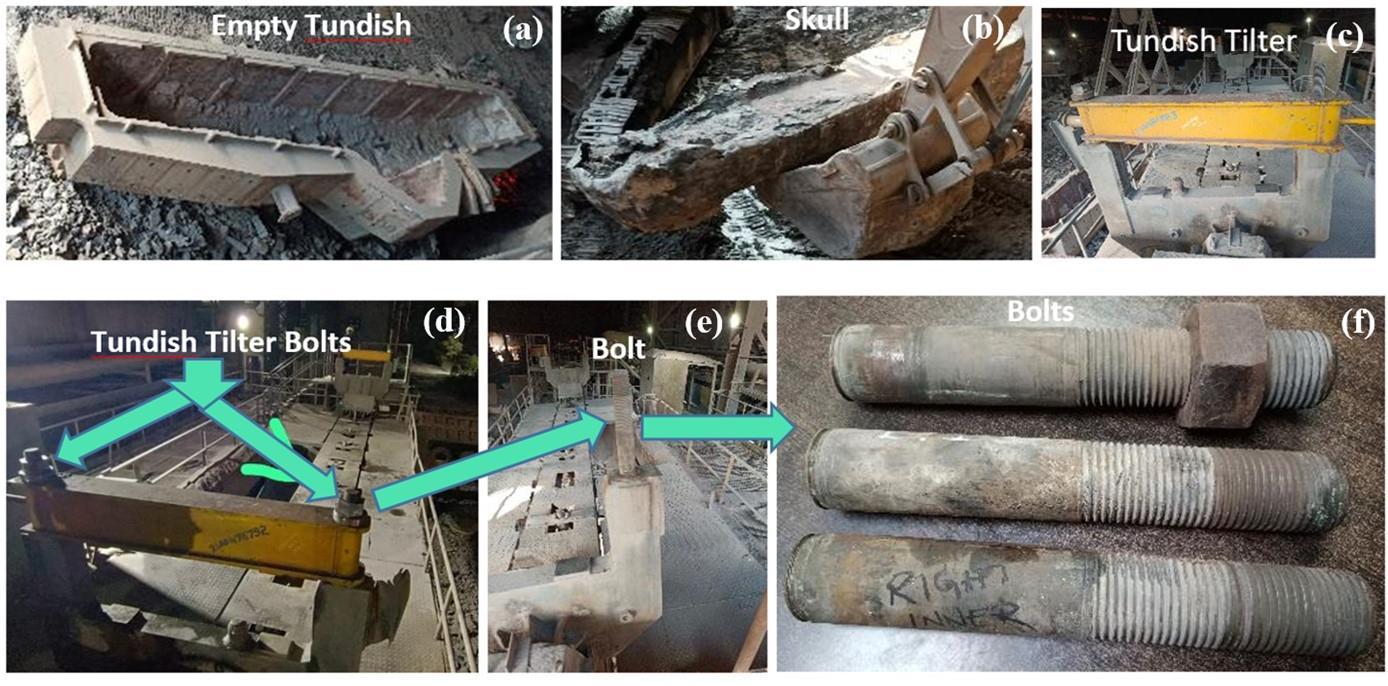
Fig.1showsdigitalimageof(a)emptytundish,(b)skullfromthetundish(c)tundishtilter(d)

(f)boltsontundishtilterwhich werebeingfailed.Fig.2(a)-(d)showscloseviewoftheboltswiththeirfracturesurface.Itcanbeseenthattheboltsarefailed atthethreadregionswherethestressconcentrationissupposedtobehigh.Therivermarksonthefracturesurfaceindicates fastfractureofthebolts[13].
3.2 Chemical Composition
The chemical composition of a typical failed bolt was carried out using SPECTRO make OES as shown in Table-1. The composition matched with the specification of 34CrNiMo6 steel grade. This is a high alloy steel with through hardening characteristicswithultra-highstrengthrange.Thesteelhas0.017%Aland0.06%S,whichmeansitisanAldeoxidizedgrade thatisre-sulfurizedtoimprovethemachinabilityofthebolt.Thesefastenersmaintainstrength1000to1300MParetaining hightoughnessandfatiguelife.Theboltalsogetsheatedwhentundishisfilledwithmoltenmetal,ahighalloysteelwithstands temperaturepreventingthemicrostructuraldeteriorationinsuchenvironment.
3.3 Inclusion Analysis
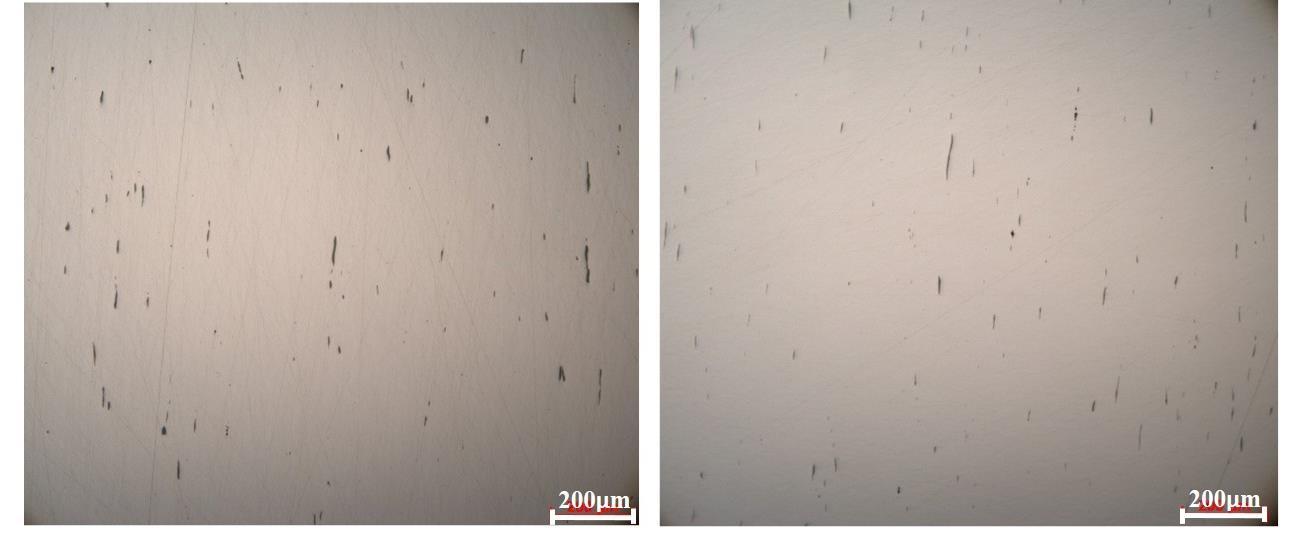
TheopticalmicrostructureofthesteelshowinclusionasshowninFig.3(a)and(b)obtainedfromnewboltandfailedbolt respectivelytoevaluatetheworstfieldinclusionratingsasperASTME-45asinTable2.Theinclusionratinginthefailedand thenewlymadeboltisgiven.Thebolthashighlevelofinclusion,butinservicethehighlevelofinclusionhaspotential to initiatefatiguecracks.
3.4 Microstructure
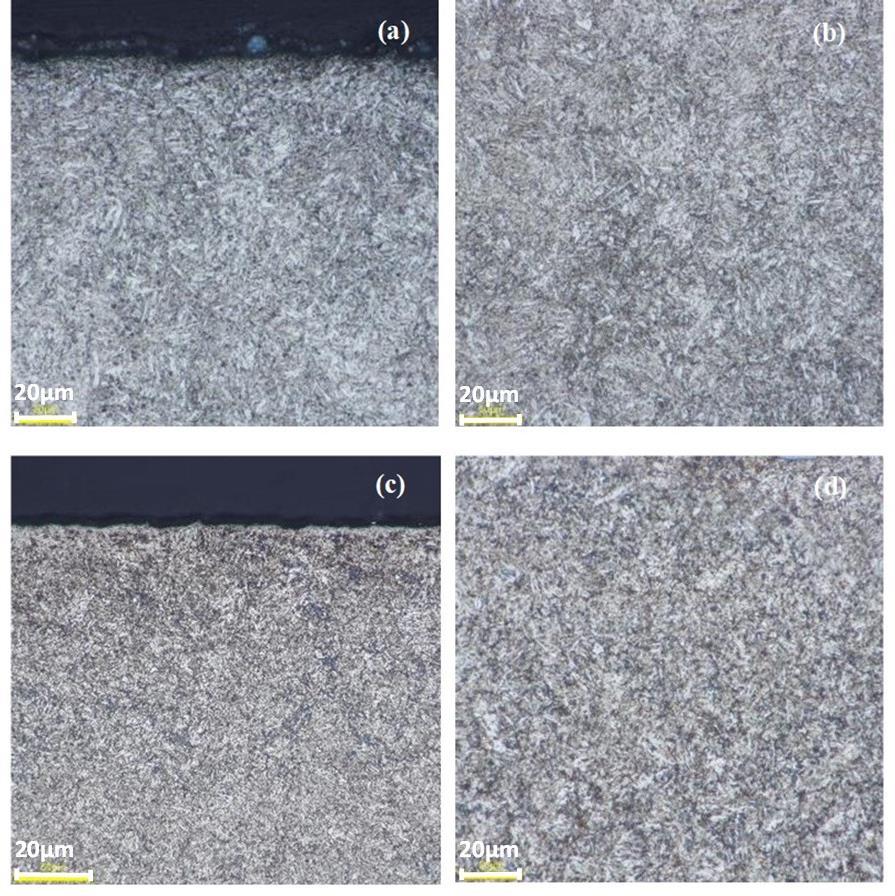
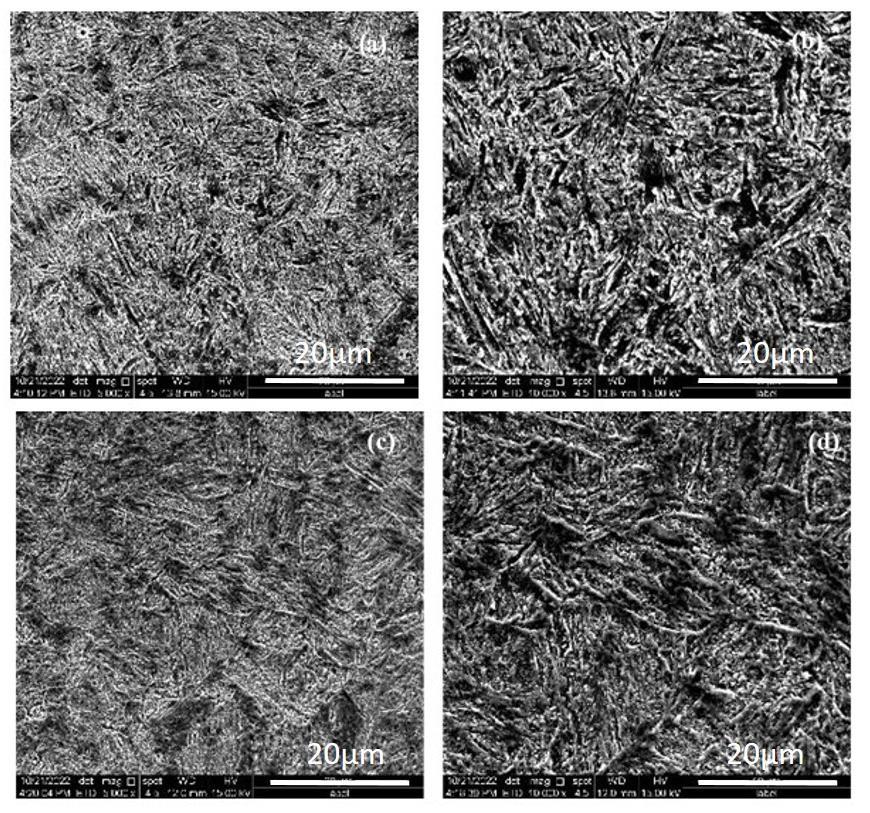
The optical microstructure in Fig. 4 (a) and (b) shows the new bolts at the edge and center region whereas (c) & (d) correspondstothemicrostructureofthefailedbolts.Themicrostructureofthenewandfailedboltswerefoundtobetempered martensiticinnature.Nosignificantvariationinmicrostructurewasseenfromthesurfacetothecenteroftheboltsindicating nosurfacehardeningtreatmentismadeonthebolts.
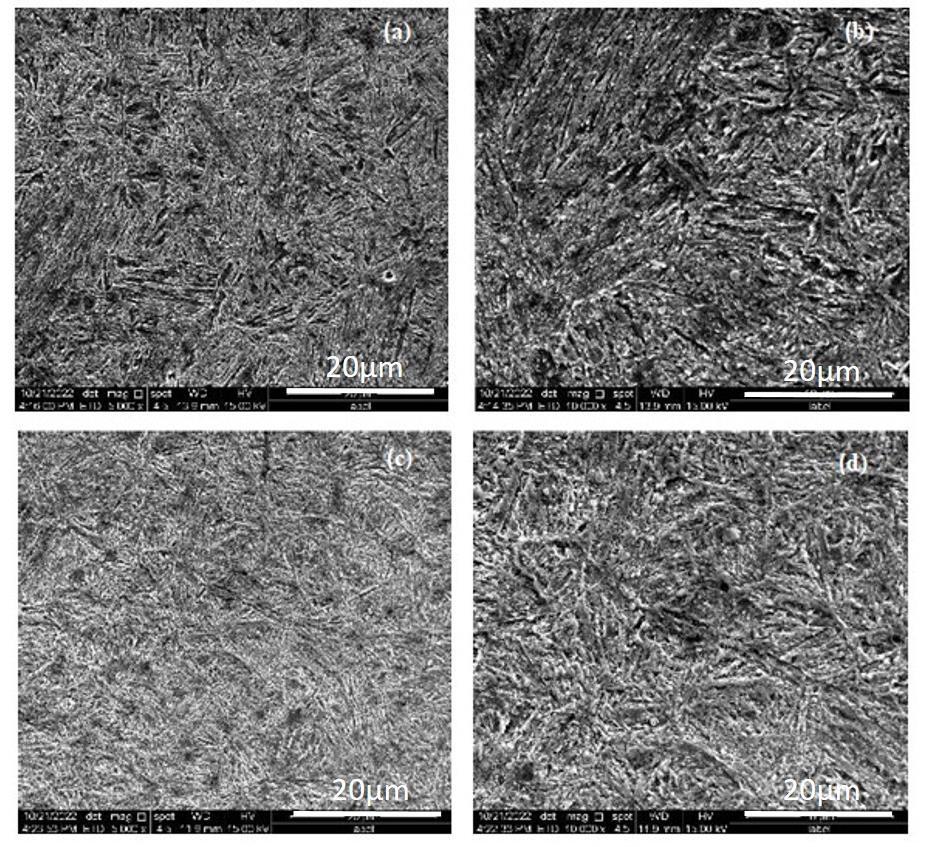
TheSEMmicrostructureofthenewboltattheedgeregionatlowandhighmagnificationisshowninFig.5(a)&(b)andthatof thefailedboltin Fig. 5 (c)&(d)respectively.ThecoremicrostructureofthenewboltsisshowninFig.6(a)&(b)andthatof thefailedboltsisshowninFig.6(c)&(d)respectively.Thetemperedmartensiticstructureisseeninthemicrographsofboth the new and old bolts. However, the martensitic laths found in the microstructure of the new bolts indicating its low temperaturetempering.
Fig-4: Opticalmicrostructure(a)edgeand(b)centerofthenewboltwith(c)and(d)aretheircorresponding microstructureofthefailedbolt.
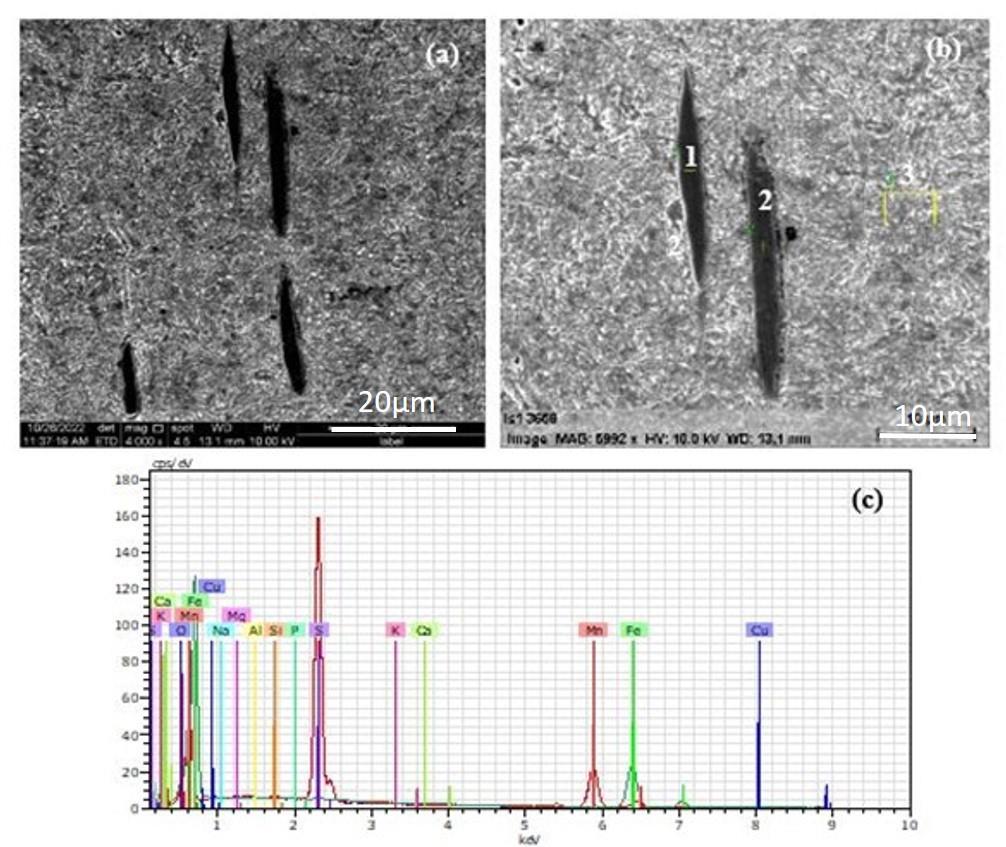
NumerousinclusionsareseenintheSEMmicrographasshowninFig.7(a).TheEDSanalysiswasdoneontheinclusion1and2 andonthematrix3shownin(b)withthespectrumoftheEDSin(c).Thechemicalcompositionoftheinclusionsalongwiththe matrixisshowninTable-3,showsthattheinclusionsasMnS.Suchlargeinclusionsandtheirpopulationsarenotdesirablefor dynamicapplicationofanyengineeringcomponents. Inclusionsarethepointsofstressconcentrationregionsforfatiguecrack initiation,whichpropagatesforfinalfractureoftheengineeringcomponents.
Table-3: SEM-EDSoftheinclusions(1&2oninclusionsand3onthematrix)
3.5 Bulk Hardness and Impact Toughness
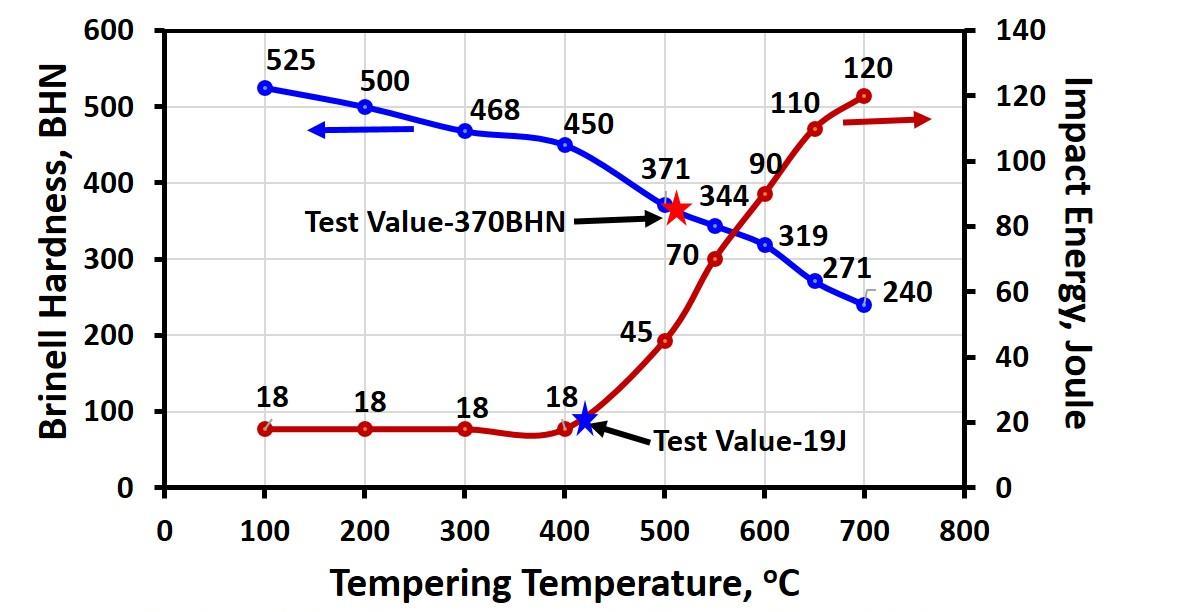
Theaveragebulkhardness(Brinellhardness)wasfoundtobe370BHNforthefailedboltand380BHNforthenewbolt.The hardnessandimpacttoughnessdatawithtemperingtemperaturewerefoundfromtheliteratureforthe34CrNiMo6gradeand plotted in Fig. 8. It can be seen that the hardness for both the new and failed bolts are corresponding to the tempering temperaturearound500oCwhichcorrespondstoanimpactenergyof45Joule.Hence,toconformtheexactvalueofimpact toughnessstandardsamples ofCharpyimpactspecimen weremadeandtestedina Zwick/Roell makeimpacttester.The resultswerefoundtobe19Joule,correspondingto425oCtemperingtemperature.Hence,itisinferredthatthelowimpact energyobtainedinthebolts,duetolowtemperaturetempering.
4. FRACTOGRAPHY
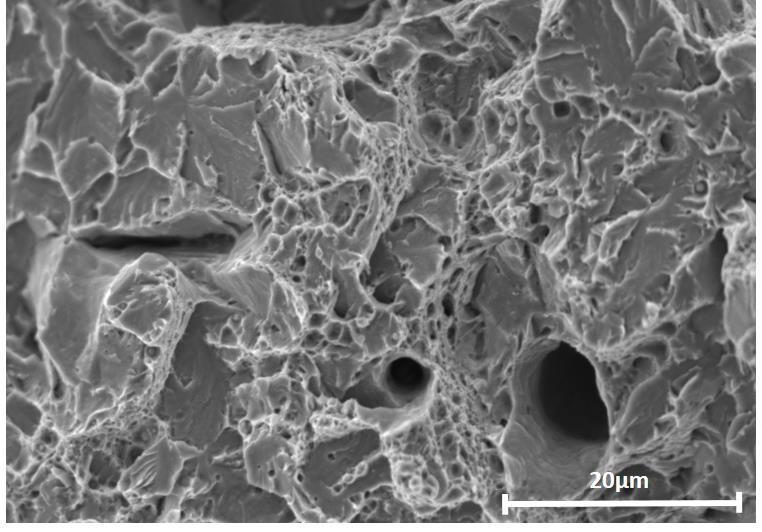
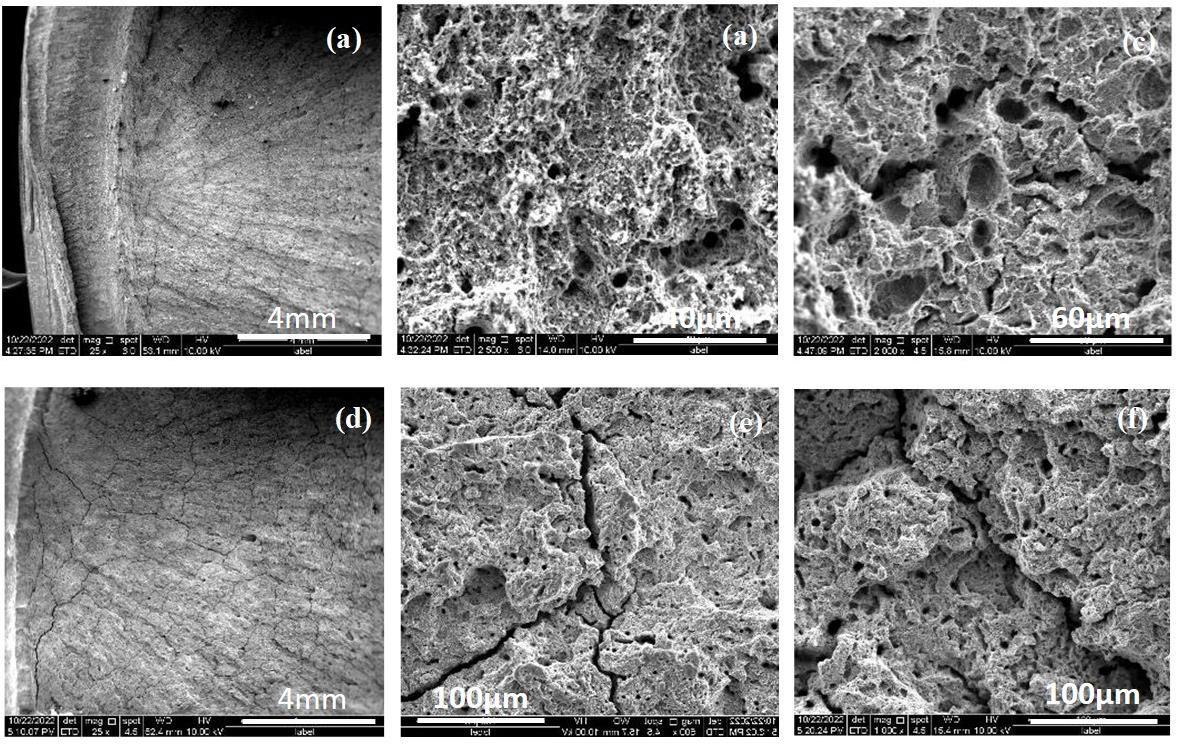
SEMFractographofthebolt-1andbolt-2atvariousmagnificationsareshownin Fig. 9 (a)-(c)and(d)-(f)respectively.The radiatingcracksareindicativeoffatiguefailureofthebolts.Therivermarksareindicativeoflowcyclefatigueoftheboltsalso failureinimpactload.Thecracksinthesamplesindicatespoortoughnessofthesteel.Thefractographyofthefailedboltafter impacttestisshownin Fig. 10.Mixedmodeoffailurewithbothcleavagesanddimplesareseeninthefracturesurfaceofthe bolt.
5. CONCLUSION
The root cause of failure is selection of wrong tempering temperature (425oC) instead of following the actual tempering temperature (540-660oC according to specification) leading to poor impact toughness of the bolts Stress concentrations increasedatthethreadgroovesduetoheavyload,duetojerktheboltsfailedduetopoorimpacttoughness.Therivermarkson thefracturesurfaceoftheboltsareindicativeoffastfractureoftheboltsduetotheimpactload/jerkload.
6. REMEDIAL ACTION
Poortoughnessofthebolts(19Joule)duetolowtemperaturetemperingisthemajorcauseoffailureoftheboltsandhenceitis suggested to temper the steel as per specification of 540 to 660oC to get very good impact toughness in the range of 70110Jouleorminimumof45Joule.Thematerialsurfacehardeningcanfurtherimprovethefatiguelifeofthebolts.Useofclean steelcangivebetterlifeofthesteelindynamicloadingconditionbyminimizingthestressconcentrationfrominclusions As theboltsareexperiencinghightemperature(100-200oC)thereisachanceoflooseningoftheboltsandhenceneedtobe tighteningperiodicallytoavoidfatiguefailureofthebolts.
Acknowledgement
TheauthorswouldliketoacknowledgetheSMS-IIdepartmentmaintenanceandR&Dcharacterizationteamfortheirsupport tocarryoutthefailureanalysis.
References
[1] WalterJ.Jensen,BookChapter,FailuresofMechanicalFasteners,Failureanalysisandprevention,editedbyWilliamT. Becker and Roch J. Shipley, ASM International, Vol.11, 2002, DOI:https://doi.org/10.31399/asm.hb.v11.9781627081801
[2] JoseAlbertoAlvarez,RobertoLacalle,BorjaArroyo,SergioCiceroandFedericoGutiérrez-Solana,FailureAnalysisof HighStrengthGalvanizedBoltsUsedinSteelTowers,Metals,Vol.6,2016,p.163;doi:10.3390/met6070163.
[3] WangHui-liandQinSi-feng,High-StrengthBoltCorrosionFatigueLifeModelandApplication,HindawiPublishing Corporation, The Scientific World Journal, Vol. 2014, Article ID 567318, pp.1-5, http://dx.doi.org/10.1155/2014/567318
[4] Guangwu Yang, Long Yang , Jingsong Chen, Shoune Xiao and Shilin Jiang, Competitive Failure ofBolt Loosening andFatigue underDiferent Preloads, Chinese Journal of Mechanical Engineering, Vol. 34, No.141, 2021, https://doi.org/10.1186/s10033-021-00663-3
[5] GuoHongfei,JianweiYan,RuZhang,ZhihuiHe,ZengqiZhao,TingQu,MingWan,JingshunLiu,andCongdongLi,Failure Analysison42CrMoSteelBoltFracture,AdvancesinMaterialsScienceandEngineeringVol.2019,ArticleID2382759, pp.1-8,https://doi.org/10.1155/2019/2382759.
[6] KalpanaK1,UshaS,Effectoftemperingprocessonhydrogendelayedfracturesusceptibilityof4140steelfastners, InternationalResearchJournalofEngineeringandTechnology(IRJET),Vol.4,Issue.3,2017,pp.827-831.
[7] Sh.Molaei,R.Alizadeh,M.Attarian,Y.Jaferian,Afailureanalysisstudyonthefracturedconnectingboltsofafilter press,CaseStudiesinEngineeringFailureAnalysis,Vol.4, 2015,pp.26-38
[8] Pabitra Palai, Pankhuri Sinha, T. Venugopalan, Analysis of Slide Gate Mounting Bolt Failure in Steel Ladle Due to Fatigue,JournalofFailureAnalysisandPrevention,Issue5,2014.
[9] ChunpingHuang,XinLin,HaiouYang,FenchengLiuandWeidongHuang,MicrostructureandTribologicalPropertiesof LaserFormingRepaired34CrNiMo6Steel,Materials,Vol.11,2018,p.1722;doi:10.3390/ma11091722.
[10] BillEccles,Thestrongerthebetterisnotnecessarilythecaseforfasteners,Fastener+FixingTechnology,Issue.11, 2013.
[11] MaterialspecificationsheetSaarstahl-34CrNiMo6,https://www.saarstahl.com
[12] https://torqbolt.com/en-10269-34crnimo6-bolting-fasteners-bolting-stud-bolts-screws-nuts-washers-suppliersmanufacturers.
[13] https://www.fastenal.com/fast/services-and-solutions/engineering/fatigue
BIOGRAPHIES
Dr JNMohapatraiscurrentlyworkingasaSeniorManageratR&DandSSofJSWSteelLtd.Heishaving 19 year of R&D experience with more than 13 years post doctorate experience in the field of NDT, FailureanalysisandAHSS.DrMohapatraisarecipientofJSPSPostdoctoralFellowintheyear2010, YoungScientistfromMRSIKolkataintheyear2008,NationalYoungNDTScientistbyISNTintheyear 2013.Hehasmorethan30SCIJournalpublications,05non-SCIjournalpublicationsandparticipated andpresentedhisworkinseveralnationalandinternationalconferences.