International Research Journal of Engineering and Technology (IRJET)

e-ISSN:2395-0056 Volume: 10 Issue: 08 | Aug 2023 www.irjet.net
International Research Journal of Engineering and Technology (IRJET)
e-ISSN:2395-0056 Volume: 10 Issue: 08 | Aug 2023 www.irjet.net
(a) M.Tech, Department of Mechanical Engineering, HBTU, Kanpur
(b) Associate Professor, Department of Mechanical Engineering, HBTU, Kanpur ***
Abstract: In the present work design and experimental investigation of a solar hot case for food warming are briefly summarized. Solar hot case is a sustainable device designed to lessen poor nations' dependency on traditional energy sources aiming at advantages such as improved healthy food, and environmental protection. A 100-watt solar panel and Ni-Cr resistance heating alloy are used in the experiment to keep the food in a safe temperature range. The present study investigates multi-wire combinations and identifies the best configuration to get the optimum temperature. The findings show that the solar hot case efficiently keeps food warm and germs-free, making it a practical option for homes, community kitchens, and workplaces in underdeveloped countries.
Keywords: Solar Hot Case, sustainable device, environmental protection, safe temperature range, underdeveloped countries
Solarhotcaseisapropersustainableapplianceforfoodwarmingandcanbeusedin householdcommunitykitchensand offices in various developing countries which depend upon conventional energy sources. The solar hot case has many meritsintermsofhealthrecovery,theenvironmentandtheeconomyofthenation.Theuseofsolarhotcasetowarmup the food will reduce the use of traditional fuel items (i.e., wood and cow dung) as well as costly camp fuels(i.e., LPG, kerosene)in rural andurban areas.Having goodfood withproper nutritionisessential forhuman beings becauseifitis not handled properly it may result in food-borne disease. There exist approximately 600 million instances of foodborne maladies on a global scale. Among these cases, children under the age of 5 bear a substantial 40% of the overall load of foodborne afflictions, culminating in an annual toll of 125,000 fatalities among this demographic.[1] The exacerbation of extreme meteorological occurrences and environment-related stressors due to climate dynamics adversely impacts the integrity of water and soil safety, thereby augmenting the vulnerabilities associated with waterborne and foodborne maladies these may go higher because trusted data from least developed countries and developing countries is not availableduetolackoftrackrecordofsuchdisease.
Unhealthyfoodconsumptionmaynotonlyimpactthehealthofpeoplebutalsonegativelyaffectsanation'sGDP,economic growth, and productivity as a whole. According to a world bank report in 2018 low- and medium-income countries lost $110 bn USD due to unsafe healthy food practices.[2]This financial burden encompasses both direct expenses, such as medicaltreatmentsandhospitalizations,aswellasindirectcostslikelostproductivityandreducedeconomicoutputandit isavertibleifmeasuresrelatedtofoodsafetyarenottakenseriously.Foodsafetymeasurescancategoricallycontributeto many sustainable development goals like as hunger prohibiting(SDG-2),poverty deduction(SDG-1) and development of wellbeing(SDG-3).[3]
According to global food security index 2022, in India
16.3% undernutrition,30.9% stunted children,33.4% underweight and 3.8% are fighting with obesity. food safety not only help to get healthy food but also help the country to utilize its demographicdividendinabetterway.
Pathogenicmicrobialgrowthisthemajorcauseoffoodbornedisease.Thispathogenicmicrobegrowthhappenshappened whenfoodisnot storedatanadequatetemperature.[4]Thetemperaturerangeatwhichmicroorganismgrowthfasteris known as temperature danger zone. The range is described between 50 C to 600 C by the food safety information council(FSIC),Australia 2016.[5]
after four tofivehours.Electrical appliancessuchasmicrowave oven etc.areused forheating foodand refrigeratorsfor cooling. These facilities are not available in offices and institutions in developing countries because of high energy consumption.Mostofthedevelopingandleastdevelopedcountriesaregeographicallylocatedatoptimalabsorption area of sun rays with high solar potential.[11]so a solution based on warming through solar thermal energy seems feasible. Keepingsuchaspectin mind,present workisfocusedonexperimentalinvestigationofsolarthermalfoodwarmerwhich canbeusedatofficesinstitutionandhouseholdforkeepingfoodwarmandgermfree(outoftemperaturedangerzone)
2.1.
Theenergyrequirementofthewateriscalculatedbyfollowingformula

Inthis experiment,oneglassofwater was usedanditwaskeptwarm insidethecase.Empty glassweightis38.87gram andglassweightwithwateris150grams Thespecificheatofstainless-steelglassistaken500J/kg-Kasandspecificheat ofwateristakenas4186J/kg-K.Generally,fooditemcontainwaterasoneofitsconstituentsthatiswhythecalculations incorporatethespecificheatofwater.Asthe specificheatofwaterishighestsotheenergyoutcomeisonhigherside.The main objective to warm the food within the safe zone limits thus 600 C was taken as a reference temperature in this experiment.[7]
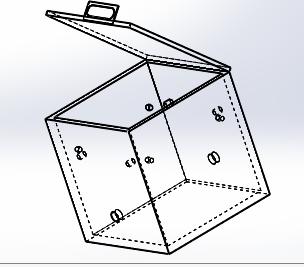
Solar hot case is made up of plywood. With total area of 929.03 cm2 .the hot case is a cuboid with dimensions equal to 30.48cm.
Systemis consistingofaluminiumsheetontheinnersideofthecaseonallthesides Aluminiumsheetsareusedtowork as a reflector or contain the energy within the box. Plywood used have both side mica which works as an insulator to reduceheatlossandtraptheradiationwithintheboxtowarmupthefoodaswellasboxtemperature.Theinnerlengthof experimentalsetupboxis27.88cmandinnerlengthisalso27.88cmwithinnerheightof24 cm.solarhotcaseschematic diagrampresentedinfig.1
In this experiment a 100-watt Photovoltaic Panel is used. A detailed review of temperature effect on photovoltaic panel wasstudied[8,9,10].bychangingthetemperaturethevoltageoutputautomaticallychangesandviceversaincaseofoutput current. The effect of temperature over solar photovoltaic is a major problem. The site where the research is being conducted has an average summertime temperature of 30 C, which is 50 C higher than the standard condition (STC) temperatureasdefinedbyIEC-61215andIEC-61646.STCtestconditionare
Higherirradiance-absorbingcellscangeneratemoreheatinadditiontomoreelectricity.Acelltemperatureriseof180C mightresultinalossofaround2V.[8]InthismoduleoutputPhotovoltaicPanelspecificationgivenbelow:
Ni-Cr, a kind of resistance heating alloy, is an alloy made of 80% Ni and 20% Cr. The joule heating of resistive (ohmic) materialsiswhatheatstheNi-Crthemost.Heating,ortheproductionofheatwhen currentflowsthroughthe Ni-Cr.The rate of heating for Ni-Cr wire is quite high. Ni-Cr is too inexpensive for this experiment's work when compared to other heatingsourceslikethermoelectricdevicesandotherheatingwires.
ThepropertiesandspecificationofNi-Crwireisgivenbelowinthetable5.
Table 5: PropertiesofNi-Crwire
The Ni-Cr wire is placed inside the box through clamping both ends with the help of copper clip and extend through a ceramictubeinordertoconnectwiththecablepoweredby100wsolarphotovoltaicpanel.
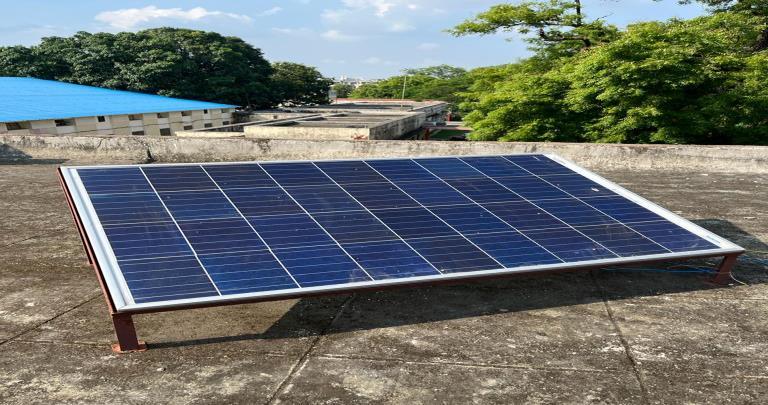
AllthetestwerecarriedoutinsidethemanufacturinglabofMechanicalEngineeringdepartmentofHBTU,Kanpurduring 6,7,10,11Julyof2023.
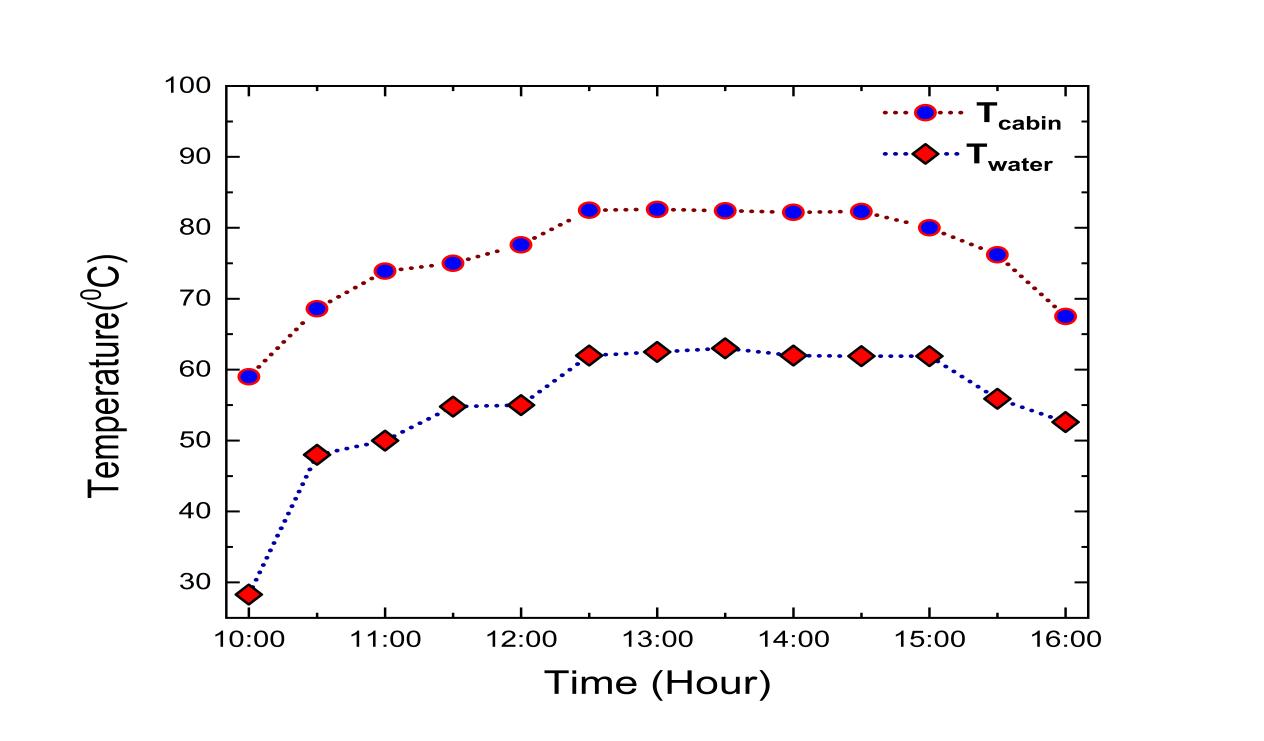
From10:00amuntil4:00pm,allofthe experimentreadingsaretakenonanhourlybasis. 32-gaugeNi-Crwirewasused for this experiment. Ni-Cr wire with 3 combination-single wire ,double wire, triple wire was used. The data revealed a pattern of temperature fluctuations in both the cabin and water over the course of the day. The recorded temperatures
demonstrate a gradual rise in the morning hours, with both cabin and water temperatures consistently increasing until around midday. Following this period, there was a transition towards slightly lower temperatures, which become more pronouncedintheafternoon.
The cabin temperature, initially starting at 59.00 degrees Celsius, steadily climbs to its peak of 82.60 degrees Celsius at 13:00, after which it experiences a gradual decline to 67.50 degrees Celsius by 16:00. Similarly, the water temperature exhibitsa paralleltrend,reachingitshighestpointof63.00degreesCelsiusat13:30beforediminishingto52.60degrees Celsiusby16:00.
Thetemperaturefluctuationscouldbeattributedtovarious factors,includingtheexternal environment,timeofday,and potential heating or cooling mechanisms in place. The fluctuations might also reflect the cyclical nature of temperature changesoverthecourseofaday.
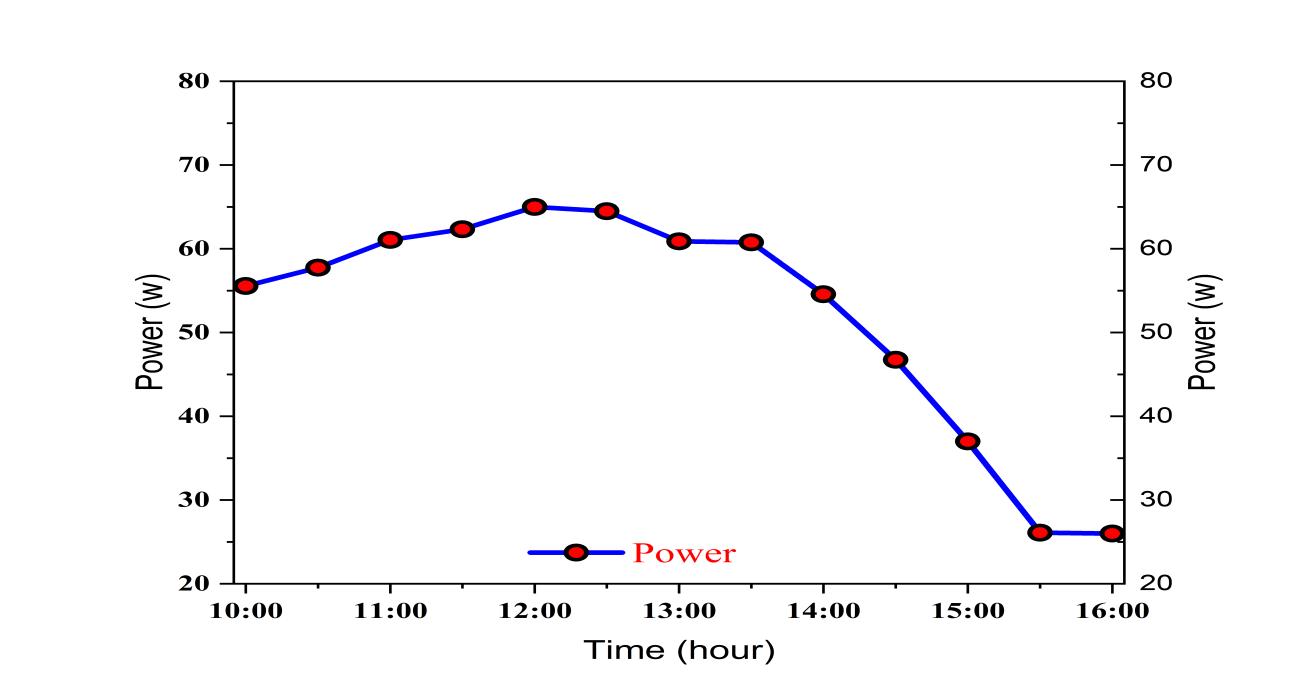
Overall, the data underscores the dynamic nature of temperature regulation within the cabin and water systems, illustrating the impact of time on temperature variations and offering insights into potential patterns that could inform further investigations or adjustments in temperature control strategies. By using the output power to input power ratio, theefficiencyofthesolarhotcasewasestimated,andtheresultsareshownintheTable6.
Equations2and3providetheformulastodeterminetheinputpowerandoutputpowerofasolarhotcase,respectively. Thetemperatureofthecabinwasmeasuredoveraperiodof60minutesatthebeginning,whenitincreasedquitequickly. Theabovecalculationscanbeusedtodeterminetheefficiencyofasolarhotcase.
…….(2)
………(3)
Theexperimentswereconducted with32-gaugeNi-Crheatingelementsinglewireinordertoproduceheatvia radiation butduetohightemperatureriseatjunctionpointwherewireand photovoltaiccablemeetitgetsmelt.wiregaugeistoo small for the current passing through it, it will have higher electrical resistance. Higher resistance means more heat is generated,leadingto overheating and potential melting ofthewire butthemaximumtemperature of 450 Cwhichisnot desirabletokeepfoodoutoftemperaturedangerzonesotryfortwo-wirecombination.
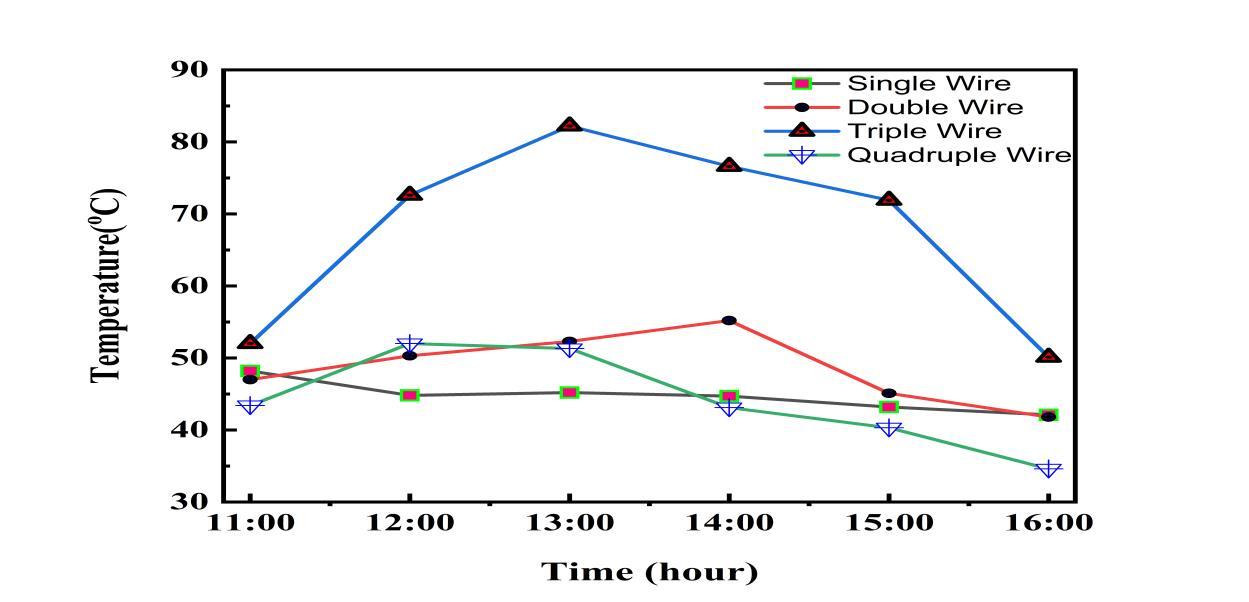
In two wire combination, wrapping the 32-gauge Ni-Cr heating wire in such a way that it generates maximum energy output through radiation. Again, same issue occurs melting at junction point. But in this experiment the maximum temperatureofcabinachievedis550Cwhichisagainlessthanthesafetemperaturezone(morethan600C).
After that three-wire combination used for further experiment which was quiet promising to our desirable temperature. In`thisarrangementthreecontinuouswiresusedwithoutwrappingitinordertoreducethebendinglosses.
Havingthisarrangement,achieved temperatureofthecabinis820C.Inordertoachievemoreheat,combinationoffour wire were used together but the difference was very low so it is clear that three wire combination is optimum for this prototypearrangementasshowninfollowinggraph.
Theexperimentalstudyofthesolarhotcasehasdemonstratedpromisingresultsinreheatingandmaintainingfoodwithin therecommendedtemperaturerange,therebyreducingfoodborneillnesses.Thissustainableappliance,constructedfrom plywood,aluminiumsheets,andNi-Crresistantheatingalloy,offersaneco-friendlyalternativeforhomesandbusinesses inimpoverishednations.Itpromotessustainablehabitsandenvironmentalpreservationbyutilizingsolarthermalenergy, reducingrelianceoncostlycampfuelsandtraditionalenergysources.ThestudyrecommendsusingtheNi-Crheatingalloy inathree-wireconfigurationtoachievethetargettemperatureof82°C.Asadevelopmentprototypeexperiment,thesolar hotboxdesignhasampleroomforrefinementandimprovement.Overall,thesolarhotcaseholdssignificantpotentialasa viablesolutionforfoodwarmingindevelopingcountries.
I wish to express my sincere thanks to my thesis supervisor Dr. S.K.S. Yadav, Associate Professor, Department of Mechanical Engineering, Harcourt Butler Technical University, Kanpur for kindly providing me an opportunity to work underhissupervisionandguidance
I would like to express my sincere gratitude to Dr. Anand Kumar, Professor and Head of Mechanical Engineering Department, Harcourt Butler Technical University Kanpur for their encouragement and providing facilities in the department.
[1]. Worldhealthstatistics2023:monitoringhealthfortheSDGs,sustainabledevelopmentgoals(who.int)
[2]. New World Bank report says food-borne illnesses cost USD110 billion per year in low- and middle-income countries(ilri.org)
[3]. Pradhan, P., Costa, L., Rybski, D., Lucht, W., & Kropp, J. P. (2017). A systematic study of sustainable development goal(SDG)interactions.Earth'sFuture,5(11),1169-1179.
[4]. Coorey,R.,Ng,D.S.H.,Jayamanne,V.S.,Buys,E.M.,Munyard,S.,Mousley,C.J.,...&Dykes,G.A.(2018).Theimpact of cooling rate on the safety of food products as affected by food containers. Comprehensive Reviews in Food ScienceandFoodSafety,17(4),827-840.
[5]. foodsafety.asn.auTemperatureDangerZone-foodsafety.asn.au
[6]. FoodSafetyFactSheets–InstituteofChildNutrition(theicn.org)
[7]. Verma, V., Shringi, K., Sharma, S., Sengar, N., & Giri, N. C. (2023). Experimental thermal performance studies on solarhotboxcookerwithdifferentabsorbercoatingmaterials.MaterialsToday:Proceedings.
[8]. Winston,D.P.,Pounraj,P.,Manokar,A.M.,Sathyamurthy,R.,&Kabeel,A.E.(2018).Experimentalinvestigationon hybridPV/Tactivesolarstillwitheffectiveheatingandcovercoolingmethod.Desalination,435,140-151.
[9]. Kabeel, A. E., Arunkumar, T., Denkenberger, D. C., & Sathyamurthy, R. (2017). Performance enhancement of solar stillthroughefficientheatexchangemechanism–areview.AppliedThermalEngineering,114,815-836.

[10]. Dubey,S.,Sarvaiya,J.N.,&Seshadri,B.(2013).Temperaturedependentphotovoltaic(PV)efficiencyanditseffect onPVproductionintheworld–areview.Energyprocedia,33,311-321.
[11]. Foroudastan,S.D.,&Dees,O.(2006).SolarPowerandSustainabilityinDevelopingCountries.
 Department of Mechanical Engineering, HBTU,Kanpur
M.Tech(CAD),
Dr S.K.S Yadav AssociateProfessor,DepartmentofMechanicalEngineering, HBTU,Kanpur