Smart Traffic Congestion Control System: Leveraging Machine Learning for Urban Traffic Optimization
P. Venkata Srinivasa Reddy1 , A. Bhavani2 , Ch. Saranya31 Student, Dept of AI & DS, VVIT, Andhra Pradesh, India
2Student, Dept of IT, VVIT, Andhra Pradesh, India

3Student, Dept of IT, VVIT, Andhra Pradesh, India ***
Abstract - Urban traffic congestion poses a significant challenge, leading to extended travel times, heightened pollution, and mounting frustration. To combat this issue, we proposetheintroductionofaSmartTrafficCongestionControl system, which leverages technology to optimize traffic flow. Our objective is to design an intelligent traffic system that dynamically adjusts signal timings using real-time data analysis and predictive modelling. To achieve this, we are integrating advanced machine learning technologies such as Proximal Policy Optimization (PPO), Long Short-Term Memory(LSTM),andYOLOv4,forfacilitatingtimelydecisionmaking for improved traffic patterns and capturing intricate trafficbehaviour.Byharnessingdata-drivendecision-making and intelligent algorithms, the smart congestion control system has the potential to revolutionize traffic control strategies, offering a sustainable and efficient approach to urban mobility. In the context of rapidly growing cities and escalating traffic demands, the implementation of such advanced systems becomes imperative for establishing a seamless and eco-friendly transportation network that benefits both commuters and the environment.
Key Words: Machine Learning, YOLOv4, LSTM, PPO, Traffic Congestion
1. INTRODUCTION
Urban traffic congestion poses a significant challenge to transportation systems worldwide, leading to increased commute times, environmental pollution, and economic losses. In response to this pressing issue, we introduce a cutting-edge Traffic Congestion Control System that harnesses the power of Machine Learning to transform urbantrafficmanagement.
Thissystemcombinesarangeofadvancedtechnologiesto achieve its objectives, with a primary focus on optimizing signaltimingsatintersectionsandinterconnectedroutes.By utilizingreal-timedatafromlivecamerasinstalledattraffic points,itdynamicallyallocatessignaldurationstomitigate congestioneffectively.
A key innovation lies in the application of deep learning techniquesforcongestiondetection.Toimproveefficiency, the system employs preprocessing methods for smaller camera images, reducing the dependency on high-quality
inputsandmanualcalculations.Theheartofthecongestion detectionprocessisaConvolutionalNeuralNetwork(CNN) model,trainedona diversedatasetcomprisingover1000 CCTVmonitoringimages.Inatimeofurbanexpansionand growingtrafficdemands,theintegrationoftheseinnovative systems is pivotal for developing an efficient, eco-friendly transportation network. Such a network not only benefits commutersbyreducingtraveltimesandenhancingsafety butalsocontributestoacleanerenvironmentbyminimizing unnecessaryfuelconsumptionandemissions.
This System explores the architecture, design, and performance of the Traffic Congestion Control System, shedding light on its potential to revolutionize traffic managementinurbanenvironments.Wedemonstratehow thefusionofmachinelearning,real-timedataanalysis,and predictivemodellingcanpavethewayforasmarter,more sustainablefutureinurbantransportation.
2. LITERATURE REVIEW
Trafficcongestioninurbanareasisamultifacetedproblem that has persisted for decades, leading researchers and engineers to explore innovative solutions to alleviate its adverse effects on society, the environment, and the economy. The integration of Machine Learning (ML) and artificialintelligence(AI)techniquesintotrafficmanagement systems has emerged as a promisingavenue to tackle this challenge effectively. This literature review provides an overviewofrelevantstudiesanddevelopmentsinthefieldof ML-basedurbantrafficmanagement.
2.1 Traffic Congestion Challenges:
Traffic congestion is a complex issue influenced by factors suchaspopulationgrowth,urbanization,andtheincreasing number of vehicles on the road. It leads to significant economiclosses,increasedfuelconsumption,andheightened levels of air pollution. Traditional traffic management systems have often fallen short in addressing these challenges.
2.2 Machine Learning for Congestion Detection:
ResearchershaveincreasinglyturnedtoMLalgorithmsfor trafficcongestiondetection.Oneofthekeycontributionsof
MLinthiscontextistheabilitytoprocessvastamountsof real-time data from traffic cameras and sensors. Convolutional Neural Networks (CNNs) have been particularlyeffectiveindetectingandclassifyingcongestion patterns from camera images, as demonstrated in this project.
2.4.1Long Short-Term Memory (LSTM) Networks:
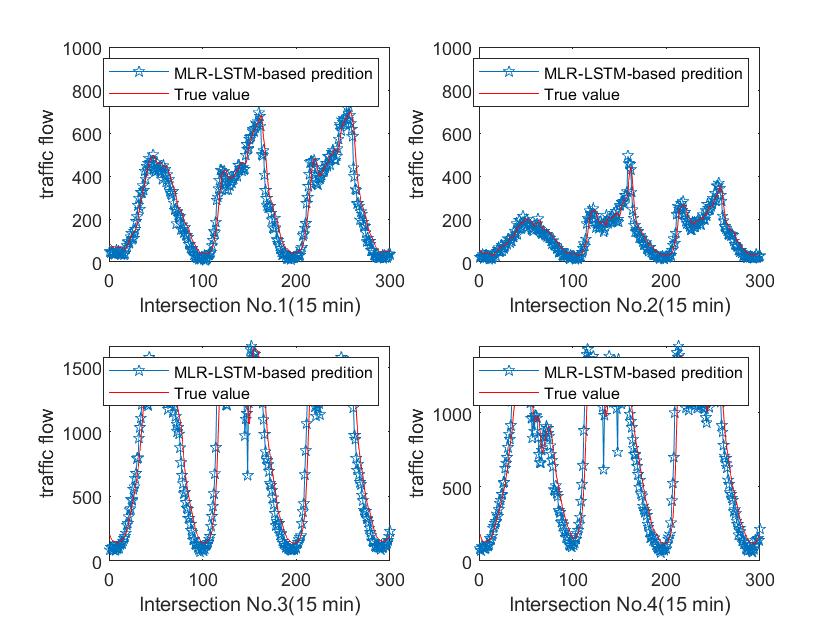
LSTMnetworksareemployedforpredictivemodellingwithin theSmartTrafficSignallingsystem.Theserecurrentneural networksareadeptatcapturingtemporaldependenciesin sequentialdata.Inthecontextoftrafficmanagement,LSTMs help predict traffic patterns and congestion likelihood, enablingthesystemtoadaptsignaltimingsproactively.
Fig.1ProcessofMachineLearning
2.3 Object Detection for Enhanced Safety:
Object detection models like YOLO (You Only Look Once) have found applications in traffic management by rapidly identifying vehicles, pedestrians, and other objects on the road.Thiscapabilityiscrucialforensuringthesafetyofroad usersandenhancingtrafficcontrolsystems'efficiency.


LSTMforTrafficPrediction
2.4 Smart Traffic Signalling:
The transition to smart traffic signalling systems that can adaptinreal-timetochangingtrafficconditionshasbeena recenttrend.ThesesystemsutilizeMLalgorithmstoprocess livedata,predicttrafficbottlenecks,andadjustsignaltimings accordingly.
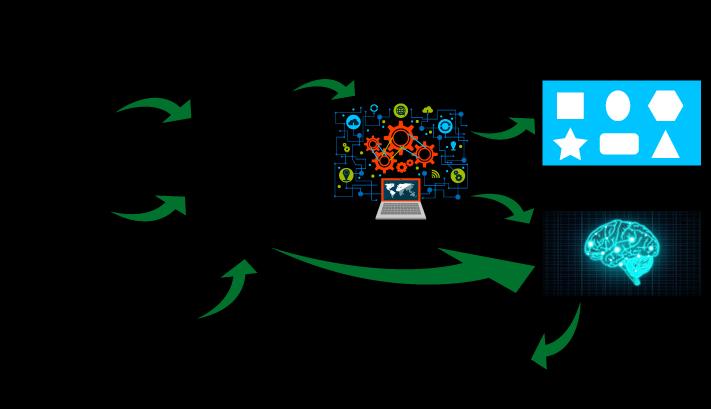
Fig.2YOLOModelforVehicleCount
2.4 Dynamic Signal Timing:
Dynamic signal timing, another pivotal aspect of traffic management, relies heavily on real-time data analysis and prediction. Reinforcement learning techniques, such as ProximalPolicyOptimization(PPO),havebeenemployedto optimizesignaltimingsbasedoncurrenttrafficconditions. LSTM networks are adept at capturing temporal dependenciesintrafficdata,enablingthepredictionoftraffic patternsandcongestionlikelihood.
2.5 Environmental Considerations:
Assustainabilitybecomesaparamountconcern,ML-based traffic management systems offer the potential to reduce emissionsandenergyconsumption.Byoptimizingtrafficflow andreducingidletimes,thesesystemscontributetogreener urbanenvironments.
2.6 Challenges and Future Directions:
Despite significant advancements, challenges such as data privacy,infrastructureintegration,andalgorithmrobustness remain. Future research should focus on the seamless integration of ML-driven traffic management systems into existing urban infrastructure, ensuring scalability and reliability.
3. OVERVIEW OF KEY ALOGORTIHMS
TheTrafficCongestionControlSystemdescribedinthepaper leveragesseveral cutting-edgealgorithms from thefieldof MachineLearningandArtificialIntelligence.Here'saconcise overviewofeachofthesealgorithmsandtheirspecificroles withinthesystem:
3.1 Convolutional Neural Networks (CNNs):
Purpose: CNNs are utilized for traffic congestion detectionfromlivecameraimages.
Overview: CNNsareaclassofdeeplearningmodels designedforimageprocessingtasks.Theyconsistof multiplelayersthatautomaticallylearnandextract hierarchicalfeaturesfromimages.Inthecontextof the paper, CNNs analyse real-time camera feeds, identifying patterns associated with traffic congestion,accidents,ordisruptions.
Significance: CNNsplayacriticalroleinproviding real-time insights into traffic conditions, allowing the system to respond promptly to congestion or incidents.
3.2 You Only Look Once (YOLOv4):
Purpose: YOLOv4 serves as the object detection algorithm for identifying objects within traffic camerafeeds.
Overview: YOLO (You Only Look Once) is an efficientreal-timeobjectdetectionsystem.YOLOv4, aspecificversion,excelsatrapidlyidentifyingand classifyingobjectsinimagesorvideoframes.Inthe paper, YOLOv4 is used to recognize vehicles, pedestrians, and other objects on the road.
Significance: YOLOv4ensuressafetybypromptly detecting objects that may affect traffic and informingthesystem'sdecision-makingprocess
3.3 Reinforcement Learning (RL) with Proximal Policy Optimization (PPO):
Purpose: RL techniques, particularly Proximal Policy Optimization (PPO), are employed for dynamicsignaltiming.
Overview: ReinforcementLearningisaparadigmof machine learning where agents learn to make decisions by interacting with an environment and receiving rewards or penalties based on their actions.PPOisaspecificalgorithmusedtooptimize trafficsignaltimingsinreal-time,aimingtoreduce congestionandimprovetrafficflow.
Significance: RL with PPO allows the system to adapttrafficsignaltimingsdynamically,responding to changing traffic conditions and minimizing congestioneffectively.
3.4 Long Short-Term Memory (LSTM) Networks:
Purpose: LSTM networks are employed for predictive modelling within the Smart Traffic Signallingsystem.
Overview: LSTMs are a type of recurrent neural network (RNN) designed to capture temporal dependencies in sequential data. In the paper, LSTMs are used to predict traffic patterns and congestionlikelihoodbasedonhistorical dataand currentconditions.
Significance: LSTMsenablethesystemtoanticipate trafficfluctuations,enablingproactiveadjustments to signal timings, thus contributing to smoother trafficflow.
TheseadvancedalgorithmscollectivelyempowertheTraffic CongestionControlSystemtoprocessreal-timedata,detect congestion, optimize signal timings, ensure safety, and predict traffic patterns. Their integration results in a comprehensiveandadaptabletrafficmanagementsolution thatcansignificantlyimproveurbantransportationefficiency andreducecongestion-relatedissues.
5. STEP BY STEP PROCESS
Certainly,let'sbreakdownthestep-by-stepprocessofthe TrafficCongestionControlSystem,highlightingtheroleof eachkeyalgorithm:
Step 1: Data Collection
Thesystembeginsbycollectingreal-timedatafrom traffic cameras and sensors placed at strategic locationsinurbanareas.
Step 2: Image Analysis with Convolutional Neural Networks (CNNs)
2.1: Livecamerafeedsarecontinuouslyprocessed byConvolutionalNeuralNetworks(CNNs).
2.2: CNNsidentifyandclassifypatternswithinthe images, focusing on traffic conditions such as congestion,accidents,ordisruptions.
Step 3: Dynamic Signal Timing with Reinforcement Learning (RL) and Proximal Policy Optimization (PPO)
3.1: ThesystememploysReinforcementLearning (RL) techniques, specifically Proximal Policy Optimization(PPO),fordynamicsignaltiming.
3.2: RLagentsusereal-timedatafromCNNanalysis as well as historical traffic patterns to make decisions.
3.3: PPO optimizes traffic signal timings in realtime, adjusting signal durations at intersections basedoncurrenttrafficconditions.
Step 4: Predictive Modelling with Long Short-Term Memory (LSTM) Networks
4.1: ThesystemutilizesLongShort-TermMemory (LSTM)networksforpredictivemodelling.
4.2: LSTMs analyse historical traffic data, identifyingpatternsanddependencies.
4.3: Based on the LSTM analysis, the system predictstrafficpatternsandcongestionlikelihood inthenearfuture.
Step 5: Object Detection with You Only Look Once (YOLOv4)
5.1: Livecamerafeedsarefurtherprocessedusing theYouOnlyLookOnce(YOLOv4)objectdetection algorithm.
5.2: YOLOv4rapidlyidentifiesandclassifiesobjects within the camera frames, including vehicles, pedestrians,andotherroadelements.
Step 6: Decision-Making and Traffic Control
6.1: The system's decision-making module integrates information from CNN, RL/PPO, LSTM, andYOLOv4.
6.2: It dynamically adjusts traffic signal timings basedoncongestiondetectedbyCNN,predictions from LSTM, and real-time object detection by YOLOv4.
6.3: Additionally, the system takes into account safetyconsiderationsbyrespondingtothepresence of pedestrians and other objects on the road identifiedbyYOLOv4.
Step 7: Continuous Monitoring and Adaptation
Thesystemcontinuouslymonitorstrafficconditions throughlivecamerafeedsandsensordata.
Itadaptssignaltimingsandtrafficcontrolstrategies in real-time to optimize traffic flow, minimize congestion,andensuresafety.
This step-by-step process illustrates how the Traffic CongestionControlSystemseamlesslyintegratesadvanced algorithms such as CNNs, RL/PPO, LSTM, and YOLOv4 to provide a comprehensive and adaptive solution for urban traffic management. By processing real-time data, making predictions, and adjusting traffic signals dynamically, the system aims to revolutionize traffic control, improve efficiency,andenhancesafetyinurbanenvironments.
5. CONCLUSIONS
The Smart Traffic Congestion Control System, as presentedinthispaper,signifiesagroundbreakingapproach tocombatingurbantrafficcongestion.ByharnessingcuttingedgeMachineLearningandArtificialIntelligencetechniques, it offers a transformative solution with the potential to revolutionizeurbantrafficmanagement.
This integrated system, driven by Convolutional Neural Networks, Reinforcement Learning, LSTM Networks, and YOLOv4,optimizestrafficflow,swiftlyidentifiescongestion anddisruptions,andenhancessafetybyrecognizingobjects ontheroad.Beyondefficiencyandsafety,itcontributesto environmentalsustainabilitybycurbingemissionsandfuel consumption.
Looking ahead, the system's future scope is promising. It includes the integration of V2X communication, advanced predictive analytics, edge computing, and adapting to autonomousvehicles.Collaborationforreal-timetrafficdata sharing, environmental impact analysis, and user-friendly interfacesarealsoonthehorizon.Ensuringscalabilityand adoptionacrossdiverseurbansettingsremainsapriority.
In essence, the Smart Traffic Congestion Control System offers a vision of urban mobility that is safer, more sustainable,andmoreefficientforall,anditspotentialfor evolutionandbroaderimpactisvast.
REFERENCES
[1] Pooja Mahto, Priyamm Garg, Pranav Seth,“REFINING YOLOV4 FOR VEHICLE DETECTION,” International Journal of Advanced Research in Engineering and
Technology(IJARET)Volume11,Issue5,pp.409-419, 2020..
[2] Dr.A. Ravi1, R.Nandhini, K.Bhuvaneshwari , J. Divya, K.Janani “Traffic Management System using Machine LearningAlgorithm”, April2021|IJIRT|Volume7Issue 11
[3] H. Shao and Boon-Hee Soong, "Traffic flow prediction with Long Short-Term Memory Networks (LSTMS)", 2016 IEEE Region 10 Conference (TENCON)Proceedings of the International Conference.
[4] Y.Lv,Y.Duan,W.Kang,Z.LiandFei-YueWang,"Traffic flow prediction with Big Data: A Deep Learning approach", IEEE Transactions On Intelligent Transportation Systems,vol.16,no.2,April2015
[5] A.HaydariandY.Yilmaz,"Deepreinforcementlearning forintelligenttransportationsystems:Asurvey", IEEE Trans. Intell. Transp. Syst.,vol.23,no.1,pp.11-32,Jan. 2022.
[6] "Automatedtrafficmonitoringsystemusingcomputer vision", 2016InternationalConferenceonICTinBusiness Industry Government (ICTBIG).
[7] Github:“https://github.com/maxbrenner-ai/MultiAgent-Distributed-PPO-Traffc-light-control”