Development of Effective Tomato Package for Post-Harvest Preservation
 Onwuzuruigbo, Johnson U.1 , Okonkwo Ugochukwu C.2
Abstract - This study evaluated the effects of chemical content on packaged materials on fresh tomato. The study was carried out by using kraft paperboardto designa package with different numbers of holes, back cover of polyethylene and some without holes. The packages were designed to contain about twenty five pieces of average sized tomatoes on one row arrangement. The packages consist of six packages and a control without packaging named M, N, O, P, Q, R and S respectively. These packages were distinguished with some having varied number of holes, covered with polyethylene and a control without hole nor covering. Tomatoes (Solanum Lycopersicum) were packaged in these packages for sixteen days to ascertain their physiologicalweight loss, percentage of decay, chemical interaction with the packaging materials and overall shelf life for each package, reading was taken at intervals of four days. The data obtained were analyzed using analysis of variance and means of different parameters were compared by least significant difference (LSD). The result revealed that packaging had a significant effect on physiological weight loss, percentage of decay, chemical interaction of the packaging material and overall shelf life. The least physiological weight loss of 0.00% was recorded on package N for the fourth day and the highest physiological weight loss of 22.22% on package S on the sixteenth day. For the first four days, none of the tomatoes decayed in all the packages but on the sixteenth day, package N had the least percentage decay of 8.00% with package P having the highest percentage of decay of 53.85%. The interactionofthe chemical content of the tomato and the packaging material to the rate of decay showed that there is significant difference between the interactions (P 0.05). The following elements –Aluminum, Arsenic, Lead, Cadmium, Silicon and Tin – present in the packaging material proved to be poisonous when tomatoes decayed in the packaging material. The shelf life of 20 days was observed in package N while other packages had 15 days. It can be concluded that packaging of fresh tomato with kraft paperboard of eight holes of 35mm each resulted in longer shelf life and least rate of decay.
Key Words: Fresh,tomato,Packaging,Physiological,weight, shelf-life
1. INTRODUCTION
The shelf life of a fresh tomato is the duration from harvesting a matured tomato to a day before spoiling. Temperatureisaveryimportantfactorthataffectstheshelf
life of a tomato. At a temperature of 50C, tomato respire moderately between 10 – 20 MgC02/Kg – hr while at a temperatureof70Ctomatocanhaveashelflifeofuptothree weeks(21days)(PackageIndia,1998).InthestudyofDario etal,(2018)onthechemistrybehindtomatoquality,they confirmedthattomatocontainsvolatileandnon –volatile chemical substances. Some of them include: ethers, aldehydes, ketones, fatty acid derivatives, amino acid derivatives, terpenoids, sugars, umami compounds, carotenoidsandpolyphenols.Thesechemicalsintomatocan react with other chemicals used to extend the shelf life of tomato or chemical contents of tomato packages. In the study of Gherezi et al (2012) and Anyasi et al (2016) to extend the shelf life of tomato with chemicals, they succeededwithouttestingtheeffectsofthosechemicalsthey used. Some of the chemicals they used are boric acid (H3BO3),calciumchloride(CaCl2),andpotassiumtetraOxomanganese(KMnO4).
InNigeria,tomatoiscultivatedinmanypartsofthecountry. ItthriveswellinSavannaagro-channelzonewithlesspest anddiseasesoftomato.Majorproducingareasliesbetween latitude7.50Nand130Nandwithinatemperaturerangeof 250C–340C.ThestatesinthiscategoriesareJigawa,Kastina, Zamfra,Sokoto,Kaduna,Bauchi,Gombo,Taraba,andKanoin the northern part of the country. It can also be grown in southernstateslikeDelta,KwaraandOyo(Agronews,2016). Tomato is a vegetable with high content of water which makesittohaveaveryshortshelflifewhenexposedtohigh temperature. In its season, it is produced in abundance whichneedsto bekeptfreshforconsumption.To dothis, packagingoffreshtomatoisoneofthebestoption.
Accordingto(Raheem,2012),packagingmaterialcouldbe either rigid or flexible. Rigid packaging materials are not easilymovedoutoftheirposition.Someexamplesinclude glass,plastics,jars,canspottery,woodenboxes,drums,tins andtubes.Flexiblepackagingisamajorgroupofmaterials thatincludeplasticfilms,paperfoil,vegetablefibres,cloths, sacks and sealed or unsealed bags. The development of packaging shows a growth from crude methods to sophisticated,advancedandappealingmethodswithfuture prospectsofbetterways.Astudyofthehistoryshowsthat earlier packages started from leaves, hollowed out tree limbs, grounds, skins, baskets and earth ware. The developmentofpackagesmovedaccordingtothefollowing trends: ceramics, glass, paper (Oldest flexible packaging), iron,plastics,cellophaneandrecentlymodifiedatmosphere
packaging (MAP), active packaging, smart or intelligent packaging,biodegradablepackagingandapplicationofNano composite (Raheem, 2012; Scater, 2010). The use of any package to extend the shelf life of tomato can be harmful whenthepackagecontainsharmfulchemicals.
1.1 Related Literature
Shelflifeoffruitsisamajordeterminantfortheirusefulness withtimepost-harvest.Thesaidshelflifeisthepost-harvest periodwithinwhichsuchfruitsaregoodforconsumption without any adverse effects to the health of consumers as wellasitsusefulnesstoagrobasedindustries.Itremainsone of the cardinal means of determining the viability of the usefulness of any fruit post-harvest. One of the means of being in control of shelf life is by adopting a reliable packaging. The packaging of fruits have been developing progressively as the years go by. In recent discoveries, intelligentpackagingandmodifiedatmosphericpackaging (MAP)havebeenofgreatbreakthroughinextendingshelf life of fruits. The shelf life of fruits and vegetables can be extended with greater gain to the economy and improved health for Nigerians. According to executive secretary of agricultural fresh produce and exporter association of Nigeria (AFPGEAN) Akin Sawyer says between 55-72 percentoffreshproducegrowninthecountryperishbefore theycanbeconsumed.HeaddedthatNigeriahadaboutfive timesmorearablelandthanKenyabutKenyaearnedabouta billiondollarsinfreshproduceexportbutNigeriastruggled toearntenmilliondollarsannually.
Thebasicprinciplesoftomatoes(Solanum Lycopersicum) biology and chemistry are of great importance in determiningasuitablepackagethatcanextenditsshelflife. Thechemistryoftomatoesaccordingto(Dairioetal,2018) showsthatithassomebasicchemicalcomponentssuchas:
Flavour
Fatty acidderivatives
Aminoacidderivatives
Terpenoids
Sugers
Organicacids
Umamicompounds
Steroidalglycoalkaloids and
Polyphenoils.
Similarly, in the biology of tomatoes post-harvest, it is a livingtissue.Ithashighrespirationrateandothermetabolic processes before maturation and ripening throughout its marketing cycle. The respiration of fresh fruits and
vegetables together with the prevailing temperature are common and most factors that affect shelf life. Higher respiration releases higher heat and energy. Respiration itselfisacatabolicprocessofusingatmosphericoxygenof carbohydrates,fats,proteinsandorganicacidsintheplant tissuetoformintermediatecompoundsandeventuallyCO2, waterandmetabolicenergy(Alejandraetal,2009).Inthe process of short supply of oxygen, production of small alcohol will occur giving rise to off flavor, off odour and finally decay and spoilage (Packaging for fresh fruits and vegetables,retrievedJanuary,2019).AccordingtoShukadev and Tridih,(2009), some respiratory quotients of some substancesinfreshfruitsareasfollows:
Glucose
Malic
=1.33
StearicAcid RQ=0.7
Paperisaverygoodpackagingmaterialfortomatobutinthe manufactureofpaperandboard,somechemicalsareadded to improve the needed properties. The basic element –cellulose fibre – used in paper production are mixed with enough water and little chemical additives. Most of the additivesarelostwhenthe waterarebeingremoved.The truthremainsthatsomeofthesechemicalsthatareretained inthepaperandboardaftermanufacturecanmigrateinto foodifitisusedinpackaging.Thesechemicalsifmigrated into food can endanger human health, change food compositionaswellasbringaboutquickdeteriorationofthe food.
According to (Summerfield and Cooper, 2000), chemical migration is a diffusion processes that is subject to both kineticandthermodynamiccontrol.Thediffusionprocessis influencedby:
1.1.1 Temperature: Migration increases with increase temperatureofcontact.
1.1.2 Time: Migration is higher for contact in long duration.
1.1.3. Thickness of material: Thehigherthethickness,the lesserthemigration.
1.1.4 Nature of material and amount of migrant in the material: Migration decreases with substance of highermolecularweightinthepackagingmaterial.
1.1.5 Type of food: Thesoftnessorhardnessofthesurface offoodaffectsthemigrationofchemicaladditives.
Thechemicaladditivesareinthefollowingcategories:
i. Functionaladditives.
ii. Processchemicalsorprocessingaids.
iii. Intermediategroupofchemicals. These chemicals can be soluble or readily dispersible in waterwhichgreatlyaffectstomatowhenpaperthatcontains harmfulchemicalsareusedtopackageit.
2. Materials and Methods
2.1 Description of study area:
The study was conducted at the Chemical Engineering Laboratory of Federal Polytechnic Nekede, Imo State, Nigeria. Nekede is located 5.41870N, 7.07530E in Owerri Westlocalgovernmentareaofthestate.Itiseight(8)Km from Owerri capital city of Imo state. The study was conducted in April, 2022. The average temperature and humidity of Nekede at that period is 300C and 73.5% respectivelyduringtheexperimentationtime.
2.2 Experimental Materials and Design
ThetomatoeswereboughtfromReliefmarketinOwerrisix days after it was harvested and transported from Jos in PlateaustateinNigeriatoOwerriinImostate.Thetomato fruitsselectedwerethosewithoutdefect.Thedetermination of volumes of some of the tomatoes helped in designing a packagewithKraftpaperboardthatcancontainanaverage oftwentyfive(25)tomatoes.SixdifferentpackagesofKraft paperboard were used and the seventh one as control without package. These packages are: Package with four holesof35mmeach,Packagewitheightholesof35mmeach, Package with four holes of 35mm and back cover of polyethylene,packagewith eightholesof35mmand back cover of polyethylene, Package without holes, Package withoutholeswithbackcoverofpolyethyleneandcontrol withoutpackage.ThesepackageswerenamedM,N,O,P,Q, R,andS.Thenumberoftomatoesinthesepackagesranges between15and28whichwerepackagedwithouttheuseof any chemical additive in the packaging. The package was designedtocontainonelayerofthetomatoeswithoutany oneontopofeachother.Theaveragetimeforcollectingdata duringtheexperimentationwasbetween8.30amto9.30am. The temperature, humidity, weight and number of decay weredailydeterminedfromeachpackage.
2.3 Sample preparation
Thetomatoeswithoutdecaywereselectedandwashedwith cleanwater.Itwaskepttodrybeforepackaging.
2.4 Methods of analysis
The temperature, humidity, physiological weight loss, chemical content of tomato and package were collected duringtheexperimentalperiodonthesixpackagesandthe control.Thecollecteddatawereusedtodeterminetheshelf lifeof the tomatoes in each package. The data were taken fromthepackagesduringthepackagingperiodbeforethe shelflifewasexceededasfollows:
2.5 Chemical effect
Thechemicalcontentsoftomatoes,Kraftpaperanddecayed tomatoesontheKraftpaperweredeterminedandanalyzed. According to Ali et. al (2020), all mineral contents are groupedintomajorelements,traceelementsandultra-trace elements.Intheirfindings,majorelementsareneededdaily above50milligrams,traceelementsareneededbellow50 milligramswhileultra–traceelementsareneededabout1 microgramsdaily.
2.6 Percentage of physiological weight loss
The physiological weight loss is one of the tool used to determinetheshelflifeoffruitsliketomato.Theweightloss wasdeterminedbyusingthemethoddescribedbyGhareezi etal(2012),Zewdie(2017)andAshenafi(2018).
PPWL (%) = 100 (4)
Where
PPWL(%)=Percentagephysiologicalweightloss.
Wo=Weightoftomatoesatday0.
Wt = Weight of tomatoes after storage for a determined numberofdays.

2.7 Shelf life
Theshelflifeoftomatoisaperiodoftimewhichstartsfrom harvestandextendstothebeginning of thedecayoftomato.
2.8 Percentage of decay
Percentage of decayed tomatoes is the ratio of decayed tomatoes at a particular day to the total initial number of tomatoes.AccordingtoMamaetal(2026)
2.9 Statistical Analysis
Thedataobtainedwasstatisticallyanalyzedforanalysisof mean,standarddeviationandvariance.Themeanseparation wasbasedonleastsignificantdifference(LSD)at5%levelof significant.
2.10 Percentage of physiological weight loss
The type of package, number of holes and cover of polyethyleneonpackagesaffectedthephysiologicalweight loss of tomatoes. In the first four days of the experiment, packagewithfourholes,packagewithfourholeswithback cover of polyethylene, package without holes, package withoutholeswithbackcoverofpolyethyleneandcontrol without packaging had 3.33%, 3.33%, 3.33% and 3.23% respectivelyastheirphysiologicalweightloss.Furthermore, packagewith eightholeshadno physiological weightloss while package with eight holes and back cover of polyethylenehad6.67%.Theaboveresultissimilartothe workofAbraet.al(2016)wherehigherphysiologicalweight loss was noticed on packages at ambient temperatures as comparedwithpackagesinrefrigerator.FromTable1,the physiologicalweightlosscontinuestovarywithdaysinall thepackages.Finallyonthesixteenthday,packagewithfour holes, package with eight holes and back cover of polyethylene and package without holes had 13.33% physiologicalweightlosswiththecontrolwithoutpackaging havingthehighestphysiologicalweightlossof22.22%and package without holes and back cover of polyethylene having the least physiological weight loss of 6.45%. The result shows that the kraft paperboard covered with polyethylenemaintainedacontrolledheatandairasthere werenoholesonit.Ontheotherhand,thecontrolwithout packagewasexposedtotheenvironmentalheatandairflow withoutcontrol.
2.11 Percentage of decay
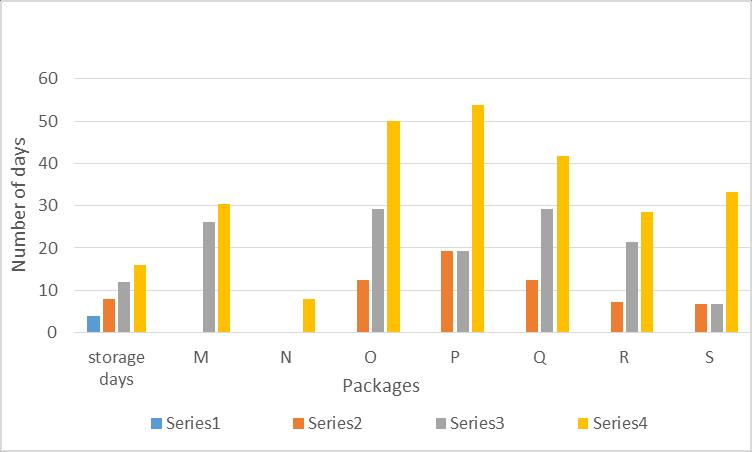
Table2andFig.2showsthatdecayoftomatoesstartedin some of the packages on day eight of the packaging. This couldbeduetothehumidityoftheroomhavingthehighest humidityof91.00%withintheperiodofexperimentation. The different packages showed different percentages of decay. Package with eight holes started to decay on the sixteenthdaywiththeleastpercentagedecayof8.00%.On thesixteenthday,packagewitheightholesandbackcoverof polyethylenehadthehighestpercentagedecayof53.85%. The decay percentages of other packages are as follows: Packagewithfourholes(30.44%),Packagewitheightholes (50.00%),Packagewithoutholes(41.67%),Packagewithout holesandbackcoverofpolyethylene(28.57%)andcontrol withoutpackaging(33.33%).Theresultshowsthatpackages that had the highest temperature also showed high percentageofdecay.Thepresenceofhightemperaturealso leadstotheonsetofirreversibleriseinrespirationandthe production of ethylene (Shukadev and Tridib, 2009). The highmoisturecontentgeneratedbyhightemperatureleads totomatodecay(Ghereziet.al,2012).
AccordingtoZewdie(2017),decayoftomatoesarenoticed asbruises.Inhisworktomatoespackagedinanenclosure hadhighernumberofbruisedtomatoesthanthosepackaged inopencontainers.Thisresultsummarilyvalidatesthathigh temperatureofpackagescaneasilyleadtohighrateofdecay oftomatoes.
2.12 Shelf life
The shelf life of tomatoes is the day preceding excessive weight loss and beginning of decay. From collected data,
excessiveweightlosswasnoticedonthetenth(10th)dayand theshelflifeoftomatoespackagedinallthepackageswere on the ninth (9th) day but for N package (Package with 8 holes)itwasonthefifteenth(15th)day.Thetomatoesused inthepackageweretransportedfromJostoOwerriaftersix daysfromthedayofharvest.Invariably,sixdayswasadded totherealizedshelflifeinOwerri.
Table 3: Shelflifeoftomatoesindifferentpackages
2.13 Effect of chemical
Thefreshtomatoismadeupofsomechemicalelementas well as the kraft paperboard used for packaging. The interaction of chemical content of the tomatoes and the packagingmaterialtotherateofdecayshowedthatthereis significantdifferencebetweentheinteractions(P 0.05). TheactualizedPvalueis0.0153butthePvaluefortherate ofdecaybasedonthechemicalcontentoftomatois0.1143. This implies that (P 0.05) showing no significant difference.Theresultconfirmedthatthechemicalcontentof tomatoalonedoesnotdeterminetherateofdecay.Theuse ofCaCl2 andaceticacidhadprovedsignificantdifferencein therateofdecayoftomatoinagreementwiththepresent work(Ghereziet.al,2012).
AccordingtoAliet.al(2020),allthemineralelementsare groupedintomajorelements,traceelementsandultra-trace elements.Intheirfindingsmajorelementsareneededdaily above50milligrams,traceelementsareneededbellow50 milligramsdailywhileultra-traceelementsareneededabout 1microgramdaily.
Table4showsthesegroupings,theirquantityinthedecayed tomatoes in the kraft paperboard and effect on human health.
Table 4:Effectofmineralelementondecayedtomatoto humanhealth
Major elements
1 Potassium 7.899ppm (7.899mg)
2 Calcium 3.988ppm (3.988mg)
3 Magnesium 0.022ppm (0.022mg)
Trace elements
1 Iron 0.136ppm (0.136mg)
2 Zinc 0.212ppm (0.212mg)
3 Copper 0.010ppm (0.010mg)
4 Manganese 0.387ppm (0.387mg)
Notharmfultohuman health<50mg
Notharmfultohuman health<50mg
Notharmfultohuman health<50mg
3. Conclusion
Packaging had a significant effect on physiological weight loss,decaypercentage,chemicalinteractionandoverallshelf lifeoffreshtomato.Basedontheresultofthisstudy,itcan be concluded that packaging of fresh tomato with kraft paperboard with eight holes of 35mm each resulted in longershelflifeandleastrateofdecay.
References
Abrar S.,Abera D.,Simegne K. and Ali M. (2016) Effects of storageconditionsandpackagingmaterialsonshelf life of tomato: food science and quality management.
Notharmfultohuman health<50mg
Notharmfultohuman health<50mg
Notharmfultohuman health<50mg
Notharmfultohuman health<50mg
5 Chromium 0.024ppm (0.024mg) Not harmful to humanhealth<50mg
6 Nickel 0.032ppm (0.032mg) Not harmful to humanhealth<50mg
7 Molybdenum 0.228ppm (0.228mg) Not harmful to humanhealth<50mg
Ultra-trace element
1 Aluminum 10.839ppm (10,839µg) Very greatly unhealthy >1µg
2 Arsenic 0.072ppm (72µg) Greatly unhealthy to human >1µg
3 Lead 0.100ppm (100µg) Greatly unhealthy to human>1µg
4 Cadmium 0.047ppm (47µg) Greatly unhealthy to human >1µg
5 Silicon 0.894ppm (894µg) Very greatly unhealthy >1µg
6 Tin 0.045ppm (45µg) Greatly unhealthy to human >1µg
Agronews (2016) Nigeria states and their agricultural produce.www.agronews.com/nigerian-statesAnd-their’s-agricultural-products
Alejandra M.e (2009).The use of packaging techniques to maintainfreshnessinfreshfruitsandvegetables:a review. International journal of food science and technology.
Ali M. Y., Sina A. A I. and Gen S. H. (2020) Nutritional compositionandbioactivecompoundsintomatoes and their impact on human health and disease: A review. Multidisciplinary digital publishing institute.
Anyasi T.A.,Aworh C.O. and Jideani A.I.O (2016) Effect of packaging and chemical treatment on storage life and physiochemical attributes of tomato (Lycopersiconesculentum Mill Cv. Roma): African journalofBiotechnology 15(35):1913-1919.
Ashenafi Haile (2018) Shelf life and quality of tomatoes (Lycopersiconesculentummill)fruitsasaffectedby different packaging materials: African journal of foodscience12(2):21-27.
Dario P.e (2018). The chemistry behind tomato quality. Natural product communications.13 (9): 12251232.
GhereziM.,JoshiN.,andSadeghiamE.(2012)Effectsofpostharvest treatment on stored Cherry Tomatoes: Journal of Nutrition and food sciences 2:8 Doi:10.4172/2155-9600.1000157.
Mama S.,Yemer J. and Woelore (2016) Effect of Hot water treatment on shelf life of tomato (Lycopersionesculentum mill): Journal of natural sciencesresearch6,(17):69-77.
PackagingIndia,February-March(1998).
RaheemD.(2012)ApplicationofPlasticsandpaperasfood packaging materials - an overview. Nutrition and foodscience,177-188.
Report,A.(2019.AprilFriday,19).Donate.Over55percent of Nigeria’s fruits, vegetables perish before consumptionLagos,LagosNigeria:PremiumTimes.
Scater,M.E(2010).Trendsinfruitsandvegetablepackaging – A review. Croatian journal of food technology, Biotechnologyandnutrition,69-86.
Shukadev M. and Tridib K.G. (2009) Modified atmosphere packaging of fruits and vegetables for extending shelflife:Areview.Freshproduce3(1),1-31global sciencebooks.
Summerfield, W. and Cooper, I. (2000) “Investigation of migration from paper and board into food –Development of method for rapid testing”. Food additivesandcontaminates,18(1):77-88.
ZewdieTsegahunMekonmen(2017)Theinfluenceofretail packaging on tomato quality: Journal of nutrition andfoodsciences7:3.