DESIGN AND ANALYSIS OF PISTON USING VARIOUS MATERIALS
Abhilash D1 , Dr Prashanth A S2 , Vinay kumar N3
1, 3 M.Tech. Student, Dr Ambedkar institute of technology
2Assistant professor ,Dept of Mechanical Engineering

Dr Ambedkar Institute of Technology, Bangalore , India
Abstract -Anelementofreciprocatingenginesisapiston. Itsfunctionistouseaconnectingrodtotransferforcefrom theexpandinggasinthecylindertothecrankshaft.Itisone ofthemostintricatepartsofacar.Thisarticleusesthefinite elementtechnique(FEM)toanalysethestructuralintegrity ofthreedistinctpistonmaterials.Al-2618,AL-4032,andAL7178arethethreedistinctmaterials.
SOLIDWORKSsoftwareisusedformodellingdifferentpiston materials, and ANSYS software is used for finite element analysis.UtilisingANSYSWORKBENCH,staticstructuraland steadystatethermalanalysisiscarriedout.UsingFEA,the findingsshowwhattheequivalentstress,totaldeformation, andtotalheatfluxwillbeonvariouspistonmaterials.Stress analysisisusedtochoosetheoptimummaterial.
1.INTRODUCTION
Oneofthemostintricateandsignificantcomponentsofan engine are the pistons. The piston's job is to transmit gas pressurewhilerotatingthecrankshaftviathepistonpin.In addition, piston will work under high temperatures, and high-pressureconditions,withhigh-speedrotationalvelocity values. An internal combustion engine's piston is a reciprocating part that moves within the cylinder and transmitsforcefromthecylinder'sexpandinggasestothe crankshaftthroughaconnectingrod.Thepistoncanendure boththegas'scyclicalpressureandtheforcesofinertiaat work.
There are different parts in the piston some of them are dividedaccordingtotherefunctionssomeofthemarethe topsurfaceofthepistoniscalledascrown,Thedesignofthe crown is based on the requirements of the engine combustion chamber, and the surface of the crown is essentiallyinconvexorconcaveforms..thebottomsurface ofthepistoniscalledasthepistonskirt.
Mainly piston consists of three grooves which are used to implement the rings known as piston rings. The main functionoftheringsistomakeeasyflowofthefuelthrough thecylinder,alsoforthereductionofthewearinthepiston it act as a oil lubricating, and they absorb the pressure developed inside the chamber and protects the piston by wearingprocess
1.1 Literature Review
[1] Design and Analysis of Piston of Internal Combustion EngineonVarious MaterialsUsingCAETool ANSYS wasa workpresentedbyG.SivaPrasad,K.DineshAchari,E.Dileep Kumar Goud, M. Nagaraju, and K. Srikanth. In this article, writersdiscussedseveralmaterials.Alalloy4032,alloysteel AISI4340,andtitaniumTi-6A1-4V.Al-alloymaterialissuited forreal-timeapplications,accordingtothepaper'sauthors, whoalsotransmitthatitreducesfuelconsumption,basedon itsstructuralandthermalbehaviour.
[2]Pagadala Siddiraju and Koppula Venkateswarareddy presentedapapertitled"DesignandAnalysisofthePiston byUsingFiveDifferentMaterials."Inthispaper,theauthors developed the pulsar 220 piston and by comparing the resultsoftheirstructuralandthermalanalyses,theycameto the conclusion that the ALSIC material is superior to the othermaterials.Also,theydemonstratedthesuperiorityof thisalloyoverconventionalalloys.
[3] Yenugupalli In their paper, "Design and Analysis of ModularPistonbyUsingCoupleFieldAnalysis,"AnilKumar andA.SridharReddydiscussedatri-metallicpiston,taking into account its dimensions through reverse engineering. Regularpistons, bimetallic pistons,andtrimetallicpistons werecreatedusingCatia,andtheywereallanalysedusing thesameboundaryconditionsinAnsysLastly,authorsthink Accordingtothefindings,amodularpistonoutperformsa singlepiecepistoninallboundaryconditionsandlowersthe costofmanufacturingapiston..
[4] Vibhandik et al. (2014) used CAE tools to analyse, optimise, and study the deformation of a piston's thermal stresses.Thepistonutilisedintheinvestigationcamefrom TATAMotorsandwasusedinacarwithadieselengine. He orderedthermalevaluationsofboththeconventionaldiesel pistonandtheupgradedpistonmadeofanalloyoftitanium andaluminium.structuralsteelisusedtomakethetypical diesel piston. The main objective of this analysis is to increase the piston's lifespan by reducing the stress concentration at the piston's upper end. After doing the research, he came to the conclusion that titanium can improvepistonqualityandhashigherthermalproperties, butbecauseitisexpensiveforlarge-scaleapplications,itcan onlybeusedinasmallnumberofapplications.
[5] Ch. Venkata Rajam et al. (2013) concentrated on the designanalysisandoptimizationofapistonusingCATIAand ANSYS.Hehasoptimisedwhileconsideringeachparameter. Reducing the mass of the piston was the aim of the optimization procedure. In this analysis, a ceramic crown covering is created. The piston's diameter and length are bothheldconstantduringoptimizationsinceheatflowdoes notchangelength.Becausethicknessaffectsvolumemore than length and diameter do, the piston's volume altered afterbeingsubjectedtotemperatureandpressurestressors. To lighten the piston with less material, the material is removed.

[6] V. V. Mukkawar et al. (2015) describe the stress distributionoftwodifferentAlalloysusingCAEtools.Inthis study, a four-stroke, single-cylinder piston from a Bajaj Pulsar220ccmotorcyclewasused.TheAL-GHY1250piston, he had concluded, exhibits less distortion than a typical piston. With this alloy, mass reduction is possible. If the same working circumstances are maintained, the safety factorcanrisebyupto27%.Whenthetwomaterialswere usedintests,Al-GHY1250surpassedtheconventionalalloy Al-2618,accordingtothestudy.
[7] C. Singh et al. (2014) found that when piston thermal performance and surface roughness of the liner surface grow,sodoesthefunctioncoefficientintheirstudyonpiston failureinI.C.engines.ThestressvaluesobtainedfromFEA arecomparedtothepiston'smaterialproperties,suchasits compositioninzirconiumandaluminiumalloy.
[8]UsingtheCAEtoolANSYSondiversematerials,design andanalysisofinternalcombustionenginepistons.Themain focusesofthisstudy'sanalysisarethepiston'sdesignand analysisBuildthepistonmodelwhileofferingdesigncriteria for modelling, such as PRO-E. Constraints affecting the piston'soperatingstatearethenappliedafterenteringthe piston's model in the analysis application ANSYS in IGES format.Theanalysisoftheresultsisthencompletedforthe variousparameters(temperature,stress,anddeformation). CastironalloyAISI4340,titaniumTi-6A1-4V,andaluminium alloy4032areamongthevariousmaterials.TheAlalloyis suited for I.C.Engine pistons, according to analysis of the variousmaterialpistons.
1.2 Methodology
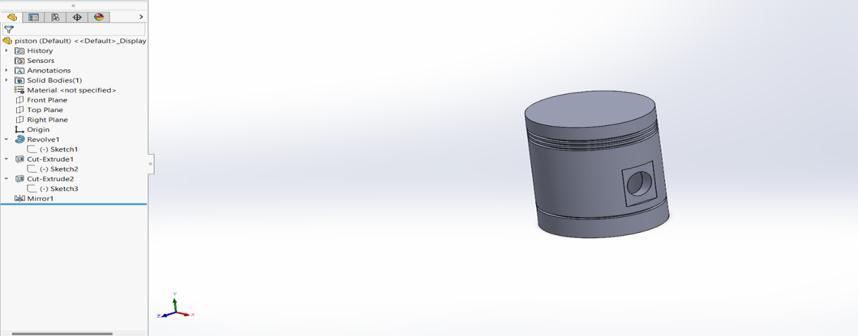
Modellingpistonwiththehelpofsolidworkstool
Gatheringmaterialpropertiesofeachmaterial
Al-2618,al-4032,al-7178materialvalueslikedensity, young is modulus and poison ratio and yield strength andthermalconductivityvalues.
solidworkmodelexportingwith"step"formatsaving
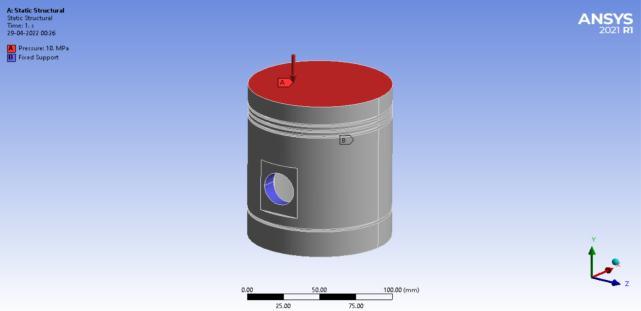
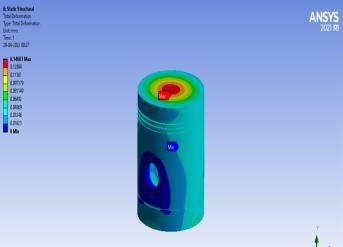
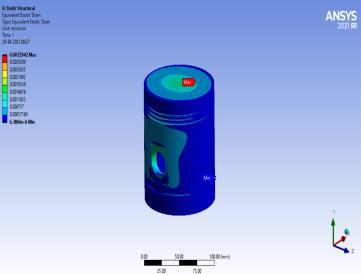
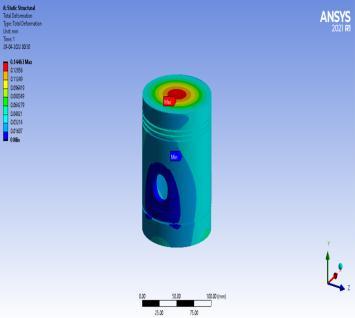
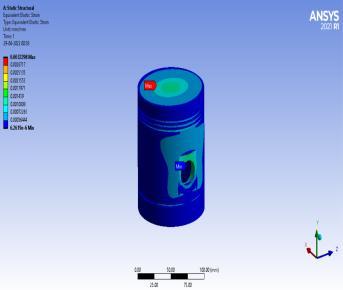
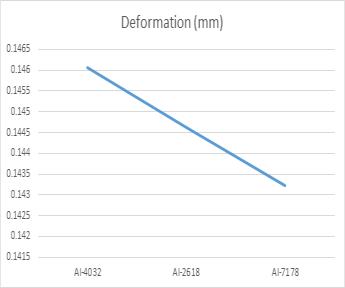
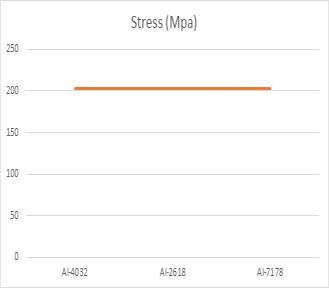
usingstructuralboundaryconditionstocalculateresults likedeformation,stress,strain,andsafetyfactorvalue.
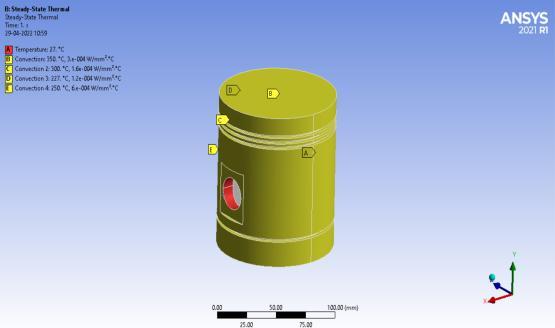
Thermalboundaryconditionswillbeusedtocalculate temperatureandheatfluxvalues.
Talkingaboutthemaximumpressurebearingcapacity ofeachmaterialabovethepiston.
• Lastly,thethesiswasfinalisedwiththenecessarytables andfiguresandthebestpossiblematerial.
1.3. Piston design
Using Solidworks, the 3D piston model was created in accordance with the guidelines in the data handbook and machinedesign.Therealisationofthe2Ddrawingandthe impositionofthegeometricanddimensionsconstraintswere the first steps in the modelling of the solid model. After creatingthesketches,asolidmodeliscreated.
MESHING
Inordertotransferloadfromoneendtotheotherinreal time,eachmaterialiscoupledwithatomsandmolecules;in Ansys,themeshingoptionisavailabletobuildelementsand nodes. Here, tetra elements were used to form the full meshing,andtheelementsizeisconsideredtobe1mm.The elementsandnodeswilltransfertheloadfromonenodeto anothernodethroughelement.



1.6. CONCLUSIONS
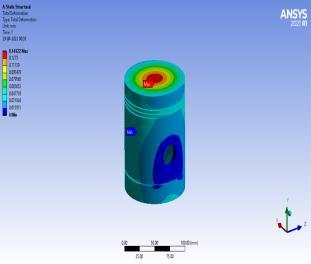
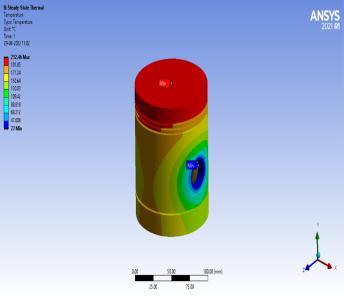
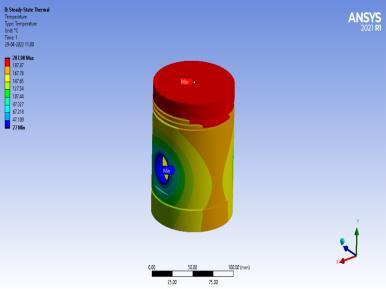
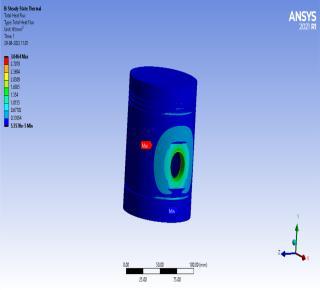
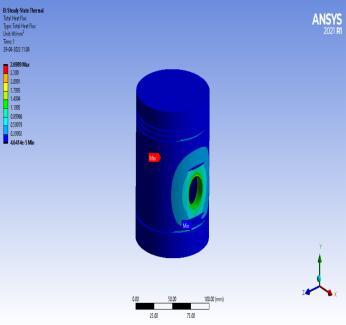
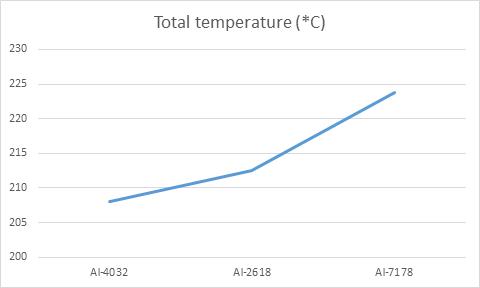
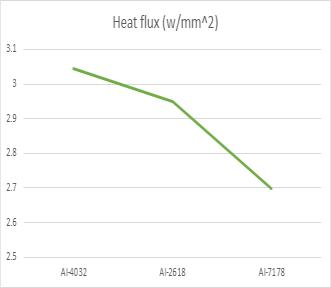
Threematerialswereemployedtoanalysethepistoninthis thesis:Al-2618,Al-4032,and Al-7178.Thepistonmodelwas constructedwiththeaidoftheSolidWorkstool,anditwas analysed with the assistance of Ansys Workbench. Each material in this thesis was examined using three separate boundaryconditions:structural,thermal.thermalanalysis resultsmakeitsimpletodeterminehowamaterialobserves temperatureorhowmuchheatitcantransportperunitarea
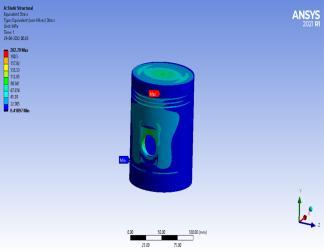
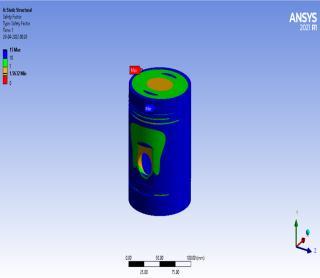
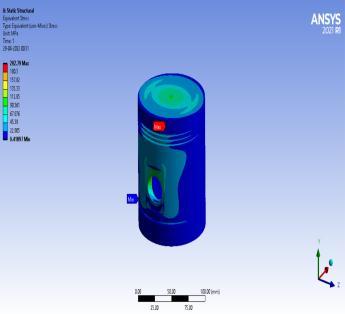
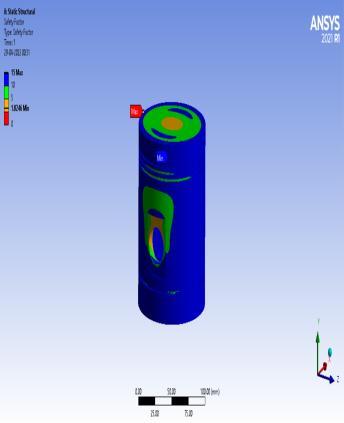
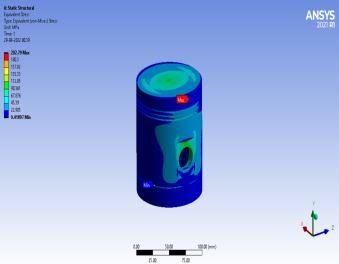
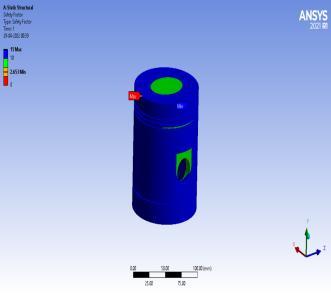
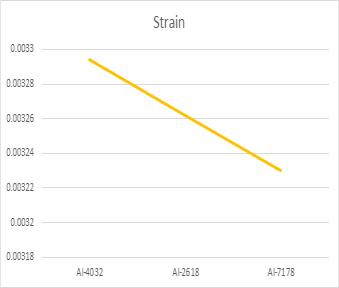
Al-4032materialhasaminimumfactorofsafetyvalueof1.5 atthisload,andaccordingtodesignconstraints,anyobject shouldmaintainaminimumfactorofsafetyvalueabove1.5. This information comes from the results of structural analysis. Al-4032 material can withstand a maximum amountofpressureof10Mpaontopofthepiston.Al-7178 material can endure a maximum pressure of 17.5Mpa, whereasAl-2618materialcantolerateamaximumpressure of12Mpa.
Accordingtothefindingsofthethermalanalysis,theal-4032 materialhasahighheattransferratewhencomparedtothe othertwomaterials.Al-7178materialhastheleastamount of heat transfer rate values, and Al-2618 material has the second-highest values. It indicates that while al7178materialhasgreaterstrengthvaluesandcanwithstand highpressurevalues,itsheattransferrate,valuesareweak.
Finally,amongallal-2618materialisperformingbetterin eachcondition,anditgiveoptimumresults.
REFERENCES
[1] G.Siva Prasad, K.Dinesh Achari, E.Dileep Kumar Goud, M.Nagaraju, K.Srikanth Design and Analysis of Piston of Internal Combustion Engine on Different Materials Using CAEToolANSYS,
[2]Pagadalasiddiraju,koppulavenkateswarareddydesign andanalysisofthepistonbyusingfivedifferentmaterials
[3] Yenugupalli Anil Kumar, A.Sridhar Reddy Design and AnalysisofModularPistonbyUsingCoupleFieldAnalysis,
[4] Vibhandik et al. (2014) used CAE tools to analyse, optimise, and study the deformation of a piston's thermal stresses.
[5] Ch. Venkata Rajam et al. (2013) concentrated on the designanalysisandoptimizationofapistonusingCATIAand ANSYS.