Design for Overcoming Terrain Variation and Wheel Fouling in Track Systems
1 Department of mechanical Engineering, PVG’s College of Engineering and Technology, Pune, Maharashtra, India
Abstract - This research paper presents the design and development of an innovative solution for addressing the challenges of terrain variation and wheel fouling in track systems. The study encompasses multiple design stages, startingfromaninitialdesigninspiredbyIndianrailways, which highlighted limitations in terrain adaptability and wheelfoulingprevention.Subsequentdesigniterationsled totheincorporationofanearlobedesign,utilizingmildsteel as the material. Rigorous testing and simulations were conducted to validate the design's performance and structuralintegrity.Whilesignificantprogresswasachieved in mitigating fouling issues and optimizing track performance,furtherrefinementsarerequiredtocompletely overcomethepersistentfoulingproblem.Thefindingsofthis researchprovidea basisforfutureimprovementsintrack systemdesign,ensuringefficientandreliableoperationin diverseterrainconditions.

Key Words: Cleaning Robot, Solar panel cleaning robot: Fishplatejoint,GalvanisedMildSteel,Terrainadaptation, Wheel fouling, Structural integrity, Durability, Optimization, Track performance, ANSYS simulations
1. INTRODUCTION
The purpose of this research is to introduce an assembly designed to aid in the cleaning of solar panels, thereby increasingtheirefficiencyandprofitabilityforconsumers. The assembly consists of a rail track that allows for the transfer of a solar cleaning robot from one-panel array to another. Solar fields are often located in desert regions wheresandaccumulationposesasignificant
AComprehensiveStudyonanExtendedDesignApproachfor Improved Performance and Reliability challenge to panel efficiency.Thejointassemblyiscapableofwithstandinga total weight of 510kgs, including the transfer trolley (450kgs)andthecleaningrobot(60kgs).Thecomponentsof theassemblyareconstructedfrommildsteel platesanda nylon bush. The objective of this study is to develop a reliable and robust assembly that can keep the rail tracks assembledwithvaryingelevationsandterrain
2. Idea and Assumptions
Theaimofthisresearchwastodesignanassemblyforarail trackjointthatcouldaccommodatedifferentterrainswith heightdifferences.Theinvestigationinvolvedanalyzingthe
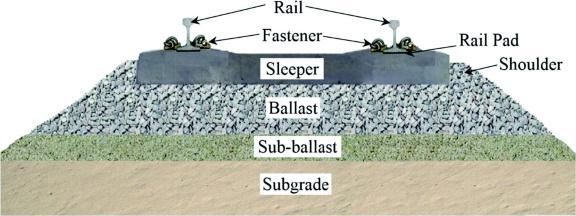
Indian railways fish plate joint, which was found to be designed to lay tracks on a flat surface, which is often impracticalandexpensive.
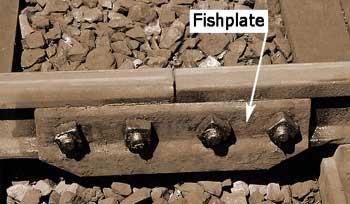
The existing design of the fish plate joint was not able to copewithterrainvariations,leadingtounstabletrackjoints. Therefore,anewdesignfortherailtrackjointassemblywas developedthatincorporatestheflexibilitytoaccommodate groundundulationsrangingfrom-10°to10°whilestillbeing stableunderloadconditions.
The objective of this research is to develop a rail track jointassemblythatcanadapttovaryingterrains,improving its stability and safety in challenging environments. The outcomesofthisstudycouldhavepracticalapplicationsin industriesthatrequiresimilarassembliesforjoiningsquare sections, such as solar panel cleaning or agriculture machinery.Suchdesignscouldhelpreducecostsassociated with the infrastructure that requires flat surfaces
TheIndianrailwaysusetheIsection,specificallytheDudley section,fortheirrailtrackjointassembly.However,inour design,weoptedforsquaresectionsmadeofgalvanizedmild steel. This decision was made after considering several factors,includingcost-effectiveness,easeofmanufacturing, andoveralldurabilityoftheassembly.Thesquaresections providethenecessarystrengthandstabilityfortherailtracks to withstand varying terrain angles. By utilizing square sections of galvanized mild steel in our design, we aim to createacost-effectiveanddurablesolutionforrailtrackjoint assemblies that can be implemented in challenging environments
2. Design and Development
2.1 Design stage I
Theinitialdesign,whichdrewinspirationfromtheIndian railways,featuredaconfigurationreminiscentofafishplate joint.Comprisingtwoplatesfastenedtogetherusingtwonut and bolt assemblies, this design aimed to address our specificrequirements.However,uponcarefulevaluation,it becameapparentthatthedesignhadcertainshortcomings, primarily in its inability to accommodate variations in terrainanditspropensityforwheelfouling.
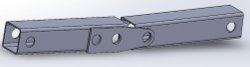
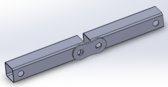
Onecriticalaspectwherethedesignfellshortwasitslimited capabilitytoadapttodiverseterrains.Asthetraintraversed unevensurfacesorencounteredchangesintrackelevation, theinflexiblenatureofthejointhinderedsmoothmovement, leadingtodisruptionsandpotentialdamagetothesystem. Furthermore,theinterferencebetweenthewheelsandthe plate further exacerbated this issue, contributing to increasedwearandtear,aswellaspotentialsafetyhazards.
Recognizingthesedrawbacks,itisimperativetorevisitthe designandexplorealternativesolutionsthatcaneffectively address the challenges posed by varying terrains and potentialwheelfouling.Thiscouldinvolveimplementinga more dynamic joint system that allows for improved articulation and flexibility, enabling the robot to navigate seamlessly across different types of terrain. Additionally, incorporating measures to prevent wheel fouling, such as introducingprotectivebarriersorimplementinga revised platedesign,willplayapivotalroleinenhancingtheoverall performanceandsafetyofthesystem.
butalsoensuresoptimalfunctionalityacrossawiderangeof terrains,ultimatelyleadingtoamoreefficientandreliable system.
2.2 Design stage II
In order to address the issue of terrain variation, a novel design concept was conceived, which proved to be highly effectiveinresolvingthischallenge.Thedesign,anextension ofapreviousiteration,showcasedsubstantialimprovements byincorporatinganinnovativeearlobedesign.Thisfeature notonlysuccessfullymitigatedtheproblemoffoulingonone sideofthetrackintersectionbutalsoprovidedasolutionto theissueofvaryingterrainconditions.Toensurestructural integrity and durability, mild steel was chosen as the materialforthedesign.Rigoroustestingdemonstratedthat the design could withstand the imposed load of 6 kN, accuratelysimulatingtheweightofthetrolleyplacedonthe track.Nevertheless,itisimportanttonotethatthefouling problemassociatedwiththewheelononesideofthetrack intersection persisted despite these advancements. While theextendeddesignrepresentedasignificantreductionin foulingoccurrences,furtheranalysisandmodificationsare warrantedtoeliminatethischallengeentirely.
Fig 3. Designstage1
Bytakingaproactiveapproachinreevaluatingtheinitial designandincorporatingnecessaryimprovements,wecan developasolutionthatnotonlyrectifiestheexistingflaws
Potential areas for improvement encompass a reassessment of track geometry and optimization of the wheelprofile.Inconclusion,theextendeddesign,featuring the incorporation of the earlobe concept and constructed withmildsteel,exhibitednotableprogressinaddressingthe issuesofterrainvariationandfoulingattrackintersections. Nonetheless,additionalrefinementsareimperativetofully overcomethepersistentfoulingproblemononesideofthe track. The outcomes of this investigation provide a solid basisforsubsequentresearchanddevelopmentendeavors, withtheultimategoalofachievingacomprehensivesolution that optimizes track performance, minimizes fouling concerns,andensuresthesafeandefficientoperationofthe system
2.2 Design stage III (Final Stage)
The proposed design represented a groundbreaking and inventive approach that effectively resolved multiple challenges, including terrain variations, wheel fouling, weight sustainment, and optimized design. Comprising a total of four components, it consisted of two plates, one nylonbush,andnutbolts,meticulouslyselectedtoensure optimalperformance.Galvanizedmildsteelwasthechosen material,providingbothdurabilityandcorrosionresistance.
Through rigorous testing and analysis, the design successfullyfacilitatedthesmoothtravelofthetrolleyalong thetrack,addressingtheaforementionedissues.Whilethere wasaminorconcernregardingtheimpactonthejointwhen thetrolleypassedoverit,extensivetestingrevealedthatthis problemwasrelativelyinsignificant.
To further validate and optimize the design, simulations were conducted using ANSYS software, enabling virtual testing of the components. This approach allowed for a comprehensive evaluation of the design's structural integrity, performance, and reliability under varying conditions. The simulations provided valuable insights, aiding in the refinement of the design and ensuring its suitabilityforreal-worldapplication.
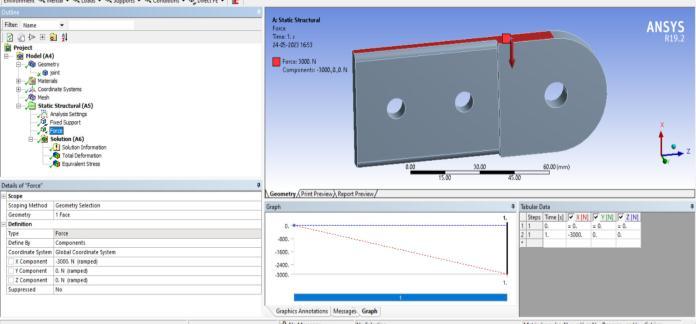
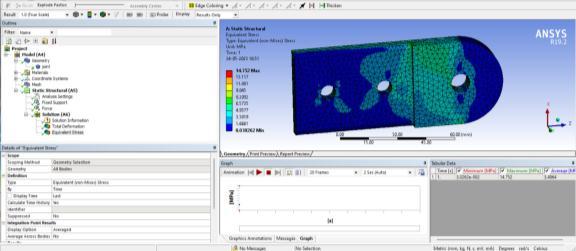
Thesefindingsprovideconfidenceinthestructuralintegrity andperformanceofthedesign,affirmingitssuitabilityforthe intendedapplication.Withthedemonstratedfactorofsafety andthestresslevelswellbelowthematerial'scapacity,the designisdeemedcapableofsafelysupportingthespecified load and ensuring the desired level of performance and reliability.
4. RESULTS
Inourproject,weaimedtoachieveanangulardisplacement ofupto10degreesforthetracks,providingarangeof10 degreesaboveand10degreesbelowtheplane.Thepurpose ofthisdesignwastocreateatrackjointthatwouldoffera reliable and robust solution for joining two closed rectangularsections,whilealsoallowingforawiderrangeof rotation.
5. DesignstageIIICAD
In summary, the new and innovative design approach effectivelytackledarangeofchallenges,offeringsolutionsto terrain variations, wheel fouling, weight sustainment, and optimaldesign.Comprisedofcarefullyselectedcomponents, including plates, a nylon bush, and nut bolts, constructed from galvanized mild steel, the design enabled smooth trolleytravelonthetrack.Whileaminorconcernregarding theimpactonthejointwasobserved,extensivetestingand ANSYS simulations confirmed the design's overall effectiveness and highlighted its potential for successful implementationinpracticalsettings.
3. Analysis for weight load sustainment and design against failure
Theanalysisofthedesignwasconductedusinganactualload of300Kgs,andtheresultsrevealedafactorofsafetyof1.5. This indicates that the design is sufficiently robust to withstandtheappliedload.Additionally,themaximumstress observedinthestructurewas15MPa,whichiswithinthe acceptable limits for the chosen material and design specifications.
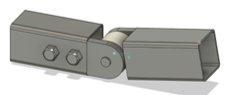
Tovalidatetheperformanceofthetrackjoint,weconducted astaticstructuralanalysisusingANSYSsimulationsoftware. Our initial requirement was for the joint to bear a load of 500kg.Duringtheanalysis,wefoundthatthejointnotonly met this requirement but also exceeded our expectations. Thejointdemonstratedthecapabilitytowithstandloadsof up to 4000kg during actual testing, showcasing its remarkablestrengthanddurability.
Moreover,ourdesignsuccessfullyfulfilledourobjectiveof creatingajointwitharotationrangeof0to40degreesin both inclination and declination for the tracks. This versatilityallowsforgreaterflexibilityinmaneuveringthe tracks,accommodatingvariousterrainsandinclinations.
In conclusion, the track joint design we implemented has proven to be highly successful. It offers an impressive angulardisplacementrangeandexhibitsexceptionalloadbearingcapacity.Thejoint'sabilitytowithstandsignificantly higherloadsthananticipatedshowcasesitsrobustnessand reliability. Furthermore, its capacity for a wide range of rotationfulfillsourdesiredfunctionalityfortrackinclination anddeclination.
5. CONCLUSION
In conclusion, the research paper presents an innovative assembly design for a rail track joint that addresses challengesrelatedtoterrainvariation,wheelfouling,weight sustainment, and design optimization. Through iterative design stages, the initial configuration inspired by Indian railways wasimprovedupon,incorporatinganinnovative earlobe concept in Design Stage II. The final design, constructed with galvanized mild steel components, demonstrated effective resolution of multiple challenges, enablingsmoothtrolleytravelonthetrack.Rigoroustesting andanalysisvalidatedthedesign'sstructuralintegrityand performance,providingconfidenceinitssuitabilityforrealworld application. Overall, the research offers a comprehensivesolutionthatoptimizestrackperformance, minimizesfoulingconcerns,andensuressafeandefficient operationofthesystem.
ACKNOWLEDGEMENT
We would like to extend our heartfelt gratitude and appreciationtoalltheauthorswhohavecontributedtothe successful completion of this research paper. Each author has played a crucial role in the conception, design, data collection, analysis, and interpretation of the findings presentedinthisstudy.Wewouldliketoexpressoursincere thanks to Mr. Ninad Watwe for providing us with the internship opportunity and his valuable guidance throughout the research process. We also extend our gratitudetoourcolleaguesfortheircollaboration,support, andintellectualcontributions.Additionally,wewouldliketo acknowledgetheguidanceandexpertiseofMr.BasantJain, the CEO of Aplos Ventures , as well as the workers at the project site for their assistance and practical insights. Furthermore, we appreciate the support of PVG's COET ProductInnovationLab.Lastly,wewouldliketothankour friends and families for their unwavering encouragement and understanding. The collaborative efforts of all the authorshavemadethisresearchpaperpossible.
REFERENCES
[1] Mechanical design engineering Handbook Peter N. Childs2013
[2] CouplingsandJoints:Design,Selection&ApplicationJon R.Mancuso