
5
Design and Fabrication of In-Pipe Inspection Robot for Crack Analysis and Detection Using OpenCv and Visual Odometry
Alwin Tony1 , Adil Noushad2 , Aquilas Ninan3, Alwin A V4 , Naveen Prakash K V51,2,3,4 UG Scholar, Department of Mechanical Engineering, Toc H Institute Of Science and Technology, Ernakulum, India
Assistant Professor, Dept. of Mechanical Engineering Toc H Institute Of Science and Technology, Ernakulum, India
***
Abstract - This project focuses on the design and enhancement of electronics controlsystems for pipe inspection robots. Currently, these robots are primarily manufactured offshore, resulting in high costs and inadequate support during malfunctions, leading to environmental mishaps. The objective is to leverage existing mechanical platforms and develop a reliable, robust, and cost-effective in-pipe inspection robot. Existing pipe inspectionrobot models worldwide exhibit significant performance variations. Manysystems have limited applicability, lack reliability, and heavily rely on user experience. This project aims to overcome these challenges by developing an innovative robot capable ofnavigatingpipelines and accurately detecting crack propagation. The robot must operate reliably in confined environments and provide technicians with digital video feedback. It will incorporate offthe-shelf components, inexpensive materials, and allow for potential on-site repairs, emphasizing traditional mechanical engineering principles. It enables the robot to autonomously distinguish between cracks and other voids, eliminating the need for additional human intervention. The proposed selfinitiating distinction between cracks and voids streamlines inspections, minimizinghumanerror andenhancingefficiency. Design of a six-legged 120 degree apart symmetric structure for the robot for easy manoeuvrability equipped with wifi module, Microcontroller, and set of cameras for computer vision. Utilises OpenCv and haar Cascading techniques and python programming to detect crack from live video feedback and shows the output to user outside. Absolute distance is also measured using visual odometry wherein change in pixels of multiple images is calculated to distance.
Key Words: Pipe Inspection Robot, OpenCv, Haar Cascading, Visual Odometry, Crack analysis, ManoeuvrableRobot
1. INTRODUCTION
Pipesareusedinmanyindustriestotransportvariouskinds of fluids and gases, many of these pipes are long and inaccessible to technicians and workers, ensuring proper passage of the fluids and maintenance of the pipes are an importantparameterfortheclientandenduser.Thisproject specifically focuses on pipes used in continuous long transmission of water and other fluids, pipes used in divisionaltransportationofwater.Cracksandwaterleakage
are a major concern for regional and national water authorities, as damages to water pipes are prone due to hindranceandnegligencecausedfromgeneralpublic,road and transport authority because of their subsequent road maintenance and building. The in-pipe robots consists a mechanism of camera and sensors to identify these crack propagation signatures and return a live feed monitoring with Program based differentiation to a technician for furtherfacilitationofevaluation.Pipetransmissionsystems deteriorateprogressivelyovertime.Pipelinesareoneofthe safestwaystotransportwaterandotherliquids.Thebigger part of pipeline transmission systems are accessible by existinginspectiontoolsorhumaninterventionbutthisis limitedtothesectionwhicharenormallyattheexterioror joints of the pipe. Corrosion or cracks does not generate largely in this areas, hence the requirement of a smaller inspection device increases. The industry is keen on receivingnewerinnovationsthatallowsinspectionwithout interrupting the routine operations. It is understood that reliableandaccurateinformationofinspectioncanonlybe foundonlybydirectpipewallaccess.Therobot(PIR)with anadaptabledesignmayhelpinimbibingwiththeinterior environment of the pipe, especially with respect to the diameterofthepipe,withhighmaneuverabilityandability tooperateunderhostileconditions.ForPIRweareusinga six wheeled concept since it is the easiest, most energy efficientandhasthepotentialtotravellongrange.
1.1 Review of Literature
[1]2010,ManaboONO,etal.,discussesthepossibilitiesofan Earthworm like robot that may be used for inspections of long pipelines. It uses a design similar to that of an Earthwormwhichusesthreerubberbellowsaspneumatic actuators. [2]2012, MD Rashid Ashraf, et al., presents the proceduresundertakenduringthedesignanddevelopment ofasmallsizepipe-inrobotforthepurposeofboilerhead inspection.Thisrobotusedthemethodofvisualinspection usingacameraprobethatshallbelaterlookedintoforthe carryingoutoftheprocedure.[3]2012,MFYousuff,etal., discusses about a robot that can be utilized for the inspectionandmovementalonganair-conditionpipeline.It details the different parameters that are to be met while designing such a robot [4]2012, Dongwoo Lee, et al., discusses about a methodology for navigating a pipeline using two mechanisms known as; Adaptable Quad Arm
International Research Journal of Engineering and Technology (IRJET) e-ISSN: 2395-0056 Volume: 10 Issue: 07 | July 2023 www.irjet.net p-ISSN: 2395-0072 © 2023, IRJET | Impact Factor value: 8.226 | ISO 9001:2008 Certified Journal | Page353
Mechanisms (AQAM) and the Swivel Hand Mechanism (SHM). These mechanisms help in bypassing the earlier difficultiesfacedbyinpipe robotsintraversingthrougha pipeline. [6]2014, Majid M Moghadam, et al., presents an apparatusthatcanbeusedtotraverseapipelineeffectively byusingthreeindependentrubbertrackunitsthatare120 degreeapartsymmetrically. Thepaperalsogoesintodetail with regards to the force analysis that was done on the apparatus. The design phase is clearly mentioned and the application of each part is noted systematically [9]2018, Sami Salama Hussein Hajjaj, et al., The paper mentions in detail about three possible methods they may use visual inspection using camera probes, assessment of corrosion coupons,orpipeInspectionusinginlineinspectiondevices fordetectingplacesofpittingormetalloss.Thedesignisa caterpillar design for in-pipe inspection. [10]2022, Kaned Thung-Od,etal.,discussedaboutisonethatcanbeusedin ferromagneticpipelinesthatareusedtotransportOil,Gas etc.Theserobotshavebothverticalandhorizontalmobility options. The design is in the shape of a train with three sections.Sensorswereprovidedformeasuringvariousdata fromwithinthepipe.
2. PROJECT METHODOLOGY
1. Designing of pipe inspection robot, here the design of pipe inspection robot was implemented using NX6.0, AutodeskFusion360andAutodeskTinkerHub.
2. Developmentofpipeinspectionrobot,hereFusion360 andTinkerhubwasusedforthesimulationbeforeactual buildingoftheprototype.
3. Fabrication of Model by means of manufacturing equipments. This robot consists of six legged wall caterpillars.
4. Creation of a camera web server in accordance with arduino microprocessor and testing of initiation of feedbackfromESP32Camera1&Camera2.
5. Creation and testing of an open CV based python (PY Charm) interfaced program that will render the live feedback from ESP32 (1&2) and will use the contours from the library to differentiate the cracks from the feedback.
6. Assemblealltherequiredfabricatedparts.Thecomplete assembly of six legs, six wheels, translation element betweenthefirstandsecondenclosureaswellascentre framewasmadeusingGalvanizedIronfixtures.
7. RelayMotorsandDriverofL298NSpecificationwasused infacilitatinggenericbackwardandforwardmovementof therobot.
8. Fixing of ESP32 cameras, microprocessor and Relay motors.Wewillbeselecting6-DCmotors.
9. Making it to crawl inside a pipe by means of remote controller to capture the video image in a screen (Live video feedback). Evaluation of Visual Odometry and determiningthescalingfactorrequiredfortheprogramto convert multiple pixels from image to distance by cascading.
10.UseofHAARCascadingtofeedinthecrackpropagation simulativeimagesandreturnthefeedback
3. DESIGN OF PIPE INSPECTION ROBOT
3.1 Design Constraints
SizeandDimension:Therobotshouldhaveacompactsize anddimensionstofitandnavigatethroughpipesofvarying diametersandconfigurations.
Maneuverability: The robot should be able to navigate throughtightspaces,bends,andobstacleswithinthepipe network.
RobustnessandDurability:Therobotshouldbebuiltwith materials and components that can withstand harsh and corrosiveenvironmentsfoundinpipes,ensuringlong-term reliability.
PowerandEnergyEfficiency:Therobotshouldbedesigned tooperateusingefficientpowersources,suchasbatteries,to providesufficientruntimeforinspectionswithoutfrequent rechargingorreplacement.
Sensing and Detection Capabilities: The robot should incorporate sensors and detection systems capable of accurately identifying cracks, leaks, blockages, and other pipeabnormalities.
CommunicationandDataTransmission:Therobotshouldbe equippedwithreliablecommunicationsystemstotransmit inspectiondata,videofeedback,andcontrolsignalsinrealtimetooperatorsormonitoringsystemsoutsidethepipes.
3.2 Design Specifications
To complete the project it is very crucial to have the specificationsbeforethestartoftheinitialdevelopmentof theproject.Thiswillensuretheconformitywiththesetof standards.Someofthespecificationsare:-
1.Videostreaming1440p
2. Vertical movement within the pipe (Max. crawl of 10km/h)
3.Wirelesscontrol(upto1200m)
4.GalvanizedIronbodywithaluminiumendowments
5. 48Megapixelcamerawithwideangleapproachsensorfor distanceranging
6.RemoteControlusingpycharmintegrationandremoteXY forelongatedcontroloftherobot
International Research Journal of Engineering and Technology (IRJET) e-ISSN: 2395-0056 Volume: 10 Issue: 07 | July 2023 www.irjet.net p-ISSN: 2395-0072 © 2023, IRJET | Impact Factor value: 8.226 | ISO 9001:2008 Certified Journal | Page354
7.
3.3 Design of Parts and Assembly
The pipe inspection robot consists of a mechanism of sixlegged120 – degreeapartrotor basedtractiontire set-up which is docked into multiple transition element which is weldedintothemaincentralframe,additionalpushelement with spring loaded risers are inserted to eliminate the changearisingwithinexternalwallsofpipeandthetiresubclearance.

Dimensions are L=200mm, H=80mm diameter, and inner diameter=17mm,Thicknessofextendedpart=8mm.there are total of six extended parts on center frame on 70 mm fromonesideandanother3on170mmfromoneendand haveaholeofdiameter6mm.
3.4.2 Calculations
Ifthespeedoftherobotis1m/secondandtherobotweighs 0.716kg,wecancalculatethepowerrequiredforthemotor usingtheformula:

Power=(Force×Velocity)/Efficiency
First,let'scalculatetheforcerequiredformovement.Since the robot is on a flat surface, we can assume the force requiredisequaltotheweightoftherobot:
Force=Weight=0.716kg×9.8m/s^2(accelerationdueto gravity)=6.8N
Assuming an efficiency of 80% or 0.8, we can substitute thesevaluesintotheformula:
Power=(6.8N×1m/s)/0.8=8.5W
Consideringthefactorofsafetywetake10wattsDCgeared motor.
4. DETAILED DESCRIPTION OF PARTS USED
4.1
Arduino Uno:
Microcontroller: The Arduino Uno is built around the ATmega328P microcontroller, which is an 8-bit AVR microcontroller.
ClockSpeed:TheATmega328Prunsataclockspeedof16 MHz
Digital I/O Pins: The Arduino Uno has a total of 14 digital input/output pins. Among them, 6 can be used as PWM (PulseWidthModulation)outputs.
AnalogInputs:Ithas6analoginputpins,labeledA0toA5, whichcanalsofunctionasdigitalI/Opins.
Programming:TheArduinoUnocanbeprogrammedusing the Arduino programming language, which is a simplified versionofC++.
Power Supply: The Uno can be powered using a USB connection, a DC power jack (7-12V), or by supplying 5V directlytothe5Vpinor3.3Vtothe3.3Vpin.
3.4
3.4.1 Assumptions
1. The force required for movement is equal to the weightoftherobot.
2. Theweightoftherobotis0.716kg.
3. Surfaceofthepipeisverysmooth.
4. Maximumspeedoftherobotis1m/s.
5. Theefficiencyis80%.
Memory: The ATmega328P on the Uno has 32KB of flash memory for program storage, 2KB of SRAM, and 1KB of EEPROMfordatastorage.
International Research Journal of Engineering and Technology (IRJET) e-ISSN: 2395-0056 Volume: 10 Issue: 07 | July 2023 www.irjet.net p-ISSN: 2395-0072 © 2023, IRJET | Impact Factor value: 8.226 | ISO 9001:2008 Certified Journal | Page355
RechargeablePowersuit,whichiswaterprooftorunthe movement.
Fig -1:CentralFrameoftheRobotusingAutodeskFusion 360
Fig -2:OverallDislocatedassemblyofDesign(Fusion360)
Power Calculation
TheArduinoUnooperatesbyfollowingaspecificsequence of operations. It starts with a power supply provided throughaUSBconnection,DCpowerjack,ordirectvoltage input.Oncepowered,themicrocontrollerrunsabootloader programstoredinitsmemory,allowingforeasyuploading ofsketches.Afterinitialization,theArduinoUnoexecutesthe setup () function where variables are initialized and pin modesareconfigured.Themainpartoftheprogramisthe loop()function,whichisrepeatedlyexecuted.Here,youcan implement project functionality, read sensor inputs, and control actuators. The board supports interrupts for immediateresponsetoexternalevents.
4.2 ESP32 CAM

TheESP32CAMisadevelopmentboardthatintegratesthe ESP32-Smoduleandacamerasensor.Itcombinesthepower oftheESP32microcontrollerandthecapabilityofcapturing images and video using a camera module. Here are some details about the ESP32CAM:ESP32 Microcontroller: The ESP32CAM is based on the ESP32-WROOM-32 module, which features a dual-core ESP32 microcontroller. The ESP32isapowerfulandversatilemicrocontrollerwithbuiltin Wi-Fi and Bluetooth capabilities. Camera Sensor: The ESP32CAMincludesacamerasensormodulethatallowsfor capturingimagesandvideo.Thecameramoduleistypically basedontheOV2640orOV7670sensor,offeringdifferent resolutionsandcapabilities.FlashMemory:TheESP32CAM boardisequippedwith4MBofflashmemory,whichisused forstoringthefirmwareandprogramcode.


4.3 ESP 8266 Wifi Module
TheESP8266Wi-FimoduleisapopularandaffordableWi-Fi module that has gained significant popularity among developers and hobbyists for its capability to add Wi-Fi connectivity to various electronic projects. Here are some detailsabouttheESP8266 Wi-Fimodule:Microcontroller: The ESP8266 module is itself a self-contained microcontrollersystem-on-chip(SoC)withintegratedWi-Fi capabilities. It features a 32-bit ten silica Xtensa LX106 microcontrollerunit(MCU).Wi-FiConnectivity:TheESP8266 module supports Wi-Fi connectivity, allowing devices to connecttolocalnetworksandtheinternet.Itsupportsthe 802.11b/g/n Wi-Fi standards, providing reliable wireless communication. Flash Memory: The ESP8266 module typically comes with onboard flash memory for storing firmware, program code, and data. The available flash memoryvariesacrossdifferentmodelsandversionsofthe module.GPIOPins:TheESP8266moduleprovidesanumber of general-purpose input/output (GPIO) pins that can be used for digital input/output, analog input, and various communication protocolssuchasUART,I2C,and SPI. The exactnumberofGPIOpinsvariesdependingonthespecific modulevariant.
A 5V 2-channel relay module is an electronic module that allowsyoutocontrolhigh-powerdevicesusinglow-power Signalsfromamicrocontrollerorothercontrolcircuit.
International Research Journal of Engineering and Technology (IRJET) e-ISSN: 2395-0056 Volume: 10 Issue: 07 | July 2023 www.irjet.net p-ISSN: 2395-0072 © 2023, IRJET | Impact Factor value: 8.226 | ISO 9001:2008 Certified Journal | Page356
Fig- 3:-GraphicalSchematicofArduinoUNO Microcontroller
Fig 4:- GraphicalSchematicofESP32Cameraandits interfaces
4.4 Channel Relay Module
Fig 5:-Connectionbetweenarduinomicrocontrollerand Channelrelaymodule
Here are some details about a typical 5V 2-channel relay module:NumberofChannels:A5V2-channelrelaymodule hastwoseparaterelaychannels.Eachchannelcancontrola different electrical load independently. Relay Type: The relays used in the module are usually electromechanical relays.Theserelaysconsistofacoilandoneormoresetsof contacts that can switch high currents or voltages. Input Voltage: The module is designed to be driven by a 5V DC powersupply.Itiscompatiblewithmostmicrocontrollers anddevelopmentboardsthatoperateat5Vlogiclevels.
ControlSignal:Themoduletypicallyusesalow-levelcontrol signal (e.g., logic low) to activate the relays. This control signalisprovidedbyamicrocontrolleroranyotherdigital outputdevice.RelayContacts:Eachrelaychannelusuallyhas acommon(COM),normallyopens(NO),andnormallyclosed (NC) contact. The COM contact is connected to the power supplyortheload,whiletheNOandNCcontactsareusedto switch the load on and off. Opt-isolation: Some relay modules include opt-isolation circuitry, which provides electricalisolationbetweenthecontrolcircuitandthehighpowerside(relaycontacts).Thishelpsprotectthecontrol circuit from voltage spikes or disturbances caused by the switchingofinductiveloads.
5. OVERVIEW OF PROGRAMS CREATED FOR ANALYSIS
5.1 RemoteXY Code for Movement of Robot
#include<RemoteXY>
#defineREMOTEXY_SERIALSerial
#defineREMOTEXY_SERIAL_SPEED115200
#defineREMOTEXY_WIFI_SSID"RemoteXY"
#defineREMOTEXY_WIFI_PASSWORD"12345678"
#defineREMOTEXY_SERVER_PORT6377
#prampack(push,1)
RemoteXY_CONF[]= //44bytes
struct{
uint8_tpushSwitch_1;//=1ifstateisON,else=0
uint8_tpushSwitch_2;//=1ifstateisON,else=0
uint8_tconnect_flag; //=1ifwireconnected,else=0
}RemoteXY;
#pragmapack(pop)
#definePIN_PUSHSWITCH_14
#definePIN_PUSHSWITCH_25 voidsetup()
{
RemoteXY_Init();
pinMode(PIN_PUSHSWITCH_1,OUTPUT);
pinMode(PIN_PUSHSWITCH_2,OUTPUT);
} Voidloop()
{ RemoteXY_Handler();
digitalWrite(PIN_PUSHSWITCH_1, (RemoteXY.pushSwitch_1==0)?LOW:HIGH); digitalWrite(PIN_PUSHSWITCH_2, (RemoteXY.pushSwitch_2==0)?LOW:HIGH); }
5.2 OpenCv Python Program for Crack Detection importcv2 importnumpyasnp importurllib.request stream_url='http:/192.168.12.269/video' threshold1=30 threshold2=100 defprocess_frame(frame): gray=cv2.cvtColor(frame,cv2.COLOR_BGR2GRAY) edges=cv2.Canny(gray,threshold1,threshold2) cv2.imshow('CrackDetection',edges) defmain():
stream=urllib.request.urlopen(stream_url)
bytes=bytes()
whileTrue:
#Readaframefromthevideostream bytes+=stream.read(1024)
a=bytes.find(b'\xff\xd8')
b=bytes.find(b'\xff\xd9')
ifa!=-1andb!=-1: jpg=bytes[a:b+2] bytes=bytes[b+2:] framecv2.imdecode(np.frombuffer(jpg, dtype=np.uint8),cv2.IMREAD_COLOR) process_frame(frame)
ifcv2.waitKey(1)&0xFF==ord('q'): break stream.release()
cv2.destroyAllWindows() if__name__=='__main__': main()
5.3 HAAR Cascading Program for distance measurement using visual odometry url=http://102.167.652.29:81/stream cap=cv2.VideoCapture(url)
prev_frame=None
dist_traveled_pixels=0
dist_traveled_centimeters=0
prev_points=None
scaling_factor=0.1235
lk_params=dict(winSize=(15,15),maxLevel=2, criteria=(cv2.TERM_CRITERIA_EPS| cv2.TERM_CRITERIA_COUNT,10,0.03))
displacement_threshold=2.0 #Adjustthisvaluebasedon theexpectedmotionmagnitude whileTrue:
ret,frame=cap.read()
ifnotret: break gray=cv2.cvColor(frame,cv2.COLOR_BGR2GRAY)
International Research Journal of Engineering and Technology (IRJET) e-ISSN: 2395-0056 Volume: 10 Issue: 07 | July 2023 www.irjet.net p-ISSN: 2395-0072 © 2023, IRJET | Impact Factor value: 8.226 | ISO 9001:2008 Certified Journal | Page357
{255,2,0,0,0,37,0,16,31,1,10,48,24,24,15,15,4,26,31,79, 78,0,31,79,70,70,0,10,48,24,75,15,15,4,26,31,79,78,0,31, 79,
uint8_t
70,70,0};
ifprev_frameisnotNone: ifprev_pointsisnotNone: next_points,status,_= cv2.calcOpticalFlowPyrLK(prev_frame,gray,prev_points, None,**lk_params)
good_old=prev_points[status==1]
good_new=next_points[status==1]
iflen(good_old)>0andlen(good_new)>0: displacements=good_new-good_old
displacement_magnitudes=np.linalg.norm(displacements, axis=1)
average_displacement= np.mean(displacement_magnitudes)
ifaverage_displacement>displacement_threshold: dist_traveled_pixels+=average_displacement
dist_traveled_centimeters=dist_traveled_pixels* scaling_factor
prev_points=cv2.goodFeaturesToTrack(gray,100,0.3,7) prev_frame=gray.copy()t
text=f"DistanceTraveled:{dist_traveled_centimeters:.2f} centimeters"
cv2.putText(frame,text,(10,frame.shape[0]-10), cv2.FONT_HERSHEY_SIMPLEX,0.5,(0,0,255),1, cv2.LINE_AA)
cv2.imshow("Frame",frame)
ifcv2.waitKey(1)&0xFF==ord('q'): break cap.release()
cv2.destroyAllWindows()
6 DISTANCE MEASUREMENT USING VISUAL ODOMETRY
Visual odometry, combined with OpenCv and Python programming,offersapowerfulapproachfordetectingthe location of a pipe inspection robot within a pipe network. Visual odometry relies on the analysis of visual data captured by the robot's onboard camera to estimate its position and orientation within the pipe. By leveraging OpenCv, a versatile computer vision library, and Python programming, the robot can extract and process visual features,tracktheirmovements,andcalculateitslocation. The process begins with feature detection, where OpenCv featureextractionalgorithmsidentifydistinctvisualfeatures suchascornersoredgeswithinthecapturedimages.These featuresactasreferencepointsforsubsequenttrackingand locationestimation.Thefeaturesarethenmatchedacross consecutive frames, utilizing OpenCv feature matching algorithms, to establish correspondences and track their motion. Python programming is utilized to implement the visualodometrypipeline.Thetrackedfeaturesareprocessed using various techniques such as motion estimation, pose estimation, and triangulation. To ensure accurate location detection;cameracalibrationisacriticalstep.Byaccurately calibratingthecamera,distortionandothercamera-specific factorsaretakenintoaccount,improvingtheaccuracyofthe locationestimation. Real-timelocationdetectionisachieved
by implementing the visual odometry pipeline efficiently. Python'sversatilityandOpenCvoptimizedfunctionsallow forfastprocessingandtrackingofvisualfeatures,enabling the robot to estimate its location in real-time during the inspection process. It is important to note that visual odometry for pipe inspection robots using OpenCv and Python has its limitations. Factors such as lighting conditions, Occlusions and dynamic environments within thepipescanimpacttheaccuracyoffeaturedetectionand tracking.Therefore,carefulconsiderationmustbegivento addressthesechallengesanddeveloprobustalgorithmsthat canhandlevariouspipeinspectionscenarios.
7 CRACK DETECTION AND RESULTS
Thepipelineundergoestestingbyintentionallyintroducing different types of cracks with varying sizes and surface areas. These cracks include major, minor, and elongated ones. The propagation of these cracks can be a significant causeofintermittentpipelinefailures,leadingtodisruptions in product transmission. To effectively inspect the pipe's interior,a pipe inspectionrobot equipped withanESP-32 Cameraisutilized.Itcapturesdetailedfootageandtransmits real-timefeedbackviaaliveIPaddress.ThisIPaddressis thenutilizedinaPythonprogramthatinvokesOpenCvfor further analysis. OpenCv accesses the live video feedback andprocessesittoidentifyirregularshapesandcontours. OpenCv enhances the analysis by applying a mask to differentiate the crack from the rest of the system. This masking technique helps in isolating and highlighting the crack, making it easily identifiable. The crack is distinctly marked with a red contour, allowing personnel to effortlessly determine its position within the extensive pipeline network. By employing this comprehensive inspection process, pipeline operators can proactively address cracks and potential failures, ensuring the uninterruptedtransmissionofproductsandmaintainingthe integrityofthepipelinesystem.

International Research Journal of Engineering and Technology (IRJET) e-ISSN: 2395-0056 Volume: 10 Issue: 07 | July 2023 www.irjet.net p-ISSN: 2395-0072 © 2023, IRJET | Impact Factor value: 8.226 | ISO 9001:2008 Certified Journal | Page358
Fig 6:Crackinducedonpipewithmarkededgesto highlighttheirregularity
8 CONCLUSIONS
In conclusion, the project work on a pipeline inspection robot utilizing Arduino Uno, RemoteXY, relay module, DC motors,RemoteXYappformovementcontrol,ESP32-CAM, andanOpenCvPythonprogramforcrackdetectionoffersa comprehensivesolutionforefficientandaccuratepipeline inspection. The integration of Arduino Uno provides a reliablemicrocontrollerplatformforcontrollingtherobot's movements and coordinating various components. The RemoteXYlibraryenableseasycommunicationbetweenthe robotandtheRemoteXYapp,allowingintuitivecontrol of the robot's forward and backward movement. The relay module plays a crucial role in controlling the DC motors, facilitating the robot's locomotion. The inclusion of the ESP32-CAM module enhances the robot's capabilities by enablinglivevideostreamingfromthepipeline.TheOpenCv Pythonprogramleveragesthepowerofcomputervisionand image processing techniques, specifically canny edge detection, to detect cracks in real-time. This provides valuableinsightsintotheconditionofthepipelineandhelps identify potential issues for timely maintenance. By combiningthesetechnologies,thepipelineinspectionrobot offers several advantages. It enhances efficiency by
automating the inspection process, reducing the need for manualinterventionandsavingtime.Theaccuracyofcrack detectionisimprovedthroughthe utilizationof computer visionalgorithms,providingdetailedvisualinformationfor analysisanddecision-making,Forinstance,implementing autonomousnavigation,advancedsensingtechnologies,and data analyticscapabilitiescanfurther enhancetherobot's performanceandprovidemorecomprehensiveinsightsinto the pipeline's condition. The pipeline inspection robot projectutilizingArduinoUno,RemoteXY,relaymodule,DC motors, RemoteXY app, ESP32-CAM, and OpenCv Python program showcases a practical and effective solution for pipeline inspection. It combines hardware, software, and computervisiontechniquestoimproveefficiency,accuracy, and safety in pipeline maintenance and management. The projectservesasafoundationforfurtheradvancementsand researchinthefieldofpipelineinspectionrobotics.
REFERENCES
[1]M.F.Yusoff,B.S.K.K.Ibrahim,H.Hamzah,H.A.Kadir DevelopmentofAirConditionalRouteWirelessInspection RobotInternationalSymposiumonRoboticsandIntelligent Sensors(2012),pp.874-880(IRIS2012)
[2] MdRaziqAsyrafMdZin,KhairulSallehMohamedSahari, Juniza Md Saad, Adzly Anuar, and Abd Talip Zulkarnain, Development of a Low Cost Small Sized In-Pipe RobotInternationalSymposiumonRoboticsandIntelligent Sensors2012(IRIS2012),pp1469-1475.
[3]DongwooLee,JungwanPark,DongjunHyun,GyungHwan Yook,Hyun-seok Yang Novel mechanisms and simple locomotionstrategiesforanin-piperobotthatcaninspect various pipe type Mechanism and Machine Theory,56(2012),pp.52-68
[4] MajidM.Moghaddam,MohammadrezaArbabtafi,A.Hadi In-pipeInspectionCrawlerAdaptabletoThePipeInterior Diameter International Journal of Robotics and Automation,26(2)(2011),pp.135-145

[5] Megumi Ikeuchi, Taro Nakamura, and Dai Matsubara, Development of an In-pipe Inspection Robot for Narrow PipesandElbowsusingPneumaticArtificialMuscles,2012 IEEE/RSJInternationalConferenceonIntelligentRobotsand SystemsOctober7-12,2012.Vilamoura,Algarve,Portugal, pp926-931.
[6]Yazdekhasti,S.;Piratla,K.R.;Sorber,J.;Atamturktur,S.; Khan, A.; Shukla, H. Sustainability analysis of a leakagemonitoringtechniqueforwaterpipelinenetworks. J. Pipeline Syst. Eng. Pract. 2020, 11,04019052
[7]Rodríguez-Olivares, N.A.; Cruz-Cruz, J.V.; GómezHernández,A.;Hernández-Alvarado,R.;Nava-Balanzar,L.; Salgado-Jiménez, T.; Soto-Cajiga, J.A. Improvement of

International Research Journal of Engineering and Technology (IRJET) e-ISSN: 2395-0056 Volume: 10 Issue: 07 | July 2023 www.irjet.net p-ISSN: 2395-0072 © 2023, IRJET | Impact Factor value: 8.226 | ISO 9001:2008 Certified Journal | Page359
Fig 8:-CrackdetectionusingOpenCv(fromtestcracks)
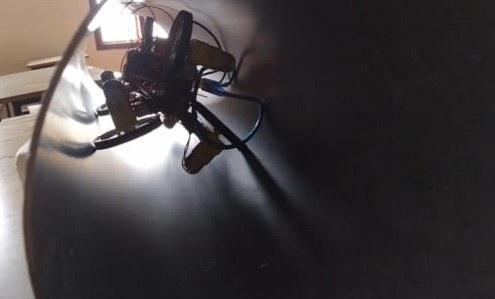
Fig 7:- RobotinspectingtheinteriorwallsoftheTestPipe
ultrasonic pulse generator for automatic pipeline inspection. Sensors 2018, 18,2950
[8] Henry, R.; Chablat, D.; Porez, M.; Boyer, F.; Kanaan, D. Multi-objectivedesignoptimizationofthelegmechanismfor apipinginspectionrobot.InProceedingsoftheInternational DesignEngineeringTechnicalConferencesandComputers andInformationinEngineeringConference,Buffalo,NY,USA, 17August2014;p.V05AT08A001.
[9]Singh,W.S.;Rao,B.;Sasi,B.;Vaidyanathan,S.;Jayakumar, T.;Raj,B.GiantMagneto-Resistive(GMR)SensorsforNonDestructiveDetectionofMagneticFluxLeakagefromSubSurfaceDefectsinSteels.InProceedingsoftheInternational Conference on Sensors and Related Networks (SENNET2009),VITUniversity,Vellore,India,1December2009;
[10]Kreutzbruck,M.;Neubauer,A.;Pelkner,M.;Reimund,V. Adaptedgmrarrayusedinmagneticfluxleakageinspection. In Proceedings of the 18th World Conference on NondestructiveTesting,Durban,SouthAfrica,16–20April 2012;
International Research Journal of Engineering and Technology (IRJET) e-ISSN: 2395-0056 Volume: 10 Issue: 07 | July 2023 www.irjet.net p-ISSN: 2395-0072 © 2023, IRJET | Impact Factor value: 8.226 | ISO 9001:2008 Certified Journal | Page360