An Experimental Study on the Reuse of Waste Water Treatment Plant Sludge in the Manufacturing of Bricks
Kailash Chandra Badgujar1 , Hemant Kumar Agarwal2Abstract - The disposal of sewage treatment plant waste, specifically sewage sludge, has raised significant environmental concerns. This research focuses on investigatingthesuitabilityof different soiltypes(Kanotasoil, Samodh soil, and Black cotton soil) obtained from diverse locations, in combination with wet and dry forms of sludge collected from Dehlawas (unit-1), ASP(Activated Sludge Process )based,Sewagetreatment plant Jaipur. Theobjective is to identify optimal clay-sludge combinations that can be utilized as environmentally friendly construction materials. The study evaluates six distinct scenarios encompassing various combinations todeterminethemostviableclay-sludge combination. Challenges encountered in the experimentation include cracking during the drying process and the onset of anaerobic decomposition, etc. Notably, the second scenario involvingKanota soilwithdrysludgedemonstratedsignificant issues, with all 70 bricks exhibiting cracks, emitting odor, and experiencingbreedingproblems.Conversely,thethirdscenario utilizing fresh wet sludge with Kanota soil yielded favorable outcomes. In the fourth scenario, the utilization of burnt sludge with Black cotton soil led to a shrinkage problem, causing a substantial reduction in brick length of approximately 1 inch, attributable to the nature of the clay, i.e., Black cotton soil. The sixth scenario, involving fresh wet sludgewithSamodhsoil, alsoprovedsuccessful, as brickswith 5%, 10%, 15%, and 20% wet sludge replacement (by weight) exhibited no cracks, while minor cracks were observed with a 30% wet sludge replacement. Furthermore, it was observed that the compressive strength of the bricks decreased as the sludge content percentage increased.

Key Words: Sewage treatment plant waste; sludge; Kanota soil; Samodh soil; Black cotton soil; anaerobic decomposition; compressive strength.
1. INTRODUCTION
Forthousandsofyears,brickshaveplayedanimportantpart inbuildingandconstruction.Despiteitsdependabilityand accessibility, it is commonly acknowledged that manufacturingburnt clay brick remains an energy- and highlyresource-intensiveoperation.Manyacademicshave beenundertakingawiderangeofstudiesonsustainableand creative bricks in order to reduce the brick industry's significantcarbonimpact.
Brick manufacture contributes to Green House Gases and Black Carbon emissions, both of which have a substantial influenceonhumanhealthandclimatechange.Furthermore, the brick manufacturing industry is distinguished by the extensive exploitation of natural resources such as clay reserves.
Global representatives discussed the unprecedented challengeofclimatechangeattheUnitedNationsClimate Change Conference of Parties in Glasgow and Sharm ElSheikh(Egypt),becausetheclimatecrisis,sustainability,and foodsecurityareessentialandurgenttopicsinallcountries.
2. NECESSITY OF STUDY IN INDIA CONTEXT
Thebuildingandmaintenancesectorisacriticaleconomic driverinIndia.TheindustryisvitaltoIndia'soverallgrowth, andthegovernmentplacesahighpriorityonimplementing lawsthatwillassurethecountry'stimelybuildingofworldclassinfrastructure.
AccordingtoNITIAayog,theIndianrealestatesectorwould beworth$1trillionby2030andwillcontributefor13%of India'sGDPby2025.
AccordingtotheUnionBudgetofIndia,duringthefiscalyear 2022-23, 80 lakh dwellings would be completed for the identifiedqualifiedbeneficiariesofthePMAwasYojana,in bothruralandurbanareas,tofacilitatecheaphousing,with traditionalfirebricksbeingusedinmostcases.
3. STATUS OF WASTE WATER TREATMENT FOR RAJASTHAN STATE
RajasthanStatewasoneofthestatesthatannounceditsown StateSewageandWasteWaterPolicyin2016,withafocus on the reuse of treated wastewaterand the promotion of publicawarenessprograms.
According to information available from the concern department of Government of Rajasthan, and RSPCB (Rajasthan State Pollution Control Board) Jaipur, total sewagegenerationisapproximately1550.00MLDfrom116 operational STPs in 33 towns across the state, and total sewagetreatedthroughSTPs(SewageTreatmentPlants)is approximately723.00MLD.Asaresult,theproperdisposal
ofsludgecreatedbythesetreatmentplantsremainsamajor taskformunicipalgovernments.
4. SIGNIFICANCE AND RELEVANCE OF THE STUDY
One of the most frequent building materials is brick. The majority of brickfields absorb soil from surrounding agriculturalland,posingadangertofoodcropproduction. Ontheotherhand,sustainableconsumptionandproduction are prerequisites for meeting the United Nations' SustainableDevelopmentGoals.
Nearly 50% of global manufacturers include some type of wasteinbrick productiontolessentheimpactsofnatural resourceexploitation,lowerproductioncosts,andachievea greater level of environmental sustainability. A suitable disposal method for sewage sludge from Waste Water TreatmentPlants(WWTPs)isaglobalissue.
Because of the increasing volume of sludge produced by wastewatertreatmentplants,thereisastrongdemandfor ecologically safe reuse and effective disposal solutions for sludge. Barging to sea, incineration, land filling, and spreadingonagriculturallandareallcurrentstrategies.The environmental impact of each of these disposal and treatmentmethodsvaries.Sludgedisposalwillbecomemore complicated as the amount of sludge produced increases withtheconstructionofwaste-watertreatmentfacilities.It has been recommended that sewage sludge and other materialsbecombinedtocreateamaterialsuitableforbrick production.
5. POTENTIAL ADVANTAGES OF THIS SYSTEM
Theutilizationofwasteproductscantransformthemfrom liabilitiesintovaluableassets.Collaborativeeffortscanlead tosharedbenefitsarisingfromtheseoutcomes.
Compared to other methods of disposing of sludge, this approach aims to minimize environmental consequences. Forinstance,therewillbenopollutionresultingfromsludge incineration,andtheaccumulationofharmfulheavymetals, which poses a risk when sludge is applied to agricultural land,willbereduced.
The production of such bricks is expected to significantly reduce energy costs by up to 50% when compared to traditional clay bricks. This substantial reduction in operationalexpensesisparticularlyadvantageousforlargescalemanufacturingofcost-effectivebricks.
Theresultinglightweightbricksofferadvantagesintermsof transportation and construction. These aspects provide substantial benefits for our environmentally conscious society,whichalsoaimstominimizeenergyconsumption.
6. OBJECTIVES OF THE STUDY
Thethesisaimstoachievethefollowingspecificobjectives:
Developaneffectiveandenvironmentallyconscious approachforreutilizingsludgewhileensuringthe quality of bricks by proposing an optimal claysludgemixtureratio.
Investigate the impact of incorporating sewage sludge into the clay mixture on the strength and variousphysicalpropertiesofbricks.
Identify the suitable type of sludge and the appropriate clay composition to be used in conjunctionwithsewagesludge,consideringboth dryandwetforms.
Draw conclusions based on the results of experiments and outline potential future advancements for further exploration in this researchfield.
7. COLLECTION OF SEWAGE SLUDGE
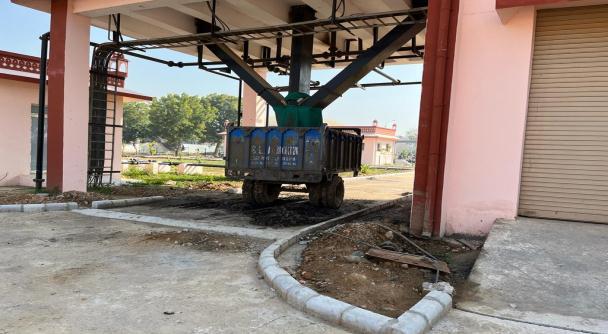
SewagesludgesamplesaretakenattheDehalawas(Unit-01) Sewage Treatment Plant in Jaipur. The STP uses the Activated Sludge Process(ASP)and hasa capacityof62.5 MLD(underupgradation).TheSTPcollectswaterfroma25kilometerradiususinggravityflow,andnopumpingisused for sewage upliftment before transferring it to the plant, whichisasignificantaccomplishmentforitsengineers.(Fig. 1.)TheSTPextendsfromVidhyadharNagartoPratapNagar in Sanganer. Sludge collected at various stages of the operationisdirectedtothesumpandthentothedigester dome. Centrifugal pumps are used to dewater the sludge, andthethickersludgeistransferredtoadomeforanaerobic digestion.Thismethodproducesbiogasanddigestedsludge, whichfarmersutilizeasmanure.Also,thisdigestedsludge can be mixed in proportionate quantity with the clay availableandcanbeusedin thebrick manufacturing.The gasproducedisusedforrevenuecollection.
Fortheresearchwork,threetypesclayeysoilwerecollected one from Kanota, Jaipur, Rajasthan, the other one from Samodh,RajasthanandthelastoneBlackcottonsoilfroma black smith shop Jaipur, Rajasthan. These places are the major hub for brick making and from here bricks are suppliednotonlytoJaipurbutalsotootherdistricts.
7.1 Preparation of Bricks
In a typical brick kiln, a batch of clay-filled bricks was created. In India, there are two types of brickmakingprocesses:manualformingandautomaticforming. Theclaybricksarehand-carved,andthebricksareshaped using traditional wooden molds. Clay brick samples with lengthsof230mm,widthsof110mm,andheightsof70mm weremade.On-site,claymixturesamples(ascontrols)were generatedinvariousratios(5%,10%,15%,20%,and30%), Subjectedtonumerousteststoidentifytechnicalandgeneral featuresinordertoobtainaproductsuitableforusageasa constructionmaterial.
Severaltrailswererunduringthebrick-makingprocessto ensurethatthecorrectmixtureofsewagesludgeandclay was used. Three various kinds of clays and two types of sludgeareutilizedinthis,oneindryformandtheotherin wetform.Sixscenarioshavebeenaddressedonhowdryand wetsludgeareemployedinthreedifferenttypesofclayto produce the required brick. The weight of 1 brick is approximately 3 - 3.5kg, and in the research work, I used 3.5kgastheweightofasinglebricktohaveenough.
7.2 Result and Discussion
The characteristic of sludge and both clays are shown in table01below.AsyoucanseethepHvaleforsludgeis3.14 whichmeansthatitisacidicinnature.Nowifwelookatthe pH value of both the clay it is 8.14 and 7.91, since these values are greater than 7 so they will come under basic category.Themoisturecontentofdrysludgeis6.14%and loss of ignition is 49.2% this means that sludge has lot of volatileorganicmatterascomparetoboththeclay,asinclay itsonly8.7%and8.1%whichisquitelow.
8. CHEMICAL COMPOSITIONOF CLAYANDSLUDGE
The X-Ray Fluorescence test is employed to analyze the chemical composition of substances, including sludge and clay. The results reveal that silica oxide constitutes the highestpercentageinthesematerials.Silicaoxideisacrucial componentasitcontributestothestrengthanddurabilityof bricks when present in an appropriate proportion. Its presenceminimizesthelikelihoodofcracks,shrinkage,and expansion.
9.
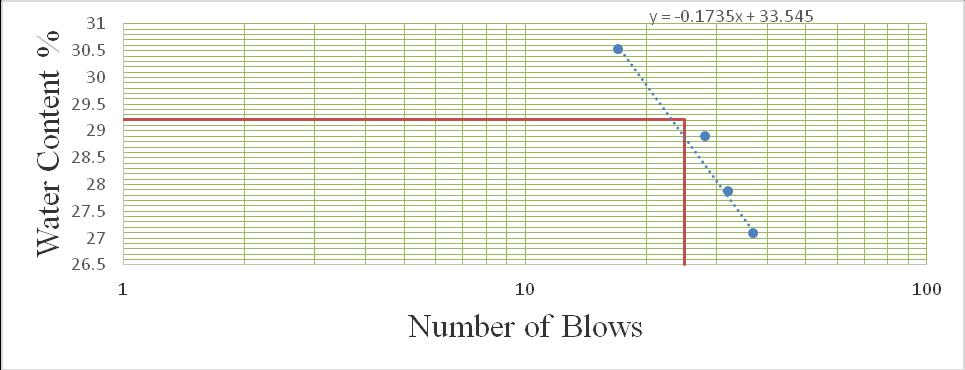
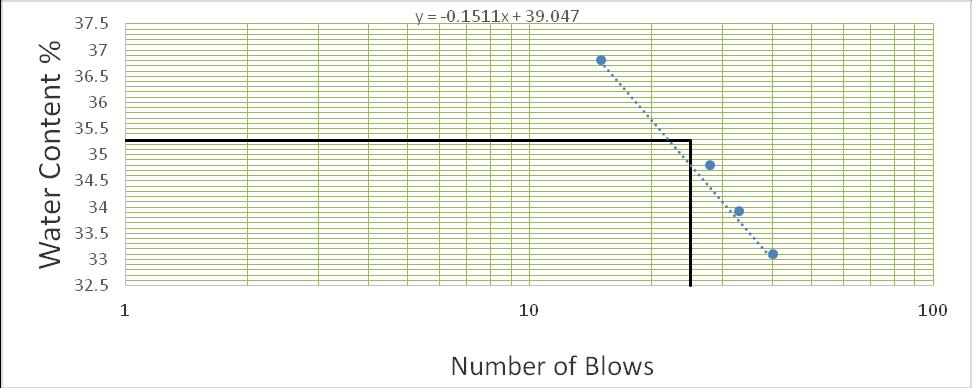
Theamountofwaterweaddtoanysoilhasacatastrophic impact on the entire system. The Liquid Limit is the boundarybetweenthesemi-solidandliquidstates,whereas the Plastic Limit is the boundary between the solid and liquidstates.Now,asshowninTable02below,thesoilhas someformofliquidlimit,thatis,theinclinationtoflowmay beseenfromsiltysoiltoclay.So,inorderforthesoiltobein thatstate,itmusthaveatleasta25%liquidrestriction,orit willbeclassifiedasnon-plastic.Nowfortheplasticlimit,if weseethetablebelow,thesoilshouldhaveatleast15%as plasticlimittobeinthatzonetobehaveasplasticmaterial otherwisethesoilwillbecalledasnon-plastic.
Additionally,Intableno.03,theliquidlimitforthe"Samodh clay"at25blowsis35%andtheplasticrestrictionfromthe 3mm thread is 18%, putting it in the low plasticity to intermediate plastic class. Now, if we look at the data for "Kanota clay," the liquid limit at 25 blows is 29% and the plasticlimitis15%,whichisquitelowwhencomparedto "Samodhclay,"indicatingthattheKanotasoilhasmoresilt contentandhenceclaywithlessplasticity.Thisresultwill undoubtedly cause some difficulties in producing decent bricksfrombothclays.
Inthesecondcaseofmystudy,wecanobservethatwhile utilizingKanotaclay,allofthebrickshadmajorcracks,and this is the explanation for it. Because clay has limited plasticity,addingsomeforeignsubstancewithnoplasticity canonlyresultinthebreakdownoftheentiresystem.This brings up another point: brick manufacturers in Kanota utilizechemicalstoincreasethebindingpropertyofclayin ordertobuildgoodbricks.
Table 02:- StandardlimitsofLiquidlimit
Theidealmoisturecontentiscrucialfortheproductionof bricks.Whenwaterisadded,thesoilbecomesmorerigid, leading to increased resistance during compaction and preventingitfromreachingadenserstate,resultinginlower drydensity.AccordingtoTable03,theoptimummoisture content for Samodh clay is approximately 20%. This indicatesthatatthislevelofwatercontent,theclayachieves optimallubrication,allowingformaximumdrydensityand compressibility.Thus,byprovidingtheappropriateamount ofwater,theclaycanbemoldedintoanydesiredshape.In thisifthesludgecontentisincreasedthenOMCwillincrease anddrydensitywilldecrease.Liquidlimitwillincreaseand plasticityindexwilldecrease.Thisclearlystatesthatsludge
isnon-plasticmaterialandifaddedtoclayitwilldecreaseits plasticityproperties.
10. CONCLUSION
Thisreportfocusesoninvestigatingtheutilizationofsludge (bothdryandwetforms)inclayfortheproductionoffired claybricks.Theresearchaimstoanalyzethephysicaland mechanical properties of the resulting burnt sludge-clay bricks. Three different types of clay were employed, with varying percentagesof sludgeincorporation ranging from 0%to30%,inordertoidentifythemostsuitableclay-sludge combination.
Keyfindingsofthisstudyareasfollows:-
i. TheAtterberg'slimittestrevealedthatthePlasticity Index of "Samodh clay" exceeded that of "Kanota clay,"leadingtotheoccurrenceofcracksduringthe dryingprocessforthelatter.
ii. During visits to the Kanota region, brick manufacturers mentioned using chemicals to enhance the binding properties of clay. This suggeststhatthesiltandsandcontentintheclayis relatively high, necessitating the use of such chemicals.
iii. Incorporating dry sludge increased the water requirementasthesludgecontentrose.
iv. In the second trial, where dry sludge was mixed with clay and water and left overnight, anaerobic conditions developed. Consequently, the entire mixtureemittedafoulodourduetothepresenceof gaseslikemethane,carbondioxide,ammonia,and hydrogen sulphide. Additionally, bugs and mosquitoeswereattractedtothemixture.
v. Theonlyviablesolutiontoeliminateorganicmatter is through burning, as done in the third trial. However, this approach incurs additional energy consumption,whichincreasescosts.Onthepositive side,burningeliminatesodourandbreedingissues inthesludge-claymixture.
vi. Utilizing wet sludge offers certain advantages. Firstly, it eliminates the need for extra water. Secondly, the mixing process becomes easier. Thirdly,thereisnorequirementforsundryingand grinding, which were necessary with dry sludge. Theseobservationsweremadeinthefourthtrial.
vii. The optimal replacement ratio without encountering cracks is 20% sludge (by weight). "Samodhclay"isparticularlysuitableforproducing sludge-incorporated bricks as no cracks were observed,andtherewasnoodouremanatingfrom thedriedbricks.
viii. Water absorption increased from 11.4% for 0% sludge replacement to 21.1% for 15% sludge replacement.Thiswasattributedtothepresenceof poresinthebricksformedbyburntorganicmatter duringfiring.
ix. Compressivestrengthdecreasedfrom12.8N/mm² for0%sludgereplacementto5.2N/mm²for15% sludgereplacement.However,evenwithincreasing sludge percentage, the compressive strength remainedabovetheminimumrequiredvalueof3.5 N/mm²forqualifyingasabrick.
REFERENCES
[1] NITIAayog.(2022).Annualdata2022.
[2] StandardQA&QCmanual.
[3] GovernmentofIndia.(2022).UnionBudget2022.
[4] BureauofIndianStandards.(1992).IS3495(Part1to 4);1992.
[5] NationalGreenTribunal.
[6] Government of Rajasthan. (2016). Rajasthan State SewageandWasteWaterPolicy2016.
[7] Yague,A.,Valla,S.,Vazquez,E.,&Cushion,V.(2002).Use ofdrysludgefromwastewatertreatmentplantsasan additiveinprefabricatedconcretebricks.Construction Materials,52(267),31-41.
[8] Tay,J.H.,Show,K.Y.,Hong,S.Y.,ChienC.Y.,&Lee,D.J. (2002). Potential reuse of wastewater sludge for innovative applications in construction aggregates. WaterScienceandTechnology,50(9),189-196.
[9] Kae,L.L.(2006).Feasibilitystudyofusingbrickmade from municipal solid waste incinerator fly ash slag. JournalofHazardousMaterials,137,1810-1816.
BIOGRAPHIES
Kailash Chandra Badgujar, AnEnvironmentEngineer,driven by a passion for environment, further aims to bridge the gap between scientific research and practical implementation to address pressing environmental concerns.