Smart Irrigation System Using IOT
Vishakha Khot1, Akanksha Sutar2, Snehal Pallakhe3 , Vaishnavi Desai4Abstract - Because of the large population, human requirements are also growing daily. The issues are growing at the same time. Water scarcity is one of the most significant issues, and it has an impact on agriculture. It consumes a lot of water. Consequently, a system that uses water in the required amount efficiently is needed. An example of this kind of system is a "SMART IRRIGATION SYSTEM." It is built on the Internet of Things, or IOT. Both water and labour are saved by this approach. According to the needs of the crops, water will be delivered in this method. The soil moisture sensor will detect moisture for this autonomous system, and the outcome will be passed to the ESP8266 Wi-Fi.
Key Words: Wi-Fi Module, Soil Moisture Sensor, Submersible Water Pump, Relay
INTRODUCTION
Oneoftheindustriesthatgeneratesrevenueforournation's economy is agriculture. According to their motto, "agricultureislifeformorethan85%,"thegovernmenthas increased funding for technology development to boost agricultural output. In drylands, conserving water is the mostcrucialissue.Itiscrucialforthesurvivaloftheplants aswell.Wemadethedecisiontoattemptandincreasethe effectivenessofwaterconsumptioninirrigationsystemsin lightofthesefactsinordertoaddressaportionoftheissue. Recent technology advancements can improve or replace traditionalwaterdistributionmethods.Weintendtouseitto increasetheeffectivenessofwaterdistribution,simplifythe process of managing irrigation, and offer simple programming.
1.1 Problem Statement
Traditionally, humans carried out each stage. Nowadays, somesystemsmakeuseoftechnologytocutdownonlabour costsorplant-wateringtimes.Suchsystemshaveextremely limited control, and a lot of resources are still being squandered.Watersavingsarenottakenintoaccountwhen using standard irrigation systems. Because the water is applied directly to the soil, plants are put under a lot of stressbychangesinsoilmoisture,whichreducesplantlook. Therearecurrentlyrisingglobalwatercrises,anditisnowa significant responsibility to manage the scarcity of water. Countries with a lack of water resources and weak economiescanobservethisexpansion.Therefore,thisisa significantissueforagriculture.
1.2 Objective
Thekeygoalistousethesystemtoimprovethesoil'shealth, which will benefit the plant as a result. Recently, farmers have come to rely on remotely controlled integrated irrigationsystemsinordertosaveenergy,time,andmoney.
2. Need of Smart Irrigation System

Compared to conventional irrigation systems, smart irrigationsystemshaveanumberofbenefits.Bytakinginto account factors like soil moisture, intelligent irrigation systemscanadjustwaterlevels.Wirelessmoisturesensors areusedforthis,whichassistthesystemdeterminewhether ornotthelandscaperequireswateringby communicating with the smart irrigation controls. Your landscape and irrigationdemandswill be easiertomanagethankstothe smartirrigationsystem,andyou'llalsohavepeaceofmind knowingthatitcanmakedecisionsonitsownifyou'renot there.Yoursmartirrigationsystemwilloptimizeresources so that everything gets what it needs without causing unnecessarywaste,whichwillresultinsignificantsavings onyourwaterbills.
3. Literature Survey
Alagupandietal.(2014):proposeasimpleandcost-effective smart irrigation system. The system is modelled in an outdoor environment using Tiny OS-based IRIS motes to measure the moisture level of the paddy field. Moisture sensorsmeasurethesoilmoisturelevel.Thesystemsetsa threshold value,andif thevoltage exceeds thatthreshold, thenitrepresentsthedriestsoil.Theproposedsystemhasa better visualization and monitoring GUI. The motor automatically switches on by pressing the button on the visualization panel. AIS works with the help of the MOTEWORKS visualization tool. The visualization tool optimizestheuseofwaterandfertilizerandmaintainssoil moisture.
Vidadala etal.(2015):The implementation ofagricultural automationsystemsusingWEBandGSMtechnologies.This embeddedprojectistodesignanddevelopalow-costsystem that is based on an embedded platform for agricultural automation.Optimumusageofwateristhemainobjectiveof this system. This project uses soil moisture sensors and temperaturesensorstodetectthewaterquantitypresentin agriculture, and a water level sensor is used to detect the waterlevelinatank.Inthissystem,wemonitorthestatusof
the sensors through Web and GSM technologies. Here, temperature, soil moisture, and water level can be monitored on a web page through a microcontroller, and informationwillbesentbySMS.Thispagecontainsallthe informationaboutthestatusofthesensors.Thisinformation willbeviewedataremotelocationusingGPRStechnology.
Rayala et al. (2016): found the system to be feasible and cost-effectiveforoptimizingwaterresourcesforagriculture production. These systems can be adjusted to a variety of cropsandimprovemaintenance.Thissystemisfeasiblefor alltypesofcrops.Wecanusethesesystemsforlarge-scale greenhousesandopenfields.
Inshort,intheexistingsystem,wecanonlyturnonandoff themotorthroughtheGSMmoduleorusingWi-Fi.Theycan also get the current status of the field through GSM technology.
4. Proposed System
Themajorgoalofour"SmartIrrigationSystem,"whichwe proposed,istolessenwaterwastage.Itispossibletousethis technology for drip irrigation. The Android app is used to deliverwatertothefieldinasmartirrigationsystem.Inthe Androidapp,wehavetheoptiontoselectacertaincrop,and the crop has already set a water level, or the amount of waterneededforthatspecificcrop.Asaresult,therootsof plantswillonlyreceivethenecessaryamountofwater.The motorwillshutoffwheneverthewaterquantityreachesa certainthreshold,andtheappwillshowthecurrentstate. Withtheaidofthistechnology,thefarmcansupplywater withouthavingtogothere.
4.1.
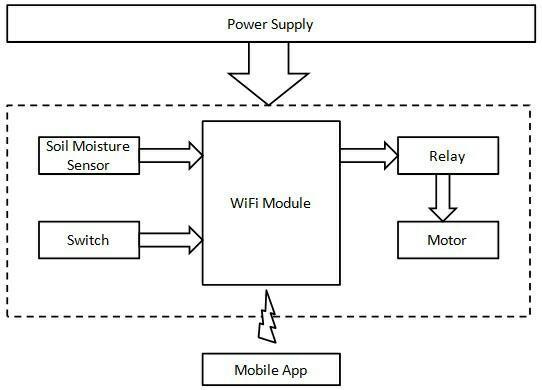
(UseanimagefromGoogle)Intheblockdiagramabove,after providingelectricity,theESP8266Wi-Fimodulereceivesthe
instructions toturn onthe motor via the app or manually using a switch. A comprehensive and self-contained Wi-Fi networksolutionthatcantransportsoftwareprogrammesis theESP8266Wi-Fimodule.Arelaywillbeusedtoturnon the motor in accordance with the programme that was burnedintotheWi-Fimodule.Arelayisanelectromagnetic component that connects two electrically isolated circuits magnetically.
The ESP8266 Wi-Fi module receives input from the soil moisture sensor. The farm's moisture level was detected using the soil moisture sensor. Once it reaches the soil, it determinestheamountofmoisturethereis.
4.2. Data Flow Diagram
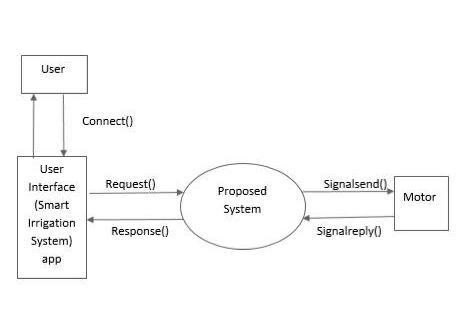
Fig 4.2: Data Flow Diagram
(Use an image from Google)A data flow diagram (DFD) models the process features of an information system by graphicallydepictingthe"flow"ofdatathroughit.ADFDis frequentlyusedasafirststeptodevelopasystemoverview withoutgoingintogreatdepththatcanthenbedeveloped. DFDscanalsobeusedforstructureddesign,whichvisualises data processing. Data flows in Fig. 4.2 begin at the user interface. The suggested system is linked to the user interface. A request () is sent to the suggested system whenever users provide instructions through the user interface.Thesignalissenttothemotorinresponsetothe request,andthemotorservesasanoutputdevice.Analertis giventothetargettoprocessthecommand.
4.3. Flowchart
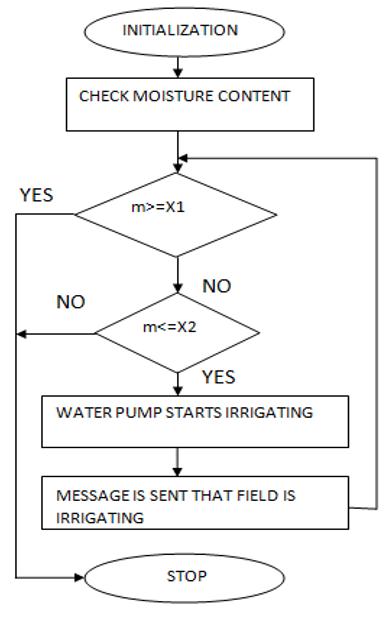
(UseanimagefromGoogle)Adiagrammaticillustrationofa solutionmodelforaspecificproblemisshowninFigure4.3. Inmanydifferentindustries,flowchartsareusedforprocess analysis, design, documentation, and programme management.
In a flowchart, the two most frequent box kinds are: i) a processingstep,whichistypicallyreferredtoasanactivity andisshownbyarectangularbox;andii)achoice,typically representedbyadiamond.TheuserneedsconfiguretheWiFihotspotbeforetheprocesscanbeginbecauseitdepends on their connection. After username and password configurationiscomplete,theusercanusetheapptochoose thenecessarycropandstarttheengine.Theusershouldtry again if the Wi-Fi hotspot generates an error due to improperconfiguration.5.DetailsofImplementation
5.1. System Implementation
The Hardware and Software utilised in this project are explainedasfollows:
5.1.1. Hardware Equipment
5.1.1.1
5.1.1.2.
5.1.1.3.
5.1.1.4.
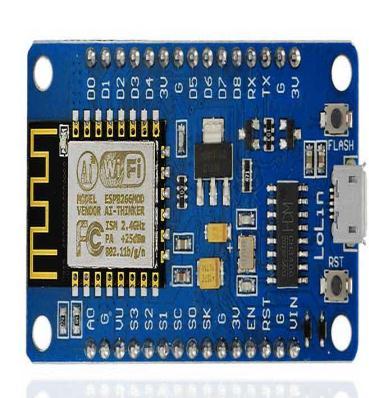
(An image from Google)The ESP8266 is a comprehensive and self-contained Wi-Fi network solution that can run software applications or disable all Wi-Fi networking featuresusingadifferentapplicationprocessor.Whenthe deviceismounted,theflashmemorycanbestartedstraight from an external Move and is the only application of the application processor. System performance will be enhanced, and memory requirements will be decreased, thankstobuilt-incachememory.Anotherinstanceiswhena Wi-Fi adaptor performs the function of wireless internet access.Anymicrocontroller-baseddesigncanincorporateit, and connecting to it is straightforward using an SPI/SDIO interfaceoracentralprocessorAHBbridgeinterface.GPIO ports, sensors, and other application-specific hardware enabletheESP8266'spowerful componenttoincorporate processingandstoragecapability.
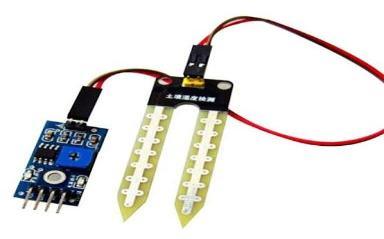
(AnimagefromGoogle)Thesoil'swetnesscanbemeasured using this sensor. The output of the module is high when thereisawaterscarcityinthesoil;otherwise,itislow.One canautomaticallywatertheflowerplantoranyotherplant that needs automatic watering by utilising this sensor. Moduleshavethreedifferentoutputmodes:simpledigital output,accurateanalogueoutput,andpreciseserialoutput.
5.1.1.3. Relay
Relay
Arelayisanelectromagneticswitchthatcanturnonoroffa considerably greater electric current and is driven by a relativelymodestelectriccurrent.Anelectromagnet,which is a coil of wire that turns into a temporary magnet when electricitypassesthroughit,isthebrainofarelay.Relaysfill in the space, allowing smaller currents to activate bigger ones. As a result, relays have two different functions: switches (which turn things on and off) and amplifiers (whichincreasesmallcurrents).(AnimagefromGoogle)
5.1.1.4. Submersible Water Pump
Fig.5.1.1.4: Submersible water pump
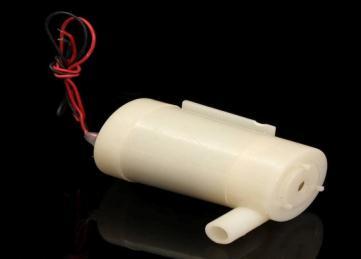
Anelectricsubmersiblepump(orsubspump,forshort)isa machine with a hermetically sealed motor that is tightly attached to the pump body (see figure d). The entire assemblyisdippedintheliquidthathastobepumped.This type of pump's primary benefit is that it avoids pump cavitation,aproblembroughtonbyasignificantelevation differencebetweenthepumpandthefluidsurface.Unlikejet pumps,whichmustdragfluids,smallDCsubmersiblewater pumpspushfluidstothesurface.Jetpumpsarelesseffective thansubmersibles.Ittypicallyrunsonvoltagesbetween3 and12.
5.1.2. Software Equipment
1.ArduinoIDE
2.Blynkapp
5.1.3.
Application of project
• Dependingonthecropandkindofsoil,thesystem must be able to control every last drop and determinetheactualamountofwaterneeded.This
is a highly useful feature that enables waste-free waterconservation.
• Both small and large fields can be used with this technique.
• Atrustworthyandeffectivemethodformonitoring environmentalparameters;
• Easyandconvenientgardenmaintenance.
6. Future Scope
In the future, a wireless component like a wireless soil moisturesensorcantaketheplaceofawirednetwork.RFID technologycanalsobeusedtocreatewirelesssystems.At eachphase,wecanaddanelectricsolenoidvalvethatcanbe automatically controlled by an Arduino board or by an ESP8266Wi-Fimodule.

7. Conclusion
WiththehelpofasoilmoisturesensorandaEsp8266Wi-Fi module,the"SmartIrrigationSystem"projectoptimisesthe use of water in agricultural fields without the need for humaninterventionfromfarmers.Themotoristurnedon andoffinaccordancewithcommandsfromanAndroidapp. Onlythenecessaryamountofwaterisprovidedtoeachcrop in this method, and the Android app displays the field's presentcondition.
References
[1]Smart irrigation system survey in the International Journal of Engineering Sciences and Research Technology (IJESRT)Dr.P.H.ZopeandH.N.KamalaskarISSN:2277-9655
[2]SensorBasedAutomatedIrrigationSystem WithIoT:A Technical Review by Karan Kanasura, Vijal Zaveri, Babu Madhav Institute of Technology, Uka Tasadia University, Bardoli,andGujarat,India.
[3]AutomaticIrrigationBasedonSoilMoistureforVegetable Crops, Rafael Muoz-Carpena and Michael D. Dukes, IFAS Extension,2005.
[4]VeenaDivyaK.IACSIT1,2,3,and5member.areal-time implementation of a drip irrigation methodology-based automatedirrigationcontrolsystem.InstrumentTechnology Department, R. V. College of Engineering, Bengaluru, Karnataka.2013;4(5).ISSN:2229-5518
[5]R.Suresh,S.Gopinath,K.Govindaraju,T.Devika,andN. Suthanthira Vanitha, "GSM based Automated Irrigation Control Using Raingun Irrigation System," International Journal of Advanced Research in Computer and Communication Engineering, Volume 3, Issue 2, February 2014.