Real Time Sign Language Translation Using Tensor Flow Object Detection
John Pius Thayiparampil1 , Kiran k2 , T Binto Binu3 , Sreejith Viju41-4BTECH UG Students ,Department of Computer Science and Engineering ,TOMS college of Engineering
APJ Abdul Kalam Technological University, Kerala ,India ***
Abstract - Deaf and mute people frequently use sign language to exchange information. In India, there are 63 million people who have severe hearing loss. At least 76–89 .Due to their limitations, people with speech and hearing impairments frequently have trouble communicating. Translation systems are required to help bridge the gap in under- standing that exists between the hearing and speechimpairedgroupsandthegeneralpopulation.Sointroducinga real-time translatessignlanguageisonesolutiontothisissue. It will be able to translate all of the varied gestures by gathering and analyzing motion data. Sign language can be readbyhumansinevery-dayculture.UsingTensorFlowobject identification,anovelreal-timesignlanguagetranslationhas been developed that can translate sign language based on hand movements and is understandable to both average individuals and those with major hearing and speech impairments. The Software will detect gesticulation.
Key Words: RealTimetranslation,SignLanguage,Tensor Flow , Object Detection , Gesture detection, Hearing and speechImpairment.
1.INTRODUCTION
Motiondetectiontracksshiftsinanobject'spositionwith relationtoitssurroundings,andviceversa.Wecanidentify moving objects in front of the camera with the aid of this motion detection program. This software can be used to carry out the following activities, among others: [1] Take assist for education purpose for deaf and muted students andteachers;[2]helpsinmeetingandconference;[3]helps togeteffectivetreatmentinmedicalsector;[4]for more effective andmoreinvolvingcommunication.Averygood waytolessenthe communicationgap.
This project report's main goal is to give a thorough descriptionoftheSignLanguageTranslatorsystemthatwas created as part of Real time sign language translator. Throughtheuseofthistechnique,peoplewhoaredeafor hard of hearing and non-sign language users can communicate more effectively. This initiative aims to improve inclusiveness for the deaf population and allow effective communication by utilizing cutting-edge technologyandartificialintelligence.Computervisionand machinelearninghavemadeconsiderablestridesinrecent years, enabling improvements in a number of areas, includingthetranslationandrecognitionofsignlanguages.
TensorFlow Object identification, a potent framework for object identification tasks, will be used in this project to create a sign language translator. We can close the communication gap between the hearing-impaired community and the rest of society by utilizing the capabilities of deep learning and image processing. For peoplewhohavehearingimpairments,signlanguageisan essential form of communication. The majority of people, however, lack the abilities needed to comprehend and interpret sign language. Effective communication and inclusion for the deaf and hard of hearing are severely hampered as a result. To solve this problem, we suggest creating a sign language translator that makes use of TensorFlow Object Detection, a cutting-edge tool for instantlyidentifyingandclassifyingitems.
1.2 GESTURE RECOGNITION
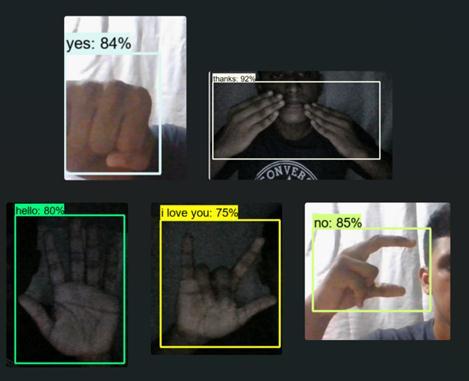
Gesture recognition acts as a translator between computersandpeopleandenablescomputerstounderstand human behaviors. This would enable natural humancomputerinteractionwithout puttingany extramechanical componentsindirectcontactwithusers.Thesignlanguage used by the deaf and dumb community is gesture-based. Whenitwasdifficulttotransmitaudioorwhentypingand writing were difficult but there was still the possibility of vision,thisgroupreliedonsignlanguageforcommunication

Peoplecouldonlycommunicatewitheachotheratthattime using sign language. Sign language is often used when someone doesn't want to speak; nevertheless, for the communityofthedeafanddumb,thisistheironlyformof communication.
1.3 LITERATURE REVIEW
Adefinedcollectionofhandgestureswithspecificmeanings used byhearing-impaired peopleto communicate in daily lifeisreferredtoasasignlanguage[3].Theycommunicate through body, face, and hand movements since they are visuallanguages.Aroundtheworld,therearemorethan300 different sign languages [5]. Even though there are numerousdistinctsignlanguages,onlyasmallportionofthe community is conversant in any of them, making it challengingforpeoplewithspecialneedstofreelyinteract with the general public. SLR offers a way to communicate withsignlanguageevenifyoudon'tknowit.Itcanrecognize gesturesandtranslatethemintolanguageslikeEnglishthat arewidelyspoken.
SLRisafairlybroadareaofstudy,andwhilemuchwork hasbeendoneinthisarea,therearestillmanyissuesthat needtoberesolved.Theelectronicsystemsarenowableto make decisions based on data and experience thanks to machine learning algorithms. The training dataset and testingdatasetarerequiredbytheclassificationalgorithms. Theclassifierlearnsfromthetrainingset'sexperiences,and themodelisevaluatedusingthetestingset[6].Numerous authorshavecreatedeffectivestrategiesfordatacollection andclassification[3][7].Previous researchcanbedivided into two categories based on the data collecting method: directmeasurementmethodsandvision-basedapproaches [3].ParticlefiltersandKalman[10][12].
2. METHODOLOGY
WiththeuseofaTensorFlowobjectidentificationAPI,the proposed system is designed to create a real-time sign languagedetectorandtrainitusingtransferlearningforthe created dataset [37]. Following the methods indicated in Section 3, images from a camera are gathered for data acquisitionusingPythonandOpenCV.
Alabelledmapthatrepresentsallthemodel'sobjectsand includestheiridandthelabelforeachletterofthealphabet iscreatedafterthe data collection.Thealphabet'sfirst26 lettersarerepresentedbyoneofthe26labelsonthelabel map.EachlabelhasauniqueIDwithavaluebetween1and 26. The open-source framework TensorFlow's object detectionAPImakesitstraightforwardtobuild,train,and use an object identification model. They offer a variety of detectionmodelsthathavepreviouslybeenpre-trainedon the COCO 2017 dataset through their technology, the TensorFlow detection model zoo. The pre-trained TensorFlow model utilized is SSD MobileNet v2 320x320. The SSD MobileNet v2 Object identification model is
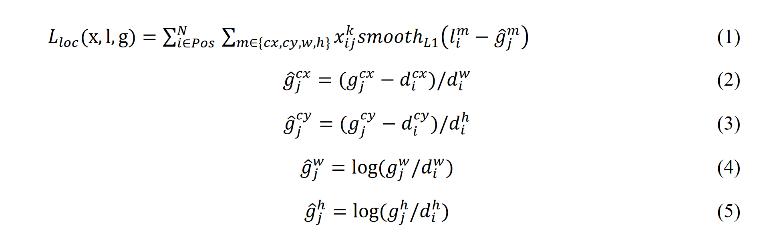
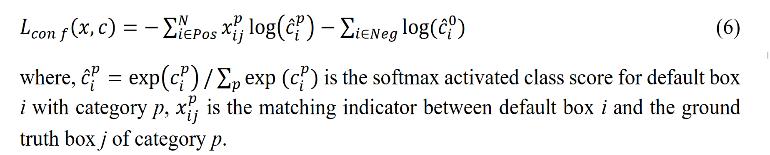
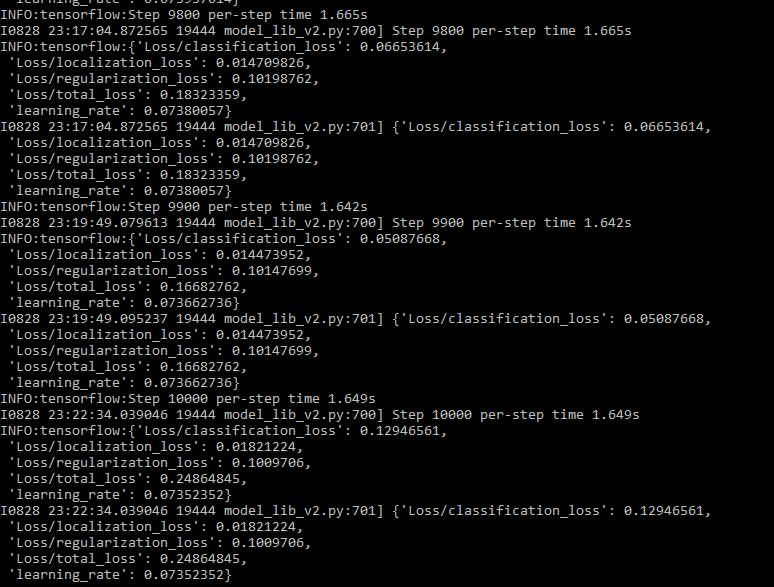
combined with the FPN-lite feature extractor, shared box predictor, and focus loss on training images scaled to 320x320.Pipelineconfiguration,orsettingupandaltering the settings of the pre-trained model to train it using the recentlycreateddataset,isfinished.Dependenciessuchas TensorFlow,con-fig_util,pipeline_pb2,andtext_formathave beenimportedforconfiguration.Themainadjustmentwas toreducethenumberofclassesoriginally90to26,which correspondstothenumberofsigns(alphabets)themodel will be trained on. The model was trained in 10000 steps after configuration setup and upgrading. The hyperparameter that was employed during training was to establishthemodel'strainingstepcount,whichwassetat 10,000 steps. The model experiences classification loss, regularization loss, and localization loss during training. Betweenthetruevaluesandtheanticipatedboundingbox correction,thelocalizationlossistimesoutofwhack.Eq.(1) to(5)containsthelocalizationloss's[38]formula.
Ontrainingimagesscaledto320x320,theFPN-litefeature extractor,sharedboxpredictor,andfocuslossareintegrated withtheSSDMobileNetv2Objectidentificationmodel.The pre-trainedmodel'ssettingshavebeensetupandmodified toallowittobetrainedusingthejust-createddataset.This processisknownaspipelineconfiguration.
listheanticipatedboundingbox,gisthegroundtruth boundingbox,andNisthenumberofmatchingdefault boxes.
In the section that follows, the various losses that were sustained during the experiment are discussed. Following training, the model is loaded from the most recent checkpoint,enablingreal-timedetection.Themodelwillbe preparedfortrainingafterconfigurationsetupandupdates.
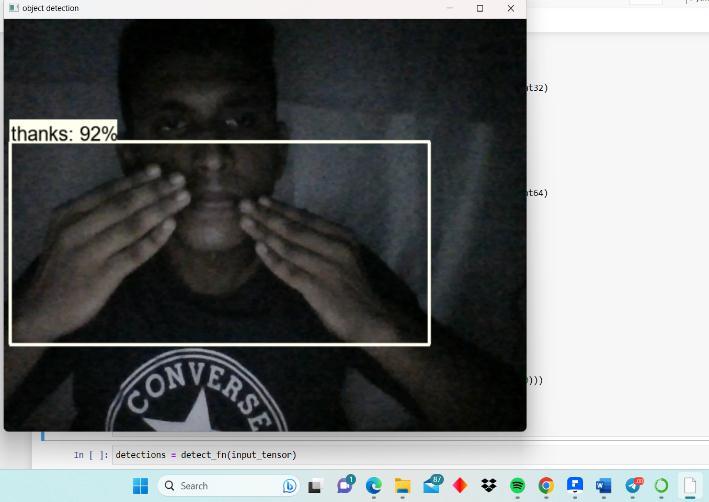
Themostrecentcheckpointgeneratedduringmodeltraining isusedtoloadthetrainedmodel.Themodelisnowfinished and prepared for real-time sign language-Detection. ThewebcamandOpenCVareonceagainusedforreal-time detection Real-time detection is accomplished using CV2 andNumPydependencies.AsdepictedinFig.2,thesystem recognizessignsinreal-timeandtranslateseachgesture's meaningintoEnglish.Thesystemiscontinuouslytestedby producinganddisplayingvariousindicators
2.1 DATA ACQUISITION
ForSignLanguage,areal-timesignlanguageidentification system is being created. Python and OpenCV are used to capture webcam photos for data acquisition. Real-time computervisionistheprimaryfocusofOpenCV'sfunctions. Itexpeditestheincorporationofartificialintelligenceinto commercialgoodsandoffersastandardinfrastructurefor computer vision-based applications. More than 2500 effectivecomputervisionandmachinelearningalgorithms areavailableintheOpenCVlibrary,whichmaybeusedfora variety of tasks, including face and object recognition, classification of human behaviors, object identification, trackingcameraandobjectmovements,andtheextractionof 3Dobjectmodels[35].Theproduceddatasetismadeupof signsthat,asillustratedinFig.1,correspondtoIndianSign Languagealphabets[36].
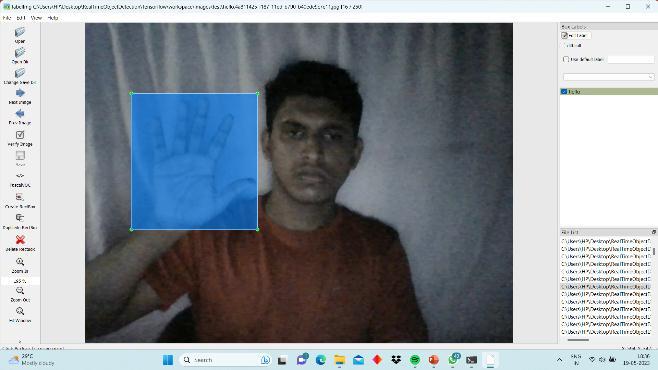
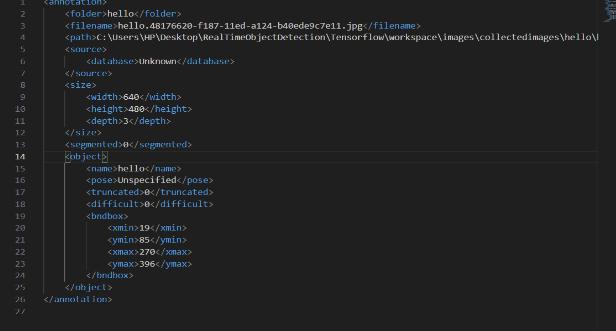
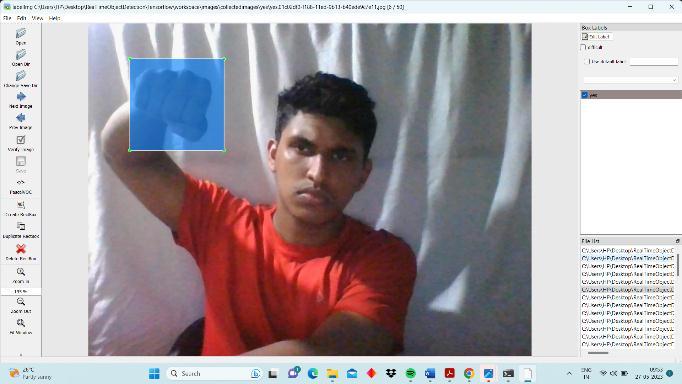
To create the dataset, 50 photos for each letter of the alphabetaretaken.Thephotosaretakeneverytwoseconds, allowingfortimetorecord gestureswithslightvariations eachtime,andabufferoffivesecondsisprovidedbetween twoseparatesigns,i.e.,togofromthesignof oneletterto the sign of another alphabet. The photographs that were capturedarekeptintheappropriatefolder.
2.2 IMPLEMENTATION
Thedatasetwasmade for SignLanguage, where thesigns areEnglishalphabets.Thedatasetisproducedusingthe data collection technique outlined in Section 3 of this document. The experiment was conducted on a computer running Windows 11that featured an Intel Ryzen 54600H4GHzprocessor,8GBofmemory,andawebcam (HP TrueVision HD camera with 0.31 MP and 640x480 resolution). The development environment consists of TensorFlowObjectDetectionAPI,JupyterNotebook,OpenCV (version4.2.0),andPython(version3.7.3).
2.3 RESULT
ThedevelopedsystemisabletodetectIndianSignLanguage alphabetsinreal-time.Thesystemhasbeencreatedusing TensorFlowobjectdetectionAPI.Thepre-trainedmodelthat has been taken from the TensorFlow model zoo is SSD MobileNet v2 320x320. It has been trained using transfer learningonthecreateddatasetwhichcontains500images
intotal,25imagesforeach toFig.6,the total loss experienced during the final 10,000 steps of trainingwas0.25;localizationlosswas0.18;classification losswas0.13;andregularizationlosswas0.10.Thelowest lossof0.17,asseeninFig.6,occurredatSteps9900.
detection, speed and responsiveness, robustness to variations,translationaccuracy,user-friendlyinterfaceand interaction,adaptability,usability,accessibility,andeffective errorhandling.
TheIndianSignLanguageRecognitionsystem'scutting-edge technique achieved 93–96% accuracy [5]. It is not a realtime SLR system, despite being quite accurate. This study addresses this problem. Despite the limited dataset, our systemhasmanagedtoreachanaverageconfidencerateof 87.4percent.
Thesefactorscontributetoaseamlessuserexperienceand facilitate effective communication between sign language usersandnon-signers.Whilethereisstillroomforfurther improvements and advancements, the real-time sign language translator demonstrates promising results in enhancinginclusivelyandaccessibility.Ithasthepotentialto empower sign language users by enabling them to communicate more easily and effortlessly in various contexts,suchaseducational,professional,orsocialsettings. Continued research and development in the field of sign language translation, combined with the advancements in TensorFlowObjectDetectionandotherrelatedtechnologies, holdgreatpromiseforthefuture.Astechnologyprogresses, we can expect further improvements in accuracy, speed, robustness,anduserexperience,ultimatelycontributingtoa moreinclusiveandconnectedsocietywherecommunication barriersarereducedoreliminatedforsignlanguageusers.
3.1 FUTURE WORK
Insignlanguagetranslatormayhaveaverygoodscopein sign language translating video calling app. The Python programming language can be used to translate sign languagesystemsinanumberofways,someofwhichare:
Future sign language translators can strive for higher accuracy in recognizing and interpreting sign language gestures.Machinelearningalgorithmscanbefurtherrefined and trained on larger datasets, enabling better understanding of subtle hand movements and facial expressions. Currently, many sign language translators require a slight delay in processing and translating signs. Future advancements may focus on reducing this latency, allowing for real-time translation, which would greatly enhancecommunicationbetweensignlanguageusersand non-signers.Recognitionoffacialexpressions:Recognizing facialexpressionscouldbeanotheradditionmadetothese systems.
ACKNOWLEDGEMENT
3.
The development of a real-time sign language translator using TensorFlow Object Detection offers significant potential for bridging communication gaps between sign languageusersandnon-signers.Byleveragingthepowerof objectdetectionmodelsandthelatestversionofTensorFlow Object Detection, the translator can accurately detect and localize sign gestures in real-time, enabling efficient and effective translation into spoken or written language. The performanceevaluationofsuchasystemfromanenduser’s perspective highlights the importance of accuracy in sign
The task has been successfully completed, and I am very appreciative to God Almighty for his grace and blessings, withoutwhichthisstudywouldnothavebeenpossible.
REFERENCES
[1] Kapur,R.:TheTypesofCommunication.MIJ.6,(2020).
[2] Suharjito, Anderson, R., Wiryana, F., Ariesta, M.C., Kusuma, G.P.: Sign Language Recognition Application Systems for Deaf-Mute People: A Review Based on Input-Process-Output.ProcediaComput.Sci.116,441–
448 (2017). https://doi.org/10.1016/J.PROCS.2017.10.028
[3] Konstantinidis, D., Dimitropoulos, K., Daras, P.: Sign languagerecognitionbasedonhandandbodyskeletal data. 3DTV-Conference. 2018-June, (2018). https://doi.org/10.1109/3DTV.2018.8478467.
[4] Dutta,K.K.,Bellary,S.A.S.:MachineLearningTechniques for Indian Sign Language Recognition. Int. Conf. Curr. Trends Comput. Electr. Electron. Commun. CTCEEC 2017. 333–336 (2018). https://doi.org/10.1109/CTCEEC.2017.8454988.
[5] Bragg,D.,Koller,O.,Bellard,M.,Berke,L.,Boudreault,P., Braffort, A., Caselli, N., Huenerfauth, M., Kacorri, H., Verhoef, T., Vogler, C., Morris, M.R.: Sign Language Recognition, Generation, and Translation: An InterdisciplinaryPerspective.21stInt.ACMSIGACCESS Conf. Comput. Access. (2019). https://doi.org/10.1145/3308561
[6] Rosero-Montalvo, P.D., Godoy-Trujillo, P., FloresBosmediano, E., Carrascal-Garcia, J., Otero-Potosi, S., Benitez-Pereira, H., Peluffo-Ordonez, D.H.: Sign LanguageRecognitionBasedonIntelligentGloveUsing MachineLearningTechniques.2018IEEE3rdEcuador Tech. Chapters Meet. ETCM 2018. (2018). https://doi.org/10.1109/ETCM.2018.8580268.
[7] Zheng,L.,Liang,B.,Jiang,A.:RecentAdvancesofDeep LearningforSignLanguageRecognition.DICTA20172017Int.Conf.Digit.ImageComput.Tech.Appl.2017Decem, 1–7 (2017). https://doi.org/10.1109/DICTA.2017.8227483.
[8] Rautaray, S.S.: A Real Time Hand Tracking System for InteractiveApplications.Int.J.Comput.Appl.18,975–8887(2011).
[9] Zhang,Z.,Huang,F.:Handtrackingalgorithmbasedon super-pixelsfeature.Proc.-2013Int.Conf.Inf.Sci.Cloud Comput. Companion, ISCC-C 2013. 629–634 (2014). https://doi.org/10.1109/ISCC-C.2013.77.
[10] Lim,K.M.,Tan,A.W.C.,Tan,S.C.:Afeaturecovariance matrix with serial particle filter for isolated sign language recognition. Expert Syst. Appl. 54, 208–218 (2016).https://doi.org/10.1016/J.ESWA.2016.01.047.
[11] Lim, K.M., Tan, A.W.C., Tan, S.C.: Block-based histogram of optical flow for isolated sign language recognition.J.Vis.Commun.ImageRepresent.40,538–545 (2016). https://doi.org/10.1016/J.JVCIR.2016.07.020
[12] Gaus, Y.F.A., Wong, F.: Hidden Markov ModelBased gesture recognition with overlapping hand-
head/hand-handestimatedusingKalmanFilter.Proc.3rdInt.Conf.Intell.Syst.Model.Simulation,ISMS2012. 262–267 (2012). https://doi.org/10.1109/ISMS.2012.67.
[13] Gaus,Y.F.A.,Wong,F.:HiddenMarkovModel-Based gesturerecognitionwithoverlappinghand-head/handhandestimatedusingKalmanFilter.Proc.-3rdInt.Conf. Intell. Syst. Model. Simulation, ISMS 2012. 262–267 (2012).https://doi.org/10.1109/ISMS.2012.67
[14] Mohandes, M., Aliyu, S., Deriche, M.: Arabic sign languagerecognitionusingtheleapmotioncontroller. IEEE Int. Symp. Ind. Electron. 960–965 (2014). https://doi.org/10.1109/ISIE.2014.6864742.
[15] Enikeev, D.G., Mustafina, S.A.: Sign language recognitionthroughLeapMotioncontrollerandinput prediction algorithm. J. Phys. Conf. Ser. 1715, 012008 (2021). https://doi.org/10.1088/17426596/1715/1/012008
[16] Cheok,M.J.,Omar,Z.,Jaward,M.H.:Areviewofhand gestureandsignlanguagerecognitiontechniques.Int.J. Mach. Learn. Cybern. 2017 101. 10, 131–153 (2017). https://doi.org/10.1007/S13042-017-0705-
[17] Cheok,M.J.,Omar,Z.,Jaward,M.H.:Areviewofhand gestureandsignlanguagerecognitiontechniques.Int.J. Mach. Learn. Cybern. 2017 101. 10, 131–153 (2017). https://doi.org/10.1007/S13042-017-0705-
[18] Camgöz, N.C., Koller, O., Hadfield, S., Bowden, R.: Sign language transformers: Joint end-to-end sign language recognition and translation. Proc. IEEE Comput. Soc. Conf. Comput. Vis. Pattern Recognit. 10020–10030 (2020). https://doi.org/10.1109/CVPR42600.2020.01004.
[19] Cui,R.,Liu,H.,Zhang,C.:ADeepNeuralFramework forContinuousSignLanguageRecognitionbyIterative Training.IEEETrans.Multimed.21,1880–1891(2019). https://doi.org/10.1109/TMM.2018.2889563
[20] Bantupalli, K., Xie, Y.: American Sign Language RecognitionusingDeepLearningandComputerVision. Proc. - 2018 IEEE Int. Conf. Big Data, Big Data 2018. 4896–4899 (2019). https://doi.org/10.1109/BIGDATA.2018.8622141.
[21] Hore, S., Chatterjee, S., Santhi, V., Dey, N., Ashour, A.S.,Balas,V.E.,Shi,F.:IndianSignLanguageRecognition Using Optimized Neural Networks. Adv. Intell. Syst. Comput. 455, 553–563 (2017). https://doi.org/10.1007/978-3-319-38771-0_54
[22] Kumar, P., Roy, P.P., Dogra, D.P.: Independent Bayesian classifier combination based sign language
recognition using facial expression. Inf. Sci. (Ny). 428, 30–48 (2018). https://doi.org/10.1016/J.INS.2017.10.046.
[23] Sharma,A.,Sharma,N.,Saxena,Y.,Singh,A.,Sadhya, D.:Benchmarkingdeepneuralnetworkapproachesfor IndianSignLanguagerecognition.NeuralComput.Appl. 2020 3312. 33, 6685–6696 (2020). https://doi.org/10.1007/S00521-020-05448-8
[24] Kishore,P.V.V.,Prasad,M.V.D.,Prasad,C.R.,Rahul, R.:4-Cameramodelforsignlanguagerecognitionusing ellipticalFourierdescriptorsandANN.Int.Conf.Signal Process.Commun.Eng.Syst.-Proc.SPACES2015,Assoc. with IEEE. 34–38 (2015). https://doi.org/10.1109/SPACES.2015.7058288.
[25] Tewari,D.,Srivastava,S.K.:AVisualRecognitionof StaticHandGesturesinIndianSignLanguagebasedon KohonenSelf-OrganizingMapAlgorithm.Int.J.Eng.Adv. Technol.165(2012).
[26] Gao,W.,Fang,G.,Zhao,D.,Chen,Y.:AChinesesign language recognition system based on SOFM/SRN/HMM. Pattern Recognit. 37, 2389–2402 (2004).
https://doi.org/10.1016/J.PATCOG.2004.04.008.
[27] Quocthang,P.,Dung,N.D.,Thuy,N.T.:Acomparison of SimpSVM and RVM for sign language recognition. ACM Int. Conf. Proceeding Ser. 98–104 (2017). https://doi.org/10.1145/3036290.3036322
[28] Pu,J.,Zhou,W.,Li,H.:Iterativealignmentnetwork for continuous sign language recognition. Proc. IEEE Comput.Soc.Conf.Comput.Vis.PatternRecognit.2019June, 4160–4169 (2019). https://doi.org/10.1109/CVPR.2019.00429.
[29] Kalsh,E.A.,Garewal,N.S.:SignLanguageRecognition System.Int.J.Comput.Eng.Res.6.
[30] Singha,J.,Das,K.:IndianSignLanguageRecognition UsingEigenValueWeightedEuclideanDistanceBased ClassificationTechnique.IJACSA)Int.J.Adv.Comput.Sci. Appl.4,(2013).
[31] Liang, Z., Liao, S., Hu, B.: 3D Convolutional Neural Networks for Dynamic Sign Language Recognition. Comput. J. 61, 1724–1736 (2018). https://doi.org/10.1093/COMJNL/BXY049.
[32] Pigou,L.,VanHerreweghe,M.,Dambre,J.:Gesture andSignLanguageRecognitionwithTemporalResidual Networks. Proc. - 2017 IEEE Int. Conf. Comput. Vis. Work. ICCVW 2017. 2018-Janua, 3086–3093 (2017). https://doi.org/10.1109/ICCVW.2017.365
[33] Huang,J.,Zhou, W.,Zhang, Q.,Li,H.,Li,W.:Videobased Sign Language Recognition without Temporal Segmentation
[34] Cui, R., Liu, H., Zhang, C.: Recurrent convolutional neural networks for continuous sign language recognition by staged optimization. Proc. - 30th IEEE Conf. Comput. Vis. Pattern Recognition, CVPR 2017. 2017-Janua, 1610–1618 (2017). https://doi.org/10.1109/CVPR.2017.175
[35] About–OpenCV
[36] PosteroftheManualAlphabetinISL|IndianSign Language Research and Training Center ( ISLRTC), GovernmentofIndia.
[37] Transfer learning and fine-tuning | TensorFlow Core.
[38] Wu,S.,Yang,J., Wang, X.,Li,X.:IoU-balancedLoss FunctionsforSingle-stageObjectDetection.(2020).
[39] Kapur, R.: The Types of Communication. MIJ. 6, (2020)..