Factors Influencing the Demand of Park and Ride in Traffic Management: A Review

Puppala Abhiram1 , Dr. Ashish Patnaik2
Abstract - Park and Ride is a traffic management strategy for the issue of urban traffic congestion. Park and Ride (P&R) system is included into the city's urban environment's transportation infrastructure. P&R is regarded as a crucial component of transportation design since it serves as an intermodal connection point between private automobiles and public transportation. Park-and-ride services (P&R services) are widely used as a component of total demand management in several nations. Despite the difficulty in locating parking spaces in city centers, P&R services located near peripheral public transport stops has shown to be progressive in reducing traffic congestion. The objective of this research is to study the factors influencing the choice rider’s behavior towards using P&R services and review the demand of P&R system in traffic management. This study can provide policy makers with relevant data for future planning and growth of park-and-ride service.
Key Words: Park and Ride, Traffic congestion, Intermodal connection point, Choice rider, traffic management.
1.INTRODUCTION
Awell-balancedandenvironmentallyfriendlytransportation system is greatly influenced by transportation planning. Highway development boosted private vehicles and dominatedonpublictransportinindustrializedcountries. Theenvironmentalconsequences,suchasnoiseandexhaust pollution, are escalating as the number of cars increases. Physical interference, obstruction, and jamming are additionalconsequencesoftheseadvancements.Oneofthe maincausesofairpollutionisthetransportationindustry, whichalsoconsumesalotofnon-renewableresourceslike petroleum.Theincreasing growth ofautomobilesincities notonlyworsensenvironmentalconditionsbutalsoleadsto socialproblemsincludingbadhealthandtrafficjams.
Duetothesecircumstances,strategiestoreducethenumber ofpassengerautomobilesenteringthecitycenteraresought afterandputintopractice.TheconstructionofParkandRide (P&R) parking lots on the outskirts of cities is a common practice.Theyaremadetomakeitpossibleforcustomersto mix private and public modes of transportation while traveling, hence minimising the amount of passenger automobiles entering the city center. P&R parking helps makecitycentersmoreeasilyaccessiblebytransportation.
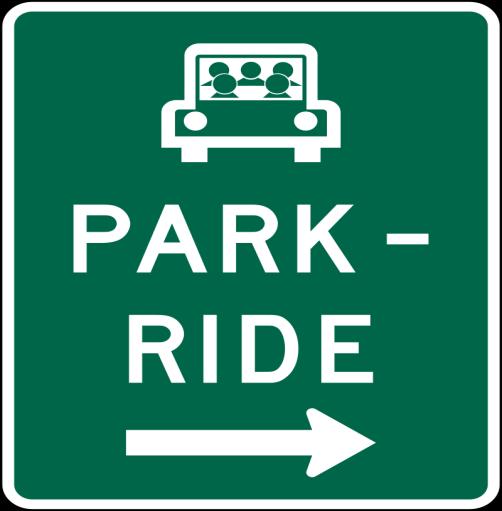
Fig-1: StandardparkandridesignintheUnitedStates
TheP&Rsystemisacollectionoffacilitiesplacedacross a city's urban area with the goal of creating a link point or modalinterchangetomovedriversofprivatevehiclestoa moreenvironmentallyfriendlymodeoftransportation,such public transportation. In other words, the limits of both privateandpublictransportationaretightlyrelatedtothe Park and Ride system. Those who commute everyday by privatevehicletotheirdestinationliveinplacesoutsidethe metropolitan core or where there are few or no direct connections to public transportation. The core business district (CBD), where they do daily activities like work or shopping,istypicallytheirobjective.Duetotheheavytraffic intheurbanarea,theentirejourneybyprivatevehiclefrom thepointoforigintothedestinationisuncomfortable.Due to the fact that the connection and accessibility of public transportation are much better in urban areas, the P&R system enables modal shift for users of private transportationtoswitchtothepublictransportationsystem. This paper aims to study and review literature works on P&Rmethodintrafficmanagement.
2. LITERATURE REVIEW
Significant amount of research work has been done on various aspects in the field of P&R parking like modelling P&Rparkinguserbehavior,studyoffactorsimpactingP&R parkingchoice,placementandcapacityofP&Rparking,and analysisofparkingspaceusage.Thisreviewpaperfocusses on the aspect of on the factors influencing the demand of P&Rintrafficmanagement.
Basedonareviewofrelevantliterature,itcanbeinferred thatlogitmodelsarefrequentlyemployedtosimulateP&R parking users behavior. Using discrete modal selection, KaramychevandReeven[1]investigatedhowP&Rparking inTheNetherlandsaffectedthedisruptionofvehicletraffic. Thefindingsoftheirstudyshowthatthedecreaseintraffic inthecitycentre(causedbytheP&Rparkingconstruction) mayattractindividualswhohavepreviouslyreliedonpublic transportation to use a car to travel to the city centre. Additionally,theysuggested thata declineintrafficinthe city'scorecanbematchedbyacorrespondingriseintraffic onthecity'soutskirts.BosandMolin[2]presentedalogit model that was based on the options provided to drivers, includingP&Rparking,personalvehicles,andotherformsof public transportation. These findings show that methods taken to lessen the appeal of cars are more common than makingtheP&Rparkingthe mostalluringoptionthrough certaintactics.
AnothertopicexploredinthediscussionofP&Rparkingis modellingtheactionsofP&Rparkingcustomers.Sharmaet al. [3] carried out research to comprehend the actions of P&Rparkingcustomers.Twopolynomiallogitmodelswere created by them. The first presupposed that users would pick the most usable options. The users select the choice theyfindmostuseful afterconsideringall oftheiroptions andperceivingthelevelofprofitassociatedwitheachone. Thesecondmodelmadetheassumptionthatusersminimise lossesincomparisontoaccessiblealternativeswhilemaking decisions.Thefindingsofthisstudysuggestthatconsumers selectP&Rparkingtoreducetheirtriptimeandexpenses. TheworksofQinetal.[4]whouseddecisionfieldtheoryto createamodeldescribingthepsychologicaldecision-making processesoftravellers,canbeincludedinthiscollectionof works. Based on surveys, Zhao et al. [5] provided a polynomial logit model for calculating the likelihood of selectingatravelmode.
Similar research was done by He et al.[6], who also used surveys to try to determine what factors affected P&R parkingusewhentravelling.Theyemployedabinarylogit model for this. According to the model's findings, higher monthlyincomeandmoreyearsofdrivingexperienceare associatedwithlessfrequentuseof P&Rparkingwhereas parking rates and congested roads are associated with increased usage of P&R parking. He et al. [7] also constructedautilityfunctionusingsurveydata.Accordingto
the findings of the research, the authors claimed that the preferencesforusingP&Rparkingareinfluencedtovarying degreesbythepersonalqualitiesofautomobileusers,travel traits,andtheenvironment.
Inresponse,WebbandKhani[8]publishedresearchonthe preferencesofP&Rparkingusersinaresearchwork.Inthis study, the polynomial logit model, mixed logit model, and nested logit model were evaluated for their predictive power. Using the results of the research, Webb and Khani concluded that polynomial and mixed logit models accuratelyreflectP&Rparkingconsumers'preferences.The findingsoftheirstudysupportthenotionthatuserspreferto spendmoretimetravellingthantravellinglongdistances.A disaggregatedmodelbasedonsurveyresultswasalsogiven byYingetal.[9]inadifferentpieceofwork.Accordingtothe findings, traffic jams, route awareness, and a scarcity of parkingspacesarethekey variablesinfluencinghowP&R parkingusersbehave.Hole[10]alsoutilisedthelogitmodel, althoughitwasabinomialmodel.Basedontheresultsofthe survey, characteristics that influence the choice of P&R parkingasoneofthetravelfactorswereexamined
Szarata[11]presentedthefindingsofaresearchthatused the Delphic approach to estimate the number of possible users of the P&R parking in . In his subsequent research, Szarata [12] presented a method for calculating the percentage of city trips that now use P&R parking as opposedtotheinitialmodeoftransportation.Theoutcomes ofsurveysconductedusingtheDelphimethodservedasthe foundationforthismethodology.Therelationshipbetween the variables influencing P&R parking choice and the intention to use parking was examined by Qin et al. [13] using structural equation modelling. The findings of the study conducted by Qin et al. suggest that poor traffic conditions are to blame for the use of P&R parking. More individualschooseP&Rparkingduetotheexcellentquality ofserviceprovidedbythistypeofparkingandthecomfort levelofusingpublictransportation.Ontheotherhand,Chen etal.[14]createdamobileapplicationthataidsP&Rparking usersinselectingappropriatespacestoparktheircars.Chen etal.employedamulti-criteriadecision-makingmodelfor thisobjective
Xianwei LIU et al. [15] investigated into the behaviors in typical Shanghai park and ride locations. The findings indicatethatthecostbenefitandtimesavingsofparkand rides are its main draws. The main deterrent for interviewees choosing park and ride is the hassle of the transition. Savings are what most people consider when decidingwhethertochooseP&Rtime.Peoplearemorelikely to pick P&R when there is a reduction in time than when thereisareductioninexpense.Zhi-ChunLi,etal.[16]useda variational inequality framework to formulate the multimodal network equilibrium problem. The results demonstrated a significant relationship between the network performance in terms of total realised travel
demand and social welfare gain and the parking charging level,thenumberofparkingspacessuppliedattheP&Rsite andintheCBDarea,aswellasthedispatchingfrequencyand fareofmetroline.TheefficiencyofamodifiedASAsolution processisillustratedusinganumericalexamplebyZiqiSong et al. [17]. The findings demonstrate that the ideal design significantly increases net social value and motivates commuterstoswitchfromdrivingtotransitandP&Rmodes i.e how the best location and capacity of P&R parking encourage commuters to drive to public transportation whileusingP&Rparking.
Shahi Taphsir Islam, et al [18]. explored the mode change behaviour of P&R users. The choosing behaviour of P&R users'modechangesisexaminedusingsurveydataonP&R usersatvariousMelbournestations,parkinglots,andbus terminals. In this study, the models for the driving mode with a reference P&R mode and the public transportation alone mode were estimated using multinomial logistic regression using SPSS. Using only public transportation increases the likelihood of doing so for the entirety of the trip,whileusingitonlyoccasionallyincreasesthelikelihood of opting for P&R mode. According to the findings of this study,thevariablesaffectingtheselectionofP&Rparking travelarethe amount of time spent travelling via P&R parking, the amount of time spent travelling overall, the modeoftransportation,andanynearbyparkingfees.Inthe study proposed by Xinyuan Chen, et al. [19] in order to encourage people to pick P&R, this analysis takes into accounttwodistance-basedtrainfarediscountprograms.It is suggested to implement both a linear and a nonlinear distance-based train fare discount scheme. The use of distance-based P&R train fare pricing systems could effectivelyshifttraveldemandtotheP&Rmodeandreduce traffic in the downtown region, according to numerical examples.TheutilisationrateofP&Rsiteslocatedfarfrom the city centre could be efficiently increased by distancebasedP&Rfeeschemes.
According to Morrall and Bolger's [20] analysis, the availability of park-and-ride services has a significant influenceonhowoftenpeopleusetransportationinthecity center,Itsimpactaccordingtohimisgreaterthanimpactof factorslikereductionoftraffic,improvingaccessetc.Olaru et al [21] concluded in their study that if other forms of transportation are included in the P&R system, public transportation may also increase. In other words, bike parking, means of access, and time of day were the key determinantsofselectionforaparticularfacility.N.A.Hamid, etal[22]concludedthattheintroductionofadedicatedbus laneinthecitycentrewillallowforaneffectiveshiftatthe P&Rserviceand will likelyresultinlesstravel time being requiredforP&Rservice.Additionally,usingapark-and-ride service is necessary to save money and time compared to usinganotherformoftransportation.
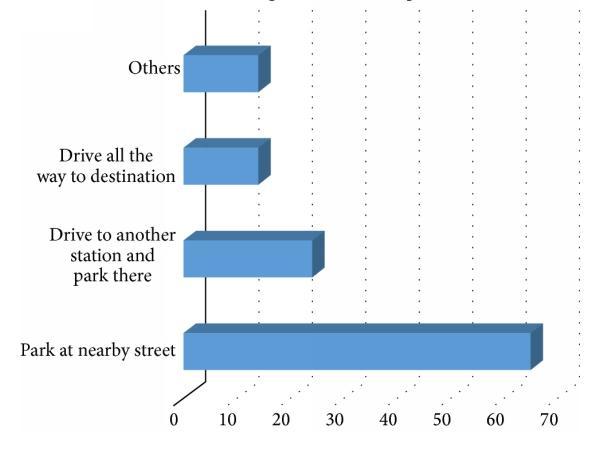
Parkhurst[23]foundthatalthoughpark-and-rideservices reduceurbancongestion,theycanincreaseperipheralurban vehiculartrafficasdriversfailtomakefurtherjourneysor attempttoaccessthefacilities,orinsomesituations,switch fromnon-motorizedtomotorisedtravel.Theeffectivenessof commuter and ride-sharing services, the availability of incentives like high occupancy vehicle (HOV) priority, travellers' financial circumstances, and physical characteristicslikethedistributionofemploymentandjobs are all important factors. Magelund [24] investigated a numberofvariablesthatinfluencepeople'sdecisiontousea carversuspublictransportation.Magelundexcludedowning acarasadescriptiveelementinhermodel.Asaresult,itis calculatedbasedontheothercriteria.Herresearchshows thatwhereasmoneyandfactorsconnectedtotheworkplace are substantially correlated, gender does not explain behavior.Ontheotherside,thechoiceoftransportmodeis directlyinfluencedbyincomeandemployment.Theoutcome demonstrates the importance of attitudes as a point of clarification. Low income and difficult parking at their workplacesaretwofactorsthatinfluencewhypeopleselect publictransportation.Althoughtheresearchinthefieldof P&RisverylimitedinIndia,Accordingtothestudiesdoneby
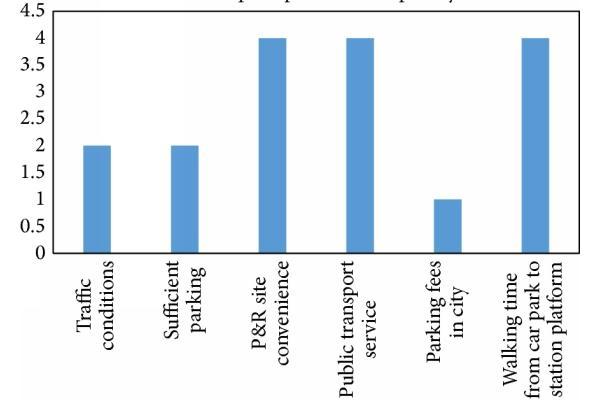
Aditya Manish Pitale et al.[25] decision riders have prioritisedqualitativevariablesoverquantitativefactorslike cost and time in the current setting. This suggests that customerswhodrivetheirowncarswillonlybedrawnto theP&Riftheyreceiveservicesthatarecomparabletothose theyreceivefromtheirowncars.Thefindingsofthisstudy supporttheideathatchoiceriderswouldpreferasuperior facilityoveronethatismoreaffordable.Ifgivenacleanand safesetting,therespondentswouldprefertoemployP&R.
KraeE.Stieffenhofeetal.[26]proposedamethodologyto assesstheperson-efficiencyofparkingspacesattheselots, measured as the passenger occupancy of parked vehicles. Thesefindingssupportearlierhypothesesthatthemajority of parked cars were not full, and they offer scientific argumentsfortheuseofparkingmanagementmethodsto increase parking efficiency. The estimations of personefficiencyfromtheauditwerefairlyaccurate,accordingtoa user intercept survey. The analysis also showed that the majorityofpeoplewhoparkedattheselocationsdidsofor transit. Fixed-route transit predominated, however numerouslotssawsubstantialcarpool/vanpooluseaswell. It will be necessary to take action to forbid these flexible transit uses if they are not desired. However, if these informalusesareprohibitedattheselots,alternativespace should be made available so that carpool/vanpool formationscanstillresult.
Shahrbanoo Rezaei et al. [27] conducted a case study to understandtheplacementbenefitsofP&Rfacilities.Inorder to take into account probable commuter behaviour when arrangingtheamenities,demandandoptimisationmodels were combined. Results of a case study conducted for the City of Nashville werediscussed. According to the case study's findings, the placement of P&R facilities could enhancenetworkefficiencyandloweremissionsandVKT.
Jamil Hamadneh etal.[28]intheir researchwork studied howlongerparkingtimesatP&Rfacilitiesaffecttraveltimes. MATSim, an open-source programme, which employs coevolutionarytechniques,isusedtorunthesimulation.The outcome confirms the overall findings of earlier research thattheP&Rsystemlengthensoveralltraveltimes.Thelink wasnotlinearbecauseitdependsonanumberofvariables, including traveller location, P&R facility location, and potentialtimeallotmentfordailyactivityplans.Accordingto the simulation, the average trip time increases by 5.75 minuteswhenparkingatP&Rfacilitiesisincreasedfrom3-6 to 10 minutes. The findings of this study inform policymakersandP&Roperatorsaboutthesignificanceof developingparkingmanagementtechniquestocutdownon timespentatP&Rfacilities,encourageautomobileusersto usetheP&Rsystem,andlessentrafficandpollutioninthe city centre. The study's findings support the idea that the P&Rsystem'soperationalstrategyaffectstravellers'mobility byusingtechnologytocutdownontimespentattheP&R facility.
OleksiiLobashovetal.[29]conductedacasestudyofthecity to obtain the demand characteristics for park and ride systemintheKharkiv.Theresultsoftheirstudyindicated that despite a negative assessment of the urban trip efficiency,only38%ofdriversarereadytouseparkandride lotsundervariousconditions.Thetripdistanceinsidethe city is used to determine the quantitative aspects of the distributionoftransportationtripsinthenodesofpotential 'parkandride'lotlocations.Thedemandfor"parkandride" lots was segmented according to the frequency of trips to Kharkiv, the commute distance within the city, and the acceptability of the terms for using such parking lots as a resultoftheanalysisoftheobjectivedatathatwasgathered. The results show that the "park and ride" demand is essentially nonexistent for distances of communication within the city of up to 5 km, and that the majority of the demandoccursfordistancesofcommunicationoutsidethe cityofbetween5and12km.
Xinyuan CHEN et al. [30] developed a model which gives us access to the modal split and route preference patternsforthewholeurbantransportsystem,makingita veryeffectivetoolforassessingthepotentialperformanceof PNR and improving its design. In this research, stochastic traveltimeistakenintoaccountalongwithCNLformodal split.Withthisadvancement,itisanticipatedthatwewillbe able to achieve a more rational pattern for the mode and route selection of the urban transport system, which is essentialfortheplanninganddesignofaPNRschemeina city.
3. CONCLUSIONS
Thispaperhasexaminedtheusageofpublictransitviaparkand-ride services, which is a well-known strategy to launching a sustainable transport agenda. Similarly, it elaboratesonthefactorsimpactingtheuseofpark-and-ride servicesasatransportationdemandmanagementtechnique.
Togivetransportationresearchersandplannersatoolthat canbecustomisedtothecitydesignstheyareplanning,this articlecontainstheliteratureontheP&Rsystem.Thereare citieswherethesystemisalreadyoperational,somewhereit isplannedtobedeployed,otherswhereithasalreadybeen fully implemented, and cities that are in the process of becomingsmartcities.PlanningforP&Rsystemsshouldtake into account emerging technologies like driverless and electrifiedautomobiles.
TheP&Rsystemshouldbeconsideredamobilitycomponent that interacts with the various transport systems in the transport policies included in a city's SUMP but P&R shouldn'tbeseenasadistinctcomponentofmobility.
REFERENCES
[1] D.Karamychew,V.;Reeven,P.ParkandRide:Goodfor thecity,goodfortheregion?Reg.Sci.UrbanEcon.2011, 41,455–464.
[2] Bos,I.;Molin,E.Istherea“Stick”Bonus?AStatedChoice Model for P&R Patronage incorporating cross Effects. Eur.J.Transp.Infrastruct.Res.2006,6,275–290.
[3] Sharma, B.; Hickman, M.; Nassir, N. Park-and-ride lot choice model using random utility maximization and randomregretminimization.Transportation2019,46, 217–232.
[4] Qin, H.; Guan, H.; Wu, Y.J. Analysis of park and ride decision behavior based on Decision Field Theory. Transp. Res. Part F Traffic Psychol. Behav. 2013, 18, 199–212.
[5] Zhao,X.;Li,Y.;Xia,H.Behaviordecisionmodelforpark and ride facilities utilization. Adv. Mobil. Theor. Methodol.Appl.2016,9.
[6] He,B.H.;Wang,W.;Chen,J.Achoicemodeloftraveler preference for P&R facilities. J. Harbin Inst. Technol. 2009,4,243
246.
[7] He, B.; He, W.; He, M. The attitude and preference of traveler to the Park & Ride facilities: A case study in Nanjing,China.Procedia-Soc.Behav.Sci.2012,43,294–301.
[8] Webb,A.;Khani,A.Park-and-RideChoiceBehaviorina MultimodalNetworkwithOverlappingRoutes.Transp. Res.Rec.2020,2674,150–160.
[9] Ying, H.; Xiang, H. Study on influence factors and demandwillingnessofParkandRide.InProceedingsof the2009SecondInternationalConferenceonIntelligent Computation Technology and Automation, Changsha, China,10–11October2009;Volume4,pp.664–667.
[10]Hole,A.R.ForecastingthedemandforanemployeePark and Ride service using commuters stated choices. Transp.Policy2004,11,355–362.
[11]Szarata,A.Definingshapeofmembershipfunction for Mamdani’sFuzzyInferenceSystemwithinpark&ride sharemodelling.AIPConf.Proc.2015,1648,600004.
[12]Szarata, A. Modeling park and ride travel forecasting. Transp.Miej.iReg.2007,7–8,11–16.
[13]Qin,H.;Guan,H.;Zhang,G.Analysisofthetravelintent forparkandridebasedonperception.Discret.Dyn.Nat. Soc.2012,2012,1–14.
[14]Chen,Z.;Xia,J.C.;Irawan,B.;Caulfied,C.Developmentof location-based services for recommending departure stations to park and ride users. Transp. Res. Part C Emerg.Technol.2014,48,256–268.
[15]Liu,X.;Yun,M.;Chen,Z.;Yang,X.Investigation,Analysis, and Modeling of Choice Behavior of Park and Ride; American Society of Civil Engineers (ASCE): Beijing, China,2012;pp.1643–1651.
[16]Li, Z.C.; Lam, W.H.K.; Wong, S.C.; Zhu, D.L.; Huang, H.J. Modeling park-and-ride services in a multimodal transport network with elastic demand. Transp. Res. Rec.2007.
[17]Song,Z.; He, Y.;Zhang,L.Integrated planningof parkand-ridefacilitiesandtransitservice.Transp.Res.PartC Emerg.Technol.2017,74,182–195.
[18]Islam,S.T.;Liu,Z.;Sarvi,M.;Zhu,T.Exploringthemode change behavior of park-And-ride users. Math. Probl. Eng.2015.
[19]Chen,X.;Yin,R.;An,Q.;Zhang,Y.ModelingaDistanceBased Preferential Fare Scheme for Park-and-Ride Services in a Multimodal Transport Network. Sustainability2021,13,2644.
[20]J. Morrall and D. Bolger, "The Relationship Between DowntownParkingsupplyandTransitUse,"ITEJournal, pp.32-36,Feburary1996.
[21]Olaru,D.;Smith,B.; Xia,J.; Lin,T.Travellers’Attitudes Towards Park-and-Ride (PnR) and Choice of PnR Station: Evidence from Perth, Western Australia. ProcediaSoc.Behav.Sci.2014,162,101–110.
[22]J.MorrallandD.Bolger,"Park-and-Ride:Canada'sMost EffectiveTDMStrategy"inCosteffectivenessthrough innovation: proceedings of the 1996 TAC annual conference, Charlottetown, Prince Edward Island, Canada,1997.
[23]N. A. Hamid, et al., "Travel Behaviour of the Park And RideUsersandtheFactorsInfluencingTheDemandfor theUseoftheParkandRideFacility,"presentedatthe EASTS International Symposium on Sustainable Transportation incorporating Malaysian Universities Transport Research Forum Conference 2008 (MUTRFC08),2008.
[24]G. Parkhurst, "Influence of bus-based park and ride facilitiesonusers’cartraffic,"TransportPolicy,vol.7, pp.159-172,2000.
[25]Aditya Manish Pitale , Manoranjan Parida , Shubhajit Sadhukhan:Factorsinfluencingchoiceridersforusing park-and-ridefacilities:AcaseofDelhi.
[26]Krae E. Stieffenhofer, Michael Barton, and Vikash V. Gayah Assessing Park-and-Ride Efficiency and User ReactionstoParkingManagementStrategies.
[27]ShahrbanooRezaei,AnahitaKhojandi,AntoraMohsena Haque,CandaceBrakewood,MingzhouJin,Christopher R.Cherry:Park-and-ridefacilitylocationoptimization:A casestudyforNashville,Tennessee.
[28]Jamil Hamadneh , Domokos Esztergár-Kiss : The InfluenceofSpentTimeatPark-and-RideFacilityonthe TravelBehaviorofWorkersandShoppers.
[29]Oleksii Lobashov, Dmytro Burko, Oleksii Pasolenko, Andrii Galkina, Tibor Schlosser : Assessment of possibilityof"Parkandride"systeminKharkiv,Ukraine.
[30]XinyuanCHEN,ZhiyuanLIU,DongshengHua,InhiKim: ANewModelforRail-BasedPark-And-RidewithFeeder BusServices.