
A Study on Data Mining Techniques, Concepts and its Application in Higher Education
Shilpa K1,2 , Dr. Krishna Prasad31Research Scholar, College of Computer Science and Information Science, Srinivas University, Mangalore, India.
2Asst. Professor, Dept. of Computer Science, Nrupatunga University, Bangalore, India.

3Associate Professor & Post-Doctoral Research Fellow, College of Computer Science and Information Science, Srinivas University, Mangalore, Karnataka, India. ***
Abstract - Higher education is one of many fieldswheredata mining techniques have become crucial tools. Theyareusedto glean important insights from large amounts of educational data. An overview of data mining methods, ideas, and specific applications in the context of higher education is given in this study. The study looks at various data mining methods that are frequently usedin highereducation.Thesemethodsconsist of categorization, clustering, mining association rules, and mining sequential patterns. The paper explores how each strategy might be used to solve certain difficulties in higher education. In addition, the articleexploresdatamining'susein higher education. It examines a number of crucialfieldswhere data mining has been shown to be useful, including student performance analysis, course recommendation systems, dropout prediction, and curriculum modification. It emphasizes how these applications can improve student engagement, educational outcomes, and institutional effectiveness. The proposed work also discusses the problems andethical issues that arise when using data mining in higher education. In order to ensure that student confidentiality and institutional standards are honored, it highlights the importance of privacy protection, data security, and responsible use of mined information.
Key Words: Datamining,highereducation,classification, clustering,datasecurity.
1. INTRODUCTION
By allowing the extraction of useful insights from huge amountsofdata,dataminingtechniqueshavetransformeda number of industries. The wealth of data produced by collegestudents,academicstaff,andeducationalinstitutions offersasingularopportunitytousedataminingtechniques to enhance teaching methods, student results, and institutionaleffectiveness.Thisintroductiongivesageneral overviewofdataminingmethods,ideas,andtheparticular uses to which they might be put in the context of higher education [1]. Data mining, commonly referred to as knowledge discovery in databases (KDD), is a group of computational methods and algorithms used to glean patterns,connections,andhiddeninformationfromsizable datasets. Utilizing statistical, mathematical, and machine learning techniques, it entails the extraction of pertinent
information from unstructured data. Generally speaking, therearetwobasiccategoriesfordataminingtechniques: descriptiveandpredictive.Themaingoalofdescriptivedata mining techniques is to summarize and visualize data in ordertoidentifypatternsandtrends.Amongthesemethods are clustering, which compiles related data objects, and association rule mining, which reveals dependencies and connectionsbetweenvariousdataproperties[2].
While developing models that can classify or make predictionsbasedonhistoricaldata,predictivedatamining techniquestrytodotheopposite.Tocategorizeorclassify dataexamples,classificationmethodslikedecisiontreesand supportvectormachinesareused.Additionally,regression analysiscanbeusedtoanticipatecontinuousvariablesand timeseriesanalysistoforecastfuturetrendswhencreating predictive models. Techniques for extracting knowledge from various educational data sources have proven to be useful in the field of higher education [3]. Student informationsystems,learningmanagementsystems,online resources,socialmedia,andresearchdatabasesaresomeof thesesources.Educationalinstitutionscanlearnmoreabout the behavior of their students as well as their learning habits, academic achievement, and engagement by evaluatingthisdata.Dataminingisusedinhighereducation in a variety of ways. Student performance analysis is one importantareawheredataminingtechniquescanbeusedto pinpoint variables that affect students' achievement, spot warningsignalsofacademic problemsearlyon,andtailor interventionstohelpstrugglingstudents.Dataminingcan alsoaidinthecreationofsystemsthathelpstudentschoose courses that are in line with their interests, academic objectives,andperformancehistories[4].
Additionally,dataminingtoolsallowfortheforecastingof student dropout rates, allowing institutions to take preventative action to reduce attrition. Institutions can identify students who are at danger of dropping out by examiningpreviousdatapatternsandcanthenofferthem targetedsupporttoincreasetheirretentionandgraduation rates.Furthermore,data mining canhelp withcurriculum design optimization by identifying course prerequisites, relationships between courses, and areas for curriculum enhancement based on pupil performance and feedback.
Dataminingapplicationsinhighereducationdo,however, present some problems and ethical questions. Important issuesthatneedtobeaddressedincludeprivacyprotection, data security, and the proper use of information that has been mined. In order to protect individual privacy, institutionsmustmakesurethatstudentconfidentialityis upheldandthatdataissuitablyanonymizedandaggregated [5].
2. RELATED WORK
Innumerousresearch,theuseofdataminingtechniques in higher education has been examined, emphasizing the importance of these techniques in improving educational procedures and results. An overview of significant studies and applications pertaining to data mining principles, methods,andusesinhighereducationisgiveninthissection.
Student performance analysis and forecasting are the subjectofoneareaofresearch.Usinghistoricaldata,data miningtechniqueswereusedinastudybyRomeroand Ventura (2007) [6] to forecast student academic performance. The researchers employed classification algorithmsanddiscoveredthatimportantdeterminants ofstudentsuccessincludedthingslikeattendance,study time,andprioracademicsuccesses.
Systemsforrecommendingcoursesinhighereducation havealsodrawninterest.Ahybriddataminingstrategy wasputupbyTanzeelaetal.(2017)[7]torecommend coursestostudentsbasedontheirpreferencesandprior performance.Thisstrategyincorporatedclusteringand association rule mining approaches. The results of the study showed how personal course recommendations mightraisestudentperformanceandhappiness.
Additionally, dropout prediction has made use of data mining tools.Educational data mining techniques were usedtofindearlyindicatorsofstudentattritioninastudy byBakerandInventado(2014)[8].Apredictivemodel wascreatedbytheresearchersusingdecisiontrees,and they discovered that characteristics like demographic data,engagementmetrics,andcoursegradeswerehelpful inidentifyingstudentswhowereatriskofdroppingout.
Theimprovementofcurriculaisanotherareawheredata miningapproacheshaveshowedpromise.Accordingon studentperformanceinclassandpreferredmethods of learning,clusteringalgorithmswereusedinastudyby ChenandWang(2015)[9].Thecurriculumdesignwas then optimized using the clustering analysis results to pinpointplaceswherethecoursematerialandsequencing maybeenhancedtobetterservevariousstudentgroups.
The social dynamics among college students have also beenstudiedusingsocialnetworkanalysistools.Network analysiswasutilizedinastudybyDeLaatandSchreurs (2013)[10]toevaluateonlinestudentinteractionsand
findsignificantusersandcommunitieswithinalearning management system. The results provide new understanding of how people learn collaboratively and howsocialrelationshipsaffectacademicsuccess.
Inadditiontotheseparticularapplications,anumberof researchershaveconcentratedonaddressingtheethical ramifications of data mining in higher education. Regarding privacy, informed permission, and the responsible use of student data in data mining applications, Schumacher and Ifenthaler (2018) [11] talkedabouttheethicalissuesanddifficultiesthatthese issues present. They stressed how crucial it is to use educational data for research and decision-makingina transparent,equitable,andaccountablemanner.
3. RESEARCH QUESTIONS
a. Whatarethevariousdataminingconceptsandmethods usedinhighereducationfortheanalysisofeducational data?
b. How can data mining methods be applied to evaluate student performance and find the variables that affect academicsuccess?
c. How can data mining techniques be used to create individualized learning environments and suggest educationaloptionsthatarecateredtotheneedsofeach individualstudent?
4. RESEARCH OBJECTIVES
Theseexactgoalsarewhatthestudyistryingtoaccomplish:
Toinvestigatehowdataminingtechniquescanbeused tocreatepersonalizedlearningexperiencesandsuggest coursesbasedontheneedsofspecificstudents.
To investigate how data mining methods are used to improve curriculum design and pinpoint areas for development based on input from students and performancedata.
Assess the difficulties and ethical issues involved in using data mining tools on educational data in higher educationandsuggestsolutions.
5. RESEARCH OBJECTIVES
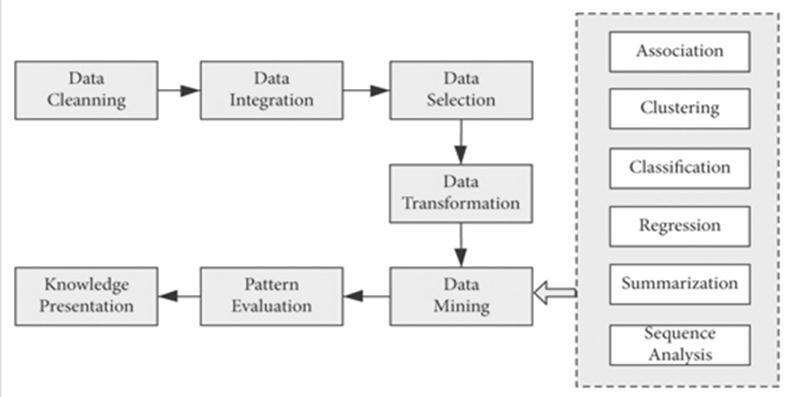
Due to the enormous amount of data created from many sources, including student records, learning management systems,admissionsdata,andinstitutionaldatabases,data miningtechniqueshavebecomeincreasinglyimportantin higher education institutions. Through the use of these methodologies, universities and colleges can gain useful insights,patterns,andtrendsfromthesedatasetsinorderto makesmartdecisionsandenhancemanyfacetsofmanaging
highereducation.Thefollowinglistofdataminingmethods istypicalinhighereducation:
a) AssociationRuleMining:Largedatasetscanbemined using association rules to find connections, dependencies,andpatterns.Thismethodcanbeusedin higher education to assess student behavior and spot connections between academic performance, course choice, and other variables. It can also assist in identifying trends in curriculum design, course sequencing,andstudentretention.
c) Clustering:Basedonsimilaritiesorpatterns,clustering isusedtoputcomparabledatapointstogether.Inhigher education, clustering algorithms can be used to categorize students into groups or cohorts based on traits like involvement, academic achievement, or demography. The creation of customized support programs, targeted interventions, or personalized learning experiences can all be done using this information.

b) ClassificationandPredictiveModeling:Modelsthatcan categorize or predict specific outcomes are created usingclassificationandpredictivemodelingapproaches. Thesemethodscanbeusedtoforecaststudentprogress inhighereducation,spotat-riskkids,andcreateearly intervention systems. Predictive models, for instance, canbeusedtoidentifystudentswhoaremostatriskof droppingoutorwhoneedmoreassistance.

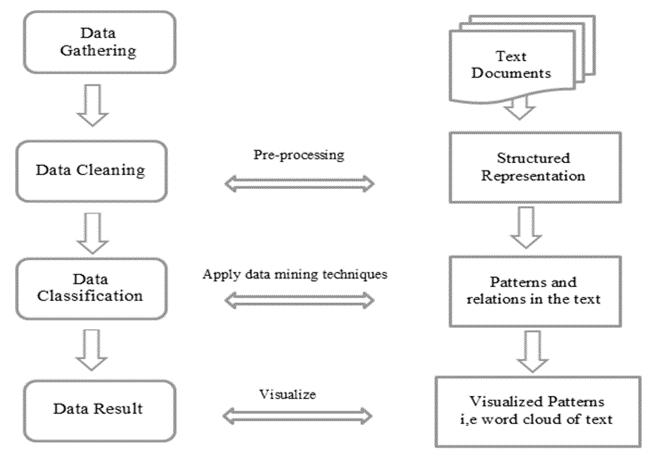
d) TextMiningandSentimentAnalysis:Usingtextmining techniques, useful information can be gleaned from unstructured text data, including student reviews, course evaluations, and social media posts. A subcategory of text mining called sentiment analysis focuses on identifying the sentiment or opinion expressed in the text. These methods can help with decision-making regarding course design, curriculum development, or institutional policies and can reveal insights into student happiness, point out areas for development,andsupportdecision-making.
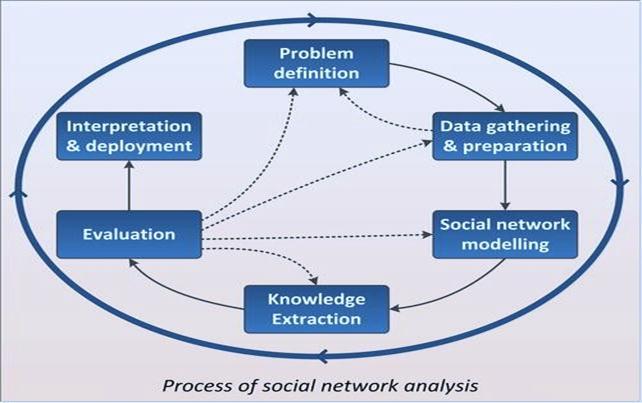
e) SocialNetworkAnalysis:Studyingtheconnectionsand
interactionsamongpeopleorthingsinsideanetworkis
calledsocialnetworkanalysis.Socialnetworkanalysis can be used to comprehend the social relationships betweenstudents,faculty,andstaffinhighereducation. It can expose powerful people or organizations, spot trendsinteamwork,andhelpcreatecommunitiesand relationshipsthatarestrongerwithintheinstitution.
6. Data Mining Concepts
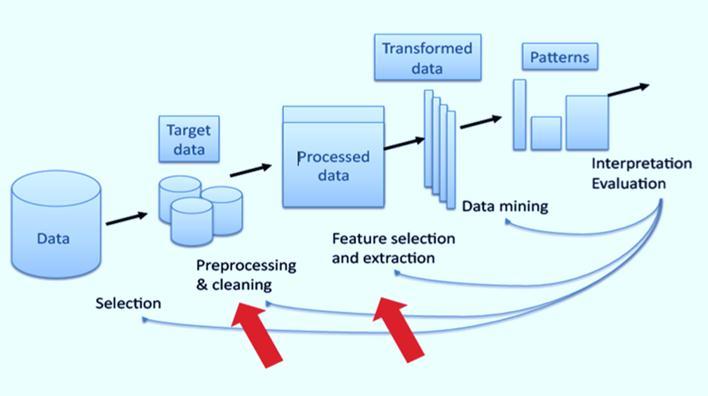
Inordertoimprovemanypartsoftheeducationalprocess andboostdecision-making,dataminingconceptsinhigher educationinvolvetheapplicationofnumerousapproaches andprocedures.Inhighereducation,thefollowingessential dataminingideasandtheirapplications:
Enrollment Analysis: Data mining techniques can be used to examine enrollment patterns and trends, including applicant numbers, enrolled student demographics, desired courses of study, and factors impactingenrollmentchoices.Allocatingresourcesand managing enrollment can both benefit from this knowledge.
Student Performance Prediction: Data mining enables the creation of prediction models to forecast student performance,includingpredictinggradesoridentifying students who are at risk of failing their classes. Institutions can intervene early and offer tailored support to improve student outcomes by assessing historical data, demographics, and other pertinent factors.
Fig.5:SocialNetworkAnalysis
f) Recommender Systems: Data mining techniques are usedbyrecommendersystemstoofferstakeholdersor studentsindividualizedrecommendations.Basedona student's profile, preferences, and prior activities, recommender systems in higher education can make recommendationsforcourses,programs,orresources. In addition to supporting tailored learning pathways, they can improve academic advising and increase studentengagement.
Course Recommendation Systems: Systems that recommend courses to students based on their academicbackground,interests,andcareerobjectives use data mining techniques. These programs can encourageprogramcompletion,improvestudentcourse selection,andsupportindividualizedlearningpathways.
LearningAnalytics:Learninganalyticsistheprocessof analyzing data produced by educational technology, suchaslearningmanagementsystems,onlineplatforms, andeducationalsoftware,inordertogatherknowledge about how well students are engaged in their studies and how well they are performing. Institutions can improve instructional design, student assistance, and learninginterventionsbyusingdataminingtoolstospot patterns,trends,andcorrelations.
GraduationRateAnalysis:Data miningcan beusedto discover completion impediments, investigate factors influencinggraduationrates,anddecideonappropriate solutions. Institutions can create plans to raise graduation rates and increase student success by examining student data such as credit accumulation, coursesequencing,andacademicachievement.
Fig.6:RecommenderSystems
TextMiningandSentimentAnalysis:Unstructureddata, includingsurveyresults,socialmediaposts,andstudent feedback,canbeexaminedusingtextminingalgorithms. Institutions can improve the curriculum, campus services, and student experiences using data-driven innovations by understanding student sentiments, identifying areas of concern or satisfaction, and implementingsentimentanalysis.
7. DATA MINING APPLICATIONS
In order to examine massive datasets and glean insightful information,dataminingtoolsareusedinhighereducation. Theseprogramsmightleadtobetterchoices,betterstudent outcomes,betterresourcemanagement,andmoreeffective institutions. In higher education, the following are some importantdataminingapplications:
To determine the variables affecting student achievement and retention, data mining approaches might be applied. Institutions can create prediction modelstoidentifyat-riskstudentsandconducttargeted interventions for higher retention rates by examining student data such as demographics, academic performance,andengagementbehaviors.
Byexaminingstudentinformation,learningpreferences, and performance measures, data mining enables the creation of tailored learning approaches. It can spot trendsandconnectionsthatassistpersonalizedcontent recommendations,adaptivelearning,andinterventions thatarespeciallycraftedtoeachstudent'sneeds.
Dataminingmethodscanhelpineffortstoimproveand design curricula. Institutions can discover areas for curriculum improvement, change course sequencing, and optimize program offerings to meet student requirementsandindustrytrendsbyassessingstudent performance data, course ratings, and learning outcomes.
Byexaminingapplicantinformation,demographics,and previous enrollment trends, data mining improves admissionsandenrollmentmanagementoperations.In order to draw in competent students, institutions can forecast enrollment demand, determine the factors impacting enrollment decisions, and create targeted recruitmentstrategies.
Datagatheredfromlearningmanagementsystemsand educationaltechnologiesisanalyzedusingdatamining techniquestoexaminestudentinvolvement,behavior, andperformance.Itcanrevealinsightsintothepatterns of student learning, pinpoint efficient teaching techniques, and enable data-driven pedagogical decision-making.
By evaluating huge datasets including student demographics, financial information, and institutional performance metrics, data mining plays a significant part in institutional research. It allows institutions to learn more about trends in enrollment, resource use, facultyproductivity,andinstitutionaleffectivenessasa whole,whichhelpswithstrategicplanninganddecisionmaking.
Donor behavior analysis and alumni data can both benefit from data mining approaches. Based on datadriven insights, institutions can target fundraising
campaigns,personalizecommunicationtechniques,and discover potential donors. This encourages greater philanthropic funding for the university and deeper alumniparticipation.
In order to evaluate and track quality assurance and certificationprocesses,dataminingtoolsmakeiteasier toanalyzeinstitutionaldata.Institutionscanfindareas for improvement and show conformity with accreditationstandardsbyexaminingdataonprogram results,studentlearningassessments,andinstitutional benchmarks.
Theseapplicationsdemonstratehowdataminingmay beusedinhighereducationtosupportstrategicgoals, improveoperationalefficiency,increasestudentsuccess, and promote evidence-based decision-making. To secure student information and uphold ethical standards, it is crucial to establish effective data governance, privacy, and ethical considerations while applyingdataminingtools.
8. FINDING AND DISCUSSIONS
The use of data mining methods and ideas in higher educationhasproducedimportantresultsandramifications forenhancingstudentperformance,individualizedlearning environments, and institutional effectiveness. The main conclusions are presented in this part along with their implicationsfordatamininginhighereducation.
Finding1:Theidentification ofelementsaffectingstudent performance, such as attendance, study time, and prior accomplishments, is made possible through data mining tools. To improve student results, this information can be usedtocreatetailoredinterventionsandsupportsystems.
Discussion:Dataminingapproachescanfindpatternsand relationships that support student performance by examiningvastamountsofeducationaldata.Theseinsights can be used by institutions to create successful interventions, like individualized tutoring, mentoring programs, or academic support services, which target particular issues influencing student performance. The involvement, motivation, and general academic successof thestudentsareimprovedbythistailoredapproach.
Finding 2: Utilizing student data, such as learning preferences and performance history, data mining techniquescancreateindividualizedlearningexperiences. This makes it possible to give recommendations, personalizededucationalinformation,andflexiblelearning environments.
Discussion:Highereducationhaspaidalotofattentionto personalized learning, and data mining is essential to its execution.Dataminingapproachescanproducesuggestions for suitable learning resources, adaptive tests, and
personalizedlearningpathwaysbyassessingstudentdata such as learning styles, interests, and prior performance. This personalised approach improves students' overall learningresultsandgivesthemthepowertotakechargeof theirownlearning.
Finding 3: By identifying students who are at danger of dropping out and making preemptive interventions to increase retention possible, data mining techniques help anticipatethedropoutratesofstudents.
Discussion:Inhighereducation,studentattritionisaserious problem.Usingdataminingtechniques,itispossibletospot students who are at danger of dropping out by looking at previousdatapatternsandtakingintoaccountelementslike course grades, engagement indicators, and demographic data.Earlydetectionenablesinstitutionstodevelopfocused support systems, such academic advising, counseling, or financialassistanceprograms,toaidstrugglingstudentsin overcoming challenges and improving their prospects of finishingtheireducation.
Finding4:Byexaminingstudentperformanceinformation and pinpointing areas for development, data mining tools enablecurriculumoptimization.
Discussion:Todeterminethestrengthsandshortcomingsof thecurriculum,dataminingtechniquescanbeusedtoassess student performance data. Institutions can modify course material,instructionalstrategies,andsequencingtobetter suittherequirementsofvariedstudentgroupsbyexamining patterns of student success and difficulties. Improved studentengagementandacademicresultsaretheresultsof this data-driven curriculum optimization, which supports moreeffectiveteachingandlearningexperiences.
9. CONCLUSIONS
Highereducationhasseenariseintheuseofdatamining concepts and techniques as valuable tools, with the improvedperformanceofstudents,individualizedlearning experiences,andinstitutionaleffectivenessbeingjustafew ofthemanyadvantagestheyprovide.Themainconclusions andramificationsofemployingdataminingtoolsinhigher educationaresummedupinthisconclusion.Theabilityto extractknowledgefromeducationaldatasourceshasbeen demonstrated through data mining approaches like clustering, association rule mining, classification, and regressionanalysis.Thesestrategiesallowthediscoveryof patterns, linkages, and hidden insights that can guide decision-making and improve educational practices by scrutinizingmassiveamountsofdataproducedbystudents, faculty, and educational institutions. Analyzing student performance is a significant application of data mining in highereducation.Dataminingmethodsmakeitpossibleto pinpointelementsthataffectacademicperformance,suchas attendance, study time, and prior accomplishments. To
createtargetedinterventionsandsupportsystemsthatwill improvestudentresults,thisinformationcanbeemployed.
Datamininginhighereducationisusedextensively for curriculum optimization. Data mining techniques can helpinthedesignofmoreefficientcurriculumstructuresby analyzingstudentperformancedatatopinpointareasthat need improvement, enhance course sequencing, and assistance. As a result, schools are able to modify their offeringstobettermatchtherequirementsoflearnersand raise standards for all instruction. Data mining tools are beingusedinhighereducation,howeverthisalsobringsup ethical issues and difficulties. Key issues that must be addressedincludeprotectingstudentprivacy,makingsure data is secure, and preserving transparency in data utilization. The preservation of student privacy, adequate anonymizationanddataaggregation,andadherencetodata protectionlawsallrequireinstitutionstoadoptresponsible practices.
REFERENCES
[1] Aggarwal,A.,Singh,M.,&Singh,A.(2017).Ahybriddata miningapproachforcourserecommendationsystemin higher education. International Journal of Advanced ComputerScienceandApplications,8(10),375-380.
[2] Baker,R.S.,&Inventado,P.S.(2014).Educationaldata miningandlearninganalytics.InHandbookofResearch on Educational Communications and Technology (pp. 435-445).Springer.
[3] Chen, W., & Wang, Y. (2015). Mining course sequence patterns for curriculum optimization in higher education. Expert Systems with Applications, 42(6), 3184-3192.
[4] DeLaat,M.,&Schreurs,B.(2013).Visualizinginformal professionaldevelopmentnetworks:Buildingacasefor learning analytics in the workplace. American BehavioralScientist,57(10),1421-1438.
[5] Hensman, P., Johnson, S., & Gubbi, J. (2016). Big data analytics in higher education: Opportunities and challenges.JournalofInstitutionalResearch,21(2),5871.
[6] Romero, C. and Ventura, S. (2007) Educational Data Mining: A Survey from 1995 to 2005. Expert Systems withApplications,33,135-146.
[7] Tanzeela Javid, Manoj Kumar Gupta, Abhishek Gupta (2020).Ahybrid-securitymodelforprivacy-enhanced distributeddatamining.JournalofKingSaudUniversity - Computer and Information Sciences, 34(6), Pages 3602-3614.
[8] Baker, R.S., Inventado, P.S. (2014). Educational Data MiningandLearningAnalytics.In:Larusson,J.,White,B. (eds) Learning Analytics. Springer, New York, NY, pp 61–75.
[9] Chen,Y.,Chen,C.andWang,Z.Y.(2015)TheMethodology Function of CiteSpace Mapping Knowledge Domains. StudiesinScienceofScience.33,242-253.
[10]Femke Nijland, Olga Firssova, Stefan Robbers, Marjan Vermeulen (2023). The networked student. Teaching andTeacherEducation,Volume131,pp.1-11.
[11]Schumacher,C.,Ifenthaler,D(2018).Theimportanceof students’ motivational dispositions for designing learning analytics. Journal of Computing in Higher Educationvolume,Vol.30,pp.599–619.
[12]Ho, H. C., & Wu, S. P. J. (2016). Applications of data miningtechniquesinhighereducation:Areviewofthe literature.JournalofEducationalTechnology&Society, 19(2),110-120.
[13]Kotsiantis, S. B., Pierrakeas, C., & Pintelas, P. (2004). Predicting students' performance in distance learning using machine learning techniques. Applied Artificial Intelligence,18(5),411-426.
[14]Romero, C., & Ventura, S. (2007). Educational data mining: A survey from 1995 to 2005. Expert Systems withApplications,33(1),135-146.
[15]Schumacher,C.,&Ifenthaler,D.(2018).Datasciencein higher education: A step-by-step introduction to machinelearningforinstitutionalresearchers.Springer.
[16]Selamat, A., Ibrahim, R., & Razak, S. A. (2018). A systematicliteraturereviewondataminingapplications inhighereducation.InternationalJournalofDataMining &KnowledgeManagementProcess,8(3),41-59.
[17]Kanade,Prakash,andJaiPrakashPrasad(2021),“Mobile andLocationBasedServiceusingAugmentedReality:A Review”,EuropeanJournalofElectricalEngineeringand ComputerScience(EJECE),Vol.5,Issue:02,pp.13–18.
[18]Sharma, M., Chugh, R., & Jha, G. K. (2019). Predicting student performance using data mining techniques: A survey.ExpertSystemswithApplications,115,597-617.
[19]Suthar, P., & Singh, M. (2019). A systematic literature reviewondataminingtechniquesforpredictingstudent performance. International Journal of Computer Applications,182(47),15-19.
[20]Thota, M., & Reinhart, R. F. (2017). Data mining applicationsinhigher education. Journal of Education andLearning,6(4),168-180.
[21]Veeramani, R., & Vairavasundaram, S. (2016). Data mininginhighereducation:Astudyusingeducational datamining(EDM)techniques.InternationalJournalof AppliedEngineeringResearch,11(6),4013-4016.
[22]Zhang, J., Zhou, L., & Zhou, N. (2019). Applications of data mining in education: Review and opportunities. Journal of Educational Technology Development and Exchange,12(1),91-104.
[23]K.KrishnaPrasad,Aithal,P.S.(2017).AStudyonOnline EducationModelUsingLocationBasedAdaptiveMobile Learning.InternationalJournalofAppliedEngineering andManagementLetters(IJAEM),1(1),36-44.
[24]Vinayachandra, Krishna Prasad, K. (2019). Executing ProductBroadeningProceduresfortheSustainabilityof anInnovation Organization - AContextual Analysisof Microsoft Corporation, International Journal of Case StudiesinBusiness,ITandEducation(IJCSBE),3(2),1-5.
[25]Sachin Kumar, Krishna Prasad, K., Aithal, P.S. (2017). Banking and Financial Analytics – An Emerging Big Opportunity Based on Online Big Data. International Journal of Case Studies in Business, IT and Education (IJCSBE),4(2),3-15.
[26]Aithal,P.S.(2018).StrategicManagementResearchin India:ContributionofTopBusinessSchoolsduringlast5 Years – A Critical Study. International Journal of Advanced Trends in Engineering and Technology (IJATET),3(1),133-145.
[27]Vikranth,K.,KrishnaPrasad,K.(2020).TheSustained Improvements in E-commerce Business through Big Data and Data Analytics of Wal-Mart Company. InternationalJournalofCaseStudiesinBusiness,ITand Education(IJCSBE),4(2),1-5.
[28]Rajeshwari,M.,KrishnaPrasad,K.(2019).ITConsulting andSoftwareServicesbyOutsourcingMakesaCompany WorldLeader-ACaseStudyofInfosysLtd.International Journal of Case Studies in Business, IT and Education (IJCSBE),3(2).
[29]Sneha, M. S., Krishna Prasad, K. (2018). Analysis of BusinessStrategiesofSalesforce.comInc.International Journal of Case Studies in Business, IT and Education (IJCSBE),2(1).
[30]Prasad, K. K., & Aithal, P. S. (2017). A Study on Enhancing Mobile Banking Services using Location basedAuthentication.Sciences(IJMTS),1(1),2016.
[31]Aithal,P.S.(2017).CompanyAnalysis–TheBeginning Step for Scholarly Research. International Journal of Case Studies in Business, IT and Education (IJCSBE), 1(1),1-18.
[32]Aithal,P.S.(2017).IndustryAnalysis–TheFirstStepin BusinessManagementScholarlyResearch.International Journal of Case Studies in Business, IT and Education (IJCSBE),2(1),1-13.
[33]Vinayachandra,&KrishnaPrasadK.(2019).Executing ProductBroadeningProceduresfortheSustainabilityof anInnovation Organization - AContextual Analysisof Microsoft Corporation. International Journal of Case StudiesinBusiness,ITandEducation(IJCSBE),3(2),1633.
[34]Geetha Poornima K, Krishna Prasad K. (2020). Data Analytics Solutions for Transforming Healthcare Information to Quantifiable Knowledge – an Industry Study with Specific Reference to ScienceSoft. InternationalJournalofCaseStudiesinBusiness,ITand Education(IJCSBE),4(1).
[35]Rajeshwari M, Krishna Prasad K. (2020). IBM Watson Industry Cognitive Education Methods. International Journal of Case Studies in Business, IT and Education (IJCSBE),4(1)(2020).
[36]Kanade, Prakash, and Jai Prakash Prasad, “Arduino based Machine Learning and IoT Smart Irrigation System”, International Journal of Soft Computing and Engineering (IJSCE), Vol.: 10, Issue: 4, pp. 1-5, March 2021.
[37]SachinKumar,KrishnaPrasadK.,AithalP.S.(2020).A StudyonCustomerAnalyticsInitiative(WCAI)andits Impact on the Brand of Wharton Business School. InternationalJournalofCaseStudiesinBusiness,ITand Education(IJCSBE),4(2).
[38]SangeethaPrabhu,KrishnaPrasadK.(2019).Wireless Technology Leading Innovator- A Case Study of Qualcomm. International Journal of Case Studies in Business,ITandEducation(IJCSBE)3(2).
[39]SrivatsaMaddodi,&KrishnaPrasad,K.(2019).Netflix Bigdata Analytics- The Emergence of Data Driven Recommendation.InternationalJournalofCaseStudies inBusiness,IT,andEducation(IJCSBE),3(2),41-51.
[40]GeethaPoornimaK,&KrishnaPrasadK.(2019).Critical Analysis on Business Strategies Adopted by an IT Company to Attain Sustainability: Case Study of CognizantTechnologySolutions.InternationalJournalof Case Studies in Business, IT and Education (IJCSBE), 3(2),14–27.
[41]Aithal,P.S.,&andSureshKumar,P.M.(2015).Applying SWOC Analysis to an Institution of Higher Education. International Journal of Management, IT and Engineering(IJMIE),5(7),231-247.
[42]PKanade,P Alva,JP Prasad, SKanade, Smart Garbage MonitoringSystemusingInternetofThings(IoT),2021 5th International Conference on Computing Methodologies and Communication (ICCMC), pp. 330335,IEEE,2021.
[43]Aithal,P.S.(2016).StudyonABCDAnalysisTechnique for Business Models, Business Strategies, Operating Concepts&BusinessSystems.InternationalJournalin ManagementandSocialScience(IJMSS),4(1),98-115.
[44]KrishnaPrasadK.,&AithalP.S.(2015).MassiveGrowth ofBankingTechnologywithTheAidOf5GTechnologies. International Journal of Management, IT and Engineering(IJMIE),5(7),616-627.
[45]Aithal, P. S., Shailashree, V. T. & Suresh Kumar, P. M. (2015). A New ABCD Technique to Analyze Business Models & Concepts. International Journal of Management, IT and Engineering (IJMIE), 5(4), 409
423.
[46]Aithal, P. S., Shailashree V. T. & Suresh Kumar P. M. (2016). Factors & Elemental Analysis of Six Thinking HatsTechniqueusingABCDFramework.International Journal of Advanced Trends in Engineering and Technology(IJATET),1(1),85-95.
[47]Aithal, P. S., & Shubhrajyotsna Aithal (2017). Factor Analysis based on ABCD Framework on Recently AnnouncedNewResearchIndices.InternationalJournal of Management, Technology, and Social Sciences (IJMTS),1(1),82-94.