NON-STATIONARY BANDIT CHANGE DETECTION-BASED THOMPSON SAMPLING ALGORITHM
Abstract - Many rigorous mathematical approaches and optimum solutions to the stationary multi-armed bandit (MAB)paradigm maybe foundinthe literature.However,the MABissue isfamouslydifficulttoanalyseforanon-stationary environment,i.e.whentherewarddistributionfluctuatesover time.Therearetwomainmethodsthathavebeensuggestedto combat non-stationary bandit problems: i) passively adaptable methods, which can be easily analysed, and ii) actively adaptive methods, which monitor their surroundings and make adjustments in response to any changes they discover. Researchers have responded by developing new bandit algorithms that build on previously established methods,suchasthesliding-windowupper-confidencebound (SW-UCB), the dynamic upper-confidence bound(d-UCB), the discounted upper-confidence bound (D-UCB), the discounted Thompson sampling (DTS), etc. For this reason, we focus on the piecewise stationary setting, in which the reward distribution is held constant for some period of time before changingatsomearbitrary moment.Forthiscontext,weoffer theTS-CDfamilyofchange-detection-based,actively-adaptive TSalgorithms.Inspecifically,aPoissonarrivalprocessisused to mimic the non-stationary environment, which adjusts the reward distribution with each new arrival. We use the Kolmogorov-Smirnovtest(KS-test)andtheAnderson-Darling test (AD-test) as Goodness-of-fit tests to identify the shift. When TS detects a shift, it either updates the algorithm's parameters or penalises previous successes. We have conducted experiments on edge-control of i) multiconnectivity1 and ii) RAT selection in a wireless network to evaluate the efficacy of the proposed method. We have compared the TS-CD algorithms to other bandit algorithms including D-UCB, discounted Thompson sampling (DTS), and change detection-based UCB (CD-UCB), all of which are optimised for dynamic situations. We demonstrate the higher performanceoftheproposedTS-CDinthestudiedapplications via comprehensive simulations.
Key Words: Decision-making, Contextual bandits, Probability distribution, Empirical performance, Convergence
1. INTRODUCTION
The multi-armed bandit (MAB) framework is a classical problemindecision-makingthatinvolvesmakingaseriesof choices among several alternatives (or "arms") with uncertainrewards.Theproblemgetsitsnamefromtheidea
ofagamblerstandinginfrontofarowofslotmachines,each withadifferentpayoutrate.Thegamblermustchoosewhich machinestoplayandinwhatorderwhiletryingtomaximize theiroverallpayout.
IntheMABframework,eacharmcorrespondstoachoiceor action that can be taken, and the rewards associated with eacharmarerandomvariableswithunknowndistributions. Thegoalistolearnwhicharm(s)havethehighestexpected reward,basedonalimitednumberoftrialsorsamples.The challengeistobalanceexploration(tryingoutdifferentarms to learn their reward distributions) with exploitation (selectingthearmwiththehighestexpectedrewardbased onthecurrentknowledge).
SeveralalgorithmshavebeendevelopedforsolvingtheMAB problem,includingtheepsilon-greedyalgorithm,theupper confidencebound(UCB)algorithm,andThompsonsampling. These algorithms differ in their strategies for balancing explorationandexploitation.
The MAB framework has applications in many fields, including online advertising, clinical trials, and recommendationsystems.Ineachcase,theprobleminvolves making decisions with uncertain outcomes and limited resources. By using MAB algorithms to optimize decisionmaking,itispossibletoimproveperformanceandincrease efficiencyinawiderangeofsettings.

1.1. THOMPSON SAMPLING ALGORITHM
ThompsonSamplingisapopularalgorithmforsolvingthe multi-armedbanditproblem.ItisaBayesianapproachthat balances exploration and exploitation by selecting actions accordingtotheirprobabilitiesofbeingoptimal,basedon theobserveddata.ThebasicideaofThompsonSamplingis to model the reward distribution for each arm as a probability distribution, such as a beta distribution for binary rewards or a Gaussian distribution for continuous rewards. The algorithm then maintains a posterior distributionovertheparametersofeachdistribution,which isupdatedasnewdataisobserved.
At each iteration, Thompson Sampling samples a set of parametersfromtheposteriordistributionforeacharmand selectsthearmwiththehighestexpectedrewardbasedon thesampledparameters.Thisbalancingofexplorationand exploitation is achieved by the probabilistic nature of the
algorithm,whereitrandomlyselectsthearmsandestimates their rewards based on the current belief about the distributionofrewards.
The key advantage of Thompson Sampling is its ability to naturally handle uncertainty in the reward distributions, withoutrequiringexplicitassumptionsabouttheformofthe distributions.Thismakesitwell-suitedtoproblemswhere therewarddistributionsarecomplexorunknown.
Thompson Sampling has been shown to have strong theoretical guarantees in the context of regret analysis, whichmeasurestheperformanceofanalgorithmrelativeto thebestpossiblerewardthatcouldhavebeenachieved.It hasalsobeenshowntooutperformotherpopularalgorithms like epsilon-greedy and UCB in a variety of settings, includingonlineadvertisingandrecommendationsystems.
2. ALGORITHMS FOR NON-STATIONARY ENVIRONMENT TOP OF FORM
Inanon-stationaryenvironment,therewarddistributionsof thearmscanchangeovertime,whichpresentsachallenge forstandardmulti-armedbanditalgorithms.Herearesome algorithms that are designed to handle non-stationary environments:
Exp3: The Exp3 algorithm is an extension of the classic multi-armed bandit algorithm that uses exponential weighting to balance exploration and exploitation. It also includes a learning rate parameter that can be tuned to adapttochangesintherewarddistributionovertime.
UCB-V:TheUCB-V(UpperConfidenceBoundwithVariance) algorithm is a modification of the UCB algorithm that incorporatesthevarianceoftherewarddistributionasan additionalfactorinthedecision-makingprocess.Thismakes it more robust to changes in the reward distribution over time.
CUSUM-UCB:TheCUSUM-UCBalgorithmcombinestheUCB algorithmwiththeCUSUM(cumulativesum)controlchart method from statistical process control. This allows it to detect changes in the reward distribution and adjust the explorationrateaccordingly.
DynamicThompsonSampling:DynamicThompsonSampling is a variant of the Thompson Sampling algorithm that updatesthepriordistributionovertherewarddistribution parametersovertime.Thisallowsittoadapttochangesin the reward distribution and maintain a balance between explorationandexploitation.
Sliding-WindowUCB:Sliding-WindowUCBisamodification oftheUCBalgorithmthatusesaslidingwindowofthemost recent rewards to estimate the mean and variance of the rewarddistribution.Thisallowsittoadapttochangesinthe
reward distribution over time and avoid overfitting to outdateddata.
These algorithms are just a few examples of the many approachesthathavebeendevelopedforsolvingthemultiarmedbanditprobleminnon-stationaryenvironments.Each algorithmhasitsstrengthsandweaknesses,andthechoice of algorithm will depend on the specific problem and constraints.
3. CHANGE DETECTION BASED ON UCB
Change Detection Based UCB (CD-UCB) is a variant of the UpperConfidenceBound(UCB)algorithmthatisdesignedto handle non-stationary environments where the reward distributionsofthearmscanchangeovertime.
TheCD-UCBalgorithmusesachangedetectionmechanism to detect when a change in the reward distribution has occurred.Whenachangeisdetected,thealgorithmswitches toanexplorationphasetocollectmoredataandupdateits estimateofthenewrewarddistribution.
ThechangedetectionmechanismusedbyCD-UCBisbased on the Page-Hinkley test, which is a statistical test for detecting changes in a data stream. The test looks for a significantincreaseordecreaseinthemeanofthereward distribution,relativetoabaselinemean.
When a change is detected, the algorithm switches to an exploration phase, where it samples each arm with a probabilityproportionaltoitsuncertainty.Thisallowsthe algorithm to collect more data on the new reward distribution and update its estimates of the mean and variance.
Onceenoughdatahasbeencollected,thealgorithmswitches backtotheexploitationphaseandselectsthearmwiththe highest upper confidence bound, as in the standard UCB algorithm.TheCD-UCBalgorithmcontinuestomonitorthe reward distribution and switch between exploration and exploitationphasesasnecessary.
CD-UCB has been shown to outperform other change detectionalgorithmsandstandardUCBalgorithmsinseveral experiments, including online advertising and recommendationsystems.However,theperformanceofthe algorithm depends on the choice of parameters and the propertiesofthedatastream.
4. EXPERIMENTAL SETUP
Usingapiecewisestationaryapproach,wewilltalkaboutthe problemstatementthatwaspresentedtousandestablish thefoundationforourfutureworkenvironment.Inthenext paragraph,wewilldiscussthedetailsofhowthiswilltake place. To put it another way, we will have our working environmentready.Inadditiontothis,wewilltalkaboutthe
changedetectionmethodsthatweuseinourworkandthe operationalideasbehindthem.
EstimationoftheMeanAmountofChange
MeanEstimatedChangeDetection,oftenknownasMECD,is an example of a change detection method that is typically implemented inside the framework of the multi-armed bandit problem. It is intended to identify changes in the meanoftherewarddistributionofanarmandtoadjustthe exploration rate appropriately in response to these detections.
TheMECDmethodkeepsanestimateofboththemeanand thevarianceoftherewarddistributionforeacharmofthe experiment. These estimates are kept in sync with one another. Next, it evaluates the accuracy of the current estimateofthemeanbycontrastingittoareferencevalue thatisinitiallybasedontheactualvaluethatrepresentsthe meanoftherewarddistribution.
Thealgorithmconcludesthattherehasbeenachangeaftera changehashappenedwhenthedifferencebetweenthemost recent estimate of the mean and the reference value is greaterthanaspecificthreshold.Thiscausesthealgorithm to raise the exploration rate. This allows the algorithm to gatherfurtherdataontherevisedrewarddistributionandto bringitsestimateofthemeanandvarianceuptodate.
After collecting a sufficient amount of data, the algorithm willtransitionbacktotheexploitationphase,atwhichpoint itwillchoosethelimbthathasthegreatestestimatedmean. The MECD algorithm will continue to keep an eye on the rewarddistributionandwillmakeanyrequiredadjustments totheexplorationpace.
MECD is effective at detecting changes in the mean of the rewarddistribution,particularlyincircumstanceswherethe changesaregradualratherthanrapid.Thisisespeciallytrue in situations where the changes are more likely to occur gradually.However,thealgorithmmightnotbeasgoodat detecting changes in the other properties of the reward distribution, such as the variance or the shape of the distribution.Thiscouldbealimitationofthealgorithm.
5. ALGORITHM FOR DETECTING CHANGES
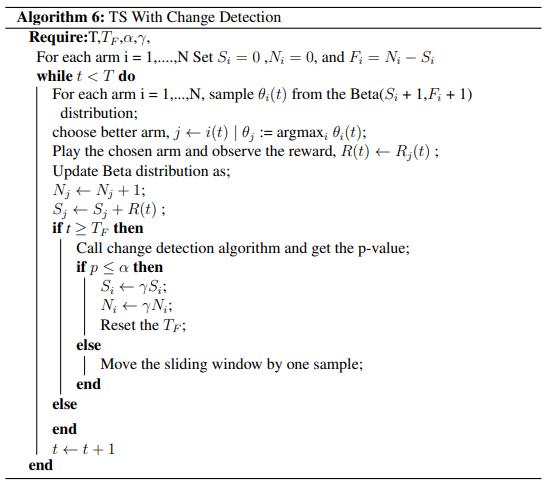
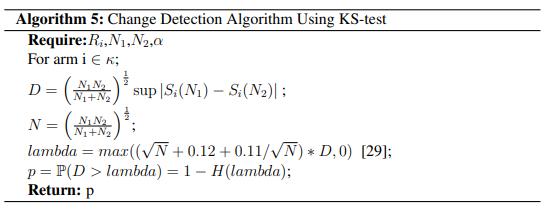
When the current time, t, is greater than TF, the CD techniqueencouragestheveryimmediatecommencementof itsexecutionprocess.Thisensuresthatthetechniquemay continue to function normally. This guarantees that an adequate quantity of data is available, from which an accurateapproximationoftheempiricaldistributionsmay bederived.Afterthat,tolocatetheshift,wefirstbuildthe empirical distributions by using the historical records of payments made for each of the arms. This allows us to determine the shift. Because of this, we can pinpoint the exactpositionoftheshift.
6. SIMULATION AND RESULT ANALYSIS
Itisveryrequiredfortheconnectionofuserequipment(UE) in5Gandotherwirelessapplicationstobesynchronizedto thetime-varyingdynamicsofboththeenvironmentandthe userequipment.Thisisthecaseregardlessofwhetherthe applications are wired or wireless. It makes no difference whethertheappsarewiredorwireless;thisistrueineither scenario.Thisisstillthecaseeveniftheindividualsoftware doesnotenablewirelesscommunication.Whenseenfrom thisperspective,itdoesnotmakeadifferencewhetherthe application in issue is wired or wireless. Both approaches havetheirbenefitsanddrawbacks.Inanyscenario,theend consequence is the same. To go further, it is necessary to satisfytheserequirementsinsomeway.Itisimpossibleto doanythingelse.Wearegoingtotestthemethodthatwas provided for the scenario that involves a large number of
connections,andwearealsogoingtoreplicatethenumber ofconnectionstothetypicalUEfortheMABframeworkto beabletodeterminetheappropriatenumberofarmsforthe solution.Thesetestsandreplicationsaregoingtobecarried outtoensurethatthesolutioniseffective.Forustobeable toidentifythenumberofconnectionsthatareinvolvedin the scenario that includes a significant number of connections, these tests and replications are going to be carriedout.
6.1. RAT SELECTION IN WIRELESS NETWORKS
WhenselectingaRAT,itisessentialtoconsiderthenetwork infrastructure and the devices' capabilities. For example, olderdevicesmayonlysupport2Gor3Gnetworks,while newerdevicesmaysupport4Gor5Gnetworks.Similarly,the network infrastructure may not support all RATs, so it is crucialtochooseaRATthatiscompatiblewiththenetwork infrastructure.
thatmanyconnectionsalready.Throughouttheprocessof calculating the AET, the following factors were taken into account,whichexplainswhythisisthecase:
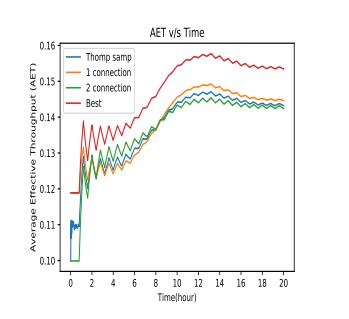
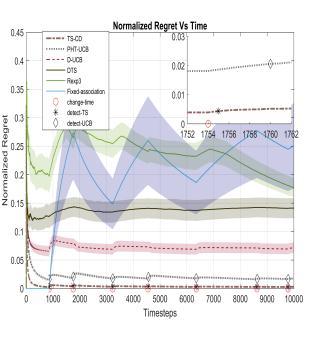
ThisillustratesthattheTS-CDtechniquethatisnowbeing contemplatediscapableofmonitoringallofthechangesthat take place in an environment that is dynamic with a reasonabledegreeofeaseprovidedthattherequiredhyperparametertweakingiscarriedout.
6.2. MULTI-CONNECTIVITY
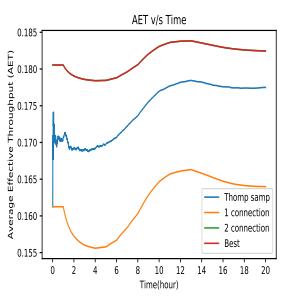
Togetthingsmovingintherightdirection,wearegoingto startbydefiningaperformancemetricthatisuniquetous. Things will get off to a good start as a result of this. As a consequenceofthis, wewill havethe abilitytolaunchthe procedure. We are going to refer to the average effective throughput(AET)asthefollowingasaperformancemetric with n connections since it is as follows. This isa suitable amountofconnectionstakingintoaccountthefactthatithas
Inthebeginning,theperformanceofthescenariowithtwo connections is higher than that of the case with one connection, but by the time t = 9h has elapsed, the performanceofthecasewithoneconnectionhasovertaken thatofthescenariowithtwoconnections.Thisissomething thatisbroughttoournoticeeveryonceina while.Thisis somethingthatwecanverifyforourselvesandsomething thatwecanseeforourselvesaswell.Thealgorithmthatwas devised,knownasTS-CD,wasabletoaccuratelymonitorthe alteration, and it would then choose the limb that has the potentialtoprovidethehighestnumberofadvantages.
7. CONCLUSION
Thesisconclusion?Checkthese.Summarisesthethesis'skey findingsandquestions.Showhowtheresearchadvancedthe field. Discuss research flaws. Examine the study's context. Considertheresearch'spracticality.
The non-stationary two-armed bandit problem was addressed using change-detection-based Thompson Sampling.ThismethodisTS-CD.Itwasthenon-stationary two-armed bandit. The non-stationary two-armed bandit research evaluated this strategy. This ensured environmental compatibility. TS-CD's immobility regime timewasestimated.Ourcomputationemployedthelowest timelimitationfeasible.Durationofimmobilitylimitedthis. Weassessedthestableregime'sduration,whichrestrictsus. Finally,TS-CDmayachieveasymptoticoptimalitybylimiting alterations.Asymptoticoptimality.Limitationsforcethebest answer. The edge-of-a-wireless-network RAT selection challengetestedourtechnique.Wecantestthemethod.TSCD outperformed max power band selection and dynamic bandit. TS-CD wins both. Benchmarks comparing TS CD performance.TS-CDsurpasseditscompetition.Wegraded eachstrategy'seffectivenesstoachievethis.RegularCDsand TS-performanceDiscswerecompared.Thenon-stationary two-armed bandit problem was addressed using changedetection-basedThompsonSampling.ThismethodisTS-CD. It was the non-stationary two-armed bandit. The nonstationary two-armed bandit research evaluated this strategy.Thisensuredenvironmentalcompatibility.
WeevaluatedTS-CD'sstationaryperiodbeforedetectinga change. That timeframe's worst-case scenario was estimated. Long-term immobility required this limitation. Stableregimeforecastslimitthis.Finally,wedemonstrate that the TS-CD approach, which reduces iterations to examine modifications, may reach asymptotic optimality. Asymptotic perfection is possible. The algorithm refines towards the best result. We tested network-edge RAT selection. This aids in technique evaluation. TS-CD outperformsindustry-standardmaxpowerbandselection andpreviouslypublishedbanditalgorithmsunderdifferent situations.TS-CDbeatsCD.TSCDfindingsarecomparedto numerous other metrics. TS-CD's higher performance enabledthis.Techniqueeffectivenesswasrated.againstthis, TS-performanceDiscswerecomparedtoCDs.
REFERENCE
[1]Villar,Sofía S.,Jack Bowden,andJames Wason."Multiarmedbanditmodelsfortheoptimaldesignofclinicaltrials: benefitsandchallenges."Statisticalscience:areviewjournal oftheInstituteofMathematicalStatistics30.2(2015):199.
[2] Buccapatnam, Swapna, et al. "Reward maximization under uncertainty: Leveraging side-observations on networks."TheJournalofMachineLearningResearch18.1 (2017):7947-7980.
[3]Rahman,AniqUr,andGourabGhatak."ABeam-Switching Scheme for Resilient mm-Wave Communications With DynamicLinkBlockages."WorkshoponMachineLearning forCommunications,WiOpt,IEEE.2019.
[4] Contal, Emile, et al. "Parallel Gaussian process optimization with upper confidence bound and pure exploration." Joint European Conference on Machine LearningandKnowledgeDiscoveryinDatabases.Springer, Berlin,Heidelberg,2013.
[5] Thompson, William R. "On the likelihood that one unknown probability exceeds another in view of the evidenceoftwosamples."Biometrika25.3/4(1933):285294.
[6]Chapelle,Olivier,andLihongLi."Anempiricalevaluation of thompson sampling." Advances in neural information processingsystems.2011.
[7]Raj,Vishnu,andSheetalKalyani."Tamingnon-stationary bandits: A Bayesian approach." arXiv preprint arXiv:1707.09727(2017).
[8] Garivier, Aurélien, and Eric Moulines. "On upperconfidenceboundpoliciesforswitchingbanditproblems." InternationalConferenceonAlgorithmicLearningTheory. Springer,Berlin,Heidelberg,2011.
[9] Liu, Fang, Joohyun Lee, and Ness Shroff. "A changedetectionbasedframeworkforpiecewise-stationarymultiarmedbanditproblem."Thirty-SecondAAAIConferenceon ArtificialIntelligence.2018.
[10] Gupta, Neha, Ole-Christoffer Granmo, and Ashok Agrawala. "Thompson sampling for dynamic multi-armed bandits." 2011 10th International Conference on Machine Learning and Applications and Workshops. Vol. 1. IEEE, 2011.
[11] Hartland, Cédric, et al. "Multi-armed bandit, dynamic environmentsandmetabandits."(2006).
[12] Raj, Vishnu, and Sheetal Kalyani. "Taming nonstationary bandits: A Bayesian approach." arXiv preprint arXiv:1707.09727(2017).
[13] Ghatak, Gourab, Antonio De Domenico, and Marceau Coupechoux. "Coverage analysis and load balancing in HetNetswithmillimeterwavemulti-RATsmallcells."IEEE Transactions on Wireless Communications 17.5 (2018): 3154-3169.
[14]Bai,Tianyang,andRobertW.Heath."Coverageandrate analysis for millimeter-wave cellular networks." IEEE Transactions on Wireless Communications 14.2 (2014): 1100-1114.
[15] Bai, Tianyang, Rahul Vaze, and Robert W. Heath. "Analysis of blockage effects on urban cellular networks." IEEETransactionsonWirelessCommunications13.9(2014): 5070-5083.
[16] Zhang, Xinchen, and Martin Haenggi. "A stochastic geometryanalysisofintercellinterferencecoordinationand intra-cell diversity." IEEE Transactions on Wireless Communications13.12(2014):6655-6669.