STATE OF THE ART CONTENT MINING USING SCAN TECHNOLOGY
Nishant Mudgal1 , Mr. Sambhav Agarwal2
1M.Tech, Computer Science and Engineering, SR Institute of Management & Technology, Lucknow, India
2Associate Professor, Computer Science and Engineering, SR Institute of Management & Technology, Lucknow ***

Abstract - Thisresearchpaperexploresthestateoftheart in content mining using SCAN (specific context-aware network) technology. Content mining, the process of extractingvaluableinsightsandknowledgefromvastamounts of textual and multimedia data, has gained significant attention in various domains. However, existing content mining techniques often face challenges in accurately capturing contextual information and extracting relevant content. The SCAN technology aims to address these limitations by incorporating context-awareness into the mining process.
This paper begins by providing an overview of the existing content mining approaches and their shortcomings. It then introducestheSCAN technology,highlighting its key features and advantages. SCAN leverages advanced natural language processing (NLP) techniques, machine learning algorithms, andsemanticanalysistoenhancecontextunderstandingand extractmeaningfulinformationfromdiversecontentsources.
TheresearchpaperdiscussesvariousapplicationswhereSCAN technology can be effectively utilized, such as sentiment analysis,recommendationsystems,informationretrieval,and knowledge discovery. It explores the benefits of SCAN in improving the accuracy and relevance of mining results, leading to enhanced decision-making and user experiences.
Key Words: content mining, SCAN technology, contextawareness, natural language processing (NLP), machine learning,semanticanalysis,sentimentanalysis.
1. INTRODUCTION
The concept of smart content has evolved alongside advancementsintechnologyandtheincreasingdemandfor personalizeddigitalexperiences.Hereisabriefoverviewof thehistoryofsmartcontent:
1. EarlyPersonalizationEfforts:Intheearlydaysofthe internet, personalization efforts were limited to basic customization options such as choosing preferences for website colors or layouts. These simplepersonalizationfeaturesaimedtoprovidea more tailored experience but lacked the sophistication and intelligence seen in modern smartcontent.
2. RiseofRecommendationSystems:Withthegrowth of e-commerce and online services,
recommendation systems emerged as a key componentofsmartcontent.Websitesstartedusing collaborativefilteringanddataanalysistechniquesto suggestproducts,movies,music,orarticlesbasedon user behavior and preferences. Amazon's "Customerswhoboughtthisalsobought"featureis aclassicexampleofearlyrecommendationsystems.
3. DynamicContentGeneration:Aswebtechnologies advanced, content management systems (CMS) became more capable of generating dynamic content.Thisallowedwebsitestodisplaydifferent content to users based on various factors like location, demographics, and browsing history. Websitesbegantousecookiesanduserprofilesto deliver personalized content, advertisements, or promotions.
4. BigDataandMachineLearning:Theadventofbig data and machine learning techniques further revolutionized smart content. With the ability to process and analyze vast amounts of user data, algorithmscouldlearnandpredictuserpreferences withgreateraccuracy.Thisledtomorepersonalized experiences across various platforms and applications.
5. InternetofThings(IoT)Integration:Theintegration ofsmartdevicesandIoTtechnologiesexpandedthe scope of smart content beyond websites and applications.Connecteddeviceslikesmartspeakers, wearables, and home automation systems began offeringpersonalizedcontentandrecommendations basedonuserbehavior,location,andsensordata.
6. Artificial Intelligence (AI) and Natural Language Processing (NLP): AI and NLP technologies have playedasignificantroleinadvancingsmartcontent capabilities.Chatbotsandvirtualassistants,powered byAI,canunderstandandrespondtouserqueriesin a conversational manner. Natural language understandingandsentimentanalysisenablebetter understanding of user intent and provide more relevantcontentrecommendations.
7. Context-AwareandReal-TimePersonalization:The latestdevelopmentsinsmartcontentfocusonrealtime,context-awarepersonalization.Byconsidering real-time data such as user location, time of day,
devicetype,andenvironmentalfactors,contentcan be dynamically adapted to meet immediate user needs. This includes displaying relevant offers, providinglocation-basedinformation,oradjusting content presentation based on screen size or orientation.
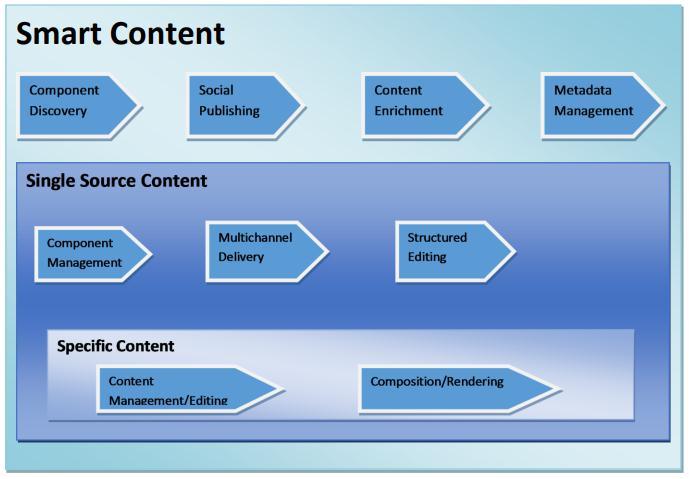
Smart content refers to digital content that is dynamic, adaptive, and personalized to meet the needs and preferences of individual users. It goes beyond static information by leveraging technology to provide a more interactiveandtailoreduserexperience.
Insimpleterms,smartcontentislikeachameleonthatcan change its appearance and behavior based on who is interactingwithit.Ittakesintoaccountfactorssuchasuser demographics,interests,browsinghistory,andlocationto delivercontentthatisrelevantandengaging.
For example, imagine visiting a website that displays differentcontentdependingonwhetheryou'reanewvisitor or a returning customer. The smart content system may showcase personalized recommendations, targeted advertisements,orcustomizedproductsuggestionsbasedon yourpreviousinteractionswiththewebsite.
Smartcontentcanalsoadapttodifferentdevicesandscreen sizes.Itensuresthatthecontentisappropriatelydisplayed and optimized for various platforms such as desktop computers,smartphones,andtablets.Thisflexibilityallows userstohaveaconsistentandseamlessexperienceacross differentdevices.
1.1. AN INTEGRATED APPROACH AND CONTENT AGGREGATION
Anintegratedapproachtocontentaggregationreferstothe combinationofvarioustechniquesandstrategiestogather and organize content from multiple sources into a unified andcohesiveexperience.Itinvolvesthecollection,filtering, and presentation of relevant information from diverse channelsandplatforms.
The process of content aggregation typically involves the followingsteps:
1. Source Identification: Identifying and selecting relevantsourcesof content isthe first step. These sources can include websites, blogs, social media platforms, news outlets, and other content repositories.
2. ContentCollection:Oncethesourcesareidentified, the content aggregation system collects data from thesesources.Thiscanbedonethroughautomated web scraping, RSS feeds, APIs (Application ProgrammingInterfaces),ormanualcuration.
3. Content Filtering: Content filtering is crucial to ensurethatonlyrelevantandhigh-qualitycontentis includedintheaggregation.Filteringtechniquescan involve the use of keywords, metadata analysis, sentimentanalysis,ormachinelearningalgorithms toidentifyandprioritizecontentbasedonspecific criteria.
4. Content Integration: The collected and filtered contentisthenintegratedintoaunifiedsystemor platform. This integration can involve combining text,images,videos,andothermediaformatsintoa cohesivedisplay.
5. Content Presentation: The aggregated content is presented to users in a user-friendly and easily consumable format. This can be achieved through the use of personalized dashboards, news feeds, topic-basedcategorization,orcustomizedlayouts.
Anintegratedapproachtocontentaggregationensuresthat usershaveaccesstoawiderangeofrelevantandup-to-date informationfromvarioussourceswithouttheneedtovisit multipleplatformsindividually.Itsimplifiestheprocessof content discovery, saves time, and provides users with a comprehensiveviewoftheirinterestsorchosentopics.
Furthermore,integratingdifferenttypesofcontent,suchas news articles, blog posts, social media updates, and multimedia, enhances the richness and diversity of the aggregatedcontent.Itallowsuserstoengagewithavariety of content formats and media sources within a single platform.
2. TEXT ANALYSIS
Textanalysisandconceptextractionaretechniquesusedto analyzetextualdataandextractmeaningfulinformationand conceptsfromit.Thesetechniquesarewidelyemployedin variousfields,includingnaturallanguageprocessing(NLP), information retrieval, sentiment analysis, and knowledge discovery. Here's a brief explanation of text analysis and conceptextraction:
1. Text Preprocessing: This involves cleaning and preparing the text data by removing noise, punctuation,stopwords,andperformingtaskssuch astokenization(breakingtextintoindividualwords or sentences), stemming (reducing words to their baseform),andlemmatization(convertingwordsto theirbasedictionaryform).
2. SentimentAnalysis:Sentimentanalysisdetermines the emotional tone expressed in a piece of text, classifyingitaspositive,negative,orneutral.Ithelps understandthesentimentofcustomers,users,orthe generalpublictowardsaproduct,service,ortopic.
3. NamedEntityRecognition(NER):NERidentifiesand classifies named entities in text, such as person names, locations, organizations, dates, and other relevantentities.Ithelpsextractspecificinformation and can be useful for information retrieval or knowledgeextractiontasks.
4. TopicModeling:Topicmodelingtechniques,suchas LatentDirichletAllocation(LDA),identifyandextract underlying themes or topics from a collection of documents.Itallowsforahigh-levelunderstandingof themainconceptspresentinthetextcorpus.
2.1. CONCEPT EXTRACTION
Concept extraction focuses on identifying and extracting specific concepts or entities from text. It goes beyond individual words and aims to capture meaningful units of information.Conceptextractiontechniquesinclude:
1. Named Entity Recognition: As mentioned earlier, NERidentifiesandextractsnamedentitiesfromtext, whichcanbeconsideredasconcepts.
2. Relation Extraction: Relation extraction aims to identify and extract relationships between entities mentioned in the text. For example, extracting relationshipsbetweenpeopleandorganizationsor identifyingthesubjectandobjectofasentence.
3. Keyphrase Extraction: Keyphrase extraction techniquesidentifyandextractimportantphrasesor termsfromtextthatrepresentthemainconceptsor topicsdiscussed.Thesekeyphrasescanbeusefulfor summarization, indexing, or information retrieval purposes.
4. OntologyorKnowledgeGraph-basedExtraction:This approach involves mapping entities and their relationshipstoapredefinedontologyorknowledge graph, enabling the extraction of structured and semanticallyrichconcepts.
3. METADATA AND FACET NAVIGATION IN SCAN
Metadata refers to descriptive information or data that provides details about the content itself. It includes attributessuchastitle,author,publicationdate,keywords, tags, and other relevant information associated with a particularpieceofcontent.InSCAN,metadataplaysacrucial roleinunderstandingandcontextualizingthecontent.
By analyzing metadata, SCAN can gain insights into the characteristics and properties of the content. It helps in identifyingrelevantcontentbasedonspecificcriteriaoruser preferences.Forexample,metadatacanbeusedtofilterand prioritize content based on factors like publication date, sourcecredibility,orrelevancetoaparticulartopic.
Additionally, metadata can provide valuable context for content aggregation and recommendation systems. By leveraging metadata, SCAN can tailor content suggestions based on user interests, historical interactions, or other relevant metadata attributes. Metadata enhances the understanding and relevance of content in the SCAN ecosystem.
Facet navigation, also known as faceted search or faceted browsing,isauserinterfacetechniquethatallowsusersto exploreandfiltercontentbasedonmultipledimensionsor facets.InSCAN,facetnavigationprovidesuserswithflexible and dynamic options to navigate and refine their content exploration.
Facets represent different dimensions or attributes associated with the content. These facets can include metadata attributes such as author, publication date, category,source,sentiment,oranyotherrelevantcriteria.By presenting these facets to users, SCAN enables them to navigateandfiltercontentbasedontheirpreferences.
Facet navigation allows users to dynamically select or combine facets to refine their content exploration. For example,ausercanchoosetoexplorecontentfromaspecific author within a particular time range or select multiple categoriesofinterest.Thisinteractiveanditerativeprocess empowers users to customize their content discovery experiencewithintheSCANenvironment.
Facet navigation in SCAN enhances the user's control and flexibility in finding content that matches their specific requirementsorinterests.Ithelpsinnarrowingdownthe content space, reducing information overload, and improvingtheoveralluserexperiencebyprovidingrelevant andcontext-awarecontentrecommendations.
3.1. METADATA MANAGEMENT
Metadatamanagementreferstotheprocesses,practices,and technologiesinvolvedinthecollection,organization,storage, and maintenance of metadata. Metadata, in this context, refers to structured information that provides descriptive andcontextualdetailsaboutdataorcontent.
Effectivemetadatamanagementiscrucialforensuringthe accuracy, consistency, and usability of data and content withinanorganizationorsystem.Herearesomekeyaspects ofmetadatamanagement:
1. Metadata Collection: Metadata collection involves capturing and recording relevant metadata about dataorcontentatvariousstagesofitslifecycle.This canincludeinformationsuchasdatasource,creation date,author,datatype,format,andotherattributes that describe the content or data's characteristics andcontext.
2. MetadataStorageandOrganization:Metadataneeds to be stored in a structured manner to enable efficient retrieval and management. This typically involvescreatingametadatarepositoryordatabase where metadata is stored, organized, and indexed. Differentmetadatastandardsandschemas,suchas Dublin Core, MARC, or industry-specific schemas, may be used to ensure consistency and interoperability.
3. Metadata Integration: In many organizations, data and content are stored in multiple systems and formats.Metadataintegrationinvolvesharmonizing andmapping metadata from differentsourcesand systems, enabling seamless access and interoperability across these systems. Integration canbeachievedthroughdataintegrationtools,APIs, ordatamodelingtechniques.
4. Metadata Quality Assurance: Metadata quality is essential for accurate and meaningful data interpretation. Metadata management includes processesandcontrolstoensuremetadataaccuracy, completeness,consistency,andrelevance.Thismay involve data profiling, validation, and data governance practices to maintain high-quality metadata.
5. MetadataSearchandRetrieval:Animportantaspect ofmetadatamanagementisenablingefficientsearch and retrieval of data or content based on specific criteria.Thisinvolvesdevelopingsearchinterfaces and tools that leverage metadata attributes to facilitate quick and accurate retrieval of relevant information.
6. Metadata Governance and Security: Metadata governanceinvolvesestablishingpolicies,standards, and procedures for metadata management. It ensures that metadata is governed in a consistent and controlled manner, promoting data integrity, security, and compliance with regulatory requirements. Metadata security measures may includeaccesscontrols,encryption,anddataprivacy practices.
7. MetadataLifecycleManagement:Metadata,likedata and content, goes through a lifecycle. Metadata managementencompassesactivitiesthroughoutthis lifecycle,includingmetadatacreation,modification, archiving,andretirement.Itensuresthatmetadata remainsrelevant,up-to-date,andaligned withthe evolvingneedsoftheorganization.
Effective metadata management provides numerous benefits, including improved data and content discoverability,enhanceddataintegration,betterdecision-
making,andincreaseddataqualityandconsistency.Itforms the foundation for efficient data management, data governance,andinformationmanagementpracticeswithin organizations.
4. PROPOSED SYSTEM ARCHITECTURE
Thegistofitisasfollows.Authorsofcontentwouldrather concentrate on their work than on the technicalities of documentstructureandvalidationinmarkuplanguageslike XMLorHTML.Thetouranditsstopsmustbepreviewedfor the author to ensure that the appropriate media is being utilised, that navigational connections are functioning properly, etc. Deploying to the target device and doing qualityassurancechecksthereisoneoption,butdoingsois time-consuming and would slow down content creation. MuseumscantakeadvantageoftheiPhone'sbrowser-based userinterfacebyeitherdevelopinganiPhoneAppthatcan interpret the TourML schema and reference media files storedlocallyonthedevice,orbyusingwebkitanddashcode basedtoolslikeiWebKitandJQTouch.Theapplicationlayer isinchargeofthefinerelementsoftheuserinterface,such astheappearanceandfeel,thegraphicaldesignofthetour, andtheneedforwirelessconnection.Therewillbeawide varietyofimplementationsofthisapplicationlayeramong museums, however Museums-To-Go might offer some referenceimplementationsthatcanreadandinterpretthe TourMLstandard.TheiPhoneapp,amobileweb-basedapp, an iPhone app that uses a dash code, etc., are all viable optionsfortheseexamples.
5. METHODOLOGY
The information you need may be stored in a variety of formats,makingdataretrievalandminingmoredifficult.The followingareonlyafewofthenumerousseriousconcerns:
1. Determiningwhichsoftwaredevelopmentkit(SDK) will aid me in delivering a suitable platform. Determining the best programming language for maximisingmyimpactonsmartphones.
2. Decidingonthemostappropriatealgorithm.
3. Decidingwhatkindofrecordswillbeconsidered.
5.1. METHODOLOGY USED
Manual Tagging: Whenanalysingadownloadedfile,ifthe userdecidesthatitwouldbebeneficial,theymayaddtagsto itwith relevant keywords. Thesetagscanthen beused to find the item in the future. Document Exploration Using Metadata:Inthefuture,ifyouwishtosearchforafileusinga certain term, you may simply provide that phrase to the programme, and it will either manually search for the file using that keyword, if it exists, or prompt you to do autotagging.
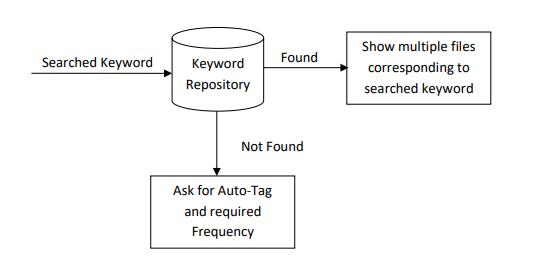
Auto tagging: Itmaytakeseveralminutes,dependingonthe amountoffiles,tomanuallycategoriseandsearchthrough all of the content stored on a smartphone's memory card beforelocatingthedesiredfileorpieceofinformation.Allof yourtagswillbesafelyarchivedinadatabasefromwhich youmayretrievethematanytime.
6. PROPOSAL OR DEVELOPMENT OF AN ALGORITHM
Inordertocategorisefilesbasedonthetermsthatappearin them,apowerfulsearchingalgorithmisutilised.TheIEEE International Conference on Data Mining (ICDM) named C4.5,k-Means,SVM,Apriority,EM,PageRank,adaBoost,kNN, NaiveBayes,andCARTasthetop10dataminingalgorithms inDecember2006.Thisisthealgorithmwederived:
6.1. ALGORITHM
1. You may use a hash table to find certain terms by usingthewordsaskeysandsettingthevaluesto0.
2. Repeatedlyloopoverthetextandexaminewhether eachwordisakeyinthehashtable;ifyes,addoneto thecorrespondingvalue.
3. Usingthematchedwordsaskeysandthecountsas values,iteratethroughthehashtableuntilyoureach oneofthenon-zeroentries.
Operates in O(N+M), where N and M are the number of wordssearchedforandsearchedthrough,respectively.
6.2. ALGORITHM IMPLEMENTATION

1. Doaread-onlyopenofthefile.
2. Remove common terms (such as is, are, am, the, then, has, had, had, will, shall, and or, etc.) and conjunctionsbeforereadingtheStart-Of-File(SOF) text.

3. Whenthefollowingcriteriaaremet,thekeywords willbesavedinthedictionaryuntiltheendofthe fileisreached:
Thevalueisincreasedby1ifthekeyalreadyexists.
Setvalueto0ifkeydoesnotexist.
4. Keyswiththetop10valuesshouldbelisted.
5. Putthesetagsintheprojectrepositorytosecurethe keys.
6. Note the location of the important files and save them.
7. MODEL USED WORK FLOW
Whenmanuallytaggingseveralfiles,theproceduremustbe repeated.
8. RESULT AND ANALYSIS
The overarching purpose of this research endeavour is to providestrategiesforthedesignofsemanticmobileservices that are more effective in terms of resource utilisation. In addition to this, the goal of the thesis is to present a categorizationsystemthatismeanttobecompletefroma theoretical standpoint with respect to the numerous composingtechniques.Specifically,theclassificationsystem will focus on the many ways in which music may be composed. In addition to the numerous models that are a synthesisofthatframework,thethesisgivesaframework for the creation of tag-based smart content services. This frameworkmaybefoundinthethesis.Inthissectionofthe essay, we are going to make an effort to search for heterogeneous contents that have been stored on the SD cardofthemobiledevicebutarenotdiscoverableowingto theextensiverangeoffileformatsandcontentkinds.Weare nowworkingonthedevelopmentofarepositorythatwillbe basedontagsandwillenableuserstosearchforanyphrase inordertoidentifythefile(orfiles)thatcontainthatword. Thisfeaturewillbemadepossiblethankstothefactthatwe arecurrently workingonthecreationof a repositorythat will be based on tags. Because there are so many various typesoffiles,itischallengingtoacquiretheresultthatwe want because we need to build distinct code for each extension.Thismakesgettingtheresultthatwewantmore complex.ThisthesisprovidesanimplementationforaSmart ContentTagRepositoryandfocusesasubstantialamountof attentiononAndroidmobiledevicesasitsprimaryresearch topic.Additionally,anumberofothermajorcontributions areincludedinthethesis.Inadditiontothis,wehaveoffered acomparativeanalysisofavarietyofadditionalintelligent contentaggregationandnavigationalgorithmsavailableon differentplatforms.Lastly,thethesisprovidesevidencethat thistechnologyhasbeensuccessfullyimplementedonthe Android operating system, which is now among the most widelyusedoperatingsystemsforsmartphones
9. CONCLUSIONS
Plug-insforotherdocumenttypes,documentsources(RSS feeds,websites,e-mail,etc.),andlanguageanalyzersmaybe readilyincludedintotheSCANplatform.Extensionstothe userinterfacemayofferwholenewdomainsoffunctionality. For instance, you may add a calendar plugin to your repository to see files in chronological order of their creation.It'spossiblethatsomeothertextanalysissoftware is looking for related papers to a given one (search by pattern).Whatrecentblogpostsprovideaglimpseintothe research being conducted in this area, as well as how the ContentTechnologiesfieldfitsinwithotherareasofstudy? Standards,integration,contenttransfer,search,opensource, and consumer-relevant technologies are only few of the areas covered. With Cloud material Management, current ECM systems may be supplemented with a low-cost, supplementary layer that improves secure collaboration
amongstemployeesaroundlivematerial.Thecapabilityof CloudmaterialManagementmayeventuallygrowtoinclude support for capturing and archiving material as well. For someyears,serviceslikeGoogleDocsandZohoDocshave providedcloud-baseddocumentcreationtoolsthatmaybe used at the beginning of the content creation process Recently, though, tools have emerged (like Google Wave) that make it possible for teams of writers to work in real timeonasamemanuscript.
REFERENCE
[1].WebContentManagement-WCM.Clea.Boston:Gilbane Conference,2014.
[2]. Text Mining with Information Extraction. Mooney, RaymondJ.andNahm,UnYong.Austin:UniversityofTexas, 2013.
[3]. Waldt, Dale.Next Generation ECM for Mission Critical Applications: Open Source ECM Capabilities and Opportunities.Boston:GilbaneCommunity,2010.
[4].SethGrimes.SixDefinitionsofSmartContents.2010.
[5].GeoffreyG,Bock,Waldt,DaleandMary,Laplante.Smart Content in the Enterprise: Next Generation XML Applications.
[6]. Understanding the Smart Content Technology Landscape.Waldt,Dale.s.l.:CMSWire,2010.CMSAdvisor.
[7].TheGilbaneConference.Waldt,Dale.2010.
[8]. Bock, Geoffrey and Waldt, Dale.Managing Content for ContinuousLearningatAutodesk.s.l.:TheGilbaneGroup, 2011.
[9].TakingOnlineEngagementtotheCloud.Laplante,Mary. s.l.:TheGilbaneGroup,2011.
[10]. Cloud Content Management: Facilitating Controlled Sharing of Active Content. Hawes, Larry. s.l. : The Gilbane Group,2010.
[11].White,Martin.Thecontentmanagementhandbook.s.l.: FacetPublishing,2005.
[12]. Yizhou Sun and Jiawei Han.Mining Heterogeneous InformationNetworks:AStructuralAnalysisApproach.
[13].George,David.UnderstandingStructuralandSemantic Heterogeneity in the Context of Database Schema Integration.2011.
[14].ConceptionofInformationSystems.Aberer,Karl.s.l.: Laboratoire de systèmes d'informations rèpartis, 2003, Laboratoiredesystèmesd'informationsrèpartis.
[15].Platforms:ExperimentingaServiceBasedConnectivity between Adaptable Android, WComp and OpenORB. Monfort,ValerieandCherif,Sihem.2012.
[16]. Trippe, Bill.Component Content Management. s.l. : GilbaneGroup,2008.
[17]. Information Mining. Rudolf Kruse. s.l. : EUSFLAT Conference,2001.
[18]. XindongWu, et al., et al.Top 10 algorithms in data mining.Verlag-London:Springer,2007.
[19]. Marc Strohlein. Content Immediacy: The New Marketing Imperative. Guidance on content Strategies, PracticesandTechnologies.February2012.
[20]. Are You Leveraging All the Mobile Technologies Required for Competitive Mobile Engagement? Marc Strohlin, Frank Schneider and Luke Barton. December 3, 2013.
[21].WernerBehrendt,etal.,etal.EP2010:DossieronSmart Content.September2003.
[22]. Rockley, Ann, Kostur, Pamela and Manning, Steve.Managing Enterprise Content: A Unified Content Strategy.s.l.:NewRiders,2003.
[23]. State of the ECM Industry. s.l. : AIIM Industry Watch 2009.
[24].ContentManagementInteroperabilityServices(CMIS). Waldt,Dale.s.l.:TheGilbaneGroup,2009.
[25].TowardsSmartPublishingatIBM.Bock,Geoffreyand Waldt,Dale.s.l.:TheGilbaneGroup,2010.
[26].Paxhia,SteveandRosenblatt,Bil.DigitalMagazineand NewspaperEdition.s.l.:GilbaneGroup,2008.
[27]. Documenting Semiconductor Devices at IBM. Bock, Geoffrey.s.l.:TheGilbaneGroup,2010.
[28].LinkedDatainPearson-TheAssetEnrichmentProcess. Solomon,MadiWelandandJohnson,Marlowe.London:s.n., 2013.
[29].MaryLaplante.SmartApproachesToManagingMobile LearningContent.s.l.:OutsellInc,2011.
[30].What'sNextwithSmartContent.Bock,Geoffrey.Boston :s.n.,2010.TheGilbaneConfere.
[31].ReviewonWebContentMiningTechniques.IJCA(09758887).AmityUniversity:Volume118-No.18.,May2015.
[32]. Literature survey in Web Content Mining. IJRITCC. Trichy,Tamilnadu,India:Volume4,Issue:10.,Oct2016.
[33]. .A Review of Trends in easearch on Web Content MiningIJMTER.Trichy,Tamilnadu,India:Volume3,Issue: 10.,Oct2016,