Development And Testing Of Parabolic Through Collectors For Domestic Applications
1234Student, Dept. Mechanical Engineering, JSPM Rajarshi Shahu college of engineering, Thathawade Pune,Maharashtra, India

4Professor, Dept. Mechanical Engineering, JSPM Rajarshi Shahu college of engineering, Thathawade Pune, Maharashtra, India ***
Abstract – Globalenergydemandisexpectedtoincrease by more than 60% over the next few decades. Nowadays, homewaterheatersaregettingmoreandmoreexpensive, andweneedtofindanotherreliableway.Solarenergyisthe mostusefulsourceofcleanenergytoreplacefossilfuels.A parabolic trough collector isone of the best ways to sustainably produce hot water. Inexpensive, easy to manufacture and easy to carry, it offers additional cost savingsopportunitiescomparedtootheravailablemodels. Thepurposeofthisresearchistoharnesssolarenergyfor homeuse.Experiments were performed using grade 204 stainless steel for the reflector and copper tubing for the absorberandmirror.Theresultsshowaslightincreasein wateroutlettemperaturecomparedtothesimpleparabolic trough collector. This document contains comprehensive content.An overview of this simple parabolic trough collector,alongwithgeometricanalysis,thermalefficiency, andapplicationsarepresented.ApplicationsofPTCinclude waterdesalination,waterheating,andincreasingthepower availabletogeneratesteam.
Key Words: Solar Energy, PTC, Household, Reflector, Absorber, Steam.
1.INTRODUCTION
Solar energy is an important component of renewable resources and is considered one of the best sources of energyavailabletomankind.Inrecentdecades,theenergy demands of the industrial and commercial sectors have continuedtogrow,resultinginanover-relianceonenergy generated using fossil fuel technologies, increasing the releaseofpollutantsintotheatmosphere,whichcontributes toglobalwarmingandenvironmentaldegradation.human health.Itisinterestingtonotethatsteamisjustonetypeof waterthathaschangedphasesinindustry.Steamisusedas aneconomicalandsimplemeansofheatinginavarietyof applications, including plant operations in the chemical, textile,polymer,andpaintindustries.
There are many ways to convert this solar energy into otherformsofenergy,suchaselectricity,hotwater,space heating, and desalination. Currently, the most promising
technology capable of converting this solar energy into thermalformisthesolarconcentratororsolarpanel.Energy isconvertedinsuchawaythatthereflectedsolarraysare linearly focused on the absorber, and heat is transferred fromtheabsorbertotheHTF.Ingeneral,therearedifferent types of solar collectors, including: B. Parabolic Trough Collector(PTC),compositeParabolicTroughCollector(CPC), andFlatPlateCollector.
Basically, a parabolic trough concentrator that reflects solarenergydirectlytoareceiverorabsorbertubeplacedat thefocallineofaparabolaiscalledaparabolictrough,atype of linear concentrating solar collector. Form a light concentrator (PTC). A larger collector opening area concentrates the direct solar energy reflected onto the smalleroutersurfaceofthereceivertube,resultinginthe heatingoftheliquidflowingthroughthereceivertube.This convertssolarradiationintothermalenergyintheformof sensibleorlatentheatinthefluid.Thisthermalenergycan beusedtoruntheRankinecycletogenerateelectricityusing steam turbines in "solar thermal" power plants or to run industrial activities that require thermal energy (food industry, petrochemical industry, etc.) can. . A parabolic troughconcentratorconcentratessolarradiation,whichis thenabsorbedbya receiver inthefocal line,converted to thermalenergyandtransportedtotheHTF.Asthemanwho createdthesecondlawofthermodynamics.
1.1 Geometric Description
Thegeometryofparabolicshapecanbedefinedbythe followingformula:
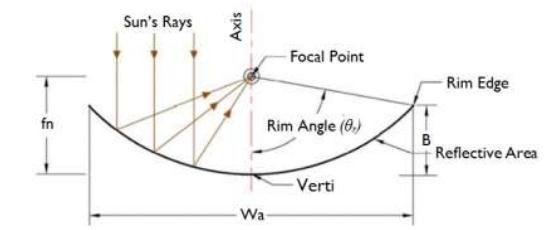
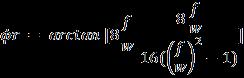
Byusingtheaperture(W)andthefocaldistance(f)the rimangle(ϕr)isdefinedasshownbelow:

Fig. 1.1 Geometrical Description of PTC
Thetotalcollectoraperture(Aa)iscalculatedas
2. EXPERIMENTAL SETUP AND WORKING
2.1 Selection of Materials
A crucial component of the design and construction of parabolictroughcollectors(PTCs)isthematerialchoice.The chosenmaterialsshouldhavecharacteristicsthatsatisfythe demands of PTC components, such as reflectors, support structures, receiver tubes, and heat transfer fluids. It's crucial to think about things like mechanical and thermal qualities, cost, availability, durability, compatibility with othercomponents,andenvironmentalconsiderationswhile choosing materials. Materials should also be assessed for their ability to be manufactured, maintenance needs, and possibilityforrecyclingorreuse.
2.2 Components of PTC

Experimentalsetupincludes–


1. ParabolicTroughReflector
2. WoodenSupportsforTroughReflector
3. ReceiverTube

4. Tap/Valve
Theabsorber(Aro)istheouterareaofthetube:
5. Pipes/Elbows
Parabolic Trough Reflector
Theratioofcollectoraperture(Aa)totheabsorberarea(Ab) i.e.,concentrationratiocanbecalculatedas:


1.2 Thermal Analysis

Theusefulheatproductionfrommodifiedparabolictrough collectorcanbedefinedas:
Itisametalsheetthatisoftencomposedofsteelandbent into a parabola shape. A stainless-steel sheetcouldbe employed in the experimental setup. It belongs to the (SS 204)grade.Thesheetcanbecoatedwithmirrorsbecauseit will be used to reflect solar light, making the surface extremely reflective. By screwing the sheet to plywood sheetswithroundplywoodcuts,itisbentandsupported.A heat transfer fluid (HTF) is included in the receiver tube, whichiswheretheconcentratedsolarradiationisdirected afterbeingreflectedbytheparabolictroughreflector.The concentrated solar energy is absorbed by the HTF, which then heats up and reaches high temperatures. Following that,aheatexchangerisusedtotransmitthethermalenergy ofthisheatedfluid.
The solar irradiation falling on the collector can be calculated by the product of aperture area (Aa) and direct beamsolarirradiation(Gb)
The thermal efficiency of the solar collector ( ) can be calculatedastheratioofusefulheattothesolarirradiation.
Wooden Supports for Trough Reflector
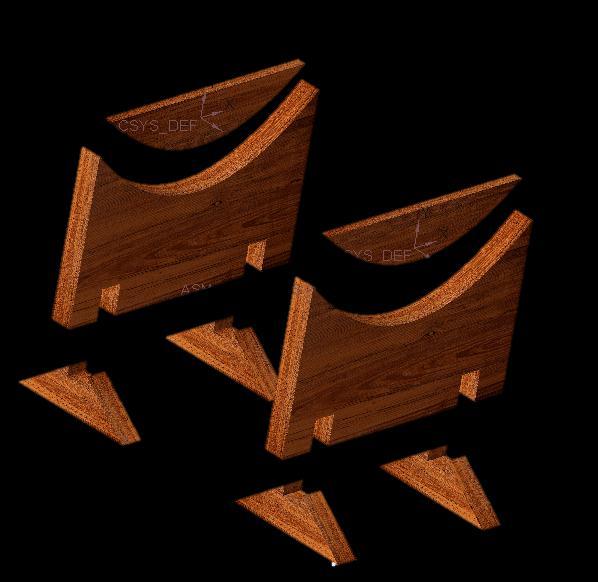
Theparabolicreflectorcanbesupportedusingavarietyof materials. Typically, plywood sheets are utilized because theyarelightweightandshieldthereflectorfromthewind. Topreservethebendingsupportfortheparabolicsheet,the plywood sheets are cut into a semi-circular form. The materialalsomakesupthestandthatisbelowthereflector. The stand could be disassembled for travelling purposes becauseofthewayitwasbuilt.Thereflector'sweightand stress must be supported by wooden supports that are strong enough to handle them. The reflector, especially in windy places, can be large and subject to wind loads. To ensurethatthewoodensupportscaneffectivelywithstand theload,carefulengineeringanddesignconsiderationsmust bemade.
Receiver Tube
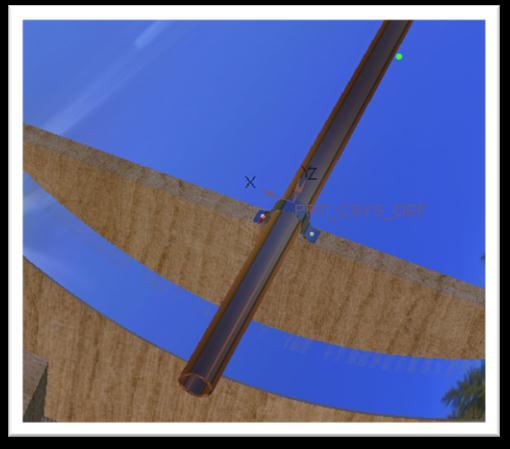
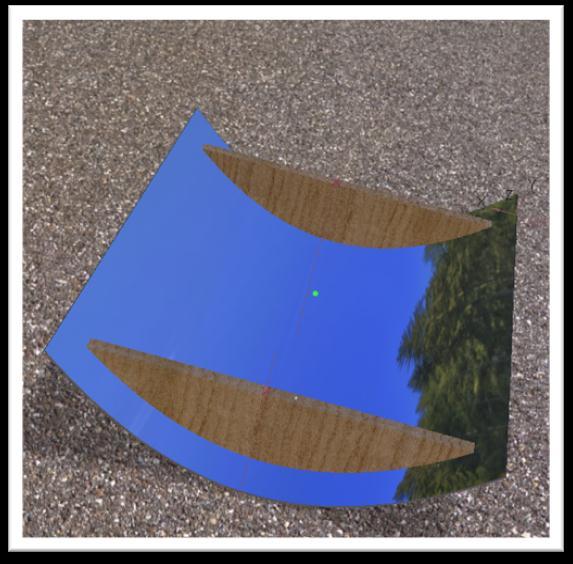
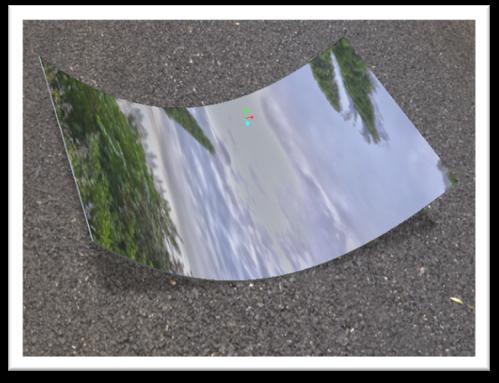
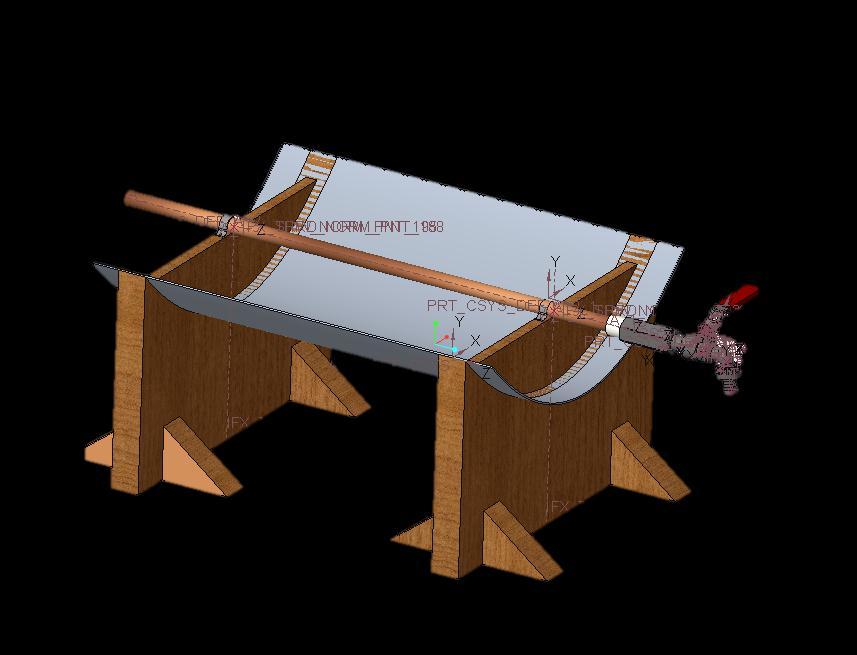
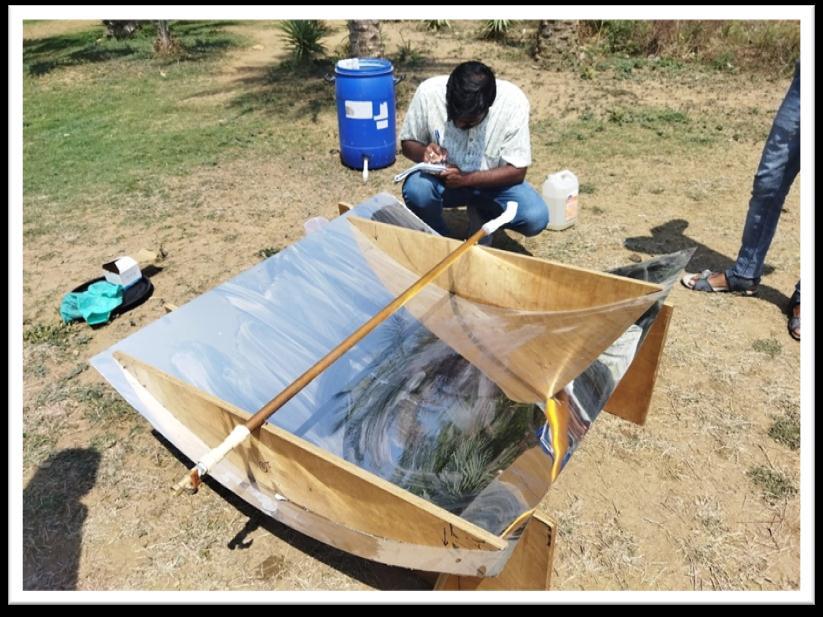
Thereceivertubeisthepartthatabsorbsthermalenergy andtransmits totheflowingfluid.Focusingrequiresspecial attention.Thematerialofthereceivertubeaffectstheoptical andthermalperformanceofthecollector.Thereceivertube canalsobecoatedwithamattblackheatresistantPUpaint. A copper tube is used for the receiver. Receiver tubes are exposed to high temperatures, typically300°Cto550°C,depending on the specific application and PTC system design. So the receiving tube must be able to dothis andcan withstand such high temperatures without deforming or compromising its structuralintegrity.HereistheCADmodeloftheassembly andtheactualmodel.
Tap/Valve
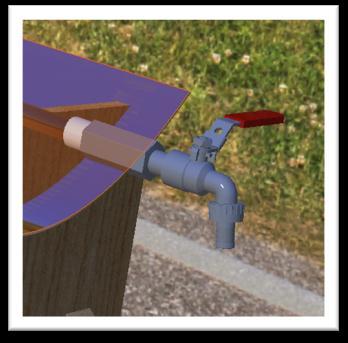
In a Parabolic Trough Collector (PTC) system, valves or faucetsareessentialcomponentsforcontrollingliquidflow inthesystem.Thespecifictypeandconfigurationofvalves andcocksusedinaPTCsystemwilldependonfactorssuch assystemdesign,size,andoperatingrequirements.Common typesofvalvesandcocksusedinPTCsystemsincludeball, gate,globe,andcontrolvalves.Thesevalvescanbeoperated manually or automatically with aremote control and actuators for precise adjustment. Proper valve and tap selection, installation, and maintenance are critical to ensuring the reliabilityand efficiencyofyour PTCsystem. Material compatibility, pressure and temperature ratings, fluid properties, system safety requirements, etc. must be considered when selecting a valve or faucet for a PTC system.
Pipes/Elbows
A parabolic trough collector (PTC) system's fluid circulationandheattransferoperationsdependheavilyon pipes.Pipesizing,insulation,materialchoice,andpressure droparethecrucialcomponentsofpipesandvalvesinclude pipe joints and fittings, piping layout, and piping arrangement. When constructing and installing pipes in a PTC system, it's necessary to follow all applicable laws, standards, and safety regulations. To guarantee the dependability,effectiveness,andsafetyofthepipingsystem, thorough engineering analysis, including pressure drop calculations,thermalmodelling,andstressanalysis,should becarriedout.
2.3 Instruments And Devices for Measurement
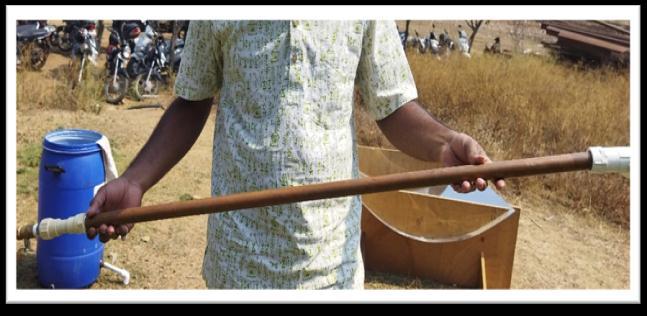
Avarietyofparametersneedtobemeasuredinorderto observehowthesetupoperates.Asetofpreciseinstruments isrequiredinordertomeasureanything.
a)Thermocouplesfortemperatureandheat-related parameters.
b)Volumetrictankformassflowmeasurement.
c)Astopwatchtochecktime-relatedlimits.
d)Thermometer
2.4 Assembly
It issignificantto keep in mind that the particular assembly procedure can change depending on the manufacturer,designconstraints,andprojectneeds.When assembling a PTC system, it is advised to adhere to the manufacturer's instructions and seek the advice of knowledgeable experts to ensure appropriate component installation,alignment,andperformance.Thiswillhelpthe PTCwithstandstrongwindsandrain.Bodyfittingshouldbe improved without sacrificing any components. The fluid shouldbeflowedproperly.Waterleaks,pipedamage,and other issues need to be addressed. Focusing on solar radiation requires a level mounting surface. Thorough testingandcommissioningprocessesarecarriedoutwhen the assembly is finished to ensure the functionality and performance of the PTC system. This may include tests to assess solar concentration, thermal efficiency, fluid flow rates, pressure levels, and system safety. Here is the cad modelofassemblyandactualmodel.
2.5 Working
A PTC is a line-focusing type of reflector that directs sunlightintoa straightline afterithitsa parabola-shaped reflector. The parabola's focal point is where the sun's radiationisconcentrated.Byplacingareceivertubenearthe focal point, it is possible to extract the thermal energy containedinsolarradiation.Thematerialusedtoconstruct this receiver has good heat conductivity. It transports the fluidinsidewithheatfromthesun'srays.Ametalorwooden standsupportstheentiresetup.Tocapturethemostsolar radiation, the reflector's acceptance angle is manually adjusted. The deflected light from the reflector is focused firstonthesupportingmirrors,thenonthecollector.This booststhesun'senergyintensity.
4. RESULT
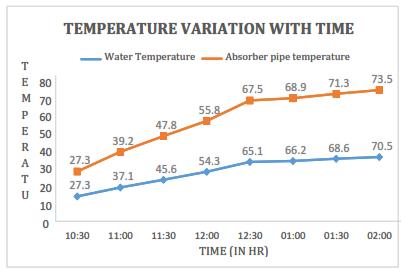
Theexperiment,aimedatcreatinganinexpensiveparabolic trough collector for home use using specular reflectors, copper tube absorbers and a mirror assembly, was considered successful and allowed water to drop significantly to 75 degrees Celsius. can be accomplished withoutmajorproblems.Considerthatnotsohighquality materialswereusedduetobudgetconstraints.Ourparabolic trough collector is very light and portable, allowing us to record heating phenomena at different locations, under differentweatherconditionsandtimeframes.Belowarethe testresults.
Thewindspeedwas9km/hr.andtheweatherwasclear andsunny,humidityon31.7%andoutsidetemperaturewas 38°Candcloudcoveragewas10%. atNagpurMaharashtra.
5.
This paper wraps up a succinct analysis of the different geometrical and thermal characteristics of the parabolic trough collector. The structure of the PTC, which can increase efficiency and reduce working costs, is its most crucial component. The working fluid, also known asheattransfer fluid (HTF), is the second-most important factor. Water is typically used as a heat transfer fluid. Although. The reflector has a significant impact on thePTC'sperformance. Polished SS-204 sheet, aluminium foil, and silver-coated PVC sheet are a few low-cost substitutes. The absorber should be very absorbent with minimalheatloss.ThePTC'sperformanceversatilityenables it to be applied in a variety of domestic and commercial settings.MirrorintegrationcanalsoenhancePTC'sthermal performancebyloweringsolarradiationloss.
Basedontheliterature,wecanspeculatethatnanofluids canbeusedtoimproveperformance,butthisisanemerging area that still needs to be explored. Parabolic trough collectorsreplaceoldersolarcollectordesigns.Itcanreplace traditionalhotwatersupplymethods.
Ourexperimentisdevelopedwiththegoalofprovidingan in-depth examination of PTC and multiple applications utilizinga parabola with a mirror finish andan evacuated tube configuration in mind. The performance of the structural and optical performance, thermal performance, andapplicationsaretheessentialparametersofaPTCthat aresummarizedingraphicalformasshownabove.700mlof fluidcanbeproducedwhileitisstillinthepipe.Inorderto execute a constant flow through the pipe and obtain continuous water heating, more research is required. PTC structureisconsideredtobethemostimportantparameter forPTCdesign,costandperformance.Structuralchangescan improve performance and reduce running costs. The heat transferfluidishissecondmostimportantparameter,asour work has shown. Water is the most common working medium.Withstainlesssteelinthiscase,thereflectorwould bethemostexpensivepartofhisPTC.Thereceivershould havelowheatlossandabsorbhighlevelsofradiation.Glass tube covers, selective coatings on receiver tubes, pin-fin inserts,andporousmediawithinthetubescanalsobeused toimprovePTCefficiency.TheParabolicTroughCollector (PTC) is an established technology that harnesses solar energyandconvertsitintousableheatenergy.Throughout this discussion, we have explored various aspects of PTC, including design, components, operating principles, and experimentalconsiderations.
6. REFERENCES
1) Devender Kumar & Sudhir Kumar, 2017, Thermal performance of solar parabolic trough collector at variableflowrates:Anexperimentalinvestigation.
2) H.JafariMosleha,S.JahangiriMamouria,M.B.Shafiia, 2015,A.HakimSimab,Anewdesalinationsystemusing a comb ination of heat pipe, evacuated tube and parabolicthroughcollector.
3) AliJaberAbdulhameda,b,⁎,NorMariahAdama,Mohd ZainalAbidinAb-Kadira,AbdulAzizHairuddina,2018, Reviewofsolarparabolic-troughcollectorgeometrical andthermalanalyses,performance,andapplications
4) Sunil Nain , Vishal Ahlawat , Sanjay Kajal , Parinam Anuradha , Ashutosh Sharma , Tej Singh, 2021, Performance analysis of different U-shaped heat exchangers in parabolic trough solar collector for air heatingapplications.
5) Sahil Thappa1 · Aditya Chauhan1 · A. Sawhney2 · Y. Anand1 · S. Anand1, 2020, Thermal selective coatings and enhancement characteristics for efficient power generationthroughparabolictroughcollector.
6) Dinesh Kumar Suppan & R. Siva Subramanian, 2020, Performanceanalysisofparabolictroughsolarcollector byvaryingtheabsorbersurface
7) A.V.ArasuandT.Sornakumar,“Design,manufactureand testing of fiberglass reinforced parabola trough for parabolic trough solar collectors”, Sol. Energy, 2007, 8(10):1273-1279.
8) K.S.Reddy and K.R.K,“Solar collector field design and viabilityanalysisofstandaloneparabolictroughpower plantsforIndianconditions”,EnergySustainDev,2012, 16(4):456–470.
9) Kumaresan G, Sudhakar P, Santosh R and Velraj R, “Experimental and numerical studies of thermal performanceenhancementinthereceiverpartofsolar parabolic trough collectors,”, Renewable Sustainable EnergyReviews,77(March):1363–1374.