The Identification of Depressive Moods from Twitter Data by Using Convolutional Neural Network with Text Data along with Emoji
Pratibha M. Jadhav1 , Dr. Sonia2, Dr. Anjali N. Kulkarni31 Research Scholar, Computer Science, JJT University Chudela, Rajasthan and Assistant Professor, Department of Computer Science, C.K. Thakur Arts, Commerce and Science College, New Panvel, India
2Associate Professor, Department of Computer Science, JJT University Chudela, Rajasthan, India

3 Assistant Professor, C.K. Thakur Arts, Commerce and Science College, New Panvel, India ***
Abstract - The identification of depressivemoodsfromsocial media platforms like Twitter has gained significant attention in recent years. But very little research is there on emoji sentiment analysis. In this research paper, we propose a Convolutional Neural Network (CNN) model that leverages both text data and emoji representations for accurate identification of depressive moods in Twitter data. The model is developed using popular Python libraries, includingpandas, scikit-learn, TensorFlow's Keras, and NLTK. The performance of the CNN model is evaluated using metrics such as accuracy, precision, recall, and F1-score. Additionally, thepaperexplores the integration of emoji representations to enhance the detection of depressive moods.
Key Words: CNN, depressive, scikit-learn, NLTK, emoji
1. INTRODUCTION
Depressionisasignificantmentalhealthconcernaffectinga large portion of the population. Early detection and intervention are crucial for improving patient outcomes. Twitterisasocialmediaplatformthatallowsuserstoshare short, text-based messages with other users. Twitter has becomeoneofthemostpopularsocialmediaplatforms,with over 320 million active users. Unlike other social media platforms, Twitter is primarily text-based. Twitter is also known for its heavy use of hashtags, which are used to categorize tweets and make them easier to search for. Twitterisoftenusedtosharenewsandinformation,aswell as personal thoughts and opinions. Textual content, including emojis, can provide valuable insights into an individual's emotional state. This research paper aims to compare the effectiveness of CNN models trained on text data combined with emoji representations in predicting depression.ByleveragingtheexpressivepowerofCNNsand incorporatingemojisentiments,themodelsaimtoimprove accuracyindepressionprediction.
2. RELATED WORK
2.1 Sentiment Classification Techniques
Numerous classification techniques exist for sentiment analysis.Berminghametal.(2010)utilizedSupportVector
Machines(SVMs)andMultinomialNaiveBayes(MNBs)for microblogsentimentclassification[3],whileBifetandFrank (2010)assessedsentimentanalysisalgorithmsusingWEKA and MOA software [4]. Other methods include automated corpus collection [1], Kouloumpis (2011) [13] utilized machinelearningalgorithmsandlexicon-basedmethodsfor sentiment analysis on Twitter data. The study highlighted thechallengesofperformingsentimentanalysisonTwitter due to the platform’s unique characteristics and demonstratedthefeasibilityofsuchananalysis.Similarly, Barbosa(2010)[2]proposedarobustsentimentdetection approach that incorporated domain-independent features and employed a machine learning algorithm, showing promise in overcoming the biased and noisy nature of Twitterdata.LiuK.L.(2018)[16]soughttoimproveTwitter sentimentanalysisbyincorporatingemoticonsintolanguage models, successfully enhancing the accuracy of sentiment classification.
2.2 Sentiment Analysis in HealthCare
Applying sentiment analysis to healthcare can provide valuable patient insights, support disease prediction, and monitortreatmentefficacy.PaulM.(2011)analyzedsocial media data to identify health trends and predict disease outbreaks[17]. Researchspecificallydedicatedtosentiment analysis for mental health applications has flourished in recent years. Similarly, De Choudhury et al. (2013) used socialmediatopredicttheonsetofdepressioninindividuals [18].
2.3 Emoji Analysis and Emotion Detection
Emoticonsplayasignificantroleinconveyingemotionsin text-based communication. C.Yh. Chang (2017) studied asynchronous web-based peer responses in an English writing class using text-based emoticons, finding that emoticonswerepredominantlyusedinpositivecontexts[7]. TheresearchbyFrancescoBarbieri(2017)predictedwhich emojis would be used based on the words in text-based tweets [10]. Studies by Bhavesh Tupkar (2021) [5] and GuptaS.(2023)[11]havefurthervalidatedtheinfluenceof emojisonsentimentpolarityintweets.JoaoMiguel(2018) introduced Emojinating, a technique that aids in brainstorming sessions by generating new emojis. This
methodcombinedsemanticnetworkdiscoverywithvisual mixing [12]. Chuchu Liu (2021) developed an emojiembeddingmodelcalledCEmo-LSTMforevaluatingonline Chinese texts during the COVID-19 pandemic. The study found the pandemic had a substantial effect on individual feelings[8].
EmmanouelaE.Manganari(2021)aimedtoprovideacritical analysis of the usage of emojis in computer-mediated communication. Their study analyzed 46 research papers publishedbetween1998and2020[9].
K. Skovholt (2014) examined the presence and usage of emoticons in workplace emails, revealing that emoticons contributed to a friendly and informal tone in email communication.Theauthorsalsohighlightedthepotential risksandchallengesassociatedwithemoticonusageinthe workplace.Theydiscussedthepotentialmisinterpretation orambiguityofemoticonsandtheimportanceofconsidering the context and recipient's preferences when using them [14].
Yang(2020)[15]developedasentimentanalysisapproach specifically for Chinese product reviews, leveraging deep learningtechniquessuchasconvolutionalneuralnetworks (CNNs)toextractmeaningfulfeaturesfromthetextualdata.
Sentimentanalysisandopinionmininghavegainedattention inextractingsubjectiveinformationfromtext.Classification techniqueslikeSVMsandNaiveBayeshavebeenappliedto sentimentanalysistasks.Theriseofsocialmediaplatforms hasprovidedextensivedataforsentimentanalysis,enabling insights into public sentiment. Challenges in sentiment analysis, suchas language ambiguity and noisy data, have beenaddressedthroughadvancedtechniques.Deeplearning approaches, including CNNs and LSTMs, have shown promisingresultsincapturingsemanticsfromtextdata.Soit isconsideredtoevaluateemojisalongwithtextdata.
3. METHODOLOGY
This section outlines the methodological approach employedfordevelopingtheConvolutionalNeuralNetwork (CNN) model in order to predict depressive moods from Twitter data, focusing on both text data and emoji representations.Theprocedurefollowedasystematicseries ofsteps,includingdatapreprocessing,tokenization,model architecture definition, model training, evaluation, and finally, interpretation of the results. Firstly Dataset was convertedtojsonfileasitretainsthemeaningofemojis.It wasloadedusingpandas.Thedatasetwasassignedtoadata frame named 'df' and we removed any rows with missing valuesusingthedropna()functiontoensuredataquality
3.1 Data Preprocessing
Thenextractedthetextdataandcorrespondinglabelsfrom the DataFrame and used the LabelEncoder to transform
categorical labels into numerical values, facilitating their compatibility with the CNN model. Subsequently split the datasetintoatrainingset(80%ofthedata)andatestset (20% of the data), ensuring a diverse set of instances for modelevaluation.
3.2 Text Tokenization
ATokenizerobject,designedtoretainthetop10,000most frequent words, was utilized to convert our text data into sequences of numerical values. By calling the fit_on_texts method,wecouldadaptthistokenizertoourtrainingdata. Thisstepresultedinavocabularythatmappedeachwordin thetrainingsettoauniqueinteger.
3.3 Model Building
TheCNNmodelarchitecturewasdefinedusingaSequential modelfromTensorFlow'sKeraslibrary.Themodelconsists ofanembeddinglayerthattransformsourintegersequences into dense vectors of fixed size, a convolutional layer that extracts feature maps from these vectors, a global max poolinglayerthatcondensesthesefeaturemaps,anddense layerstoenablethemodeltolearnnon-linearrelationships. Adropoutlayerwasalsoincludedtopreventoverfitting.The model was compiled using a binary cross-entropy loss function,whichissuitableforbinaryclassificationtasks,and the Adam optimizer, known for its efficiency. The chosen metricforevaluationduringtrainingwasaccuracy.
3.4 Model Training and Evaluation
Wetrainedourmodelonthepreparedtrainingdataforaset numberofepochs,tuningthebatchsizetoensureabalance betweencomputationalefficiencyandmodelperformance. Themodelwasthenevaluatedontheunseentestdata.The trainedCNNmodelachievedanaccuracyof0.88,implyinga correct prediction rate of 88% on the test data. A deeper lookintotheclassificationreportshowsthataprecisionof 0.91 for class 0 (negative sentiment) and 0.50 for class 1 (positive sentiment), demonstrating the model's skill in correctlyclassifyingsentiments.
Therecall,whichreflectsthemodel'sabilitytoidentifyall instancesofaspecificclass,was0.96forclass0and0.30for class 1, indicating the model's robustness in identifying negative sentiments. Moreover, the F1-score, a weighted averageofprecisionandrecall,was0.94forclass0and0.37 forclass1.Thesescoressuggestthatthemodelmaintainsa reasonable balance between precision and recall for both sentimentclasses,provingitsoverallreliabilityinsentiment classification.Figure1showsagraphicalrepresentationof theevaluationMetrics
Fig 1: Graph of Precision-Recall and F1 Score Compared for Positive and negative sentiments
Theconfusionmatrixprovidesavisualrepresentationofthe model's performance. It is shown in the following figure; fromwhichmodelefficiencyispredicted.
TheCNNmodeltrainedonthesecondarydatasetdisplayed an accuracy rate of 88%, suggesting a reasonably high degreeofcorrectnessinitspredictions.Whenobservingthe individual sentiment classes, the model demonstrated varyingdegreesofprecisionandindicatingthatthemodel wassuccessfullyidentified.

Overall,theresultsindicatethattheCNNmodelachieveda highaccuracyrateonthetestdata,demonstratingastrong performanceinclassifyingsentimentbasedonTwitterdata. The model was more proficient in identifying negative sentiment,asseenbythehigherprecisionandrecallrates. However,itseffectivenessatrecognizingpositivesentiment waslessreliable.Thesefindingshighlightthepotentialfor usingdeeplearningtechniques,suchasCNN,insentiment analysis tasks. Furthermore, they also suggest that integrating text and emoji data can enhance model performance.However,furtherworkisrequiredtoimprove themodel'sabilitytodetectpositivesentiments.
5. CONCLUSION AND FUTURE WORK
This study presented an application of a Convolutional Neural Network (CNN) model for the prediction of depressivemoodsusingTwitterdata,withafocusonboth textual and emoji data. The findings from this study have substantiated the viability of applying a CNN model in sentiment analysis tasks, demonstrating the model's proficiencyinidentifyingsentimentsexpressedinthedata, particularlynegativesentiments.Theaccuracyofthemodel on the test data was 88%, showing that the model was successfulincorrectlypredictingthesentimentofthetweets amajorityofthetime.Theprecisionandrecallratesfurther indicatedthatthemodelwasrobustinidentifyingnegative sentiments.
Fig 2: Confusion matrix
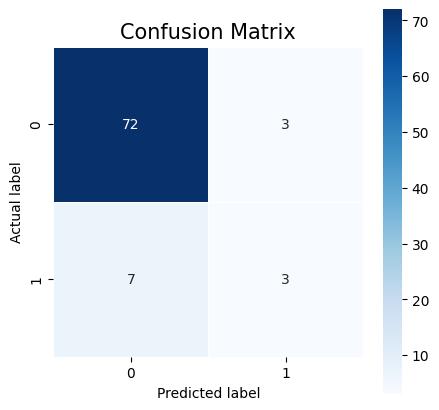
AsperFigure2;TrueNegatives(TN)are35instancesthat were correctly predicted as negative sentiment. False Positives (FP) are 6 instances that were incorrectly predicted as positive sentiment when they were negative sentiment.FalseNegatives(FN)are24instancesthatwere incorrectlypredictedasnegativesentimentwhentheywere positivesentiment.TruePositives(TP)are20instancesthat werecorrectlypredictedaspositivesentiment.Overall,the performanceoftheCNNmodelisbalanced,demonstrating proficiencyinclassifyingnegativesentiment.
4. RESULTS AND DISCUSSION
TheevaluationoftheConvolutionalNeuralNetwork(CNN) modelprovidedaplethoraofintriguingfindings.Themodel demonstrated promising potential in sentiment classification,offeringanavenuetoexploreinfurtherdepth.
The use of emojis in sentiment analysis has been less exploredintheliterature,andthisresearchhasshownthat incorporating emojis into the analysis can enhance the model'sperformance.Thisaddsanewdimensiontothefield of sentiment analysis and opens up possibilities for more nuancedandaccurateanalyses.
Future research directions could involve fine-tuning the model,incorporatingmorediversedatasets,andexploring other feature engineering techniques to enhance the performance of the model. Moreover, other deep learning modelscouldbeinvestigatedandcomparedtoidentifythe most efficient techniques for sentiment analysis on social mediadata.
Inconclusion,theproposedCNNmodelpresentsapromising toolfordetectingdepressivemoodsonTwitter,combining textual and emoji data. The findings from this study have broader implications for mental health surveillance, demonstratingthepotentialofmachinelearningtechniques in providing valuable insights into public mental health trends from social media data. However, continual
advancementsandrefinementsinmodeldevelopmentare crucialtofullyharnessthepotentialofthesetechniques.
REFERENCES
[1] A.PakandP.Paroubek.(2010),“Twitterasa Corpusfor Sentiment Analysis and Opinion Mining", In ProceedingsoftheSeventhConferenceonInternational LanguageResourcesandEvaluation,pp.1320-1326.
[2] BarbosaL,FengJ.Robus.(2010),"Sentimentdetection on Twitter from biased and noisy data", In Proc. the 23rd International Conference on Computational Linguistics:Posters,Vol.2,pp36-44.
[3] Bermingham A, Smeaton A F.(2010), "Classifying sentimentinmicroblogs:Isbrevityanadvantage?", In Proc. the 19th ACM International Conference on Information and Knowledge Management, pp.18331836.
[4] Bifet A, Frank E. (2010), "Sentiment knowledge discoveryinTwitterstreamingdata".InProceedingof DiscoveryScience.DS2010,Vol.6332,pp.1-15.
[5] BhaveshTupkar,DhirajIgrapawar,PrashantWankhede, Akash Yeole, Akhil Anjikar. (2021), "Analysis of Sentiments of Tweets using python", International Research Journal of Modernization in Engineering TechnologyandScience,Vol.03,No.6,pp666-673
[6] Cao,D.,Ji,R.,Lin,D.,Li,S.(2016),"Visualsentimenttopic model-based microblog image sentiment analysis", Multimedia Tools and Applications, Vol. 75 (15), pp 8955-8968.
[7] C.Yh.Chang,(2017),"EFL reviewers’ emoticonusein asynchronous computer-mediated peer response", Comput.Compos.Vol.40,pp1
18
[8] ChuchuLiu,FanFang,XuLin,TieCai,XuTan,Jianguo Liu , Xin Lu. (2021), "Improving sentiment analysis accuracy with emoji embedding", Journal of Safety ScienceandResilience,Vol.2,pp246-252
[9] Emmanouela E. Manganari. (2021), "Emoji Use in Computer-MediatedCommunication,TheInternational TechnologyManagementReview",Vol.10,No.1,pp111
[10] FrancescoBarbieri,MiguelBallesteros,HoracioSaggion. (2017), "Are Emojis Predictable?", arXiv preprint arXiv:1702.07285
[11] Gupta,S.;Singh,A.;Kumar,V.(2023),"Emoji,Text,and Sentiment Polarity Detection Using Natural Language Processing", Information,Vol.14(222),pp1-18
[12] JoaoMiguelCunha,PedroMartins,PenousalMachado. (2018), “Emojinating: Representing Concepts Using Emoji”,Proceedingof26thInternationalConferenceon Case-BasedReasoning, pp1-10
[13] Kouloumpis E, Wilson T, Moore J. (2011), "Twitter sentimentanalysis:ThegoodthebadandtheOMG!",In Proc.the5thICWSM,Vol.5,pp538-541
[14] K.Skovholt,A.Grønning,A.Kankaanranta.(2014),"The communica¬tive functions of emoticons in workplace e‐mails",J.Comput.Med.Commun.Vol.19,pp780–797.
[15] Li Yang, Ying Li, Jin Wang, R. Simon Sherratt. (2020), “SentimentAnalysisforE-CommerceProductReviews in Chinese Based on Sentiment Lexicon and Deep Learning”,IEEEAccess,Vol.8,pp23522-23530
[16] Liu K L, Li W J, Guo M. (2018), "Emoticon smoothed language models for Twitter sentiment analysis", In Proceeding.the26thAAAI,Vol.14(3),pp727~739
[17] MichaelJ.PaulandMarkDredze.(2011),"YouAreWhat YouTweet:AnalyzingTwitterforPublicHealth",Fifth International AAAI Conference on Weblogs and social media,Vol.5,No.1,pp265-272
[18] Munmun De Choudhury, Michael Gamon, Scott by Counts,EricHorvitz.(2013),"PredictingDepressionvia socialmedia",ProceedingsoftheSeventhInternational AAAI Conference on Weblogs and social media, Vol 7, No.1,pp128-137