GLOVE BASED GESTURE RECOGNITION USING IR SENSOR
Abstract - In recent times, thanks to the support of cuttingedge technology interfaces, the development of hand gesture recognition systems has drawngreater attention. Additionally, sign language recognition was primarily created to aid in communication between dumb and deaf people. Various image processing approaches, including segmentation, optimization, and classification, are used in conventional works to recognize hand gestures. Although it takes more time to recognize patterns, there are fewer false positives, higher error rates, and incorrect computation outputs as a result of the primary issues with inefficient processing of huge dimensional datasets. Therefore, the goal of this project is to create aneffective hand gesture recognition system employing an inexpensive but effective IR sensor that is integrated into the gloves. The light obtained by the IR sensor, which is positioned across from the light emitting diode, is used to recognize the hand gesture. The LCD screen shows the hand gesture's meaning, and an audio message is also played through the speaker. Comparing the suggested method to the current ones reveals that it is more accurate and has a lower error rate. People with communication impairments have more interaction and security difficulties. The importance of this endeavour resides in finding solutions to these issues. By pushing a buzzer button, the suggested smart speaking glove can notify users of alerts and their current location. Our main goal is to address both the safety-related and communication-related problems. The proposed system's experimental results show that both have been accomplished. The gap between normal people and speech-impaired persons will be greatly improved by implementing the same method in real-time apps.
Key Words: GSM & GPS module, Arduino Nano, Hand gesture recognition, Speaker & Display output, IR sensor.
1.INTRODUCTION
TheWorldFederationoftheDeafandtheWHOestimatethat 70millionpersonsworldwidearebothdeafandmute.There are300millionpeopleintheglobe,32millionofwhomare deaf. Most people with speech and hearing issues cannot read or write in commonly used languages. In order to communicatewithothers,deafandmutepeopleutilisesign language(SL),whichistheirnativespeech.Moreoftenthan speaking,gesturesinsignlanguages includingtheuseof fingermovements,handmotions,andfacialexpressions areusedtoconveymessages.Thisproject'smajorgoalisto makeitpossibleforhearingandspeech-impairedindividuals
to communicate in real time. Hardware and software are combinedtocreatetechnologies.Hardwareandsoftwareare combinedtocreatetechnologies.Beforeproducingspeech and a display, the device will use the micro-controller to processhumangestureinput.Theonlymethodtoshareour opinionsisthroughcommunication.Itisnotanticipatedthat thiswilllimittheminanymanner.Asaresult,thosewhoare deafanddumbfinditdifficulttocommunicatewithothers, soitis crucial tocreatea model that is both practical and appropriateforthem.Asaresult,weprimarilycommunicate throughhandgesturesandatoolcalledSMARTSPEAKING GLOVE. This technology uses an embedded IR sensor in glovestoenableanddetecthandgesturerecognition.Thisis accomplishedbymeasuringthequantityoflightthatstrikes thereceiver,whichispositionedinfrontofthetransmitter, andconveyingthemeaningofthehandgestureintheform ofanoutputintheformofadisplayandvoice.Peoplewith speech impairments have trouble verbally speaking, whereas those with hearing impairments have trouble hearingwhatotherpeoplearesaying.Bothcommunication and safety-related issues are our focus. Speech-impaired peoplemustdeal withboth problemsasa result,whichis where our smart speaking glove comes in. In the actual world,usingthisglovewillbebothimmenselyadvantageous and demanding. The deaf and dumb have more security challenges than social contact problems. This project's originalityderivesfromresolvingthisproblem.
2. LITERATURE REVIEW
Intheirstudydescribedin[1],A.Z.Shukoretalfocused-on individuals who are deaf and mute, emphasizing their reliance on sign language for communication. However, communicating with non-sign language users poses a significant challenge for them, particularly in educational, social, and work environments. To address this issue, the researchers aimed to develop a sign language translation systemthatwouldfacilitatecommunicationbetweenhearing or speech-impaired individuals and those who do not understand sign language. Additionally, they sought to evaluate the accuracy of this system in interpreting sign language. The sign language translation system they developedutilizedadatagloveconfiguration.Itincorporated 10tiltsensorstocapturefingerflexion,anaccelerometerto detect hand motion, a micro-controller, and a Bluetooth module to transmit interpreted information to a mobile phone. The researchers conducted several experiments to assess the performance of the tilt sensors and the overall

accuracyofthedatagloveintranslatingselectedalphabets, numbers,andwordsfromtheMalaysianSignLanguage.The resultsoftheinitialexperimentindicatedthatthetiltsensors requiredtiltingbeyond85degreestosuccessfullychangethe digital state. In terms of accuracy, when tested by four individuals,thedatagloveachievedanaverageaccuracyof 95% for translating alphabets, 93.33% for numbers, and 78.33% for gestures. The overall average accuracy for translatingall typesofgestureswas89%.Theresearchers suggested that further improvements could be made by incorporatingadditionaltrainingandtestdataandutilizing underlyingframeworkssuchasHiddenMarkovModels.In summary,thestudypresentedbyA.Z.Shukoretalaimedto developasignlanguagetranslationsystemusingadataglove configuration. Their findings demonstrated promising accuracylevelsfortranslatingselectedelementsofMalaysian SignLanguage.Furtherrefinementsandenhancementscould be explored in the future to improve the system's performance
In their study described in [2], Anbarasi Rajamohan et al addressedthechallengingtaskofcommunicationbetween deaf-muteindividualsandthosewhocanhearandspeak.The researchers aimed to develop a glove-based deaf-mute communication interpreter system to facilitate communicationfortheseindividuals.Thegloveutilizedinthe systemwasequippedwithfiveflexsensors,tactilesensors, andanaccelerometer.Eachspecificgestureperformedbythe user resulted in a proportional change in resistance measured by the flex sensors, while the accelerometer detectedtheorientationofthehand.Theprocessingofthese handgestureswascarriedoutusingArduino,apopularopensourceelectronicsplatform.Theglovefeaturedtwomodesof operation:atrainingmodedesignedtobenefiteveryuserand an operational mode for real-time communication. In the training mode, users could teach the system their specific gestures, allowing for personalized communication. The systemconcatenatedtherecognizedgesturestoformwords, utilizingtheArduinoplatform.Furthermore,theresearchers incorporatedatext-to-speechconversion(TTS)blockinthe system,enablingthetranslationofthematchedgesturesinto voiceoutput.Overall,theprojectaimedtodevelopaglovebased deaf-mute communication interpreter system to facilitatecommunicationbetweendeaf-muteindividualsand thosewhocanhearandspeak.Theglove'ssensors,combined withArduinoprocessing,allowedforgesturerecognitionand the formation of words. The addition of a text-to-speech conversionblockenabledthesystemtoprovidevoiceoutput correspondingtotherecognizedgestures.
Intheirstudydescribedin[3],GunasekaranK.etalfocused onutilizingadvancementsinembeddedsystemstodesign and develop a sign language translator system aimed at assistingindividualswhoareunabletospeak(referredtoas "dumb"inthepaper).Theprimaryobjectiveofthisresearch was to enhance the lifestyle of individuals with speech impairments.Someindividualsaroundtheworldoftenuse
sign language as a means of communication, but understanding sign language can be challenging for the general population. To address this issue, the researchers developed a real-time sign language translation system. Whenthesystemdetectsasignlanguagegesture,itplaysthe corresponding pre-recorded voice, thereby reducing the communicationgapbetweendumbindividualsandordinary people.Theproposedmodelconsistsoffourmainmodules: the sensing unit, processing unit, voice storage unit, and wireless communication unit. The researchers integrated fluxsensorsandanAPR9600modulewiththePIC16F877A microcontroller.Thefluxsensors,placedingloves,respond to hand gestures. Based on the sensor's response, the microcontrollerplaystheappropriaterecordedvoiceusing theAPR9600module.Thestudydiscussesasnapshotofthe entire system, advantages over existing methods, and simulationoutputsoftheprocess.Theproposedsystemis highlightedforitshighreliabilityandfastresponse,offering potential benefits in bridging the communication gap betweendumbindividualsandthegeneralpopulation.
Intheirstudydescribedin[4],H.Ikedaetalpresentedasign language editing apparatus. This apparatus is designed to facilitate the creation and display of sign language animations based on finger movements. The apparatus consistsofseveralcomponents.Firstly,thereisaglove-type sensorthatconvertsfingermovementsinsignlanguageinto electricalsignals,generatingtimeseriesdatarepresenting signlanguagewords.Thissensorcapturesthemotionofthe fingersandtranslatesitintoausableformat.Next,thereisa signlanguageworddataeditingdevicethatreceivesthetime seriesdatafromtheglove-typesensorandaddsadditional predetermined data to process the inputted data. This editingdevicemodifiesthetimeseriesdataofsignlanguage words according to specific requirements. The system includesasignlanguageworddictionary,whichstoresthe processed time series data of sign language words. This dictionaryactsasarepositoryforthemodifiedsignlanguage word data. To create sign language sentences, a sign languagesentencedataeditingdevicereadsthetimeseries data of sign language words from the dictionary based on predetermined characters inputted via an input unit. This deviceaddsadditionalinformationtothetimeseriesdataof sign language words, resulting in time series data representing complete sign language sentences. A sign languageanimationsynthesizingdevicetakesthetimeseries data ofsignlanguagesentencesproducedbythesentence dataeditingdeviceasinput.Itusesthisdatatogeneratesign languageanimationsthatdepictthemovementofthesign languagebeingexpressed.Finally,adisplayunitisusedto showcasethesignlanguageanimationsproducedbythesign language animation synthesizing device. Overall, this sign language editing apparatus provides a means to convert fingermovementsinsignlanguageintodigitaldata,editand combinethatdatatoformcompletesignlanguagesentences, andsynthesizesignlanguageanimationsfordisplay.
Intheirstudydescribedin[5],LauraDipietroetalfocused ontheacquisitionofhandmovementdatausingglove-based systems and its applications across various engineering disciplines and biomedical sciences. The paper provides a comprehensive survey of these glove systems, analysing their characteristics, technological advancements, and limitations, while also discussing the current trends in research.Handmovementdataacquisitionhasbeenutilized in numerous fields, including gesture analysis and biomedical research, making glove-based systems a prominent tool for capturing such data. Despite being in existenceforoverthreedecades,thesesystemscontinueto attracttheinterestofresearchersfromdiversefields.The primary objective of the paper is to offer readers, both newcomersandspecialists,acomprehensiveunderstanding of glove system technology and its wide range of applications.Fornewcomerstothefield,itprovidesasolid foundation for comprehending the technology and its potential applications. Specialists in the field can gain insightsintothebreadthofapplicationsinengineeringand biomedicalsciences,alongwithanupdatedunderstandingof theadvancementsandfrontiersofresearchinglove-based systems. By examining the evolution of glove technology, discussing the various applications, and highlighting the currentlimitationsandresearchtrends,thestudyaims to provide a valuable resource that enhances the understandingandutilizationofglovesystemsindifferent domainsofengineeringandbiomedicalsciences.
Intheirstudydescribedin[6],M.G.Kumaretaladdressed the communication challenges faced by speech-impaired individualswheninteractingwiththosewhocanspeak.As speech-impaired individuals rely on sign language for communication, there is a significant communication gap between them and the general population. To bridge this gap,theresearchersfocusedongesturerecognition,which can be accomplished using two approaches: image processing-basedandsensor-based.Theproject'sobjective was to design a smart glove that translates sign language into text, facilitating easier communication for speechimpairedorhearing-impairedindividuals.Thesmartglove wasdesignedtodetectandmeasurefingermovementsand theoccurrenceofcontactbetweenthefingers.Thesensed datafromthesensorsembeddedintheglovewasprocessed by an Arduino UNO board. The processed data was then transferredtoanAndroidphoneusingaBluetoothmodule. Thetransmitteddatatooktheformoftext,representingthe signlanguagegestures.Tofurtherenhancecommunication, the text data was converted into speech using the Google Text-to-Speech converter or a similar technology. Overall, theprojectaimedtodevelopasmartgloveforsignlanguage translation,enablingspeech-impairedorhearing-impaired individuals to communicate more easily. By detecting and translatingfingermovementsintotextandconvertingthe text into speech, the smart glove provided a means for speech-impaired individuals to communicate with others effectively.
Intheirstudydescribedin[7],MadhuriYetalfocusedonthe automatictranslation ofIndiansign language intoEnglish speechtofacilitatecommunicationbetweenhearingand/or speech impaired individuals and those who can hear. The aimoftheresearchwastodevelopasystemthatcouldserve as a translator for people who do not understand sign language,eliminatingtheneedforanintermediateperson and enabling communication using the natural mode of speaking.Theproposedsystemisaninteractiveapplication program implemented using LABVIEW software and integratedintoamobilephone.Themobilephone'sbuilt-in camera is utilized to capture images of sign language gestures.Visionanalysisfunctionsareperformedwithinthe operating system, and the resulting speech output is produced through the device's built-in audio capabilities. Thisapproachminimizestheneedforadditionalhardware and reduces expenses. The system incorporates parallel processing, which helps reduce the lag time between sign language input and translation. This parallel processing enablesalmostinstantaneousrecognitionandtranslationof fingerandhandmovements.Thesystemspecificallyfocuses onrecognizingone-handedsignrepresentationsofalphabets (A-Z) and numbers (0-9). The results of the study demonstrate high consistency, reproducibility, and a relativelyhighlevelofprecisionandaccuracy.Theproposed systemshowspromisingperformanceintranslatingIndian sign language into English speech, allowing for effective communication between hearing and speech impaired individualsandthosewhocanhearandspeak.
In their study described in [8], MohdYusofRahiman Wan Abdul Aziz et al aimed to develop a system capable of detecting and recognizing hand gestures from images captured by a camera. The system was built using Alters FPGA DE2 board, which features a Nios II soft-core processor. The implementation involved utilizing image processingtechniquesandasimpleyeteffectivealgorithm. Imageprocessingtechniqueswereemployedtoenhancethe captured image, enabling smoother subsequent processes for translating the hand sign signal. The algorithm was designed specifically for translating numerical hand sign signals,andtheresultsweredisplayedonaseven-segment display. To construct the system, Alters Quartus II, SOPC Builder,andNiosIIEDSsoftwarewereutilized.SOPCBuilder facilitated the interconnection of components on the DE2 board in an efficient and organized manner, reducing the needforlengthysourcecodeandsavingtime.QuartusIIwas responsibleforcompilinganddownloadingthedesigntothe DE2board.Theprojectalsoinvolvedequippingaglovewith various sensors, including flex sensors, an accelerometer, andtouchsensors,todetectdifferentsignlanguagegestures. Flexsensorswereplacedon thefingerstomeasurefinger bending,whileanaccelerometeronthepalmdeterminedthe hand'slocationintheX,Y,andZaxes.Touchsensorswere integratedintothegloveaswell.Thehandsigntranslation algorithm was implemented using the C programming languageunderNiosIIEDS.Recognizinghandsignsignals
fromimagescanhavevariousapplications,includinghuman controlofrobotsandothertasksthatrequireasimplesetof instructions.Thesystem'sfunctionalitycanbeexpandedby incorporating a CMOS sensor into the setup. Overall, the studyaimedtodevelopahandgesturerecognitionsystem usingFPGAtechnology,imageprocessingtechniques,andan efficient algorithm, with the potential for applications in roboticsandotherfields.
Intheirstudydescribedin[9],ShihabShahriarHazarietal focusedontherecognitionandtranslationofhandgestures, whichisanaturalandexpressivemeansofcommunication for the hearing impaired. While previous research has primarilyfocusedonstaticgestures,postures,oralimited setofdynamicgesturesduetotheircomplexity,thispaper aimed to address real-time recognition of a large set of dynamicgesturesusingtheKinectMotionSensordevice.The challengeliesinthefactthatthegestureofeachuserfora particular word may vary slightly. To overcome this, the authorsemployedanefficientalgorithmthatincorporatesa gridviewapproachforgesturerecognitioninbothtraining andtranslationmodes.Thisalgorithmenablesthesystemto effectivelyrecognizeandtranslategestures.Toevaluatethe performance of the proposed system, the researchers conducted experiments involving various individuals performingtwelvedifferentwords.Theexperimentalresults demonstrated that the system achieved an approximate successrateof80%inaccuratelytranslatingthegestures. TheuseoftheKinectMotionSensorDevice,coupledwiththe efficient gesture recognition algorithm, contributes to a morecomprehensiveandreal-timeapproachtorecognizing andtranslatingdynamichandgestures.Thisresearchoffers promising insights into improving communication for the hearingimpairedbyleveragingadvancedtechnologiesand efficientalgorithms.
Intheirstudydescribedin[10],SidneyFelsetalintroduced Glove-Talk-II,asystemthatenablesthetranslationofhand gestures into speech through an adaptive interface. The system utilizes a mapping mechanism that continuously associates hand gestures with 10 control parameters of a parallelformatspeechsynthesizer.Thismappingallowsthe handtoserveasanartificialvocaltract,generatingspeechin real time. The approach offers numerous advantages, including an extensive vocabulary, support for multiple languages,and directcontrol over fundamental frequency andvolume.ThelatestversionofGlove-Talk-IIincorporates variousinputdevicessuchasaCyberglove,aContactGlove, apolhemussensor,andafoot-pedal.Italsoincorporatesa parallel format speech synthesizer and three neural networks. The task of translating gestures into speech is divided into vowel and consonant production. A gating network is used to weigh the outputs of a vowel neural network and a consonant neural network. The consonant network and gating network are trained using examples providedbytheuser.Ontheotherhand,thevowelnetwork establishesafixed,user-definedrelationshipbetweenhand
positionandvowelsounds,eliminatingtheneedfortraining examples.Additionally,thesystememploysfixedmappings from the input devices to generate volume, fundamental frequency,andstopconsonants.Theresearchinvolvedone subjectwhounderwentapproximately100hoursoftraining toachieveintelligiblespeechusingGlove-Talk-II.Thesubject progressedthrough eightdistinctstages while learning to speak,andalthoughthespeechratewasslow,thequalityof thespeechexhibitedmorenatural-soundingpitchvariations comparedtotext-to-speechsynthesizers.Thedevelopment of Glove-Talk-II represents a significant advancement in translating hand gestures into speech, providing a unique and adaptable interface for individuals to communicate using their gestures in a more natural and expressive manner.
3.PROPOSED WORK
3.1 OBJECTIVE
The primary objective of the smart speaking glove for speech-impairedpeopleusinganIRsensorandpanicswitch is to provide communication assistance and ensure the safety of individuals in emergency situations. The glove incorporates technology to address the specific needs of speech-impaired individuals, providing them with an alternativemeansofcommunicationandawaytosignalfor help when needed. Here is a breakdown of the main objectives:
Communication Assistance: Thesmartgloveaimstoassist speech-impaired individuals in expressing themselves by translatingtheirgesturesorhandmovementsintospoken words.TheIRsensorembeddedintheglovedetectsthese movementsandconvertsthemintoaudiblespeech,enabling thewearertocommunicatewithotherseffectively.
Mobility and Accessibility: The glove is designed to be wearable and portable, allowing individuals to use it wherevertheygo.Itscompactdesignensuresthattheuser can carry it with ease, enhancing their mobility and accessibilitytocommunication.
Emergency Situations: Thepanicswitchintegratedintothe gloveservesasasafetyfeature.Incaseofanemergency,the usercanactivatethepanicswitch,whichtriggersanalarm ordistresssignal.Thisfeaturehelpsindividualsquicklyand effectively signal for help when they are unable to communicateverbally.
Location Tracking: The glove incorporates locationtracking capabilities to determine the wearer's current location.Thisfeatureenablesotherstoquicklylocateandaid inemergencysituations,furtherenhancingthesafetyofthe user.
Independence and Empowerment: By providing an alternativecommunicationmethodandasafetymechanism,
thesmartspeakinggloveaimstopromotetheindependence andempowermentofspeech-impairedindividuals.Itallows users to navigate their daily lives with greater confidence andautonomy,knowingthattheyhaveareliablemeansof communicationandasafetyfeatureattheirdisposal.
Overall,theobjectiveofthesmartspeakinggloveistobridge the communication gap for speech-impaired individuals, enhance their safety in emergency situations, and enable themtoleadmoreindependentandempoweredlives.
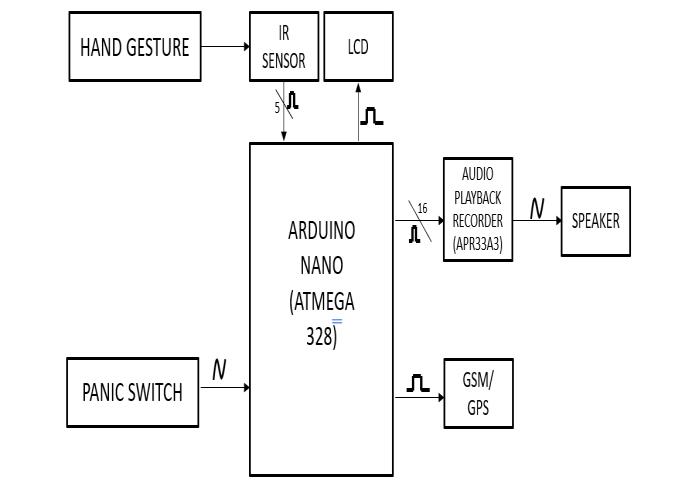
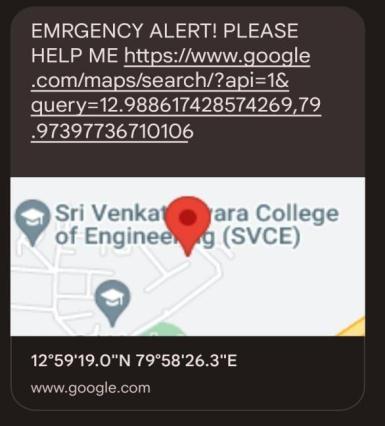
Voice Output: TheprocesseddatafromtheArduinoNanois sent to an APR33A3 module and an LCDdisplay. The LCD displayshowsthemessageassociatedwiththerecognized gesturefromthedatabase.TheAPRmodule,alsoknownas an Auto Playback Recorder, generates the speech signal corresponding to the message and plays it through a speaker. The user has the option to select their desired language for communication using language selection switches.Incaseofemergencysituations,apanicswitchis provided.Whenactivated,ittriggersamessagecontaining the word "EMERGENCY" along with the device user's location,whichistrackedusingaGSMandGPSmodule.The location information is sent to a guardian or designated recipientintheformofGooglemaps.
Overall, the smart speaking glove combines hardware componentssuchasflexsensors,ArduinoNano,LCDdisplay, IR sensors, and modules for voice output and location tracking,alongwithsoftwareprogrammingontheArduino, to enable speech-impaired individuals to communicate effectivelyandseekhelpinemergencies.
3.2.1 ARDUINO NANO (ATMEGA 328)
3.2 SYSTEM MODEL
The smart speaking glove for speech-impaired people consists of both hardware and software components, as depicted in Fig-1. The system is divided into three main parts:
Gestureinput
Processingthedata
Voiceoutput
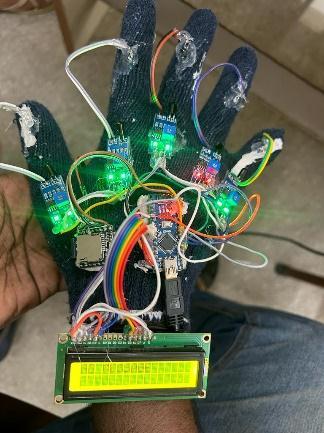
Gesture Input: ThegloveisequippedwithIRsensorsplaced strategically on the fingers, allowing the user to make gestureseasily.Thesesensorsdetectthehandmovements andproducecorrespondingvoltagevalues.Eachgestureis associated with a specific resistance value, which is convertedintoavoltagesignal.
Processing the Data: The voltage signals from the IR sensors are in analog form and need to be processed. An ArduinoNanomicrocontrollerwithaninbuiltADC(Analogto-Digital Converter) is used to convert the analog signals into digital form. The microcontroller stores predefined gestures and their corresponding messages in a database, which can be in different languages. The Arduino Nano comparestheinputvoltagewiththethresholdvaluesstored inthedatabasetoidentifythegesturemadebytheuser.
TheArduinoNanoisaversatileandcompactmicrocontroller boardthatisbasedontheATmega328Pchip.Itbelongsto theArduinofamilyofdevelopmentboardsandisspecifically designedforsmall-scaleprojectsthatrequireacost-effective andlow-powersolution.Theboardfunctionsbyexecuting instructions stored in its flash memory and can be programmed using the Arduino software, which utilizes a simplifiedversionoftheC++programminglanguage.Power canbesuppliedtotheArduinoNanoeitherthroughaUSB connection or an external power source, and it communicates with other devices through various digital and analog input/output pins. The Arduino Nano comes equipped with onboard components, including voltage regulatorsandaUSB-to-serialconverter,whichcontributeto itsfunctionality.Thisboardcanbeeasilyconnectedtoother electronic components such as sensors, actuators, and displays, enabling users to create interactive projects and prototypes. Due to its versatility and compact size, the Arduino Nano is widely utilized in applications such as robotics,homeautomation,andwearabletechnology,among others
3.2.2 INFRARED SENSOR
The IR transmitters emit infrared light, while the IR receiversdetectthereflectedlight.Whentheemittedlight strikesawhitesurface,itisreflectedtowardstheIRreceiver, causingminorvoltagechanges.Asaresult,theIRreceiver detectsthepresenceofinfraredphotons.Ontheotherhand, whenthelightstrikesablacksurface,itisabsorbed,andno reflectedlightreachestheIRreceiver.Consequently,theIR receiverdoesnotdetectanyinfraredrays.Inthisproject,an ArduinoisemployedtoprocesstheinputfromtheIRsensor.
WhentheIRsensordetectsawhitesurface,itsendsasignal of 1 (HIGH) to the Arduino. Conversely, when the sensor detects a black line, it sends a signal of 0 (LOW) to the Arduino.ThisallowstheArduinotodistinguishbetweenthe whitesurfaceandtheblackline,enablingtherobottofollow thedesiredpath.
3.2.3 GSM MODULE
SIMCom Wireless Solutions is a subsidiary of SIM TechnologyGroupLtd.(stockcode:2000.HK)andspecializes in the development and sale of wireless modules. These modules are designed based on various technology platformssuchasGSM/GPRS/EDGE,WCDMA/HSDPA,and TD-SCDMA. Like a mobile phone, a GSM modem accepts a SIM card and utilizes a mobile operator subscription. SIMComWirelessSolutionsisarapidlyexpandingwireless company that offers a wide range of wireless modules to meetdiverserequirements.Theyprovidespecializeddesign solutionsformobilecomputing,GPS,andotherapplications. Additionally,SIMComWirelesscollaborateswiththird-party entities to enhance their product offerings and provide comprehensive solutions in the field of wireless communication.
3.2.4 GPS MODULE
The GPS module is a satellite navigation system that provides users with position and time data in various weatherconditions.Itiswidelyusedinships,vehicles,and trucks for navigation purposes. Both military and civilian users benefit from the global capabilities of GPS, which continuouslydeliversreal-time,three-dimensionallocation, navigation, and timing information. To integrate the GPS modulewithanArduinoboard,itisnecessarytodisconnect the Arduino IC (Atmega chip) from the Arduino board, leavingonlytheserialcircuitryactive.Thissetupisreferred to as the Gateway mode. In the serial window, sentences startingwiththe"$"signcanbeobserved,whichareinthe NMEAformat.TheGPSmoduletransmitsreal-timetracking position data in NMEA format, which consists of multiple sentences.
3.2.5 APR 33A3 (AUDIO PLAYBACK RECORDER)
The APR33A3 is an integrated circuit commonly used for voiceandsoundapplications,providingaudiorecordingand playbackcapabilitieswhenintegratedintoasmartspeaking glove.Withinthesmartspeakingglove,theAPR33A3hasan onboard analog-to-digital converter (ADC) that converts incomingaudiosignalsfromtheintegratedmicrophoneinto adigitalformat.Thedigitalaudiodataisthenstoredinthe APR33A3's built-in non-volatile memory, the capacity of whichdependsontheversionoftheAPR33A3chipused.
When playback is required, the APR33A3 retrieves the stored digital audio data from its memory and converts it
backintoanalogaudiosignalsusingtheonboarddigital-toanalogconverter(DAC).Theseanalogsignalsarethensent toanaudioamplifierandspeakerwithintheglove,allowing theusertoheartherecordedaudioplayback.TheAPR33A3 iscontrolledbyamicro-controllerorasimilardeviceviaa serialinterfaceusingspecificcommands.Thesecommands instruct the APR33A3 to perform operations such as recording,playback,orstopping.Userinteractionwiththe smartspeakingglove'smicro-controllercanbeprogrammed totriggeraudiorecordingandplaybackbasedonuserinput or predefined triggers. For example, pressing a specific buttonontheglovemayinitiaterecording,whilepressing another button may initiate audio playback. By incorporatingtheAPR33A3intothesmartspeakingglove, users can record and play back audio messages, enabling voice-basedcommunicationandfeedbackwithintheglove's functionality.
3.2.6 SPEAKER
The speaker within a smart speaking glove functions by convertingelectricalsignalsintoaudiblesoundwavesforthe usertohear.Hereishowitoperateswithintheglove:
Electrical Signal: The smart speaking glove's microcontrolleroraudioplaybackcircuitrygeneratesanelectrical audio signal, typically in the form of analog voltage variations.Thissignalrepresentsthedesiredsoundorvoice messagetobeplayed.
Amplification: Since the electrical audio signal is usually weak,itneedstobeamplifiedtoalevelthatcaneffectively drivethespeaker.Anaudioamplifiercircuitwithintheglove booststheamplitudeofthesignal,makingitstronger.
Speaker Cone and Magnet: Thespeakerunitconsistsofa cone-shapeddiaphragm,avoicecoil(coil),andapermanent magnet.Thevoicecoilisconnectedtothebaseofthecone andissurroundedbythemagnet.
Magnetic Field and Coil Interaction: Whentheamplified electrical audio signal flows through the voice coil, it generates a varying magnetic field around the coil. This varying magnetic field interacts with the fixed magnet, causing the voice coil and cone to move back and forth rapidly.
Sound Production: As the cone moves back and forth, it displaces the surrounding air molecules, creating sound waves. These sound waves propagate through the air as pressure variations, producing audible sound that can be heardbytheuser.
Audio Output: Thesoundwavesgeneratedbythevibrating cone are emitted through the speaker's front face or an opening in the glove, allowing the user to hear the audio playbackorvoicemessages.
The quality, volume level, and frequency response of the speaker depend on its design, construction, and the characteristics of the audio amplification circuitry. By incorporating a speaker into a smart speaking glove, the glove can provide audible feedback, play recorded audio messages,andenablevoicecommunication.
3.2.7 PANIC SWITCH
Apanicswitchincorporatedwithinasmartspeakinggloveis typicallya physical buttonorsensor that, when activated, triggersanimmediateresponseoremergencyaction.Hereis ageneraloverviewofhowitoperateswithintheglove:
Button or Sensor: The panic switch is a distinct physical buttonorsensorintegratedintotheglove.Whenpressedor activated,itsendsasignalindicatingtheuser'sintentionto invokeapanicoremergency.
Micro-controller Input: Thepanicswitchisconnectedto theglove'smicro-controllerorcontrolcircuitry.Themicrocontroller continuously monitors the status of the panic switchinputtodetectwhenitisactivated.
Panic Event Detection: Upon detecting that the panic switchhasbeenactivated,themicro-controllerrecognizesit asaspecifictriggereventforapanicoremergency.
Immediate Response: Once the micro-controller detects the activation of the panic switch, it initiates a predefined response or action. The nature of this response can vary depending on the purpose and programming of the smart speakingglove.
3.2.8 LCD 16X2
AnLCD16x2displayfunctionsbyutilizingliquidcrystalsto manipulate light passing through them. It consists of 16 columnsand2rowsofcharactercells,whereeachcellcan displayacharacterorsymbol.Tointerfacethedisplaywitha smartspeakingglove,amicro-controllerorsimilardeviceis required to send commands and data to the display. The micro-controller controls the display by issuing specific commandstoinitializeit,positionthecursor,andwritedata to the desired locations on the screen. Trilateration is the mathematical principle underlying the functioning and operation of the Global Positioning System (GPS). By utilizing the distances to satellites, the receiver's position can be calculated. In the case of four satellites, the fourth satellite serves to confirm the intended position. Additionally, tracking the location using three satellites is possible, with each spacecraft using a fourth satellite to validateitsintendedlocation.TheGlobalPositioningSystem consistsofsatellites,controlstations,monitorstations,and receivers.TheGPSreceivergathersdatafromthesatellites andappliesthetrilaterationtechniquetodetermineauser's preciselocation.
4. RESULTS AND DISCUSSION
4.1 GESTURE RECOGNITION & ITS CONVERSION
The smart speaking glove designed for individuals with speechimpairmentsutilizesaninfrared(IR)sensortodetect handmovementsandconvertthemintoaudiblespeech.In this section, we present the structure of the Results and Discussionsectionofaresearchpaperonthistopic.
RESULTS: Thestudyinvolvedagroupof5participantswith speechimpairmentswhotestedtheprototypeofthesmart speakingglove.Eachparticipantwasinstructedtoperforma seriesofpredefinedhandgestureswhilewearingtheglove, andtheIRsensorcapturedthecorrespondingmovements. Subsequently, the glove processed the collected data and generatedspeechoutputbasedontherecognizedgestures. Theobtainedresultsdemonstratedthatthesmartspeaking gloveachievedaremarkablelevelofaccuracyindetecting and interpreting hand movements. The IR sensor successfully captured a wide range of gestures, including fingermovements,palmorientation,andhandshapes.The glove effectively translated these gestures into coherent speech output, enabling the participants to communicate efficiently. During the testing phase, the participants expressedahighlevelofsatisfactionwiththeperformance oftheglove.Theyfoundtheglovetobeintuitivetouseand greatly appreciated its capability to convert their hand movements into spoken words. The system's accuracy in recognizinggesturessignificantlyimprovedtheparticipants' ability to express themselves, reducing their reliance on alternativecommunicationmethods.
Intheprocessofanalysingtheresults,itwasobservedthat whenthebitnumberissetto1,indicatingtheappropriate direction of finger bend, contact between the LED and IR sensor is prevented. Consequently, the specific finger movement is not recognized. Conversely, when the bit numberissetto0,indicatingthenon-bendingpositionofthe finger,contactisestablishedbetweentheIRsensorandLED installedintheglove'sfingers,enablingtherecognition of thefinger'sgesture.TheoutputisthenpresentedontheLCD display and converted into speech output based on the combination of finger movements. The gesture pattern is determined based on these outcomes. The results of the studyhighlighttheeffectivenessofthesmartspeakingglove in gesture recognition and conversion. The high level of accuracyachievedbythegloveincapturingandinterpreting handmovementsholdssignificantpromiseforindividuals withspeechimpairments.Theintuitivenatureoftheglove's interface and its ability to convert gestures into speech
output offer a practical and efficient means of communication.However,furtherresearchisnecessaryto explore potential improvements and expand the range of supportedgestures.Theincorporationofmachinelearning algorithmsoradvancedsignalprocessingtechniquescould enhance the system's gesture recognition capabilities. Additionally,userfeedbackandlong-termusabilitystudies shouldbeconductedtoensuretheglove'seffectivenessand usersatisfactioninreal-worldscenarios.Overall,theresults indicate that the smart speaking glove with IR sensor technology has the potential to significantly improve communication for individuals with speech impairments, providing them with a reliable and intuitive means of expressingthemselvesthroughhandgesturesconvertedinto audiblespeech.
DISCUSSION: Thesmartspeakinggloveoffersapromising solutiontoaddressthecommunicationchallengesfacedby individuals with speech impairments. By utilizing an IR sensortocaptureandinterprethandmovements,theglove successfullyconvertsgesturesintoaudiblespeech,providing analternativemeansofcommunication.Thistechnologyhas thepotentialtosignificantlyimprovethequalityoflifefor speech-impaired individuals by enhancing their ability to communicateeffectivelyandinteractwithothers.Oneofthe key advantages of the smart speaking glove is its adaptability. The system can be easily customized to recognizedifferenthandgesturesandaccommodatevarious languages,ensuringitsapplicabilitytoawiderangeofusers. Furthermore,thecompactandportabledesignoftheglove makes it convenient for everyday use in different environments.Whiletheinitialresultshavebeenpromising, thereareseveralareasthat warrantfurtherimprovement andresearch.Enhancingtheaccuracyofgesturerecognition iscrucialtominimizeerrorsandensurethereliabilityofthe system.Thiscanbeachievedthroughadvancedalgorithms or machine learning techniques that improve the glove's ability to interpret complex hand movements accurately. Additionally,optimizingtheglove'sergonomicsandcomfort isimportanttoensurethatuserscanwearitcomfortablyfor extended periods without experiencing discomfort or fatigue.Usertrainingandadaptationtotheglove'sinterface are also essential factors to consider. Investigating the learningcurveandusers'easeofintegratingthegloveinto their daily routines will provide valuable insights into the usability and practicality of the device. In conclusion, the smart speaking glove holds great promise as a communication tool for individuals with speech impairments. With further enhancements and research, including improved gesture recognition, optimized ergonomics, and user training, this technology has the potentialtoempowerspeech-impairedindividuals,granting them greater independence and facilitating meaningful interactionswithothers.
4.2 EMERGENCY SITUATION INDICATOR
Theinclusionofanemergencybuttonindevicesdesigned forspeech-impairedindividualsservesasavitalfeatureto ensure their safety and provide swift assistance during emergencysituations.Hereisamorerefinedexplanationof itsusage:
Immediate Assistance: In the event of an emergency requiringimmediateaid,suchasamedicalcrisisorpersonal safetyconcern,speech-impairedindividualscanactivatethe emergency button on their device. This action triggers an alertsystemthatpromptlynotifiesrelevantauthoritiesor designatedemergencycontacts.
Location Identification: Equipped with GPS or other location-tracking technologies, the device determines the precise whereabouts of the individual at the time of emergency button activation. This crucial information is transmitted along with the alert, enabling emergency responderstoquicklylocateandreachthepersoninneed.
Swift Response: By sharing the individual's current location, emergency responders can rapidly assess the situationandprovideappropriateassistance.Thisexpedited response time can significantly mitigate the impact of emergenciesandpotentiallysavelives.
User Accessibility: The emergency button should be thoughtfully designed with the specific needs of speechimpairedindividualsinmind.Itshouldbeeasilyaccessible, prominently displayed on the device, and incorporate mechanisms to prevent accidental activation, thereby minimizingfalsealarms.
Integration with SupportSystems: Seamlessintegrationof the emergency button with existing emergency response systems, such as emergency call centre’s or mobile applications, ensures that alerts are promptly received by the appropriate authorities. This integration facilitates efficientcoordinationofresponseefforts.
Privacy and Security Considerations: Safeguarding the privacy and security of the user's location data is of paramount importance. The system should implement robustencryptionmeasuresandadheretorelevantprivacy regulationstoprotecttheindividual'spersonalinformation fromunauthorizedaccess.
By incorporating an emergency button into devices for speech-impairedindividuals,theirsafetyandwell-beingcan be significantly enhanced. Prompt access to assistance, coupled with accurate location tracking, empowers individualstoseekhelpduringemergencies,providingthem withagreatersenseofsecurityandreassurance.
5.CONCLUSION AND FUTURE SCOPE
Conclusion: ThesmartspeakinggloveutilizinganIRsensor for speech-impaired individuals presents a promising assistive technology solution. Through the accurate detectionandinterpretationofhandmovements,theglove successfullytranslatesgesturesintoaudiblespeech,enabling effective communication. The results of testing and user satisfactionindicateitspotentialtosignificantlyenhancethe quality of life and independence of speech- impaired individuals. he compact and portable design of the glove, coupled with its versatility in accommodating different gesturesandlanguages,makesitapracticalandaccessible communication tool. The positive feedback from users highlights its intuitive interface and its ability to reduce relianceonothercommunicationmethods.
Future Scope: WhilethesmartspeakinggloveusinganIR sensor has shown promising results, there are several avenuesforfutureresearchanddevelopment:
Gesture Recognition Improvement: Furtherrefinementof the gesture recognition algorithms can enhance accuracy and reliability, reducing the occurrence of errors in translatinghandmovementsintospeechoutput.Advanced
machinelearningtechniques,suchasdeeplearning,couldbe exploredtoachievehigherprecisionandexpandtherangeof recognizedgestures.
Multimodal Communication: Integration of additional sensors,suchasaccelerometersorflexsensors,cancapture more nuanced hand movements and gestures, enabling a richer and more expressive form of communication. Incorporatingothermodalities,suchashapticfeedback,can enhance the user experience by providing tactile cues or responses.
Natural Language Processing: Advancements in natural languageprocessing(NLP)canimprovethecoherenceand fluencyofthespeechoutputgeneratedbytheglove.Thiscan includebettersentencestructure,intonation,andcontextawareness to ensure more natural and effective communication.
Accessibility and Customization: Furthereffortsshouldbe madetoensuretheglove'saccessibilityforindividualswith varyinglevelsofhandmobilityordexterity.Customization options,suchasadjustablesensitivityorgesturemapping, can accommodate different user preferences and requirements.
Long-Term Usability and Comfort: Investigatingthelongterm usability and comfort of the glove is crucial. User studiescanassessfactorslikeergonomics,breathability,and ease of wear to ensure extended periods of use without causingdiscomfortorfatigue.
IntegrationwithSmartDevices: Exploringintegrationwith existingsmartdevices,suchassmartphonesortablets,can enhance the functionality and connectivity of the smart speakingglove.Thiscanincludefeaturesliketext-to-speech conversion, message drafting, or compatibility with communicationapps.
User Training and Support: Continuedusertrainingand supportresourcesareessentialtofacilitatetheadoptionand effectiveuseofthesmartspeakingglove.Userfeedbackand engagement should be actively sought to drive ongoing improvementsandaddressuserneeds.
Inconclusion,thesmartspeakinggloveutilizinganIRsensor holdsgreatpromiseasanassistivetechnologyforspeechimpairedindividuals.Continuedresearchanddevelopment, alongwithuser-centreddesignprinciples,canfurtherrefine its performance, expand its capabilities, and improve the overall communication experience for speech-impaired individuals.
REFERENCES
[1] A. Z. Shukor, M. F. Miskon, M. H. lamaluddin, F. bin Ali@Ibrahim,M.F.Asyraf,andM.B.binBahar,"Anew data glove approach for Malaysian sign language
detection,"IEEEInternationalSymposiumonRobotics andIntelligentSensors(IRIS2015)ProcediaComputer Science,Vol.76,2015.
[2] AnbarasiRajamohan,HemavathyR.,DhanalakshmiM., “Deaf-MuteCommunicationInterpreter,”International Journal of Scientific Engineering and Technology, Volume 2 Issue 5, pp: 336-341, 1 May 2013, ISSN: 2277-1581.
[3] Gunasekaran K., Manikandan. R., “Sign Language to SpeechTranslationSystemUsingPICMicrocontroller”, International Journal of EngineeringandTechnology (IJET),Vol5No2,pp1024-1028,Apr-May2013,ISSN: 0975-4024.
[4] H. Ikeda, H. Sagawa, T. Sakiyama, M. Ohki. and Y. Kaneko,”Signlanguageeditingapparatus,"USPatent 5,990,878,v.J77-D-II,pp.753–763,1994.
[5] Laura Dipietro, Angelo M. Senior, member IEEE, “A SurveyofGloveBasedSystemandtheirapplications,” IEEEtransactiononSystem,Man,andCybernetics-Part C:ApplicationandReview,vol.38,no.4,2008.
[6] M.G.Kumar,M. K.Gurjar,andM.S. Singh,"American sign language translating glove using flex sensor," ImperialJournalofInterdisciplinaryResearch,vol.2, no.6,2016.
[7] Madhuri, Y.; Anitha, G.; Anburajan, M., “Vision-based sign language translation device," Information CommunicationandEmbeddedSystems(ICICES),2013 InternationalConferenceon,vol.,no.,pp.565,568,2122Feb.2013,DOI:10.1109/ICICES.2013.65083.
[8] MohdYusofRahimanWanAbdulAziz,―Developmentof SignSignalTranslationSystemBasedonAltera‘sFPGA DE2Board‖,InternationalJournalofHumanComputer Interaction(IJHCI),Vol.2,Issue3,pp.101-114,2011.
[9] Shihab Shahriar Hazari, Asaduzzaman, Lamia Alam, andNasimAl Goni wrote "Designing a sign language translation system utilizing Kinect motion sensor device," International Conference on Electrical, Computer and Communication Engineering (ECCE), February16-18,2017,Cox’sBazar,Bangladesh.
[10] SidneyFelsandGeoffreyHinton,“GloveTalkII,”IEEE transaction on neural networks, Department of Computer Science of University of Toronto, Toronto, Volume9No1,6November1998.