Servant-ModLeach Energy Efficient Cluster Base Routing Protocol for Large Scale Wireless Sensor Network
Fuseini Jibreel1, Mohammed Ibrahim Daabo2 , A.W. Yusuf-Asaju3, Kazeem Alagbe Gbolagade41Department of Computer Science, Faculty of Applied Sciences, Tamale Technical University, Ghana
2Department of Computer Science, School of Computing & Info. Sciences, C.K. Tedam University of Technology & Applied Sciences, Navrongo, Ghana.
3Department of Computer Science, Faculty of Communication & Info. Sciences, University of Ilorin, Ilorin, Nigeria
4Department of Computer Science, College of Information & Communication Technology, Kwara State University, Nigeria ***
Abstract: In wireless sensor networks, the sensor nodes are usually engaged in a number of activities making them lose energy very fast. Therefore, maximizing the lifetime of nodes during protocol design is of primary concern. In this paper, the MODLEACH protocol is studiedandenhanced. In MODLEACH, it is observed that the Cluster Heads (CHs) are responsible for both data aggregation and routing of data to the Base Station (BS). This allows a faster depletion of the CHs energy and the energy of the entire network. Also, it has been observed that the residual energy of the nodes is not considered in selecting the Cluster Heads (CHs). This makes it possible for weaker nodes to be selected as CHs. In this research, a modified MODLEACH protocol called Servant-MODLEACH (S-MODLEACH) has been proposed to address the problem of residual energy and lessen the huge task placed on CHs in MODLEACH protocol. In the proposed protocol, Cluster CHs are selected based on the strength of their residual energy. In addition, servant nodes for data aggregation and routing of data to CHs are introduce in the network. Simulations have been conducted to evaluate the new clustering algorithm using MATLAB R2017a and the results showed that S-MODLEACH performs better than MODLEACH in heterogeneous settings in terms of throughputs, energy conservation and extension of the network lifetime
Keywords: Energy Consumption, MODLEACH Protocol, NetworkLifetime,Servant-MODLEACH
1. Introduction
Sophisticationinelectronicsduetoadvancedtechnology today, has enabled network protocol designers to develop low cost, low power and small size sensors [5, 6]. In fact, thousandsofthesesensorsaredeployedinWirelessSensor Network (WSN) based on the requirement of network application. These devices are able to monitor physical environment,computeandtransmitdataamongthemselves toresourcenodescalled.
BaseStation(BS)[8].Theoverreliabilityofthesesensor nodesonbatteriesforenergyisamajorissuebecausethese batteriescannotbereplacedorrechargedeasilyoncethey are deployed. Therefore, protocols for these kinds of
networks must be designed in such a way that they are energy efficient in order to prolong the lifetime of the network.

LowEnergyAdaptiveClusteringHierarchy(LEACH)was the first hierarchical cluster-based routing Protocol with clustersinWSNstohavebeendeveloped[4].
Themainobjectiveofthisprotocol wastominimizethe energy consumption in sensor networks [13]. In LEACH, thereisaClusterHead(CH)foreachclusterresponsiblefor receivingdatafromnormalsensornodes(NSN),aggregating thedataandforwardingittotheBS.
Energy heterogeneity is another key issue that merits attention [14] in wireless sensor networks. This happens whenthereisenergydifferencetosomethresholdbetweena sensor node and its neighbors [1]. In the case of heterogeneouswirelesssensornetworks,[12],developedan energy-efficientservicediscoveryprotocol.Here,nodesare identifiedwithhardwareidentifiers,whichareunique,along with capability grades. The sensor node with the highest capability grade becomes cluster head and collects and aggregates data from all sensor nodes in the cluster. With thisscheme,itiseasytoconstructandmaintainanditcan adaptquicklytotopologicalchangesinsensornetworks.A delay-constrained energy-efficient routing scheme in heterogeneousWSNswaspresentedby[22].Inadditionto static sensor nodes in their case, mobile and static supper nodes can be used to support periodic and event-based reportingapplications.Varioustypesofdatamessagesare supported by the algorithm. From its routing table, the source sensor node selects the best relay super node and sendsthemessagetoit.Generally,ClusterHeadsareselected using an advanced algorithm based on the amount of remainingenergyonCHsandthedistancetheyarefromthe basestation.Therearetwomulti-hopingcriteriaproposedin this algorithm: distance-based multi-hoping and loadbalancing-based multi-hoping. This gives rise to different energylevelsinthenetwork.Itisonthebasisofthiskindof network that a modified algorithm called ServantMODLEACH (S-MODLEACH) has been proposed. It is an
enhancement of MODLEACH protocol in heterogeneous settings.ThealgorithmoperatesinaWSNunderthreelevel energy heterogeneity. Simulation results showed that, the proposedalgorithmoutperformsthatoftheMODLEACHin termsofthroughputandnetworklifetime.
The rest of the work is organized as follows: Section 2 looks at a review of related works; Section 3 presents problemdefinition,whileRadioEnergyandNetworkModel isdescribedinSection4.Simulationresultsandanalysisare discussedinSection5andconclusionisdrawninSection6.
2. Related Works
In2001,[11]introducedanewenergyefficientprotocol called TEEN (Threshold sensitive Energy Efficient sensor Networkprotocol)forre-activenetworks.Theperformance oftheprotocolwasevaluatedandwasfoundtobelimitedto asimpletemperaturesensingapplication.Intermsofenergy efficiency, the protocol was seen to have outperformed existingconventionalsensornetworkprotocols.
[9],discusseda two-level (TL) hierarchyand realized a protocolthathaveabetterenergyconsumption.TL-LEACH usesrandomrotationoflocalclusterbasestations(primary cluster-heads and secondary cluster-heads). This allows betterdistributionoftheenergyloadamongthesensorsin the network especially, when the density of network is higher. They evaluated the performances of their protocol withNS-2andthisprotocoloutperformedLEACHintermsof energyconsumptionandlifetimeofthenetwork.
[23], proposed the new Version LEACH (V-LEACH) protocol which improves the original LEACH protocol by selectinga backup-CHcalledthevice-CHwhichtakesover theroleoftheCHintheeventtheCHdies/runout.Whena CHdies/runsout,theclusterwillbecomeuselessbecauseall datagatheredbysensorsintheclusterwillneverreachthe sink.So,inadditiontoelectingCH,thevice-CHalsochosen. Bydoingso,clusternodesdatawillalwaysreachtheBSand thereforenoneedelectinganewCHeachtimetheCHruns out,andthiswillextendthelifetimeofthenetwork.
[17], proposed the modified R-LEACH protocol which allowsanalternativenodetogetreplacedinplaceofanode whichlosesitsenergysuchthattheentirenetworklifetime can be extended and avoid data loss. The Packet Delivery Ration(PDR)andenergylevelshavebeenfoundtobebetter thanLEACH.
[21],presentedtheStableElectionProtocol(SEP)which gave a weighted probability that allowed each node the possibility of becominga cluster head. [16], presented the Distributed Energy-Efficient Clustering scheme for heterogeneouswirelesssensornetworkscalledDEEC.Inthis scheme, the existing energy in the nodes is the election criteriaforanodetobecomeaclusterhead.[1],proposed theEnhanced-SEPclusteringalgorithminathree-tiernode
scenario to prolong the effective network life-time. SimulationresultsshowedthattheEnhanced-SEPachieves better performance in this respect, compared to other existing clustering algorithms in both heterogeneous and homogenousenvironments.
[19],describedLeach-heterogeneoussystemwhichsought tocomparetheheterogeneousandhomogeneoussystems. They analyzed LEACH protocol which is a homogeneous system and then studied the impact of heterogeneity. SimulationresultsusingMATLABshowedthattheproposed Leach-heterogeneous system significantly reduced energy consumptionandincreasedthetotallifetimeofthewireless sensornetwork.
[7], proposed Modified Enhanced Stable Election Based RoutingProtocolforWSNs.Theproposedprotocol,whichis an extension of the Enhanced Stable Election Protocol (ESEP), considered the residual energy and ensured maximumnetworklifetime.
[20],alsoevaluatedsomeissueswhichhavebeenleftout inthefieldofWSNsandshowedsomecomparisonbetween homogeneous and heterogeneous protocols. In order to reducetheenergyconsumptionofeachclusteringnodeand enhance the lifetime of the wireless sensor network, [18], proposedtheLEACHprotocol.Inthiscasethebasestation chooses the cluster head directly. Tests results conducted showed that the proposed method proved to be more efficientthanLEACHtermsoflifetimeofthenetwork.[3],in their study, presented a model in which the selection procedureofclusterheadsremainsthesameasinthecaseof ordinaryLeachprotocol.Theyhowever,dividedthewhole areaofthenetworkintoamultiplerectangulardistributed region. In each region, the authors applied the LEACH algorithm. As part of their study, [2], developed an intracluster multi-hop communication algorithm based on the LEACH protocol for multi-hop simulation of annealing (MhSA-LEACH).ASimulationAnnealing(SA)algorithmwas used to select intermediate nodes for multi-hop protocol using Traveling Salesman Problem (TSP). Based on the probability theory, multi-hop nodes are selected based on their shortest distance and can only be skipped once, resulting in a more optimal node path. In addition, the authorsproposedanalgorithmwhichwascomparedtothe conventional LEACH protocol as well as the Multi-Hop Advanced Heterogeneity-aware Energy Efficient (MAHEE) clustering algorithm based on OMNeT++. The test results demonstratedthatMHSA-LEACHcanbeoptimizedinterms ofthenumberofpacketsreceivedbyBSorCHaswellasthe number of dead and alive nodes from LEACH and MAHEE protocols.AmodifiedMODLEACHProtocolcalled ServantMODLEACH in heterogeneous settings is presented in this paper.Threetypesofnodesareconsideredinthisprotocol with one node called the servant node assigned the responsibilityofdataaggregationtoeasetheworkloadof CHs.Thisideaishatchedinordertoprolongthelifetimeof theCHsandthenetworkasawhole.
3. Problem Definition
LEACH forms the basis on which several cluster-based routingprotocolshavebeendeveloped.However,LEACHhas somechallenges;asaSingle-hopcommunicationusedinthis protocoldesign,andhence,cannotbedeployedinnetworks that are spread over large distances. Also, Cluster Heads (CHs) are elected only on the basis of probability without taking into consideration the energy requirements and therefore LEACH tends not to provide the actual load balancing.Inaddition, CHs are electedin everyround and this leads to re-clustering. The re-clustering process consumes a lot of energy. Finally, the same signals applicationisusedinLEACHprotocolirrespectiveofthetype ofcommunicationandthegiventask.
MODLEACH is also a cluster-based algorithm that was proposed based on LEACH. It is a modification of LEACH build mainly on two points. Firstly, in MODLEACH, if the electedclusterheadhasmoreenergy,itremainsclusterhead inthesubsequencerounds[6].Secondly,MODLEACHhasnot amplified all thesignals tothesamelevel asinthecase of LEACH protocol. The signal amplification in this protocol dependsonthetypeofcommunicationsuchasintercluster, intra cluster or cluster head to BS communications. This leads to reduction in energy consumption in the network. MODLEACHalsohassomechallenges.Firstly,itallowsthe cluster heads alone to receive data from normal sensor nodes, aggregate the data and route it to the base station. Theseoverburdenstheclusterheadsandasresultsdeplete theirenergyatafasterrate.TheCHsintheenddie/runout leaving the data to be sent to BS wasted. Secondly, probabilityfunctionisusedinselectingtheclusterhead.This couldallowweakernodestobeselectedasCHswhichcannot transmitdatasuccessfullytoBS.
4. S-MODLEACH: The Proposed Scheme
thenormalnodeinthenetworkasexplainedby[1,15].Itis assumedthateachsensornodetransmitssensingdatatothe BSthroughtheselectedservantnodesandselectedcluster headsandalltheCHsareselectedperiodicallybydifferent weightedprobabilities.
MODLEACHchallengesasexplainedinsection3havebeen addressed by Servant–MODLEACH. Firstly, ServantMODLEACH reduces the burden on the cluster heads by introducingspecialnodescalledservantnodes.Thesespecial nodes are responsible for data aggregation. They receive datafromthenormalnodes,aggregateandtransmitittothe CH.
Theclusterheadsthensendtheaggregateddatastraight toBS.ThisgivesServant-MODLEACHtheadvantageofbeing deployedinnetworksspreadoverlongdistance.Secondly, theproposedprotocolselectsCHsbasedonresidualenergy at all the three levels rather than relying on probability functionsasinbothLEACHandMODLEACH.Inthiscase,the nodes with high residual energies are selected as cluster headswhicharecapableofsustainingthenetworkenergy requirement for a longer period. The servant nodes have theirinitialenergiesfallingbetweenthenormalnodesand advance nodes; thus, making S-MODLEACH a suitable candidateforheterogeneousenvironment.
4. Cluster Formation
ThisismadeupoftheSetupPhaseandSteadyStatePhase
SetupPhase:Theclusterheadsselectionprocessissimilarto [1, 15]. Let represent a percentage of the population of sensornodescalledadvancednodeswhichwillbeequipped with timesmoreenergyresourcesthanthenormalsensor nodesinthenetwork;and isafractionofthepopulationof sensornodescalledservantnodes,whichwillbeequipped with timesmoreenergyresourcesthanthenormalsensor nodesinthenetworksuchthat,theinitialenergyfornormal nodes is , advanced nodes, = (1)
andservantnodes, = (2)
where The total initial energy of the system is increasedbytheintroductionofbothadvancedandservant nodes:
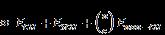
(3)
Network
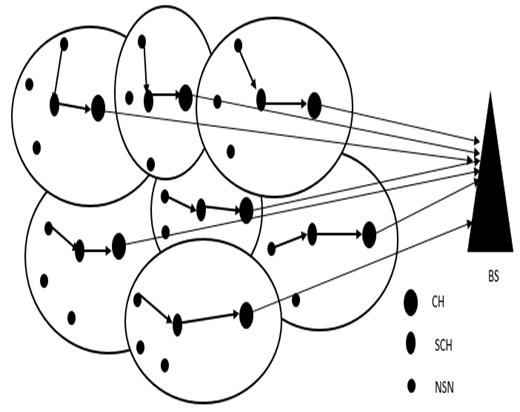
Theproposednetworkmodelismadeupofthreetypesof nodesdeployeduniformlyinasquareregion,namely,normal nodes,servantnodesandadvancenodesasshowninFigure 1.TheselectionprobabilityofeachnodetobecomeaCHis weightedbytheinitialenergyofthenoderelativetothatof
Usingtheassumptionsmadeby[1],theoverallenergyof thenetworkisincreasedbyafractionof andthe new epoch of the system must be equaled to ( ).
If we choose , and for probabilities of becomingnormal,servantandadvancednodesrespectively, then we have them in Equations 4-6. Their respective
thresholdsarealsogiveninEquations7-9.
transmittedaskbitsofdatatotherespectiveclusterheads. So,thetotalenergydissipatedbyeachServantClusterHead isgivenbyEquation(11). (11)
Where, is the distance from the Servant Cluster Headtoclusterhead.
The total energy dissipated by each non-cluster head is givenbyEquation(12)
(12)
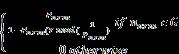
(7)
where G is the set of normal nodes that have not become clusterheadsinthepast roundr



The energy dissipated in a cluster per round can be calculatedasin(13). (13)
Thus, the overall energy of the network is given in Equation(14).


where is the set of servant nodes that has not become clusterheadinthepast roundr
(9)
where isthesetofadvancednodesthathavenotbecome clusterheadsinthepast roundr.
Cluster heads follow a Time Division Multiple Access (TDMA)scheduletoassigntimeslotsforthesensornodes insidetheclusterasexplainedby[6].
Steady Phase
The sensor nodes send the sensed data to the corresponding Servant Cluster Heads (SCHs). The SCHs aggregatethe data,remove redundanciesand forwardthe data to their respective Cluster Heads (CHs), which then transmittheaggregateddatatothebasestation.

Thetotalenergydissipatedbyeachclusterheadisgiven byEquation(10);

Thedifferentamplificationenergiesproposedby[10]for intra,interandclusterheadcommunicationtoBShavebeen implementedinthisworkandisgiveninEquation(15) (15)


Simulation Results and Analysis
TheS-MODLEACHalgorithmissimulatedusingMATLAB R2017a. This is to set up a comparative analysis for MODLEACHand S-MODLEACH proposed in this work. In thisexperiment,200nodesaredeployedin200*200region andtheBSisplaced(100,250)awayfromthecentre.Let usinitializethe =0.5andassumethat20%ofsensor nodes will be advanced nodes (m=0.2) and 20% servant nodes(q=0.2).OtherparametersusedareshowninTable 1.
where isthedistancefromtheclusterheadtoBSand isthenumberofSCHs.Asregardstotheservantcluster head, the energy dissipated will be aggregated and
Performance Criteria Used
Theperformancemetricsusedtostudyandevaluatethe cluster-basedroutingprotocolsare:
Numberofthealive/livenodes,numberofthedeadnodes, packettotheBSandpackettotheCH.
Thesemetricscanallowustodrawconclusionaboutthe stability period of the network which is the time interval fromthestartofnetworkoperationuntilthedeath/runout ofthefirstnode;andtheunstableperiodofthenetworkis alsodefinedas:thetimeintervalfromthedeath/runoutof firstnodeuntilthedeathofthelastnode.TheLifetimeofthe network is also the number of rounds made until the first nodedies[21]
0to500rounds,bothMODLEACHandS-MODLEACHshowed high number of alive nodes with S-MODLEACH showing slightlybetterstability.Whenthenumberofroundsincreased slightly above 2000, no node was alive in MODLEACH protocol.S-MODLEACHontheotherhand,hasmorethan160 alivenodesin2000rounds.Thoughthenumberofalivenodes decreasesslightlyastheroundsincrease,itisabletomaintain more than 120 alive nodes up to 9000 rounds and then eventually,endsupbetween10000and12000rounds.This clearlyshowsthatbyintroducingtheservantnodeconcept intoMODLEACH,itreducesthedistancebetweenthenormal and advanced nodes; hence, more energy is conserved to sustainthenodesandthenetwork.


Figure2representsthesimulationdynamicsofthenumber ofalive/livenodesduringthelifetimeofthenetwork.Between
Figure3showsthenumberofdeadnodesperroundsof theprotocols.Itisimportantforanyenergyefficientclusterbased routing to have low dead nodes per round as dead nodes mean loss of information from that region. In MODLEACH,thenumberofdeadnodesincreasedatafaster rate and no surviving nodes existed after 2000 rounds. SMODLEACH,ontheotherhand,reducesthedeathrateofthe nodes until the last node died between 10000 and 12000 rounds.
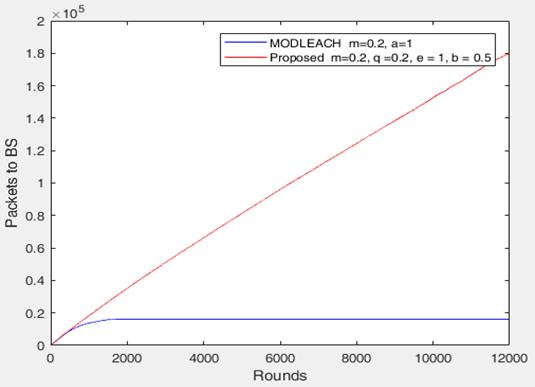
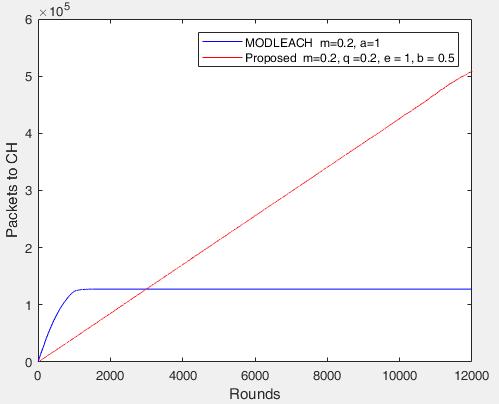
Figures 4 and 5 show the comparison between MODLEACHandS-MODLEACHintermsofnumberofdata packetssenttotheBSandclusterheads.Theresultsshowed that,after1800rounds,theMODLEACHprotocolmaintains thesameamount/numberofpacketssenttotheBSandalso maintainsthesameamount/numberofpacketssenttothe cluster heads. S-MODLEACH, on the other hand, increases lineallyandmovesbeyond10000roundsforboththeBSand theclusterhead.Itisclearthat,S-MODLEACHsentmoredata totheBSandclusterheadsthanMODLEACH.Thisisdueto thepresenceofservantnodeswhichhavereducedthework loadofCHs;andhence,CHshaveenoughenergytotransmit andalsoimplementdifferentamplificationenergies.
5. Conclusion
In this paper, an improved MODLEACH algorithm in heterogeneous settings called S-MODLEACH has been proposed.Threelevelsofnodeswereusedinformulatingthe algorithm.Ineachlevel,nodeselectedthemselvesascluster headsbasedontheirenergylevels.Simulationswerecarried outandtheresultsshowedthatS-MODLEACHoutperformed MODLEACHintermsofthroughputsandnetworklifetime. Theproposedalgorithmtendedtoreducenetwork energy consumptionusingactiveservantnodes.Thesenodeswere assignedtheresponsibilityofaggregatingthedatareceived.
Fromnormalnodes,whicharemostly,assignedtocluster heads. This reallygaveclusterheads longerlifetimeand the networkasawhole.Alsofromtheexperiment,thepositionof theBSwasmovedfarawayfromthefield(100,250)compared tothatofMODLEACH(100,100)andthismakesS-MODLEACH suitable for networks spread over a large coverage area. Further, dual transmitting power levels for inter, intra and clusterheadtobasestationcommunicationswereimplemented this really minimized the energy used within these clusters. Results further showed that there is optimisation of data packetsreceivedandreductionindeadnotesanddataloss.
References
[1] Aderohunmu, F. A. & Deng, J. D. (2009). An Enhanced Stable Election Protocol (SEP) for Clustered Heterogeneous WSN. Discussion Paper Series, No. 2009/07,DepartmentofInformationScience,University ofOntago,Dunedin,NewZealand.pp.1-16.
[2] AidilSaputraKirsan,M.UdinHarunAlRasyid,IwanSyarif, Dian Neipa Purnamasari (2020). Energy Efficiency Optimization for Intermediate Node Selection Using MhSA-LEACH:Multi-hopSimulatedAnnealinginWireless Sensor Network. EMITTER International Journal of Engineering Technology, 8(1),1-18{Lookatthenamesof authorsagain;surnamesshouldcomefirst,followedby initials}
[3] Anik Kumar Saha, Md. Sharif Uddin Khan and Md Mezanur
[4] Barai, L. Y., & Gaikwad, M. A. (2014). Performance evaluation of LEACH Protocol for Wireless Sensor Network. International Journal of Innovative Research in Advanced Engineering (IJIRAE), 1 (6), 141-145. doi: 10.24003/emitter.v8i1.459.
[5] Heinzelman,W.B.,Chandrakasan.A.P.,&Balakrishnan, H.(2002).Anapplication-specificprotocolarchitecture forwirelessmicrosensornetworks,” IEEE, Transactions on Wireless Communications, 1(4),660–670.
[6] Heinzelman, W., Chandrakasan, A. & Balakrishnan, H. (2000). Energy-efficient communication protocol for wireless sensor networks. In the Proceeding of the HawaiiInternationalConferenceSystemSciences,pp.110.https://doi.org/10.1145/3362966.3362978
[7] Jeevan, L. J. P., & Manjaiah, D. H. (2014). Modified Enhanced Stable Election Based Routing Protocol for Wireless Sensor Networks. International Journal of Innovative Research in Computer and Communication Engineering.2(5),54-59.
[8] Jun, W., Xin, Z., Junyuan, X., & Zhengkun, M. (2011). A Distance-basedClusteringRoutingProtocolinWireless SensorNetworks.Importantnationalsciencetechnology specificprojects.
[9] Loscrì,V.,Morabito,G.,&Marano,S.(2005).Atwolevels hierarchyforlowenergyadaptiveclusteringhierarchy (TL-LEACH). Vehicular Technology Conference, 3,18091813.
[10] Mahmood, D., Javaid, N., Mehmood, S., Qureshi, S., Memon, A. M., & Zaman, T. (2013). MODLEACH: A variant of LEACH for WSNs 26th IEEE Canadian Conference on Electrical and Computer Engineering (CCECE2013),Regina,Saskatchewan,Canada,pp.1-6.
[11] ManjeshwarA.,&Agrawal,D.P.(2001).TEEN:ARouting Protocol for Enhanced Efficiency in Wireless Sensor Networks.1stInternational WorkshoponParalleland DistributedComputingIssuesinWirelessNetworksand MobileComputing,2001,pp.1-7.
[12] Marin-Perianu,R.S.,Scholten,J.,Having,P.J.M.(2008). Cluster-based service discovery for heterogeneous wireless sensor networks. International Journal of Parallel, Emergent and Distributed Systems, 23(4),32546.
[13] Maurya,P.,&Kaur,A.(2016).Asurveyondescendantsof LEACH Protocol. I. J. Information Engineering and Electronic Business,2,pp.46-58.
[14] Mhatre, V., & Rosenberg, C. (2004). Homogeneous vs. heterogeneous clustered sensor networks: A comparative study. In Proceedings of 2004 IEEE International Conference on Communications, pp. 3646–3651. Network, Web and Security, 14(8),47-53.
[15] Pal,R.,&Sharma,A.K.(2014).MSEP-E:EnhancedStable ElectionProtocolwithMultihopCommunication. Global Journal of Computer Science and Technology:
[16] QingL.,QingxinZhu,MingwenWang.(2006).Designof a distributed energy efficient clustering algorithm for heterogeneous wireless sensor networks. Computer Communications.29(12),2230-2237.
[17] Ramesh,R.,Charaan,R.M.D.,Kumar,N.T.M.,&Uma,E. (2014). Implementation of load balancing in Leach Protocol for Wireless Sensor Networks. 2nd International Conference on Emerging Trends in Engineering and Technology (ICETET'2014), London (UK),pp.80-84.
[18] Rasyid, M. U. H. A, Lee, B., Syarif, I. & Arkham, M. M. (2018).LEACHPartitionTopologyforWirelessSensor Network, in 2018 IEEE International Conference on ConsumerElectronicsTaiwan(ICCE-TW),pp.1-5.
[19] Sharma,N.,&Verma,V.(2013).HeterogeneousLEACH Protocol for Wireless Sensor Networks. International Journal of Advanced Networking and Applications, 05(1), 1825-1829.
[20] Singla, & Kaur, (2016). Comparative analysis of Homogeneous N Heterogeneous Protocols in WSN. International Journal of Science and Research (IJSR), 5 (6),1300-1305.{Othernamesofauthors?}
[21] Smaragdakis,G.,Matta,I.,&Bestavros,A.(2004).SEP:A stable election protocol for clustered heterogeneous wireless sensor networks, Proceedings of the InternationalWorkshoponSANPA,2004.pp.251-261. wireless sensor network (VLEACH). International Journal of Digital Content Technology and its Applications, 3(2),132-136.
[22] Yang,Y.&Cardei,M.(2010).Delay-constrainedenergyefficient routing in heterogeneous wireless sensor networks. International Journal of Sensor Networks, (7), 4,236-247.
[23] Yassein,M.B.,Al-zou'bi,A.,Khamayseh,Y.,&Mardini,W. (2009). Improvement on LEACH protocol of Wireless Sensor Network (VLEACH). International Journal of DigitalComtentTechnologyanditsApplications,3(2), pp.132-136.