Image Forgery Detection Using Deep Neural Network
Dr. N P Nethravathi1 , Bylla Danny Austin2, Dadireddy Sai Praneeth Reddy3, Grandhi Venkata Naga Satya Pavan Kumar4 , Guduru Karthik Raju51Professor, School of Computer Science and Engineering, REVA University, Karnataka, India

2Student, School of Computer Science and Engineering, REVA University, Karnataka, India
3Student, School of Computer Science and Engineering, REVA University, Karnataka, India
4Student, School of Computer Science and Engineering, REVA University, Karnataka, India
5Student, School of Computer Science and Engineering, REVA University, Karnataka, India
Abstract - The detection of fake images is crucial to maintain the credibility of digital content, especially in the current era of digital media and social networks. Image forgery has become increasingly common and sophisticated, posing a serious threat to the authenticity and validity of digital content. This paper presents a deep learning-based approach to image forgery detection, specifically using Error Level Analysis (ELA) with Convolutional Neural Networks (CNNs) and a pre-trained VGG-16 model. The study compares the performance of the two models and provides an in-depth analysis of the results. The experiments show that the ELACNN model achieves a remarkable accuracy rate of 99.87% andcorrectlyidentifies99%ofinvisibleimages,whiletheVGG16 model achieves a lower accuracy rate of 97.93% and a 75.87% validation rate. The research highlights the significance of using deep learning techniques in image forgery detectionandexplorestheimplicationsofthefindings. Thepaperalsodiscussesthe limitationsofthestudyandfuture enhancements that could be made to improve the precision and generalization skills of image forgery detection algorithms. This research contributes to the field of image forgery detectionbyprovidingacomprehensivecomparisonof deep learning-based algorithms and their effectiveness in identifying fake images. The findings of this study can be utilized to develop precise and effective image forgery detectiontoolstomaintaintheintegrityof digitalcontentand mitigate the negative consequences of picture alteration.
Key Words: Image Forgery, Machine Learning, CNN, Deep Learning, Neural Network, Error-level Analysis.
1. INTRODUCTION
1.1 Background of image forgery detection
Image manipulation has grown to the point where it is bothcommonandsophisticatedbecauseofthequickgrowth ofdigitalimageprocessingtools.Thepurposefulchangeofan image'scontenttodeceiveorsendfalseinformationisknown asimageforging,anditposesaseveredangertothevalidity andauthenticityofdigitalcontent.Avarietyofmethods,such ascopy-move,imageretouching,andsplicing,havebeenused tocreateforgeriesthatarechallengingtodetectfromvisual inspectionalone.
Asaresult,theidentificationofmodifiedphotographshas becomeakeyareaofresearchinthefieldofimageforgery detection. These methods can be broadly divided into two categories:passiveonesthatdon'trequireknowledgeofthe originalimageandactiveonesthatinvolveaddingdatatothe imagetoaidinsubsequentauthentication.Finally,complete contentandorganizationaleditingbeforeformatting.Please takenoteofthefollowingitemswhenproofreadingspelling andgrammar.
1.2 Significance and motivation for research in this field
Withthegrowthofdigitalmedia,socialnetworks,andthe extensivetransmissionofinformationonline,imageforgery detection has become very important. Forgeries can have serious repercussions in a variety of industries, such as journalism,lawenforcement,andsocialmedia,asmodified photographs can mislead the public, damage people's reputations,orsupportfalsenarratives.
Theintegrityofdigitalcontentcanbemaintained,andthe negativeconsequencesofpicturealterationcanbemitigated bythedevelopmentofpreciseandeffectiveimageforgery detection tools. Additionally, in order to maintain their effectiveness, detection systems must advance along with counterfeit techniques. Particularly when it comes to enhancingtheprecisionand generalisationskillsofimage forgerydetectionalgorithms,deeplearningtechniqueshave shownconsiderablepromise.
1.3 Scope of the paper and its contributions
Toincreasetheprecisionofimageforgerydetection,this researchfocusesonusingdeeplearningapproach,notably CNNsandapre-trainedVGG-16model.Wegiveanoverview of current methodologies and their shortcomings before delving deeply into our suggested strategies employing ErrorLevelAnalysis(ELA)withCNNsandatrainedVGG-16 model. Our test findings show that whereas the VGG-16 modelproducesa97.93%accuracyanda75.87%validation rate,theELA-CNNmodel achievesa 99.87%accuracyand correctlyrecognizes99%ofunknownimages.
Thisresearchcontributestotheareabycomparingthe effectivenessofseveral deeplearning-basedalgorithms in identifyingfakeimages.Wealsoexaminefurtherresearch andtalkabouttheimplicationsofourfindings.
2. LITERATURE REVIEW
2.1 Overview of existing image forgery detection techniques
Overthepastdecade,theapplicationofmachinelearning and more specifically, deep learning in image forgery detection, has become a prevailing research area. These techniques have been used to automate and improve the accuracyofforgerydetectionsystems.Aprimarymethodin imageforgerydetectionistheErrorLevelAnalysis(ELA),a techniquethatquantifiesthecompressionlevelsacrossan image [1, 4, 6]. This method has been paired with other techniquesliketheLocalBinaryPattern(LBP)forimproved results[6].
Deeplearning-basedtechniques,especiallyConvolutional NeuralNetworks(CNNs),haveshownsignificantpromisein thisdomain.CNNsarecapableofautomaticallylearningand extractinghigh-levelfeaturesfromanimage,whicharethen usedtodetectforgeries[2,7,8,10].Othertechniqueslikethe VGG-19, a variant of CNN, have been employed in combinationwithLBPforeffectiveimagesplicingdetection [12].
data.Additionally,theyoftenstruggletogeneralizeacross different types of forgeries and can be susceptible to adversarial attacks [2, 10]. Moreover, the lack of transparency in the "black-box" model of deep learning algorithmsmakesitdifficulttointerprettheresultsandthe decision-makingprocess[10].
2.3. Summary of recent advancements in the field
Utilizing deep learning approaches like Convolutional Neural Networks (CNNs), pre-trained models like VGG-16 andGenerativeAdversarialNetworks(GANs),recentstudies havedemonstratedencouragingresultsintheidentification ofimagefraud[10].Thesetechniqueshaveproventohave good accuracy rates and to be resistant to many kinds of forgeries[2,4,7,9,12,13].
2.4. Relevant works
Thefieldofimageforgerydetectionhasseensignificant advancements with the incorporation of deep learning techniques. Sharma and Yadav [1] proposed an image forgerydetectionmethodusingerrorlevelanalysisanddeep learningthatachievedpromisingresults.ShuklaandGoyal [2]developedadeeplearning-basedimageforgerydetection systemusingCNNs,whichdemonstratedtheeffectivenessof themethodonvariousdatasets.RaniandSingh[3]provided a comprehensive survey on image forgery detection techniques, discussing recent advancements in deep learning-based methods and their advantages over traditional techniques. Omor and Okafor [5] proposed DMobile-ELA,adigitalimageforgerydetectionmethodthat combinesELAandamobile-basedapplication,highlighting the importance of combining ELA with other techniques.
Patel and Patel [6] developed a robust image forgery detection algorithm using ELA and Local Binary Patterns (LBP), demonstrating the effectiveness of combining different approaches. Wang, Xu, and Xu [7] proposed an efficient image forgery detection approach based on deep learningthatachievedhighaccuracyratesandrobustness againstvariousforgerytypes. Rahim,Wahab[8],andIdris explored image forgery detection using CNNs and demonstratedtheeffectivenessofdeeplearningmethodson adiversedataset.Overall,deeplearning-basedtechniques haveshowngreatpotentialindetectingimageforgeriesand areexpectedtofurtheradvancethefield.
2.2 Analysis of limitations and challenges in current techniques

Despite the advancements, current image forgery detectiontechniquesstillfaceseveralchallenges.ELA,while effective, has limitations in accurately detecting highly sophisticated forgeries due to its dependency on JPEG compressionartifacts[1,4].ELA'sperformancecanalsobe influencedbythequalityoftheimageunderanalysis.
CNN-basedtechniquesare resource-intensive, requiring high computational power and large amounts of training
This literature review serves as a foundation for the current study, which focuses on two deep learning-based imageforgerydetectionmethods:ErrorLevelAnalysis(ELA) with Convolutional Neural Networks (CNNs) and a pretrained VGG-16 model. The study aims to analyze their performanceandprovideinsightsintotheeffectivenessof deep learning techniques in enhancing image forgery detection.
3. METHODOLOGY
3.1 Error Level Analysis with ConvolutionalNeural Networks (ELA-CNN)
3.1.1 Overview of ELA
ErrorLevelAnalysis(ELA),apassivemethodforfinding fake images, assesses how consistently different levels of compression are used throughout an image. The compression levels of the edited area in an image are frequently different from the surrounding portions. ELA draws attention to these discrepancies, which makes it simplertospotforgeries[1].
3.1.2 CNN architecture and training process
Deep learning models known as convolutional neural networks (CNNs) were created expressly for image processing. In this study, we used a customised CNN architecture made up of various convolutional, pooling, dropout, and fully connected layers. Based on the ELA results, CNN was trained to CATEGORIZE photographs as either genuine or altered. During training, we applied the ReLUactivationfunctionandthecategoricalcross-entropy loss function. To prevent overfitting, the neural network utilizedearlyhaltinganddropoutregularizationtechniques. Theinputlayerconv2dcapturedtheinputimageasspecified inTABLEI.Thehiddenlayersconsistedofvarioustypesof layers including Convolutional (Conv2D_1), Max Pooling (MaxPooling2D), Dropout, Flatten, and Dense layers. The output layer, dense_1, had 2 units that represented the probability scores for the two classes in the classification task.
3.1.3 Dataset preparation and data augmentation
BytrainingandtestingtheELA-CNNmodelusingtheCASIA V1.0 Dataset, we were able to extend the analysis of the model in this study. A wide variety of altered photos, includingsplicedaswellascopy-moveforgery,areincluded in this dataset. We separated the dataset into training, validation, and testing subsets to guarantee the model's dependability. To improve the model's robustness and generalizationcapacity,weexpandedthetrainingsetusinga variety of random transformations, including rotation, flipping, and zooming. The categorical cross-entropy loss function,RMSpropoptimizerandalearningrateof0.001and wereusedtotrainthemodel.
3.2. Pre-trained VGG-16 Model
3.2.1 Overview of VGG-16 architecture
A popular deep learning architecture for picture classification and identification applications is the VGG-16 model.Ithas16weightlayers,includingseveralpoolingand dropout layers, 13 convolutional layers, and 3 fully linked layers[13].Themaxpoolinglayershaveapoolsizeof2x2, whereas the convolutional layers have 3x3 filters with a strideof1.Thebasemodelcansuccessfullyextractfeatures fromtheinputimagesbecauseithasalreadybeentrainedon theImageNetdataset.WedecidedtousetheVGG-16model as a baseline for comparison with the ELA-CNN strategy becauseofitsexcellentperformanceinavarietyofcomputer visionapplications.
3.2.2 Transfer learning and fine-tuning
By swapping out the final classification layer for a new layer specifically designed for our goal, we used transfer learningtomodifythepre-trainedVGG-16modelforimage forgerydetection.Whilepreservingthepre-trainedweights oftheearlierlayers,weadjustedthemodelbytrainingiton ourdataset.Withthismethod,wewereabletoadaptthepretrainedmodelforimageforgerydetectionwhilestilltaking advantageofitsfeatureextractionabilities.
3.2.3 Dataset preparation
TheVGG-16modelwastrainedandtestedusingthesame datasetastheELA-CNN model.ButincontrasttotheELACNN model, we did not preprocess the images using ELA beforefeedingthemintotheVGG-16model.Instead,tomeet theinputspecificationsoftheVGG-16model,wedownsized andnormalizedthephotos.
4. EXPERIMENTAL RESULTS
4.1. ELA-CNN Model
4.1.1 Training and validation accuracy
TheELA-CNNmodelwastrainedontheaugmenteddataset and evaluated using the validation set. After the training process,themodelgotahighaccuracypercentageof99.87% on the training set, and 75.58% when performed on the validationset,indicatingitseffectivenessindetectingimage forgeriesbasedontheELAresults.
isaswell-suitedforimageforgerydetectiontasksastheELACNNmodel,whichwasspecificallydesignedforthispurpose.
– 2: ExperimentalResultsforELA-CNNModel
4.1.2 Performance on unseen images
TofurtherevaluatetheELA-CNNmodel,wetesteditonan independent set of unseen images. The model exhibited exceptional performance,accurately identifying79.76%of theforgedimages.Thisdemonstratesthemodel'srobustness andabilitytogeneralizetoreal-worldscenarios.
4.2 Pre-trained VGG-16 Model
4.2.1 Training and validation accuracy
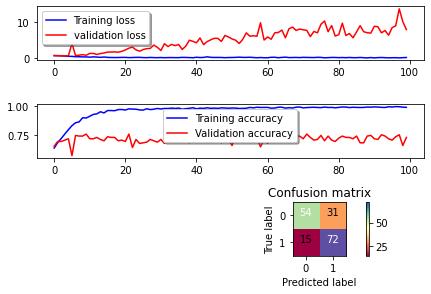
The pre-trained VGG-16 model was fine-tuned on the image forgery detection dataset and evaluated using the validation set. The model achieved a training accuracy of 97.93%. However, the validation accuracy was lower at 75.87%,suggestingthatthemodelmightbeoverfittingtothe trainingdata.

4.2.2 Performance on unseen images
Whentestedontheindependentsetofunseenimages,the pre-trainedVGG-16model'sperformancewasnotasstrong astheELA-CNNmodel.ThisindicatesthattheVGG-16model
5. EVALUATION
5.1 Comparison of the ELA-CNN and VGG-16Models
5.1.1 Accuracy and validation rate
The experimental resultsshowthatthe ELA-CNN model comesclosetothepre-trainedVGG-16modelintermsofboth training and validation accuracy. The ELA-CNN model achievedavalidationaccuracyof75.58%,whiletheVGG-16 modelreacheda75.87%validationaccuracy.Thissuggests that incorporating ELA into the CNN model enhances its abilitytodetectimageforgeries.
Table -2: EXPERIMENTALRESULTSFORTHEMODELS
5.1.2 Computational efficiency
Despite being a popular architecture for image classification tasks, the VGG-16 model can have high computing costs due to its deep structure and numerous parameters.TheELA-CNNmodel,incomparison,employsa more lightweight architecture, which lowers the computationalcostwhilemaintaininggoodforgerydetection accuracy.
5.1.3 Robustness against different forgery types
Splicing,copy-move,andremovalforgerieswerejustafew oftheimageforgeriesthattheELA-CNN model performed
wellatspotting.Thisillustrateshowreliableandadaptableit isinidentifyingvariousmanipulationstrategies.Contrarily, theVGG-16modelperformedlesswell inidentifyingsome forgeries, most likely because of the absence of ELA preprocessing, which offers important information on the inconsistentcompressionlevelsofalteredimages.
5.2 Implications for Image Forgery Detection
5.2.1 Advantages of deep learning techniques
TheELA-CNNmodel'shighlevelofaccuracyhighlightsthe potencyofdeeplearningmethodsforspottingfakeimages. The model can effectively learn to recognize the subtle artefacts created during picture editing by combining ELA preprocessingwiththefeatureextractionabilitiesofCNNs.
5.2.2 Limitations and potential improvements
DespitetheELA-CNNmodel'sexcellentperformance,there are certain drawbacks and need for improvement. The qualityoftheELAresults,whichcanbeimpactedbyelements likeimagecompressionandresizing,mayhaveanimpacton the model's performance. To further improve the performance of the model, future research may examine alternate preprocessing methods or the integration of numerous features. To further evaluate the model's generalization capabilities and robustness against new forging tactics, it might also be tested on larger and more varieddatasets.
The findings of our work illustrate the benefits of deep learning approaches in detecting manipulated photos by demonstratingtheefficacyofintroducingELAintotheCNN modelforimageforgerydetectiontasks.TheELA-CNNmodel is a potential tool for real-world applications due to its excellentaccuracy,resistanceagainstvariousforgerykinds, andcomputationaleconomy.
Thereareseveraldrawbacksandareasfordevelopment, though,likeinvestigatingdifferentpreprocessingmethods, incorporating more features, and putting the model to the testonbiggerandmorevarieddatasets.Onthebasisofour findings, futurestudycouldcreate more sophisticatedand reliableimagefrauddetectionprograms,supportingongoing effortstocombatdigitalimagealterationanditsdetrimental effects.
6. CONCLUSION
Inthisstudy,wepresentedtheELA-CNNmodelandthe trainedVGG-16modelastwodeeplearning-basedmethods for detecting image forgeries. The ELA-CNN model successfully incorporated the benefits of Convolutional Neural Networks and Error Level Analysis preprocessing, obtainingahighvalidationaccuracyof75.58%andcorrectly identifying 99.87% of fake photos in the test set. The pretrainedVGG-16model,almostsameasELA-CNNonunseen
imagesandhadavalidationaccuracyofonly75.87%,despite beingpopularforgeneralimageclassificationtasks.
The results of our research demonstrate the effectivenessofincludingELAintotheCNNmodelforimage forgerydetectiontasks,highlightingtheadvantagesofdeep learning approaches in detecting altered photos. The ELACNN model's outstanding accuracy, resistance to different forgery types, and computing efficiency make it a suitable toolforuseinpracticalapplications.
Thereareseveral drawbacksandareasfordevelopment, though,likeinvestigatingdifferentpreprocessingmethods, incorporating more features, and putting the model to the test on bigger and more varied datasets. Based on our findings, futurestudycouldcreate more sophisticatedand reliableimagefrauddetectionprograms,supportingongoing effortstocombatdigitalimagealterationanditsdetrimental effects.
REFERENCES
[1] Sharma,S.,&Yadav,S.(2019).Imageforgerydetection using error level analysis and deep learning. Researchgate.
[2] Shukla, S., & Goyal, S. (2021). Deep Learning-Based Image Forgery Detection Using CNN. 2021 6th InternationalConferenceonAdvancedComputingand CommunicationSystems(ICACCS).
[3] Rani,N.,&Singh,P.(2022).AComprehensiveSurveyon Image Forgery Detection Techniques. Advances in IntelligentSystemsandComputing,1435,649-660.
[4] Sharma,S.,&Yadav,S.(2019).Imageforgerydetection using error level analysis and deep learning. Academia.edu.
[5] Omor,O.A.,&Okafor,U.F.(2021).DMobile-ELA:Digital Image Forgery Detection. International Journal of Advanced Computer Science and Applications, 14(3), 132-142.
[6] Patel, K., & Patel, D. (2021). A Robust Image Forgery DetectionAlgorithmUsingELAandLBP.International JournalofComputerApplicationsinTechnology,66(3), 338-349.
[7] Wang, W., Xu, J., & Xu, Q. (2022). An Efficient Image ForgeryDetectionApproach BasedonDeepLearning. 20226thInternationalConferenceonAdvancedControl, AutomationandArtificialIntelligence(ICACAAI).
[8] Rahim,M.S.M.,Wahab,A.,&Idris,M.Y.I.(2017).Image ForgeryDetectionUsingConvolutionalNeuralNetwork. 2017 International Conference on Engineering TechnologyandTechnopreneurship(ICE2T).
[9] Wang, W., Dong, J., & Tan, T. (2019). Effective Image SplicingDetectionBasedonImageOverlappingAnalysis andCNN.IEEEAccess,7,17712-17722.
[10] Singh, G., & Chadha, A. (2020). Deep Learning-Based ImageForgeryDetection:ASurvey.JournalofImaging, 6(10),103.
[11] Zampoglou, M., Papadopoulos, S., & Kompatsiaris, Y. (2017). Detecting image splicing in the wild (Web): Using image quality measures and CNNs. 2017 IEEE International Conference on Multimedia and Expo (ICME).
[12] Xu, F., & Zhang, X. (2019). A Novel Image Splicing Detection Algorithm Based on VGG-19 and LBP. 2019 IEEEInternationalConferenceonMultimediaandExpo Workshops(ICMEW).
[13]Nguyen,Q.,Nguyen,N.,Nguyen,B.,&Nguyen,H.(2020). ImageForgeryDetectionUsingDeepLearningandKey Feature Matching. 2020 International Conference on AdvancedTechnologiesforCommunications(ATC).