Design And Development Of Prosthestic Limbs
Jeel Mukeshbhai Patel1 , Kartik Nareshkumar Dodiya2 , Dharmik Ganeshbhai Gajjar3 ,Ayush Bhaveshkumar Patel4, Priyank Mukesh Shah5, Mayurkumar Pravinbhai Parmar61 Student, Gujarat Technological University, Ahmedabad , Gujarat

2Student,Indus University, Ahmedabad, Gujarat.
3Student, Gujarat Technological University, Ahmedabad, Gujarat.
4Student, Gujarat Technological University, Ahmedabad, Gujarat.
5Student, Gujarat Technological University, Ahmedabad, Gujarat. ***
Abstract - The arm is electronically actuated and controlled by using user muscles. The bionic arm used by a person who born without a limb. Also, we can control this arm by a mobile Application and can save different gestures in it according to need. This type of technologies or product made by using this technology is very expensive and generally not available in developing countries.
Rapid growth and advancement of industry allows to become a scale manufactures. Some mechanical devices are less complex than myoelectric device. Its limitation has to growth and development in the field will leads to improve over time. This thesis covers a broad range of engineering disciplines. Nowadays, electronic actuators and circuit will animate the device and allow for sophisticated control schemes.
Key Words: bionicarm,gesture,myoelectricdevice
1.INTRODUCTION
Themostvaluablethingtoanyhumanbeingistheirbody. Replacing a mssing human limb, especially a hand which makes one truly appreciate complexity of human body. Prosthetic device have been discovered from ancient civilizations aroung the world which demonstrate the processofprosthetictechnology.
Theinnovationofthewoodenleginancienttime,thatwas the example of prosthetic device. As time change, designs andmaterialforprostheticwasalsoimprovedandstarted withhingesandpulleysystems.Aswemovefurtherweuse thehookswhichcanopenandclosethebendsoftheirelbow.
In this century we use the myelectriv prosthetic arm. It’s aimedtodesignthefunctionofhumanarmaspossibleand cancontrolledtosomemuscularconstruction.
1.1 Purpose Of Prosthetic
Sometimes it is also known as “Artificial Limb”. If any human-being missing his/her leg or arm, or any organ of bodywhichwillhelpyoutoperformyourdailyactivitiessuch aswalking,eating,dressing,handshaking,etc.
1.2 Types of Prosthetic Arm
Generally, there are several categories of prosthetic devices.
1. PassiveProsthetic: The Prosthetictoeshave been found attached to ancient Egyptian mummy’s. PassiveProsthesisaresimple,non-movingdevices thataimtorestorethecosmeticsappearanceand basicfunctionallytoamputee.Awoodenlegisthe exampleofapassiveprosthetic.
2. Bodycontrolledprosthetic:Bodypowerprosthetic canbecontrolledviaringharnessconnectedtothe user.Asimplemechanicaldevice knownashook which is linked to the movement of elbow or shoulder.Atatime,thisdeviceismostpopularly and easy to use. This type of devices is very cheaply.
3. Myelectric controlled prosthetic: It measure the electro-myographysignalsfromthecontractionof muscles. These signals are measured through electrodes placed on the surface of skin and connected directly to the muscles. These signals are amplified and send to the microcontroller, whichgivestheinformationofinternalactuators. Nowadays,myoelectricdevicesareusedtocontrol themechanicaldevices
4. Brain controlled interface: Brain-Controlled Interface:Thebrain-controlledinterfaceintegrates electroencephalography(EEG)forrecordingbrain activity and transcranial magnetic stimulation (TMS)fordeliveringinformationtothebrain.This interface enables humans to engage in brain-tobraincommunication,allowingthemtosolvetasks using their brain signals. Through these communication channels, we can assess the performance of Brain-Net and evaluate its effectiveness in various situations. This form of controliscommonlyreferredtoasadirectneural interfaceorbrain-computerinterface(BCI).
2. METHODOLOGY
2.1 Ideation/Concept
Ourmotiveistodesignaprostheticsarm.Recently,Human Machine Interface (HMI) has become an important part of manytechnologysuchasa differentbio-signalssuchasEOG, EMG, and EEG can be deployed to develop a closed-loop controlsystemforphysicallydisabledandelderlypeopleto improvetheirqualityoflife.Ontheotherhand,astheroad andindustrialaccidentsareincreasingincountries,moreand morepeoplesarelosingtheirbodypartsandarenotableto treattheirconditions properlyduetothe financial burden andlackintechnologyadvancement.
We will try to design, implement and test a low cost EMG recordingandmonitoringsystemthatcandetectandprocess EMGsignalsfromdifferentkindsofmusclecontraction.The record signals will interface with the computer through ArduinoandthentheEMGsignalswillbeanalyzeatMATLAB platform.Wewillalsodevelopanalgorithmtodetectmuscle contraction and expansion from raw EMG recordings and then convert it into command signals that will control a roboticarm.Whichcanbeusedforthosedisabledpersons wholosttheirarm.For,Prostheticsarmtactilesensorisalso used. This sensor will be used to detect force applied on objectandmotionofhandiscontrolledtoholddelicatethings
In this prosthetics arm, the actuation of finger is done by using the servo motors. There are three types of methods whichusedforfingersactuation.
Fingeroperatedwithindividualmotorateverypoint.
Closing action of figure is controlled by only one motor using tendon and the return action is controlledbyspring.
Opening and closing both action is controlled by tendonandsinglemotorbyusingtwotendons.
2.2 Mechanism of Actuation of Fingers
Therearethreemechanismoffingeractuation.
1. Finger operated with individual motor at every joint.Thisrequirearound23motorsandhastobe controlled.
2. Closing action of finger is controlled by only one motor using one tendon and the return action is controlledbyspring.
3. Opening and closing both action is controlled by tendonandsinglemotorusingtwotendons(closing andopeningoffingeriscontrolledbyclockwiseand anticlockwisemotionofmotorrespectively)
2.3 Degrees of Freedom
Thewhichwearegoingtodevelopwillhave6to7degrees of freedom. For each finger there will be one degree of freedomand,onedegreeoffreedomwillberotationofpalm.
2.4 3D Printing
The methodology used in this research was to gather information on the present and future advantages of 3D printinginthemedicalindustry.Currently,3DPrintersare used in a variety of applications throughout the medical industry. The most common uses involve printing dental devicesandimplants,modelsofindividuals’bodiesforpresurgery practice, and “replacement body parts” (such as prostheticsorreplacementsegmentsofbones).
The3Dprintersinmedicalfields,alsoknownasBio-printers, printcellsusuallyinaliquidorgel.Thepurposeofthesebioprintersistoassemblelivingtissue.Researchershavebeen workingtocreatecellslayerbylayerthroughaprint-head withoutkillingthem.Inthefuture,theywillbeabletomake cartilage, bone, skin, blood vessels, small bits of liver, and othertissuesbyusingbio-printers.
2.5 Electrical Design
1. SignalFlowOverview:Thesignalflowinthesystem startswithauserflexing,whichgeneratesananalog signal.Thisanalogsignalisthenamplified,rectified, and smoothed by the EMG (Electromyography) sensor board. The microcontroller in the system utilizesthisanalogsignaltogenerateapulsewidth modulated(PWM)signal.ThePWMsignal isthen usedtodriveservomotors,whichinturntension thetendonsresponsibleforcurlingupthefingers.
2. Actuation: Theactuatorsemployedinthissystem are standard servo motors capable of rotating to angular positions up to ±90 degrees from their resting position. The precision of each servo motor'sangularmovementinfluencestheaccuracy with which the fingers can be controlled, consideringtherelativelysmallmovementsofthe artificial tendonsrequiredtoopen andcloseeach finger.
3. Microprocessor:Thecentralcomputingcomponent in this system is an 8-bit microprocessor, such as Arduino, which utilizes either the Atmega328 or Atmega2560 microcontroller. It possesses 32 kilobytesofmemoryandoperatesataclockspeed of16MHz.Themicroprocessorcanbeprogrammed using the Arduino IDE (Integrated Development Environment) on a standard Windows computer throughaUSBcable.
4. Voltage Regulators: Power Voltage Regulators: In ordertoregulatethevoltageandpowersuppliedto the servos and microcontroller, power regulators are implemented. These regulators serve the purpose of preventing situations where a servo could draw excessive current from the battery, potentiallyleadingtostallingandcausingdamage totheelectronicsorevenposingafirehazard.
5. To fulfill this requirement, 5V surface mount regulatorshavebeenemployedtosupplypowerto the servos, while a 3.3V regulator is used specificallyforpoweringthemicrocontroller.The selectedregulatorshaveamaximumoutputcurrent of1A.
Considering that each servo typically requires access to a minimum of 500mA of current to operate,itisassumedthateach1Apowerregulator caneffectivelysupplypowertotwoservos.These regulatorsaredesignedtomaintainastableoutput voltage of 5V. However, it is worth noting that operatingtheservosat5Vinsteadoftheideal6.5V mayresultinslightlyreducedperformanceinterms ofspeedandtorque..
6. Electromyography Sensing: Electromyography Sensing: The system incorporates user-friendly single-channelEMGsensorboardsforthepurpose of sensing and measuring muscle activity. These sensor boards are equipped with a small printed circuit board (PCB) and three surface electrodes. Two of the electrodes are utilized to measure the voltage potential across a muscle, while the third electrodeservesasagroundreferencepointandis placedonabonyfeature.
The EMG sensor kit is specifically designed to be seamlessly integrated with a microcontroller. It employs an internal amplification system that effectively converts tiny electrical pulses into a rectifiedandsmoothedsignal.Thissignalcanthen be utilized as an input to the analog-to-digital converterofamicrocontroller,allowingforfurther processingandanalysis.
7. Tactile Sensor or Force Sensor: The system incorporatesatactilesensororforcesensor,which isutilizedforthedetectionandmeasurementofthe spatialdistributionofforceappliedperpendicular toapredeterminedsensoryarea.Thissensorplays acrucialroleininterpretingthespatialinformation relatedtoforce.Itsprimarypurposeistodetectthe force applied to an object, enabling the control of handmotionforsecurelygraspingdelicateitems.
8. Power Supply: Ensuring portability and independencefromexternalpowersourcesisvital forthissystem.Whileawallpowersupplymaybe suitable for testing and debugging purposes, a prostheticarmrequiresapowersourcethatcanbe easily carried by an amputee. Considering that servo motors consume a significant amount of currentduringoperation,disposablebatteriesare not a practical solution as they would be drained tooquickly,necessitatingfrequentreplacement.
3.DESIGN AND 3D PRINTING
Firstofall,westartedsearchingforadesignwhichwecan copyorfromwhichwecantakehelpoftostartdesigning ourownarmwhichnoonecanclaimforwereferredvarious project and YouTube videos for that some of them are as follows.
1. ThesisofaStudent:Theveryfirstwereferwasthe tesisofonefinalyearBEMechanicalstudentnamed Mahadi Elsayed Hussein who had also worked in samedomainofmakingEMGcontolledprosthetic arm.Welearnedalotfromthisthesis.
2. InMoovHand: InMoov is one open source website which provides all .stl parts to student or researchers who want to do study on prosthetic armwereferredthiswebsitealso.Finalprototype ofthisisalsoattachedin websiteofthisiswww.inmoov.fr
3. DIYRoboticArm(WillDonaldson):ThisisYouTube channel who had made a DIY 3D printed robotic armandhehadtakenreferencefromonewebsiteis www.instructables.com/id/Robotic-Arm-3DPrinted-DIY-Initial-Prosthetic-Prot. We had referredthis prototypealso.
4. AdamJensenArmbyAugmentedFuture:Thisisa websitewhereFourcompaniescomingtogetherto bringyouthefutureofprosthetics.OPENBIONICS, DEUS EX UNIVERSE, RAZER STARGAZER, INTEL REALSENSEfromthis websitewedecideto make our design from the pic of Adam Jensen Arm the figureisattached.
3.1 Our Prototype
Afterstudyingthiswestartingwestartedtomakeourown design in SolidWorks mostly referring this last image of AdamJensenArmwithlotsofmorepicsandmakeourown Designjustbyvisualizingthispicturesandreferringsome otherlikethesisofMahdiElsayedHusseinandInMoovHand forDimensionsandtrytomakearmasattractiveasAdam JensenArm.BelowisthelistofallcomponentofourDesign withPictureofallPartsinTable3.1
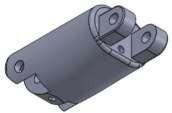
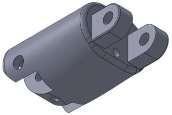
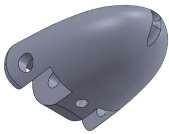
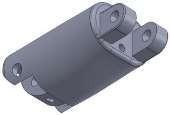
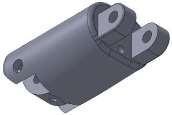
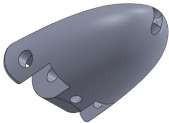
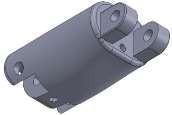
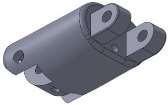
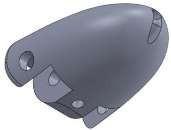
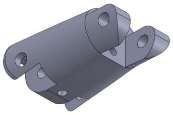
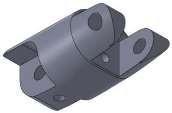

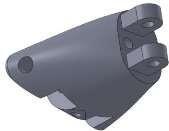
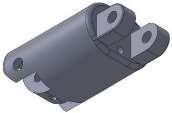
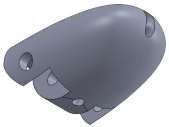
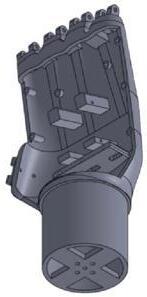
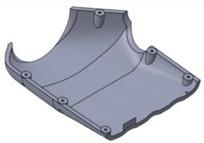
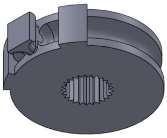

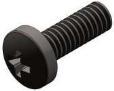
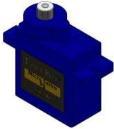
3.2 Complete Design after Assembly
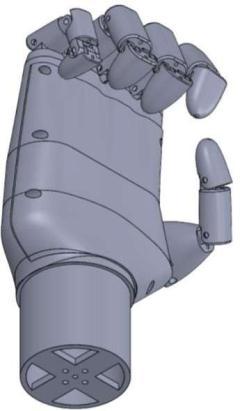
EarlierinTable3.1,allcomponentsareindividuallyshown underthistopicliketoattachthecompleteassemblypicture ofprostheticarewithsomespecialfeatures.Thepictureof completeassemblyisshowninfigure3.2.1.
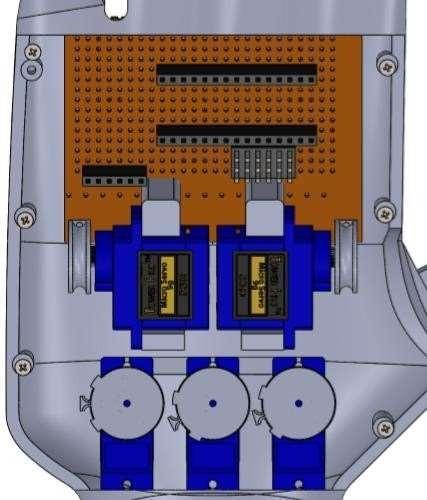
Inthefigure3.2.2,theinnerviewofprostheticarmisshown howallservomotorsandcircuitissetinpalmisshownfor betterunderstandingofscenario.
Now, weare inserting some 3D Design as shown in figure 3.3.2.


3.3 Silicing Software and Practical Model
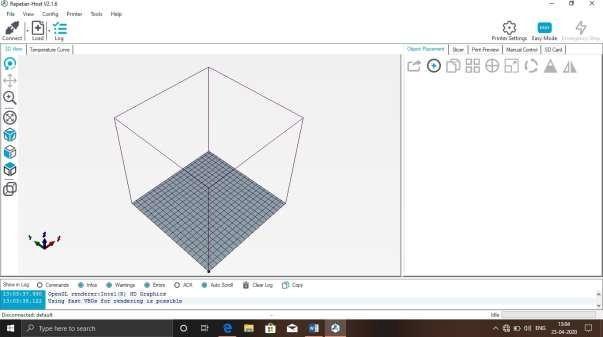
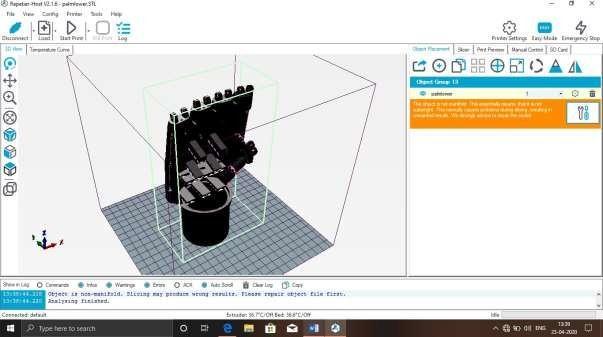
There are lots of slicing software for 3D Printing. For our project we use CURA slicing software via Repetier Host Server.
Repetier-Hostiseasytouse,evenforbeginners,butgivesyou full control of your printer, slicer and printing process if needed.Thisisthereasonwhyyoucanprintanyfilamentin perfectqualitylikePLA,ABS,andPETG,chocolateormetal,if yourprinterhardwaresupportsit.
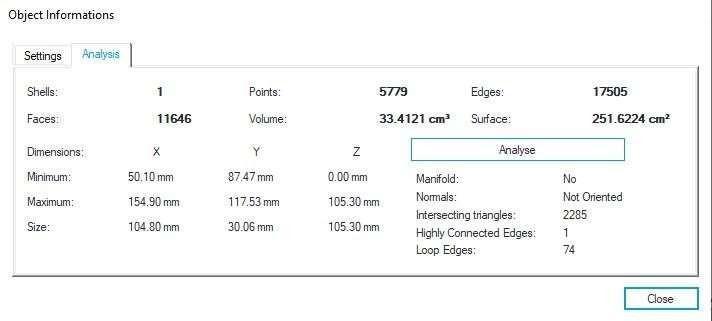
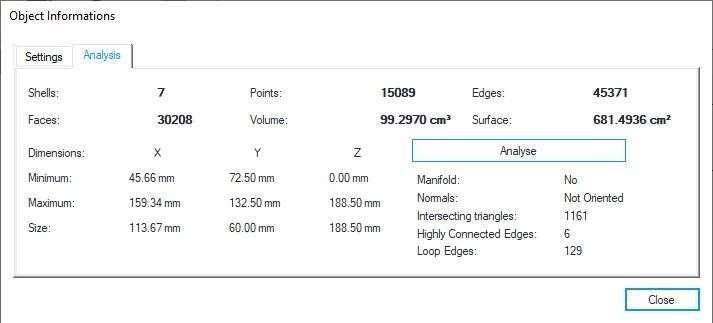
here,wehaveputallthedataintheRepetierHostandthe resultsareshowninupcomingfigures.
Manydifferentmaterialscanbeusedfor3Dprinting,suchas ABSplastic,PLA,Polyamide(nylon),glassfilledpolyamide, stereolithographymaterial(epoxyresins),silver,titaninum, steel,wax,photopolymersandpolycarbonate.
In conclusion, the design and development of prosthetic limbsisanimportantareaofresearchthataimstoimprove thequalityoflifeforpeoplewhohavelostalimb.Themain aim of this study was to evaluate the current state of prostheticlimbtechnologyandidentifyareaswherefurther improvements are needed to make them more functional andaccessible.Theuseofadvancedmaterials,sensors,and controlsystemshasenabledthedevelopmentofprosthetic limbsthatcancloselymimicthemovementofnaturallimbs. However,thereisstillaneedforfurtherresearchtoimprove theintegrationofprostheticlimbswiththehumanbodyand enhance the user's sense of control and feedback. Additionally,theaffordabilityandaccessibilityofprosthetic devices need to be improved to make them more widely available to those who need them. Overall, continued researchinthisfieldhasthepotentialtogreatlybenefitthe livesofmillionsofpeopleworldwidewhohaveexperienced limbloss.
REFERENCES
[1] RyanWilliamGlasgow,Portland,MechanicalProsthetic Hand: a patent field on 13 March 2016 application numberisUS20170266020A1
[2] Mahdi Elsayed Hussein, 3D Printed Myoelectric Prosthetic Arm , A thesis of final year Mechatronics Student from school of Aeronautical, mechanical and mechatronic engineering (AMME) under guidance of ProfessorGrahamBrookerfromtheAustralianCentre forFieldRobotics(ACFR)carriedoutatOctober2014
[3] Joseph Thomas Belter, Aaron Michael Dollar, Michael Leddy From New Haven, CT (US), Multi- Grasp Prosthetic Hand assigned by Yale University on 18 August2016applicationnumberisUS20170049583A1.
[4] TANGZHIQIANGChina,Bionicmechanicalarm:apatent field on 28 March 2016 application number is 201610184415.8
[5] Christopher OEvans,N ChristopherPerry,Dirk Avan derMerwe,KeithDViolette,StewartMCoulter,Thomas A Doyon, David Blumberg JR, Arm prosthetic device appliedbyDEKAProductsLimitedManchester,NH(US) on 15 April 2011 application number is US20110257765A1.
[6] Li Guanglin China, Intelligent artificial hand control system:apatentfieldon01June2016publishedbyLi Guanglinapplicationnumberis201410605676.3.
[7] Sun Baofeng China, EMG nerve-based redistribution technology bionic arm system a patent field on 21 January2010publishedbyZhengXinChinaapplication numberisCN2010201089274U.
[8] DRBISWARUPNEOGIIndia,HIGHDOFINTERPRETED EMGKNOWLEDGEBASEDPROSTHETICARM:apatent on24May2016applicationnumberis201631017724.
[9] LACHAPPELLE EASTON, PROSTHETIC ARM WITH ADAPTIVE GRIP : patent field on 18 July 2019 applicationnumberisWO2019US12603.
[10] Raspopovic,BidirectionalLimbNeuroProsthesis:apatentfirldon19December2014Application numberis20160331561.
BIOGRAPHIES
Mr. Jeel mukeshbhai Patel, completed my Undergraduation studiesinMecha ical Engineering at Ghandhinaagr Institute of Technologyin2021.
Mr. kartik Nareshkumar Dodiya, completed,Bachelor’s Degree in Autoobile engineering at Indus Institute of Technology and engineering,IndusUniversity.




Mr. Dharmik Ganeshkumar Gajjar,completed Bachelor’s Degreee in Automobile engineering at L.J institute of engineering and Technology, GujaaratTechnologicalUnoversity
Mr Ayush Bhaveshkumar Patel, Completed Bachelor’s Degree in Mechnical engineering at L.J institute of Technology, Gujarat TechnologicalUniversity.
Mr.PriyankMukeshbhaiShah, CompletedBachelor’sDegreein MechnicalEngineeringat L.J. Instituteoftechnology,Gujarat TchnologicalUniersity.
Mr. Mayur Pravinbhai Parmar,Completed B.tech in Mechnical Engneering at Om engineering,Junaghadh