International Research Journal of Engineering and Technology

Jun
International Research Journal of Engineering and Technology
Jun
1,Assistant Professor, Department of Civil of Engineering , Department of Technology, Shivaji University, Vidyanagar, Kolhapur-416004, Maharashtra, India
2Research Scholar, Department of Civil Engineering ( Environmental Science & Technology) ,Department of Technology, Shivaji University Kolhapur, Maharashtra, India ***
Abstract:-
Human activities and urbanisation deplete water resources. Due to rising home waste, sewage, industrial waste, etc., freshwater bodies are polluted. Urban and semi-urban areas produce lots of sewage. Sewage treatment and disposal are global issues due to a lack of cost-effective methods. Aerobic and anaerobic therapy technology has improved. Low-cost rootzone sewage treatment. Conventional sewage treatment plants cost Rs 12 per 1000 litres to operate and maintain. Due to expensive treatment costs, sewage is directly dumped into rivers or surrounding water bodies, contaminating society's water sources. Small towns cannot use traditional methods. Sewage treatment must be cost-effective. Root Zone Technology (RZT), which uses plants to treat sewage, is a low-cost alternative. Root Zone Technology was tested for sewage treatment. Pilot reactors explore diverse plant species. Tap water irrigated reactor-planted species. India needs to fully exploit this technology for sustainable growth
1. Introduction:-
RapidurbanisationinagrowingcountrylikeIndiahasledtoariseinthedemandforwaterusedinawiderangeof human activities. The water supply and demand in many urban areas have been impacted by population growth. Domestic water supply, industrial production, irrigation, power generation, animal supply, recreation and leisure, breeding of aquatic species, dilution and transport of trash, etc. are all examples of developmental activities that rely on water (IWWA,2007). Water treatment is a common necessity in both residential and commercial settings. About 80% of the world's freshwater consumption is the result of residential wastewater. Thelack of readily availableclean water is one of India's most pressing environmentalproblems.Indiaisexperiencingadoublewhammyofinadequateinfrastructureandrisingurbanpopulationsas itattemptstomaketheleapfrompoornationtodevelopedpower.Thishasresultedintwoissuesthatfeedoffofeachother: waterscarcityandsewageoverflow.By2050,itispredictedthatalmosthalfofthecountry'spopulationwouldresideinurban areas.Asaresult,thedemandsplacedonthecity'sinfrastructureandpublicserviceshaveincreasedatafasterratethan they have grown. Sewage is often discharged into nearby bodies of water or let to spread across open fields, making for poor wastewatertreatmentinruralareas.ClassIcitiesandclassIItownswithpopulationsover50,000areanticipatedtogenerate 38,254MLD (millionlitres per day) of wastewater. Only31% of wastewatergenerationis treated, whichamountsto 11,787 MLDofmunicipalwastewatertreatmentcapacity(CPCB,2009).Forthisconstructedwetlandusesnaturaltreatmentsystemwith substratematerialslikesandorgravelplantedwithvegetation[6].Reedbedisthenaturalamdcheapmethodoftreatingdomestic, industrialandliquidwaste.Reedbedisconsideredasaneffectiveandreliablesecondaryandtertiarytreatmentmethodwhereland areaisnotamajorconstraint[9].
1. Toanalizedifferentcharacteristicsofsewagewaterfromstudyarea
2. Toinvestigatethefeasibilityofapplyingtheconstructionwetlandsystemtotreatthe sewagewastewater
3. Selectionanalyzethewastewatertreatmentefficiencyofrootzonesystemwithconventionaltreatmentplant.
4. Tofindoptimumcostforconstructedwetlandbasedonnumberofoccupants
1.3 Study area:-
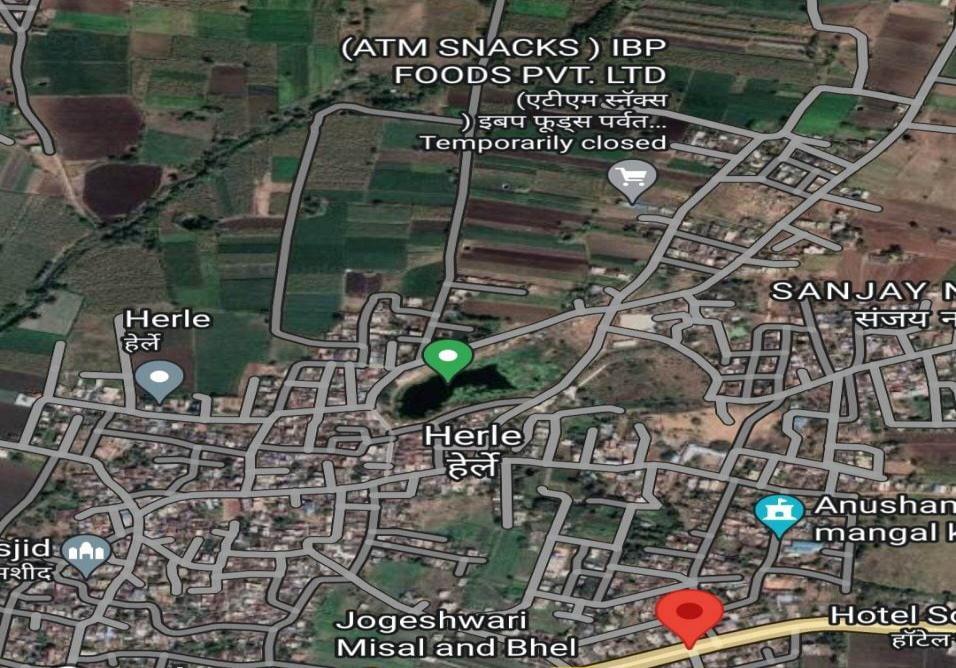
TheareaselectedforthisprojectisA/PHerle,Dist.Kolhapur,Tal.Hathkngale whichissituated558meters/1831feet abovemeansealeveland74.32andlatitude16.74
2.1 Mr. Rajnikant Prasad1, Prof. Rangari P J2, Asst. Prof. Dilendra Jasutkar3 "ConstructedWetlandanEfficientTreatment MethodforDomesticWastewaterTreatment"waspublishedinInternationalResearchJournalofEngineeringandTechnology. Lab-scale Mundhwa model. Constructed wetlands treat diverse wastewater sources. This study compares naturally and artificially aerated created wetlands for home wastewater treatment. Filter media filled the lab model, and one unit was artificiallyaerated.Lab-scalemodelswereusedtostudyMundhwa.Colour,odour,pH,COD,andDOwereexamined.
2.2 Kalpana Kumari Thakura, Avinash Bajpaib and Shailbala Singh Baghela This study examined the effectiveness and feasibility of EPCO's Horizontal surface flow created wetland/Root Zone Unit at Ekant Park, Bhopal. From June 2011 to May 2012,wastewatersamplesfromtheRootZoneSystemInletandOutletatEkantPark,Bhopal(M.P.)werecollectedquarterly. DO, BOD, COD, nitrate, and phosphate were measured using established procedures. The Root Zone System works well and cleanedwatercanbeusedforrecreationalactivitieslikewashingclothes,fishing,swimming,irrigation,etc.
3.3. Mahesh Mane1, Bhupen Patil2, Mohit Pawar3, Yatin Gohil4, Akshaya Ghalimath. ThispaperexaminestheRootZone Treatment System, which consists of soil gravel, sand, and fine aggregate filtration beds. This technique effectively treats domestic and industrial effluents using a natural method. RZTS are well-known in temperate climates and are simple to operate due to their minimal installation, maintenance, and operational costs, as well as their incorporation of the selfregulatingdynamicsofanartificialsoileco-system.Thistechnologyhasbeenimplementedeffectivelyinseveralnations.Use
ofconstructedwetlandscannowberecognizedasanacceptedlow-costEcotechnology,especiallybeneficialascomparedto costlyconventionaltreatmentsystems.ThistechnologymustbeutilisedtoitsfullestextentinadevelopingnationlikeIndiain ordertomaximiseitsbenefitsandpromotesustainabledevelopment.
3.4) B. L. Chavan1, V. P. Dhulap2, (Year 2012) Constructed wetland remediation of wastewater is cost-effective. In Asian nations, the wetland technology is highly applicable. Various varieties of aquatic weeds or macrophytes are treated. Phragmiteskarkaisanaquaticshrubthatemerges.Duetoitsrapiddevelopment,itisapromisingmacrophyteforsustainable use in wastewater treatment. This paper describes the use of Phragmites karka for wastewater (sewage) remediation in constructed wetlands with horizontal subsurface flow. The effluent was treated using phytoremediation or rootzone bed technology and Phragmites karka.Beforeandafter treatment, the physicochemical parameterswereanalysedand evaluated forpollutionburdenreduction.BeforetreatmentwithPhragmiteskarkaina constructedwetland,wastewater wasobserved tobeblackish-dark,foul-smelling,andhighlyoffensive-smelling.However,aftertreatmentwithPhragmiteskarka,wastewater was observed to be clear and odourless. 96 hours of hydraulic residence time reduced the concentrations of TS by 61.64 percent,TDS by60.37percent, TSS by 63.19 percent,hardnessby 57.15 percent, nitrate by94.69%, phosphorus by92.95%, BOD by 61.4 percent, and COD by 64.74 percent.The results indicate that root zone technology is beneficial for wastewater treatmentinordertoreducesurfaceandgroundwaterpollutionloads.
3.5) Sagar E. Shinde1, Suraj Phad2, Prashant Mishra3, Saurabh Gaikwad4, Shubham Bharade5 Both aerobic and anaerobictreatmenttechnologieshaveseensignificantadvancements.However,enormouscapitalexpendituresarerequiredto construct treatment facilities, and the disposal of treated effluents is a significant issue. The estimated operation and maintenancecostper1000litresforaconventionalsewagetreatmentfacilityisRs12.Duetothehighcostoftreatment,sewage is discharged directly into rivers and other local water bodies, contaminating the society's water sources. Small cities and communities are infeasible for conventional methods. Therefore, a cost-effective method for sewage remediation is required. RootZoneTechnology(RZT)isemergingasanalternative,low-costmethodfortheremediationofwastewaterthroughtheuse ofplantspecies.ToevaluatetheviabilityofRootZoneTechnologyforeffluenttreatment,studieswereconducted.Theresearch isconductedusingpilot-scalereactorsonvariousplantspecies.Inthereactor,variousplantspecieswereplantedandinitially irrigated with potable water. After stabilising the reactor, various quantities of sewage were applied at regular intervals of threedayswhileplantgrowthwasmonitored.Aftersteadystateisattained,itwasdeterminedthatzerodischargewouldresult from the hydraulic load. When the reactor was subjected to excessive hydraulic loading, the effluent water quality was evaluated.
Thewetlandunit'sintakeanddischargewerecharacterisedphysically,chemically,andbiologically.
Steptwo:treatingsewageeffluentusingabuiltwetlandwhilekeepinganeyeonitsviability.
Third,comparethestandardtreatmentfacilitytotherootzonesystem.
FourthDeterminetheoptimalbudgetfortheman-madewetlandbyfactoringintheexpectednumberofvisitors.
Plantswillbeplacedintheunitafterithasbeenmadewithseparatelayersofstonechips,sand,andstonedust. Additionally,plantdevelopmentwillbetracked.
Third,onlyregularwaterwillbeusedforsprinklingduringthemonth-longgrowingphase. Aftertakingsamples,thesewagewaterwillbereleasedintotherootzone.
To begin, the root zone system itself makes room for the water to circulate. Second, the roots provide an environment favourabletothegrowthofaerobicbacteriabybringingoxygendeepintothesoil.Theoxidationofammoniatonitrateisthe
initial stage in the biological breakdown of nitro compounds, and it requires the presence of these organisms. Third, nitrification occurs,which meansthattheplantsthemselvesabsorbsomeofthe nutrientsfromthe effluent.Improved water qualityispossiblewiththeuseofreedbeds.
ExtremelyeffectiveatkillinggermsandvirusesDecreasedamountsofsuspendedparticulatesandbiologicaloxygendemand. Removingmetalsandloweringnitrogenlevels.
Recycling of water from the bathroom. It is possible to use it as a polishing therapy for treatments if it is combined with particularorstraightforwardpretreatmentsfirst. Itispossibletoutiliseitasatreatmentthatwillpolishanywastewater.For example,breweriesandsugarfactories.
Treatment of the output of septic tanksis where this product shines. Streams, nalas,rivulets,and other bodies of water that have been polluted need to be treated (floating beds can be proposed). bodies of water (floating beds are a possible recommendation).
1. Billore, S. K., Ram, H., Singh, N., Thomas, R., Nelson, R. M., and Pare, B. 2002. Treatment performance evaluation of surfactant removalfromdomestic wastewaterina tropicalhorizontalsurfaceconstructedwetland.In proceedingsofthe 8thinternationalconferenceonWetlandSystemsforWaterPollutionControl,Dr.salaam,Tanzania,16-19Sept.
2. INTERNATIONAL JOURNAL OF ENVIRONMENTAL SCIENCES Volume 3,No 1, 2012 by the authors - Licensee IPA- under CreativeCommonslicense3.0Researcharticle
ISSN0976–4402.
3. ISI1991.“Indianstandardspecificationfordrinkingwater”.IS:10500,IndianStandardInstitution,pp.1-5.
4. GlobalJournalofEnvironmentalResearch4(2):90-100,2010ISSN1990925X©IDOSIPublications,2010.
5. MoEF,EvaluationofGangaActionPlan(1995)NationalRiverConservationDirectorate,GovernmentofIndia.
6. Mr. Rajnikant Prasad1, Prof. Rangari P J2, Asst. Prof. Dilendra Jasutkar3 Proceeding of International Research Journal of Engineering and Technology (IRJET) presented paper on “Constructed Wetland an Efficient Treatment Method for DomesticWastewaterTreatment’
7. Reddy,K.R.andGale,P.M. 1994.WetlandProcessand WaterQuality:A symposium overview.Journal ofEnvironmental Quality,23:875-877.
8. Singh.R.S.andC.P.Shrivastava(1985),QualityofSewageinVaranasi.IAWPCTech.Ann.12,pp28-31.
9. Wood. A. and L.C. Hensmann, (1988), Research to develop engineering guidelinesfor the implementation of constructed wetlands for wastewater treatment in SouthAfrica. International Conference on Constructed Wetlands for Wastewater Treatment,Chattanooga,Tennessee,USA,32(3),pp.291-294.