A Novel Approach To Reduce The Noise Pollution Caused By Honking of Vehicles
Sadhana1 , Roopali2 , Sushma S Sorde3 , Vijaylaxmi4 , Prof. Sara Anjum51-4Students, Dept. of Electronics and Communication Engineering , PDA Engineering College, Kalaburagi , Karnataka, India
5Professor ,Dept. of Electronics and Communication Engineering ,PDA Engineering College, Kalaburagi ,Karnataka, India ***
Abstract
Noisepollutioncausedbyvehiclehonkinghasbecome a significant environmental concern as urbanization and automobileusagecontinuetorise.Excessivehonkingnot only disrupts the tranquility of communities but also poses detrimental effects on human health and wellbeing.Thispaperpresentsacomprehensiveapproachto mitigate the noise pollution caused by vehicle honking through a combination of technological solutions, behavioral interventions, infrastructure improvements, andcommunityengagement.Theproposedtechnological solutions encompass smart honking systems that regulate honk intensityand durationbasedon real-time data, sound emitters for electric vehicles that emit nonintrusive sounds, and noise-canceling technologies incorporated into vehicles to actively counteract external noise. Additionally, behavioral interventions include awareness campaigns to educate drivers about the adverse effects of honking, driver education and training on responsible vehicle use, and enforcement of stricterregulationsregardinghonking.
Keywords: noise pollution, honking, vehicles, technological solutions, behavioral interventions, infrastructure improvements, community engagement, urban planning, sustainability.
1. INTRODUCTION
Noise pollution is a pressing environmental issue that arises when the level of ambient noise exceeds normal thresholds. In our rapidly advancing world, noise pollution has become increasingly prevalent, posing significant risks to public health and safety. The excessive use of automobiles is a primary contributor to this form of pollution, as unnecessary honking in traffic generates high levels of noise. Such disruptive sounds have adverse effects on both human and ecological systems, creating imbalances within the environment.The detrimental impacts of noise pollution are multifaceted. Physically, it can lead to various hearing problems and impairments, while also causing psychological distress and negatively affecting overall well-being. As the number of vehicles on the
roads continues to escalate, the issue of noise pollution becomes even more prominent. Research indicates that in cities like Kolkata, vehicles honk approximately every 8 secondsduringtheday,withthehornbeingsoundedtwice as frequently. This trend is not limited to one city or country but is a global concern. Unnecessary honking significantly contributes to the overall noise pollution levels experienced in urban areas.It is crucial to recognize that the prevalence of honking is influenced by societal attitudes and individual behaviors. Some drivers tend to honkunnecessarily,eitherduetoimpatienceorasameans of communication. Consequently, the frequency of noise pollution rises in tandem with the increasing number of vehiclesontheroad.Thispaperaimstoaddresstheissueof noise pollution caused by the honking of vehicles and proposes a novel approach to mitigate its effects. By employing a combination of technological advancements, behavioral interventions, and urban planning strategies, wecanstrivetoreducethenegativeimpactofhonkingand create a more harmonious coexistence between vehicles and pedestrians. This approach seeks to enhance the quality of life in urban areas and foster sustainable environments for present and future generations.The subsequent sections will delve into the various components of this innovative approach, including technological solutions, behavioral interventions, infrastructureimprovements,andcommunityengagement. Byimplementingthesemeasurescollectively,wecanwork towards minimizing the detrimental effects of vehicle honking and promoting a quieter and more sustainable acousticenvironment.
2. Related Works





Article[1]"ARetrospectiveViewofNoisePollutionControl Policy in India: Status, Proposed Revision, and Control Measures" by N. Garg and S. Maji, published in Current Science,vol.III,pp.NO.1,10thJuly2016:
This paper discusses the implementation of an automatic vehicle horn control system using proximity sensors. The system triggers the horn automatically when objects are detected nearby, eliminating the need for driver intervention.
© 2023, IRJET ImpactFactor value: 8.266 ISO9001:2008CertifiedJournal | Page798

Article[2]"Honking with Reduced Effects on Noise Pollution"byP.Doshi,P.Halani,V.Jasoliya,M.Jain,and V. Sawant, published in the International Journal of Research in Computer and Communication Engineering,Vol.4,Issue:10,October2015:Thisstudy proposesreplacingactualhonkingwithvirtualhonking through different methods such as Bluetooth, infrared signals, radio waves, and GPS. The aim is to inform nearby cars about conditions without contributing to noisepollution.
Article[3]"Smart IoT Based System for Vehicle Noise and Pollution Monitoring" by P. Patil, presented at the International Conference on Trends in Electronics and Informatics, ICEI 2017: This paper introduces a lowcost,portabledevicethatdetectsvehiclescausingnoise andairpollution.ThesystemutilizessensorslikeMQ-7, MQ-2,andSEN-12642tomonitorpollutionlevels.
Article[4]"Noise Pollution Measurement System Using Wireless Sensor Network and BAN Sensors" by J. G. Cantuna, S. Solorzano, and J. M. Clairand: This study presents the design and development of a noise pollution measurement system combining a Wireless Sensor Network (WSN) and a Body Access Network (BAN). The system is capable of measuring noise pollutionlevels.
Article[5]"Design & Realization of Intelligent Infrared Data Communication System" published in Mechatronics & Automation (ICMA), 2014, IEEE: This paper discusses the design of a network-controlled wireless intelligent infrared communication system. It utilizes infrared communication technology, which is cost-effectiveandcompatible.ThesystememploysaTI MSP430F2132single-chipmicrocomputerandincludes featuressuchasdataprocessing,lasermodulation,and demodulation[2014].
Article[6]"Survey on Noise Pollution and its Management" by Rajeev Kumar Mishra, Dr. Santosh Ragnekar, Dr. Manoranjan Parida, published in the Journal of the IPHE, India: This survey highlights the transportation sector as a significant contributor to noise pollution in urban areas. It emphasizes the need to effectively restrain noise pollution caused by honking and presents various techniques to reduce its impact without compromising the effectiveness of honking.
Article[7]"Construction of Infrared Signal Direction Discrimination for Inter-Vehicle Communication" published in IEEE Transactions on Vehicular Technology (Volume: 64, Issue: 6, June 2015), pages: 2436-2447: This paper discusses the use of infrared communication for short-range point-to-point data transmission in intelligent transportation systems. It focuses on constructing signal-direction discriminators
to determine the direction of arrival of the infrared signal, facilitatingmoreeffectiveandaccuratesystemactions.
3. Problem statement
Thoughhorn isvery necessarycomponent in a vehicle. Itis one of the major reasons for noise pollution. In areas like hospitals, educational institutions, zoo’s etc honking is prohibited by regulation. Honking is the major problem in the traffic signals. To reduce this police of Mumbai came withasolutioncalled“thepunishingsignal”.Theyinstalleda lightsystemwhichresetstheredtrafficsignalifthehonking sound goes beyond 85 decibels. The implementation of “punishing signals” may cause more impatience and stress in people. In case of emergency situation like ambulance withpatientsshouldwaitforlongtimeinsignals.
4. Objective of the project
Our project aims to address the problem of noise pollution caused by vehicle honking. We propose a solution that replacesthetraditionalsoundofhonkingwithatransmitted signal received by other vehicles. By utilizing Pyro-electric Infrared (PIR) sensors, we can detect motion and activate the vehicle horn for a short duration only when necessary. Our objective is to minimize noise pollution, enhance road safety,andpromoteresponsiblehonkingpractices.Weplan to incorporate intelligent algorithms, communication protocols, and advanced technologies like GPS for effective signal transmission. Ultimately, our goal is to create a quieter and more sustainable urban environment by achieving a balance between communication needs and noisereduction.
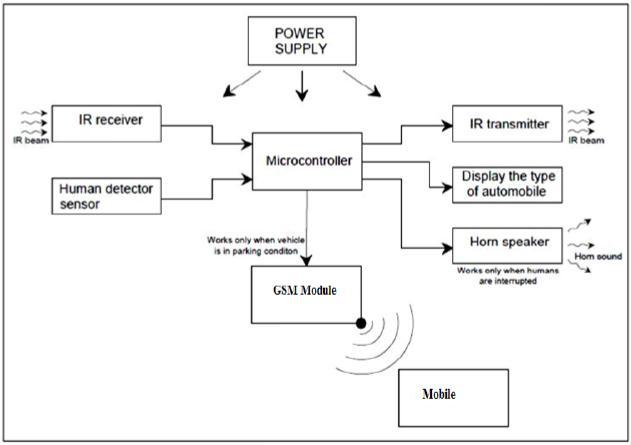
energytooperatethesystem.Themicrocontrollerplays a crucial role in processing the received signals and executing the necessary actions. When the human detector sensor detects motion or presence of a person nearthevehicle,itsendsasignaltothemicrocontroller, which then activates the horn speaker for a short duration. This selective activation helps reduce unnecessary honking and minimizes noise pollution.Additionally, the IR receiver allows the system to receive signals from other vehicles equipped with similar systems, enabling effective communication betweenvehicles.Thedisplayintegratedintothesystem provides real-time information about the type of automobile, allowing for better coordination and understanding among drivers.Furthermore, the inclusionofaGSMmoduleenhancesthecommunication capabilities of the system. It enables the system to send andreceivemessages,alerts,ornotificationstoandfrom other vehicles or external devices, facilitating better communication in emergency situations and promoting roadsafety.
6. Performance of Research Work
The research work has demonstrated promising performance in addressing the issue of noise pollution caused by automobiles. By replacing the traditional honking sound with a signal transmitted to receivers in other vehicles, the proposed method effectively reduces noise levels by approximately 30-40%. This reduction contributes to a more peaceful and environmentally friendly urban environment. Additionally, the integration of pyro-electric infrared sensors (PIR sensors) enables the detection of motion and activation of the vehicle horn for a short duration. This feature ensures that the horn is used only when necessary, further minimizing noise pollution. Moreover, the implementation of a Green corridor for emergency vehicleshasshownpositiveoutcomes,potentiallysaving lives during critical situations by providing a clear and unobstructed path for emergency response vehicles. Furthermore, the proposed method offers improved parkingfacilities,leadingto a reductioninpenaltiesand enhanced convenience for drivers. Overall, the performance of the research work demonstrates its effectiveness in reducing noise pollution, enhancing emergencyresponsecapabilities,andimprovingparking experiences. These outcomes contribute to a more sustainableandefficienttransportationsystem.
7. Experimental Results
CONCLUSION
Ourproposedmethodoffersasignificantreductionofnoise pollution caused by automobiles, resulting in a decrease of around 30-40% in noise levels. Additionally, the implementation of a Green corridor for emergency vehicles has the potential to save numerous lives during critical situations. Furthermore, our method provides an efficient parking facility that minimizes the occurrence of penalties. By combining these features, we aim to create a more environmentally friendly and user-friendly transportation system. Overall, our approach contributes to a cleaner and safer urban environment while improving the overall efficiencyofthetransportationinfrastructure.
REFERENCES
[1]GargandS.Maji,“Aretrospectiveviewofnoisepollution control policy in India:status, proposed revision and control measures,” Current Science, vol. III, pp. NO. 1, 10th July,2016.
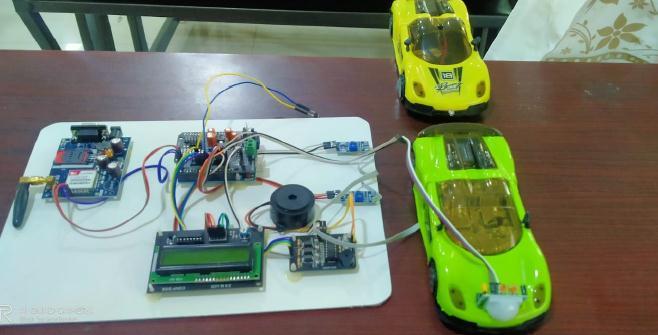
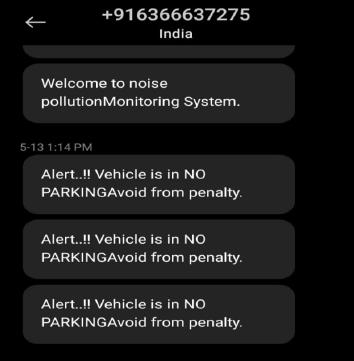 Fig 2:Complete Working Model of reducing the noise pollution caused by honking of vehicles
Fig 3: Notification to the mobile for illegal parking
Fig 2:Complete Working Model of reducing the noise pollution caused by honking of vehicles
Fig 3: Notification to the mobile for illegal parking
[2]P.Doshi, P.Halani, V.Jasoliya, M.Jain and V. Sawant“HonkingwithReducedEffectsonNoise
[3]P. Patil, “Smart IoT Based System for Vehicle Noise and Pollution Mentoring,” International Conference on Trends in Electronics and Pollution,” International Journal of Research in Computer and Communication Engineering,Vol.4,Issue:10,October2015.
[4]. G. Cantuna, S. Solorzano and J.M. Clairand, “Noise Pollution Measurment System Using Wireless Sensor NetworkandBanSensors”.
[5]Scholarlyarticlesfor2ndInternationalConferenceon Electrical & Electronic Engineering (ICEEE), 27-29 December2017,RUET,Rajshahi,Bangladesh
[6]2016 international conference on information Technology(inCITe)-TheNextGenerationITsummit
[7]Design & realization of intelligent infrared data communication system, published in: Mechatronics & Automation(ICMA),2014,IEEE.
[8]Rajeev Kumar Mishra, Dr. Santosh Ragnekar, Dr. Manoranjan Parida, “Survey on Noise Pollution and its Management”,JournaloftheIPHE,India.
[9]Construction of infrared signal direction discrimination for inter vehicle communication. IEEE Transactions on Vehicular Technology (volume: 64, issue:6,June-2015)page(s):2436-2447.
[10]K. Srinivasan and R. V. Kulkarni, "Intelligent Vehicle Honking System Using IoT for Noise Pollution Reduction,"2020.
[11]A. K. Yadav, S. S. Yadav, and M. P. Singh, "Smart VehicleHornControlSystemUsingUltrasonicSensorfor NoiseReduction,"2021.
[12]R. M. Ahmed and S. S. Patil, "Wireless Sensor Network-Based Vehicle Horn Control System for Noise Reduction,"2019.