International Research Journal of Engineering and Technology (IRJET) e-ISSN:2395-0056

Volume: 10 Issue: 06 | Jun 2023 www.irjet.net p-ISSN:2395-0072
IMPROVING THE QUALITY OF LIFE IN AUSTIN THROUGH THE REDUCTION OF TRAFFIC CONGESTION
Tijani Mohammed, Precious Aduwenye, and Han Gao ***ABSTRACT
The assessment of traffic congestion in Austin, Texas prompted the development of a comprehensive solution aimed at addressing the issue. Commuters often face prolonged travel times and uncertainty surrounding bus or car arrival schedules, leading to passenger discomfort. In order to enhance the quality of public transportation services and tackle these challenges, this research proposes the implementation of an innovative design encompassing various key components,includingcustomerand systemrequirements.Furthermore, this novel designincorporatesthecapabilityto monitor potential passenger and pedestrian patternsthatcouldcontributetounexpected traffic congestion or accidents. The effectiveness of this model design was compared favorably with the Austin Core Transportation (ACT) and Austin Strategic Mobility Plan (ASMP), both of which are slated for implementation in Texas. Additionally, a case study was presented to demonstrate a sample implementation of the proposed model, showcasing its accuracy and indicating its potentialforhighuserratings,therebyconfirmingitsefficacyinimprovingthequalityofpublictransportationservices
1. INTRODUCTION
Poor transport infrastructures, rising road accidents, traffic congestions, and increased emissions are some of the problems facing the transportation sector in recent times [1, 2] Ensuring a sustainable, efficient, and functional public transport system is crucial for mitigating congestion and pollution in urban areas worldwide. Transportation plays a pivotalroleintheeconomyoftheUnitedStates,significantlycontributingtoitsoverallproductivityandgrowth.According todata fromtheU.S.DepartmentofTransportation,the transportationsectoraccountedfor5.4%ofthecountry'sGross Domestic Product (GDP) in 2020, reaching a staggering $1.2 trillion [3]. This sector employs millions of Americans, supportingover11.5millionjobsinvarioustransportation-relatedindustries.Efficienttransportationnetworksfacilitate the movement of goods, enabling businesses to reach domestic and international markets. Due to the importance of this sector,thereisalwaystheneedfortransportationmodestocompeteandcomplementeachother.
The road transportation system in Texas largely needs improvement yet the purchase of cars is increasing [4]. This will ultimatelyleadtoanincreaseintrafficcongestionespeciallyintheurbanareas.Ensuringthesustainabilityofcitiesamidst ongoing urbanization is of utmost importance [5] Several cities have seen the need to create more road networks and delineate morespacesfor future road plans.Nonetheless,anincrease in populationandcar demands oftenleadto more car trips and unintended consequences such as traffic congestion Traffic congestion will not only lead to the decline of various economic and social functions but also lead to the continuous deterioration of the urban living environment, becoming a "stubborn urban disease" hindering the development of the city. The direct impacts of traffic congestion on sociallifeincludetraveltime,gascostincrease, andaccidentswhichsometimescauseinestimableloss.Inaddition,heavy trafficalsoleadstoanincreaseinaccidents,whichinturnworsenstrafficcongestion.Theincreasedcostoftravelnotonly affects work efficiency but also inhibits people's daily activities, reducing the vitality of the city and the quality of life of residents.
Theinfluenceofurbantrafficonthenaturalenvironmentincludesautomobileexhaustpollution,noise,andvibration.The urban transportation system has become a major source of air pollution, and in some cities, motor vehicles have even accountedfortheentirepollutionsource.Inaddition,theimpactoftrafficnoiseandvibrationonthelivingenvironmentof residents and sensitive facilities such as hospitals and schools in the surrounding areas of the road has become a prominentsocial problem. Gasexhaustionfromvehiclesisthemainpollutionsourceoftheurbanatmosphere. Themain harmful emissions from automobiles are carbon monoxide, hydrocarbons and nitrogen oxides, odors, particles, photochemical fumes, etc. According to the detection data of large and medium-sized cities in developed countries in EuropeandAmerica,allkindsofmajorpollutantsincities,suchascarbonmonoxide (CO),carbondioxide,hydrocarbons, and motor vehicle exhaust accounts for about 40% to 90% of the total amount of formaldehyde, nitric oxide, nitrogen dioxide, sulfur dioxide, copper particulates, and suspended particulates. In addition, according to the survey of 11 urban areas in the United States, more than 67% of the CO in the atmosphere, and more than 92% of the hydrocarbons are vehicleemissions[6]
Inrecentyears,therehasbeenmorenewsaboutself-drivingcarswhich arepredictedto bethefutureoftransportation. While it won't be the dominantmodeof road trafficfor decades to come, the emergenceofself-driving carsis becoming popular.Self-drivingcarscouldsignificantlyreducethedistancebetweenthefrontandrearofthevehicleandavoidroad accidents caused by human error. However, it will take time for autonomous vehicles to become the dominant mode of road traffic, and whether these advantages become a reality will depend on customer acceptance of this technology. We know that once autonomous vehicles are officially on the road, they will greatly influence the long-term investment decisions of major infrastructure (such as roads, toll roads, railways, large parking lots, and mass transit) and infrastructureinvestors.
Traffic congestion takes a huge toll on the economy as a whole. First of all, there is a marked decline in the efficiency of people'sdailybusiness.Thecongestionwastesalotofeffectiveworkandresttime,andthetensionanddepressioncaused bythecongestionalsoreducetheworkefficiencyofthecitizens.Intermsofgovernmentinvestment,inordertoalleviate congestion,thegovernmenthastoincreaseinvestmentinroadmaintenanceandconstructiondirection,widentheoriginal road, and build microcirculation roads and parking facilities. The air pollution caused by traffic congestion also requires thegovernmenttoinvestheavilyinenvironmentalcontrolandpollutiontreatment.Andpaymoremedicalinsurancefees forthepatientscausedbyairpollution,andincreasetheinvestmentinhospitalsandothermedicalfacilities.Furthermore, thetransportationindustrydrivesconsumerspendingbyconnectingindividualstoemploymentopportunities,education, healthcare,andrecreationalactivities.Consequently,anyimprovementsintransportationinfrastructureandsystemshave thepotentialtoenhanceproductivity,stimulateeconomicactivity,andimprovetheoverallwell-beingofthenation.
Due to the few public transportation stations, slow running speeds, incomplete coverage, and lack of comfort, a large numberofpeoplestillchoosetodriveprivatecars,whichworsenstrafficcongestion.Astheeconomicsituationimproves, more families are buying private cars, which gradually reduces the number of people who ride bicycles and walk. The occurrenceofunexpectedweatheralsoleadstotheoveruseofprivatecars.Inthecurrentpoliciesontransportation,there are already fees for car purchase, parking, and fuel tax. If congestion charges are added, it may bring negative social impacts. The objective of this paper is to provide a suitable model to reduce traffic congestion in a busy city like Austin, Texas.
2. AUSTIN TRAFFIC SITUATION
Accordingtoa navigationprovider [7],Austinisrankedamong thecitieshavingtheworsttrafficcongestionproblemsin the world in 2019. After conducting a global index study measuring 2018 traffic in 403 cities across the globe, Austin is rankedNo.19and179intheUSandtheworldrespectively,formostcongestedtraffic.InthestateofTexas,Austinisalso ranked No.1 for having the worst traffic congestion. According to the index, drivers in Austin will have their travel time increasebyanaverageof25%duetotrafficcongestion.Theworsttimetobeontheroadisweekdayeveningsfrom4p.m. to6p.m.,wheretraveltimescanbeanaverageof63%longer.
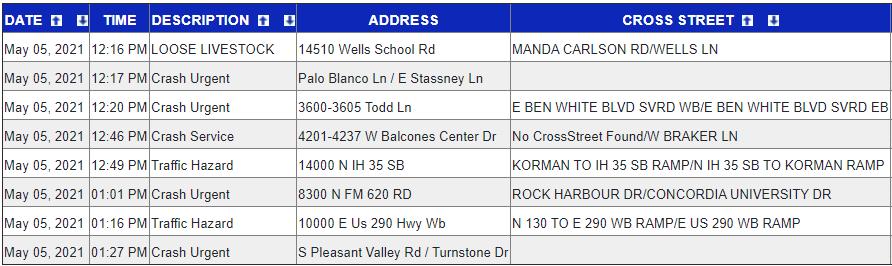
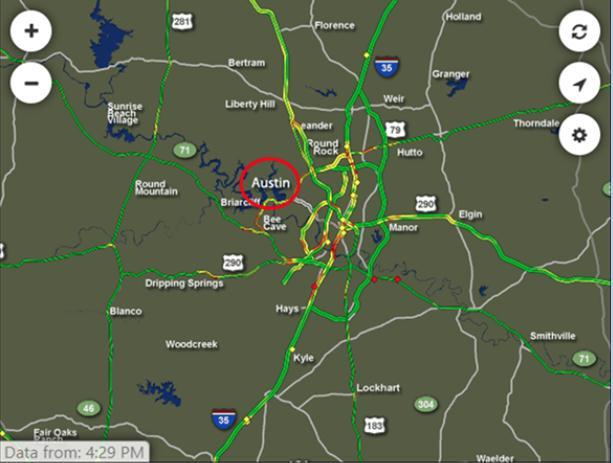
Fig. 1. shows the real-time traffic map in Austin at 4:30 PM. Roads near downtown Austin became busy (represented in yellow color) in working peak times such as morning and late afternoon. The red/yellow dots show the car accidents reported, which are common and frequently happen on these roads. Table 1 shows the traffic report for Austin on May 5th.Amongthoseeightreports,sevenofthemarerelatedto crashesandtraffic withmanyofthemhappeninginregions neardowntownAustin,thebusinessconcentratedareas.
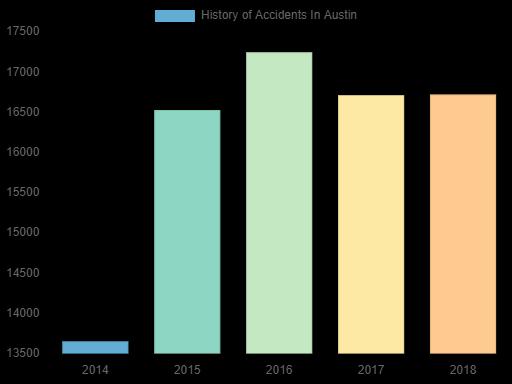
Furthermore, Fig. 2. below shows the history of accidents happening in Austin from 2014 to 2018. The number of accidents increased from around 16,500 in 2014 to above 17,000 in 2016 and thereafter decreased to about 16,500 in 2017and2018.Comparedto2014,theymarkedlyincreasedinlateryears. Trafficcongestionformedmayduetoseveral reasons such as unreasonable city planning to meet the rising population, poor public transportation, and an increasing numberofprivatecars.
Volume: 10 Issue: 06 | Jun 2023
Workplace separation is the biggest cause of congestion. Austin is a city with many people living outside the city and workinginside.Duringthemorning andeveningtrafficpeakhours,hundredsofcarsplytheroadsasaresultofworkers commuting to and from work. The poor public transportation and the increasing number of private cars are making the situationmoredifficult.Thosecarstakeoverhalfofthetransportationresourcesbutonlysendoutlessthan5%ofpeople sincethemajorityofthecarsontheroadsareprivatecars, withonlyoneperson(thedriver).Furthermore,ifthedrivers havepoortrafficmorality,thereisahigherchancetoformcongestionduetoanyunexpectedaccidentsontheroads. Due to the rapid growth in population in Austin, it is important to have measures in place that could help reduce the burden Austinitesgothroughoncongestedroads.
Affordablecentralhousingisoneofthesafestandbestmethods forimprovingtrafficcongestioninAustin.Alotoftraffic couldbereducedifpeoplecouldworkclosetowheretheylive.Buttheycannotaffordit.Thebiggestproblemislow-wage workers who have to drive in and out of Austin from outlying towns, such as Round Rock, Georgetown, Salado, and Pflugerville.Ontheotherhand, therearehighlypaidhigh-techpeoplewholiveinthecentralpartofthecitybutdrivefar NorthorSouthwesttowork.
Another solution can be building the subway in downtown Austin. Interstate 35 is a major Interstate Highway in the centralUnitedStatesthatcrossesAustinandconnectssurroundingtowns.However,withtherapidgrowthoftheeconomy in Austin, more and more people work downtown, which causes lots of traffic congestion on I-35. The main reasons for traffic congestion on I-35 include unable to perform real-time traffic management, vehicle and road operating optimization, and unpunctual emergency response. Considering the cost and operation efficiency, if there is a subway system in downtown Austin that connects near surrounding areas such as Round Rock and Kyle, which will be more convenientforpeoplewho needtospend30minutesdriving ratherthananhourintrafficjams.Thiswillhelptoreduce thetrafficcongestiondowntownandimproveroadsafety.
Another possible solution to improving the traffic congestion in Austin is through a combination of driving up bus ridershipthroughfreefares,moreexpressbuses,andcarpoolvans.Thiscouldsignificantlyimprovecongestion.Busesand vancarpools,althoughnotasfavorableaslightrail,canhaveabigimpactonroadsbytakingcarswithlonecommutersoff thehighwayduringpeakrushhours.Better(and moreintricateandfarmorefrequent)busroutesfromoutlyingareasto the city. For instance, It is no problem for someone from Round Rock to get to Austin proper; it’s getting them to their actual workplaces that are highly problematic. The only thing that the City seems focused on is the downtown area and buildingpublictransportationforthem.
2395-0056
Volume: 10 Issue: 06 | Jun 2023 www.irjet.net p-ISSN:2395-0072
3. DESIGN REQUIREMENTS
3.1 Customer Requirements
Considerationsaboutthecustomer'srequirementscanbemainlydividedintofiveaspects:
3.1.1 Affordability: thenewsystemshallbeaffordableforallusers.Lowcostswillenticeuserstoutilizethesystem. The costoftakingthesystemshouldbelowerthantakingprivatecars else,everyonewillchoosetodrivetheircarinsteadof trying another option. All cities within Austin will also need to be able to sustain and maintain the system hence, affordabilityisessentialinmakingthenewsystemasuccess.
3.1.2 Safety: the safety of customers and users is the utmost priority. Users need to feel safe when utilizing the new system.Privacy,physical,andpersonalsafetyneedstobeguaranteed.Althoughthesecuritysystemofthesubway/railway maybeinconvenient,thissystemallowsforittobeanoptiononthelist.
3.1.3 Reliability: It shall be reliable in terms of software, privacy, and being able to accommodate large users online without glitchesordowntime.Theconsistencyshouldbethesamewhichmeansconstantcustomerrequirementsleadto thedirectedanswer/solutions.
3.1.4. Accessibility: Accessibility is crucial in the sense that the majority of people must hop onto the new system. It should be very easy to navigate and move around. The more customers, the more successful the new system shall be. Accessibility is also related to affordability, the high cost of the new system will not increase affordability, and in other words,accessibility.
3.1.5. User friendly: user-friendliness makes users and customers navigate through the new system without having difficulties. There should be explicit instructions on how to use it. Furthermore, the user-friendly interface must incorporateaccessibilityoptionsfordisabledusers.
3.2 System Requirements
3.2.1 Input/output Requirements
The system will allow the users to provide basic information such as name, current address, and phone number amongothers.
Itwillassistpassengersanddriverstoeitherchoosetointeractandconnectornot.
Userswillbeallowedtohavetheoptionofopeningandclosingthesystem.
The system will use the latest GPS by importing either from Google or Apple map and location tracker to locate bothdriversandpassengers.
Itwillbeabletoaccessthelatesttrafficinformationinandaroundthecity.
3.2.2 Technology Requirements
Inournewsystem,ourapplicationwillhavethefollowingtechnicalrequirements.
ThenewsystemwillbeabletoworkperfectlyonAndroid,IOS,andWindowsdevices.
Itwilltrackthenumberoftripsfordrivers.
Itwilltrackthenumberoftripsforpassengers.
Thesystemwillrequirebasicinformationsuchasname,age,gender,andcontactinformation,amongothers.
Itwillprovideoptionstocalculateandcollectmilesandearnfreetripsinthefuture.
Thenewsystemwillhaveauser-friendlyinterfacewithadditionalassistancefordisabledpersonnel.
Itisimportanttonotethat,inorderforthenewsystemtoworkefficiently,wewouldliketoincorporateotherfactorsand implementthefollowingmeasuresintothesystem.
PotentialPassengerstracking
Thisisessentialbecausemostpeopleonlythinkaboutvehiclesandbuseswhenthinkingabouttraffic congestion. The ability to track potential passengers will lead to addressing pedestrian traffic which in turn could lead to trafficcongestion
Patternstracking
Thisisessentialinthesensethatthemovementofpedestrians,passengers,andvehicleswillhelpfutureplanning mucheasier. Patterntrackingenablesthenewsystemtotrackandzoneoutwherethereissignificanttraffic,the timeoftraffic,thealternateroute,andamongothers.
Adaptivetrafficsignals
Adaptivetrafficsignalsallowustogainbetterinsightandunderstanding oftraffic.Thisenablesustocontrolthe flowandthelengthoftimevehiclesbecomeidleatthetrafficlights.Thisthen,canbeusedtomodifythetimingof trafficsignalstocoincidewiththepatternsoftrafficduringtheday.
Real-timetrafficfeedback
Real-time traffic feedback helps to choose the very best route with real-time feedback. Potential passengers, buses,andothervehicleswillbeabletoavoidcongestedareasandratherchoosethebestpossibleroute.Thiswill maximizetheuseofvehiclesbecausepotentialpassengerswillknowexactlywherebusesare.
3.2.3 Performance Requirements
Thenewsystemwillbeabletocatertoalargenumberofcustomershoppingonthesystematthesametime.
Thenewsystemwillfindthebestpossiblerouteforeveryride.
Subsequently,thenewsystemwillreducethetimeoftravelforbothdriversandpassengers.
The new System will give users the options to either share or match rides with other users on the sameroute.
Thesystemwilltrackreal-timetrafficinformationinordertoselectthebestroute.
Thesystemwillprovideaquickresponsetoriders.
3.2.4 Cost Requirements
Thenewsystemwillcostabout$250,000toconstructandsetup.
Thenewsystemwillhavemonthlymaintenanceandupdatesfor$30,000.
Initialadvertisementandmarketingforthefirst3monthswillcostunder$65,000.
Subsequentadvertisementandmarketingwillreduceto$10,000permonth.
Usersandcustomerswithmembershipwillhaveamonthlyfeeof$20.
One-timeuserswithnomembershipwillhaveafeeof$$9.99perride.
Citiesacquiringthenewsystemwillhavetheircitizenspayamonthlyfeeof$14.99.
3.2.5 Trade-off Requirements
Userswithnomembershipwillbeofferedagoodone-timedeal.
Afamilycanhaveagooddealwithfamilybeingabletopaylessandbeingabletoshareeachother'smembership.
Thenewsystemwillgiveuserstheoptiontousehighoccupancyvehiclesinexchangeforpickingupotherriders.
Thesystemshallcalculateadegreeofburdenforpassengersanddriversbasedon extradistancefromtheroute theymustgo.
3.2.6 System Test Requirements
Thesystemshallundergoperformancetestingtomeasurehowitwillbehaveifthereisanincreasingworkloadof usersdemandduringspecifictimes.
Thesystemshallundergouserinterfaceandusabilitytesting.
Thesystemwillgothroughservertestingtobuildpowerful,reliableandstableapplications.
Thesystemwillmakesurethatthevehicleusedtotransferridersisingoodandreliable conditionbyaskingfor licenseplatesorVINnumbers.
3.3. System Validation
Customerneedsinclude:
Thesystemshalloperateautonomously
Thesystemshallbeabletoplanthebest/mostsuitablerouteasthecustomer'sneeds
Systemshallassistcustomers
Thesystemshallbeabletotrackpotentialcustomersandfuturepatterns
Thesystemshallhaveadaptivesettingsthatcanmodifyasthereal-timeconditionchanges
Requirementsthatsatisfythecustomerneeds:
I. The system shall operate autonomously: The systems should be designed in a way that is able to operate autonomously with the provided information. The subsystems function together and should be able to identify what commands the customer required. And based on the provided information, data analysis, and decisionmakingprocesses,thenextmovementsaremade.
II. The system shall be able to plan the best/suitable route as customer needs: It is important to design a system that can identify emergencies like car accidents on the roads. And data analysis combined with other subsystemslikeGPScanfindanotherwayorsolutionstomeetcustomers’requirements.
III. The system shall assist customers: The system should be designed to provide additional information or assistance for the customers. It can assist passengers and drivers with multiple options. Also, it can provide assistancefordisabledpersonnel.
IV. The system shall be able to track potential customers and future patterns: Thesystemcanbedesignedwith machine learning techniques and combined with big data to predict potential passengers and future patterns. Because not only do vehicles and buses play important roles in traffic congestion, but also the pedestrians are influencingtrafficconditions.Thesystemshouldenablepatterntrackingsoitwillknowwherethereissignificant traffic,thetimeoftraffic,thealternateroute,andamongothers.
V. The system shall have adaptive settings that can modify as the real-time condition changes: The system should be designed to have adaptive settings for real-time conditions which allows customers to gain better insightandunderstanding.Also,itshouldprovidereal-timetrafficfeedbacktoenhancecustomerexperiences.
4. CASE STUDY AND CONCEPT EXPLORATION
4.1. Case study
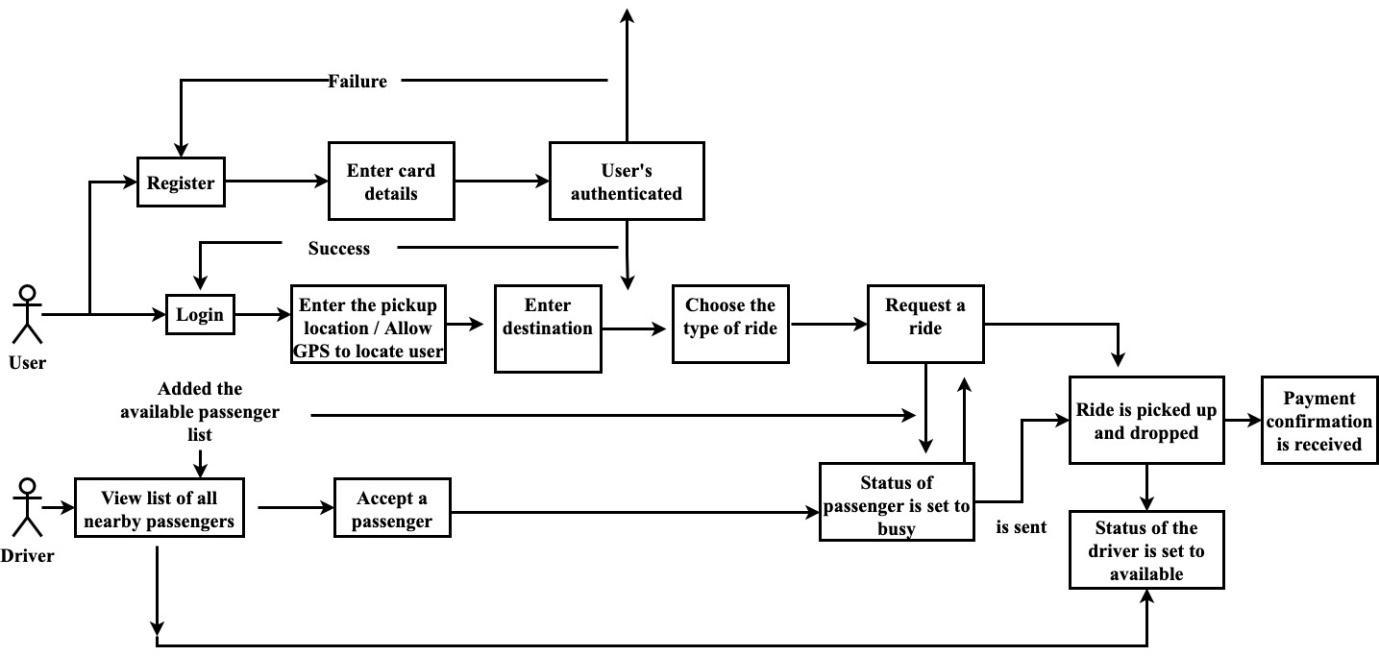
welookedathow different usersinteractwiththesystemtoproperlydeal with ourconcerns.Assuch,wedescribedthe goalsoftheusers,theinteractionsbetweentheusersandthesystem,andtherequiredbehaviorofthesysteminsatisfying our goals Fig. 3. describes the realization of the new design, and served as an abstraction of the implementation model. Thisisessentialinthedesignmodelasitpointsouttheinputtoactivitiesinimplementationandtest.Itrepresentsallthe eventsandattributesthatwillbeassociatedwitheachoftheactorsoractionsareshownbytheirrespectivetypeofarrow betweenthem
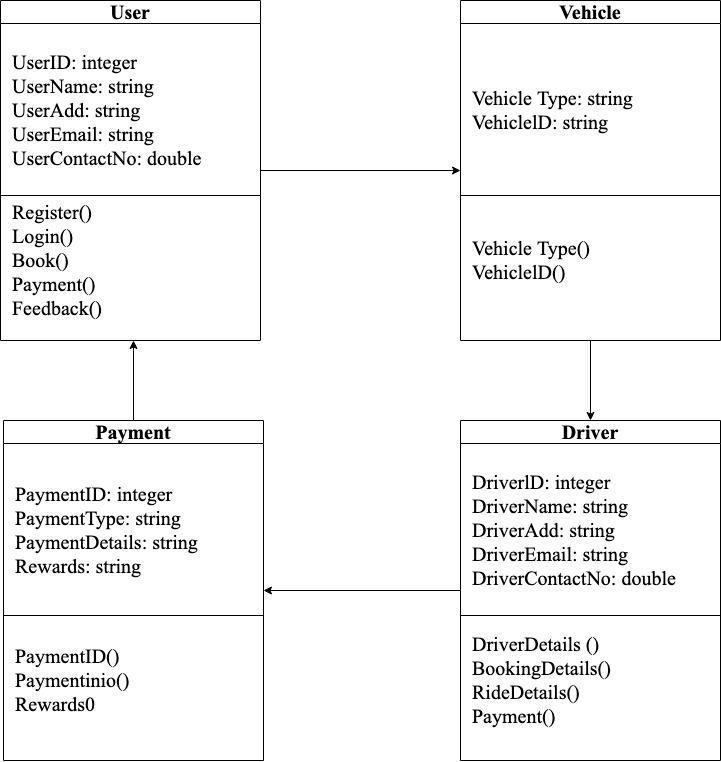
TheClassdiagrams(see Fig. 4.)allowthevisualizationofallevent-drivenactionswiththeirdomainsandalldomainsthat willbeinheritedbyotheractorswiththeirattributes.
Volume: 10 Issue: 06 | Jun 2023 www.irjet.net
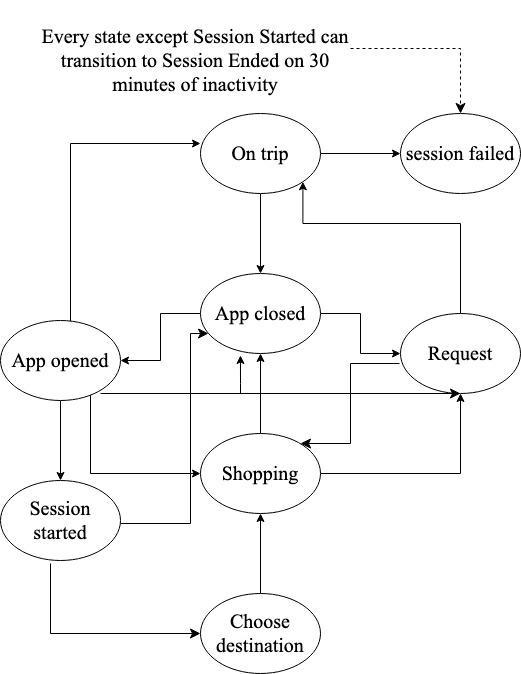
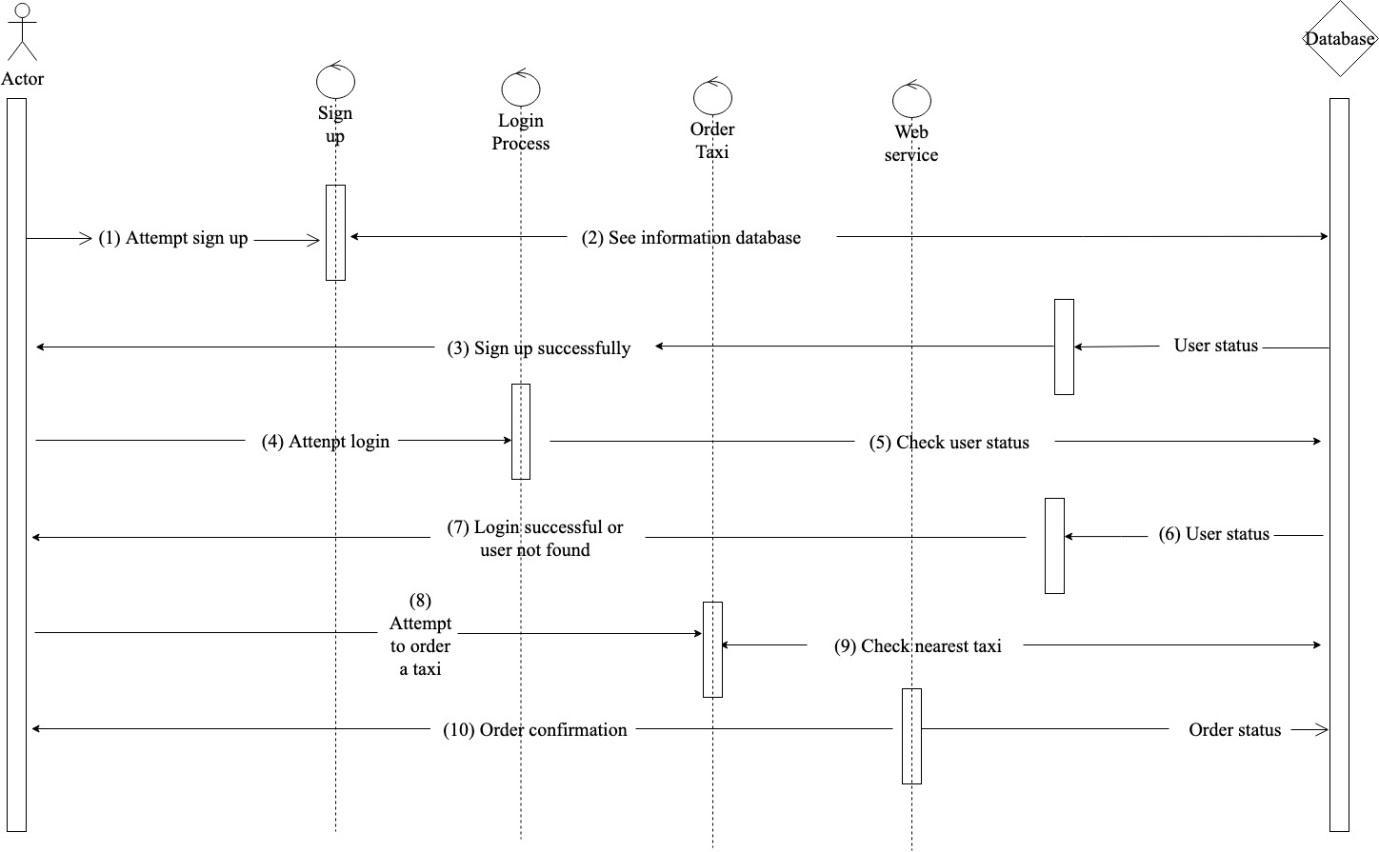
Also, Fig. 5. showsthesequencediagramsthatallowedustorepresentusecasesinatimelinewithallpossiblescenarios included such as verification based on condition statements to start interacting with the system. The State machine diagram(see Fig. 6.)aids toillustratethetransitionsof thebehaviorofthesystem aswellasallfeedbackloopsbetween behaviorstates.
4.2. Concept Exploration
4.2.1 Alternative design
Thissectioninvestigatedalternativesystemdesignstostudythesystemconcepts.Currently,thereweremanyapplications suchasUber,Lyft,andsoon.Thosepopularandconvenientappsbroughtpeoplenewtripmodesandbusiness.Uberand itscompetitorshavemadestructuralchangestotheoldindustrythatoperatemuchthesamewaytheydiddecadesago.In thepast,peoplewhoneededa taximustgetoneinpersonorcall a localcarservicetwohours beforepicking uptimeto bookthecar.Electronicname-callingserviceslikeUberor Lyftmake it possible to securea carortaxi fromanylocation viaasmartphone.
Severaldistinctadvantages,insteadofchasingataxidownthestreetorcallingandwaitingforahalf-hourcarservice,app users can order a car from any location and arrive at it within minutes. Because the passenger's credit card had been linked to an electronic name account, the payment will just be deducted from the account. For drivers, Uber and other electronic names enjoy greater freedom and flexibility. Drivers can log in and out of the system at any time and choose their own time. The downside, however, is that this disruptive technology reduces the market share of traditional taxi servicesandreducesdrivers'overallprofits.Andmostimportantly,astherearemoredrivers,therearemoreprivatecars ontheroadsandmoretrafficcongestion.
There were area-concentrated programs and projectslikeASMPandACT inAustin. For ASMP, it is a plan that combines policies, supporting actions, transportation networks such as public transportation, and bicycle systems, as well as the street network which was used to identify the right of way requirements. The purpose of this plan is to improve and sustain the life quality of all Austinites by providing a comprehensive multimodal transportation plan for the future of transportation networks. And to achieve mobility outcomes based on the continuous growth of Austin and the surrounding communities. However, the ASMP also has some challenges, which include how to promote public health while trying to lower the risk of travel-related injury. Or how to balance the accessibility to a growing region with a multimodal transportation network [11]. The ACT plan is another program that looks into the mobility of downtown Austin.Althoughthisprogramiscurrentlyonhold,itwillberesumedinthenearfuture.
4.2.2 Trade-off study
The comparative study is given in Table 2. Compared with current existing programs, the designed system has several advantages than the others. While ASMP and ACT are more planning-related systems, our designed one combined the transportationnetworks,andbuild-inserviceswhichenableuserstobooktickets/tripsdirectlythroughthesystem.Also, real-timetrafficfeedbackcanbeprovidedbydataanalysisofmachinelearningtechniques.
Besides that, the design system can track potential passenger and pedestrian patterns that may cause unexpected traffic congestionoraccidents.
Trafficcongestion arises asa consequence of inefficienciesand disruptionswithin urban transportation systems,leading to significant societal impacts due to increased traffic congestion. In this study, we have explored different technologies drivingtheAustintransportationsystems,theirdevelopmentandexaminingtheireffectsonpassengers Asuitabledesign model for the case of Austin was introduced. Through the utilization of this model we have discovered its potential to
Volume: 10 Issue: 06 | Jun 2023 www.irjet.net
significantlyenhancethequalityofpublictransportservices,therebyattractingmorepassengers.Furthermore,thismodel has the capability to enhance the competitive edge of public transport when compared to private transportation alternatives
References
[1] T.Neeson,M.Ferris,M.Diebel,P.Doran,J.O'Hanley,andP.McIntyre,"Enhancingecosystemrestorationefficiency throughspatialandtemporalcoordination," Proceedings of the National Academy of Sciences of the United States of America, vol.112,04/272015,doi:10.1073/pnas.1423812112.
[2] T. Tong and T. E. Yu, "Transportation and economic growth in China: A heterogeneous panel cointegration and causality analysis," Journal of Transport Geography, vol. 73, pp. 120-130, 2018/12/01/ 2018, doi: https://doi.org/10.1016/j.jtrangeo.2018.10.016.
[3] USDOT. "Transportation Services Contributed 5.4% to U.S. GDP in 2020." https://www.bts.gov/newsroom/transportation-services-contributed-54-us-gdp-2020-decline-59-2019 (accessed2023).
[4] C. News. "Texas Car Dealers Increasing Prices As Scarcity Spikes Amid Global Shortage Of Computer Chips "
https://www.cbsnews.com/texas/news/texas-car-dealers-increasing-prices-as-scarcity-spikes-amid-globalshortage-of-computer-chips/(accessed.
[5] H.Karimi,S.-N.Shetab-Boushehri,andB.Ghadirifaraz,"Sustainableapproachtolanddevelopmentopportunities based on both origin-destination matrix and transportation system constraints, case study: Central business districtofIsfahan,Iran," Sustainable Cities and Society, 2019.
[6] L. K. Guo Weidong, Liang Qinghuai, "Influence of Urban Transportation on Environment and Its Countermeasures," Journal of Beijing Jiaotong University, vol. 27, no. 2, pp. 105-109, 2003-02-25 2003. [Online].
Available:http://jdxb.bjtu.edu.cn/EN/Y2003/V27/I2/105
[7] TomTom,ed.https://www.tomtom.com/en_us/:TomTom,2021.
[8] FOX7,"AustinTraffic,"ed.https://www.fox7austin.com/traffic,2021.
[9] A.-T. C. T. R. Page, "Austin-Travis County Traffic Report Page ", ed. https://www.austintexas.gov/qact/default.cfm?sort=0,2021.
[10] M.report,"Myaccidentreport,"ed.https://myaccident.org/police-report/texas/austin.
[11] A. C. Council, "Austin Strategic Mobility Plan," ed. https://www.austintexas.gov/department/austin-strategicmobility-plan,2021.