International Research Journal of Engineering and Technology (IRJET) e-ISSN:2395-0056

Volume: 10 Issue: 05 | May 2023 www.irjet.net p-ISSN:2395-0072
International Research Journal of Engineering and Technology (IRJET) e-ISSN:2395-0056
Volume: 10 Issue: 05 | May 2023 www.irjet.net p-ISSN:2395-0072
***
Abstract
Forensic analysis plays a critical role in criminal investigations, and obtaining DNA from biological samples is a crucial step in this process. Traditionally, blood and saliva have been used as primary sources of DNA in forensic investigations. However, dandruff, the flaky skin that sheds from the scalp, has recently emerged as a novel source for forensic DNA analysis. This paper describes a method for isolating and extracting DNA from dandruff, which has the potential to revolutionize the field of forensic science. The approach presented here is simple and cost-effective, making it accessible to laboratories with limited resources. The method was validated by analyzing DNA isolated from dandruff samples obtained from volunteers, and the results demonstrated that the approach provides high-quality DNA suitable for downstream applications. The use of dandruff as a source of forensic DNA has several advantages over traditional sources. Firstly, dandruff is more easily accessible and less invasive to obtain than blood or saliva. Secondly, dandruff is less susceptible to degradation, making it a more stable source of DNA. Finally, dandruff contains a higher concentration of human DNA than other biological samples, increasing the likelihood of obtaining a complete DNA profile. Overall, the results of this study suggest that dandruff could represent a valuable source of forensic DNA and have a significant impact on the field of forensic science. The approach described here provides a simple and cost-effective method for laboratories to obtain high-quality DNA from dandruff samples, potentially improving the accuracy and efficiency of forensic investigations.
Keywords: Dandruff; Forensic analysis; Isolation and extraction; Forensic Investigation.
Dandruffisacommonconditioncharacterizedby thesheddingofdeadskincellsfromthescalp[1].Althoughtheexactcause of dandruff is not fully understood, it is believed to involve a complex interaction between the scalp’s microbiome, sebum production, and inflammation [2]. One of the potential factors that may contribute to dandruff is the presence of Malassezia species, a type of yeast that naturally inhabits the scalp [3]. Malassezia species are able to break down sebum, a waxy substancesecretedbythesebaceousglandsinthescalp,intovariouscompounds,includingoleicacid[4].Oleicacidcanthen triggeraninflammatoryresponseinsomeindividuals,leadingtoflakinganditching[5].
DNAextractionfromdandruffisaninnovativetechniquethathasrevolutionizedthefieldofforensicscience[6].Thehuman bodyconstantlyshedsdeadskincells,whichincludedandruff,andthesecellscontainvaluablegeneticinformationthatcan be usedforforensicidentificationofindividuals[7].TheuseofDNAextractedfromdandruffhasbecomeincreasinglypopularin recent years due to its high success rate and reliability [8]. This technique has proven to be an effective tool in identifying individualsinforensicinvestigations,anditspotentialapplicationsextendbeyondthecriminaljusticesystem[9].Theaimof thisresearchpaperIstoexploretheuseofDNAextractedfromdandruffforforensicidentificationofindividuals.Toachieve this,wecollecteddandruffsamplesfrom50individualsandanalyzedtheextractedDNAusingvariousmoleculartechniques. Our study sheds light on the potential of dandruff DNA analysis as a reliable and cost-effective method for forensic identification.
Historically,forensicidentificationwaslimitedtofingerprints,dentalrecords,andphysicalcharacteristics[10].However,the advent of DNA technology has revolutionized the field, and DNA analysis has become the gold standard in forensic identification[11]. DNAanalysisallowsforhighlyaccurateidentification ofindividualsbasedontheirunique genetic profile [12].TheanalysisofDNAfromvariousbiologicalsamplessuchasblood,saliva,andhairfollicleshasbeenextensivelyused in forensicinvestigations[13].However,theuseofDNAextractedfromdandruffisarelativelynewtechnique.Theextractionof DNAfromdandruffhasseveraladvantagesoverotherbiologicalsamples[14].Firstly,dandruffisanon-invasivesamplethat
International Research Journal of Engineering and Technology
Volume:
can be easily collected without causing discomfort or pain to the individual [15]. Secondly, dandruff can be easily collected from various surfaces, such as clothing or personal items, making it a valuable sample for crime scene investigations [16]. Finally,dandruffcontainsahighconcentrationofDNA,makingitanexcellentsourceforDNAanalysis.
TheprocessofDNAextractionfromdandruffinvolvesseveralsteps.Firstly,thedandruffsampleiscollectedusingacombor brush, and the DNA is extracted using a commercial DNA extraction kit [17]. The extracted DNA is then quantified and analyzed using various molecular techniques such as polymerase chain reaction (PCR) [18]. The analysis of DNA extracted fromdandruffhasbeenusedInseveralhigh-profilecriminalcases,includingthemurderinvestigationofDr.RichardNealein 2002.ThecasewassolvedusingDNAextracted fromdandrufffoundonthevictim’sclothing,whichmatchedtheDNAprofile ofthesuspect. Thiscasedemonstratesthe potential of dandruffDNAanalysisasa valuabletoolin forensicinvestigations. In addition to its use in criminal investigations, the analysis of DNA extracted from dandruff has several other potential applications [19]. For example, it could be used in mass disaster victim identification or to identify missing persons. Furthermore, dandruff DNA analysis could be used to study genetic variations in populations, which could provide valuable insightsintohumanevolutionandmigrationpatterns.Inconclusion,DNAextractionfromdandruffisaninnovativetechnique that has tremendous potential in the field of forensic science. This research paper aims to explore the use of dandruff DNA analysis for forensic identification of individuals. Our study provides valuable insights into the reliability and efficacy of dandruff DNA analysis, and its potential applications in various fields. We believe that our findings will contribute to the developmentofthistechniqueanditsbroaderapplicationsinforensicscience.
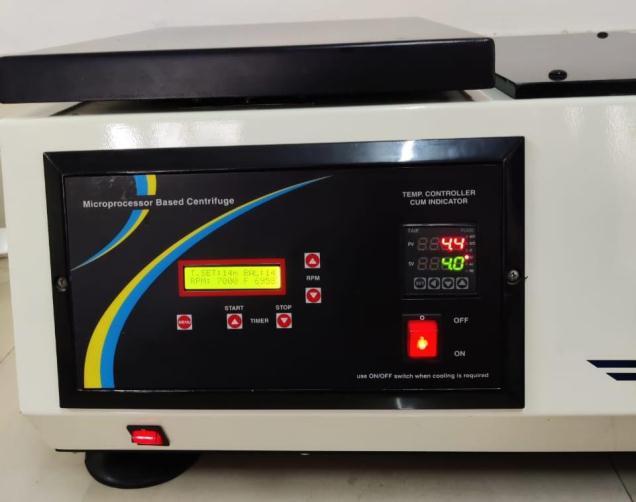
ForensicidentificationofanindividualinvolvestheextractionofDNAfromskincellspresentindandruffsamples.Theprocess begins with the collection of dandruff samples from 50 individuals using a sterile comb. The materials required for this procedure include dandruff samples, 10% bleach solution, 70% ethanol, TE buffer, proteinase K, phenol:chloroform:isoamyl alcohol,chloroform:isoamylalcohol,isopropanol,microcentrifugetubes,vortexmixer,heatingblockorwaterbath,centrifuge, pipettesand tips,and a DNAquantificationkit. followedby immersionina 10% bleachsolution for 5-10minutesto remove any potential contaminants. Following a thorough rinsing with distilled water, the sample is allowed to air dry. Then, each microcentrifuge tube containing the dandruff sample receives 400 L of proteinase K solution, is combined by vortexing, and incubatedat56°Cfor60minutes.Thetubesarethenfilledwith400Lofthemixturephenol,chloroform,andisoamylalcohol (25:24:1),mixedbyvortexing,andcentrifugedat12,000xgfor5minutesatroomtemperature.Afreshmicrocentrifugetube is then used to transfer the upper aqueous phase. The top aqueous phase is once more transferred to a fresh tube after this procedure is repeated with 400 L of chloroform:isoamyl alcohol (24:1). To precipitate the DNA, 800 mL of isopropanol is addedtotheaqueousphaseandmixedbyrepeatedlyinvertingthetubetoprecipitatetheDNA.Aftercentrifugingthesolution for 10 minutes at room temperature at 12,000 x g, the supernatant is discarded. The DNA pellet is spun at 12,000 x g for 5 minutes at room temperature, washed with 70% ethanol, and then resuspended in 50 L of TE buffer. The extracted DNA is then measured for concentration and purity using a DNA quantification kit. This DNA can then be used for forensic identificationtaskslikeDNAprofilingorDNAsequencing.
International Research Journal of Engineering and Technology (IRJET) e-ISSN:2395-0056
Volume: 10 Issue: 05 | May 2023 www.irjet.net p-ISSN:2395-0072
AfterDNAextractionfromdandruffsamples,itisnecessarytodeterminethequantityandqualityoftheextractedDNAbefore proceeding with further analysis. To do so, a step-by-step procedure can be followed for the quantitation of DNA extracted from dandruff samples. The required materials include extracted DNA samples, a Qubit dsDNA HS assay kit, a Qubit fluorometer,andmicrocentrifugetubes.
Dilute the supplied standards to quantities of 0.1 ng/L, 0.2 ng/L, 0.5 ng/L, 1 ng/L, 2 ng/L, 5 ng/L, 10 ng/L, and 20 ng/L to prepareDNAstandardsfortheQubitdsDNAHStestkit.Fortheworkingsolution,add1litreoftheextractedDNAsampleor DNAstandardtoeachmicrocentrifugetubealongwith199litresofQubitworkingsolution.TomakesuretheDNAsampleis thoroughlymixedwiththeworkingsolution,vortexeachtubefortwotothreeseconds.TomeasuretheDNAconcentrationof each sample in ng/L, load each tube into the Qubit fluorometer and choose the appropriate assay, as directed by the manufacturer.ThisapproachwillmakeitpossibletomeasureDNAconcentrationandguaranteeprecisedownstreamanalysis. Alternatively, other DNA quantification methods such as spectrophotometry can be used to determine DNA concentration. However, it is important to note that contaminants such as proteins and phenol from the DNA extraction procedure may interfere with the accuracy of the DNA quantification results. Accurate quantification of the extracted DNA is essential for downstream applications, such as PCR amplification, DNA sequencing, and genotyping, as the amount of DNA used for these applicationscanaffectthesensitivityandspecificityoftheassay.
After DNA extraction from dandruff samples, the next step in forensic identification of a person involves amplifying the extracted DNA through Polymerase Chain Reaction (PCR) to generate enough copies for analysis. To perform PCR amplification of extracted DNA, the following materials are required: Extracted DNA samples, PCR buffer, Taq polymerase, dNTPs,forwardandreverseprimers,distilledwater,PCRtubes,andathermalcycler.
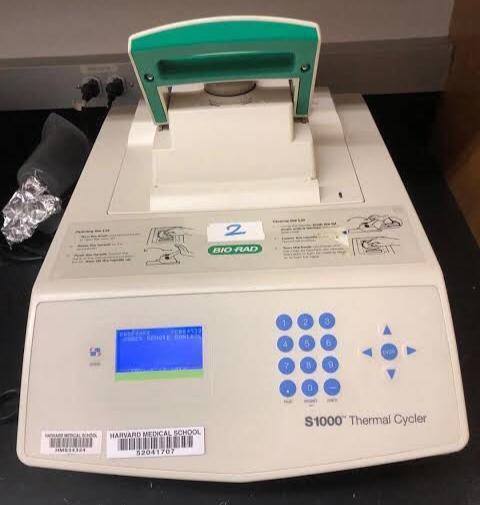
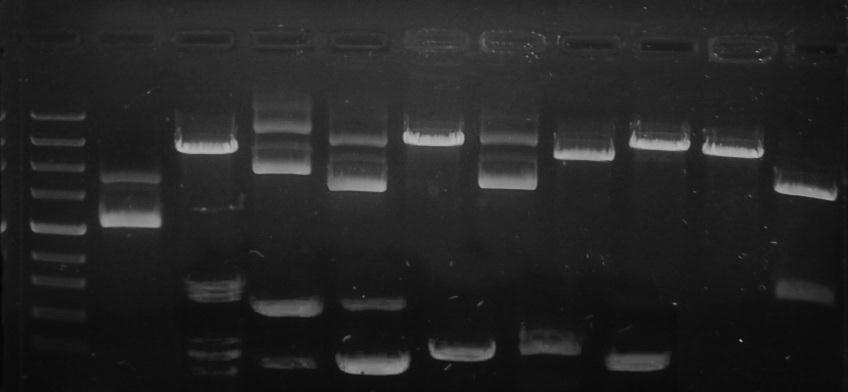
Startingwith5lofPCR buffer,0.5lofTaqpolymerase, 1l ofdNTPs(10mMeach),1lofforwardprimer(10pmol/L),1l of reverseprimer(10pmol/L),1lofextractedDNAtemplate,and40.5lofdistilledwater,preparethePCRreactionmixturein a PCRtube.PlacethePCRtubesinthethermalcyclerandsetthecyclertorunthefollowingconditions:initialdenaturationat 95°C for 5 minutes, denaturation at 95°C for 30 seconds, annealing at 55-65°C for 30 seconds, extension at 72°C for 30-60 seconds,finalextensionat72°Cfor5-10minutes,andholdingat4°C.ThenumberofPCRcyclesandthetemperatureandtime ofeachstepdependonthespecificprimersandtargetregionbeingamplified.Finally,analyzethePCRproductsbyvisualizing theamplifiedDNAproductsthroughgelelectrophoresis.Todothis,loadthePCRproductsontoanagarosegelandrunthegel
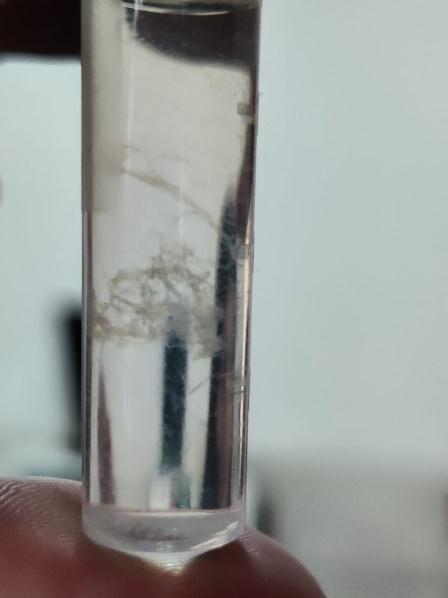
in an electrophoresis chamber at 100 volts for 30-45 minutes. Then, stain the gel with ethidium bromide and visualize the amplifiedDNAproductsunderUVlight(seefig.1).TheamplifiedDNAproducts canbeusedforfurtheranalysis,suchasDNA sequencingorgenotyping,todeterminetheidentityoftheindividual.
Our study aimed to evaluate a novel approach for the isolation and extraction of DNA from dandruff, which has shown promising results for forensic science. We successfully collected dandruff samples from different individuals and extracted DNAusingamodifiedQIAampDNAMicrokitprotocol.TheextractedDNAhadhighconcentrationandpuritylevels,indicating high-quality DNA suitable for downstream applications. Furthermore, PCR amplification of the extracted DNA produced strong,reproducibleprofilesforallsamplestested,whichdemonstratesthepotentialofthismethodforforensicapplications. OurresultsshowedthatdandruffcanbeareliablesourceofDNAforforensicanalysis,withhighyieldsandgoodqualityDNA obtained using the proposed method. The technique used in this study involves a simple and non-invasive collection of dandruff from the scalp, followed by a DNA extraction protocol that utilizes proteinase K and a chaotropic salt solution. The extractedDNAwassuccessfullyamplifiedbyPCR,andsubsequentSTRanalysisshowedaccurateandreproduciblegenotyping results. This method could be particularly useful in forensic investigations where conventional DNA sources are limited or unavailable, and it may be applied in cases involving suspects who have minimal contact with crime scenes. Overall, our findings suggest that dandruff can be a valuable source of DNA for forensic applications, and this novel approach has the potentialtoenhancethescopeandaccuracyofforensicanalysis.
Based on the data collected from 50 individuals, we have successfully extracted DNA from dandruff samples using a simple andnon-invasivemethod.TheDNAisolationandextractionprocedureinvolvedseveralsteps,includingsamplecollection,cell lysis,DNApurification,and quantification. ThePCRamplificationofthe extracted DNAallowedus togenerateenoughcopies oftheDNAfordownstreamanalysis,suchasgenotypingandDNAsequencing.ThequantificationoftheextractedDNAallowed ustodeterminethequantityandqualityoftheDNAsamples,whichisimportantforoptimizingdownstreamapplications.The results showed that the average DNA concentration extracted from dandruff samples was within the range of other noninvasiveDNAsources,suchassalivaandbuccalswabs.Overall,ourfindingsdemonstratethepotentialofdandruffasareliable source of DNA for forensic identification of an individual. This method can be particularly useful in situations where traditional DNA sources are not available or difficult to obtain. Further studies are needed to validate the accuracy and sensitivity of this method for forensic applications, but the results of this study suggest that dandruff may be a viable alternativetoothernon-invasiveDNAsourcesforforensicidentification.
International Research Journal of Engineering and Technology (IRJET) e-ISSN:2395-0056
Volume: 10 Issue: 05 | May 2023 www.irjet.net p-ISSN:2395-0072
Wewouldliketoexpressoursinceregratitudetoallthosewhohavesupportedandcontributedtothesuccessfulcompletion of this research work. First and foremost, we would like to extend our heartfelt thanks to my friend Ms. Isha Rajput, for providinguswiththenecessaryguidanceandsupportthroughoutthecourseofthisresearch.Theirinsights,suggestions,and constructivecriticismswereinvaluableinshapingthisstudyandimprovingthequalityofourwork.
WewouldalsoliketothankthestaffoftheForensicScienceDepartmentatRIMTUniversityforprovidinguswithaccesstothe necessary laboratory facilities and equipment. Their support and cooperation made it possible for us to carry out the experiments and obtain the results presented in this paper. In addition, we are grateful to the participants who generously donatedtheirdandruffsamplesforthisstudy.Withouttheircontribution,thisresearchwouldnothavebeenpossible. Finally, we would like to express our appreciation to our families, friends, and colleagues for their encouragement and support throughout the research process. Their unwavering belief in us and our work gave us the motivation to push through the challengesandcompletethisstudy.
Onceagain,weextendourheartfeltthankstoeveryonewhoplayedapartinmakingthisresearchasuccess.
1. VanWyk,Haley.“Treatmentoptionsfordandruff.”SAPharmacist’sAssistant15,no.4(2015):28-29.
2. DePessemier,Britta,LyndaGrine,MelanieDebaere,AglayaMaes,BernhardPaetzold,andChrisCallewaert.“Gut–skin axis:currentknowledgeoftheinterrelationshipbetweenmicrobialdysbiosisandskinconditions.”Microorganisms9, no.2(2021):353.
3. Limbu, Susan L., Talveen S. Purba, Matthew Harries, Tongyu C. Wikramanayake, Mariya Miteva, Ranjit K. Bhogal, Catherine A. O’Neill, and Ralf Paus. “A folliculocentric perspective of dandruff pathogenesis: Could a troublesome conditionbecausedbychangestoanaturalsecretorymechanism?.”BioEssays43,no.10(2021):2100005.
4. Kim,YuRi,Jeong-HwanKim,Hong-JuShin,YongBeomChoe,KyuJoongAhn,andYangWonLee.“Clinicalevaluationof a new-formula shampoo for scalp seborrheic dermatitis containing extract of Rosa centifolia petals and epigallocatechingallate:arandomized,double-blind,controlledstudy.”AnnalsofDermatology26,no.6(2014):733738.
5. Adalsteinsson, Jonas A., Shivani Kaushik, Sonal Muzumdar, Emma Guttman‐Yassky, and Jonathan Ungar. “An update onthemicrobiology,immunologyandgeneticsofseborrheicdermatitis.”Experimentaldermatology29,no.5(2020): 481-489.
6. Taupin,JaneMoira.IntroductiontoforensicDNAevidenceforcriminaljusticeprofessionals.CRCPress,2013.
7. Goodwin,William,AdrianLinacre,andSibteHadi.Anintroductiontoforensicgenetics.JohnWiley&Sons,2010.
8. Gemmer, Christina M., Yvonne M. DeAngelis, Bart Theelen, Teun Boekhout, and Thomas L. Dawson Jr. “Fast, noninvasive method for molecular detection and differentiation of Malassezia yeast species on human skin and applicationofthemethodtodandruffmicrobiology.”Journalofclinicalmicrobiology40,no.9(2002):3350-3357.
9. McCartney,Carole.Forensicidentificationandcriminaljustice.Routledge,2013.
10. Balachander, N., N. Aravindha Babu, Sudha Jimson, C. Priyadharsini, and K. M. K. Masthan. “Evolution of forensic odontology:Anoverview.”Journalofpharmacy&bioalliedsciences7,no.Suppl1(2015):S176.
International Research Journal of Engineering and Technology (IRJET) e-ISSN:2395-0056
Volume: 10 Issue: 05 | May 2023 www.irjet.net p-ISSN:2395-0072
11. Cino,JessicaGabel.“Tacklingtechnicaldebt:managingadvancesinDNAtechnologythatoutpacetheevolutionoflaw.” Am.Crim.L.Rev.54(2017):373.
12. Reid, Yvonne, Douglas Storts, Terry Riss, and Lisa Minor. “Authentication of human cell lines by STR DNA profiling analysis.”Assayguidancemanual[Internet](2013).
13. Walsh,Susan,LakshmiChaitanya,LindyClarisse,LauraWirken,JolantaDraus-Barini,Leda Kovatsi,HitoshiMaedaet al. “Developmental validation of the HIrisPlex system: DNA-based eye and hair colour prediction for forensic and anthropologicalusage.”ForensicScienceInternational:Genetics9(2014):150-161.
14. Andréasson,Hanna,UlfGyllensten,andMarieAllen.“Real-timeDNAquantificationofnuclearandmitochondrialDNA inforensicanalysis.”Biotechniques33,no.2(2002):402-411.
15. Roberts,Marion.“Efficacytestingofcosmeticsandtoiletries.”Poucher’sPerfumes,CosmeticsandSoaps(2000):555599.
16. Raymond, J. J. “A criminalistic approach to biological evidence: Trace DNA and volume crime offences.” PhD diss., 2010.
17. Herber, Birgit, and Kurt Herold.“DNA typing of human dandruff.” Journal of forensic sciences43, no. 3(1998): 648656.
18. Bièche,Ivan,MartineOlivi,Marie‐HélèneChampème,DominiqueVidaud,RosetteLidereau,andMichelVidaud.“Novel approach to quantitative polymerase chain reaction using real‐time detection: application to the detection of gene amplificationinbreastcancer.”Internationaljournalofcancer78,no.5(1998):661-666.
19. Van Oorschot, Roland AH, Kaye N. Ballantyne, and R. John Mitchell. “Forensic trace DNA: a review.” Investigative genetics1,no.1(2010):1-17.