Effect of Crumb Rubber Material on Concrete Mix
Prof Dr. Vidya Saraf1, Nikita R Zanjure2, Achal K Bodalkar3 Vaishnavi S Chaudhari4, Pradip B Chavan5, Harshad A Dhepe6 .1Professor of Civil Engineering Department, 2,3,4,5,6 Fourth year Civil Engineering Department, Government College of Engineering Jalgaon-425001[MS] India
***
Abstract - This study describes the effect of tire rubber crumb on concrete. This research helps to understand the use and effect of rubber tire crumb in concrete structures. Improving the recycling of waste materials in accordance with the principle of sustainable development. The procedures used in this research used experiments such as, slump cone test, water absorption test etc. Disposal of waste tire rubber has become a major environmental problem in all parts of the world which poses a very serious threat to the environment. So far only a small fraction is recycled and millions of tires are simply stockpiled, landfilled, or buried. This paper reviews tests conducted using rubber tire waste concrete samples to determine compressive strength. It was found that the compressive strength rubberized concrete was lower than the control mixture, while it exhibited better results in abrasion resistance. Fine aggregates are partially replaced by crumb rubber to form crumb rubber concrete. Finally, crumb rubber was introduced into the concrete mixture after pre-treatment by six modifiers.
Key Words: Crumb Rubber, Aggregates, Compressive strength, Water, Concrete.
1.INTRODUCTION
India accounts for 6-7% of global total waste tires. As the local tire industry is growing at a rate of 12% annually, the volumeofwastetiresisincreasing.Morethan1billiontires are manufactured worldwide every year and the same number of tires from waste vehicles are removed permanently. The US is the largest producer of waste tires, about 290 million a year. In China and India, the volume of tire waste is increasing at a high rate due to the rapid increaseinthesalesofnewvehicles.Sincetiresaremadeto last longer, the same things that make them durable also make them difficult to dispose of which has a long-term impact on the environment. India produced 90000 MT of reclaimed rubber from waste tires in 2011. It takes thousandsofyearsforatiretocompletelydecomposealone. In many cases it burns, releasing toxins and pollutants into the air, water, and soil. Stockpiling or illegal dumping or landfilling are traditional methods of disposing of waste tires,buttheseareshort-termsolutions. Recyclingofvehicle tires is essential as disposing of waste tires is not an easy task Tires are among the largest and most problematic sources of waste, due to mass production and their durabilityTiresareamongthelargestandmostproblematic sourcesofwaste.

2. METHODOLOGY
1.1 Materials Used
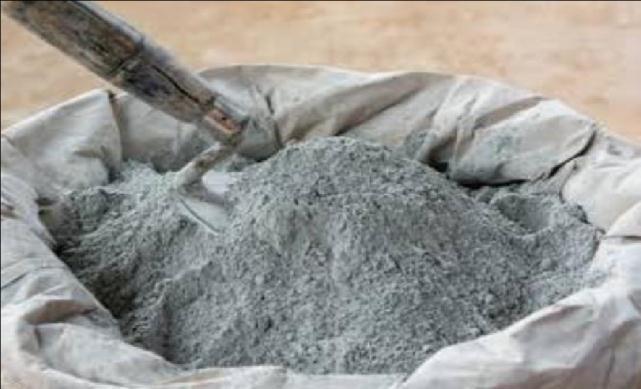
1 Cement: Ordinary Portland cement, 43 grade confirming IS 12269-1993. The compressive strength measured in the standard mortar at 28 days was 24 MPa.
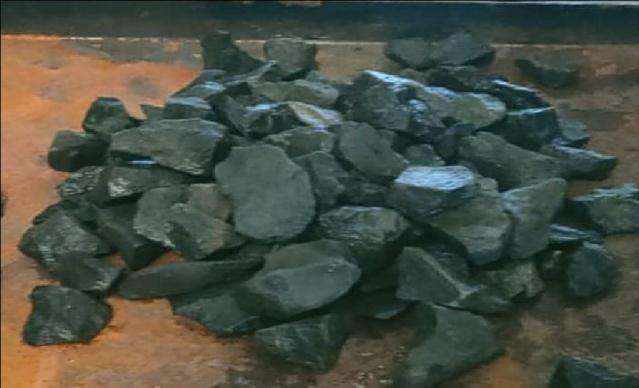
2 Coarse Aggregate: The aggregates which is retained overISSieve4.75mmistermedascoarseaggregate.
3 Fine Aggregate: The aggregate passing from 4.75 mm andretainedon75µmmISsieve.
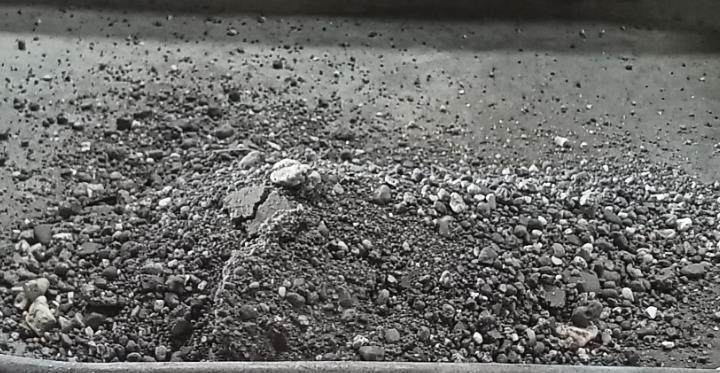
Table -1: Quantityofmaterialsusedinconcretemix
Preparation of Mix proportion for 15cm×15cm×15cm Block
4 Water: Potable water is used which is Free from silts, salts and shall fulfill the requirement as per IS 456:2000.
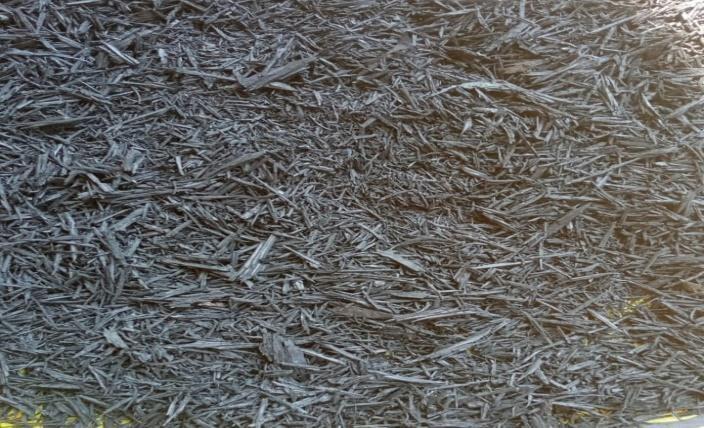
5 Tire Rubber Crumb: Crumb rubbers are obtained by grinding. Recycled Tire Crumb particle size ranging in from4.75mmto0.075mm.
3. RESULT AND DISCUSSION
The specimen for the compressive strength of concrete test were cured for 7, 14, and 28 days. The result shows thatcrumbedrubbergenerallydecreasethecompressive strength.
1.2 Details of Mix Proportion
1. The concrete mixes are prepared to achieve target strengthof25N/mm2
2. The specimens cubical in shape shall be 15 X 15 X 15cm.
3. The blocks were kept in normal curing condition for7days,14days,and28daysinwater.
International Research Journal of Engineering and Technology (IRJET) e-ISSN:2395-0056
Volume: 10 Issue: 05 | May 2023 www.irjet.net p-ISSN:2395-0072
The result for the compressive strength test for conventional concrete blocks of trial mix no. 1 normal designmixesfor7,14and28daysaretabulatedabovein thetable-2.
The result for the compressive strength test for conventionalconcreteblocksoftrialmixno.310%oftire crumb rubber design mixes for 7, 14 and 28 days are tabulatedaboveinthetable-4.
The average result for the compressive strength test for conventional concrete blocks of trial mix no. 1, trial mix no. 2, trial mix no. 3 design mixes for 7, 14 and 28 days aresummarizedgraphicallyinChart-1.



The result for the compressive strength test for conventionalconcreteblocksoftrialmixno.2 5%oftire crumb rubber design mixes for 7, 14 and 28 days are tabulatedaboveinthetable-3.
compressive strength for conventional concreteblocks
3. CONCLUSIONS
Based on the results obtained from the experiment, the followingconclusionscouldbedrawn:
With increasing quantity of the crumb rubber, the compressive strength tends to decrease. A maximum of 88% strength is observed for the mix with 5% replacementofcrumbrubber.
With increasing quantity of the crumb rubber, the compressive strength tends to decrease. A maximum of 64% strength is observed for the mix with 10% replacementofcrumbrubber.
REFERENCES
[1] Z. K. Khatib and F. M. Bayomy, Rubberized Portland cement concrete, Journal of Materials in Civil Engineering,1998,206-213.
[2] Nadim A. Emira and Nasser S. Bajaba, The effect of Rubber crumbs on some mechanical properties of concreteComposites,InternationalJournalofMechanic SystemsEngineering,2(2),May2012,55-58.
[3] XiangShuandBaoshanHuang,RecyclingofwasteTyre rubber in asphalt and Portland cement concrete: an
Overview, Construction and Building Materials, Elsevier2013.
[4] C. Vigneshkumar, N. Polmanar and B. Sunantha, Effect of rubber tyre waste in concrete, International Journal ofAppliedResearch,4(11),November2014,302-304.
[5] American Society for Testing and Materials [ASTM], D5603. (2001). Standard Classification for Rubber Compounding Materials Recycled Vulcanizate ParticulateRubber.Philadelphia:Author.
[6] American Society for Testing and Materials [ASTM], D5644.(2001). Standard Test Methods for Rubber Compounding Materials Determination of Particle Size Distribution of Recycled Vulcanizate Particulate Rubber. Philadelphia: Author. American Society for Testing and Materials [ASTM], C642. (1997). Standard Test Method for Density, Absorption, And Voids in HardenedConcrete.Philadelphia:Author.
[7] Byrami M, Auckland Uniservices Limited, (2006, October). Rate of Absorption of Water by Litecrete LightweightConcreteandNormalConcrete.
[8] Devadas, M. (2003, June). Reinforced Concrete Construction.TataMcGraw-HillEducation
[9] Gillesania, D. (2013). Simplified Reinforced Concrete Design2010NSCP.CebuDGPrint,Inc.
[10] Mangubat, P., Calapiz, I., Eder, A., Mantala Jr., M., Salendro, E. (2008, June). Licean Journal of Social Science.FeasibilityofWasteRubberDustasaConcrete Aggregate,1(2).