Identification and analysis of Microplastics in Riverine Environment in Kannur, Kerala
Arunima Pradeep, Binisha P1Mtech student, Dept of Civil Engineering, KMCT College Of Engineering For Women

2Assistant Professor, Dept of Civil Engineering, KMCT College Of Engineering For Women, Kerala ***
Abstract - Microplastics are fragments of plastic that are sized less than 5 mm. This study aims at quantifying the microplastic pollution of a small section of a major river in the Kannur district. The study is done in samples collected from banks of Anjarakandy river. The study involved collecting samples from site and then analyzing it in lab. Along the banks 3 samples were collected. The processing was done according to NOAA protocol. The microplastic was analyzed using FT-IR spectroscopy.
Key Words: Microplastic
1.INTRODUCTION
Plasticatypeofsyntheticpolymerisaversatileandwidelyused material, with applications in various fields such as kitchenware,toys,packaging,textiles,andmore.Butwiththe increase in plastic usage, the amount of plastic waste has increased exponentially, leading to a significant environmentalproblem.
Oneofthemostcriticalconcernsrelatedtoplasticwasteis the emergence of microplastics, which are small pieces of plasticdebrislessthanfivemillimetres insize.Microplastics area result of directuseor degradation oflargerplastics, andtheyposeasignificantthreattomarineecology.Dueto tidalactions,densityofmicroplastics,winddistribution,and otheratmosphericparameters,microplasticsgetdistributed inthemarineenvironmentglobally,andtheycanbefoundin marine surface waters, deep sediments, and beach sediments.
Ingestion of microplastics by marine species, from zooplanktontolargeranimalslikesharksandwhales,isone of the most concerning effects of this substance. When marine,terrestrial,andfreshwaterspeciesthathavealready consumedmicroplasticsarepreyeduponbyotheranimals, the microplastics may move through the food web. Laboratory research suggests that the amount of microplastics in the environment and how much they resemble food both have an impact on the likelihood that theywillbeconsumed.Inaddition,microplasticstendtoact as adsorbents for other harmful chemicals and toxins, leadingtofurthernegativeimpactsonbiologicallife.
1.1 Microplastics
AccordingtotheEuropeanChemicalsAgencyandtheU.S. NationalOceanicandAtmosphericAdministration(NOAA),
microplasticsareplasticfragmentsthatarefewerthan5mm (0.20in)inlength.Microplasticsaresmallplasticparticles thathavebecomeamajorenvironmentalconcerninrecent years.
Theyare foundinoceans,rivers,lakes,andotherbodies of wateraround the world.Microplasticscan come from a varietyofsources,includingthebreakdownoflargerplastic items,microbeadsinpersonalcareproducts,andfibersfrom syntheticclothing.Despitetheirsmallsize,microplasticshave the potential to cause significant harm to ecosystems, wildlife,andhumanhealth.Theyenternaturalenvironments via a number of sources, such as cosmetics, clothing, food packaging, and industrial processes, and create contamination.
Microplastics are a pervasive environmental pollutant that can be found in various ecosystems, including the atmosphere,freshwater,andoceans.Basedonmorphological analysis,MPscanbecategorizedintosixtypes:fiber,sphere, foam, sheet, fragment, and film. Fiber-shaped MPs are the mostcommonlyfoundtypeofMPintheenvironment.The garmentindustryistheprimarysourceofmicrofibersinthe environment,withwashingprocessesduringmanufacturing being a key contributor. Foam-type plastic particles are formedthroughthefragmentationofdifferentplastic-based products.Itemssuchasfoampackaginganddisposablefood containers can break down into smaller pieces over time, contributingtotheaccumulationoffoam-structuredMPsin theenvironment.Similarly,plasticsyntheticbagsandpacking materialscancontributetotheformationoffilm-structured MPsthroughfragmentation.Sphere-typeparticlesoriginate from resin pellet leakage of the transportation system, abrasive blasting media, and different abrasive products. Both transparent and colored MPs are available in the environment.
1.2 Sources
Microplastics can come from a variety of sources, both human-made and natural. Some common sources of microplasticsinclude:
Plastic products: Microplastics can be generated duringtheproduction,use,anddisposalofplastic products, such as plastic bags, bottles, and packagingmaterials.
Synthetic textiles: Synthetic fabrics, such as polyester and nylon, shed microfibers when laundered or worn. These microfibers can contributetotheaccumulationofmicroplasticsin theenvironment.
Tires: Car tires are made of synthetic rubber and canshedtinyparticlesofmicroplasticsduringuse.
Personalcareproducts:Microbeads,whicharetiny plastic particles used in some personal care productslikeexfoliatingscrubsandtoothpaste,can enter the environment through wastewater discharge.
Fishinggear:Abandonedorlostfishinggear,such asnetsandlines,canbreakdownintomicroplastics intheocean.
Industrialprocesses:Microplasticscanbegenerated during industrial processes, such as abrasive blasting,plasticpelletproduction,andsandblasting.
It is important to note that microplastics can also be generatednaturally,suchasfromerosionofrocksandsoil. However, the majority of microplastics found in the environment are human-made. To reduce the presence of microplasticsintheenvironment,itisnecessarytoaddress the sources of plastic pollution and promote sustainable alternatives to plastic products through atmospheric deposition,whichoccurswhenairbornemicroplasticssettle onlandorwater.
2. STUDY AREA
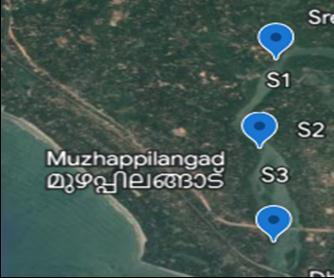
ThestudyisconductedalongthebanksofAnjarakandyriver whichisasignificantwatercoursethattraversestheKannur DistrictofKerala,India. TheriverdrainsintotheArabiansea. Samplesarecollectedfromthreelocationsalongthebank.
3. METHODOLOGY
The process of analyzing MPs typically involves several procedures such as collecting, preparing, extracting, and identifying samples. To successfully detect MPs in complicated soil matrices, it is important to effectively separate them. Extraction is a crucial step that follows samplecollectionandpretreatment,asitaimstoisolateMPs forlater quantificationandidentification.Theobjective of this project is to separate MPs from their environmental matrixinordertoobtainthemforfurtheranalysis
3.1 Sample collection
Samples were collected from the study area. Overall 3 samples were collected (Fig 1). The samples are collected withinlessthan5cmfromtheground.
Forpreventingcontamination,thesampleswerestoredin glassjar.
The samples are dried and were sieved through 2 mm sieve for homogenizing as well as for separating larger debris.100gofsievedsamplewasfurtherusedforanalysis
3.2 Digestion of organic matter
NOAA guidelines were followed for wet oxidation. The sample was treated with Hydrogen peroxide and Ferrous Sulphatesolutiontodigestorganicmatter.
3.3 Density separation
TheprocessofseparatingMPsfromcomplexsamplesoften involves the use of density separation, which takes advantage of differences in particle densities and surroundingenvironments.Onesuchmethodinvolvesusing a Sodium Chloride solution, where particles with a lower densitythanNaClwillfloatinthesupernatant.Tocreatethe solution,6gofNaClisaddedtoevery20mlofsolution.The supernatantisthencollectedinabeakerandlefttosettlefor 24hours.
3.4 Filtration
Thesupernatantafterdensityseparationwasthensubjected tofiltration.ThesamplewasfilteredontoWhatmannfilter paper(No.42).This membrane with the particlescollected wasthenallowedtodryfor24hrsatroomtemperature
3.5 Identification of Microplastics
ToconfirmthecompositionoftheMPs,achemicalanalysis ofthecontentsinthedriedfilterpaperwasperformed.The contentsfromthefilterpaperarecarefullyremovedandis observedundermicroscope,Thentheparticlesaresentfor FT-IRanalysis
3.6 Quantification
100 gmofsamplesaresievedandthecountofmicroplastics isobtained.
4. RESULT AND DISCUSSIONS
Fromthe3soilsamples,100gramsofsoilwasanalyzedand themicroplasticwascountedandquantifiedperweight.
Anaverageof20-22particleswerefoundper100gmofsoil samples. The sample S1 has the least number of particles whereasS3haveahighercountof25.S3isalocationwhich isapproachingtothedrainingsite.
FT-IR analysis is done for samples collected from filter paper.Thewavenumberrangeof4000-500cm-1 wastaken
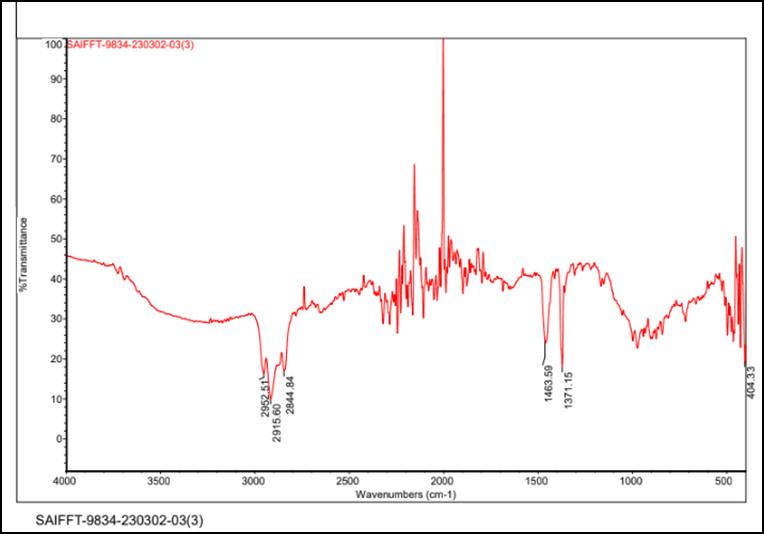
Table -1: CountandWeightofplastics
MicroplasticfromSample1andSample2are analysedusing FT-IR and they are referenced with library The peaks interprettopolyethyleneandpolypropylene.Variousforms ofboththesepolymersareseen.Chlorinatedandoxidized formsofpolyethelenewerefound.
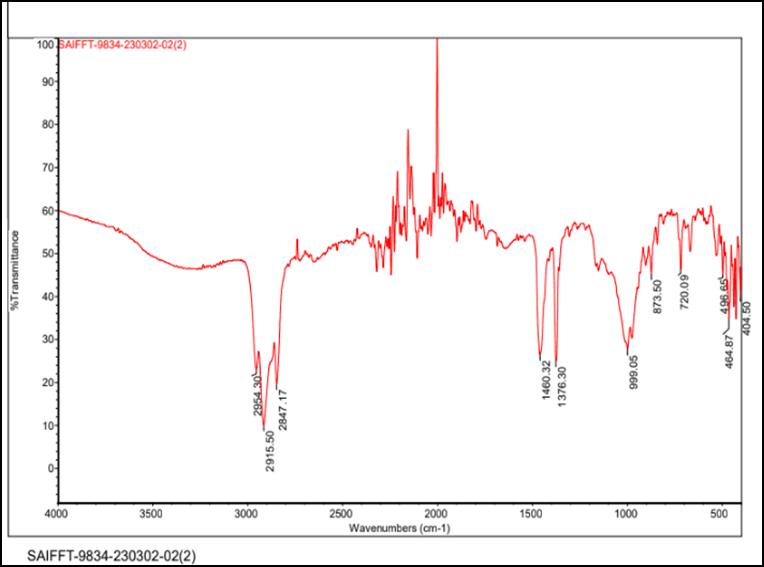
Fig4showsFT-ITanalysisofSample3whichistakenfrom riverbank.Thegraphwasreferencedwithlibraryandfound that the major compound present is polyethylene. Polyethyleneisacommonlyusedpolymerintheproduction ofplasticproducts,suchasbags,packaging,andbottles.
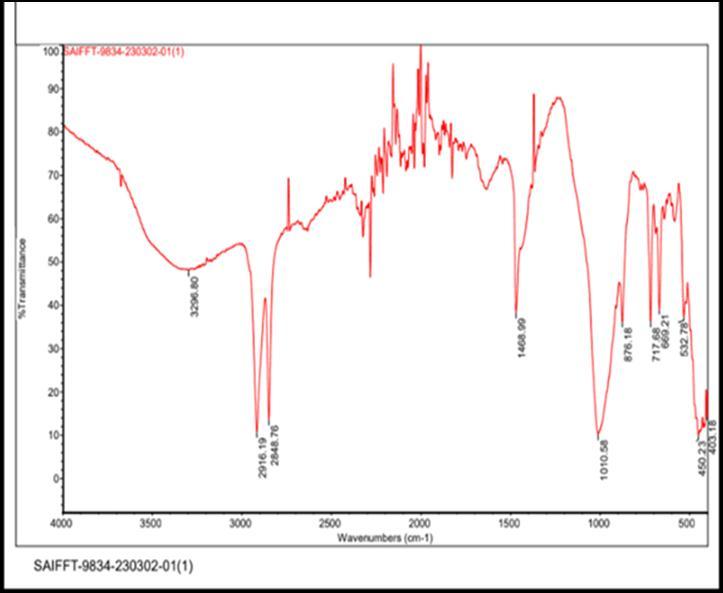
Polyethylenemicroplasticsinriverinesandcancomefroma variety of sources, such as plastic litter on land or from plasticproductsthatbreakdownovertime.Itisalsoknown to be a major component of microplastics found in the environment,includinginriverinesand.
Likepolyethylene,polypropyleneisalsousedinproduction ofvarietyofcommongoodsandhencewhentheseproduct
fromresidentialandcommercialareabreaksdown,getsend upinriverinedeposits.
5. CONCLUSIONS
Theaccumulationofmicroplasticsintheenvironmentisa growing concern and efforts are needed to reduce their releaseintotheenvironmentandtoremediatetheexisting accumulation.Furtherbreakdowncanleadtheplasticsize range to nano ranges which is even more harmful to the ecosystem
This study was conducted to quantify and analysis the microplasticcontentin ariverineenvironment.Itasfound thatpolypropyleneandpolyethylenewerepredominantin riverinesamples.
These findings are concerning, as microplastics can have detrimental effects on the environment and marine life. Therefore,remediationmethodsarenecessarytoreducethe accumulationofmicroplasticsintheenvironment.
REFERENCES
[1] V.AnuPavithran(2021)“Studyonmicroplasticpollution in the coastal seawaters of selected regions along the northern coast of Kerala, southwest coast of India ” JournalofSeaResearch
[2] AshwiniSureshKumarandGeorgeK.Varghese(2021) “MicroplasticpollutionofCalicutbeach -Contributing factorsandpossibleimpacts”MarinePollutionBulletin
[3] KGowdaetal(2022)“IdentificationofMicroplasticsin Contaminated Urban Informal Landfill Soil With RemovalMethods”IJERT
[4] RKarthiketal(2018)“Microplasticsalongthebeaches of southeast coast of India” Science of the Total Environment 1388-1399
[5] K Zhang et al (2021) “Understanding plastic degradation and microplastic formation in the environment:Areview”EnvironmentalPollution
[6] F Stock et al (2019) “Sampling techniques and preparationmethods formicroplasticanalysesinthe aquatic environment A review” Trends in Analytical Chemistry