CASTING AND EVALUATING THE INTERLOCKING BRICKS USING ORGANIC WASTE MATERIAL.
***
Abstract Bricks are one of the most significant and major material used for all construction purpose. In many countries, Sludge waste especially, textile sludge is a serious problem which risks environment and human health. The textile sludge is used to make the construction bricks that serve as resolve for solid waste management. This paper reviewsonthedevelopmentofinterlockingbrickswithadditionoftextilesludgewhichincludes5%,10%,15%and20% thatgrosslyreducestheutilityofclaywhichisgraduallybecomingscarceinmanypartsoftheworldwhileimprovingtheir strengthincomparisoninthatofconventionalbricks.Theinterlockingmouldsizethatwetookforthisexperimentwas12 X 8.5 X 6.The test parameters include compression strength, water absorption, efflorescence and soundness are studied andtestedasperBOI(BureauofIndianstandards). Thus,theutilizationofsludgecouldproduceagoodqualityofbricks makingthemoneofa reliablealternativedisposal methodsforthesludgewhichdumpedinopenlands andalsoreduces theuseofcementwhileconstructioninthisinterlockingbrickmethod.Thisstudyanalysethestrengthoftheinterlocking brickswhenitismixedwithtextilesludge.
Keywords: ETPtextilesludge.
1. INTRODUCTION
Population scenario comes towards India by means of increasing industries. The fruitful efforts of industries lead to the developmentofIndia.Astheindustriesincreases,sodoestheindustrialeffluents.Recentstudiesestimatethattheamount of industrial waste might amount approximately between 250 and 300 million tons emanating from chemical and agricultural process in India. It is very essential to dispose such wastes in an absolutely safe manner without disturbing the environment and human wellbeing. Build-up of unmanaged wastes particularly in developing countries has endangeredtheirenvironment.Inviewofthissituation,useofeconomicandenvironmental-friendlymaterialsisofagreat concernintheconstructionindustry.

The use of recyclable wastes as building materials looks like a viable solution not only to the pollution problem but also benefitstheeconomyintheformofcost-effectivebuildings.
Severalinvestigatorshavealreadyattemptedtoincludesludgesuchaspaperprocessingresidues,cigarettebutts,flyash, polystyrene foam, plastic fibre, cotton waste, dried sludge collected from an industrial wastewater treatment plant, rice husk ash, granulated blast furnace slag, rubber, Kraft pulp production residue, limestone dust and wood sawdust, processed waste tea, petroleum effluent treatment plant sludge, welding flux slag and waste paper pulp, Cotton and limestonepowder wastesin theuseoftextilesludgeintheprocessofinterlockingproductionof bricks.Inthis paperwe are investigating the brick manufacture and its strength compared to that of existing conventional bricks. The nondegradableusedmaterialwasutilizedforutility-basedproduct.Theeffortshavebeentakentoutilizethepowderedtextile sludge in conventional burnt clay brick thereby revolutionizing the manufacture of interlocking bricks in the field of construction.
2. METHODOLOGY
Collection of sludge
Crushing and grinding the sludge
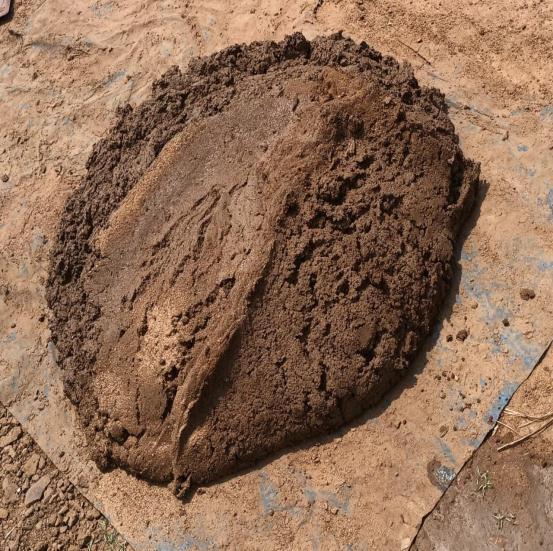
Mixing of sludge with clay and adding sufficient water

Casting of bricks in interlocking mould
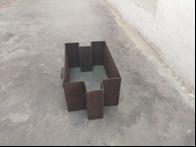
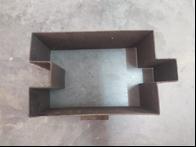
After drying, bricks are burnt Compression strength of bricks tested Interlocking bricks casted using mould
3. MIX DESIGN
Thematerialsformanufacturingofinterlockingbricksconsistsofsludgeandclay1:2(clay:sludge)byvolume.Volumeis calculated instead of weight is due to simplicity of manufacturing clay and sludge were mixed together in manual mixer andwaterwasgraduallyaddeduntilhavingrightconsistencywhichreadyformoulding.
3. RESULTS AND DISCUSSION
Inthistopictheresultsfromexperimentalinvestigationareproffered.Theresultsfromtheresearchareusedtostudyand comparethecompressivestrengthofinterlockingbricksusingsludge.
3.1.1 Discussion on Result:
Theinterlockingbricksshowsbestoutcomeswhencomparedtoconventionalbricksandalsowithother percentagesofsludge.In20%,itpossesslowcompressivestrength.
Asthestrengthshouldnotlessthan3.50N/mm2,theaveragecompressivestrengthforinterlockingbrickshaving 15%ofsludgeabout3.98isgrasps.
CONVENTIONAL BRICK = 12%
PERCENTAGE
% of Water absorption
3.2.1 Discussion on Result:
Aswaterabsorptionshouldnotexceed20%innormal,15%ofwaterabsorptioncanbelaidoffin15%ofsludgeis considerable.
Conventionalbricksownlesswaterabsorptionwhencomparedto15%oftextilesludgeininterlockingbricks.
3.EFFLORESCENCE TEST ON BRICK :
•RESULT–NOEFFLORESCENCE.
4.SIZE AND SHAPE :
•WITHINSTANDARD LIMITS.
5.SOUND TEST:
•CLEARBELLRINGINGSOUNDANDBRICKDOESENTBROKE.
OPTIMUMSLUDGEPERCENTAGECANBEUSEDFORCONSTRUCTION–15%
5. CONCLUSION
This study thus concludes that the objectives have been adequately met ensuring that the revolutionary idea of interlocking bricks incorporating textile sludge will succeed in producing environment safe cost effective bricks for the purposeofmodernizedandinnovativeconstructionsassomepercentofsludgematerialisaddedwithclay.
International Research Journal of Engineering and Technology (IRJET) e-ISSN:2395-0056
Volume: 10 Issue: 05 | May 2023 www.irjet.net p-ISSN:2395-0072
1.Theexperimentalworkhasbeendevotedtoevaluatethecompressivestrengthandwaterabsorption,whenETP textilesludgewereaddedinclaywhilecasting. Thefollowingaretheconclusionsdrawnfromtheinvestigation.
2. The average compressive strength for interlocking bricks having 15% of sludge shows greater results when comparedtoconventionalbricksandotherpercentages.
3. The percentage of water absorption for interlocking bricks having 15% of sludge achieved when compared to otherpercentagewithconventionalbricks.
4.Fromourtheoreticalstudy,weincludetheETPtextilesludgeinmakinginterlockingbrickswillbeeffective.
5. It is both economic and environmental concern where clay and cement can be reduced while casting and constructionrespectively.
6.Andfurtheradditionofsludgewilldirectlyreducethestrengthwasalsostudied.
6. REFERENCES
• AgrawalD.,HingeP.,WagheU.P.,RautS.P.,(2014),“UtilizationOfIndustrialWasteInConstructionMaterial–AReview”, InternationalJournalOfInnovativeResearchInScience,EngineeringAndTechnologyVol.3,No.1,pp–8390-8397.
• Aeslinaabdulkadir.,“Bricks:anexcellentbuildingmaterialforrecyclingwastes–areview”,(EME2011),4,2011, pp.108-115.
• Alla.A.Shakir, B. Wiesbusch,C. F. Seyfried,“DevelopmentOf Brick FromWasteMaterial“,7(8)2013,pp.812
818.
• Shrikantsjahagirdar,Shrihari,BManu,“ Reuseof TextileMill Sludgein BurntClayBricks”,2,2013pp96-103.
• BaskarR.,Begum K , Ravi Krishnan.S and Sundaram S “Novel Green BricksManufacturedFromTextileETP Sludge”,5,2014,pp:76-81.
• MaryLissyP,B.Wiesbusch,C.F.SeyfriedandN“Utilizationofsludgeinmanufacturingenergyefficientbrick”,11, 2014,pp:71-74.
• MohammadshahidArshadandDr.Y.P.Pawade,“ReuseofNaturalWaste MaterialforMakingLight WeightBricks, 3,2014,pp:49-53
• Bhashar s Mohammed, Mohd Shahir Leiw, Wiswam Alaloul. „Development of Rubberised geopolymer interlockingbricks”,8,2018,pp:401-408.
• Maneeth P D, Pramod K, Kishor Kumar, “Utilization of Waste Plastic In Manufacturing of plastic-Soil Bricks”, 3, 2014,pp:298-312.
• OAJohnson,M.Napiah,Kamaruddin,“PotentialUsesof WastesludgeinConstructionIndustry:AReview,8(4]pp: 565-570.