A New Deep Learning Based Technique To Detect Copy Move Forgery In
Digital Images
Akhila M P1 , Aiswariya Raj 2 , Manju C P31 Electronics and Communication Engineering Federal Institute of Science And Technology Kerala, India
2Assistant Professor Electronics and Communication Engineering Federal Institute of Science And Technology
Kerala, India
3Assistant Professor Electronics and Communication Engineering Federal Institute of Science And Technology

Kerala, India
***
Abstract - Due to the advancement of photo editing software, digital image forgery detection has become an active research area in recent years. In recent studies, deep learningbased methods outperformed hand-crafted methods in image tasks such as image classification and retrieval. As a result, the proposed method introduces a novel deep learning-based forgery detection scheme. The feature vectors are extracted using the VGG16 CNN model. After obtaining the features, the similarity between the feature vectors was investigated for the detection and localization of forgery. The test result is then compared with two other methods, and the corresponding F1measures are computed.
Key Words: Copy Move Forgery, Deep Learning, VGG16,CNN architecture, block based forgery detection
1.INTRODUCTION
In today's technology environment, the Digital images are becoming a concrete information source as imaging technology progresses. They are usually seen in defence work,reportingwork,medicalcheckups,andmediawork. With developments in digital image technology, such as cameraequipment,programmes,andcomputersystems,as wellasincreaseduseofinternetmedia,adigitalimagecan now be considered a crucial knowledge point. Because of technical advancements and the availability of low-cost hardwareandsoftwaremodificationequipment,aswellas enhancedalteringtools,picturealterationisnoweasierand requires less effort. Meanwhile, a wide range of picture manipulation software has put image authenticity in jeopardy. The goal of image content forgeries is to make modificationsinsuchawaythattheyaredifficulttodetect withthenakedeye,andthenutilisetheresultsforharmful purposes. So the, Photographs that have been forged are becoming more common. Without a question, image authenticity is a major worry these days. To validate the legitimacyofthemodifiedimage,therearetwobasicforms ofimageforgerydetection.Thefirstistheactivetechnique, whilethesecondisthepassivetechnique.
Digitalwatermarkinganddigitalsignaturearetwo active methods. Whereas the passive approaches include imagesplicing,retouching,andcopymoveforgery.Among
different types of forgery, the copy-move method has developedsomuchthatithasbecomeverydifficulttofindit outataglance.Themethodofcopymoveforgeryistocopya partoftheimageandcunninglypasteittoanotherpartof thesameimage.Sincethecopiedpartoftheimageispasted tothesameimage,somostoftheimagepropertieswillbe same that makes detection difficult. And the Copy move forgerydetectionwhichisapassivedetectionapproachcan be carried out without the use of PhotoShop or any other software.
Generally,threemethodsarecommonlyemployed todetectforgery:methodsthatareblock-based,keypointbased,oracombinationofboth.Theblock-basedtechniques dividetheimagesintooverlappingregularblocksandfind the fit between each and every block of the entire image. Block-based techniques are more accurate but the segmentation of the image into overlapping blocks makes the approach computationally expensive. Keypoint based techniquesperceivethekeypointsofanimageanduseitto discover the copy-pasted forged region. All the above methods mentioned uses hand-crafted features. And the disadvantagesofthis methodisthat, these methodshave high execution time and at low contrast these methods cannotdetectforgeries.Andtocopeupwiththisproblems,a new deep learning based technique to detect copy move forgeryispresented.
The paper is organized as in the following manner. The relatedworksarediscussedinSection2.Section3discribes the proposed method. The results of proposed method is discussedinSection4.AndthepaperisconcludedinSection 5.
2. RELATED WORKS
Differentimagecopy-moveforgerydetectiontechniquesare considered and analyzed for the period range between (2003-2021) in this section. A recent study of copy move forgerydetectionmainlyfocusonusingtheSIFTalgorithm. Also,mostalgorithmsdetectthecopy-moveforgerywhen thecopy regiondid notscaleand rotate. And most of the copy move forgery detection algorithms is having a very complex procedure for detecting forgery. J Fridrich et.al
presentedapaper[1]in2003.Thispaperinvestigatesthe problemofdetectingthecopymoveforgeryanddescribean efficientandreliabledetectionmethod.Also,introducedtwo algorithmsforthedetectionofcopy-moveforgery-onethat usesanexactmatchandonethatisbasedonanapproximate match. Popescu et.al presented a paper [2] in 2004.This paper describes an efficient technique that automatically detects duplicated regions in digital images. Basically the technique works by first applying a principle component analysistosmallfixedsizeimageblockstoyieldareduced dimensionrepresentation.Andduetosomeadditivenoiseor lossycompressionstheimageisrobusttominorvariations. Althoughitshowsthatthedetectionispossibleeveninthe presenceofsignificantamountsofcorruptingnoise.
K Sunil et.al presented [3] in 2014. In this paper block matching algorithm is used to detect the type of tamperinginthismethod.Differentsizedimagesaretakento evaluatethe performanceof the proposedalgorithm. This algorithmisimplementedinmatlab2012a.Andthemajor challenges of this method was not the Robustness against post processing operations and the time taken by the detectiontechnique.Discretecosinetransformandprincipal component analysis have been used to represent and compress the feature vector of overlapping blocks respectively. This method, on the other hand, successfully detected the copied moved part with intensity changes. N Huang et.al presented [4] in 2018. The proposed method introduced image tampering detection based on CNN and understands extracted features from each convolutional layeranddetectdifferenttypesofimagetamperingthrough automatic feature learning. The method involves constructionofanimageforgerydetectingnetwork,thathas a total number of nine layers including the input layer, 5 convolutional layer,2 fully connected layer and a softmax classifier.Thismethodutilizedapublicdataset,CASIAV1.0 fortheexperimentanalysis.Thedatasetcontainstwotypes ofimages,authenticandsplicedimagesbothinJPEGformat. Finally the performance of the proposed method is compared between softmax and SVM in order to demonstrate the advantage. And it was implemented in Matlab2018b.NHRajiniproposedImageforgerydetection usingCNN[5]in2019.Thispaperpresentedanovelimage forgeryidentificationmethodwhichdealtwithsplicingand copymoveforgeries.Thatis,atechniquefordetectingimage forgery is introduced that combines ZM -polar (Zermike moment) and block discrete cosine transform (BDCT). S S Narayanan et.al introduced [6] in 2020.The proposed methodutilizestheadvantagesofbothkeypointbasedand blockbasedforgerydetectionmethods.Insuchanalgorithm, theimageissegmentedintonon-overlappingblocks,andfor each blocks the key points are computed. And based on a predefined similarity threshold the forged region is identifiedinthismethod.
K Sunitha et.al presented copy move forgery detection method using hybrid feature extraction [7] in
2020.Thispaperalsousesbothkey-point andblock-based method for detecting the copy move forgery. And this methoddoesnotextractenoughfeaturepointsconsidering smallandsmoothedregion.However,thispaperpresentsan effective technique using key-points employing hybrid feature extraction, detection and hierarchical clustering method.Andfinallytheexperimentalresultsshowsthatthis method attains better performance when compared with otherforgerydetectionmethods.RAgarwalet.alpresented [8] in 2020. It was based on the classification of various typesofimageforgerytechniques.AlsodiscussesbasicCNN architecture which is used by most deep learning approaches.Thispaperalsopresents acomparativeanalysis of various deep learning methods ,their effectiveness and limitations. I T Ahmed et.al proposed image splicing detection [9] in 2021. The proposed method introduced a CNN based pretrained Alexnet model to extract deep features with little training time. CCA was utilized for the classificationpurpose.DeepLearningreducestheamountof time and effort required to extract hand-crafted characteristicsfrommanipulatedimages.ZNKhudhairet.al presented review on copy move forgery detection [10] in 2021. This paper mainly focused on copy move forgery detection and most of the recent algorithms are analyzed andtheperformancesarealsocompared.
3. PROPOSED METHOD
Theproposedmethodintroducesanewdeeplearning-based detection scheme to detect the forgery. Firstly, the overlappedsquareblocksareobtainedfromtheinputimage with the size of 64. After that the CNN architecture is implemented. Here, in the proposed model we have introducedtheVGG16modeltoextractthefeaturevectors. After obtaining the feature vectors, similarity matching is done using the Euclidean distance measure. Then the distances are compared with a predetermined threshold value.Forthistheshiftvectorbetweenthematchedblocks are calculated. Finally, the copy move forged region is detected.Ingeneral,proposedmethodcanbeexplainedin threesteps:
Deeplearning-basedfeatureextraction
Featurematching
Post-processing
3.1 DEEP LEARNINGBASED FEATURE EXTRACTION
Initially, the image with a size of 64 is used to obtain the overlappedsub-squareblocks.TheCNNarchitectureisthen used to extract block features. Here, we've gone with the VGG16 model. VGG16 is a convolution neural net (CNN) architecture that won the 2014 ILSVR (Imagenet) competition.Itiswidelyregardedasoneofthebestvision modelarchitectures.The16inVGG16referstothefactthat
it has 16 layers with weights. This network is fairly large, with approximately 138 million parameters. We use the featurefromthemaxpoollayeroftheVGG16model'sblock5 "conv3"layer.Eachblockisrepresentedby512-dimensional feature vectors. Then the PCA method is used to reduce dimension.
3.2 FEATURE MATCHING
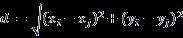
In this step, the similarity searching is performed after obtainingfeaturematrixinordertorevealthepresenceof forgery. To accomplish this, feature matrix is first lexicographicallysortedtospeedupthematchingstep.The similarity of vectors is then presented using Euclidean distance. Eq. (1) compares vector distances to a predeterminedthresholdtodeterminethematchingvectors.
(1)
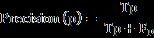
Toavoidfalsematches,thecandidatematchesarechecked according to the Euclidean distance among the matched blocks. And it must be greater than the threshold represented. When is the upper left coordinate of and is the upper left coordinate of , the distance‘d’iscalculatedas:

(2)
And the condition of must be provided for the matchingoftwovectors.
3.3 POST-PROCESSING
Inthisstep,potentialfalsematchesarefirsteliminated.The shift vector between matched blocks is computed for this purpose. and aretheupperleftcoordinates of the suspicious pairs, and the shift vectors are obtained using, , values. And it is determined whether the number of blocks with the same shift vector exceedsapredeterminedthresholdvalue.Ifthisconditionis met,itisproventhatcopymoveforgeryhasoccurredwith therelatedblock.
4. RESULTS AND DISCUSSION
Inordertofurtherillustratetheefficiencyoftheproposed method,itsresultsarecomparedto,twootherCNNmodels. Forcomparison,theCNNmodelsResNet50andEfficientnet wereutilized.Itisalsomentionedthattheproposedmethod, as well as others, was tested on the CoMoFoD v2.0 image dataset[11].

4.1 DATASET
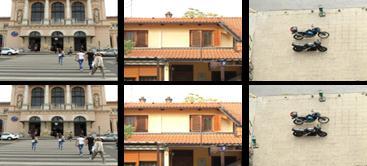
HerethetestimagesaretakenfromtheCoMoFoDdataset, thatconsistof260tamperedexamples.Foreverytampered image, we stored original image, two types of masks that mark forgery, and additional information such as size of tampered region. These color images range in resolution from512×512pixels.SomeofimagesfromtheCoMoFoD v2.0imagedatasetareshowninFig.1.
4.2 EVALUATION METRICS
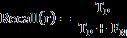
For theperformanceevaluationoftheproposedmodel,the F1-measureiscalculatedbasedontheconfusionmatrix.The F1-measure is used for performance evaluation of the considered and proposed methods. Higher F1-measure result indicates its superior performance to marking the forgedregions.

F1-Measure=
Where denotesthenumberoftrulydetectedtampered blocks, denotes the number of incorrectly detected tamperedblocks,and denotesthenumberofincorrectly non-detectedblocks.


4.3 PERFORMANCE EVALUATION OF PROPOSED METHOD




In the performance evaluation, the test results of our proposed methodiscomparedwithtwootherCNNmodels, ie,ResNeT50andEfficientNetmodel.ResNetisanacronym forResidualNetwork.ResNethasmanyvariantsthatusethe sameconceptbuthavedifferentnumbersoflayers.Resnet50 isavariantthatcanworkwith50neuralnetworklayers.The ResNet-50 model is divided into five stages, each with a convolutionandidentityblock.Eachconvolutionblockhas threeconvolutionlayers,andeachidentityblockhasthree
convolution layers as well. The ResNet-50 has over 23 milliontrainableparameters.whereastheEfficientNetisa convolutional neural network architecture and scaling method that uniformly scales all depth/width/resolution dimensionsusingacompoundcoefficient.



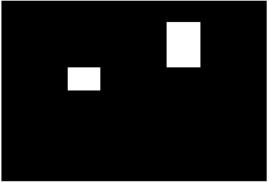
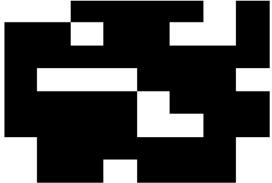

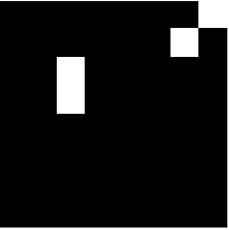





HerethetestimagesaretakenfromtheCoMoFoD dataset[11],thatconsistof260tamperedexamples.Andfor the analysis of the proposed model ,the F1-measure is calculatedbasedontheconfusionmatrix.Table1showsthe correspondingdetectionresults.
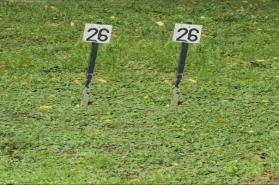
Table- 1:DetectionResults
It is also given the visual results of the proposed method withothertwomethodsie,ResNet50andEfficientnet.Asa summaryofthegivenvisualresults,itisclearlyseenthatour detection method detects forged regions more accurately thantheothermethods.Thefigure2showsthevisualresults oftheproposedmodelswithResNet50 andtheEfficientNet.
5. CONCLUSIONS
Inthispaper,deeplearning-basedframeworkispresented todetectionandlocalizationofcopymoveforgeriesinstead of using traditional feature extraction techniques. The method uses the VGG16 convolutional neural network to obtain image sub-blocks’ features. After that, matching of them are realized with the Euclidean distance measure. Finally,evaluatetheperformanceoftheproposedmethod withtwoothermethods(ie,ResNeT50,Efficientnet)using theF1-measurecalculation.Anditisprovenwiththetest resultsthattheproposedschemeismoresuccessfulthanthe othermethods.
REFERENCES
[1] Fridrich,A.J.,Soukal,B.D.andLukáš,A.J.,Detection of Copy-Move Forgery in Digital Images, Digital ForensicResearchWorkshop(DFRWS),2003.
[2] Popescu,A.andFarid,H.,ExposingDigitalForgeries byDetectingDuplicatedImageRegions,Tech.Rep., TR2004-515,DartmountCollage,2004.
[3] K. Sunil, D. Jagan, and M. Shaktidev, “DCT-PCA BasedMethod for Copy-Move Forgery Detection,” Adv. Intell.Syst. Comput., vol. 249, pp. 577–583, 2014.
[4] N. Huang, J. He and N. Zhu, "A Novel Method for Detecting Image Forgery Based on Convolutional Neural Network,"2018 17th IEEE International Conference On Trust, Security And Privacy In Computing And Communications/ 12th IEEE InternationalConferenceOnBig DataScienceAnd Engineering (TrustCom/BigDataSE), 2018, pp. 1702-1705, doi: 10.1109/TrustCom/BigDataSE.2018.00255
[5] N.HemaRajini,2019,ImageForgeryIdentification using Convolution Neural Network, International JournalofRecentTechnologyandEngineering.
[6] S.S.NarayananandG.Gopakumar,"RecursiveBlock BasedKeypointMatchingForCopy Move ImageForgeryDetection,"202011thInternational ConferenceonComputing, Communication andNetworkingTechnologies(ICCCNT),2020,pp. 1-6,doi:10.1109/ICCCNT49239.2020.9225658.
[7] K. Sunitha and A. N. Krishna, "Efficient Keypoint basedCopyMoveForgeryDetectionMethodusing HybridFeatureExtraction,"20202ndInternational ConferenceonInnovativeMechanismsforIndustry Applications (ICIMIA), 2020, pp. 670-675, doi: 10.1109/ICIMIA48430.2020.9074951
[8] R.Agarwal,D.Khudaniya,A.GuptaandK.Grover, "Image Forgery Detection and Deep Learning Techniques: A Review,"2020 4th International ConferenceonIntelligentComputing and ControlSystems(ICICCS),2020,pp.1096-1100,doi: 10.1109/ICICCS48265.2020.9121083.
[9] I.T.Ahmed,B.T.HammadandN.Jamil,"Effective DeepFeaturesforImageSplicingDetection," 2021 IEEE 11th International Conference on System Engineering and Technology (ICSET), 2021,pp.189193,doi:10.1109/ICSET53708.2021.9612569
[10] Khudhair, Zaid Nidhal & Mohamed, Farhan & Abdulameer, Karrar. (2021). A Review on CopyMoveImageForgeryDetectionTechniques.Journal of Physics: Conference Series. 1892.012010. 10.1088/1742-6596/1892/1/012010.
[11] D. Tralic, I. Zupancic, S. Grgic and M. Grgic, "CoMoFoD Newdatabaseforcopy-moveforgery detection," Proceedings ELMAR-2013, 2013,pp.4954.