International Research Journal of Engineering and Technology (IRJET)

Volume: 10 Issue: 05 | May 2023 www.irjet.net
International Research Journal of Engineering and Technology (IRJET)
Volume: 10 Issue: 05 | May 2023 www.irjet.net
Abstract - Telecommunication and computing technologies are crucial in solving real-world problems, particularly in developing countries where issues with railway-level crossings remain prevalent. The consequences of level-crossing accidents can be severe, resulting in fatalities, injuries, and vehicle damage, which can have a significant impact on a country's economy. To address this issue, an IoT-based framework for an automatic railway gate controller has been designed. The primary objective of this framework is to automate the opening and closing of railway gates upon the arrival and departure of trains, respectively, the primary objective of the proposed model is to minimize the occurrence of accidents, especially at unmonitored railway crossings. This system also reduces the time for which the gate remains closed, providing a more efficient and reliable operation. The proposed gate controller is suitable for unmanned level crossings, where accidents are more likely to occur, and manual operation errors can be preventedthroughtheautomaticoperationofthesystem. The system operates using an Arduino-based system, which receives input signals from two sensors and sends informationtothegatemotordrivertoopenandclosethe gate. The arrival and departure of trains are monitored, and the gate is operated accordingly. Overall, the implementation of an automatic railway gate controller utilizingIoTtechnologieshasthepotentialtosignificantly reduce the number of accidents at level crossings, promotingsaferandmoreefficienttransportation.
India has the largest railway network in the world, with hundreds of trains operating on its tracks daily. However,itisdifficulttostopamoving trainimmediately in the event of an emergency, resulting in serious consequences such as loss of human life, injury, and damagetorailwayproperty.Therefore,railwaysafetyisof utmostimportanceforrailoperationsworldwide.Railway safety is particularly crucial in India, where the railway is the cheapest mode of transportation, resulting in an increased likelihood of accidents due to careless manual operations. Currently, the IndianRailways currently has a total of 31,846 level crossings, out of which 18,316 are manned while 1,350 remain unmanned. A survey conductedbytheIndianRailwayfoundthat38.2%oftotal railway accidents in India are crossing accidents, the
majority of which occurat passiverailway crossings. This underscores the importance of implementing an "automaticgatecontroller"toenhancesafetyandsecurity forrailwaytravelers.
Unmanned railway crossings are particularly prone to accidents, often caused by the carelessness of road users orthelackofworkers.Wecanleveragethebenefitsofthe proposed model to overcome the challenges faced by the current system Firstly, it aims to reduce the time for which the gate is kept closed, and secondly, to provide safetytoroadusersbyminimizingaccidentscausedbythe carelessness of road users and the errors of gatekeepers. Thesystemusessensorsplacedatadistancefromthegate to detect train departures. The system operates by transmitting information about the train's departure to a microcontroller that then operates the motor and opens the gate. As a result, the gate is closed for a shorter time compared to manually operated gates since the gate's opening and closing are determined by a telephone call from the previous station. Additionally, the system is highlyreliablesinceitisnotsubjecttomanualerrors.
Themainfocusofthisprojectistoaddresstheissueof traffic congestion caused by manually operated railway crossinggates.Duetothegatesbeingclosedunnecessarily forextendedperiods,roadtrafficissignificantlyincreased, exacerbating an already common problem. This project aimstoprovideasolutionthatautomatestheoperationof thegates,reducingtheamountoftimetheyareclosedand thereby minimizing the impact on road traffic. Railroad accidents and fatalities are on the rise in our country, particularlyatrailwaycrossings.Thisislargelyduetothe fact that the gates are usually manually operated and can cause unnecessary traffic congestion when left closed for noreason.Toaddressthisissue,weproposeanautomated railway gate control system that will help reduce the numberofaccidentsandimprovesafetyatjunctions.
The problem statement for the automated railway monitoringsystemisthatthemanualoperationofrailway gates at junctions is causing unnecessary traffic congestion, which can lead to accidents and result in severe damage to life and property. The need is to design an automated system that can detect the presence of a
train and operate the railway gates accordingly, ensuring thesafetyofroadusers,pedestrians,andtrainpassengers. This system should be reliable, cost-effective, and easy to maintain, making it a sustainable solution for railway crossingmanagement.
1. In 2022, Prof. R M Sahare authored a paper titled "Automatic Railway Gate Control System" The study aims to develop an automatic system for controlling railwaygatesatunmannedlevel crossings,whichwill replace the need for gatekeepers or semi-automatic gates,whilealsopreventing accidentsthat mayresult from manual gate operation and inadequate knowledge about obstacles on the railway track. The majorcomponentsof the model area railwaytrack,a toy train, IR sensors, AVR microcontroller, LED signals, servo motors, LCD Display, a buzzer. By reducing human intervention and ensuring accurate gateoperation,thissystemimprovessafety,qualityof service, and helps prevent accidents at unmanned railway level crossings. To make it completely automateditisneededtoequipanever-endingsource of energy that could operate the gates and the appropriate solution is the solar energy that can be obtainedthroughthesolarpanels
2. In2019,Mst.ShamimaHossainconductedresearched on “Automated Railway Track Changing Model with Real-Time Centralized Monitoring Interface”. This prototype capable of changing tracks automatically based on direction and position of the train and also can be controlled manually from a central office and also includes a real-time computer interface that can continuously monitor the position and movement of the trains that move along the tracks. This design is hopedtorenderaconcept,properexecutionofwhich maybringaboutagreatchangeinthepresentrailway system increasing efficiency, increasing profit and most of all rendering people a low-cost, time-efficient railwaytransportsystem.
3. In 2015, Karthik Krishnamurthy Monica Bobby and their team conductedresearch on the "Sensors-based automaticrailwaygate."Thestudyaimedtodevelopa system that automates the operation of gates at level crossings using a microcontroller and detects collisions at the crossing level. The components used for the automation of the railway gate were infrared sensors. An infrared (IR) sensor detects radiation to sensemovementinthesurroundingenvironment.The study concluded that an automatic railway gate control system could reduce human involvement in the opening and closing of railway gates, thus preventing accidents involving vehicles and pedestrians crossing railway tracks. Therefore,
automating the gate can enhance the safety and reliabilityofgatecontrol.
4. In2014,AnilM.D.andhisteamconductedresearchon the "Advanced Railway Accident Prevention and Controlling System Using Sensor Networks". The study focused on managing the increasing railway traffic worldwide and preventing accidents through theuseofcomponentssuchasIRsensors,firesensors, Zigbee technology, and embedded systems tocontrol trackmanagement.Whenthetrainarrivesataspecific location, the transmitter IR sensors generate their respective signals, and at the same time, the receiver IRsensorreceivesthesignalandstopsthetrain.
In India, railway crossings are manually operated by railway operators who are responsible for opening and closing the gates based on the arrival and departure of trains. The operator receives information about train schedules through communication tools. However, this system is prone to errors and has resulted in numerous accidents at railway crossings. Train information is relayed from one system to another as the train moves towards the crossing. Unfortunately, more than 50% of train accidents in India occur at railway crossings due to the existing flaws in the system. The current approach used bytheIndianRailway systemis notsafeand has led toincreasingaccidentseveryyear.
This paper aims to automate the lifting of railway crossing gates using a micro servo motor and gear arrangement. Two ultrasonic sensors are installed on either side of the gate The Ultrasonic sensor transmitter, which is located in the engine and guard, transmits a signal to the receiver on the track when the train is approaching the crossing. When the receiver receives the signal, the gate is closed, and when the train passes through the other receiver on the other side of the gate, themotorisactivatedandthegateisopened.Thissystem reduces the chance of accidents at unguarded crossings, where accidents are more likely to occur. It is fully automatic, reducing the likelihood of human error and makingitmorereliable.Advantagesofthissysteminclude a reduced chance of human error, faster operation, improved safety and quality of service, and accident prevention.
The system architecture of the Automated Railway Monitoring System using Arduino includes multiple components that work together to achieve the project goal. The main components include the Arduino Uno
board, two ultrasonic sensors, a servo motor, red and greenLEDlights,andabuzzer.Thetwoultrasonicsensors areplacedoneithersideoftherailwaytracktodetectthe presence of a train approaching the crossing. The sensor dataisprocessedbytheArduinoUnoboard,whichsendsa signaltotheservomotortoopenthegateandactivatethe redLEDlightsandbuzzertowarnpedestriansanddrivers tostop.
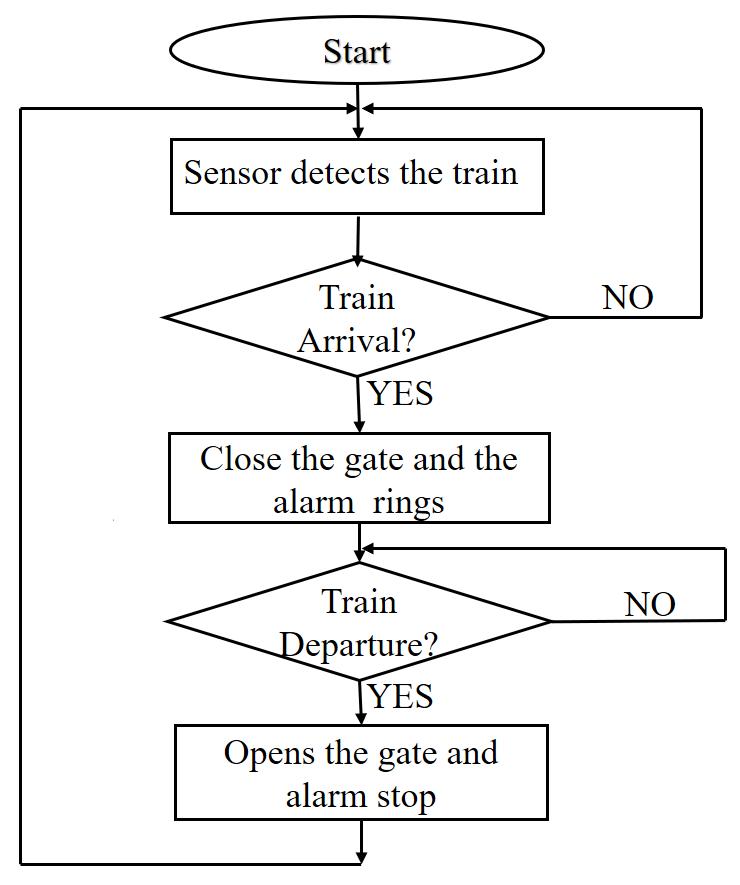
Step 1: Start
Step 2: Setupthesensorstodetecttrains.
Step 3: Check for the arrival of train using sensors. If the train is detected, proceed to step 4 Otherwise,repeatstep3.
Step 4: Activate warning signals to alert road users oftheoncomingtrain.
Step 5: Close the railway crossing gate to prevent roadusersfromcrossingthetracks.
Step 6: Check for the departure of the train using the sensors. If the train has departed, proceedtostep7Otherwise,repeatstep6.
Step 7: Opentherailwaycrossinggatetoallowroad userstocrossthetracks.
Step 8: Return to step 2 to start the process again andwaitforthenexttrainarrival.
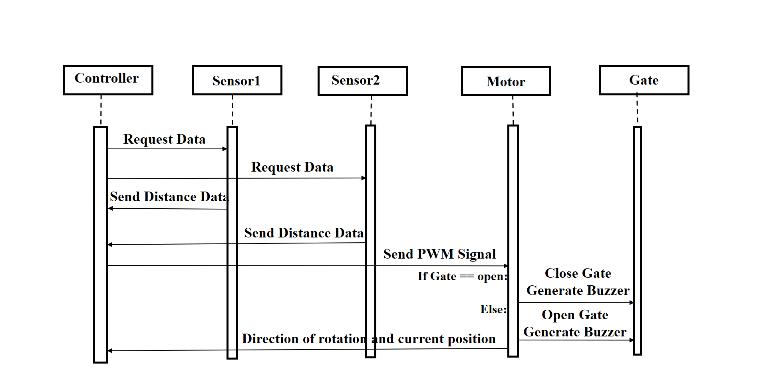
In the context of the automated railway monitoring system, a sequence diagram can be used to depict the interactions between different components of the system. For example, the diagram can show how the ultrasonic sensorsdetectthepresenceofatrainandsendasignalto the Arduino board. The diagram can also illustrate how theArduinoboardthenactivatestheservomotorto open thegateandturnontheredLEDlightsandbuzzertowarn pedestriansandroadusers.Oncethetrainpassesthrough the railway crossing, the diagram can show how the Arduino board deactivates the servo motor to close the gate and activates the green LED lights to signal the road users and pedestrians to proceed. Overall, the sequence diagram helps to visualize the flow of messages and actionsbetweendifferentcomponentsofthesystem.
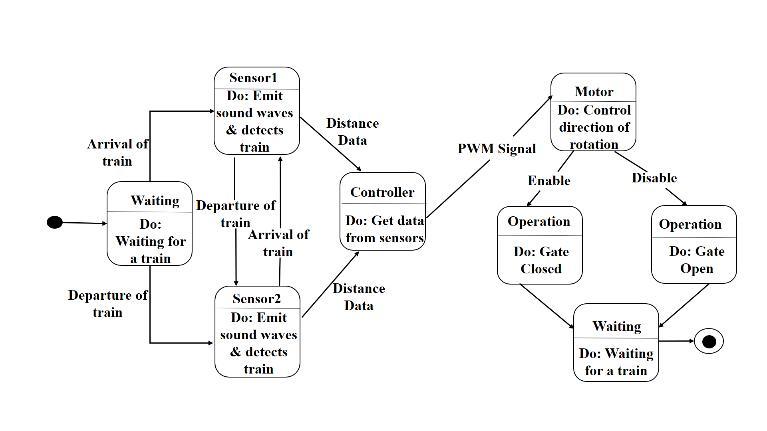
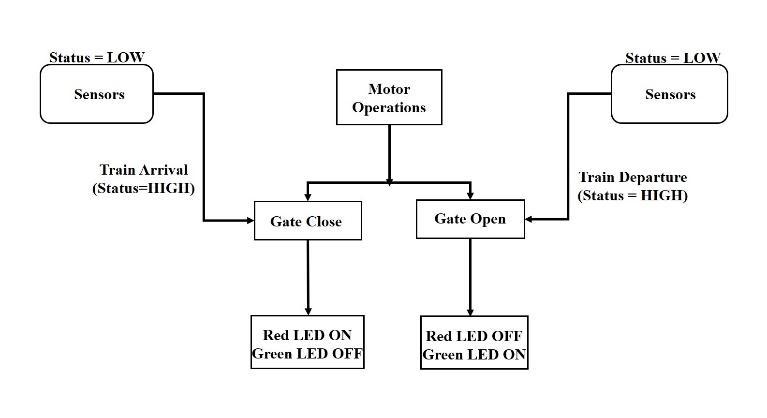
Theautomatedrailwaymonitoringsystemisbasedon an event-driven model where events or triggers initiate actions in the system. In this system, the event occurs whentheultrasonicsensorsdetectthepresenceofatrain approaching the railway crossing. This event triggers the Arduinoboardtoactivatetheservomotortoopenthegate and activate the red LED lights and buzzer to warn the road users and pedestrians to stop. Once the train passes through the railway crossing, another event occurs that triggers the Arduino board to deactivate the servo motor toclosethegateandactivatethegreenLEDlightstosignal theroadusersandpedestrianstoproceed.
The event-driven model is an efficient and effective way of designing and implementing systems that need to respond to external events in real-time. It allows the system to be more responsive, scalable and adaptable to changing circumstances, without having to continuously monitor the environment. In the automated railway monitoring system, the event-driven model ensures that therailwaycrossinggateisopenedandclosedattheright time, without the need for human intervention, thus ensuring the safety of road users, pedestrians and train passengers
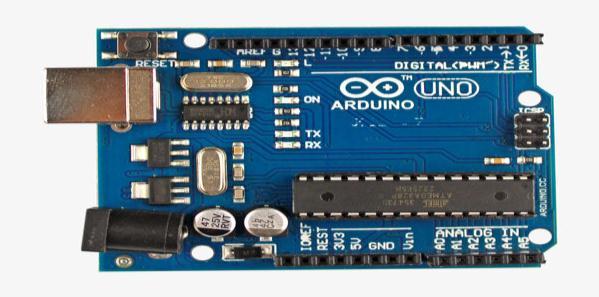
A. Arduino Uno: TheATmega328Pmicrocontrollerchip serves as the foundation for the Arduino Uno microcontroller board. The Arduino Uno is equipped with a range of useful features, including 14 digital input/output pins, 6 analog inputs, a USB connection, a16MHzquartzcrystal,apowerjack,anICSPheader, and a reset button. These digital pins can be used to performvarioustaskslikereadingsensors,controlling LEDs, and communicating with other devices via digitalprotocolslikeI2C,SPI,orUART.Inaddition,the analog inputs can be utilized to read analog sensors and convert their values into digital signals that the microcontrollercanthenprocess
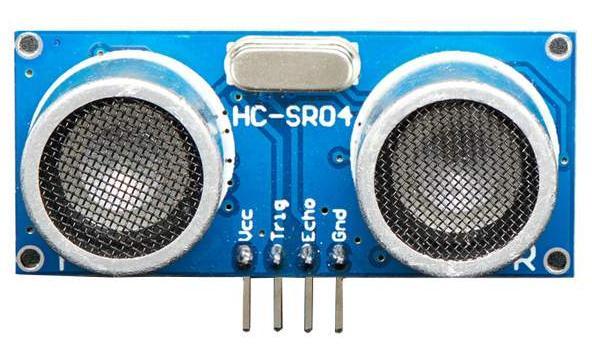
B. Ultrasonic Sensor: An ultrasonic sensor operates by emitting high-frequency sound waves beyond the limits of human hearing (typically between 40kHz to 200kHz) and subsequently capturing the echo that reflects back. The device then computes the duration it takes for the wave to reflect back after striking an object.Byusingthespeedofsoundinthemedium,the sensorcalculatesthedistancetotheobject
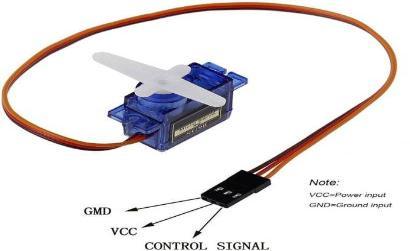
C. Servo Motor: A servo motor consists of a motor, a control circuit, and a feedback mechanism. The control circuit receives a signal from an external source, such as a microcontroller, and sends a pulse width modulation (PWM) signal to the motor. The feedbackmechanismensuresthatthemotorrotatesto the desired position by providing information on the motor'scurrentpositiontothecontrolcircuit.
D. Buzzer: A buzzer is a type of audio signaling device that generates a continuous or intermittent sound. It consists of a vibrating element, such as a diaphragm or a piezoelectric element, that is driven by an electronic oscillator circuit. When an electrical signal
is applied to the buzzer, the oscillator circuit causes the vibrating element to oscillate rapidly, creating a sound wave that propagates through the air. The soundproducedbyabuzzercanvaryinpitch,volume, andduration,dependingonthedesignofthevibrating elementandtheoscillatorcircuit.
pin of the Arduino board. Connect the GND pin of both sensors totheGND pinoftheArduino board.Connect the Trigger pin of the first sensor to Pin 3 of the Arduino board and the Echo pin of the first sensor to Pin 2 of the Arduino board. Connect the Trigger pin of the second sensor to Pin 6 of the Arduino board and the Echo pin of thesecondsensortoPin7oftheArduinoboard.
Connect the Servo motors to the breadboard and then connect them to the Arduino Uno board using jumper wires. Connect the Signal pin of the first Servo motor to Pin8oftheArduinoboardandtheSignalpinofthesecond Servo motor to Pin 9 of the Arduino board. Connect the VCC pin of both the servo motors to the 5V pin of the Arduinoboard.ConnecttheGNDpinofbothservomotors totheGNDpinoftheArduinoboard.
E. LED Lights: LEDlightsareelectroniccomponentsthat emit light when an electrical current passes through them.LEDstandsfor"light-emittingdiode,"andthese components are made of semiconductor materials that emit photons when an electrical current flows throughthem.
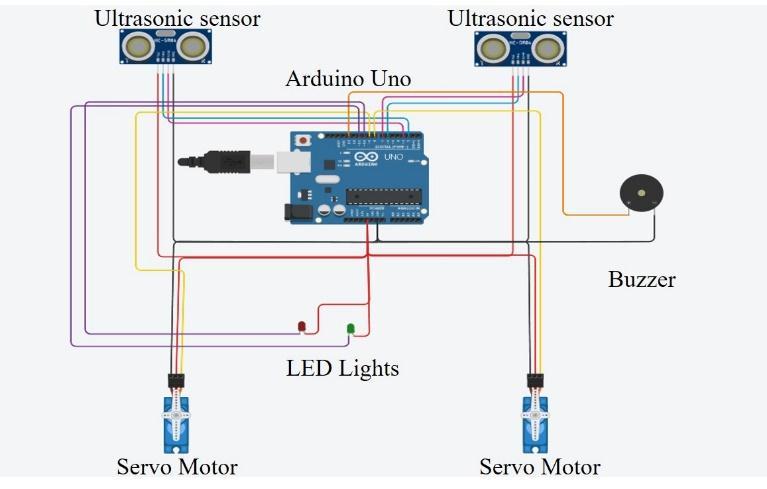
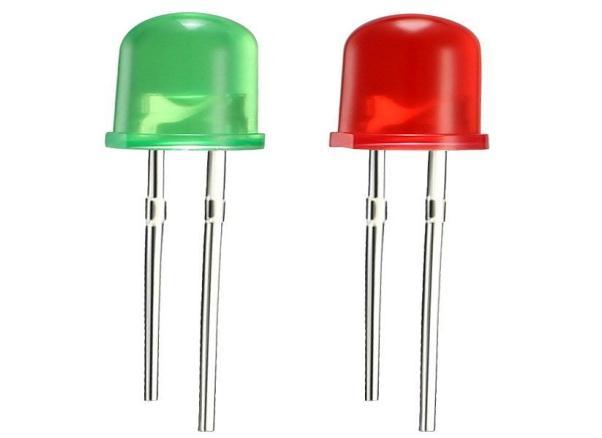
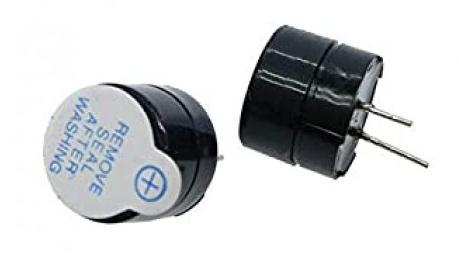
Connect the Buzzer and LED Lights to the breadboard and then connect them to the Arduino Uno board using jumperwires.ConnectthepositivepinoftheBuzzertoPin 13oftheArduinoboardandthenegativepinoftheBuzzer totheGNDpinoftheArduinoboard.Connectthepositive pinoftheRedLEDlighttoPin10oftheArduinoboardand the negative pin of the Red LED light to the 5V pin of the Arduino board. Connect the positivepin of the GreenLED lighttoPin11oftheArduinoboardandthenegativepinof theGreenLEDlighttothe5VpinoftheArduinoboard.
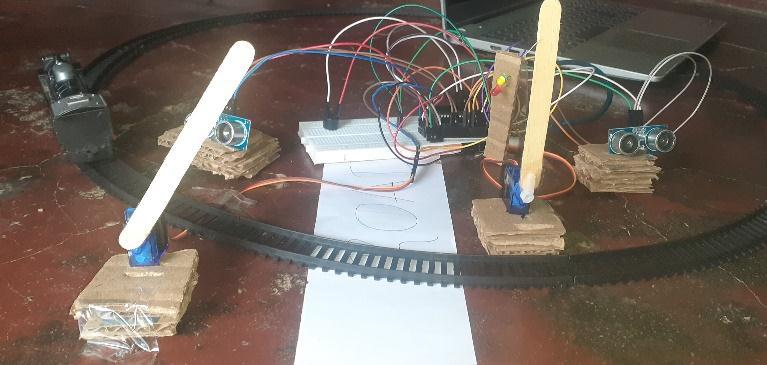
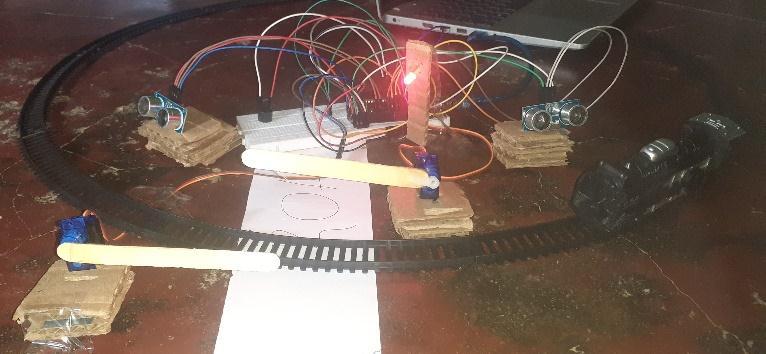
The circuitry for this project includes various components such as Ultrasonic Sensors, Arduino Uno, servo motors, Buzzer, LED lights, Jumper wires and Breadboard. The sensors used in the project are responsible for detecting the arrival and departure of trains. These sensors send the data send to the microcontroller, which processes the input and sends necessary signals to the motor drivers. The motor drivers are responsible for executing the signals sent by the microcontroller. They control the flow of traffic based on the different cases identified by the system. The gates, whichareoperatedbytheservomotors,areinitiallyopen. The servo motors receive signals from the motor drivers toclosethegateswhennecessary.
Connect the ultrasonic sensors to the breadboard and thenconnectthemtotheArduinoUnoboardusingjumper wires. Connect the VCC pin of both the sensors to the 5V
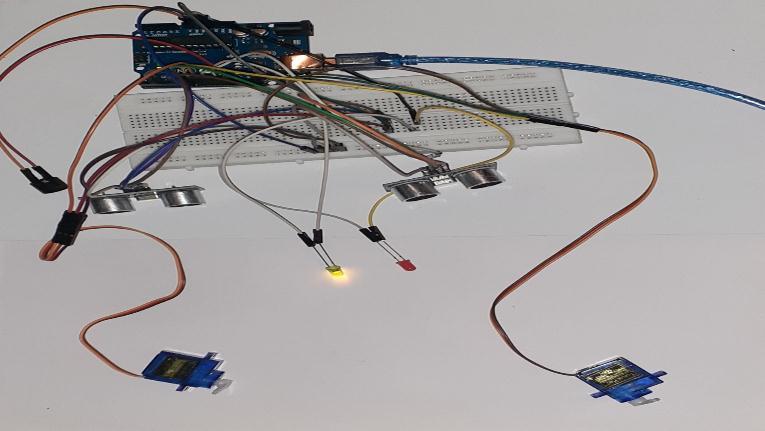
The experimental automatic gate control system for railway level crossings includes a plastic track for testing purposes.Twogatesorbarriersarelinkedwithtwoservo motors. The results of extensive laboratory testing on the automated railway monitoring system indicate that the system functioned effectively. Arduino based automatic railway monitoring system ensure safety for road users anddealwiththetime-consumingprocessofgateopening and closing. The objective of this thesis is to create a railway level crossing gate control system utilizing Arduino technology that is both affordable and efficient. The proposed Arduino based automatic railway level crossinggatecontrolsystemensureshumansafety.Also,it is highly reliable and has a fast operational speed. The applicationsofArduinobasedautomatedsystemarehuge inourcountry
system will have high, reliability performance and lower costcomparedtoexistingonescurrentlyinuse.
[1] https://www.researchgate.net/publication/3137875 52_Automatic_Railway_System/download
[2] Railways to eliminate over 6,000 unmanned level crossings,articleintheIndianExpress,30thJuly2016 byPTI
[3] Indian Railway develops warning system for unmanned level crossings, article in Times of India, 25th October2015byPTI
[4] Swati Rane, Mayuri Pendhari, Pooja Patil, Prakash Sakari, Yashmith Shetty, Automatic Railway Gate Control and Track switching with automated train, International Journal of Science, Engineering and TechnologyResearch(IJSETR),Volume4,Issue4,April 2015,pp1062-1066.

[5] K. Vidyasagar, P. Sekhar Babu, R. Ram Prasad, Anti Collision and Secured Level Crossing System, International Journal of Computer Applications Volume107,No3,December2014,pp.1-4.
[6] HninNgwe Yee Pwint, ZawMyoTun, HlaMyoTun, Automatic Railway Gate Control System Using Microcontroller, International Journal of Science, Engineering and Technology Research (IJSETR), Volume3,Issue5,May2014,pp1547-1551
Bharath Bharadwaj B S Professor,Departmentof Computer Science & Engineering, Maharaja Institute of Technology Thandavapura
The automatic railway monitoring system is an effectiveandbestsolutiontotheproblemsthatoccurina systemusedbyIndiantrains.Thisprogramofferssuperior benefitstoroadandrailwayusesmanagers.Thisprogram minimizes the risks involved occurs at intersections and reduces waiting time of high-speed rail crossings. As this the system does not require any human resources at all made in any remote and rural areas there is no railway guard. Servo motors are utilized in the proposed system for lifting the gates, offering high reliability and accuracy in raising or lowering the gate to a specific angle of rotation. Finally we will conclude that the proposed
Bharath H R Student, Department of ComputerScience&Engineering, Maharaja Instituteof Technology Thandavapura


Roopa B
Student,DepartmentofComputer Science&Engineering, Maharaja Instituteof Technology Thandavapura
Shruthi M Student,DepartmentofComputer Science&Engineering, Maharaja Instituteof Technology Thandavapura


Varsha M Student,DepartmentofComputer Science&Engineering, Maharaja Instituteof Technology Thandavapura.