International Research Journal of Engineering and Technology (IRJET)

Volume: 10 Issue: 05
Object Detection with Computer Vision
Rakesh Kumar Mahey1, Tanima Arora2
1MCA Student, Department of Computer Application, D.A.V Institute of Engineering and Technology, Jalandhar,144008, Punjab, India
2MCA Student, Department of Computer Application, D.A.V Institute of Engineering and Technology, Jalandhar,144008, Punjab, India ***
Abstract
The goal of this research was to use [1]human hands to run computers, mainly to support and improve technology used in the field of education, especially for supporting lecturers during presentations. The programme created for this goal makes use of additional libraries including [2]FLTK, [3]OpenGL, and [4]OpenCV, as well as [5]computer vision techniques. Presenters need a projector and a webcam in order to use the programme. The programme sends appropriate signals to the computer based on the[6] recognised patterns by using the webcam to detect and analyse the shape and pattern of the presenter's hands. The study's output is a programme that successfully improves [7]teaching and presentation techniques, giving teachers a more seamless experience. In the subject of [8]computer vision, there is now a lot of work being done on the identification and localization of visually appealing regions inside images. Applications in [8]computer vision, [9]computer graphics, and multimedia can all benefit from the ability to automatically [10]recognise and partition such salient regions. Many salient object detection [11](SOD) techniques have been developed to imitate the capacity of the human visual system to identify salient areas in images. Based on how they engineer features, these techniques can be generally divided into two groups: deep learning-based methods and conventional methods.
This survey covers both traditional and deep learning-based methods, including the most significant developments in image-based SOD. The survey offers in-depth insights on saliency modelling trends, addressing important concerns, outlining fundamental methods, and exploring potential future directions.
Keywords: human hand detection FLTK, OpenGL, OpenCV, computer vision techniques, recognized patterns, teaching presentation techniques, computer vision, computer graphics, recognize, (SOD) techniques
1.Introduction
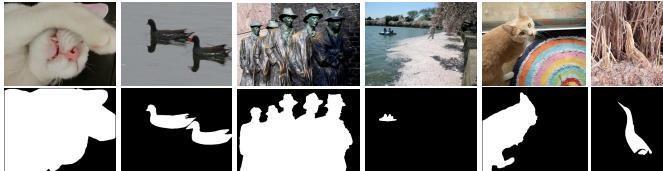
SOD has shown useful in a variety of computer vision tasks as a preprocessing step, including visual tracking, picture captioning,andimage/videosegmentation.Butbecausetherearesomanydifferentkindsofscenesthatarerecordedinfreeviewingsituations,SODrunsintoproblemsanddifficulties.
Akeycomponentofdeeplearning-basedsalientobjectdetection(SOD)istheuseoffullyconvolutionalneuralnetworks(FCN) [12]. In order to do coarse saliency prediction and modify it for boundary-accurate saliency maps in a data-driven manner, FCNs make use of their potent hierarchical multi-scale feature representation. While conventional models for SOD have the advantage of real-time performance and use in real-world scenarios, deep learning-based models for SOD have substantial advantages,suchasbetteraccuracy.
Saliency priors have been added into various deep models in recent research to improve the representational capacity of multi-layerfeaturesandspeedupthetrainingprocess.Saliencyestimationsfromvarioustraditionalmethodswereintegrated byWangetal.[13]toprovideasbackgroundinformationfortheidentificationofsalientlocations.Thesaliencyidentification procedureisguidedbythispriorknowledge.
GoalOfSOD
The purpose of this survey is to give readers a thorough and useful understanding of how Salient Object Detection (SOD) approacheshavedevelopedthroughouttime.Byprovidingthoroughinsightsintotheiressentialcomponents,thestudyseeks to [14] capture the essence of the motivational concepts behind both traditional and deep learning-based approaches. Although numerous methodologies have been addressed by current studies, they frequently lack in-depth technical information.Thesesurveyswereunabletoofferadequatetechnicaldetailsforeachmethodduetotheemphasisoncoveringa widenumberofways.
The goal of this survey, in contrast, is to find a balance between the technical details provided for each approach and the coverageofpertinentmethods.Thus,ithopestoclosethegapandrecentamorethoroughrundownofSODmethods.Themost recent and effective techniques from both traditional and deep learning-based approachesare covered in this survey. It also comparesanumberofcutting-edgetechniquesusingfourregularlyusedmetricsfromtheSODliterature.
Thisreviewseekstogivereadersacomprehensiveoverviewofthestatusofthefieldtodaybycombiningabroadcoveringof methods with technical specifics, giving them an understanding of the various approaches and how well they perform in salientobjectrecognition.
2. overview of Salient Object Detection
Cognitivepsychologists and neuroscientists whohavelookedintothecognitiveand psychologicaltheoriesofthe[15]Human Visual System (HVS) attention have made contributions to the interdisciplinary topic of saliency detection . Early saliency models have been built on the foundation of these notions. Itti et al.'s full implementation of the computational attention architectureisasubstantialadvancementinvisualsaliency.
Inordertocreatealow-resolutionsaliencymap,themodelputforwardinReferenceestablishedafeed-forwardmethodthat computesand combinesmulti-scalecolorcontrast, intensitycontrast,andorientationcontrast. The most prominentareasof theimagearehighlightedbythiscomputationaltechnique.Additionally,a[16]winner-take-all(WTA)neuralnetworkisused repeatedly.
2.1 Global Contrast Based SOD
Thesestepscanbeusedtodeterminearegion'ssaliencyvalueusingacolourhistogram:ForthewholeimageI,calculatethe colourhistogram.Thedistributionofcoloursinanimageisdepictedbyacolourhistogrambycountinghowofteneachcolour appears.
SegmenttheimageIintoappropriateparts.Considerthatrkstandsforoneofthesesubdividedregions.
Thesegmentedregionrk'scolourhistogramshouldbecalculated.
Bycontrastingregionrk'scolourhistogramwiththecolourhistogramsofeveryothersegmentedregionintheimage,youcan determinetheregion'soverallcontrast.
Youcanuseavarietyofmethods,includinghistograms,todeterminetheglobalcontrast.
2.2 . Diffusion Based SOD
Diffusion-basedSODmodelsuseadiffusion matrixandagraphstructureonthepicturetodistributetheseedsaliencyvalues over the entire region of interest. The creation of foreground/background seeds, the regulation of the diffusion process, and thegraphbuildingofthesemodelscanalldiffer.
Theseapproachesbuildagraphontheimage,whereeachnodecorrespondstoapixelorpatch,andedgeslinkadjacentnodes. Thespatial relationships betweenpixelsorpatchesintheimageare represented bythegraph.Tostartthe diffusionprocess, seed values are generated for the foreground and background. The initial saliency values allocated to particular areas of the image are shown by these seeds. Depending on the particular SOD model, the seed selection may change.Using a diffusion matrix,theseedsaliencyvaluesarespreadthroughouttheentireregionofinterestduringthediffusionprocess.Thesaliency values' distribution across the graph is governed by the formula in this matrix. Normally, it takes into account both the saliencyvaluesofnearbynodesandtheconnectivitybetweennodes.
3.Deep Learning-Based Salient Object Detection
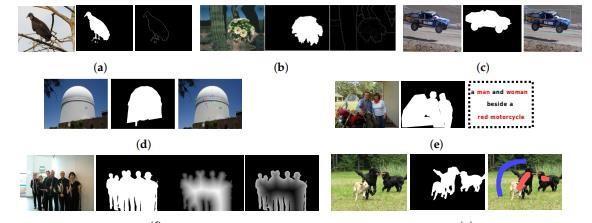
Convolutional Neural Networks[17] (CNNs) have a deep design that allows them to learn differentiable and hierarchical features at many levels. In order to create representations that are essential for saliency detection, deep learning-based Saliency Object Detection (SOD)modelstakeuse of this hierarchical feature hierarchyand integrate innovative architectural features into the network. Deep learning-based SOD models may automatically identify image regions with high saliency valuesatacoarsescalebyutilisingthesesophisticatedmulti-layerfeatures.Furthermore,theshallowlayersofthehierarchy offer thorough information that is helpful for identifying the boundaries and fine structures of the salient object(s). ResearcherscancreatenovelmodelsfortheSODproblemusingCNNsbecauseoftheirwiderangeofcapabilities.
4. Comparison and Analysis
Due to differences in their number, shape, size, location, and lighting conditions, the existence of many items with the same attributespresentsachallengeinsaliencyobjectrecognition.Edgebasedalgorithmshavethepotentialtomissactualpositives andemphasisetruenegativesbyinaccuratelydetectingsignificantedgesandsuppressingbackgroundedges.
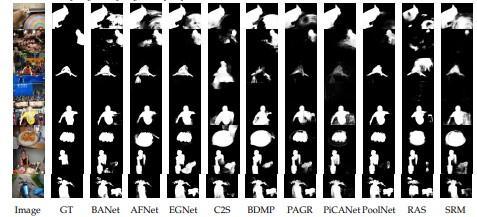
Inordertohighlightmanyitems,theRASmodel[18]improvesobject boundaries,asseeninFigure4.1,.However,precisely capturingallofthesemanticdataisessentialtotheRASmodel'seffectiveness.Additionaldifficultiesarisewhenattemptingto detect small objects in scenes (Figure 4.2), including the need for suitable detection at a coarse level and efficient feature aggregationtechniquestopreventinterruptionsduringprogressivefusion.
5. Future Recommendations
Deepneuralnetwork(DNN)models have recentlyemergedtomeettheneedsofembeddedandmobileapplications.Agood exampleofoneofthesemodelsistheresiduallearningmodelsuggestedinReference,whichfocusesonlearningtheresidual ineachside-outputoftheFullyConvolutionalNetwork (FCN)tograduallyimprovetheglobalprediction.Aconvolutionlayer withfewerchannelsisusedtoapplythisstrategy,resultinginacompactandeffectivemodel.Itischallengingtomaintainhigh detection accuracy while reducing the model's capacity in such constrained environments. Therefore, these recent developments in DNN models for SOD aim to achieve real-time performance by optimizing model efficiency and addressing memoryconstraints.
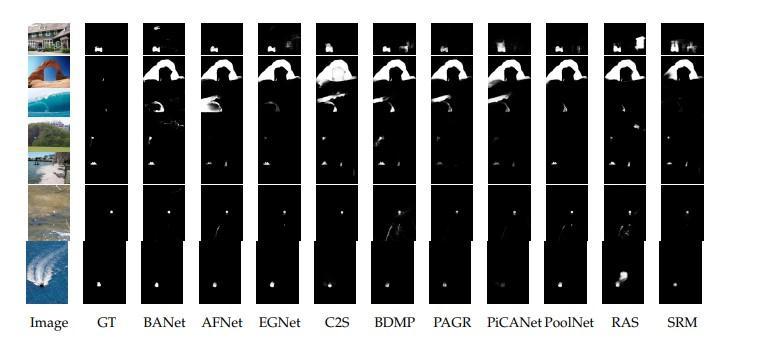
Issues relating to datasets: For the development of SOD models, access to big, less biassed datasets is essential. Bias in the trainingdatasetmakesitmoredifficultforthemodeltoattendsalientobjectsinchallengingsettings.Toswiftlycheckforthe presenceofcentrebiasanddataselectionbias,existingSODdatasetscanbequicklyexamined.Whengatheringphotosforthe
datasets,photographsthataretoogenericforsalientobjectdetectorsaretypicallyeliminated.Examplesincludephotoswith noprominentparts,abackgroundthatisoverlybusy,andsalientobjectsthatareoutsidetheimage'sborders.Itiscrucialto createdatasetswithmorebiased-free,realisticcircumstanceswhilemaintainingabigscale.
6. Conclusions
In order to give readers a broad understanding of the most important models and current developments in the field, this survey concentrates on salient object detection (SOD) in images. There have been many models presented over the past 20 years,includingbothtraditionalSODstrategiesanddeeplearning-basedtechniques.
Conventional models frequently rely on heuristic priors or low-level hand-crafted features. In scenarios with a single object andaplainbackground,thesemodelsshowefficiencyandefficacy.Theyareunabletoeffectivelyextractsemanticinformation due to their relianceonhand-crafted featuresand priors,which results in disappointingpredictionsinchallenging cases.On theotherhand,deeplearning-basedmodelshavetakentheleadinSOD.Theperformanceofthesemodels,whichmakeuseof deeplearningtechniques,isastounding,especiallyindifficultsituationsinvolvingmanyobjects,scalefluctuations,reflections, andbackgroundclutter.
Qualitative analyses show that even the most successful SOD models display performance variability across many difficult circumstances.RecentSODmodelshavebegunincludingedgeinformationandcontextualinformationtoboostperformance, whichfurtherimprovestheircapacitytoaccuratelycapturesalientitems.
References
1.Ma,C.;Miao,Z.;Zhang,X.P.;Li,M..IEEETrans.Multimed.2017,19,2415–2424.[CrossRef]
2. Qin,C.;Zhang,G.;Zhou,Y.;Tao,W.;Cao,Z.Neurocomputing2014,129,378–391.[CrossRef]'
3. Fu,H.;Xu,D.;Lin,S.Object-basedmultipleforegroundsegmentationinRGBDvideo.IEEE Trans.ImageProcess.2017,26, 1418–1427.[CrossRef][PubMed]
4. Itti,L.;Koch,C.;Niebur,E.IEEETrans.PatternAnal.Mach.Intell.1998,20,1254–1259.[CrossRef]
5. Long,J.;Shelhamer,E.;Darrell,T.;pp.3431–3440.
6. Chen,S.;Tan,X.;Wang,B.;Lu,H.;Hu,X.;Fu,Y..IEEETrans.ImageProcess.2020,29,3763–3776.[CrossRef]
7. Feng,G.;Bo,H.;Sun,J.;Zhang,L.;Lu,H.Neurocomputing2020,403,33–44.[CrossRef]
8. Cao,X.;Zhang,C.;Fu,H.;Guo,X.;Tian,Q.IEEETrans.NeuralNetw.Learn.Syst.2015,27,1253–1265.[CrossRef]
9. Chia,A.Y.S.;Zhuo,S.;Gupta,R.K.;Tai,Y.W.;Cho,S.Y.;Tan,P.;Lin,S.Semanticcolorizationwithinternetimages.ACMTrans. Graph.(TOG)2011,30,6.[CrossRef]
10. Margolin,R.;Zelnik-Manor,L.;Tal,A.Saliencyforimagemanipulation.Vis.Comput.2013,29,381–392.[CrossRef]
11. Goferman,S.;Tal,A.;Zelnik-Manor,L.Puzzle-likecollage.InComputerGraphicsForum.
12. Fang, Y.; Wang, J.; Yuan, Y.; Lei, J.; Lin, W.; Le Callet, P. Saliency-based stereoscopic image retargeting. Inf. Sci. 2016,372, 347–358.[CrossRef]
13. Borji, A.; Itti, L. State-of-the-art in visual attention modeling. IEEE Trans. Pattern Anal. Mach. Intell. 2012, 35, 185–207. [CrossRef]
14. Nguyen,T.V.;Zhao,Q.;Yan,S.Attentivesystems:Asurvey.Int.J.Comput.Vis.2018,126,86–110.[CrossRef]
15. Treisman,A.M.;Gelade,G.Afeature-integrationtheoryofattention.Cogn.Psychol.1980,12,97–136.[CrossRef]
16. Shelhamer, E.; Long, J.; Darrell, T. Fully convolutional networks for semantic segmentation. IEEE Trans. Pattern Anal. Mach.Intell.2017,39,640
651.[CrossRef][PubMed]
17. Noh,H.;Hong,S.;Han,B.Learningdeconvolutionnetworkforsemanticsegmentation.
18. Chen,B.;Li,P.;Sun,C.;Wang,D.;Yang,G.;Lu,H.Multiattentionmoduleforvisualtracking.PatternRecognit.2019,87,80–93.[CrossRef]
19. Shi,J.;Malik,J.Normalizedcutsandimagesegmentation.IEEETrans.PatternAnal.Mach.Intell.2000,22,888
905.
20. Alexe, B.; Deselaers, T.; Ferrari, V. Measuring the objectness of image windows. IEEE Trans. Pattern Anal. Mach. Intell. 2012,34,2189–2202.[CrossRef