
MARSHALL MIX DESIGN FOR COASTAL ROADS IN KERALA
Sreedhar H Kartha1 , Alan Luke , Albert K Thomas3 Aswin A Nair4 Student, Dept. of Civil Engineering, St. Josephs College of Engineering &Technology Palai, Kerala, India
Abstract - Coastal highways are one of the developing modes of transportation in India. Due to the convenience of operation and maintenance and by considering its low cost and abrasive resistance, asphalt mixturesarecommonlyusedfortheconstructionofcoastal roads.Sincethecoastal highways runnearand parallel to the sea, they are always vulnerable to sea water and it is widelyknownthatsalinitybadlyimpactsasphalt.Asphaltic pavementswhicharesubjectedtotheeffectofsalinityshows reduced cracking resistance, reduced adhesion between binderandaggregates,reducedloadbearingcapacity,aging etc.andthesearemainlyduetothemigrationofsaltintothe mixture and resulting crystallization effect and other chemicalreactions.Thoughcoastalhighwaysareemerging widely in Kerala there is no practical and cost-effective solutionforthisproblemofsalinity.Anumberofresearches are conducted to understand the effect but very few are intendedforfindingasolution.So,inthispaperweareusing Marshall stability and Retained Marshall stability tests on varioussamplescontainingcandlewax,naturalrubber,and plastic waste as added additives to study the effect of salt water on the load-bearing capacity and flow rate of the sample. Water sample collected from a seashore and a laboratory-preparedsaltwatersampleareusedtoevaluate thesamples.Theseresultsarecomparedwiththewetand dryMarshallstabilityandvolumetricpropertiesofsample without any added additives to find a suitable solution to addressthisproblemconsideringbothpracticalityandcost effectivenessintheformofamodifiedasphaltmix.
Keywords: Marshall stability, Retained Marshall stability, Candle wax, Natural rubber, Plastic waste.
1.INTRODUCTION
Coastalhighwaywhichrunsparalleltothecoastisoneofthe majorupcomingprojectsofKerala.Itspreadsaround623 kmsfromTrivandrumtoKasaragod.Bituminousmixisused fortheconstructionofcoastalroadsassameasthatofother roads and highways. Besides from other locations coastal areas are always vulnerable to the effect of salinity in the formofseawater,sprayingofsalt,fogandmistcontaining saltetc.
Bituminousmixmainlyconsistsofabitumenbinder,coarse andfineaggregatesandfillermaterial.Bitumeniscommonly usedfortheconstructionofroadsaroundtheworlddueto itsconvenienceinmaintenanceandoperation.Bitumenhas gainedpopularityalsoduetoitslowcostcomparedtoother
pavement types like concrete pavement with all the same benefits. Bitumen is known for its superior abrasion resistanceandflatsurface.

Butwhenbitumenisusedincoastalareasitissubjectedto salinity and it negatively affects the life and properties of bitumen.Bitumenwhencomesincontactwithsaltresultsin aging, reduction in cracking resistance, reduction in adhesionbetweenbitumenandaggregatesandanincrease inchancesofstripping.Theeffectofsalinitywhichistobe seriously considered is the reduction in binding ability of bitumen as it is the root cause for stripping, cracking and aging. It is the bitumen binder that binds the aggregates together and forms the pavement but when this ability of bitumenisaffecteditwillaffecttheentireserviceabilityof pavement.
Seawaterismainlycomposedofsodiumchloride(NaCl) andsodiumsulphate(Na2SO4)andthiswillchemicallyreact withbinderandaggregateandcauseproblemsotherthan the above discussed ones. The impacts of sea water on bituminousmixesareduetothecrystallizationeffectafter themigrationofsaltfromseawaterintothemixture.

As the presence of salt in coastal areas cannot be avoided and bitumen cannot be replaced with other materials,itisimportanttofindasolutionforthisproblem. Thepaperdiscussesasolutionintheformofsomeadditives that can be added to the bituminous mix to counter the effectsofsaltwithoutanynegativeimpactstotheproperties of bitumen as well as to the environment, with ease of availabilityandcosteffectiveness.
Thepapermainlyinvestigatestheeffectofseawaterand salinity on the load-bearing capacity and flow value of bitumenmixthroughtheMarshallstabilitytestandRetained Marshall stability test on samples containing the belowmentionedadditivesundertwosalineconditions.
1.1 Candle Wax
Waxisamaterialthatisavailableatalowcostandisalmost always available. It is known that wax can be added to bitumen to improve its stiffness in the form of softening points, better penetration, and better binding properties. Candle wax is a simple form of wax that becomes waste materialafterburning,ascandlesmadefromrecycledwax are not bright and have an unattractive appearance. So, candle wax havinga specific gravity of 0.86 is used in this paperasanadditivetostudyhowitaffectstheload-bearing capacityandflowrateofsamplesundersalineconditions.

1.3 Plastic Bottle
Plastic waste is a major threat to our society. It is currentlyusedinroadconstructionasitleadstoincreased bondingandanincreasedareaofcontactbetweenpolymer and bitumen. They do not absorb water and have better flexibility, which results in less rutting and less need for repair.Around20lakhpackageddrinkingwaterbottlesare soldperdayinIndia,andasthesebottlesarenotcommonly reused,themajorityofthemendupindumpingyards.So, polyethyleneterephthalate(PET)-typeplasticbottleswitha specificgravityof1.297areusedinthepaperasanadditive inthebitumenmix.
1.2 Natural Rubber

Natural rubber is a material that is readily available in Kerala.Ithasbeenusedinroadconstructionbecauseofits goodresistancetotemperatureandwaterpenetration,sowe can also analyse how natural rubber mixed with bitumen prevents the effect of salt water. The rubber industry in Keralaisneardestructionduetotheverylowmarketprice, but the use of rubber to counter salinity can boost the industry.So,rubberwithaspecificgravityof0.96isusedin this paper as an additive to study how it affects the loadbearing capacity and flow rate of samples under saline conditions.
1.4 Water Samples for Evaluating Sample
Allthesamplespreparedforthepaperareevaluatedusing twowatersamples.Oneofthemiscollecteddirectlyfromthe sea,andtheotherispreparedinthelaboratory.Seawateris collectedfromMararikulamBeachintheAlappuzhadistrict ofKeralaState.Thesecondoneispreparedbydiluting350 gmsoftablesaltperlitreoftapwater,whichisaroundten times the salt concentration of sea water. The dilution is madepossiblebyslightlyheatingthewater.
2. Preparation and Testing of Samples
2.1 Materials
Materials needed for the production of samples include crushedaggregate,bituminousbinder,filler,andadditives. Coarseaggregateandfineaggregateofspecificgravity2.5 and 2.72 respectively are used. VG-30 bitumen of specific

gravity 1.02 is used for all the samples. Quarry dust of specificgravity2.72isusedthroughouttheexperimentsas fillermaterial.
2.2 Preparation of Samples
Thecoarseaggregates,fineaggregatesandthefillermaterial shouldbeproportionalandmixedinsuchawaythatfinal mix after blending has the gradation within the specified rangewithspecifiedgradationofmineralaggregatesasper MoRTH2013giveninTable1.Therequiredquantityofmix istakensoastoproduceacompactedbituminoussampleof thickness63.5mmapproximately.
Approximately1200gofaggregatesandfilleraretaken and heated to a temperature of 1500C to 1700C. The compactionmouldassemblyandrammerarecleanedand kept pre heated to a temperature of 100 to 1450C. The bitumenisheatedtoatemperatureof1500Cto1650Cand therequiredquantityofbitumen(Optimumbindercontent) isaddedtotheheatedaggregateandthoroughlymixedata temperatureof150°Cto165°Cbyhandmixingwithtrowel. The mix is placed in a mould and compacted by rammer, with75blowsoneitherside.Thecompactingtemperature shouldbeminimum140°C
Table-1: AggregateGradation

sampleisthenweighedinairandinwaterfordetermining volume and later bulk density. The samples are then transferred into a water bath, kept at 60° C for 30 to 40 minutes.Theyarethenremoved,andplacedinMarshalltest head. Their Stability and flow values are noted. They are correctedforvariationfromaverageheight.Thecorrected Marshall stability value of each sample is determined by applying the approximate correction factor, if the average height ofthesampleis not exactly63.5mmthecorrection factorsaregivenintable2
Table-2: Correctionfactorsforheight

ThecompactedsampleswithbitumenofgradeVG-30are allowedtocooltoroomtemperature,thesampleheightand weightisdetermined,theoreticaldensityiscalculated.The
The same process as described above is used to make the additive-containingsamples,andtheadditivesareaddedata rateof6%byweightofthebindercontent.Theadditivesare addedatthesametimeofmixingofbinderwithaggregates atthesametemperatureasthatofbinder.Alladditivesare addedinliquidform.
2.3 Testing of Samples
2.3.1 Softening point
Thesofteningpointofbitumenisthetemperatureatwhich thesubstanceattainsaparticulardegreeofsofteningunder specifiedconditionsoftest.Thedeterminationofsoftening point helps to know the temperature up to which a bituminous binder should be heated for various road use applications. The softening point of virgin bitumen and bitumencontainingadditivesarefoundandcompared.
2.3.2 Ductility
The ductility test gives a measure of adhesive property of bitumen and its ability to stretch. In a flexible pavement design,itisnecessarythatbindershouldformathinductile filmaroundtheaggregatesothatthephysicalinterlockingof the aggregate is improved. Binder material having insufficient ductility gets cracked when subjected to repeated traffic loads and it provides pervious pavement surface.Ductilityofbituminousmaterialismeasuredbythe distance in centimetre to which it will elongate before
breaking when two ends of standard briquet sample of materialarepulledapartataconstantspeedandconstant temperature.
Salinityisknowntodecreasethebindingproperty ofbitumensoitisimportanttotestthechangeinductility value of bitumen additive mix otherwise the combination willbeofnouse.
2.3.3 Marshall stability test and Volumetric analysis
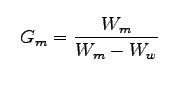
Marshall Stability test and volumetric analysis was conductedtodeterminestability,flow,densityandairvoids. After24hoursofaircooling,thedimensionsofthesamples are recordedandtheyaresubmerged in a constantwater bath maintained at 60 0Cfor 30 to 40 min. The sample is loaded at a constant rate, and loading is applied till the samplefails.Theloadatthetimeoffailureisnotedandisthe Marshallvalue,andthedeformationmeasuredatultimate loading is the Marshall Flow value. The Marshall stability value is not directly shown by the Marshall testing apparatus,butitisshownasprovingringreadings.These provingringreadingsaremultipliedbyafactorof0.0537to obtain the Marshall stability value. The corrections are appliedtothestabilityvalueswithrespecttothethicknessof thesamples.Thepropertiesliketheoreticalspecificgravity (Gt), bulk specific gravity (Gm), air voids, voids filled with bitumen(VFB),andvoidsinmineralaggregate(VMA)were determinedusingthefollowingequations:
Gt=TheoreticalSpecificgravity

Gm=Bulkspecificgravity
Va=%airvoids
Vb=%volumeofbitumen

….(4)
….(5)
….(6)
For evaluating the performance of samples under saline conditions,therespectivesamplesareheatedintheabovementioned water samples for 30 to 40 minutes instead of heating them in normal water. That is, two samples from each trial are heated in every sample evaluating water samplesandaretestedforMarshallstabilityvaluesandflow values.
W1=WeightofCoarseaggregate

W2=Weightoffineaggregate
W3=Weightoffiller
….(1)
G1=SpecificgravityofCA


G2=SpecificgravityofFA
G3=Specificgravityoffiller
G4=Specific gravity of binder
Wb=Weightofbinder
2.3.4 Retained Marshall stability Test
Wm=Weightofmixinair
Ww=Weightofmixinwater
….(2)
….(3)
AretainedMarshall stability(RMS)test wasconducted to determine the reduction in the Marshall stability value of samplesduetotheeffectofwater.TheMarshallsamplesare immersedinwaterfor24hoursat600Cafteranaircureof 24hoursandtestedforMarshallstability.Thesesamplesare termedwetsamples(C2)andcomparedwithconventional samples(C1),alsocalleddrysamples.RMSisgivenbythe equation
….(7)
C2=Marshallstabilityofwetsample

C1=Marshallstabilityofdrysample
RetainedMarshalltestisonlyconductedonsampleswithout additiveandonsampleswiththemostviableadditive.For conducting Retained Marshall test samples are kept immersedinrespectivesamplewaterfortwenty-fourhours at600Cafteranaircuringoftwenty-fourhours.
2.3.5 Optimum Binder Content (OBC)
Optimum Binder Content is the amount of binder corresponding to 4% air voids and is represented in percentagebytheweightofthetotalmix.Itisobtainedby plottingagraphofthepercentageofairvoidsonthey-axis andthebindercontentonthex-axis.
The Marshall samples were initially cast with binder contentsrangingfrom4.5to6.5%atanincrementrate of 0.5% in order to determine the optimum binder content. Marshall Parameters like % air voids, % Voids in mineral aggregate, % Voids filled bitumen, Marshall Stabilityand flow value were found out. To find the optimum binder content, samples are prepared without adding any additive. The optimum binder content was determined byfinding the binder content corresponding to 4 % air voids from graph 1. The Marshall test results for finding optimumbindercontentaredepictedinTable4.
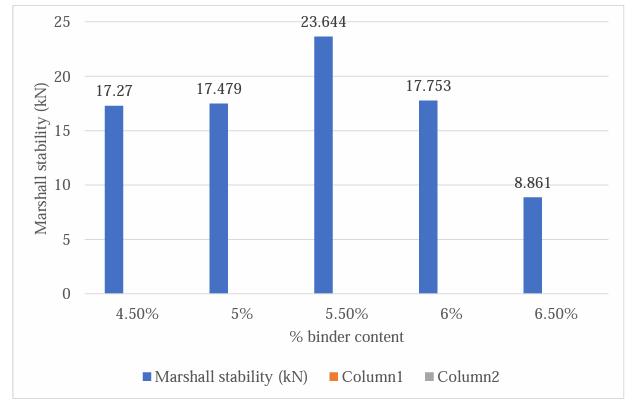
Table-4: CompositiontofindpreliminaryOBC
Graph-1: Percentageairvoids,VMA,VFBv/sbinder content
Forthispaper,theoptimumbindercontentcorrespondsto 4% air voids is 5.678 % and is kept constant for all the samples prepared. Graph 1 shows the variation in percentage of air voids, VMA and VFB with the change in percentage of bitumen content, and the bitumen content correspondingto4%airvoidsisalsoshowninthegraph.


Graph- 2: Marshallstabilityv/sbindercontent
3. Results and Discussions
3.1 Ductility Test
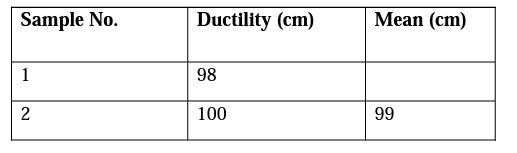
Theresultofductilitytestdoneonvirginbitumenofgrade VG30undernormalwaterisshownbelow.
Table - 5: Ductilitytestwithnormalwater
Theresultofductilitytestdoneonvirginbitumenofgrade VG30underbothsalineconditionisshownbelow.
Table -6: DuctilityTestwithSalineWater

Fig-6: Performingductilitytestinlab
Ductilityistheabilityofamaterialtohaveitsshapechanged without losing strength or breaking. From the above two tables,wecanobservethattheductilityvalueofbitumenis reduced as the salt concentration in water increases. A reductioninductilitymakesbitumenmorebrittle.Thismay be the cause of the reduction in crack resistance of bituminouspavementexposedtosalinewater.
3.2 Softening Point
TheresultofSofteningpointtestdoneonvirginbitumenof gradeVG30undernormalwaterisshownbelow.
Table-7: Softeningpointtestwithnormalwater
Softeningpointofbitumenisacrucialfactorasitindicates the ability of the material to withstand high temperature withoutsignificantdeformationordamage.Softeningpoint of bitumen affect the temperature susceptibility of bituminous mix. A lower softening point can result in excessive deformation and rutting at high temperature. Whileahighsofteningpointcanleadtocrackingandbrittle behavioratlowtemperature.Softeningpointofbitumenis usedtopredictthe performanceof bituminous mix under differenttemperatureconditions.

From above two table we can conclude increase in concentration of salt do not have significant effect on softeningpointofbitumen.
3.3 Marshall stability test and Volumetric analysis

3.3.1 Marshall test and volumetric analysis done on samples under normal conditions without any additive
Table -9: Marshalltestandvolumetricanalysisresults ofsampleswithoutanyadditiveundernormalcondition
TheresultofSofteningpointtestdoneonvirginbitumenof gradeVG30underbothsalineconditionisshownbelow.
Table-8: SofteningpointtestwithSalinewater


3.3.2 Marshall test and volumetric analysis done on samples undersaline conditions without any additive.
The Marshall stability value of the sample evaluated in seawaterconditionsshowsarounda20%declineinstability valueand20%declineinFlowvaluewhencomparedwith the Marshall stability value of the sample evaluated in normal water conditions. The sample evaluated in

laboratory-preparedsaltwaterconditionsshowsaround a 37%declineintheMarshallstabilityvalueand20%decline in flow value when compared with the Marshall stability valueofthesampleevaluatedinnormalwaterconditions.
This reduction in Marshall stability may be due to the penetrationofsaltionsintothebitumen.Thispenetration can cause chemical changes that weakens the bitumen binder. The presence of salt can also increase the rate of oxidation and ageing of the bitumen binder and hence reducesitsstrengthandstiffness.ThereductioninMarshall stability indicates that the mixture’s ability to resist deformationandcrackingisreduced.
Decreaseinflowvalueindicatesthatthesamplebecomes brittle.Thereisdeclineinflowvalueofsampletestedinboth salineconditionscomparedtothatofnormalwater,which shows that the sample becomes more brittle as concentrationofsaltinwaterincreases.
3.3.3 Marshall test and volumetric analysis done on samples under saline conditions with plastic bottles as additive.
Table- 11: Marshalltestandvolumetricanalysisresultsof sampleswithplasticadditiveunderSalineconditions


The Marshall stability value of the sample with plastic additiveevaluatedinseawaterconditionsshowsarounda 64%increaseinstabilityvalueanda10%decreaseinFlow value.Inlaboratory-preparedsaltwateritshowsarounda 43% increase in the Marshall stability value and 25% decrease in Flow value, when compared with Marshall stability and flow value of the sample without additive evaluated under both saline conditions. The increase in Marshall stability value in the presence of plastic additive even in saline environment may be due to the increase in stiffness of the mix. Certain plastic has high stiffness and which have ability to increase stiffness of bitumen mixes, leadingtohigherstability.Increaseinstabilitymaybealso due to the ability of plastic to improve the cohesion of bitumen mix. An increase in cohesion can lead to better bonding and higher stability. Plastic can also improve the resistance of bituminous mixtures to moisture damage by reducingtheamountofwaterthatpenetratesthemix.
The reduction in flow value of a bitumen mix containing plasticmaybeduetothefactthatplastichastheabilityto makethebituminousmixstiffer.Whentherigidityofthemix increasesthedeformationisdecreasedandflowvalueisalso decreased.
3.3.4
Table-12: Marshalltestandvolumetricanalysisresultsof sampleswithcandlewaxunderSalineconditions

3.3.5 Marshall test and volumetric analysis done on samples with natural rubber as additive.

Table-13: Marshalltestandvolumetricanalysisresultsof sampleswithnaturalrubber
TheMarshallstabilityvalueofthesamplewithwaxadditive evaluated in seawater conditions shows around a 35% decreaseinstabilityvalueand33%increaseinFlowvalue. In laboratory-prepared saltwater it shows around a 35% decreaseintheMarshallstabilityvalueand7%increasein Flowvalue,whencomparedwithMarshallstabilityandflow valueofthesamplewithoutadditiveevaluatedunderboth salineconditions.
MostoftheresultincludingMarshallstabilityisnotasper MoRTH specification. The reduction in Marshall stability value may be due to the low melting point of candle wax typicallymadefromparaffin.DuringtheMarshallstability testsampleistestedtohightemperaturearound600C.The wax within the mixture will likely soften and melt. This softeningcanleadtoalossofcohesionandoverallstrength. Themeltedwaxcanactasalubricant,reducingthefriction betweenaggregateparticleandthebituminousbinder.This lubricatingeffectcanresultinreducedstability.Waxhaslow adhesionpropertywithbituminousbindersothepresence ofcandlewaxinthemixturecanhindertheproperaddition betweentheaggregateparticlesandthebinder,whichcan also reduce stability. The lubricating effect of wax is the reasonforincreaseinairvoids.
The Marshall stability value of the sample with natural rubber additive evaluated in seawater conditions shows arounda54%increaseinstabilityvalueand26%increasein flow value. In laboratory-prepared saltwater it shows around a 6% increase in the Marshall stability value and 40%increaseinflowvalue,whencomparedwithMarshall stability and flow value of the sample without additive evaluated under both saline conditions. In normal water Marshallstabilityvaluewithnaturalrubberincreasesupto 32%butflowvalueisdecreasedupto13%,whencompared withsampleswithoutanyadditivetestedinnormalwater.
TheincreaseinMarshall stabilityvaluemaybeduetothe property of natural rubber to improve binder aggregate adhesion, improved adhesion promotes better bonding which leads to increased stability. Natural rubber has the abilitytoenhanceresistancetodeformationbyactingasa reinforcingagentandbyimprovingstiffnessandelasticityof binder, this increased resistance to deformation can also result in increased stability. Natural rubber increases the elasticity and flexibility of the bituminous binder which improves the stability. Natural rubber can enhance the cohesive strength of bituminous binder. Natural rubber being hydrophobic can repel water and prevent its
penetrationintothemixture,thisimprovedresistancetothe moisturedamagecanenhancetheoverallstabilityofsample insalinecondition.
Graph-3: Resultobtainedinnormalwater
Graph-5: Result obtainedinpreparedsaltwater
3.3.6 Retained Marshall test done on samples
Table-14: Percentage RMSvalues

Graph-4: Resultobtainedinseawater


The limiting value of the percentage RMS is 80%. When samples are tested in normal water with rubber as an additive, they show an increase of 2.27% RMS compared with normal water without additive. When samples are testedinseawaterwithrubberasanadditive,itshowsan increaseof14.48%RMScomparedwithseawaterwithout additive.Samplestestedinseawaterwithoutadditivesshow anRMSvalueof65.96,whichislessthanthelimitingvalue. From these results, we can conclude that the percentage RMS can be improved by adding rubber as an additive. Natural rubber, being hydrophobic, can repel water and prevent its penetration into the mixture; this improved resistance to moisture damage may be the reason for an increaseinRMSvalue.

Graph-6: ResultofRetainedMarshallstability
4. CONCLUSIONS
Fromtheresultsobtained,itisconcludedthattheductility valueofbitumeninasalineenvironmentisdecreased,and hencethecrackingresistanceisalsodecreased.Thevalueof the softening point is not much affected by salinity. The binding property of bitumen is disturbed due to the migration of salt molecules into the mix. The Marshall stability of bituminous mix is decreased as cracking resistanceandbindingpropertiesofbitumenaredecreased. Itisalsoidentifiedthatthe reductioninMarshall stability increases with an increase in salt concentration. The flow valueisobservedtobedecreasing,whichindicatesthatthe samplebecomesmorebrittle.
Threeadditivesweretestedtodeterminetheirabilityto countertheeffectofsalinityinbituminousmixes,anditwas foundthattheincorporationofcandlewaxinitspureformis notevidentasthestabilityandvolumetricpropertiesarenot underlimitsasperMoRTHspecification.Useofcandlewax initspureformisnotfeasibleasitsmeltingpointisaround 400C. Due to low melting point of candle wax it may melt within the Marshall sample and can cause reduction in stability and reduced adhesion between aggregates. IncorporationofplasticandrubberimprovestheMarshall stability values even under saline conditions and all volumetric properties are under limits as per MoRTH specification.
The addition of plastic and rubber has the ability to improve the adhesion between aggregates. Hence, the additionofbothplasticandrubbercansolvethemajoreffect
ofsalinity,whichisa reductioninthebindingproperty of bitumen. The addition of waste plastic bottles is more economical, and it helps reduce plastic waste to a great extent.Butitisnotanenvironmentallyfriendlysolution,as burning plastic bottles to get liquified plastic is a serious threattotheenvironment.Liqueficationofnaturalrubber alsocausesairpollution;however,burningplastictendsto produce a wider range of toxic emissions and volatile organic compounds. These emissions from plastic combustioncanbemoreharmfultohumanhealthandthe environmentthanthosefromburningnaturalrubber.
TheMarshallstabilityvalueofthesamplewithnatural rubberadditiveevaluatedinseawaterconditionsshows around a 54% increase in stability value, when comparedwithMarshallstabilityofthesamplewithout additiveevaluatedunderbothsalineconditions.

TheRMSvaluesofrubberaddedsampleis84.4%and 80.44innormalandseawaterrespectively
Inlaboratory-preparedsaltwateritshowsarounda6% increaseintheMarshallstabilityvalue,whencompared withMarshall stabilityofthesample withoutadditive evaluatedunderbothsalineconditions.
In normal water Marshall stability value with natural rubber increases up to 32%, when compared with sampleswithoutanyadditivetestedinnormalwater.
As per the experiments and results, natural rubber is concludedtobethebestadditiveamongthethreestudied under this project. 6% natural rubber by weight of the bitumen is sufficient for better results, so this can be incorporatedintothebituminousmixdesign.Itissuitableto beusedfortheongoingcoastalhighwayprojectinKeralain order to counter the effect of saline water on bituminous pavement.Thisprojectcanbefurtherextendedwithmore economical and environmentally friendly materials. More advancementintechnologiesfortheliquefactionofnatural rubberorplasticwithfewereffectsontheenvironmentcan furtherimprovethereliabilityoftheproject.
REFERENCES
1. QiJiang,MeizhuChen,YuechaoZhao,ShaopengWu, Yansong Fan, Zhengxu Gan, Yunlong Zhang. November2022.“Comprehensiveassessmentofthe durabilitydeteriorationofasphaltpavementinsalt environment: A literature review”. Elsevier, https://doi.org/10.1016/j.cscm.2022.e01706
2. Carlo Carpani, Edoardo Bocci, Emiliano Prosperi,Maurizio Bocci. November 2022. “Evaluation of the rheological and performance behavior of bitumen modified with compounds
includingcrumbrubberfromwastetires”.Elsevier, https://doi.org/10.1016/j.conbuildmat.2022.12967
3. RunhuaGuo,HaihuZhang,YuanxinTan.July2022. “Influence of salt dissolution on durable performanceofasphaltandSelf-ice-meltingasphalt mixture”. Elsevier, https://doi.org/10.1016/j.conbuildmat.2022.12832
4. Yuanyuan Meng, Chichun Hu, Yuke Tang, Daniel Großegger,WuhaoQin.March2022.“Investigation on the erosion mechanism of simulated salt conditions on bitumen”. Elsevier, https://doi.org/10.1016/j.conbuildmat.2022.12726
5. Sudheerponnadaet.al.March2022.“Experimental investigation on modification of rheological parameter of bitumen by using waste plastic bottles".Elsevier
6. Zhengwu Long, Xianqiong Tang, Yanhuai Ding, Miomir Miljkovic, Ashok Khanal, Wenbo Ma, LingyunYou,FuXu.April2022.“Influenceofsea salt on the interfacial adhesion of bitumen–aggregate systems by molecular dynamics simulation”. Elsevier, https://doi.org/10.1016/j.conbuildmat.2022.12747
7. ÁngelVega-Zamanillo,LuisJuli-Gándara,MiguelA. Calzada-Pérez,EvelioTeijónLópez-Zuazo.July2021. “Studyontheconservationofbituminousmixesin highmountainroadsandcoastalzones”.Elsevier, http://www.sciencedirect.com/
8. BaozhuFeng,HaoyuWang,SongLi,KuoJi,LidingLi, RuiXiong.November2021.“Thedurabilityof asphalt mixture with the action of salt erosion: A review”. Elsevier, https://doi.org/10.1016/j.conbuildmat.2021.12574
9. RuiZhang,NaipengTang,HongzhouZhu.December 2021.“Theeffectofseasaltsolutionerosionon cohesion, chemical and rheological properties of SBS modified asphalt”. Elsevier, https://doi.org/10.1016/j.conbuildmat.2021.12592
additive”. Elsevier, https://doi.org/10.1016/j.conbuildmat.2019.07.13 8
11. Ylva Edwards. 2018. “Influence of Waxes on Bitumen and Asphalt Concrete Mixture Performance”
10. NoemiBaldino,RuggeroAngelico,PaolinoCaputo, DomenicoGabriele,CesareOlivieroRossi.July2019. “Effect of high-water salinity on the adhesion propertiesofmodelbitumenmodifiedwithasmart