International Research Journal of Engineering and Technology (IRJET) e-ISSN: 2395-0056

Volume: 10 Issue: 05 | May 2023 www.irjet.net
p-ISSN: 2395-0072
SMART SOLUTION FOR RESOLVING HEAVY TRAFFIC USING IOT
P. Arul Mozhi1 , M. Curie2 , S.Jeevitha3 , J.Gerija Shree4 , S.Devaki51 Assistant Professor, Dept. of Electronics and communication Engineering, Vivekanandha college of Technology For women, Tamil Nadu, India
2Dept. of Electronics and communication Engineering, Vivekanandha college of Technology For women, Tamil Nadu, India
3 Dept. of Electronics and communication Engineering, Vivekanandha college of Technology For women, Tamil Nadu, India
4 Dept. of Electronics and communication Engineering, Vivekanandha college of Technology For women, Tamil Nadu, India
5 Dept. of Electronics and communication Engineering, Vivekanandha college of Technology For women, Tamil Nadu, India ***
Abstract - The issue of heavy traffic jams in urban areas is becoming increasingly prevalent as more vehicles hit the roads. Smart solutions using IoT have been proposed to alleviate the problem. This research proposes a smart solution using camera sensors, Raspberry Pi, an LCD display, and cloud technology to reduce heavy traffic jams The system uses camera sensors to detect traffic density and transmits data to a Raspberry Pi The Raspberry Pi processes the data and displays the information on an LCD screen The system is also connected to the cloud to store and analyze data for future use The results show that the proposed system can accurately detect traffic density and provide real-time traffic updates, which can help to reduce traffic congestion.
Key Words: IoT, traffic jam, camera sensors, Raspberry Pi, LCD display, cloud technology.
1.INTRODUCTION
Traffic congestion is a serious problem that affects many urban areas around the world. The increase in the number of vehicles on the road has led to a significant increase in traffic congestion. Heavy traffic jams cause inconvenience to road users and result in economic lossesduetodelaysintransportation.Therefore,findinga smart solution that can alleviate traffic congestion is of paramount importance. In recent years, Internet of Things (IoT) technology has been proposed as a way to reduce traffic congestion. This research proposes a smart solution using camera sensors, Raspberry Pi, an LCD display, and cloud technology to reduce heavy traffic jams.
1.1 Methodology
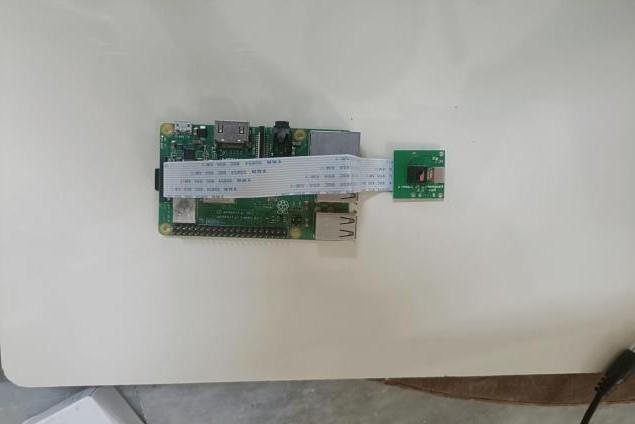
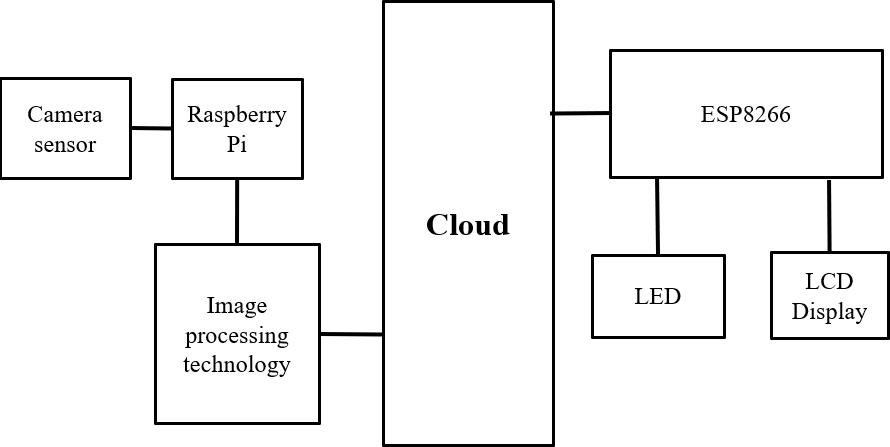
The proposed system uses camera sensors placed at strategic locations to detect traffic density. The sensors captureimagesoftheroadandtransmitdatatoaRaspberry Pi. The Raspberry Pi is a single-board computer that is capable of processing data and executing programs. The Raspberry Pi processes the data using image processing
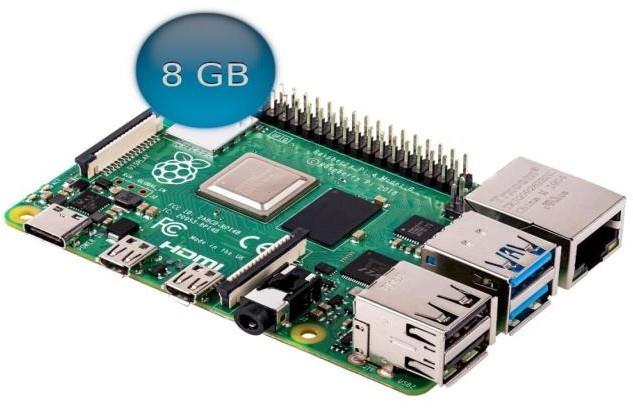
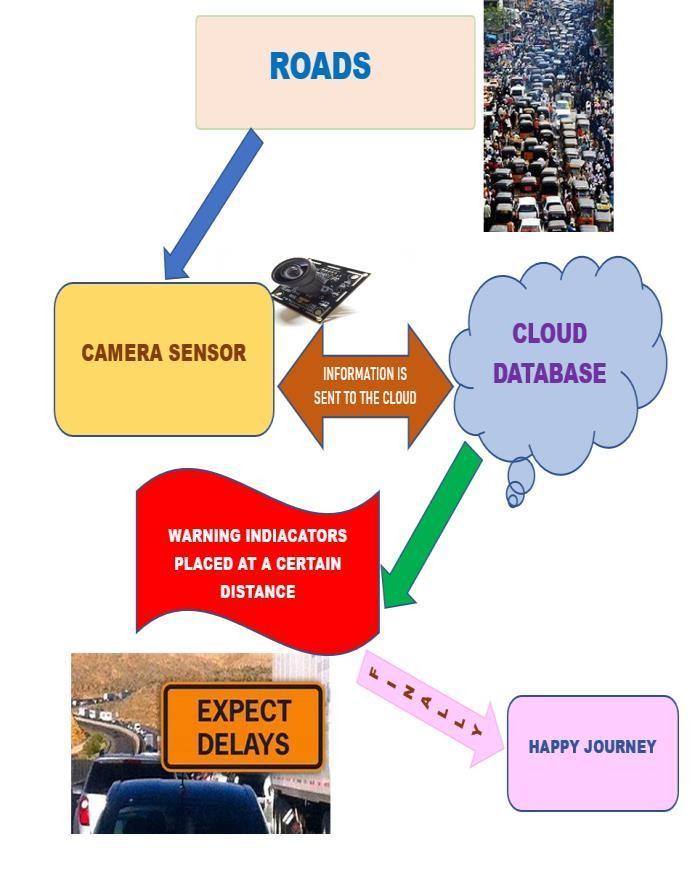
algorithmstodeterminethetrafficdensity.Theinformation isthendisplayedonanLCDscreenlocatedattheroadside. The system is also connected to the cloud to store and analyze data for future use. IoT is employed in practically every industry, and it will be crucial in traffic control. Sensorsand cloud services are used in IOT deployment. However, using all of the sensors will be more expensive financially. Due to the fact that camera sensors will serve astheequivalentofallothersensors,wehavechosennotto use allof the available sensors in this project. Installed in trafficzonesandonhighwaysarecamerasensorsthatuse image processing to detect any changes in the state of the roadandtransferthatinformationtothecloud,whereitis used tosend warning signals to LCD screens located at specificdistances.
1.2 System needed
Camerasensorsareusedtocaptureimagesoftheroad,and theimagesareprocessedtodetectthenumberofvehicleson the road. The camera sensors can be installed at strategic locations such as intersections, highways, and toll booths. Thecamerasensorscaptureimagesoftheroadandsendthe data to the Raspberry Pi for processing. The Raspberry Pi processes the data using image processing algorithms to determine the number of vehicles on the road. The informationisthendisplayedonanLCDscreenlocated at theroadside.
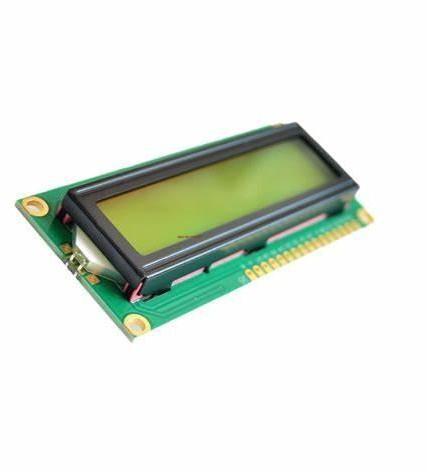
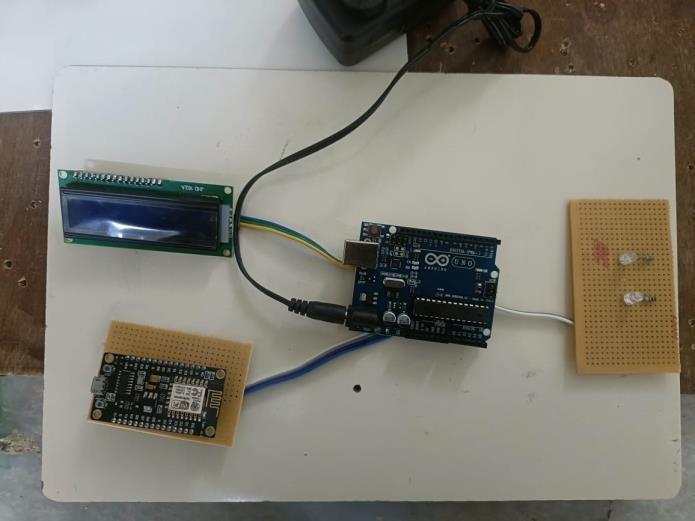
The LCD display is used to display the current traffic conditions. The LCD display can be installed at strategic locations such as intersections, highways, and toll booths. Thedisplayshowsthecurrenttrafficconditions,whichcan help drivers to choose alternative routes to avoid heavy traffic.Thedisplaycanalsoshowreal-timeupdatesontraffic conditionsandprovideinformationontheestimatedtravel time
1.3. Related work
[1]ThesmarttrafficmanagementsysteminCambridgeCity usesqueuedetectorsburiedintheroadstoidentifytraffic congestion and communicate information to the central control unit, which takes the right judgements. The centralization of the system may lead it to lag due to networking issues. According to the researcher who used securitycamerastoidentifytrafficandOCRtoidentifythe vehiclesbynumberplaterecognition,thetechniquewillnot functioninPakistansincetherearemanydifferenttypesof traffic, including cycles and donkey carts that do not have numberplates.
[2] A VANET-based effective navigation system for ambulanceswaspresentedbyShekheretal,to handlethe issueofdeterminingthequickestroutetothedestinationto avoid unanticipated traffic jams based on real-time traffic information updates and historical data. Real-time traffic dataandGPSintegrationledtothesuggestionofadynamic routing system (GPS). A metro rail network and a road transportationsystemarealsoincludedinthesystemtohelp ambulancesnavigateinreal-worldsituations.Toachievea sustainable Intelligent Transportation System, a sensor integrationtechniquehasbeenplannedforallcarsin(ITS)
[3]. Sensor fusing is used to assure safety and security in variousITScomponentsaswellastrafficvehiclecontrolto ensureaplannedtrafficregulation
Previousrelatedworkshavebeenshowntobeeffectivein trafficmanagement,butinthiswork,theuserisalsoalerted to all potential road and traffic-related issues via a web application,includingalertsandwarnings.
2. PROPOSED SYSTEM
Fig–3:LCDDisplay
Thecloudstorageallowsforthestorageandanalysisofdata. Thesystemisconnectedtothecloud,whichallowsforthe storageofdataontrafficpatterns.Thecloudstoragecanbe usedtoanalyzedataontrafficpatternsandhelptopredict future traffic congestion. The cloudstorage canalsobeused tostoredataonthenumberofvehiclesontheroad,which canbeusedforfurtheranalysis.
Information is gathered from sensors in cars, traffic cameras,weatherstations,trafficfeeds,andmobiledevices.
Information is analysed locally in cars, then sent to and aggregatedinthecloud.Localisedroadsafetywarningsare thensentfromthetrafficmanagementcentresofregional roadoperatorsbacktoLCDDisplaywiththeleastamountof delaypossible.
8.226 |
Trafficcongestionisagrowingconcerninurbanareas,and it affects people's lives in various ways, from wasted time to increasedairpollutionandaccidents.Totacklethis problem, weproposeasystemthatutilizesIoTandimageprocessing toofferasmartsolutionforheavytraffic.
The proposed system consists of several components: a networkofsensors,acentralserver,andLCDdisplays.The sensorsarestrategicallyplacedatvariouslocations,suchas intersectionsandhighways,tocapturereal-timetrafficdata, including vehicle count, speed, and direction. The data is thentransmittedtothecentralserver,whereitisprocessed usingimageprocessingalgorithmstoidentifytrafficpatterns andpredictcongestion.Basedontheanalysis,thesystemcan generate traffic alerts and suggest alternative routes to drivers. The alerts are displayed on LCD screens installed along the roadsides or at intersections, providing drivers withreal-timeupdatesontrafficconditions.Thedisplayscan alsoprovidenavigationassistance,directingdriverstothe fastest and most efficient routes based on current traffic conditions.
Furthermore, the system can control traffic signals and adjust their timing based on traffic flow, reducing congestion and improving overall traffic flow. This is accomplished using the IoT infrastructure by having the sensorstransmitthetrafficdatatoacentralserverthatwill adjustthetrafficlightsaccordingly.Thestatusofthetraffic signals can also be displayed on LCD screens, allowing drivers to anticipate the changes and adjust their driving accordingly.In addition, the system can provide valuable insights to city planners and traffic engineers, helping them make informed decisionsabouttrafficmanagement and infrastructure development. By analyzing traffic data overtime,thesystemcanidentifytrendsandareasofhigh congestion, which can be used to inform infrastructure planninganddesign.
To ensure the effectiveness of the proposed system, it is important to consider factors such as scalability, reliability,and security. The system should be designed to accommodate future growth and changes in traffic patterns. Additionally, it should be reliable and able to handle large volumes of traffic data without downtime. Finally, security measures should be put in place to protect theprivacyofuserdataandpreventunauthorized accesstothesystem.
In conclusion, the proposed system that utilizes IoT and image processing has the potential to provide a smartsolution for heavy traffic. By capturing real-time traffic data, analyzing it using image processing algorithms, andprovidingreal-timealertsandsuggestions onLCDdisplays,the system can help reduce congestion, improve traffic flow, and make travel safer and more efficient.Moreover,itcanprovidevaluableinsightsforcity planners and engineers to make informed decisions about infrastructureplanninganddevelopment.
2.1. Results
Theproposedsystemaccuratelydetectstrafficdensityand providesreal-timetrafficupdates.TheLCDdisplayshows the current traffic conditions, which can help drivers to choose alternative routes to avoid heavy traffic. The cloudstorageallowsfortheanalysisoftrafficpatternsand can help to predict future traffic congestion. The proposed system can be used in urban areas to improve trafficmanagementandreducetrafficcongestion.
3. CONCLUSIONS
The proposed smart solution using camera sensors, Raspberry Pi, an LCD display, and cloud technology is an effective way to reduce heavy traffic jams. The system providesreal-timetrafficupdatesandallowsfortheanalysis of traffic patterns, which can help to predict future traffic congestion. This technology can be implemented in urban areas to improve traffic management and reduce traffic congestion.Theproposedsystemiscost-effectiveandeasy toimplement,makingitafeasiblesolutionforcitiesaround theworld.TheuseofIoTtechnologyintrafficmanagement canhelptoimprovetheoveralltransportationsystemand makeitmoreefficient
REFERENCES
[1]SabeenJavaid,AliSufian,SaimaPervaiz,MehakTanveer “SmartTrafficManagementSystemUsingInternetofThings” Department ofComputerSoftwareEngineering,College of Telecommunication Engineering, National University of SciencesandTechnology,Islamabad,Pakistan.,Department of Software Engineering, University of Gujrat, Sialkot Campus,Sialkot,Pakistan.
[2] L. Sumia, V. Ranga,” Intelligent Traffic Management System for Prioritising Emergency Vehicles in a Smart City “ Department of Computer Engineering, National InstituteofTechnology,Kurukshetra,India
[3]MdKhurramMonirRabby,MuhammadMobaidulIslam, Salman Monowar Imon “A review of IoT application in a smarttrafficmanagementsystem”.Proceedingsofthe2019 5th International Conference on Advances in Electrical Engineering(ICAEE)26-28September,Dhaka,Bangladesh
[5] P. Ajay· B. Nagaraj · Branesh Madhavan Pillai · Jackrit Suthakorn·M.Bradha ” Intelligent ecofriendly transport management system basedon IoT in urban areas”
[6]AmardeepDas,PrasantDashandBrojoKishoreMishra” AnInnovationModelforSmartTraffic ManagementSystem UsingInternetOfThings(IoT)”
[7] HonFongChong,Danny WeeKiatNg”Developmentof IoTDeviceforTraffic ManagementSystem”LeeKongChian FacultyofEngineeringandScience,UniversitiTunkuAbdul Rahman(UTAR),Kajang,Malaysia
[8] Mohamed Fazil Mohamed Firdhous1, B. H. Sudantha2, Naseer Ali Hussien3'' A framework for IoT-enabled environmentawaretrafficmanagement”1,2Departmentof InformationTechnology,UniversityofMoratuwa,SriLanka Center of Excellence in Intelligent Transport Systems, UniversityofMoratuwa,SriLankaCollegeofEducationfor PureSciences,WasitUniversity,Iraq
[9] Arnav Thakur1, Reza Malekian2, and Dijana Capeska Bogatinoska3 “ Internet of Things Based Solutions for Road Safety and Traffic Management in Intelligent Transportation Systems” 1 Department of Electrical, Electronic and Computer Engineering, University of Pretoria, Pretoria 0002, South Africa,2 University of InformationScienceand Technology St. Paul theApostle, Ohrid, RepublicofMacedonia.
[10]Elizabeth Basil, Prof.S.D.Sawant,” IoT based TrafficLight Control System usingRaspberry Pi” Department of ElectronicsandTelecommunicationNBNSSCOE,Pune,India.
[11]AlbertoAttilioBrincatT.Net,FedericoPacifici,Stefano Martinaglia,FrancescoMazzola“TheInternetofThingsfor Intelligent Transportation Systems in Real Smart Cities Scenarios” 2019 IEEE 5th World Forum on Internet of Things(WF-IoT)