Utilization of HDPE for making piezoelectric plastic tiles
Prof. Radha Powar1, Akanksha Chougale2, Pratiksha Shinde3, Priyanka Deshpande4, Samiksha Kumbhar5, Suraj Nikam61Assistant Professor, Department Of Civil Engineering, D. Y. Patil Edu. Society’s D. Y. Patil Technical Campus (Faculty of Engg) Talsande, Maharashtra, India
23456UG Student, Civil Engineering Department, D. Y. Patil Edu. Society’s D. Y. Patil Technical Campus (Faculty of Engg) Talsande, Maharashtra, India ***
Abstract - The overall goal of this study article is to help clean up the environment. The specific goal of this work is to develop sustainable plastic tiles from plastic trash. As a result of this technology's usage of waste plastic in the production of tiles, the environment is automatically cleaned up.The current investigation focuses on producing floor tiles from 100% HDPE waste plastic. The study also covered the production of electricity. Piezoelectric flooring is excellent for areas with high foot traffic. Therefore, using waste plastic tile and piezoelectric sensors to generate electricity from footstep energy will assist to minimize pollution and energy demand, resulting in the creation of piezoelectric plastic tiles as the end result.

Key Words: Plastic, plastic waste, HDPE, piezoelectricity, tiles, footstep.
1. INTRODUCTION
Numerous research have examined the possibility of capturing the energy of people strolling through crowded public areas. For nations with dense populations, the techniqueknownaspiezoelectricity,whichapplieshuman waste energy from foot power, is unquestionably crucial. Whenpressureisapplied,floorsensorscatchtheelectrical energycreatedbythepressureandconvertittoanelectrical chargethatisthenstoredandusedasapowersource.
The usage of a flooring tile made of piezoelectric material makes it appropriate for locations with high foot traffic. a method for effectively using waste plastic in flooring tiles andthepotentialforelectricityproductionthroughtheuse ofpiezoelectricmaterialsinflooringtiles.
Problem Statement
Plasticwasteposesaseriousthreattoboththeenvironment andhumanlives.Plasticdisposaltakescloseto300years. Additionally,theplasticcontainsdangerouscompoundsthat, when burned, release deadly fumes. We intend to employ wasteplasticfromthecivilindustryasarawmaterialforthe productionoftilesinordertolessenthisnegativeimpactof plasticontheenvironment.
It is past time to consider producing cleaner sources of electricity given the nation's increasing demand for electricityonaregularbasis.TheIndianpowerindustryhas previously launched a number of steps to encourage renewableenergysourcesincludingsolar,wind,hydro,etc. There are numerous ways to produce electricity as an alternativetechniqueofgeneratingpower,andoneofthese ways,calledfootstepenergygeneration,canbeasuccessful waytodoit.
Types of Plastic
1. PolyethyleneTerephthalate.
2. High-DensityPolyethylene.
3. PolyvinylChloride.
4. Low-DensityPolyethylene.
5. Polypropylene.
6. Polystyrene.
Piezoelectric Effect
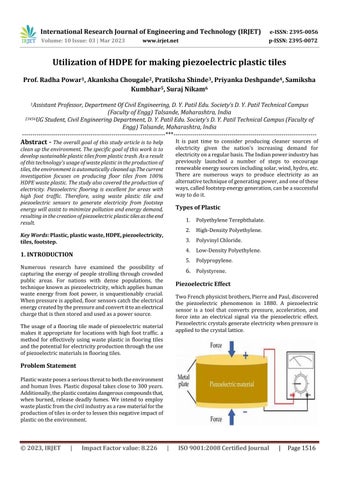
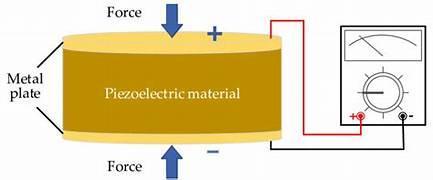
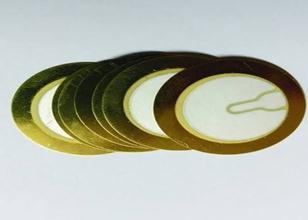
TwoFrenchphysicistbrothers,PierreandPaul,discovered the piezoelectric phenomenon in 1880. A piezoelectric sensor is a tool that converts pressure, acceleration, and force into an electrical signal via the piezoelectric effect. Piezoelectriccrystalsgenerateelectricitywhenpressureis appliedtothecrystallattice.
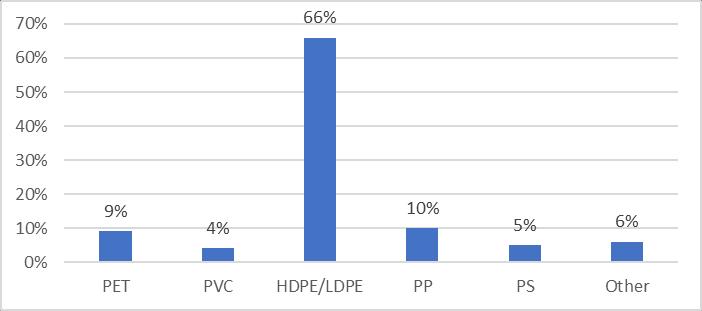
PWmakesup8%ofthewasteproducedinIndia.InIndia, 6137 tonnes of PW run through streets, highways, and beaches per day without being collected. By 2005, PW in MSW had roughly doubled in comparison to 1970, while papertrashproductionhadonlyclimbedslightlymorethan twice as much. Figure displays the primary types of polymersusedinIndia'sPWcomposition
PrimarytypesofpolymersusedinIndia'sPWcomposition
Typicalpiezoelectricsensor
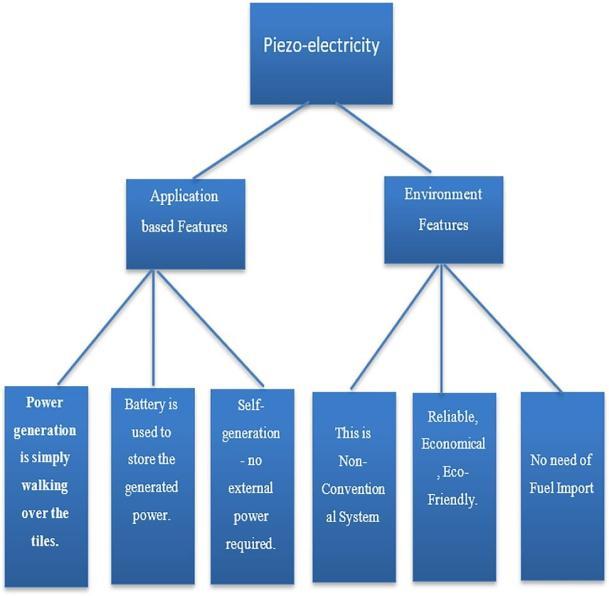
Typical characteristics of piezoelectricity
Themajorityofcurrentenergyresearchisconcentratedon creating new energy sources. The search for future renewableenergysourceshasbegun.Duetotheirpeculiar nature and unique and interesting features, piezoelectric materials are being explored more and more. Energy can only be changed from one form to another; it cannot be created or destroyed. In actuality, their materials may be suitable to generate electrical energy from mechanical energy,similarasvibrations,intoelectricity.
TypicalpropertiesofHDPEplastic
2. Methodology
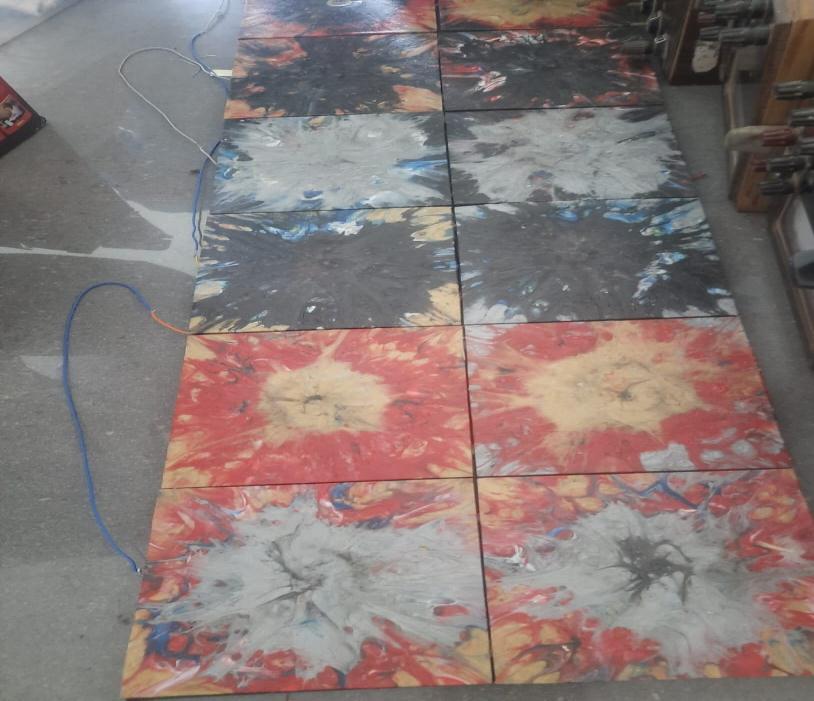
Hdpe-labeledplasticwastewascollectedfromautogarages forrecycling.Plasticgarbageisphysicallysorted,shredded, and cut into smaller pieces. The chips were thoroughly cleaned and free of dirt, paper labels, and other product remains. Plastic waste melted at temperatures between 2100Cto3000Cwhenusinganinjection mouldingsystem. Theindividualtilemeasures150x150x10mm.Amouldwas createdtogivethemoltenplasticitsultimateshapeofthe tile. This was created by joining MS plates with welding. Mouldshouldbeplacedinwatertocoolimmediatelyafter beingfilledwithmoltenplastic.Thetileistakenoutofthe mould once it has cooled. For proper utilization of piezoelectric sensors sandwiching it in rubber which is placed under tile. So by using above methodology the 0.9mx0.3m tile track is made and 20 piezoelectric sensor wereplaced.
3. Generation of electricity by use of piezoelectric materials
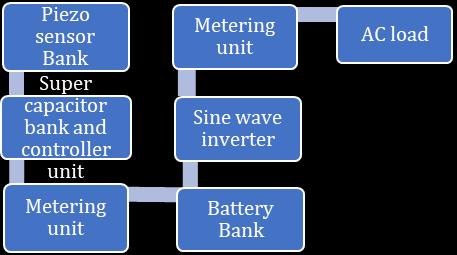
Achargeisproducedacrossapiezoelectricmaterialwhena force is applied to it. The pressure energy applied to the flooring tiles containing piezoelectric material can be convertedintoelectricalenergy.Theweightofthepersons stepping on it can provide pressure. The output of the piezoelectricmaterialisnotconstant.Thisvariablevoltage can be transformed into a linear voltage with the use of a
bridge circuit. The availability of rechargeable batteries helps with output DC voltage storage. A provision can be made to convert Direct Current (DC) to Alternate Current (AC)loadsbyprovidingabatteryandconnectinganinverter tothebattery.Additionally,anLCDdisplaycanbeused.
FlashandFirePointTest
Flashandfirepointtestwastakenusingstandard procedurebyusingPenskyMartenapparatus.
1
5. Result and discussion
4. Test
Flexuretest
The three-point bending flexural test was used to test the flexurestrengthofsample.
SrNo Specimen Breakingload(N) Average
1 Specimen1 1482 1524.67
2 Specimen2 1594
3 Specimen3 1498
WaterAbsorptiontest
ThewaterabsorptiontesthasbeencarriedoutasperASTM D570-98.Thesamplesaresubjectedtogradualincreasein waterabsorptionatroomtemperatureof23oC Sr
1 Specimen1 0.03 0.031
2 Specimen2 0.013
3 Specimen3 0.051
Compressiontest
The plastic block has a short curing time. Plastic core can slowly cool over a period of 24 hours in ambient temperatures,but72hoursisrecommendedforsafety.
An assembly is capable to generate 12 v. A circuit can be preparedtoutilizetherenewableenergythatisgenerated bypiezoelectrictilesandcanbeconnectedtoanacload.For example,theaveragepercentageofwaterabsorptionbytile is 0.031%. The average breaking load is 1524.67 N. The compressivestrengthobtainedis13.6N/mm2 andresultof flashandfirepointtestwas obtained230oCasflashpoint and330oCasfirepoint.Formtheresultsitisclearthatsuch tiles can easily use in Indian conditions without much problem of catching of fire at normal operating temperatures.Thereisnoeffectofweatheringontile.
6. Conclusion
Thestudyoffersapracticalandeffectivesolutionforgetting ridofwasteplastic.Wehavecreatedasystemthatismost suitedforcongestedregionsandcangenerateenergyfrom staircases,passageways,andmanyotherbusylocationslike institutionalbuildings,trainstations,etc.Thesetilesperform betterthanregulartiles.Becauseitismadefromgarbage,a product that has been totally recycled was produced at a very low cost. Unlike ceramic tile, the substance is indestructible. With the use of these techniques, waste plasticandwastehumanenergybothcanbeutilized
Piezoelectricplastictilesarrangement
7 References
1) Seghiri,M.,Boutoutaou,D.,Kriker,A.,&Hachani,M. I. (2017). The possibility of making a composite material from waste plastic. Energy Procedia, 119, 163-169.
2) 1SOURABH JADHAV, 2RAVINDRA SANGALE, 3SUJEET GUPTA, 4PRAMOD PATIL, 5Prof. RACHANA VAIDYA, June 2022, Making Of EconomicalPlasticTilesUsingPlasticWaste
3) BibiIntanSurayaMurat1 ,MuhammadSyarifuddin Kamalruzaman1 ,Mohamad Hafiz nor Azman1 andMuhamad Fazlee Misroh1 (2020), Assessment of Mechanical Properties of Recycled HDPEandLDPEPlasticWastes
4) Zhou, Yi1, Ammar A.M.Al Talib2, Jonathan Yung Chun Ee3(2022), Recycling Of High Density Polyethylene Plastics (Hdpe) Reinforced With Coconut Fibers for Floor Tiles
5) Prof.PatilA.A.,Miss.NadafN.I.,Miss.MahediS.I. ,Miss.BhusareM.B.(2020), Reuse of Plastic Waste into Flooring Tiles
6) Shanmugavalli, B., Gowtham, K., Nalwin, P. J., & Moorthy, B. E. (2017). Reuse of plastic waste in paverblocks.InternationalJournalofEngineering ResearchAnd,V6,2,313-315.
7) Awoyera,P.O.,&Adesina,A.(2020).Plasticwastes to construction products: Status, limitations and future perspective.Case Studies in Construction Materials,12,e00330
8) Rishav Singh1, Somnath Maity2, Sanjir Alam Sk.3 (2022), Manufacturing of plastic tiles from waste plastic materials
9) RUSHIKESH MODHE1, YOGESH LONDHE2, PROF. KASHINATHZAMARE3,PROF.LAXMANLAHAMGE4 (June2022), Use Of Plastic Waste for Floor Tiles
10) Singh, R. K., & Ruj, B. (2015). Plasticwaste management and disposal techniques-Indian scenario.International Journal of Plastics Technology,19(2),211-226.
11) Bamigboye, G. O., Ngene, B. U., Ademola, D., & Jolayemi, J. K. (2019, December). Experimental study on the use of waste polyethylene terephthalate (PET) and river sand in roof tile production. InJournal of Physics: Conference Series(Vol.1378,p.042105).IOPPublishing.
12) Liu,Y.,Yang,W.M.,&Hao,M.F.(2010).Researchon mechanical performanceof rooftilesmadeoftire powder and waste plastic. InAdvanced Materials Research(Vol. 87, pp. 329-332). Trans Tech PublicationsLtd.
13) Moussa,R.R.,Ismaeel,W.S.,&Solban,M.M.(2022). Energy generation in public buildings using piezoelectricflooringtiles;Acasestudyofametro station.SustainableCitiesandSociety,77,103555.
14) Elhalwagy,A.M.,Ghoneem,M.Y.M.,&Elhadidi,M. (2017). Feasibility study for using piezoelectric energy harvesting floor in buildings’ interior spaces.EnergyProcedia,115,114-126.
15) Kumar, D., Chaturvedi, P., & Jejurikar, N. (2014, March).Piezoelectricenergyharvesterdesignand power conditioning. In2014 IEEE Students' ConferenceonElectrical,ElectronicsandComputer Science(pp.1-6).IEEE.
16) Boby, K., Paul, A., Anumol, C. V., Thomas, J. A., & Nimisha,K.K. (2014).Footstep powergeneration using piezo electric transducers.International JournalofEngineeringandInnovativeTechnology (IJEIT),3(10),1-4.
17) Naresh, K., Balaji, A., Rambabu, M., & Nagaraju, G. (2018).PracticalOrientedFootStepElectricPower Generation by Using Piezo Material and MicrocontrollerinCampus.InternationalResearch
18) Bhattacharya,R.;Chandrasekhar,K.;Roy,P.;Khan, A. Challenges and Opportunities: Plastic Waste ManagementinIndia.
Available online: https://archive.nyu.edu/handle/2451/42242 (accessedon15January2021).