International Research Journal of Engineering and Technology (IRJET) e-ISSN:2395-0056

Volume: 10 Issue: 05 | May 2023 www.irjet.net p-ISSN:2395-0072
International Research Journal of Engineering and Technology (IRJET) e-ISSN:2395-0056
Volume: 10 Issue: 05 | May 2023 www.irjet.net p-ISSN:2395-0072
Niveditha S1 , Jyothi M 2 , Keerthana R3 , Priyanka H M4 , Amrutha P5
1 Head of Department and Assistant Professor, Computer Science and Engineering Department, Jnanavikas Institute of Technology,Karnataka, India
2Undergraduate Student, Computer Science and Engineering Department, Jnanavikas Institute of Technology, Karnataka, India
3Undergraduate Student Computer Science and Engineering Department, Jnanavikas Institute of Technology, Karnataka, India
4Undergraduate Student, Computer Science and Engineering Department, Jnanavikas Institute of Technology, Karnataka, India
5Undergraduate Student, Computer Science and Engineering Department, Jnanavikas Institute of Technology, Karnataka, India ***
Abstract-Diabetes is a chronic ailment that could result in a catastrophe for the world's healthcare system 382 million people worldwide have diabetes, according to the International Diabetes Federation. By 2035, this will increase to 592 million. Diabetes is a disease characterized by high blood glucose levels. The signs of this raised blood sugar level include increased thirst, appetite, and frequency of urinating. One of the main causes of stroke, kidney failure, heart failure, amputations, blindness, and kidney failure is diabetes. Our bodies convert the food we eat into sugars like glucose when we eat. Then, we anticipate insulin to be released from our pancreas. Our cells can be unlocked by insulin, allowing glucose to enter and empowering us. The most prevalent forms of the disease are type 1 and type 2, but there are other varieties as well, including gestational diabetes, which develops during pregnancy. Data science's newest field, machine learning, studies how computers learn via experience. The objective of this work is to develop a system that can more correctly conduct early diabetes prediction for a patient by combining the results of several machine learning methodologies.
Keywords- Decision tree, K closest neighbor, Logistic Regression, Support vector machine, Accuracy, Machine Learning,Diabetes.
Diabetes is a disorder that is spreading swiftly, even in children If we are to understand diabetes and how it develops,wemustfirstunderstandwhathappensinthe body when there is no diabetes. We get sugar (glucose) from the foods we eat, particularly those that are heavy in carbohydrates. Our body's primary source of energy comes from foods high in carbohydrates. Everyone requires carbohydrates, including those who have diabetes. Examples of foods that contain carbs include bread, cereal, pasta, rice, fruit, dairy products, and vegetables(especiallystarchyvegetables) Someglucose
is transported to our brain in order for us to think and function effectively. The remaining additionally to our liver, where it is stored as energy that the body uses later.Insulinisrequiredforthebodytoburnglucosefor fuel. The pancreas' beta cells create insulin. Insulin acts as a key to open door to allow glucose to enter the cell from the bloodstream, insulin binds to the cell's doors and opens them. Hyperglycemia occurs when glucose builds up in the bloodstream, and diabetes happens when the pancreas is unable to create enough insulin (insulin deficit) or the body is unable to utilize the insulin produced (insulin resistance). Diabetes Mellitus ischaracterizedbyelevatedbloodsugar(glucose)levels. DiabetesSubtypes:
A person with type 1 diabetes has a weaker immune system and cells that are unable to produce adequate insulin There are currently no reliable studies demonstrating the causes of type 1 diabetes, and no successfulpreventativemeasuresareavailable.
Type 2 diabetes is distinguished by either insufficient insulin synthesis by the cells or by the body's incorrect insulin use. This kind of diabetes affects 90% of people with diabetes, making it the most common. Its occurrence is influenced by both hereditary and environmental factors. Diabetes Causes : Diabetes is primarilycausedbygenetics.Itiscausedbyatleasttwo faulty genes on chromosome 6, The chromosome that controlshowthebodyrespondsto differentantigens.
Potentially, viral infection could have an impact on how type 1 and type 2 diabetes develop. Viruses such as hepatitis B, CMV, mumps, rubella, and coxsackievirus, according to research, enhance the likelihood of developingdiabetes.
International Research Journal of Engineering and Technology (IRJET) e-ISSN:2395-0056
Volume: 10 Issue: 05 | May 2023 www.irjet.net
Women who experience high blood sugar levels early in pregnancydevelopgestationaldiabetes.Itwillreoccurin two-thirds of the cases throughout additional pregnancies. When gestational diabetes was present throughout a pregnancy, there is a high likelihood that type1ortype2diabeteswillemerge.
1. Yasodha et al:
Categorizationonanumberofdatasetsisusedtoassess whetherornotapersonhasdiabetes.Thehospital'sdata warehouse, which has 200 instances with nine attributes, was used to create the data set for the diabetic patient. Both blood tests and urine tests are mentioned in these instances of the dataset .WEKA can be utilized to classify the data in this study's implementation due to its great performance on tiny datasets. The 10-fold cross validation approach is used to review and compare the data after that. We use the naïve Bayes, J48, REP Tree, and Random Tree algorithms. Among the others, J48 performed the best, withanaccuracyof60.2%.
2. Aiswarya et al:
Attempts to diagnose diabetes by studying and evaluating the patterns that emerge in data through classification analysis using Decision Tree and Naive Bayes algorithms. The study's purpose is to propose a faster and more successful method of identifying the sickness, which will aid in the timely treatment of the patients. The study discovered that utilizing a 70:30 split, the PIMA dataset, and cross validation, the J48 technique delivers an accuracy rate of 74.8% and the naïveBayesmethodproducesanaccuracyrateof79.5%. dataset with dichotomous values, which means that the class variable has two possible outcomes and may be easily handled if detected earlier in the data preprocessing stage and can aid in improving the predictionmodel'sperformance.
Aditya,KSomasekharReddy,DurriShahwar. computing technologies(i-PACT).
4. Lee et al:
Concentrate on utilizing the decision tree algorithm CART onthediabetesdatasetafterapplyingtheresamplefilterto the data. The author emphasizes the issue of class imbalanceandtheimportanceofaddressingitbeforeusing any approach to boost accuracy rates. The bulk of class imbalances occur in datasets with dichotomous values, indicating that the class variable has two possible outcomes. If this imbalance is detected earlier in the data preprocessingstep,itmaybeeasilyaddressedandwillhelp toimprovethepredictionmodel'saccuracy.
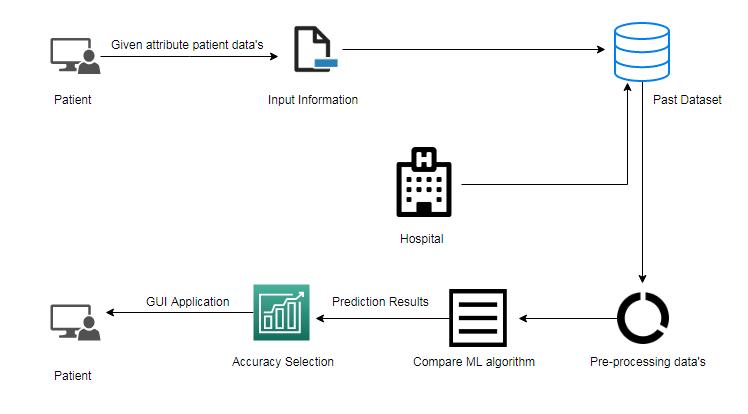
Thediabetesdatasetwasdeveloped.Wewilllearnabout the different classifiers used in machine learning to predict diabetes in this part. We will also present the technique we proposed to increase precision. In this paper, five alternative methodologies were used. The various strategies are discussed more below. The accuracy metrics of machine learning models are the output Predictions can then be made using the model. The collection contains 2000 diabetes cases. The readingsareusedtoestablishwhetherornotthepatient hasdiabetes.
Traditional and cutting-edge machine learning approachesareemployedtoforecastdiabetesinitsearly stages in the work presented. The same dataset is used to run eight well-known machine learning algorithms, andtheoutcomesareanalyzedusingthesamemetricsto discover the most practicable technique that provides the greatest classification performance result. Decision tree, random forest, support vector machine, XG Boost, K-nearest neighbor, Naive Bayes, artificial neural network, and convolutional neural network are the machinelearningmethodsemployed
The study evaluates how well the same classifiers perform when used with different platforms, similar parameters (accuracy, sensitivity, and specificity), like MATLAB and RapidMiner. It also seeks to discover and compute the accuracy, sensitivity, and specificity percentages of various categorization algorithms. The algorithms JRIP, J Graft, and Bayes Net were utilized. J Graft has the highest accuracy (81.3%), sensitivity (59.7%), and specificity (81.4%), according to the data Furthermore, it wasdiscovered that WEKA outperforms MATLAB and RapidMiner. 2021 Innovations in power and advanced computing technologies (i-PACT), Rahul S G, Rajnikant Kushwaha, Sayantan Bhattacharjee, Agniv
International Research Journal of Engineering and Technology (IRJET) e-ISSN:2395-0056
One of the most pressing real-world medical challenges istheearlydetectionofdiabetes.Inthiswork,concerted efforts are made to develop a system that can predict diabetes. Our pancreas is then supposed for insulin production. The ability of insulin to unlock our cells is like a key, enabling the internal flow of glucose and our ability to work. The most common types of diabetes are type 1 and type 2, although there are others, such as gestational diabetes, which develops during pregnancy. Machine learning is a new area in data science that explores how machines learn from experience. The purpose of this work is to develop a system that can more correctly predict early diabetes in a patient by combining the findings of multiple machine learning methodologies.
Volume: 10 Issue: 05 | May 2023 www.irjet.net p-ISSN:2395-0072 groups.
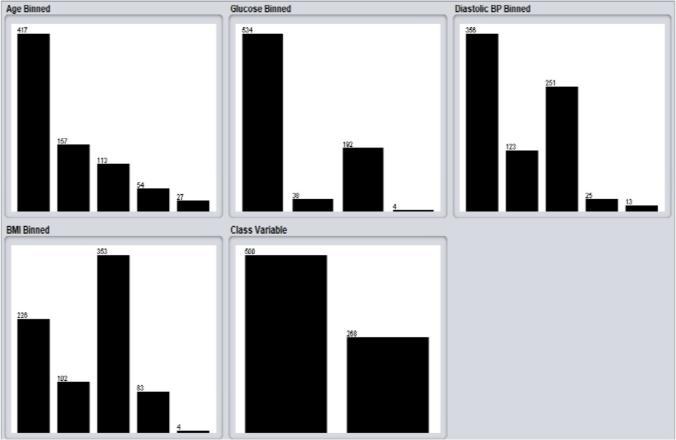
reduction.(Ora similar) outcome.A dataset's number of attributes has been reduced via dimensional reduction [32].Theprinciplecomponentanalysismethodwasused toidentifyessential propertiesfromalargedataset. Age, diastolic blood pressure, BMI, and glucose were all factorsinthedatasetthatwerestatisticallysignificant.
5. Transformation of data
Smoothing, normalization , and data aggregation are all components of data transformation [33]. The binning methodwasemployedtosmooththedata.Theproperty of age has proved effective in categorizing into five
The dataset for this study was supplied by the Diabetes andDigestiveandKidneyDiseasesNationalInstituteand is At the UCI ML Repository, it is accessible to everyone [29].Themainobjectiveofusingthisinformationwasto identify and determine a patient's likelihood of having diabetes using precise diagnostic information from the dataset. When selecting occurrences from the larger dataset, numerous constraints were encountered. Both the dataset and the problem are supervised binary classification, specifically. Diabetic Pima Indians (PID) dataset had 768 records describing female patients, 500 negative instances (65.1%), and 268 positive instances (34.9%),aswellas9=8+1(ClassAttribute)attributes.
Real-world data may have values that are noisy, inconsistent, or missing. If Low data quality may lead to ineffectivesearchresults.Thedatamustbepreprocessed in order to obtain high-quality findings. Cleaning, integration,transformation,reduction,anddiscretization areusedtopreprocessthedata.Itisvitaltoincreasethe data'ssuitabilityfordataminingandanalysisintermsof time,cost,andquality[30].
Real-world data may have irregular, inconsistent, or missingnumbers.Ifthedataqualityispoor,itisprobable that no useful results will be discovered. Preprocessing the data is required to get high-quality results. Data preprocessing techniques include cleaning, integration, transformation,reduction,anddiscretization.Itiscritical to improve data mining and analysis applicability in termsoftime,cost,andquality[30].
A smaller-volume, condensed version of the dataset that yields the same results is produced through data
1. XG Boost:
A tree-based machine learning system called XG Boost
Extreme Gradient Boosting begins with weak models and finishes with a powerful model More nodes are added to decision trees in parallel while accounting for thegradientofthelossfunction. Theresultsofeachtree are examined when categorizing an instance, and the result with the most votes is returned as the model's output.
A straightforward but efficient machine learning algorithm is K’s closest neighbor A graph representing training data with the expectation that examples from thesameclasseswillbeclusteredtogether.Aninstance's position on a graph is determined using its features when predicting it is given a label, and the k neighbors who are closest to it are recognized For the categorization of the diabetic dataset, a two- threedimensional convolutional neural network with convolutional layers was used., with the labels of these neighborstakenintoaccount.Convolutionlayersemploy 8and4filters.
The Decision trees, Using a machinelearning tool, show how the generated model predicts data. It builds a tree withnodesrepresentingfeaturesthebranchesrepresent the paths that must be takenfollowing each node, while the leaves represent forecasts. Classes of the given data can be anticipated by travelling from the root to the leaves and picking appropriate branches The most significant and elective characteristic is located at the rootnodeofthedecisiontree,indicatingthesignificance of features. In the study being presented, models were built using Gini Information Gain settings for two-level pruning.
The decision tree makes misleading predictions when a section of it is constructed wrongly. A machine learning method called random forest seeks to address the overfitting problem. This method combines the predictions of numerous decision trees that were generated at random, and the label that received the mostvotesisreturnedasthelabelfortheinputdata.The votingmechanismformanytrees'judgement.
AEachinstanceinaspaceismappedbyasupportvector machine, which also divides the space into hyperplanes Each hyperplane represents a class, and each piece of data is mapped to form the classification Because training costs and time for large datasets may be prohibitive,itispreferabletouseSVMforsmalldatasets. Thepolynomialkernelusedinthisstudyhasadegreeof 3,andtheregularizationvalueissetto0.1.
The Naive Bayes machine learning algorithm is built on the Bayes theorem. When the dataset is large and containsa large numberoffeatures,itdoesnotproduce good results since it assumes that all attributes are independent. Gaussian A variation of Naive Bayes that usestheGaussnormaldistributioniscalledNaiveBayes. polynomialkernelusedinthisstudyhasadegreeof3, andtheregularizationvalueissetto0.1.
7. A neural network is a type of artificial neural network.
A neural network is a type of artificial neural network intended to solve difficult issues by simulating the functions of the human brain. To create predictions, a network with nodes and connections is built using this procedure. At initialization, each link will be assigned random weights, which will be adjusted based on the loss of train data. n nodes are used to produce predictions for an n-class problem. connected to the network's output. And the outputs of each of those n nodes provide the likelihood that a specific set of data belongstoaparticularclass.
8. Convolutional Neural Network
Artificial neural networks are created to solve complex issues by emulating how the human brain functions. Using this method, a network with Predictions is made using nodes and links. Upon initialization, random weightswillbeassignedtoeachlink,andweightswillbe adjusted based on how much train data was lost. The likelihoodthatagivencollectionofdatabelongs Whenn nodes are set to the network's outputs, each of the n nodes'outputscorrespondstoaspecificclass.Utilizethe resultstopredictaproblemwithnclasses. Performance metricsincludeaccuracy,recall,precision,andf-score.
An accuracy performance indicator measures the proportion of correctly identified data to total data. Despite its popularity, it does not provide full Statistics performedbythemodel.Precisionisdefinedastheratio of genuine positives to all data classified as positive. Precision in diabetes patient classification exhibits the model's ability to identify patients while avoiding categorizing healthy individuals as sufferers. The proportion of true positive outcomes to all positive results is referred to as recall. In the case of diabetes classification, it reflects how many patients the model can identify. F score is a valid metric for evaluating model performance since it calculates the harmonic meanofrecallandprecision.
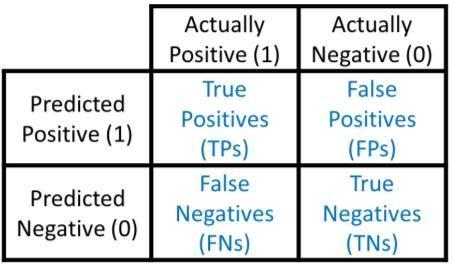
A confusion matrix may also be used to display model performance. An n x n matrix known as a confusion matrixisoneinwhichnrepresentsthequantityoflabels in a specific dataset genuine labels are represented by eachrow,whilepredictedlabelsarerepresentedbyeach column.
An important data mining technique is the artificial neural network (ANN), a branch of artificial intelligence research. The An ANN's three layers are input, hidden, and output. Units in the hidden layer convert the input layer into the output layer.. The output of one neuron is used as the input of another layer. An artificial neural network (ANN) recognizes complicated patterns and learns from them. There are billions of neurons in the human brain. A perceptron is a single neuron of this type, and axons connect these cells to other cells. Dendrites interpret input as stimuli after receiving it. Dendritestakeininformationandconvertitintostimuli.
Similar to this, the ANN is made up of numerous nodes connected to one another. A weight represents the connection between two units. An ANN's purpose is the transformation of input into useful output. Introducing "input"referstothecombinationofasetofinputvalues linked to a weight vector, which might be positive or negative. The weights can be added using a function, such as y = w1 1x + w x2 2 to send the result to the output.Theweightingdeterminesaunit'sinfluence,and the synapse is where a neuron's input signal meets another neuron's output signal. Both supervised and unsupervised learning methods are compatible with ANN.Ourstudyutilizedsupervisedlearningbecausethe resultsareprovided







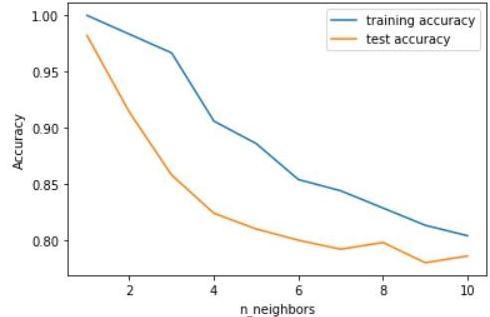
In order to examine the approaches throughout the dataset, these measures were created using 5fold cross checking.Whenusingkfoldcrossvalidation,Thedataset hasbeensplitintokparts.
The training procedure will be repeated k times, using k-1foldsfortrainingand1foldfortestingeachtime.This strategyavoidstheproblemofunbalanceddata,allowing model metrics to be monitored more precisely. And 1fold for testing. With this approach, the problem of unbalanced data is avoided, allowing for more precise monitoringofmodelmetrics
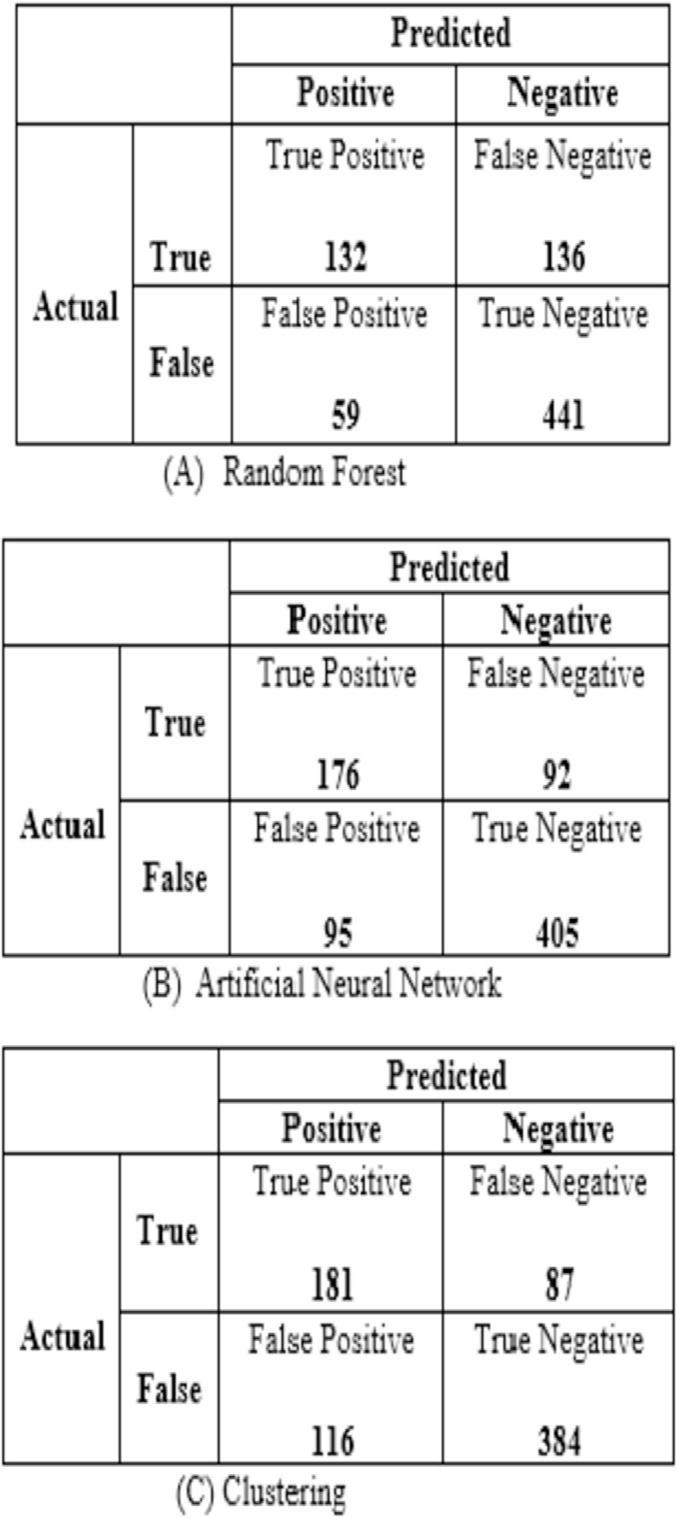
A confusion matrix can also be used to demonstrate model performance. An n x n matrix is a confusion matrix.inwhichnrepresentshowmanylabelsarethere in a particular dataset. The labels themselves are representedbyeachrow,whiletheanticipatedlabelsare shownbyeachcolumn.
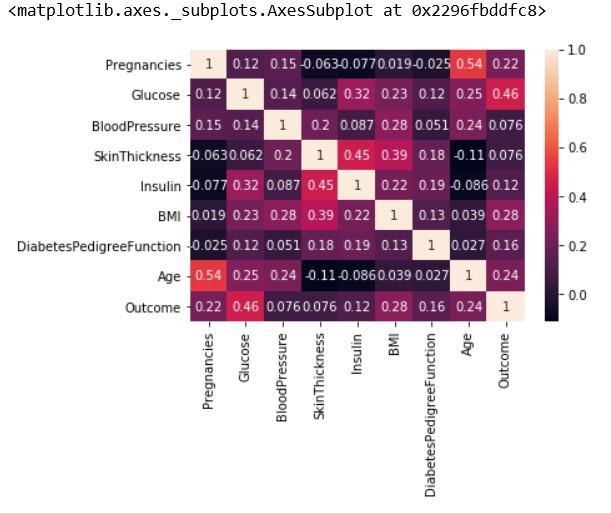
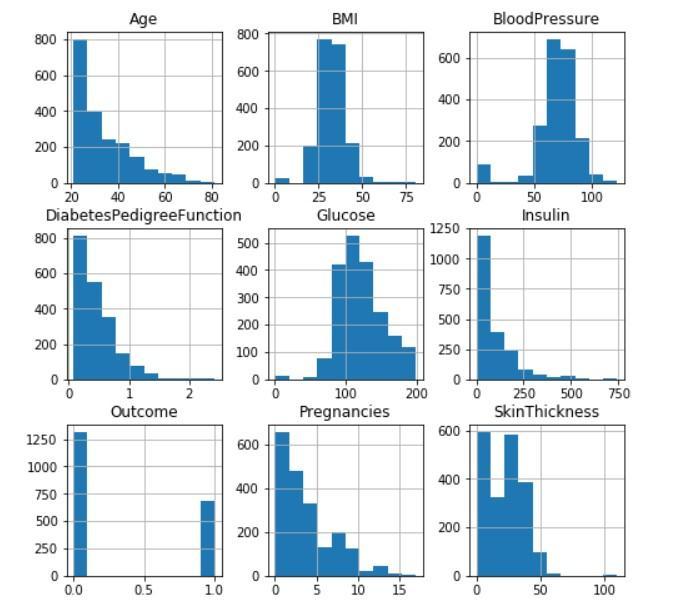
It is clear that none of the attributes have a particularly strong relationship with our result value. Some characteristics have a positive correlation with the outcomevalue,whileothershavea negativecorrelation.
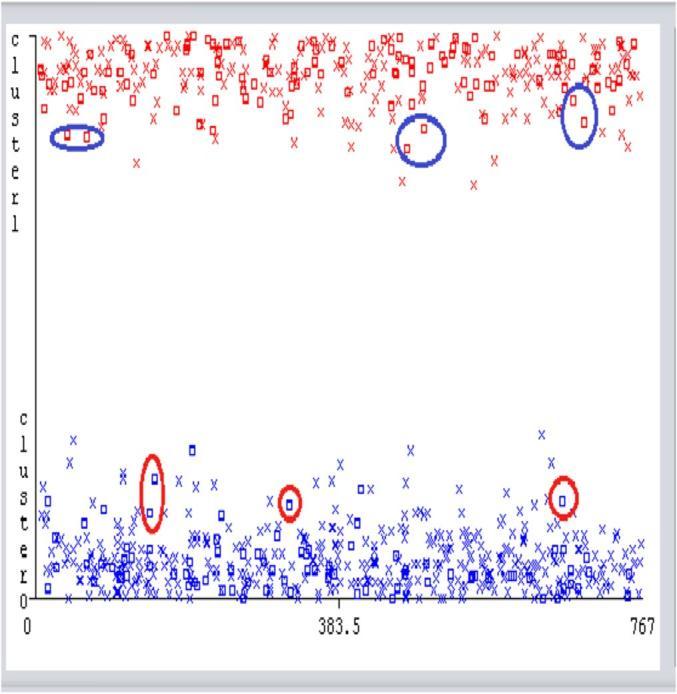
Itisclearthatnoneofthefeaturessignificantlyinfluence our result value. Some features and the outcome value haveapositivecorrelation,whileothershavea negative correlation.Histogram:
this study utilizing various criteria. The research is centered on the John Diabetes Database. Using the Decision Tree approach, experiments assess the suitabilityofthedesiredsystemwith99%accuracy.
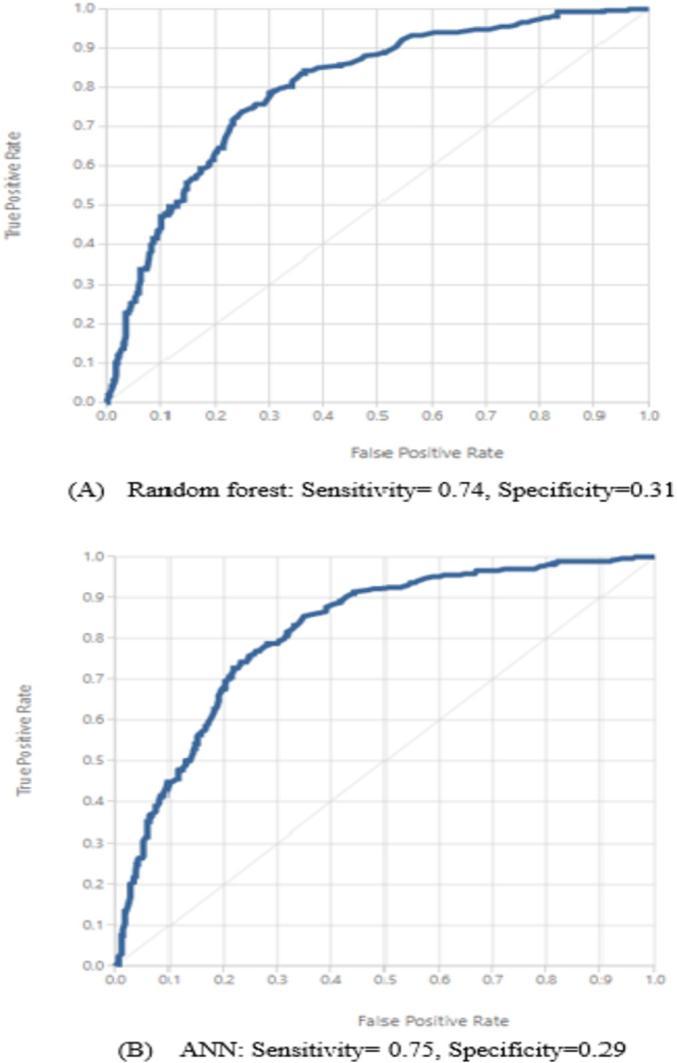
Data mining and machine learning methods are beneficialfordiagnosingdiseases.Variouscategorization systems based on accuracy, with the capacity to anticipate diabetes early being a key premise. for medical diagnosis of diabetes patients. There is a classification statements of accuracy. The Pima Indian diabetes dataset was subjected to three machine learning methods. In addition, they were trained and validated on a test dataset. The results of our model implementations show that ANN outperforms the other models. The findings from association rule mining revealed a significant correlation between BMI and glucoselevelsanddiabetes.Thisstudy'srestrictionisthe use of a structured dataset, however unstructured data willlikelyalsobeusedinthefuture.
The categorization outcome demonstrates the identificationandlabellingofthreetypesoftissues.This tissueclassificationisusedtodeterminethebestcourse of action for treating diabetic patients' wounds so they recover quickly. However, the outcome needs to be verified using factors like accuracy. Additionally, verification of this detection system using More wound image data sets are being examined, as well as the effectiveness of various segmentation and classification algorithmsbasedonvariouscolorandtexturalfeatures.


This classifier attempts to generate a hyper plane that modifies the distance between the data points and the hyper plane to best distinguish the classes. A number of kernelsareusedtoselectthehyperplane.Itriedoutthe linear,poly,rbf,andsigmoidkernels.
Theearlydiagnosisofdiabetesisoneofthemosturgent modern medical problems. The goal of this endeavor is to create a system that can anticipate diabetes. This research examines and evaluates five machine learning classification methods utilizing a range of measures. Experiments are being conducted on the John Diabetes Database. With 99% accuracy, the decision tree technique is used to assess the acceptability of the desiredsystem.Diabetesidentificationisoneofthemost important medical problems facing society today. This approach requires coordinated efforts to develop a system that can predict diabetes We investigate and evaluatefivemachinelearningclassificationtechniquein
Eightmachinelearningtechniquesareusedinthisstudy to examine the early-stage diabetes risk prediction dataset Performance indicators including accuracy, recall, precision, and f-score are used to compare the results. The created 1-dimensional convolutional neural network model is the most effective one which, when appliedtothedataset,hasa99.04%accuracyrateusing the 5-fold cross validation schema. On the early-stage diabetes risk prediction dataset, no studies using XG Boost or Convolutional Neural Networks have been published. The findings presented in this research demonstrate that both of these two approaches successfully identify the risk of diabetes in its early stages.Since the evaluated metricsarehigh,more effort couldbeputintodevelopinganearly-stagediabetesrisk predictionapplication.
[1] Anjuman, A.A., M.G. Ahamad, and M.K. Siddiqui (2013). Application of data mining: Treatment of patientswithdiabetes,bothyoungandold
[2] Bainite, M.P., G.R., 2014. Design of Classifier for Detection of Diabetes Mellitus Using Genetic Programming. Advances in Intelligent Systems and
Computing1,763–770.doi:10.1007/978-3319-11933-5.
[3] Choubey, D.K., Paul, S., Kumar, S., Kumar, S., 2017. ClassificationofPimaIndiandiabetesdatasetusingnaive bayeswithgeneticalgorithmasanattributeselection,in: CommunicationandComputingSystems:Proceedingsof the International Conference on Communication and ComputingSystem(ICCCS2016),pp.451–455
[4] Sisodia,D.,Shrivastava,S.K.,Jain,R.C.,2010.ISVMfor face recognition. Proceedings 2010 International Conference on Computational Intelligence and Communication Networks CICN 2010, 554–559doi:10.1109/CICN.2010.109.
[5] Sciences 25, 127–136, King Saud University; Doi: 10.1016/j.jksuci.2012.10.003. Health Monitoring and Tracking of Soldier Using GPS," International Journal of ResearchinAdventTechnology,vol.2,no.4,pp.291-294, April2014.P.Kumar,G.Rasika,V.Patil,andS.Bobade
[6]"ARealTimeAutonomousSoldierHealthMonitoring and Reporting System Using COTS Available Entities," Second International Conference on Advances in Computing and Communication Engineering (ICACCE), Dehradun,India,May2015,pp.683-687
[7] "An IoT based patient monitoring system using raspberry Pi", International Conference on Computing Technologies and Intelligent Data Engineering, Kovilpatti,India,January2016,pp.1-4.
[8] “Real Time Health Monitoring System of Remote Patient Using Arm7”, R. Shaikh, International Journal of Instrumentation, Control and Automation (IJICA), vol. 1, no.3-4,pp.102-105,2012.
[9] International Institute for Strategic Research (3 February 2014). Pages 241-246 ofTheMilitary Balance (2014). Routledge, London, ISB9781857437225.no. 3-4, pp.102-105,2012.