IMPLEMENTATION OF LEAN TOOLS AND EGONOMIC ASPECTS IN THE DESIGN OF A CARAVAN
1,2
3,4,5,6
Abstract - The project aims to overcome major challenges like improving the efficiency, productivity, and Ergonomics based caravan designing company. One of the biggest problems for the implementation of lean is the voluminous nature of work and various types of resistance in the early stages. If we ignore such resistance and plow ahead with implementation, the result is likely to be nothing more than superficial improvements. Thus, we have implemented the concept of Lean by providing both flexibility and comfort to the end consumer. Some of the major lean tools are implemented like Poke Yoke, single-minute exchange of die, Kanban, kaizen, standardized work, and takt time.
1.INTRODUCTION
Leanassemblingisanadministrationreasoningzeroingin on the decrease of the seven squanders (Over-creation, Holding up time, Transportation, Handling, Stock, Movementand Scrap)in fabricated items.By disposing of waste (Muda), quality is improved, creation time is decreased, and the expense is diminished. Lean is tied in with getting the right amount while limiting waste and beingadaptableandopentochange.Leanassemblingisa strategy which center around client needs and satisfies it by conveying the necessities at less time with top notch and less expensive expense through taking out a wide range of stowed away squanders that present in the organizationsbynonstopimprovement
1.1 EVOLUTION OF LEAN MANUFACTURING
The idea of Lean was created by the Toyota leader, Taiichi Ohno (1912-1990). Mr Ohno initially distinguished the seven sorts of MUDA (squander). Mr. Ohno's convictions were formed byhis investigation of the Model TPortage(1913)Ceaselessstreamindefinitegathering,as well as his interest with American grocery stores.In 1913 HenryPortageplannedtheModelTMechanicalproduction systemsothat’ll thecyclewasinasimilargroupingasthe form. Preceding these all-assembling processes (stepping, welding, and so on) were assembled making clump producing. While in the US Mr. Ohno understood that the American Store loading and restocking strategies were
infinitely better to the techniques utilized in weighty ventures.

2. LEAN IMPLEMENTATION
2.1 POKA YOKE
Poka Yoke is a Japanese term that means "mistakeproofing"or"inadvertenterrorprevention".APokaYokeis any mechanism in any process that helps an equipment operator avoids mistakes. Its purpose is to eliminate product defects by preventing, correcting or drawing attentiontohumanerrorsastheyoccur.
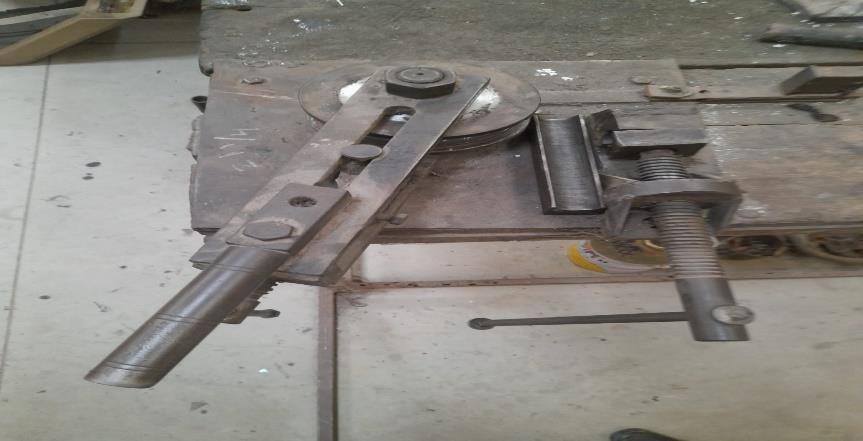
In this company before welding, the pipes are bent as required.Ittakesmoretimetomarkthepipeandcheckfor accuracy every time they bend it. Therefore, introduction of Poka Yoke will help in reducing the time taking to completetheprocess.
Thus,astopperisintroducedinthepipebendingmachine at particular length. This avoids the errors that are made by humans. As pipe to be bent is of constant length in the most cases. This acts as a perfect method of Fool Proofing and has immediate effect on time, as it reduces the time takentobendthepipefrom250secondsto100seconds.
2.2 5S CONCEPT
Objective:
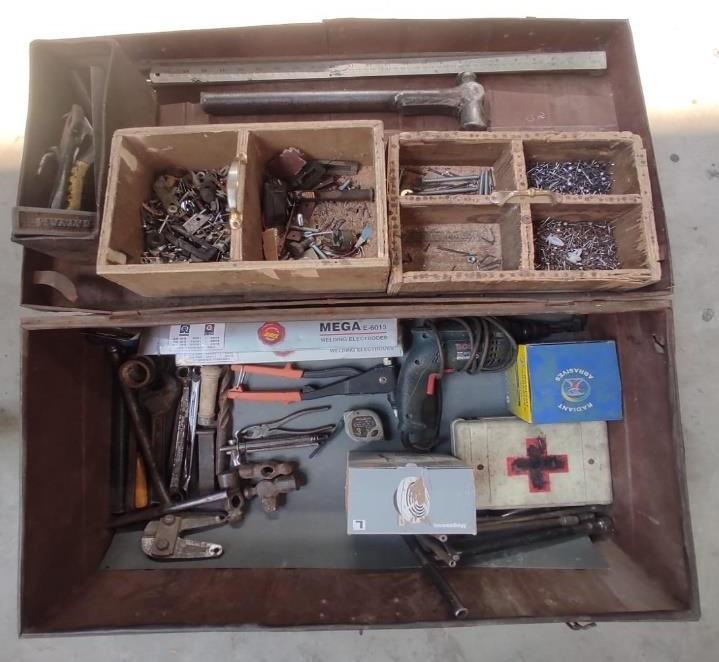
Arranged tools in the tool boxes according to the shape andsizes
Description:
Tools such as bolts, nuts, steel nails, drilling machines, spanners, welding electrodes, etc., are arranged properly in a tool box based on their shapes and sizes. This results insavedworkingtime.
Difficulties faced:
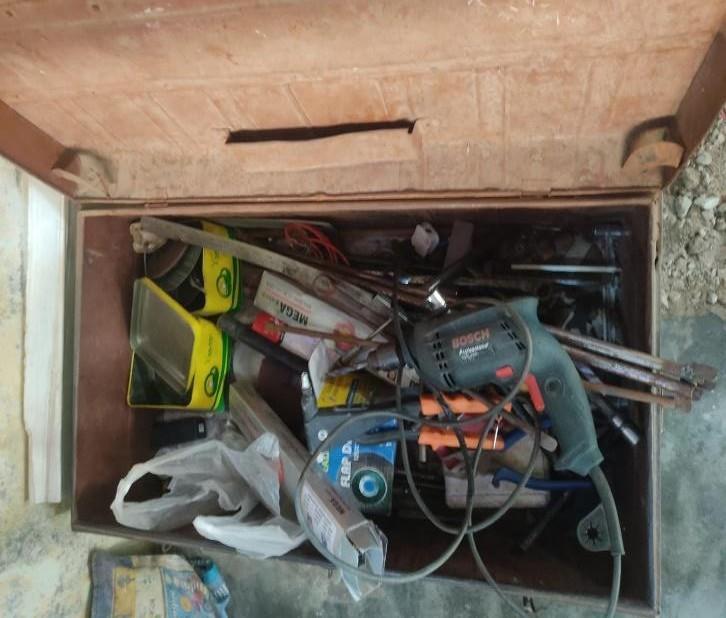
Improper arrangement of tools can cause more time consumption.
Suggestions: To solve this issue, separate boxes are needed for tools such as steel nails, bolts, and nuts, based on their shapes andsizes.
Implementations: We have separated various tools into separate boxes basedontheirsizes.Thishashelpedussavetime.
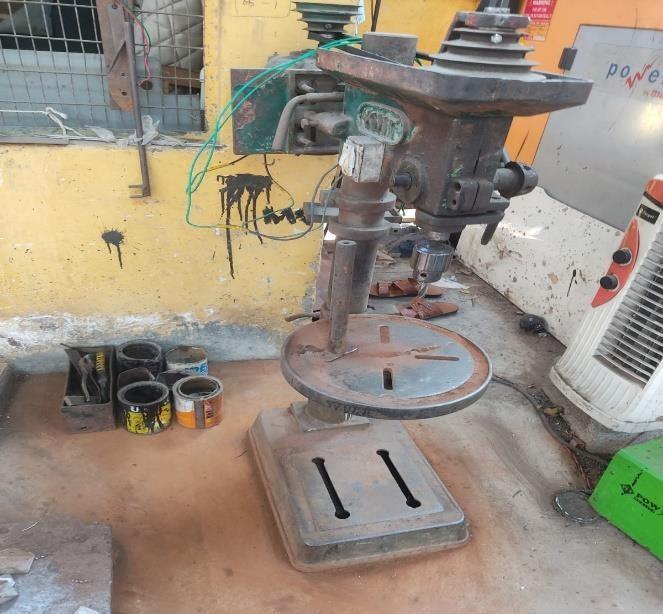
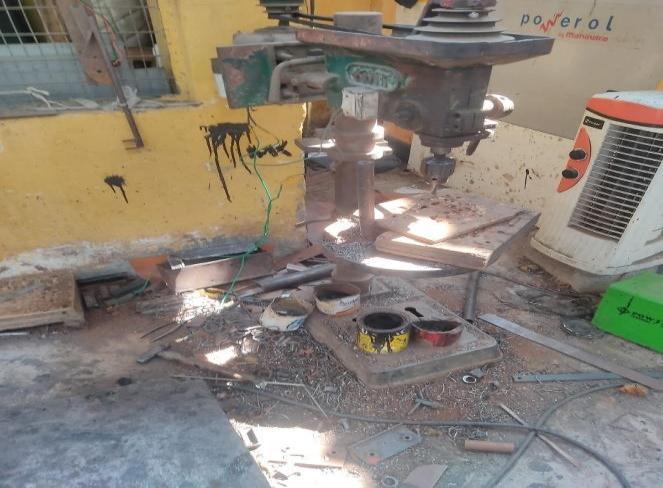
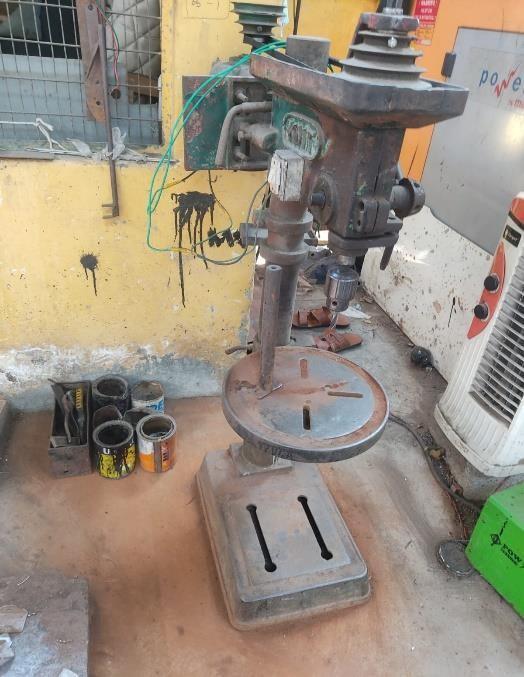
During the drilling process, various tools were scattered around the machine and the burs on the circular plate were sticky, which could lead to problems during the drilling process. To ensure smooth operation we cleaned thearea around and arranged the tools. Thishelpedus to workwithoutproblem.
2.3 KAIZEN
Kaizen is a Japanese term that refers to the practice of continuous improvement. The word “kai” (change) and “Zen”(Good),whichtogethermean“changeforthebetter” or “improvement”. The Kaizen philosophy has been implemented in organizations around the world as a way to improve production values while also improving employeemoraleandsafety.
2.3.1 Kaizen improvement in Pipe Bending Manual Machine
BENEFITS:
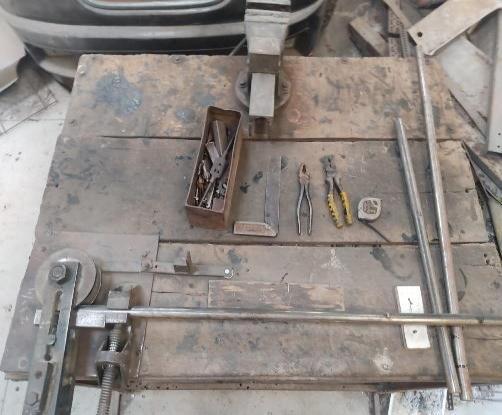
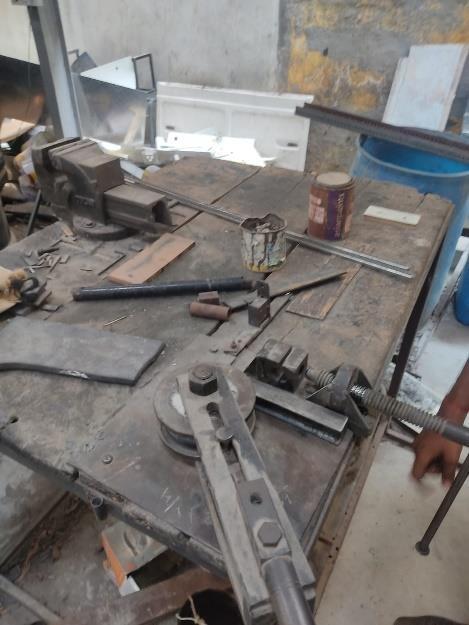
To reduce the time workers spend searching for them, which can lead to delays, frustration, and decreased productivity. so, we have placed the pipes and tools near the pipe bending machine to reduce the time workers spendsearchingforthem.
2.3.2 Kaizen improvement in Drilling machine
Problem Definition:
The current setup of the pipe bending machine involves fixed it on a table, but the tools and pipes are not located nearby. which the workers spending more time searching forthenecessarytoolsandpipes.
Why -why Analysis:
Why: thetoolsandpipeswerenotlocatednearthepipe bending machine caused a problem for workers. As they hadtospendmoretimesearchingfortheseitems
How: place the pipes and tools near the pipe bending machineitreducesthetimeworkersspendforsearching.
Problem Definition:
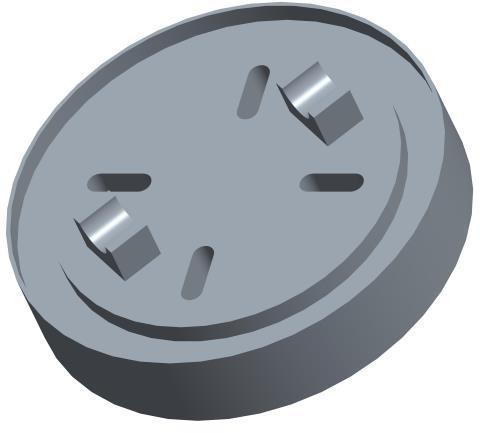
The use of a fixture plate for holding pipes during the drilling process presents a vibration that can cause the pipestomoveduringdrilling.
Why -why Analysis:
Why: due to drilling process, the machine generates vibrations,whichcausethepipestoshake.
Why: holding the pipes manually may not provide sufficient stability, resulting in movement and misalignmentduringdrilling.
How: the support plate was attached to the fixed plate usingboltsandscrew,ensuringasecureandstable setup.
400Min/day.
AverageworkingDaysinamonth=25days
Netoperatingtimepermonth=Averageworkingdays× Net operating time per day =25×400 =10,000min/month
Noofseatsrequiredpermonth=55seats
Netoperatingtime
TaktTime= Customerrequirement =10,000/55 =181Minutes/unit
Every 181 Minutes we really want to deliver no less than Oneseattomeetcustomernecessity.
BENEFITS:
Wehavesuggestedasupportplateontothefixtureplate to hold the pipes during drilling, the pipes can be securely held in place, reducing the need for manual holding and minimizing the mismatched holes. This effectively prevents vibrations from occurring and resultsinhigheraccuracyandprecision.
2.4 TAKT TIME:
Takt time is defined as Maximum allowable time which you need to produce a one product in order to meet customerdemand
Netoperatingtime
TaktTime= Customerrequirement
Datataken:
Totalworkinghours/day=8hours
Lunch =30minutes
Breaks =30minutes
Startupmeeting =20minutes
Netoperatingtimeperday=Totalworkinginmin(Lunch,Startupmeeting andBreaks) =480–(30+30+20) =480–80
3. CONCLUSIONS
Improved quality, enhanced productivity, shorter lead times, and more customer satisfaction are just a few advantages that organisations that effectively use lean manufacturing concepts may enjoy. It is a continuous process that needs constant development and adaptability to shifting conditions to maintain success over time. By implementing the lean tools we achieved 10–15minsreductionofoverallproductioninaday.
REFERENCES
[1] J.E.Shigley"Mechanicalengineeringdesign",New York,McGraw-Hill;FifthEdition,1989,pp.31-71.
[2] J. E. Shigley Charles E. Mischke, “Mechanical engineering design”, New York McGraw-Hill; fifth edition’1996,pp.475-517.
[3] Rother,M.,Shook,J,LearningtoSee:ValueStream Mapping to Add Value and Eliminate Muda, The Lean Enterprise Institute, Inc., Brookline, MA. 1999.
[4] John Bessant, David Francis, Developing strategic continuous improvement capability,International Journal of Operations & Production Management, 9(11)(1999)1106-111.