3D Printable Concrete: Mixture Design, Simulation & Test Methods
Jithin Sudhakrishnan1 , Reshma Nair P J2 , Manjusha Mathew3
1Mtech student, Structural and construction management, MGMCET, Pampakuda P.O, Muvattupuzha, Kerala, India
2Assistant professor, Civil Department, MGMCET, Pampakuda P.O, Muvattupuzha, Kerala, India
3Assistant professor, Civil Department, MGMCET, Pampakuda P.O, Muvattupuzha, Kerala, India
Abstract – Over the past decade, 3D concrete printing has shown tremendous potential in the field of construction industryespecially inthefieldofresidentialprojects.Thefresh stage and hardened state requirements of 3D printable concrete are not controlled by the present codes and standards. Even though the conventional 3D printing with PLA, ABSetc. arebecomingpopular andaccessibleincommon market, theconcept of3D concreteprintingisstillinaccessible even to the scholars and researchers due to the high cost involved. So, we need to develop a cost-effective methodology for experimenting and testing of 3D printable concrete mixes. In this paper, various historical data on mix design proportions are studied and a general conclusion is made so that how a more acceptable mix can be made with the locally available materials in the market with proper granular material packing. A software called Elkem Material Mix Analyzeris usedfortheoptimizationofthe mix.Theconceptof Manual Extrusion (Manual 3D printing with hand held extruder) is introduced here for experiment purpose. Aspects of mixture compositions and their effects on properties especially on fresh stage and hardened stage of 3DPC are highlighted and mix design approaches are described. Presently we are following a trial-and-error approach, and whichremains thenorm. We havetodevelopastandardguide line to achieve design targets common to specific parameters of 3D printer and which should be universally acceptable.
Key Words: 3D printable concrete (3DPC), Rheological properties, Mix Design of printable concrete, Manual Extrusion, Material Mix Analyzer, Hand printing.
1.INTRODUCTION
In 3D printing the concept followed is additive manufacturing technique. Normally the structure is built layer by layer based on three-dimensional computergenerated model. Khoshnevis has invented the contour craftingtechnique,whichisfoundasthemajormilestonein this sector. 3D concrete printing is now found as an innovative technology that shows amazing potential with regard to the increase of safety and productivity in construction. The main economically feasible concrete printingmethodsarebasedonlayeredextrusion.Sowecan say that 3D printable concrete (3DPC) is a “tailor-made” material that can be delivered by the concrete mixer and pumpandadjustableextrusionnozzleofa3Dprinter.And thenafterdeposition,itshouldmaintainitsshapestability
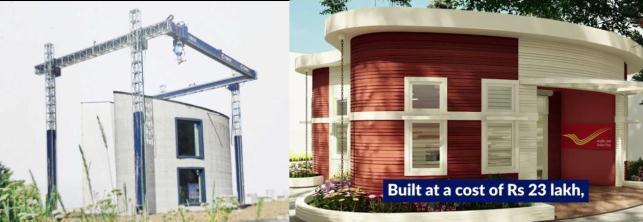
under the gravitational load of already printed concrete layers above the printed layers without any support formwork.Comparedtoconventionalconcrete,3DPC,asa keystone of a new, automatic, digital technology, brings numerous benefits to construction, like highly flexible architectural design, formwork-free fabrication, rapid construction, acceptable working conditions, material savings,etc.workingconditions,materialsavings,etc.Cost efficiencyalsocanbeimprovedbythistechnology.Nowthe projectsincorporating3dprintersarebecomingrecognized in the industry as an alternate technology in residential constructionprojects.3DPChasbeensuccessfullyutilizedin fabricating bridges, houses, bus stations, post offices and manyotherobjects.Eventhoughitsrapidgrowing,wehave onlylimitedknowledgeaboutthissubject.Forasuccessful extrusionprocess,thematerialmustbeflowableenoughso thatitcanbeextrudedthroughthenozzle.Butafterthelayer is extruded, the extruded layered concrete must have sufficient shear strength to resist deformation due to its superstructural weight & self-weight. Here thereby rheologicalparameterscomeintoplay.Thematerialmust befluidlikewithalowviscositywhileinsidethepumpand nozzle, but once it’s extruded out this should change to a solid like behavior with enough strength to resist deformation. With respect to the material used, so many approachescanbeusedforachievingthis.Weknowthatin 3Dprintingofpolymers(e.g.,polylacticacid(PLA)),thisis achievedbyasuddenchangeintemperature.Whileinside the nozzle, the filament made with polymer is heated to aboveitsmeltingpoint,thenallowingittoflowthroughthe nozzle.Butonceextruded,itisrapidlyallowedtocooland causingatransitiontoasolidstate.Forconcreteandother non-Newtonianyieldstressfluids,thefundamentalprinciple isfardifferent.Thepumpappliesenoughstresstoexceed the yield stress of the material, allowing it to flow and extrudethroughthenozzleend.Afterextrusionisdone,the highyieldstressallowsthematerial toresistdeformation andpreventflowinthematerial.Also,itisnoticedthatyield stress of the extruded concrete increases with time. Therefore, yield stress of concrete is identified as an important parameter for mixture design of 3DPC. A high yieldstressisrequiredtopreventdeformationofextruded layers.Apartfromthis,iftheyieldstressandplasticviscosity becomeveryhighsuchthattheyexceedthecapabilityofthe pump,thenextrusionofthematerialbecomesfail.So,there isanoptimumrangeofyieldstressinwhichthematerialis bothextrudableandbuildableisfoundoutbyresearchers.
However, kindly note that this yield stress range is also dependentontheprinterparameters.So,weneedtodevelop acost-effectivemethodologyforexperimentingandtesting of3Dprintableconcretemixes.Hereempiricalmixdesign methodisstudiedandsummarizedthequantitativeaverage measure of each ingredient of 3D concrete recipe, so that how a more acceptable mix can be made with the locally available materials in the market with proper granular material packing. A software called Elkem Material Mix Analyzerisusedfortheoptimizationofthemix.Theconcept of Manual Extrusion (Manual 3D printing with hand held extruder)isintroducedhereforexperimentpurpose.Along withthis,foraparticularsetofprintparametersusedinthe study,theoptimumrangeofyieldstressisdeterminedfor printableconcrete.
1.1 AIM
Themainaimofthispaperisasmallefforttodevelopa cost-effective method for experimenting and testing of 3D printableconcrete.
2. LITERATURE REVIEW
Literaturereviewisconductedtounderstandaboutthemix design concept of conventional concrete and 3D Printable concrete Also,thisreviewaddressestheyieldstress-based mixture design approach for Portland cement-based concretessuitableforextrusionprocess.
2.3 CRITICAL REVIEW
Byreviewingtheliteratures,itisidentifiedas,thepresent codesandstandardsforconventionalconcretecan'tbeused for the 3D printable concrete mix design. Trial-and-error methodidentifiedasthenorm,forfinalizingtheappropriate mixcompositionfor3Dprintableconcrete.Researcheson ExistingRheologicalmodelsarestillneededtodevelopthem into reliable mix design tools. The currently available mix designfor3DPCmainlyfocusesontheprintabilityoffresh concrete. The strength or durability characteristics of hardenedconcretearenottargetedmainly.FiniteElement Method-based models can be used to simulate complex shapes and prints and could give printer parameter recommendations. Yield stress-based mixture design approachforOrdinaryPortlandcement-basedconcretesis suitableforextrusionprocess
2.4 METHODOLOGY
The topic was selected by understanding the potential of 3DPC, which in future can revolutionize the digital construction industry. For understanding the complexity involvedintheproductionof3DPCdifferentjournalswere studied and literature review was prepared. Later participated in the workshop on advances in 3D concrete printing jointly organized by IIT Madras, IIT Hyderabad, ArizonaStateUniversitydated17th&18thofMarch2023,
havebroughtlighttothecurrentstatusandroadaheadof harnessingthefullpotentialofthistechnology.Therehave been significant achievements with respect to the use of alternativecementitiousbindersandspecialtyadmixtures, butseveral challengesstill existthatcome inthewayof a large-scale adoption, such as reinforcement integration, alterationsrequiredinstructuraldesign,etc.Apartfromthis studyisconductedonthebasic3Dprinters,3Dmodelling, slicing&printingsoftwareusedforconventional3dprinting. Different 3d printers and medias used for printing also studied.Gatheredinformationregardingindustrialpractices, methods & technology innovations by discussing with COBOD, they are the global market leader in 3D concrete printing. Procedure adopted in 3D concrete printing by Indian startup TVASTA, Chennai is also studied from 3d modelling,slicing,printingsimulationanduptotheinterface of3dconcreteprintingwithroboticarmprinternamed‘R6’. Apartfromthistheinitiativeby‘MinvayuProject’,Auroville CentreforScientificResearch,TamilNaduisreallyobserved asinspirational.Thebudgetary3Ddeltaprinterworkingon CURA open-source code is capable of printing sustainable clay&cementblocks.InspiredfromalltheaboveaManual Extrudercapableforexecutingtesting3DPCismade.Then Materials and ingredients required for the specified 3DPC mixisidentifiedandprocured.Referencemixisprepared. Tests for pumpability, Extrudability and buildability were executed. Necessary improvements / additions in Mix are suggested upon Test findings. Preparation of final Mix proportion. Then executed tests for Hardened Stage requirements.
Themethodologyadoptedforthisprojectedisdescribedas follows:
a) Selectionoftopic
b) Literaturereview
c) Fixingofobjectives
d) Studyon3Dprinting,3Dprinters,processetc(Site visits,Workshops,FABLabs)
e) The concept of manual 3D hand printing (making extruder)
f) Study&conclusionof3DPChistoricalexperimental data
g) Selectionofrawmaterials
h) OptimizingthegranularskeletonusingEMMA
i) Onsiteexperiment–Trial-01(Extrusion&Printing)
j) Modification of above mix (more sustainability approach)–Trial-02(Extrusion&Printing)
k) Testinglabsamplesandprintedsamples
2.4.1 STUDY ON 3D SOFTWARES AND 3D PRINTERS
AllAdditiveManufacturing(AM)systemmuststartfroma software model that fully detail about the the external / internalgeometry,thisisinclusiveoftheuseofalmostany professionalCADsolidmodellingsoftware,buttheoutput mustbea3Dsolidmodelorsurfacerepresentation.Nowa
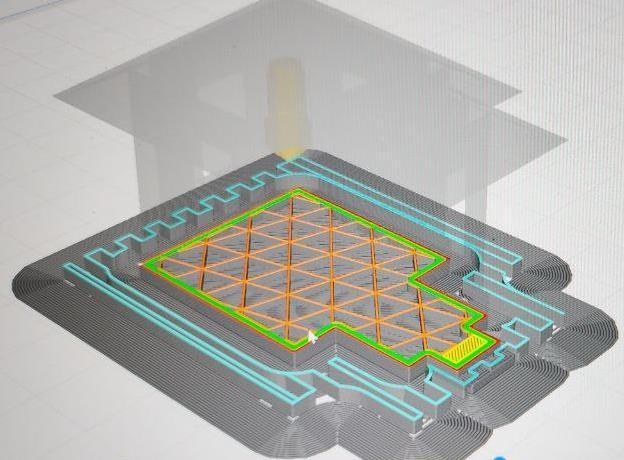
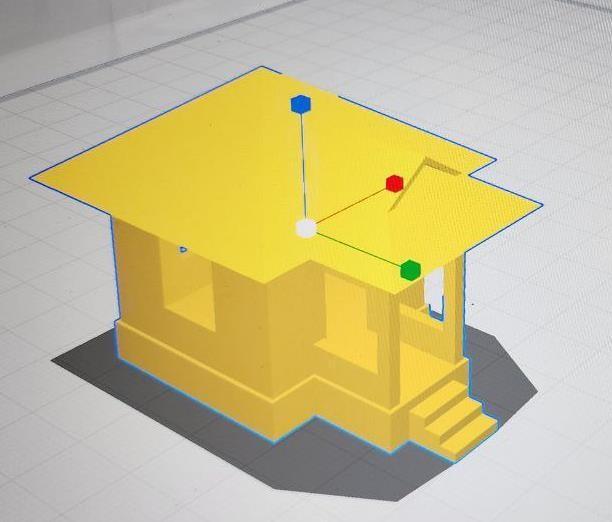
days reverse engineering equipment likelaserandoptical scanning also are used to create this representation. Followingaremajor3dmodellingsoftware,slicingsoftware and 3d printers used for development of 3D printing. 3D modeling software used are AutoCAD2020 & Fusion 360. AlongwithCADmodellingsoftwareweuseSlicingsoftware for3Dprinters.A3Dslicersoftwareisa3Dprinterprogram whereyoucanimport3Dmodelsinto forexample.STL, GCODEor.OBJfileformat.Thesemodelsdevelopedfor3D printersformthebasisoftheprint.Thesefilescontainthe geometricalinformationlikedetailsofedges,heightsandall theinformationaboutyour print.Followingarethemajor slicing software under consideration. ULTIMAKER CURA (Opensource),REPETIER,CREALITYCATALYSTEX.
general types, that we have already detailed in earlier chapters. Following are the major market leaders in conventional3DprinterswhichusePLA,ABS,PETGetc.for extrusionthroughfuseddepositionmethod.Majormarket leadersareSTRATASYSENDER-3V2NEOULTIMAKER.
2.4.2 STUDY ON 3D CONCRETE PRINTERS
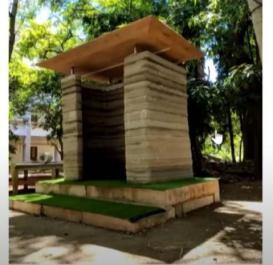
Concrete 3D printers work in the same way as an Fused DepositionMethod3Dprinters.Both printersprintlayers over layers to create the final product. Here in place of a plastic filament, concrete 3D printers extrude specially designedconcretemixes.But,therearesomedifferences,for concreteprintingtheprinterismuchlarger.Printingawhole houseorbuildingneedanindustrial-sizedgiganticprinter. The other thing is the software program which will be an advancedversionofthenormal3dprintingsoftware.Any3D modeling software can be used to create the intended structureandthenitsisexportedandprogrammedintothe printer.After thatthestructureisprintedeitheronsite or off-siteandassembledatsite.
Thetypesofadditivemanufacturingcanbedividedbywhat theyproduceorwhichtypeofmaterialtheyuse,buttoapply structure to the technology worldwide, the International Standards Organization (ISO) divided them into seven
Major types of concrete printing used in construction industryareclassifiedintotwo:gantryprintersystemsand roboticarm printersystems.Eachmethodadopt different systemtoprint3Dconcrete.
Type1:Gantryconcrete3Dprinters
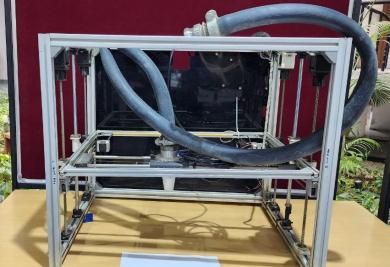
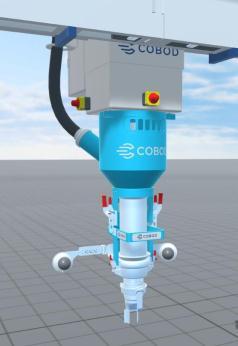
Thefirstsystemunderstudyisgantrystyleprinter.Thisis the most popular method out of the two. A gantry 3D concreteprintersystemconsistsofaprinterextruderhead that pivots from an x, y, and z-axis controlled automated gantrystructuralframe.Theprintercanmoveinfollowing directions: up-down (z-axis), forward- backward (y-axis), and side-to-side (x-axis). An ideal example for this is the COBODBOD2printerfromDenmark.
Type2:RoboticArmPrinting
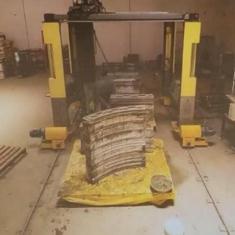
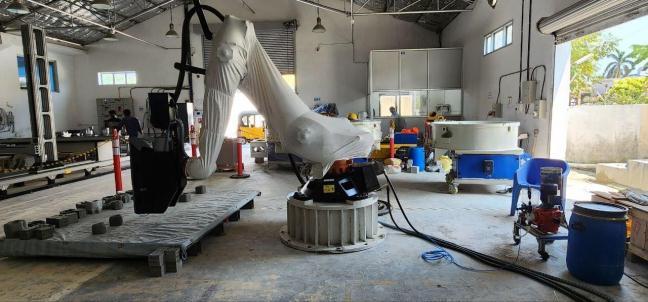
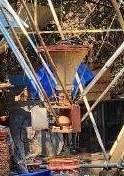
Theothertypeisroboticarmconcrete3Dprinting.Whichis not as popular as gantry 3d concrete printer. It has got a moveableprinterheadlikegantryprinters,however,instead of moving around a defined space it has an arm-like structurethathasgotmovementpossibleinalldirections. Theymovebetweenthex,y,andzplanes,buttheyaremore flexiblethangantryandreachalmosteverywhere.Arobotic arm then holds the extruder head and moves it around. Layering with concrete will continue until the project is finished.WehaveseenthisinactionwiththeTVASTA–R6 attheirworkshopatoldMahabalipuramroad,Chennai.
3. THE CONCEPT OF MANUAL 3D HAND PRINTING
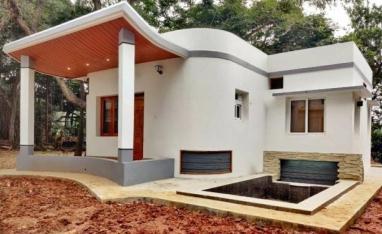
Decadesaftertheinventionofconventional3Dprinters,the extrusion materials changed from polymers to concrete, printers for 3D concrete extrusion are observed as unreachabletocommonresearchersinIndia.Theneedfor developingaManualExtrusionmechanismisthefirststepto develop a cost-effective 3D printer that is affordable to common peoples. The above light weight and sturdy ExtrusionsystemcanbeautomatedwithaCNCmachine. In April 2019 L & T has hand printed first water tank of capacityat2KLatKanchiasafirststepintothe3Dconcrete printingindustry.
Mr. Jorge Ayarza of Minvayu Project, Auroville Centre for ScientificResearch,TamilNadualongwithhisteamhasbuilt cheapest3Dprinterwithlocallyavailablematerials,whichis running onopen-source3Dprinterslicingprogramcalled CURA.Theshapeandconfigurationofthisprinterisalarger versionofDELTAprinterwhichisusedforprototypingwith PLA/ABS. Which use low-cost controllers with external driversandsteppermotors.
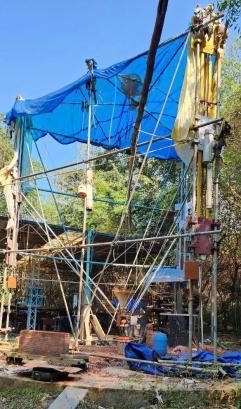
ToDevelopaCosteffectiveandaccessibleMethodologyto simulate3DConcreteprintingprocess&Tests,theconcept
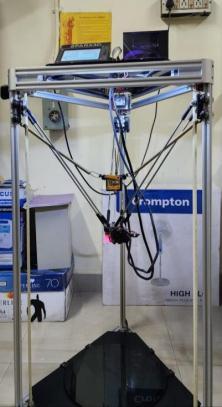
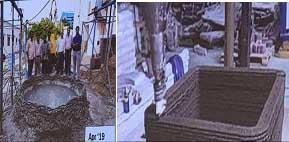
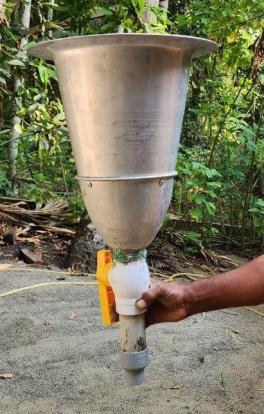
ofManuel3DHandPrintingisintroduced.Themanual 3d extruder for hand printing is inspired from L& T’s hand printed water tank and Extruder design of Minvayu & COBOD.
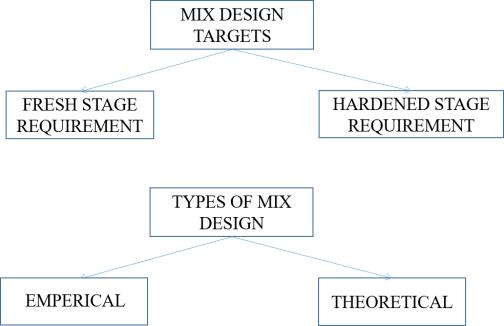
extrudabilityandbuildabilitycharacteristicsrequiredforan effective3Dconcreteprinting.Apartfromthisthestrength& durability targets are to be effectively controlled. We can define2mixdesigntargets.Oneisfreshstagerequirement, whichisdirectly relatedto pumpability, extrudabilityand buildability. And the requirements for pumpability and extrudabilityarecontradictorywithrespecttobuildability. Wehavefollowedempiricalmixdesignmethodfor3DPC.
4.
Themainissueof3Dprintableconcreteistheidentification and selection of cost-effective raw materials and the proportioning & mix design to meet the pumpability,
5.
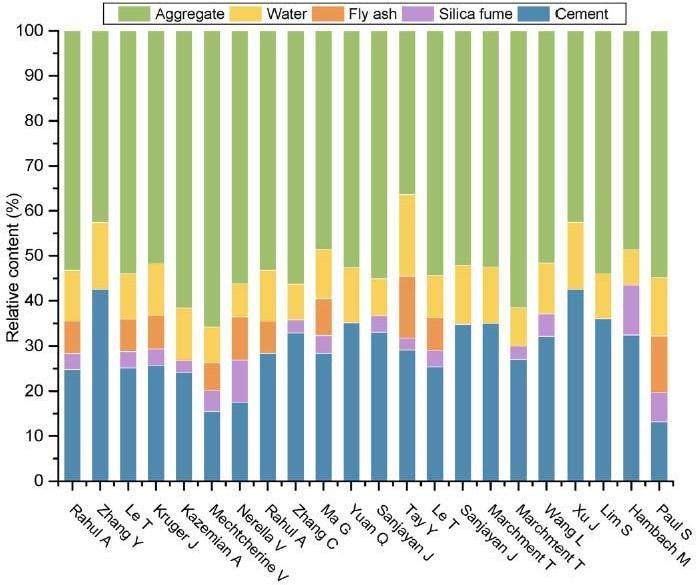
Based on the calculation and analysis according to the statistical information in Fig. 13, the average mass proportionsofaggregate,water,andbinderare53%±13%, 11% ± 5%, and 36% ± 10% respectively. If the density of 3DPCisassumedtobe2300kg/m3,theaveragedosageof aggregate,water,andbinderwillbeapproximately1220± 300 kg/m3, 250 ± 115 kg/m3, and 830 ± 230 kg/m3, respectively.Italsocanbecalculatedthattheaveragewaterto-binderratioisabout0.3.Inaddition,ClassFflyashand silicafumeareoftenemployedascementitiousmaterialsto partiallyreplacecement.
5. PROPOSED MIX DESIGN
Wehavemadeananalysisbasedonhistoricalexperimental datathatisavailableindifferentjournalsandaconclusion on different percentage of constituents are made and tabulatedasfollows,basedonthisaproposedmixdesignis made.
Table
Analysisofhistoricalexperimentaldataof3dpc& proposedtrialmixforhand3dprinting
5.1 STIPULATIONS FOR PROPORTIONING TRIAL MIX -01
a) Grade designation: Importance given to Pumpability, Extrudability & Buildability. Targeting M40 and assumed 15%reductioninstrengthofprintedsamples.
b)Typeofcement:PPCgradeconformingtoIS14892015 part1
c)Maximumnominalsizeofaggregate:2.36mm
d) Exposure conditions to be assumed as per Table 3 and Table5ofIS456:Severe(for3DPCconsideredasreinforced concrete)
f)Workability:140mm(slump)
g) Method of concrete placing: Hand Printed by Manual Extrusion3DPrinter
h)Degreeofsupervision:Good
j)Typeofaggregate:Crushedangularaggregate
k)Maximumcement(OPC)content:450kg/m3asperIS456 cl:8.2.4.2,butnotapplicablehere
l)Chemicaladmixturetype:Superplasticizer(Polycarboxylate etherbased)
5.2 MATERIAL SELECTION FOR TRIAL MIX-01
a) Fine Aggregate (Natural Sand) from Bharathapuzha, Mayannur,Ottapalam,Palakad
b)Cement:UltraTechPortlandPozzolanaCement(PPC-Fly ashbased,Flyash@31%)
c)Superplasticizer (Polycarboxylate ether based) Fosroc
Auramix400
5.3 TEST DATA FOR MATERIALS
a)Cementused:PPCgradeconformingtoIS14892015part1
b)Specificgravityofcement:2.9(PPC)
c)Specificgravity
1)Fineaggregate(atSSDcondition):2.60
2)Flyash:2.50
3)Silicafume:NA
4)Chemicaladmixture:1.11
d)WaterabsorptionofFineaggregate:1.0%
e)MoisturecontentofFineaggregate:Nil
5.4 OPTIMIZATION OF THE CONCRETE MIX
Mix design for conventional mix is generally guided by IS456 and IS 10262 2009, which is updated on 2019. Irrespectiveofguidelinesthemethodfollowedshouldsatisfy therequirementstargeted.Commonlytheguidelinesprovide minimumcementcontent&maximumwatercement ratio required for different environmental conditions like mild, moderate,severe,verysevereandextreme. ACI211&EN 206 are the international standards on this. Mainly mix design targets workability & strength requirement. The modernconceptofmixdesignisonMaximizingthepacking of ingredients and minimize the paste. Optimization of granularingredients likecoarseaggregate,medium/fine aggregates,andcementitiousbinders. Themixdesignisthen targetedtoproducetheamountofpasterequiredoverand abovethevoidlevelinthegranularpacking.Alongwiththe granularpackingwemayhavetodesignthepasteforbest flow. Rheology deals with this. So, the yield stress (The minimum shear stress to initiate flow) & plastic viscosity comesintoplay.Inconventionalmixdesign,proportionof coarseaggregatedependsonzoneoffineaggregate.Intypical mixdesignsZoneIIisused(FinenessincreasefromzoneIIto zoneIV).ForzoneIIdeterminecoarseaggregatecontent. To attain a particular strength, determine the water cement ratio. With respect to maximum size of coarse aggregate determinewatercementratio.Themodernconceptofmix designisbasedonmaximumdensitycriteria.
In1907Fullerdefinedmaximumdensitygradation.
Pi=100(di/D)0.45
WherePi=Particlepassingaparticularsieve.
di=Specificsievesize
D=Maximumsizeofaggregate
In modern mixes more finer materials are using. This particlesizedistributionmethodconsidersthead-infinitum concept of filler effect of supplementary cementitious materials (Size ranges from 20-40mm and to 150microns (sand),mineraladmixtureslessthan75microns,cementin between10to15microns,silicafumelessthan1micron.But too much of finer materials like silica fume etc will have negativeimpacttoconcretemixeswhichiscalledloosening effect. There are few particles size distribution model softwareinthemarket,whichareEMMA&EUROPACK.
Thesoftwareusesamodificationonaboveequation, ie.CPFT=100(dq -dmq)/(Dq -dmq)
CPFT=Cumulativepercentagefinerthan
dq =Particlesize,dmq =Minimumparticlesize
Dq = Maximum particle size, q = Distribution modulus (rangefrom0.21to0.37)
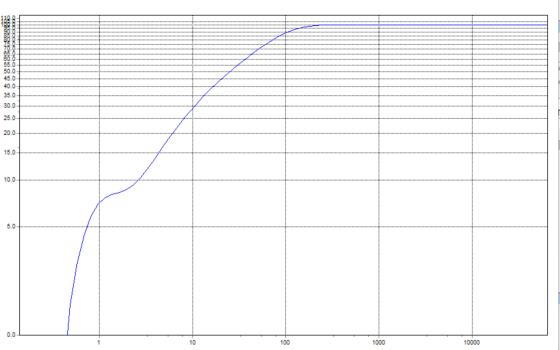
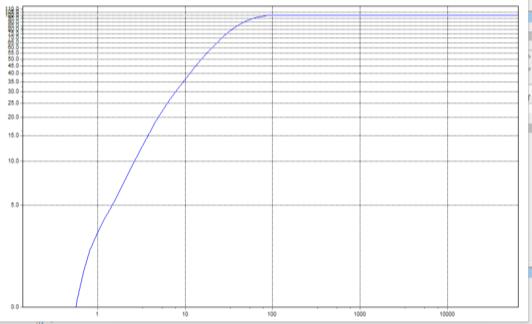
Here the proposed concrete mix is optimized by using ‘ElkemMaterialMixtureAnalyzer(EMMA)’andthegranular structureiscompactedtoachievemorerobustmix.Modified Andreassen model is used for Comparing the predicted
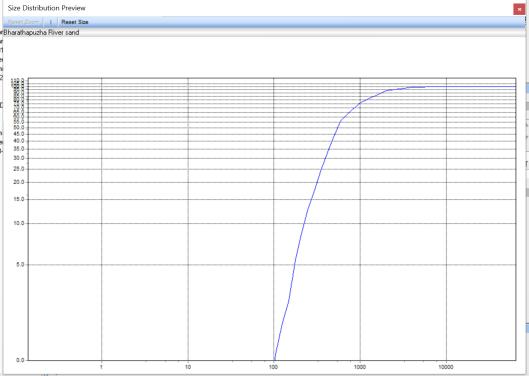
particlesizedistributionofproposedmix.The‘q’valuetaken as0.28.EMMAcanbeusedforcalculatingtheCO2imprintof proposedmix.AndwhichcangivetotalenergyspendinKilo Julesontheproductionofconcretemix.Henceitcanbeused forsustainabilityimpactanalysis.
So, the particle packing approach can be suitably used to design special concrete like 3DPC. The use of this methodology leads to a reduction in the number of trials requiredtoarriveatthemixdesign.Theresultantconcrete propertiesareaffectedpositively.Socosteffectiveconcrete canbeproduced.
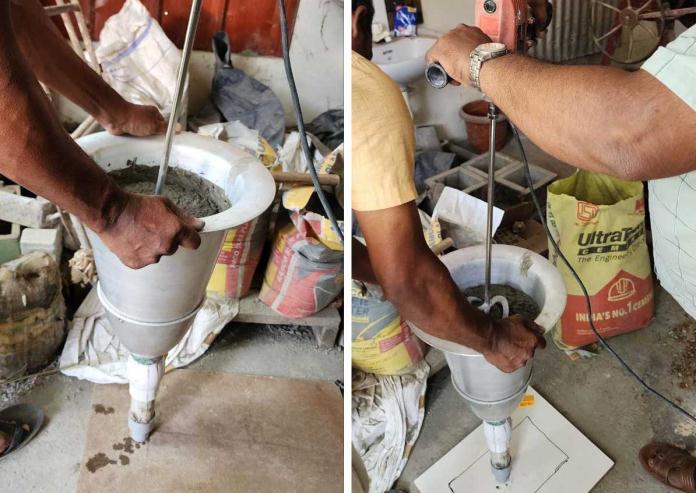
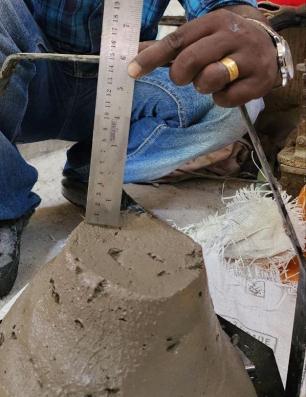
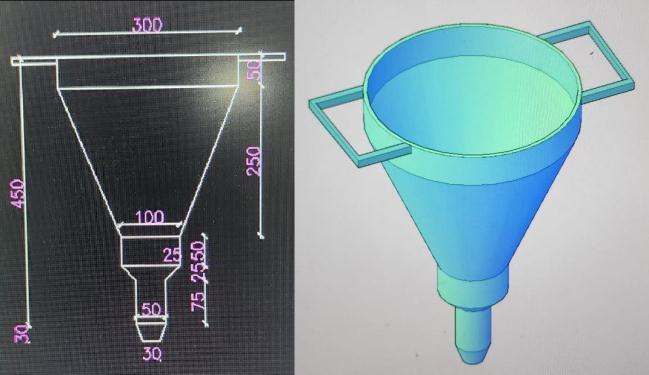
The different raw materials are weighed and mixed in a rotarydrummixtureandtheslumpisobservedas140mm
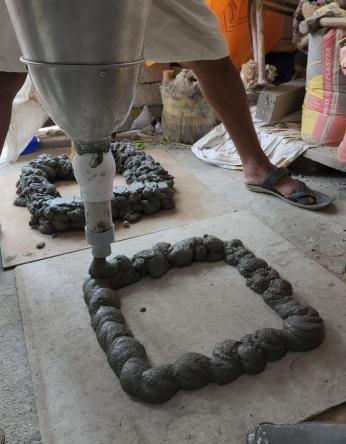
Hereweareintroducingahandheldmanual3dprinterfor experimentpurpose.Thisaimstousethegravitationalforce alongwithauguragitationinextruderitselftofacilitatethe extrusion process. So, the optimum range of yield stress determinedforthismanualextrudedandprintableconcrete can be recorded for future references to achieve machine learningonFEMsimulationstopredictthebuildability.The structural build-up with time is not assessed in these experiments.

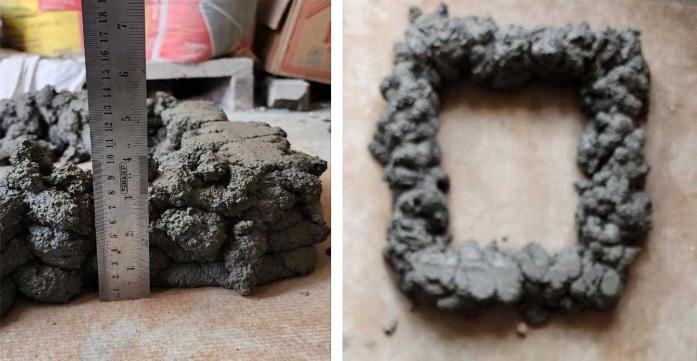
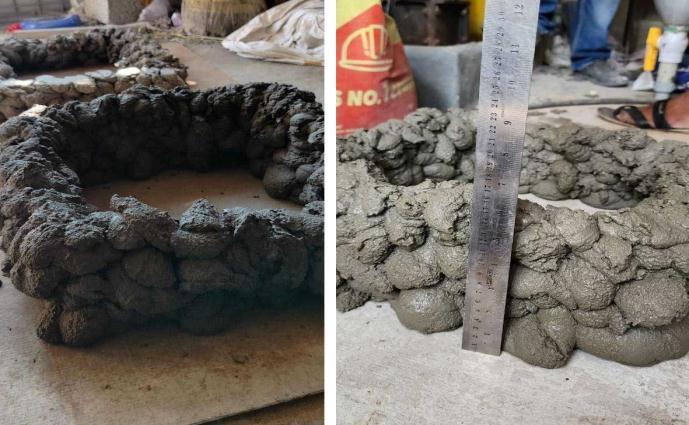
Therequiredquantityofmixedconcretematerialfromrotary drum mixer is transferred to the hand extruder. Then the bottomvalvenearnozzleoftheextruderisopenedtopermit extrusionfromextruder.Theconcretenotextrudedatfirst, then we have added admixture gradually and rechecked extrusion. At optimum yield stress the material stated to extrudeandmaintainedadequatebuildability.
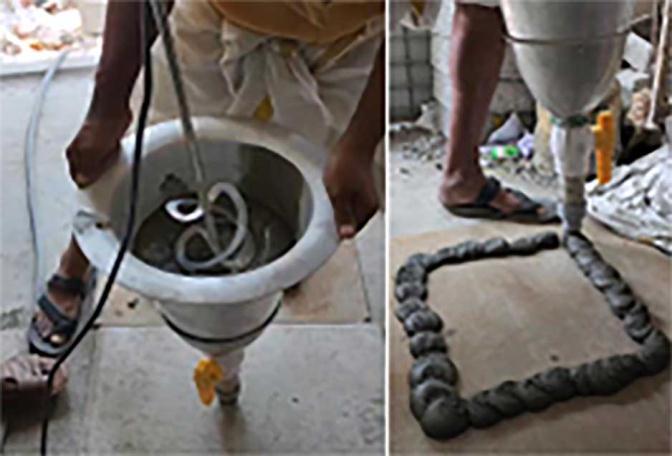
The3setsof150mmx150mmx150mmcubestakenistested for28dayscompressivestrength.
AverageCubeCompressiveStrengthobtainedat28days = 43.90N/mm2
28daystrengthofonsiteprintedsampleistakenbycoring thespecimen.
5.7 STRENGTH TESTS FOR TRIAL MIX-01
Thecompressivestrengthof150mmx150mmx150mm cubestakenat7and28days
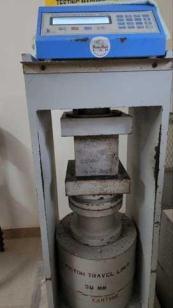
The laboratory samples made is cured in curing tank and printed sample kept open to facilitate actual site characteristics.The3setsof150mmx150mmx150mmcubes taken is tested for 7 days compressive strength. Average Cube Compressive Strength obtained at 7days = 32.92N/mm2
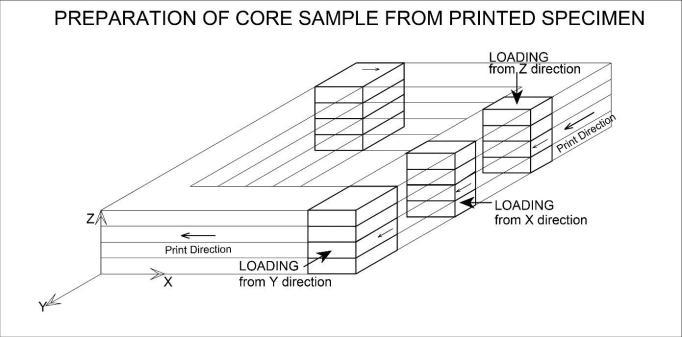
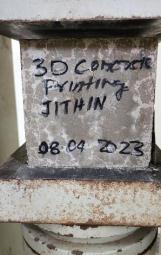
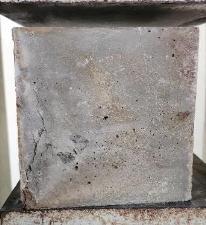
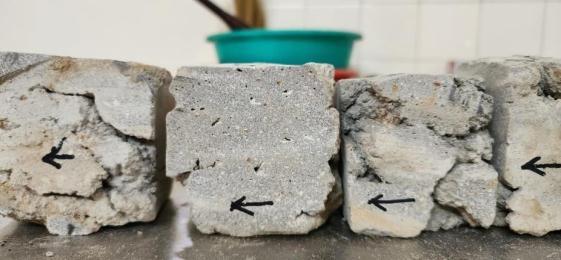
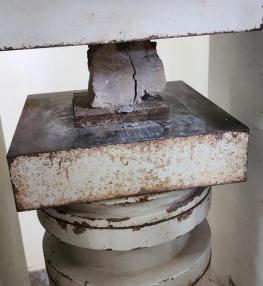
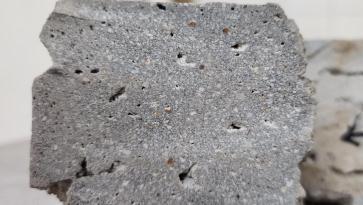
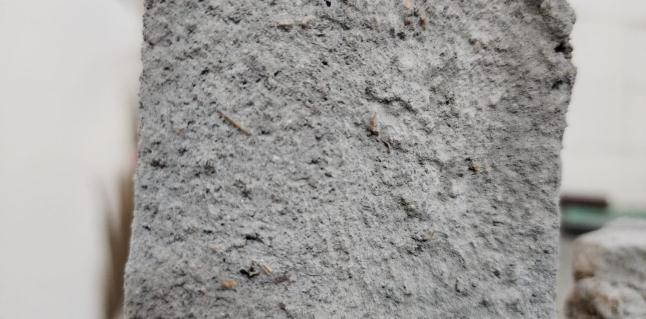
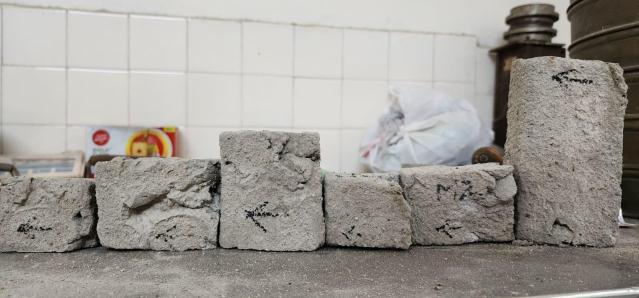
The3x3setsof60mmx60mmx60mmcubescoretakenfrom printed sample and are tested for 28 days compressive strength. Cross and longitudinal cut sections examined to checkvoids,poresetc.Strongandhardsurfacetexturefound. No serious issues with inter layer bonding. Then the compressivestrengthistestedinX,Y&Zdirections.
Average Compressive Strength obtained at 28days along direction perpendicular to print direction and parallel to layers=6.63N/mm2 (Xdirection)
Average Compressive Strength obtained at 28days along directionopposite¶lleltoprintdirection=18.63N/mm2 (Ydirection)
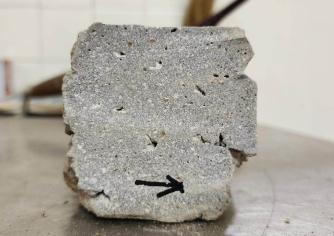
Average Compressive Strength obtained at 28days along directionperpendiculartoprintdirectionandperpendicular tolayers=16.33N/mm2 (Zdirection)
6. PROPOSED GREEN TRIAL MIX FOR HAND 3D PRINTING
TheearliermadetrialmixNo:1washavingcementcontent morethan450kg/m3.Anewmixdesignproposalismade with locally available sustainable materials, which is tabulatedasfollows.
ProposedGreenTrialMixforHand3dPrinting

6.1 STIPULATIONS FOR PROPORTIONING TRIAL
a) Grade designation:Importance given to Greening of the mix,Pumpability,Extrudability&Buildability.TargetingM40 andassumed15%reductioninstrengthofprintedsamples.
b)Typeofcement:PPCgradeconformingtoIS14892015 part1
c)Maximumnominalsizeofaggregate:2.36mm
d) Exposure conditions to be assumed as per Table 3 and Table5ofIS456:Severe(for3DPCconsideredasreinforced concrete)
e)Workability:140mm(slump)
f) Method of concrete placing: Hand Printed by Manual
Extrusion3DPrinter
g)Degreeofsupervision:Good
h)Typeofaggregate:Crushedangularaggregate
i)Maximumcement(OPC)content:450kg/m3asperIS456
cl:8.2.4.2,Attempttolimitthiswithin450kg/m3
j)RiseHuskAshasperIS17271996
k)Alccofine1203asperIS16715-2018
l)Chemicaladmixturetype:Superplasticizer(Polycarboxylate etherbased)
6.2 MATERIAL SELECTION FOR TRIAL MIX-02
a) Fine Aggregate (Natural Sand) from Bharathapuzha, Mayannur,Ottapalam,Palakad
a)Cement:UltraTechPortlandPozzolanaCement(PPC-Fly ashbased,Flyash@31%)
b)ALCCOFINE–1203,MicroMaterial
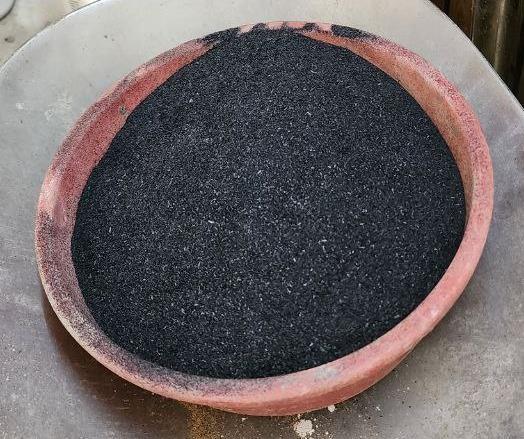
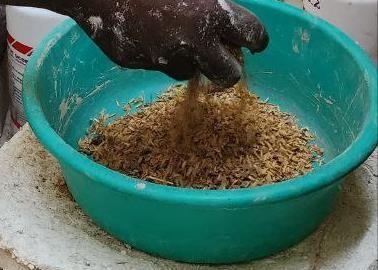
c)RiseHuskAsh
d)Superplasticizer (Polycarboxylate ether based) Fosroc Auramix400
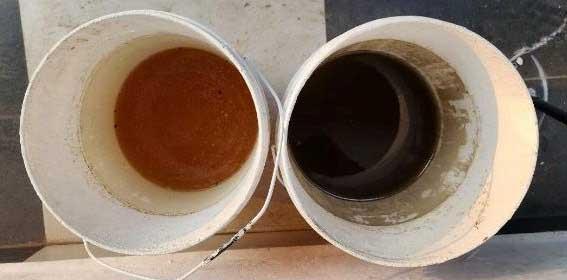
e)RawRiseHusk
f)KadukkaWater
g)JaggeryWater
6.3 TEST DATA FOR MATERIALS
a)Cementused:PPCgradeconformingtoIS14892015part1
b)Specificgravityofcement:2.9(PPC)
c)Specificgravity
1)Fineaggregate(atSSDcondition):2.60
2)Flyash:2.50
3)Alccofine:2.85
4)RiseHuskAsh:2.05
5)Chemicaladmixture:1.11
d)WaterabsorptionofFineaggregate:1.0%
e)MoisturecontentofFineaggregate:Nil
6.4
Thentheconcretemixisoptimizedbyusing‘ElkemMaterial Mixture Analyzer (EMMA)’ and the granular structure is
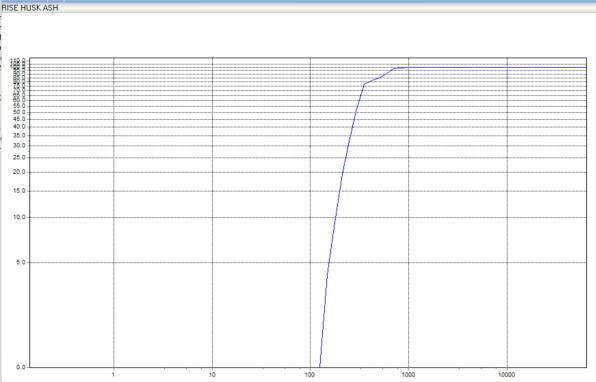
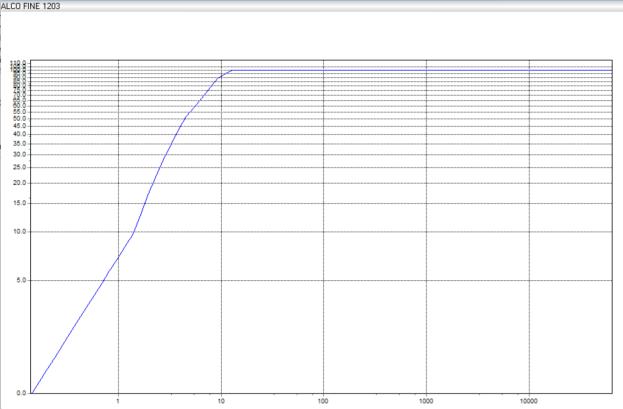

compactedtoachievemorerobustmix.Basedonthiswecan predicttheparticlesizedistributionofproposedmix.
Fig
6.5
ExtrusionwithtrialmixNo.2isdonesatisfactorilyandthe buildabilityisfoundexcellentwithrespecttotrialmixNo.1.
6.6 STRENGTH TESTS
Strength test of trial mix No. 2 is done at 7 and 28 days
Average Cube Compressive Strength obtained at 7days = 5.1N/mm2
AverageCubeCompressiveStrengthobtainedat28days = 7.30N/mm2
28daystrengthofonsiteprintedsampleistakenbycoring thespecimen.
Average Compressive Strength obtained at 28days along directionperpendiculartoprintdirectionandperpendicular foundnegligible<2.5N/mm2 (Zdirection)
7. COMPARISON OF RESULTS
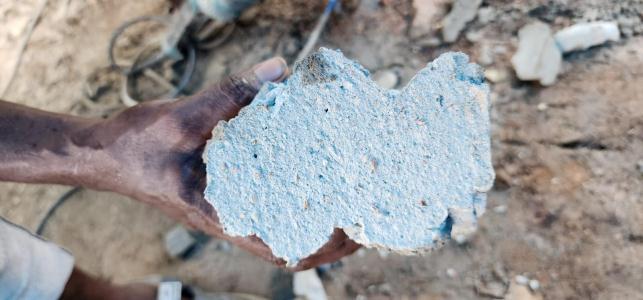
Trialmix-01andTrialmix02arecomparedbasedonthetype and quantity of ingredients used, easiness in extrusion and acceptabilityintermsofbuildabilitywhenboththemixesare infreshstage.WecanseethattheTrialmix-01hasconsumed cementcontentof571kg/m3whereasthereferencemixtaken asperhistoricaldatahastakencementcontentof663kg/m3 So,trialmix-01hasconsumed92kg/m3lesscementcompared toreferencemixdesign. Trialmix01usePPCdirectlyinstead ofwhatisusedinreferencemix,whereOPCandflyashadded separately. Trial mix-02 was an effort to make the 3DPC greenerandmoresustainable.Wherethecementcontentis reducedto430kg/m3.Intrialmix02admixturecontentalong with water content has increased to make the mix more workable. The presence of rice husk ash and alccofine requiredtheaboveincreasetomakethemixextrudable.Itis observedthatTrialmix-02hasmorebuildabilitycomparedto thetrialmix-01.WhereasthecompressivestrengthofTrial mix -01 found excellent and which is above 40N/mm2. But Trial mix-02 has shown very low compressive strength on laboratory cubes. Where as the site core sample has shown reduction in strength of 57 to 85% of cube compressive strength.Itisobservedthatthetrialmix-01canbeusedfor loadbearingwallconstructionasthelowestvaluetakenfrom core samples is more than the requirement specified in IS2572-2005.
8. CONCLUSIONS
Average Compressive Strength obtained at 28days along direction perpendicular to print direction and parallel to layersfoundnegligible<2.5N/mm2 (Xdirection)
Average Compressive Strength obtained at 28days along directionopposite¶lleltoprintdirection=2.90N/mm2 (Ydirection)
As 3DPC printing process is far different from traditional casting, the mix designs for printable concrete were successfullytestedwiththehelpofacustom-mademanual extruder.
The printable concrete workability requirements, like pumpabilityandextrudabilityisachievedbytheadditionof PCE basedadmixture.Whereasbuildabilityisachievedby properandcompactgradationofingredients.AdditionofFly ash improved the yield stress and buildability. Also, it enhancedtheinterlayerbondstrength.Pozzolanicreaction favored reduction in shrinkage cracks. Even though techniquesareavailablebyusingstiffeners/acceleratorsat the extrusion head for better buildability, the method adopted is by controlling the yield stress of the mix by propergradationandPCEbasedadmixtures.
This is a small effort to Establish a widely accepted Mix design concepts based on compressive strength and durabilityforprintableconcrete.
EventhoughtheTrial-01wasmadewithPPC,wecouldable toreducethecementcontentwithrespecttothereference mixdesigndataavailable.Whereasgeneralpracticeofthe consumptionofhigh-volumecementitiousmaterialsleadto highenergyconsumptionandCO2emissionwhichdoesnot accordwiththeprincipleofsustainabledevelopment.
So, effort was made to replace the cementitious materials withRiseHuskAshandAlccofinealongwithPPCinTrial-02. Trial-02 was able to reduce the cement content within 450kg/m3.So,wecansaythatitisagreenmix.
ThemodifiedmixdesignexecutedasTrial-02wasableto improvethebuildabilityoftheprint.
But the strength performance of Trial-02 is not up to the expectations. Further fine tuning is required to attain the printabilityandstrengthcharacteristicsofthegreenmix.
AssustainableconstructionpracticesaretheultimateGoal, furtherinvestigationsarerequiredforthedevelopmentof 3DPCwithcoarseaggregateandlowbindercontents.Also, theuseofLC3Cement(LimestoneCalcinedClayCement) will be able to save 50% clinker and save the resources available.Therefore,wecandefinitelysaythat,3DPCisgoing torevolutionizetheconceptoflowcarbonleanconstruction. The tremendous efforts and researches in this area will changethefutureofconstruction.
ACKNOWLEDGEMENT
We are expressing my gratitude to following persons for theirtechnicalsupport.Dr.ManuSanthanam(IITMadras), Dr. Radhakrishnan P.M (CUSAT CAD & 3D Printing Lab, Kochi),Mr.JorgeAyarza(MinvayuProject,AurovilleCentre for Scientific Research, Tamil Nadu), Mr. A.V Rahul (IIT Thirupathi),Mr.VinodEldoBaby(MACEKothamamgalam),
Mr. Paul Shaji (MACE Kothamangalam), Mr. M.A Joseph (UltraTechCementsLtd),Mr.ShyjuNair(Treasurer,Indian Concrete Institute, Kochi), Mr. Parivarthan, Mr. Rohit, Mr. Tharun Sisodiya (TVASTA, Chennai), Mr. Roshin (COBOD, AsiaPacific,Malaysia),Mr.Minshad(CUSATFABLab,Kochi), Mr.BibinRaj(LabTechnician,DesignRightLab,Kochi),Mr. Salamon (FOSROC Ltd) Mr. Bhagyanath C, Mr. Sunny, Mr. JayanK.V,Mr.DileepT.A(Sargasala,Chendamangalam),Mrs. SimiPrajeesh(iBuildCare,Kottuvalli)
REFERENCES
[1] A. V Rahul, Manu Santhanam, Hitesh Meena, Zimam Ghani,2018,“3Dprintableconcrete:Mixturedesignand test methods”. Cement and Concrete CompositesM. Young, The Technical Writer’s Handbook. Mill Valley, CA:UniversityScience,1989.
[2] ChaoZhang,VenkateshNaiduNerella,AnuragKrishna, Shen Wang Yamei Zhang, Viktor Mechtcherine, NemkumarBanthia,2021,“Mixdesignconceptsfor3D printableconcrete:Areview”.ScienceDirect
[3] ChaoZhang, ZeyuHouaChunChen, Yamei Zhang, Viktor Mechtcherine, ZhengmingSun, 2019, “Design of 3D printable concrete based on the relationship between flow ability of cement paste and optimum aggregate content”.ScienceDirect
BIOGRAPHIES
Jithin Sudhakrishnan, M Tech student, MGM College of Engineering, Kerala Technical university, Kerala, India. Building EnergyEfficiencyExpert.