WATER QUALITY MONITORING RC BOAT
Dr. S. Vijayanand1, R. Gayathri2, Harini M3, Hithaishi U M41Assistant Professor, Sri Venkateswara College of Engineering, Sriperumbudur, TamilNadu

234Students of Electronics and Communication Engineering, Sri Venkateswara College of Engineering, Sriperumbudur, TamilNadu ***
Abstract - Water pollution has become a major issue these days due to the dumping of industrial waste, harmful chemicals, and other pollutants. The quality of water plays a crucial role in the health of plants, animals, and human beings. Therefore, improved methods of water quality monitoring are required. The manual collection of water samples at various locations is a traditional method of water quality monitoring. The water quality is then characterized using laboratory analytical methods. So, here we design a solution for easy water quality checking of water bodies. This system measures the pH, Turbidity, Temperature, and humidity levels of water samples using the respective sensors, and based on the values, it gives information about whether the water is fresh or polluted and also what kind of aquatic flora and fauna can be grown. The interfaced sensors are placed on the boat and realtime data can be obtained once the boat moves over the water’s surface. This project is based on the Internet of Things, which will be controlled by the Arduino Nano using a mobile application. Accordingly, a propeller system to provide the forward propulsion and a servo motor arrangement to control the boat by moving left or right by means of a mobile device using a joystick module. The values of the sensors, the suggestions of aquatic flora and fauna, and the position of the boat can be viewed through the Adafruit webpage with the help of the Wi-Fi module.
Key Words: Arduino Nano, pH, turbidity, temperature, humidity, flora, fauna, Adafruit.
1.INTRODUCTION
Water is the primary source of economic and social development.Itisvitaltomaintainhealth,growplantsand cropsandmanagetheenvironment.Thedemandforwateris not only for human survival but also for aquatic flora and fauna,astheyliveinthehabitatofwater.Ensuringthesafety ofwaterisachallengeduetotheexcessiveuseofchemicals andfertilisers,mostofwhichareman-made.Waterpollution has been greatly exacerbated by modern advancements, agriculturalpesticides,andthenon-enforcementoflaws,as wellasbytherapidpaceofindustrializationanditsgreater impactonagriculturalgrowth.Rainfallthatisnotdistributed evenly can occasionally make the issue worse. When determiningthequalityofthewater,individualpractisesare also crucial. Poor water quality may spread disease and inhibitsocioeconomicprogress.
2. LITERATURE REVIEW
DarshanaR.Sarnaik,C.M.Jadhao,andMhaskeproposeda work on "Real Time Water Pollution Monitoring RC Boat UsingIOT,"asystemthatcollectsinformationfromwireless sensorslinkedtoaRaspberryPimodelB,processesit,and thencompilestheinformationintoatextfilethatissentto IOT.AgatewayisbuiltontheRaspberryPi3modelBusing theFTP(filetransferprotocol)protocolfordatatransmission to the IOT. Cloud computing technology, which offers a privatelocalserver,isusedtomonitortheprocesseddataon the internet. Separate IP addresses are offered by cloud computing technologies, enabling data monitoring via the internetfromanylocationintheworld.Thesystemismade user-friendly by the introduction of a browser application thatusesHTTPtoretrievethatmonitoreddata.Therefore, individualsfromallaroundtheworldcanaccessandmonitor thedatasimplybyutilizingthisbrowserapplication.[1]
Olasupo O. Ajayi, Hloniphani C. Maluleke, and Antoine B. Bagula Zaheed Gaffoor, Kevin C. Pietersen and Nebo Jovanovic worked on the process of collecting data on "WaterNet:ANetworkforMonitoringandAssessingWater Quality for Drinking and Irrigation Purposes," which proposeda network architectureto gatherinformationon water quality metrics in real-time and employs machine learning techniques to estimate the quality of water automaticallyforvariouspurposes.Thisnetworkisbasedon Lora and takes land topology into account. A partial mesh networktopologyisthemostsuitablenetwork,accordingto simulationresults.Here,threeML modelshavebeenused. TheyareLogisticRegression(LR),RandomForest(RF),and Support Vector Machine (SVM). The water classification processtookintoaccountthesealgorithms,andtheresults showedthatLinearRegressionperformedbetterfordrinking water,whileSupportVectorMachinewasbettersuitedfor irrigation water.A recursivefeature eliminationalgorithm was then combined with these three Machine Learning modelstoidentifywhichwaterparameterhasthegreatest influence on the classification efficiency of the respective model.[2]
Mohamad Adhipramana, Rina Mardiati, and Edi Mulyana developedarobotsystemcalled"RemotelyOperatedVehicle (ROV)RobotforMonitoringQualityofWaterBasedonIOT" to monitor the parameters of water quality based on the Internet of Things. The main hardware used here is the
micro-controller,theArduinoNano.Aremotecontrolleris usedtocontroltherobotsystem.Therobotsystemismadeof anArduinoNano,DCmotors,andanL298Nmotordriver.A pHsensor,aturbiditysensor,andaTDSsensorareamong thehardwarecomponentsutilizedinthemonitoringsystem to detect the pH of samples, turbidity units, and PPM. The ESP8266-01isalsofunctionalasasystemprocessor.Here, thecloudserverservesasbothadatarepositoryandadata reader.[3]
AjithJeromB,IlayarajaV,andManimegalaiRproposedwork on "An IoT-Based Smart Water QualityMonitoring System using the Cloud", The goal of this paper is to investigate a real-timesystemforanalyzingandmonitoringriverwater quality.Threelevelsareproposedfortheframework:alayer formonitoringandcontrol,alayerfordecision-making,anda layer for data collection. The decision layer analyses the acquired data, compares it to the pre-existing data, and diagnosesthedatausingmachinelearningalgorithms.Only whentherehasbeenamajorchangeinthedatathathasbeen receiveddoestheSmartWateralgorithmpermitstorage.The databasesizecouldbesuccessfullydecreasedasaresultof this.Forpredictingthesamplesacquiredasdatafromvarious sensors,thesystemistrainedwithallparametersusingfive differentwaterclasses:Type-I,Type-II,Type-III,Type-IV,and Type-V.Inthissystem,themachinelearningmethodisused toregularize,train,andtestthousandsofsamples.[4]
SwatiChopade,Rahul Mishra, Hari PrabhatGupta,Tanima DuttaandPretiKumariproposed"AnEnergyEfficientRiver WaterPollutionMonitoringSystemintheInternetofThings", Inthispaper,theresearcherssuggestedanenergy-efficient riverwaterpollutionmonitoringsystemthatmakesuseof long-range communication technologies and deep neural networks. The system creates a compressed Deep Neural Network(DNN)tocomputetheWaterQualityIndex(WQI) anddeterminehowmuchenergyisneededtocommunicate theWQI.Thesystemthentrainsacompresseddeepneural network using the knowledge distillation technique. Furthermore,inordertodetermineappropriatespreading factors in the LoRa network, our work established a Nash equilibriumamongthedevices.Todeterminethetimeperiod and to make it possible for the long-range network's appropriate spreading factor to transmit the water data, a gametheory-basedapproachissuggested.[5]
3. METHODOLOGY
The theory underlying real-time IoT water quality monitoring is described in this section. The general block diagramofthesuggestedmethodisdetailedinSection3.1. Each and every component of the suggested system is thoroughlydiscussedinSection3.2.
3.1 Overall Block Diagram
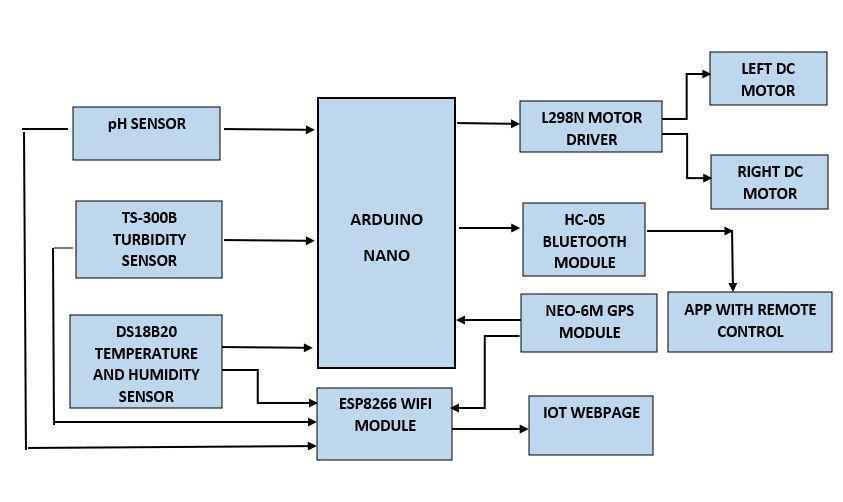
Inthisproposedblockdiagram,thesensorssuchaspH, turbidity, temperature and humidity are connected to the core controller. To transfer the data over the internet, the corecontrollersaccessthesensorvaluesandprocessthem. TheArduinoNanoisusedasacorecontroller.Thesensors arealsoconnectedtotheESP8266Wi-Fimoduletodisplay thedataontheIOTAdafruitserver.
3.2 Proposed Work
Thesystemissubdividedintotwoparts.
3.2.1.WaterQualityMonitoringSystem
3.2.2RemoteNavigationSystem
3.2.1 Water Quality Monitoring System
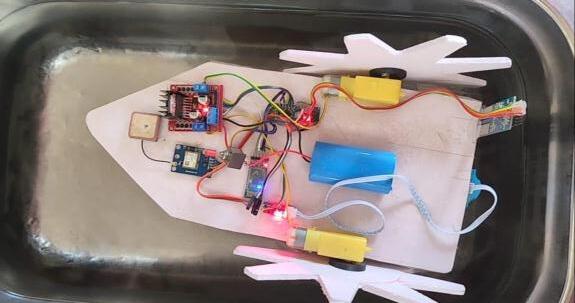
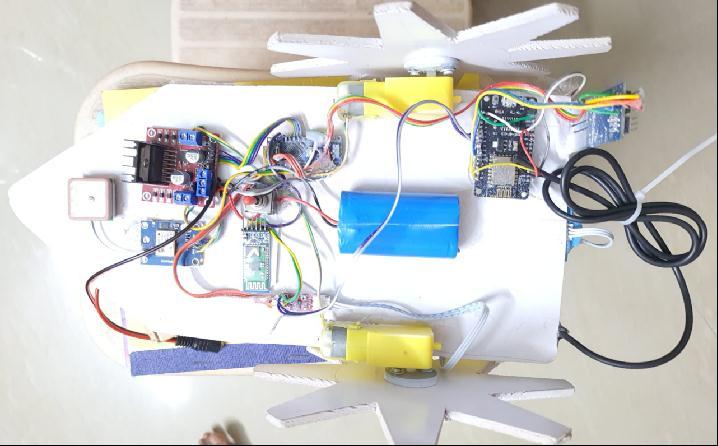
Thefirstphaseofimplementationincludesthemonitoringof water parameters by using sensors such as pH sensor, turbidity sensor, temperature and humidity sensor. The sensors and GPS module are interfaced with the Arduino NanoandESP8266Wi-Fimodule.TheL298Nmotordriveris connected to the Arduino Nano. This whole setup is interfaced in the boat. Because the characteristics that the sensorsarereadingfromthewaterbodiesareanalogue,they mustbetransformedintodigitalformbeforetheprocessor canprocessthedata.Afterbeingprocessed,thedatamaybe viewedontheIOTAdafruitwebsite.
3.2.2 Remote Navigation System
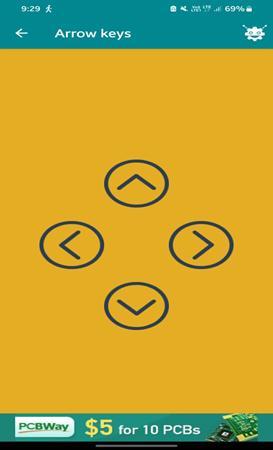
Thesecondphaseofimplementationincludesconnectingthe boattotheBluetoothmoduleandtheninterfacingitwiththe mobile application. Then the boat is controlled using the mobile application. The values of the water quality parametersandthegraphsaredisplayedontheIOTAdafruit webserver.Also,thepositionoftheboatisobtainedonthe web server by using the GPS module. Based on thesensor values,thequalityofthewaterisdeterminedandclassified as fresh water, slightly polluted water, or polluted water. Also,basedonthequalityofthewaterandwaterparameters, it recommends what kind of aquatic flora and faunacanbegrown.
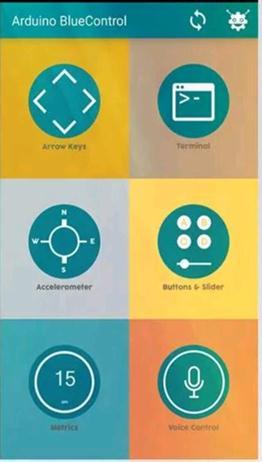
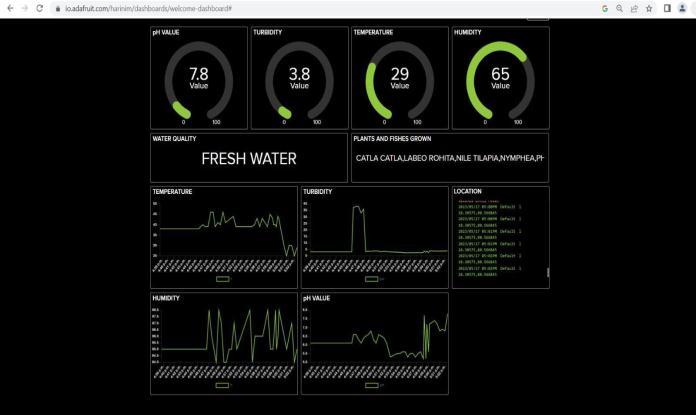
with the help of the Bluetooth module. Then the boat is controlledusingthejoystickmodulepresentintheArduino BluetoothControllerapplication.Whentheboatismovingin thewater,thereal-timedatagetsdisplayedontheAdafruit webpagewiththehelpoftheESP8266Wi-Fimodulethatis connectedto theMQTT server. The ArduinoNanoandthe ESP8266Wi-FimoduleareconnectedwiththehelpofanAPI keyregeneratedontheIOTAdafruitserver.Now,thewater quality is determined with the help of PyCharm using the logisticregressionalgorithm.Basedonthewaterqualityand the sensor values, the aquatic flora and fauna will be displayedusingthesamelogisticregressionalgorithm.The usernameoftheAdafruitserverandtheregeneratedAPIkey are given to the Arduino IDE as well as the PyCharm IDE. Also,thereal-timelocation(latitudeandlongitude)andthe graphsobtainedonthewebserver.
5. RESULTS
HerewehaveusedapHsensortocalculatethepHvalueof differentwatersamples.ThePhvaluesrangebetween0and 14.ThepHrangeof5.5-6.5 isidealforplantdevelopment becauseoftheaccessibilityofsupplements.Then,weuseda turbiditysensorwiththesupportingmoduletocalibratethe turbidity of the water as well as determine the total suspendedsolidsinthewater.Thepresenceofhighturbidity levels limits the amount of light that can penetrate the water's surface. Plant growth is impacted because their capacityforphotosynthesisisdecreased.Hence,turbidityis animportantfactor.
Also,theDS18B20temperatureandhumiditysensorisused to calculate the surrounding temperature as well as the water temperature. Aquatic life is influenced by water temperature,whichalsoregulatestherateofmetabolicand reproductiveprocesses.Thesolubilityofoxygendecreases asthewatertemperaturerises.
4. WORKING
Whenweswitchonthetoggleswitchandplaceitinwater, thesensors,suchasthepHsensorandtheturbiditysensor, getinitialized.Then,byturningonBluetoothonthemobile phone,themobileapplicationgetsconnectedtotheRCboat
This system displays the water quality as well as recommends aquatic flora and fauna based on real-time monitoring.Thisisauniquefeatureoftheexistingsystems.
OurwaterqualitymonitoringRCboatsystemiseconomical andfastasitcanmonitorwaterqualityautomaticallyand doesn'trequireanymanondutyotherthancontrollingthe boat. Thissystemhasbeenproventobecapableofshowing these physicochemical parameters as well as properly displayingtheseresultsthroughavarietyofexperimentsin reservoirs,lakes,andpersonalwaterstoragetanks.
REFERENCES
[1] DarshanaR.Sarnaik,C.M.Jadhao,Mhaske,“RealTime Water Pollution Monitoring RC Boat Using IOT”, InternationalJournalofAdvancedResearchinScience, CommunicationandTechnology,Volume2,Issue5,June 2022.
[2] Olasupo O. Ajayi, Antoine B. Bagula, Hloniphani C. Maluleke,ZaheedGaffoor,NeboJovanovic,AndKevinC. Pietersen, “WaterNet: A Network for Monitoring and Assessing Water Quality for Drinking and Irrigation Purposes”,IEEE,Volume10,May2022.
[3] Mohamad Adhipramana, Rina Mardiati, Edi Mulyana, “RemotelyOperatedVehicle(Rov)RobotforMonitoring QualityOfWaterBasedOnIOT”,IEEE,December2020.
[4] AjithJeromB,ManimegalaiR,IlayarajaV,“AnIoTBased Smart WaterQualityMonitoring SystemusingCloud”, International Conference on Emerging Trends in Information Technology and Engineering (ic-ETITE), 2020.
[5] SwatiChopade,HariPrabhatGupta,RahulMishra,Preti Kumari and Tanima Dutta, “An Energy Efficient River Water Pollution Monitoring System in Internet of Things”,IEEETransactionsonGreenCommunications andNetworking,Volume5,No.2,June2021.
[6] GayatriGunjal,RenuGuraddi,SonalMore,“IOTBased Water Quality Monitoring System Using RC Boat”,
International Research Journal of Modernization in EngineeringTechnologyandScience,Volume4,Issue4, April2022.
[7] AbhishekTiwari,SanjayShahi,PrabhatKumarSharma, “Water Quality Monitoring System: IOT Based Technique”,InternationalJournalforResearchTrends andInnovation,Volume7,Issue8,2022.
[8] Amey S. Shirodkar, Kadam Akshay M. Mali Vipul H, Mestry Gaurav S, Singh Aniket D, “Design & DevelopmentofRCSpeedBoat”,InternationalResearch JournalofEngineeringandTechnology(IRJET),Volume 7,Issue4,April2020.
[9] Mr. Aakash Pramod Adake, Dr. Manasi Dixit, “Water QualityMonitoringSystemusingRCBoatwithWireless SensorNetwork”,InternationalJournalforResearchin AppliedScience&EngineeringTechnology(IJRASET), Volume7,Issue4,April2019.
[10] MissDarshanaR.Sarnaik,Dr.C.M.Jadhao,Prof. S.S. Mhaske,“RealTimeWaterPollutionMonitoringRCBoat UsingIOT”,InternationalJournalofAdvancedResearch inScience,CommunicationandTechnology(IJARSCT), Volume2,Issue5,June2022.
[11] Mohamed Aslam, Sreerag K, Stebin T Jose, Mr. G. Chandrashekar,“IoTBasedWaterPollutionMonitoring RCBoat”,InternationalJournalofAdvancedResearchin Science, Communication and Technology (IJARSCT) Volume2,Issue7,May2022.
[12] Mr. Aakash Pramod Adake, Dr. Manasi Dixit, “Water QualityMonitoringSystemusingRCBoatwithWireless SensorNetwork”,InternationalJournalforResearchin AppliedScience&EngineeringTechnology(IJRASET), Volume7,Issue4,April2019.
[13] C.Ashwini, Uday Pratap Singh, Ekta Pawar, Shristi, “WaterQualityMonitoringUsingMachineLearningAnd IOT”-InternationalJournalofScientific&Technology Research,Volume8,Issue10,2019.