Behavior of Partially Strengthened RC Columns from Sides of the Perimeter Using Prefabricated Hybrid Composite Plates (HCP)
Anjusha M. P1 , Krishna M. M2
1 PG Student, APJ Abdul Kalam Technological University, Kerala Universal Engineering College, Vallivattom, Kerala, India
2 Assistant professor APJ Abdul Kalam Technological University, Kerala, India Universal Engineering College, Vallivattom, Kerala, India ***
Abstract - A This study is to investigate the efficiency of partial strengthening of reinforced concrete columns using prefabricated hybrid composite plates (HCP) from sides of perimeter. It involves the use of ANSYS software to analyse the effect of different strategies of strength and durability on corner and edge rectangular columns that fully strengthening can’t be executed. So effectiveness of partial strengthening studied by strengthen from one, two, three sides as edge columns have only three available sides and corner columns from one and two sides because of two sides availability. The composite plates were made up of different materials, including CFRP (Carbon fibre reinforced polymer) and SHCC (Strain hardening cementitious composites), the most suitable materials for strengthening of the columns. Chemical anchors were used to prevent or delay debonding of strengthening layer and these bolts used for attaching 25 mm plates to columns. The columns are then subjected to axial loading conditions and their response is analysed in terms of load-carrying capacity, stiffness and ductility. The optimal strengthening configuration is identifying by changing column sides and span conditions, changing HCP NSM (Near surface mounted) method CFRP embedded configurations. This paper contributes to the development of efficient and effective partial strengthening techniques by use of HCP on RC columns, particularly in terms of enhancing their strength and resisting external forces. Among these particular span condition and number of strengthening sides identified that provide high load carrying capacity than others.
Key Words: PartialStrengthening,ANSYS,HCP,AxialLoading,NSM,SHCC,CFRP,ChemicalAnchors

1.INTRODUCTION
Columnsaretheverticalstructuralmemberdesignedtosupportloadsprimarilyincompressionandtransmitthemtothe foundationorthebase.Itisoneofthemostfundamentalelementsofabuilding'sstructuralsystem.Thesearetheprimaryloadbearingstructuralcomponentsinthebuildingwhichmakesthemmostlikelyvulnerabletodeterioration.Overtime,itrequires strengtheningtoresistearthquake,increasedloads,changingfacilitytypesofservicesorincreasedtrafficvolumeinbridges,to addorrestoreultimateloadcapacity.Structuretypesandloadingschemesaffectstrengtheningmethod.Collapseofreinforced concrete(RC)structuresbecauseofIncreasedLoadCapacity,Deterioration,StructuralDeficiencies,SeismicUpgrades,Change of use has become frequent so column strengthening is necessary to ensure the safety, durability, and longevity of RCC structures.Structuralelementsmayneedtoberepairedorstrengthenedduetochemicalandphysicalactions.Forthepastfew yearsseveraltechniquesimplementedusedtostrengthenreinforcedconcretecolumnslikereinforcedconcretejacketing,steel jacketing,andFRPconfiningorjacketing.[1]
For some cases fully strengthening can’t be executed so have to investigate the feasibility of partial strengthening on rectangularcornerandedgecolumnstoexplorethepossibilityofachievingadequatestrengthandstiffness,whichinvolves selectivelyreinforcingspecificareasofthecolumns.Hybridcompositeplatesstrengtheningisaninnovativetechniqueusedin structuralengineeringtoenhancetheperformanceofexistingconcretestructures.Itinvolvesthecombinationoftwomaterials. ThemaincombinationscanbetakenareSHCC(strainhardeningcementitiouscomposites)andCFRP(carbonfibrereinforced polymer)[2].Theapplicationofprefabricatedhybridcompositeplatesstrengtheningisparticularlyusefulinstrengthening existingconcretestructures.Theseprefabricatedplatesof25mmthicknesscanbefixedtotheexistingcolumnthroughoutthe specimenbyboltedconnections.Thesechemicalanchorswereusedtopreventordelaydebondingofthestrengtheninglayer. Byaddingthehybridcompositeplatestothestructure,theload-carryingcapacityofthestructurecanbeincreasedwithoutthe needformajorstructuralmodifications.Thismakesthetechniqueacost-effectivesolutionforextendingthelifespanofaging infrastructure. It offering a promising solution for improving the performance of concrete structures in a durable and sustainablemanner.
Columnsaretheverticalstructuralmemberdesignedtosupportloadsprimarilyincompressionandtransmitthemtothe foundationorthebase.Itisoneofthemostfundamentalelementsofabuilding'sstructuralsystem.Thesearetheprimaryload-
bearingstructuralcomponentsinthebuildingwhichmakesthemmostlikelyvulnerabletodeterioration.Overtime,itrequires strengtheningtoresistearthquake,increasedloads,changingfacilitytypesofservicesorincreasedtrafficvolumeinbridges,to addorrestoreultimateloadcapacity.Structuretypesandloadingschemesaffectstrengtheningmethod.Collapseofreinforced concrete(RC)structuresbecauseofIncreasedLoadCapacity,Deterioration,StructuralDeficiencies,SeismicUpgrades,Change of use has become frequent so column strengthening is necessary to ensure the safety, durability, and longevity of RCC structures.Structuralelementsmayneedtoberepairedorstrengthenedduetochemicalandphysicalactions.Forthepastfew yearsseveraltechniquesimplementedusedtostrengthenreinforcedconcretecolumnslikereinforcedconcretejacketing,steel jacketing,andFRPconfiningorjacketing.[1]
For some cases fully strengthening can’t be executed so have to investigate the feasibility of partial strengthening on rectangularcornerandedgecolumnstoexplorethepossibilityofachievingadequatestrengthandstiffness,whichinvolves selectivelyreinforcingspecificareasofthecolumns.Hybridcompositeplatesstrengtheningisaninnovativetechniqueusedin structuralengineeringtoenhancetheperformanceofexistingconcretestructures.Itinvolvesthecombinationoftwomaterials. ThemaincombinationscanbetakenareSHCC(strainhardeningcementitiouscomposites)andCFRP(carbonfibrereinforced polymer)[2].Theapplicationofprefabricatedhybridcompositeplatesstrengtheningisparticularlyusefulinstrengthening existingconcretestructures.Theseprefabricatedplatesof25mmthicknesscanbefixedtotheexistingcolumnthroughoutthe specimenbyboltedconnections.Thesechemicalanchorswereusedtopreventordelaydebondingofthestrengtheninglayer. Byaddingthehybridcompositeplatestothestructure,theload-carryingcapacityofthestructurecanbeincreasedwithoutthe needformajorstructuralmodifications.Thismakesthetechniqueacost-effectivesolutionforextendingthelifespanofaging infrastructure. It offering a promising solution for improving the performance of concrete structures in a durable and sustainablemanner.
2. NUMERICAL MODELLING AND ANALYSIS OF COLUMNS
The main objective of this investigation is to partially strengthen the corner and edge rectangular column from sides of perimeteralsototesttheperformanceofHCPasastrengtheningandretrofittingelement.
2.1 GENERAL
Inthisstudytencolumnmodelsareconsidered.Herecolumnswith200x300mmcross-sectionand3000mmheightaretaken [5].Inthisstudy,finiteelementmodellingandanalysisiscarriedoutusingANSYSworkbench.Itisapowerfulsoftwaretoolfor performingfiniteelementanalysis(FEA)ofstructuresandsystems.itimprovesthequalityofproductsbyidentifyingand resolvingpotentialdesignproblemsbeforetheproductismanufacturedalsoreducesthecost ofproductdevelopmentby minimizingtheneedforphysicalprototypesandtesting.
Herea3-dimensionalmodelofacolumnstrengthenedwitha25mmhybridcompositeplatemadeupofCFRP(CarbonFiber ReinforcedPolymer)stripsandstrain-hardeningcementitiouscomposites.Themodelcanbecreatedbyimportingthecolumn geometryintothesoftwareandthenaddingthecompositeplatetoit.Thecompositeplatecanbemodelledusingfiniteelement analysistechniquesthatsimulatethebehaviorofthematerialunderdifferentloadingconditions.
Inthiscase,axialloadingwouldbeappliedtothecolumntosimulatethebehaviorofthestructureunderverticalforces.The analysiscanprovideinsightsintotheperformanceofthestrengthenedcolumn,suchasitsload-carryingcapacity,stiffness,and deformation characteristics. It can also help identify potential failure modes and stress concentrations that could lead to structuralfailure.
ByusinghybridcompositematerialssuchasCFRPstripsandstrain-hardeningcementitiouscomposites,thestrengthand stiffnessofthecolumncanbeimproved.Thecompositeplatecanhelpdistributetheloadmoreevenlyacrossthecolumnand reduce the stress concentrations at critical points. This can result in improved overall performance and durability of the structure.
2.2 SPECIMEN CONFIGURATION AND MATERIAL PROPERTIES
All the ten columns hade a cross section of 200x300 mm and were 3000 mm in length. The conventional column were reinforcedwith4mainbarsof10mmdiameterand9numbersof4mmstirrupswith150mmspacingandhaveanominal coverof20mm[1].
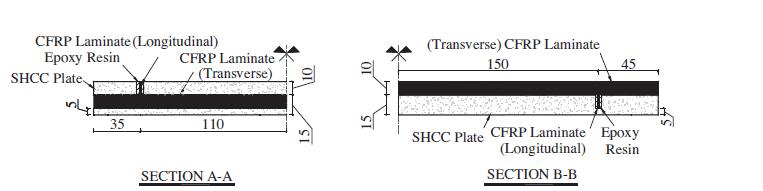
Tomakethestrengtheninglayerofthehybridcompositeplateof25mmthicknessonthecolumntheCFRPmadeintostripsof 10x1.4 mm and these strips are laid in the longitudinal direction also CFRP layer thickness of 10 mm laid at transverse directionasperreinforcementembeddedtechnique.TheothercompositematerialintheHCPSHCClaidatathicknessof5and 10mmasshowninfigure1.
Thestrengtheninglayersaremainlyfixingtothespecimeneitherby wrappingor usingtheboltedconnections.Here the strengtheninglayerarefixingtothecolumnbythehighstrengthanchorageboltedconnections.TheM12anchorboltshada tensilestrengthof800MPaused[6].
CFRP(carbonfiberreinforcedpolymer)isacompositematerialthatiswidelyusedinvariousindustriesalsotheyhavehigh qualityinperformanceandproperties.Theself-compactingSHCCwascomposedofcementitiousmortarreinforcedwith2%of volume short discrete PVA fibers. The PVA fiber used in this study had a length of 8 mm and was produced by Kuraray CompanywithdesignationofRECs15x8.Theaveragetensilestressatcrackinitiationandtheaveragetensilestrengthofthe SHCCwas2.43and3.35MParespectively,withaminimumtensilestraincapacityof1.3%[4].Thesemodelsanalysisaredone underaxialloadingconditionandtheloadcarrying capacityofeachcolumnarenoted.Thegeneratedmeshshownonfigure2 theselectedmeshsizeis50 mmafterthe meshsensitivityanalysisdoneandshape ofthemeshishexahedron dueto3d elementshapingandelementaltypeisconcrete-Solid185andrebarBeam188.
2.3 PARTIAL STRENGTHENING USING PREFABRICATED HCP
Prefabricatedhybridcompositeplateshavebecomeapopularmethodforstrengtheningstructuresduetotheirnumerous advantages.Theseplatesaresignificantlylighterthantraditionalstrengtheningmaterialssuchassteelplates,yethavehigher strength-to-weightratios.Thismeansthattheycanprovideasimilarlevelofstrengtheningwhilebeingmucheasiertohandle andinstall.Thesearecorrosionresistanceandcanbedesignedandmanufacturedtomeetspecificengineeringrequirements. Alsocompositematerialshaveexcellentdurabilityandlong-termperformance.Theydonotdegradeovertimeandhavealow risk of failure, making them a reliable and cost-effective strengthening solution. Strengthening the RC structures are a necessarythingforextendedlifespanofbuildings.ThereareseveralstrengtheningtechniquesforRCcolumnsbutthestudyof partial strengthening on corner and edge columns needs further investigation. While strengthening the corner and edge rectangularcolumnsfullysidesaren’tavailableforstrengthening.Sothecornercolumnhasavailablepossibletwosidesare strengtheningfromtwoandonesideondifferentspanconditions.Socornercolumnsarestrengtheningonaspanconditionof onelongerandshorterspanincaseof2sidestrengtheningandincaseof1sidestrengtheningonelongerandoneshorterspan conditionthenincaseofedgecolumnsthecolumnsarestrengthenedfromthreetwoandonesidesofperimeterondifferent spanconditionrespectivelyasshownontheTable2.Thesemodelsanalysisaredoneunderaxialloadingconditionandtheload carrying capacityofeachcolumnarenoted.
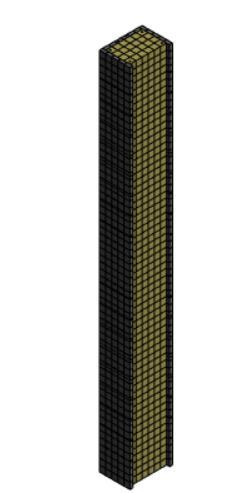
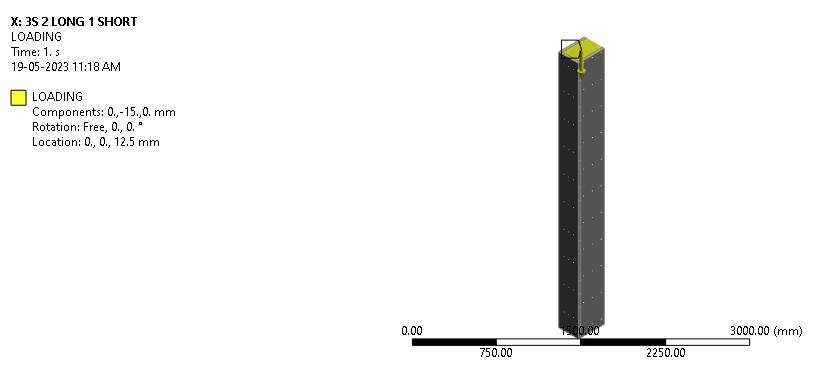
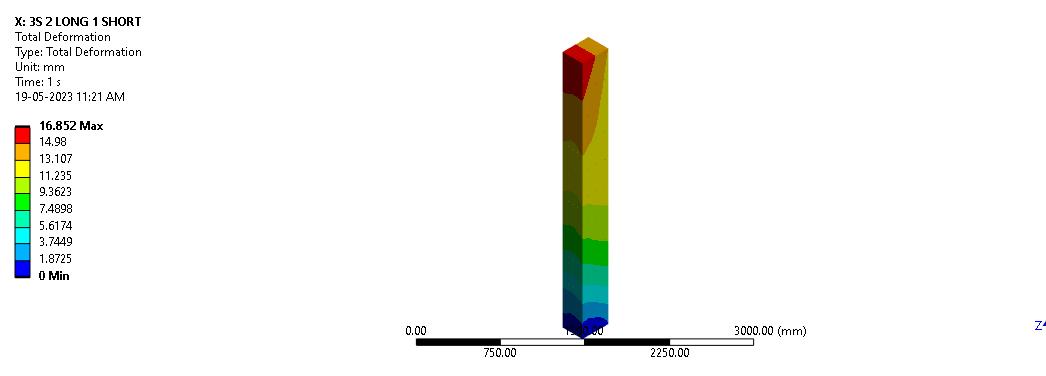
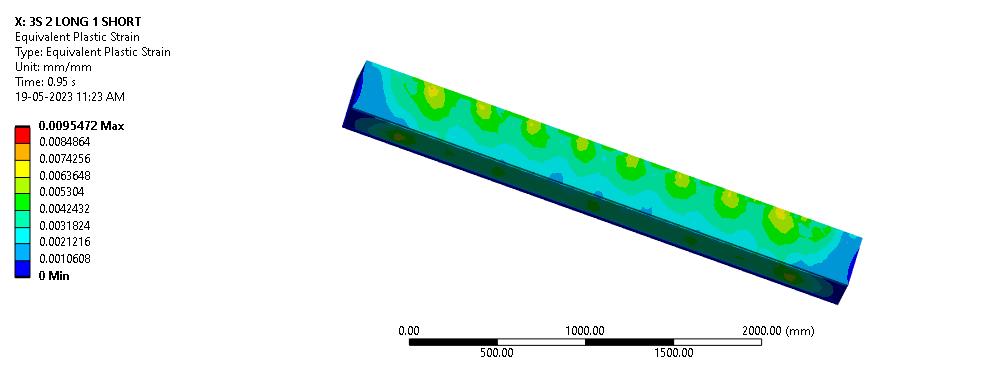
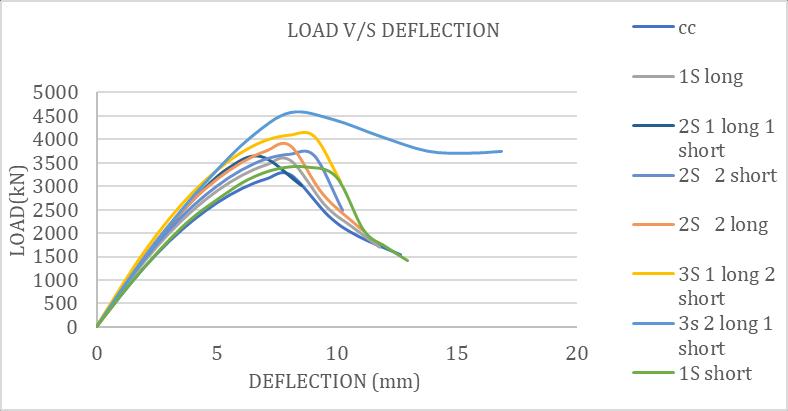
Chart -1:LoadDeflectionCurveofStrengthenedColumnSpecimens
2.4 NEW DESIGN PROPOSAL
A parametric study is conducted to analyze the effectiveness of partial strengthening on RC corner and edge rectangular columnunderaxialloadingbychangingtheCFRPembeddedconfigurationofstriplayersonetotwoinlongitudinaldirection usingsizeof2.8x10mm.Heretheanalysisiscarriedonthespandirectionbasedonbetterloadcarryingcapacityshown.
3s2long1short
CFRP2
2S2long CFRP2
LAYERS
1Slong CFRP2
LAYERS
3s2long1short
2S 2long
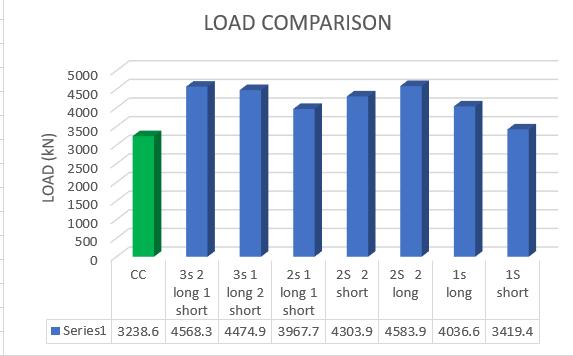
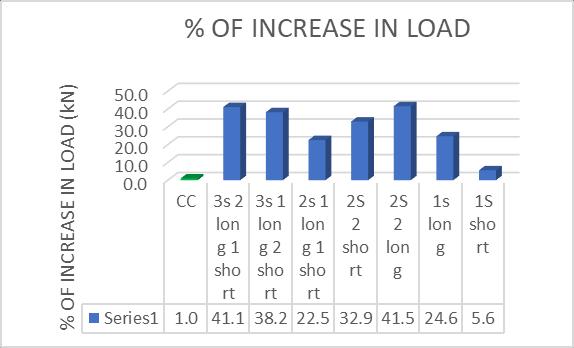
Whencomparedwiththecontrolcolumntheloadcarryingcapacityofpartiallystrengthenedcolumnfromperimeterofsides increasesandthe3sides(2longer1shorterspan)4568.3kNshowsbetterresultsthan3sides(2shorter1longerspan) 4474.9kN.Incaseof2sidedstrengthenedcolumn,2sides(2longerspan)showshighstrength4583.9kNthanthe2sides strengthened(2shorterspan)4303.9kNandthe2sides(1longer1shorterspan)3967.7kNalsofor1sidedstrengthened columns1longerspanshowsmoreloadcarryingcapacity4036.6kNthan1sidedshorterspan3419.4kN.
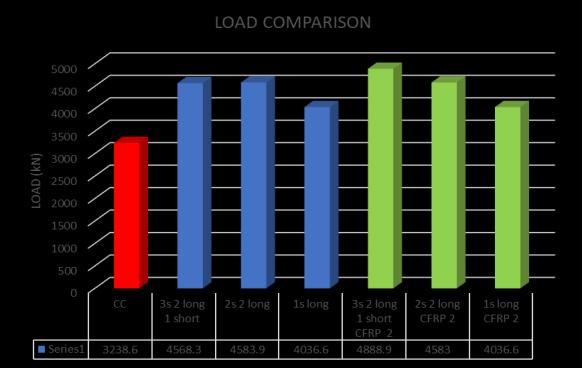
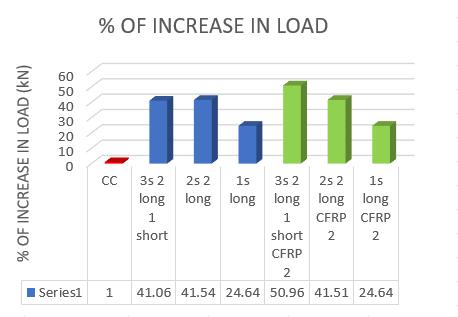
FromtheselectedspanconditionstheCFRPlayerchanged1to2,thenthe3sidedstrengthenedcolumn(2longer1shorter span)4568.3kNinto4888.9kNmadethefurtherstrengthimprovementincolumns.Butinthe2sided(2longerspan)and1 sidedstrengthenedcolumn(1longerspan)thereisnofurtherimprovementincolumnstrengthening.Sotheresultsshowsthat onlyinincreasingthesideswithincreasingtheCFRPlayersandcontinuouseffectofplateswillincreasetheloadcarrying capacity(incaseof3sides)increaseinloadupto9.9%.
4. CONCLUSIONS
Thepartialstrengtheningunderaxialloadingoncornerandedgerectangularcolumnsfromsidesofperimeterusing prefabricatedHCPshowedanacceptableincreaseinloadcarryingcapacitycomparedtocontrolcolumn.
Theresultsshowsthat2longersidestrengtheninggivinghighstrengththan3sided(2long1short)spanand1longer sidestrengtheninghavehighincreaseinloadcarryingcapacitythan2side(1longand1shorter)spansowecan providethattypeofpartialstrengtheningonparticularsectionsforbetterperformance.
Focusedonthenumberofsidesstrengtheningondifferentspanconditionsandfurtherstudiesconductedonselected highstrengthspanconditions.
ChangingandincreasingtheCFRPlayerembeddedconfigurationineachperimeterofcolumndoesnotshowanymuch improvementinstrength.
AKNOWLEDGEMENTS
I wish to thank the Management, Principal and Head of Civil Engineering Department of Universal Engineering College, Thrissur,affiliatedbyKeralaTechnologicalUniversityfortheirsupport.Thispaperisbasedontheworkcarriedoutbyme (Anjusha M. P.), as part of my PG course, under the guidance of Er. Krishna M M. (Assistant professor, Civil Department, UniversalEngineeringCollege,Thrissur,Kerala).Iexpressmygratitudetowardshisforvaluableguidance.
REFERENCES
1) Khaled Mohamed Mahmoud, Ezzaat Ahmed Sallam et al. Behavior of partially strengthened reinforced concrete columnsfromtwoorthreesidesoftheperimeterScienceDirect(2022)
2) EsmaeelEsmaeelia,YuanyeHebetal.Cast-in-situ vs prefabricatedsolutionbasedonNSM-CFRPreinforcedSHCCfor seismicretrofittingofseverelydamagedsubstandardRCbeam-columnJointsScienceDirect(2021)
3) EsmaeelEsmaeeli,JoaquimA.O.Barros FlexuralstrengtheningofRCbeamsusingHybridCompositePlate(HCP): ExperimentalandanalyticalstudyScienceDirect(2015)
4) EsmaeelEsmaeelia,JoaquimA.O.Barrosetal.Assessmentoftheefficiencyofprefabricatedhybridcompositeplates (HCPs)forretrofittingofdamagedinteriorRCbeam–columnjointsScienceDirect(2014)
5) S. Rajagopal, S. Prabavathy Investigation on the seismic behavior of exterior beam–column joint using T-type mechanicalanchoragewithhair-clipbarScienceDirect(2013)
6) SabahattinAykac1;IlkerKalkanetal.StrengtheningandRepairofReinforcedConcreteBeamsUsingExternalSteel Plates”JournalofStructuralEngineering,Vol.139,No.6,ASCE(2013)
7) VrettosL,KefalaE,TriantafillouThC(2013)“InnovativeFlexuralStrengtheningofReinforcedConcreteColumns UsingCarbon-FiberAnchors” ACI Struc J 110 (1)63-70