Volume: 10 Issue: 05 | May 2023 www.irjet.net

Volume: 10 Issue: 05 | May 2023 www.irjet.net
Abstract Big data analysis has emerged as a crucial technology in recent years due to the exponential growth ofdatageneratedfromvarioussources.Thisdatacancome in structured, unstructured, or semi-structured formats and is generated from diverse channels such as social media platforms,smart city sensors, ecommerce websites, and numerous applications. These vast amounts of data encompassawiderangeofformats,includingtext,images, audios, and videos. Hadoop provides a comprehensive ecosystem of tools and frameworks that enable efficient storage and processing of big data. One of the key components of Hadoop is the Hadoop Distributed File System (HDFS), which is designed to store and manage dataacrossaclusterofcommodityhardware.HDFSbreaks down large files into smaller blocks and replicates them across multiple nodes, ensuring data reliability and availability.MapReduceallowsfor parallel computation of data across a cluster of machines, making it suitable for processinglarge-scaledatasets.Bybreakingdowncomplex tasks into smaller subtasks and distributing them across multiple nodes, MapReduce enables faster and more efficient data processing.As big data analysis continues to evolve, Hadoop has expanded its ecosystem with various technologies to enhance its capabilities. These include YARN (Yet Another Resource Negotiator), which serves as the cluster resource management framework, enabling efficient allocation of computing resources for different applications. Pig, an abstraction layer on top of Hadoop, provides a high-level language called Pig Latin for expressing data analysis tasks. MRjob is a Python framework that simplifies the development of MapReduce jobs. Zookeeper is a centralized service for maintaining configuration information, synchronization, and naming services.Hiveoffersadatawarehouseinfrastructureanda query language called HiveQL for querying and analyzing data stored in Hadoop. Apache Spark, a fast and generalpurposedataprocessingengine,isintegratedwithHadoop to provide faster in-memory computation capabilitiesIn this paper, our focus is on exploring big data analysis and demonstrating how Hadoop, along with its associated technologies, can be used for analyzing, storing, and processinglargevolumesofdata.Byleveragingthepower of Hadoop's distributed architecture and the complementary tools within its ecosystem, organizations caneffectivelyharnessthepotentialofbigdataandderive valuableinsightsforvariousapplicationsandindustries.
Keywords Big Data, Hadoop, HDFS (Hadoop Distributed File System), MapReduce, Software Testing,
Yarn, Pig, MRjob, Zookeeper, Hive, Apache Spark, Hive, HBase
Recently, information technology systems have been playing a major role in handling and giving insights to organization’s business. This information can come from education, traffic, healthcare, or commerce sectors. This datacanbestructuredorsemi-structuredandcanbeinthe formoftext,images,audio,video,andlogfiles.Theamount ofdatatobestoredandprocessedisofteninterabytes.[15] It becomes extremely hard for a single system to manage suchbigdata.
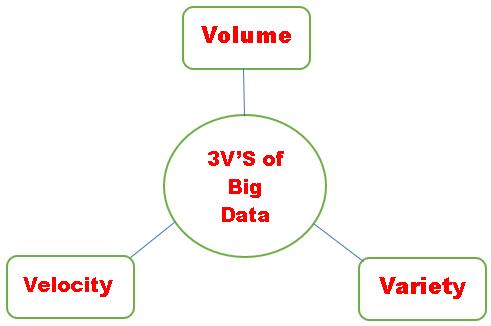
3 V’s, on the basis of which Big Data is defined includes–volume,velocityandvariety.
Volume – The size of data from organizations in social media,healthcare,education,andbusinesssectioncomes is ever increasing. Big companies like Google and Facebook process information in petabytes. The IOT (sensors data) is also increasing day by day. So, it becomes difficult to manage such big data using traditions systems.
Variety–dataintoday’sworldisdividedintostructured (schema, columns), semi-structured (json, emails, xml) andunstructured(images,videos,audio)categories.This datacanalsoberawandrequiresheavysystemwork to convert it into useful information using traditional analyticalsystems.
Velocity – this concept defines the speed at which the data arrives from source destination and the speed with which it is processed. The size of the incoming data is hugeanditneedstobeprocessedatasimilarspeed.
Companies like Google, Facebook process petabytes of data on a daily basis.[23] There is certain software that come in use to operate and manage this big data. This paperfocusesonesuchsoftwarecalledHadoopandhow it is used in big data testing. The paper first describes what is big data and then moves to technologies like Hadoop and its components –HDFS and MapReduce. Thereareseveralbuddingtechnologieswhichcomeinto play like YARN, Pig, Spark, Zookeeper, Hive, Apache Spark and HBase. Yarn helps in enabling the processing and running of batch, stream, interactive, and graph data stored inHDFS.[27] Hive and Pig are two integral
parts of the Hadoop ecosystem, but there are some key differencesbetweenthem.
processinglimitations,highcomputationalprocessing,and memoryconstraints.
Spark isanfreetouseframeworkwhichisdedicatedfor providingto-way communicative questioning, machine learning, and live workloads. Apache Zookeeper is a service that provides operational support to Hadoop clusters,offering a distributed configuration service, a synchronization tool, and a naming registry.[7] Finally, Apache HBase is a free-to-use, NoSQL, distributed, warehouse for big data that provides consistent live access to zetabytes of data. It is effective for managing largesparsedatasets.[5]Thepaperwillfocusonpractical usage of these technologies and compare them performancewise.
However, with growing number of business storage this technology has also become quite vulnerable to attacks. The paper will focus on describing challenges, security measuresandvulnerabilityofthisarchitectureandhowto tacklethem.
MillionsofnewIOTdevicesarebeinglinkedtotheinternet everyday. Social mediaappslikeInstagram,Facebook are an explosive contributor to the big data. Following this burstindata,manycompaniesswitchfromtraditionaldata storage systems towards cloud storage.[9] It is still a challenge to upload to cloud storage in real time because the data is huge. During the real time uploading of IOT devices associated with floods and debris flow management to the cloud, the sensors may be sending big chunks of data which can cause timely processing and processingcomputationallychallenging.
Despite the rise in popularity of big data analytics, the problemofhowtodealwithalotofdatawhilemaintaining privacy is still unresolved. Data are decentralized and originate from a variety of sources, including sensors, mobiledevices,andInternetofThings(IoT)devices,which explains why. A privacy and security issue has also arisen fromtheanalysisofheterogeneousdatasourcesasaresult of contact with other external systems.[9] It is also essential to ensure that the source is not subject to any attacks. Illegal transfer of backup data, for instance, becomes a major worry in big data research for the healthcare industry. To stop a new breach of patient security and privacy, this situation must be fully rectified. This event forces big data to reconsider analytics and developerprivacy.
With the humongous growthin the big data technology, there is massive rush of unstructured data in various formsandsize.Itbecomes quitedifficulttohandlesuch data.Hence,manyoftheexistingproblemsrelatedtobig data such as analysis methods and applications, storage models,privacyandsecurityarediscussedbelow.
It is important to analyze big data to gain further meaningful and useful insights. To handle a complex, inconsistent andunstructureddata,an accuratemethod is required. To work with such an inconsistent and complicated data, poses another problem for the data scientists. There are methods such as inquisitive, predictive, prescriptive, and pre-emptive analytics but the skills, tools and knowledge required to work on them are limited.[21]
some of the challenges in dealing with big data are live or on-the-spot data transfer, situation discovery, research, insight gaining and responses. Their application require a more than sufficient knowledge to apply an efficient approach. Conventional applications are limited by
A.Hadoopandbuddingtools
Hadoop,developed bytheApacheSoftwareFoundation, is a distributed computing framework that enables unrestricted access to large-scale data processing. It is widely used by global corporations such as eBay, Facebook, and Yahoo. Hadoop comprises several components, including HDFS for user interface and storage, MapReduce for data processing, and YARN for system management. Initially created in 2005 to support Yahoo's Nutch search engine project, Hadoop was published in 2011 and can scale up to 4000 nodes per cluster, enabling fast processing of vast amounts of data.[13]Toenhancesecurityand administration,vendorspecific Hadoop distributions have been developed. The key components of Hadoop include the Name Node, Data Node, Job Tracker, and Task Tracker. However, Hadoop's lack of internal cluster security makes it susceptible to threats.
HDFS is designed to efficiently handle large-scale data distributed across clusters of commodity computers. This data can originate from various sources such as IoT sensors, social media platforms, and e-commerce servers. HDFS breaks down big data into smaller blocks, typically weighing 128MB, and distributes multiple copies of each block across the cluster for fault tolerance. If a machine fails,thedatacanberetrievedfromothermachines.
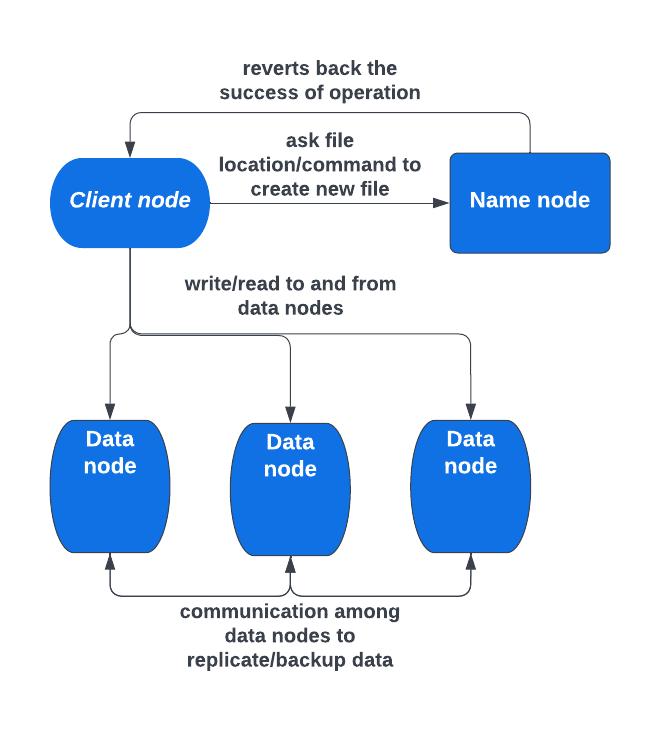
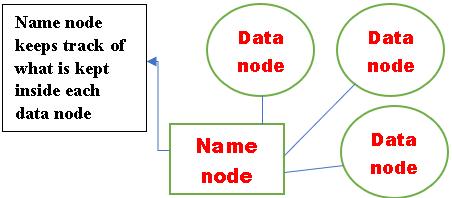
The architecture of HDFS consists of three main components:theNameNode,ClientNode,andDataNodes. TheNameNodekeepstrackofthefilespresentontheData Nodesandtheirlocationswithinthecluster.However,the Name Node itself does not store data. The Client Node is responsible for reading and writing files in HDFS.[34] When reading a file, the Client Node requests the file's location from the Name Node, which provides the informationneededtoaccessthefilefromtheDataNodes. When writing a file, the Client Node informs the Name Node to create a new file, and the data is then sent to the DataNodes,whichcommunicatewitheachothertocreate backups of the file. Various methods can be used to interactwithHDFS,includingcommand-lineinterface,user interface(suchasAmbari),Javainterface,andHTTP/HDFS proxies. The command-line interface offers several commandsforworkingwithHDFS.
MapReduce is a parallel programming paradigm and processing approach for building distributed applications thatefficientlyhandlelarge volumesofdata onclusters of shared hardware.[35] It was originally developed at Google and is powered by Hadoop, an open-source platform developed by Apache, primarily based on Java. The MapReduce algorithm consists of two key elements: Map and Reduce. Using tuples to represent each element, the Map operation transforms one collection of data into another, while the Reduce operation combines the output of the Map into a smaller set of tuples. The MapReduce paradigm allows easy scaling of data processing across multiple CPU nodes. Mappers and reducers are the basic components used in the MapReduce model for data processing. A MapReduce application can be easily scaled by updating the configuration, allowing it to run on hundredsoreventhousandsofserversinacluster.
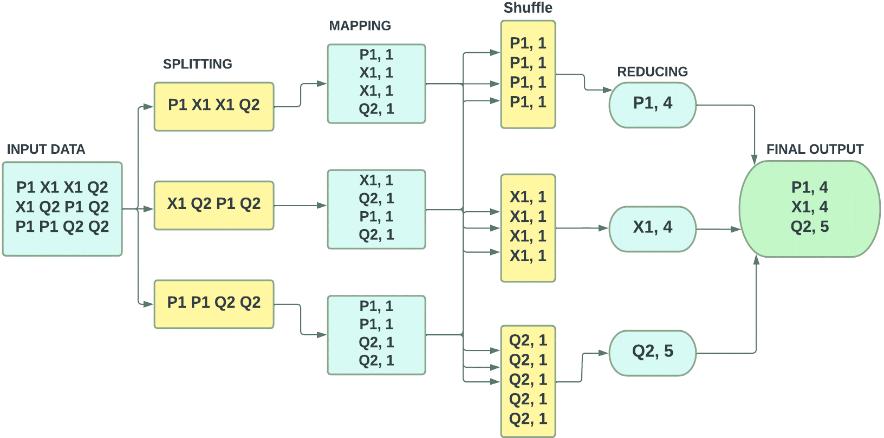
The MapReduce program's execution consists of two stages: the Map stage and the Reduce stage.[28] The Map stage processes the input data, typically stored in Hadoop DistributedFileSystem(HDFS),andpassesitcharacterby character to the mapper function, producing intermediate data.TheReducestagecombinestheintermediateoutputs and produces a final output, which is then stored back in HDFS.MapReducefollowsamaster-slaveparadigm,where themaster(JobTracker)dividestheproblemintojobsand sends them to various Data Nodes (TaskTracker) for parallel processing. The map jobs often run on the same cluster nodes as the processed data, and if a node is overloaded,anothernodeclosetothedataisselected. The intermediate results of the Map and Shuffle phases are combined to reduce the amount of data transferred betweenmaptasksandreducetasks.Whiletheinputdata and the final output are stored in HDFS, the intermediate results are stored in the local file systems of the Data Nodes.
The JobTracker is responsible for monitoring the Data Nodes, managing the TaskTrackers, and ensuring the completion of jobs. If a task fails or a Data Node becomes unresponsive, the JobTracker restarts the job on another server,preferablyonewithacopyofthedata.Additionally, if a task is running slowly, the JobTracker can initiate speculative execution by starting the same task on a different server to complete the job within the allocated time.
MrJob is a Python framework that simplifies the development and execution of MapReduce tasks on Hadoop servers. It provides a high-level API for creating MapReducejobsandabstractsthecomplexitiesofHadoop. SomekeyfeaturesandbenefitsofMrJobinclude:
i. Compatibility with various Hadoop versions, including Amazon Elastic MapReduce (EMR), local computers, andDockercontainers.
ii. High-levelAPIthateliminatestheneedfordealingwith low-levelHadoopdetails.
iii. Built-in test framework for testing MapReduce tasks beforedeployingthemtoaHadoopcluster.
To create and run a job using MrJob, one can use commandssuchascreatinganewjob,runningajoblocally oronaHadoopcluster,andtestingajoblocally.[19]
Creatinganewjob:pythonmrjobcreate-jobmy_job
Running a job locally: python my_job.py -r localinput_file
Running a job on a Hadoop cluster: python my_job.py-r hadoopinput_file
Running a job on Amazon Elastic MapReduce: python my_job.py-remrs3://input_bucket/input_file
Testingajoblocally:pythonmy_job_test.py
E.YARN
YARN, which stands for Yet Another Resource Negotiator, is a cluster management technology used in Hadoop for resourceallocationandapplicationscheduling.Itoffersthe followingcharacteristicsandadvantages:
i. Resource management: YARN enables efficient sharing of cluster resources among multiple applications.
ii. Centralized scheduler: YARN includes a centralized scheduler that controls resource allocation and schedulesapplicationsonthecluster.
iii. Fault tolerance: YARN incorporates fault tolerance mechanisms to ensure uninterrupted application executioneveninthepresenceofnodefailures.
iv. Scalability: YARN is designed to handle large clusters with thousands of nodes and millions of tasks.
To interact with YARN, various commands can be used, such as starting the ResourceManager, starting the NodeManager, submitting MapReduce or Spark jobs, and monitoringapplicationprogress.
petabytesofdatainawidelydistributedway.
StartResourceManager:yarnresourcemanager
StartNodeManager:yarnnodemanager
Submit MapReduce job: yarn jar mapreduce.jar MyJob inputoutput
Submit Spark job: spark-submit master yarn deploymodeclustermyapp.pyinputoutput
Monitor application progress: yarn application - status <application_id>
Pig is a framework for analyzing large datasets using Pig Latin, a high-level scripting language. Pig Latin provides a simplified syntax for expressing data analysis tasks, allowing users to focus on the analysis logic rather than low-level implementation details.[9] Pig handles data storageandprocessingcomplexities,makingdatahandling easier. It offers a scripting interface for conducting data analysis jobs and is designed to operate on large clusters and handle petabytes of data in a distributed manner. Some common Pig commands include loading data from a file, filtering data, grouping and aggregating data, and writingdatatoafile.
StartPigshell:pig
Load from a file: mydata = LOAD 'mydata.txt' USING PigStorage(',')AS(col1:int,col2:chararray,col3:double);
Filter data: mydata_filtered = FILTER mydata BY col1 > 100;
Group & aggregate data: mydata_grouped = GROUP mydata BY col2; mydata_aggregated = FOREACH mydata_groupedGENERATEgroup,AVG(mydata.col3);
Write to a file: STORE mydata_aggregated INTO 'output' USINGPigStorage();
G.Hive
Hive is a data storage utility that provides a SQL-like interface for querying and analyzing large Hadoop datasets. Hive translates SQL queries into MapReduce tasks, enabling developers and analysts to interact with Hadoop using familiar SQL syntax. Key characteristics and benefitsofHiveinclude:
i. SQL-like interface: Hive offers a user-friendly SQL-like interface that simplifies the creation and execution of queriesonlargedatabases.
ii. Scalability: Hive is designed to handle big clusters and process petabytes of data in a distributed and parallel manner.
iii. Data warehousingfeatures:Hivesupportsfeatureslike table creation and partitioning for effective data warehousing.
TouseHive,onecanstarttheHiveshell,createtables,load dataintotables,andrunqueriesusingSQLsyntax.
StartingtheHiveshell:hive
Creating a table: CREATE TABLE mytable (col1 INT,col2 STRING,col3DOUBLE);
Loading data into a table: LOAD DATA LOCAL INPATH 'data.txt'INTOTABLEmytable;
Running a query: SELECT col1, AVG(col3) FROM mytableGROUPBYcol1;
Overall, these tools and technologies, such as Hadoop, HDFS, MapReduce, MrJob, YARN, Pig, and Hive, provide powerful capabilities for distributed data processing and analysis,makingiteasiertohandlelargedatasets
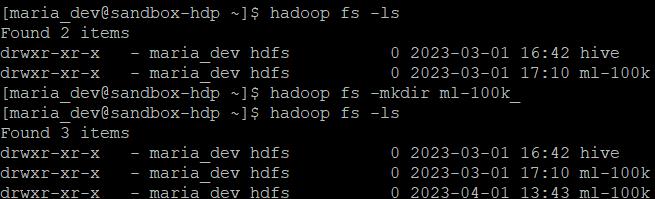
This paper runs a MapReduce job using sandbox environment to better understand the usage of Hadoop HDFSandMapReducecommands.Asamplemoviedataset isusedtoapplyvariousfunctionsandcommandson.With
the help of Ambari (Hadoop user interface) bash commandlinewetypethefollowingHDFScommands:
i. Hadoopfs-ls(listsfilesinthecluster)
ii. Hadoop fs -mkdir ml-100k(makes a new folder namedml-100k)
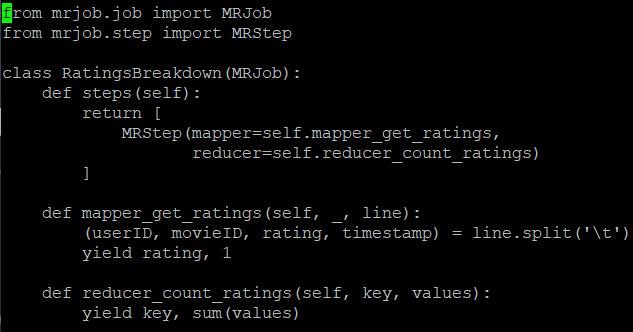
With the help of nano text editor we input the functions for sorting and adding the movie ratings according to the user id. This task is completed with the help of a python librarycalledMRjob.BelowarethefunctionsofMRjob:
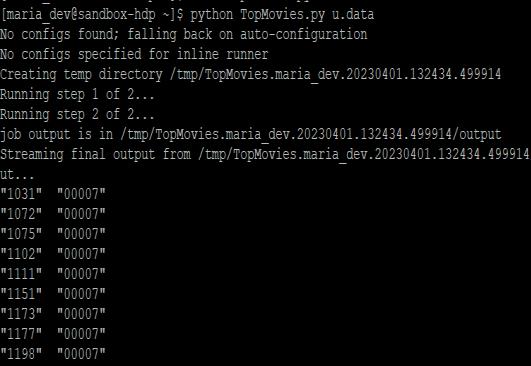
Oncethefunctionsaredefinedintheeditorwemake sure to save the python file.[12] Then we run the MRjobpythonfileonthemoviedatasetonly toview therequiredresults:
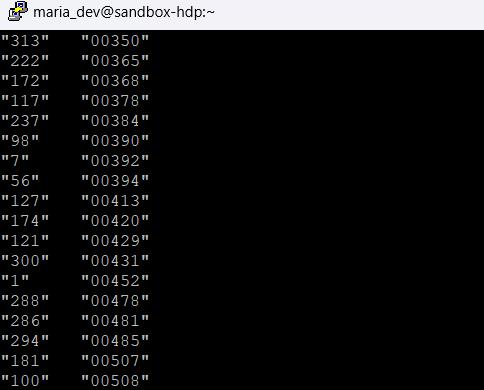
After running the Python commands we get the MapReduced result from the dataset which containsthe sorted (ascending order) ratings of themovies(right) accordingtotheuserids(left).
[1] Bhosale, H. S., Gadekar, P. D. (2014). "A Review Paper onBigDataandHadoop."InternationalJournalofScientific andResearchPublications,4(10).
[2]Smitha,T.,Kumar,V.S.(2013)."ApplicationofBigData in Data Mining." International Journal of Emerging TechnologyandAdvancedEngineering,3(7).
[3] IBM Big Data Analytics HUB. (n.d.). "Four V's of Big Data." Retrieved from www.ibmbigdatahub.com/infographic/four-vs-big-data
[4] Mridul, M., Khajuria, A., Dutta, S., Kumar, N. (2014). "Analysis of Big Data using Apache Hadoop and MapReduce."InternationalJournalofAdvanceResearchin ComputerScienceandSoftwareEngineering,4(5).
[5] Apache Hadoop Project. (n.d.). "Apache Hadoop." Retrievedfromhttp://hadoop.apache.org/.
Big Data is a type of data whose size, variety, and complexity necessitate the development of new design, methods, algorithms, and analytics in order to handle it andderivevalueandsecretknowledgefromit.Dataisnow produced from a variety of sources and can enter the system at varying speeds.[4] Today, processing huge amounts of data is a major problem. We covered the HadooptoolforBigDataindepthinthisarticle.Hadoopis the foundational framework for structuring Big Data and solvingtheissueofmaking itusableforanalytics.Wealso talkedabout some Hadoop componentsthat help with the handling of big data sets in dispersed computing settings. In the future, we can apply some clustering methods and testtheirperformance.
Hadoop offers several advantages for big data testing, including scalability, failure tolerance, and support for different data types. However, due to the platform's complexityandthediversityoftoolsaccessible,testingbig dataonHadoopcanbedifficult.Toguaranteetheaccuracy anddependability ofbigdata processedwith Hadoop, it is critical to have a comprehensive grasp of its architecture, testingmethods,andtools.
As the demand for big data analytics grows rapidly across various sectors, the potential scope of big data testing usingHadoopisimportant.Asmorebusinessesimplement big data technologies, the need for efficient testing strategies and tools grows.[17] Because of its scalability, fault tolerance, and support for different data types, Hadoop has become a common tool for big data handling and analysis. Hadoop is anticipated to provide more sophisticated testing methods and instruments to guarantee the accuracy and dependability of big data as it evolves.
[6] Smitha, T., Sundaram, V. (2012). "Classification Rules by Decision Tree for Disease Prediction." International JournalforComputerApplications,43(8).
[7] Baker, N. (2017). "3 Universities That Are Using Big Data - QS." Retrieved from https://www.qs.com/3universities-thatare-using-bigdata/?fbclid=IwAR2eH_8StopgXHIlnGn5IQvnwIKmDQVM_ xTWZc5oq6FDp4_vwNkUzG4xZOQ.
[8] Information Technology Research and Development Centre, University of Kufa. (2018). "E-learning server statistics." Retrieved from http://elearning.uokufa.edu.iq/?page_id=100
[9] Parsola, J., et al. (2018). "Post Event Investigation of Multi-stream Video Data Utilizing Hadoop Cluster." International Journal of Electrical and Computer Engineering,8,5089.
[10] Apache Hadoop. (2018). "Hadoop – Apache Hadoop 2.9.2." Retrieved from https://hadoop.apache.org/docs/r2.9.2/
[11] Tom, W. (2015). "Hadoop: The Definitive Guide." Fourth Edition The Definitive Guide Storage and Analysis atInternetScale.
[12]InsightsSAS.(n.d.)."WhatisHadoop?"Retrievedfrom https://www.sas.com/en_us/insights/bigdata/hadoop.html.
[13] Yang, H. C., Dasdan, A., Hsiao, R. L., Parker, D. S. (2007). "Map–reduce–merge: Simplified relational data processingonlargeclusters."Proceedingsofthe2007ACM SIGMODInternationalConferenceonManagementofData.
[14] Hunt, P., Konar, M., Junqueira, F. P., Reed, B. (2010). "ZooKeeper: Wait-free coordination for internet-scale systems." Proceedings of the USENIX Annual Technical Conference.
[15]Junqueira,F.,Reed,B.(2013)."ZooKeeper:Distributed ProcessCoordination."O'ReillyMedia,Inc.
[16] Ranjan, R. (2014). "Streaming big data processing in datacenterclouds."IEEECloudComputing,1(1),78-83.
[17] Bahga, A., Madisetti, V. (2014). "Internet of Things: A Hands-OnApproach."Vpt.
[18] Meng, X., et al. (2016). "MLlib: Machine learning in Apache Spark." Journal of Machine Learning Research, 17(1),1235-1241.
[19] Gonzalez, J. E., et al. (2014). "Graphx: Graph processing in a distributed dataflow framework." Proceedingsofthe14thUSENIXSymposiumonOperating SystemsDesignandImplementation.
[20] Kulkarni, S., et al. (2015). "Twitter Heron: Stream processing at scale." Proceedings of the 2015 ACM SIGMOD International Conference on Management of Data.
[21]Aji,A.,etal.(2013)."HadoopGIS:Ahigh-performance spatial data warehousing system over MapReduce." ProceedingsoftheVLDBEndowment,6(11),1009-1020.
[22] Apache Hadoop. (2016). Retrieved from http://hadoop.apache.org/
[23] Apache Hive. (2016). Retrieved from https://hive.apache.org/.
[24] Apache Hadoop HDFS. (2016). Retrieved from http://hadoop.apache.org/hdfs
[25] Dean, J., Ghemawat, S. (2008). "MapReduce: Simplified data processing on large clusters." CommunicationsoftheACM,51(1),107-113.
[26] White, T. (2012). "Hadoop: The Definitive Guide." O'ReillyMedia,Inc.
[27] Zaharia, M., et al. (2010). "Spark: Cluster computing withworkingsets."HotCloud,10(10-10),95.
[28] Akbarinia, R., Pournaras, E., Aberer, K. (2013). "Dynamicloadbalancingindistributedstreamprocessing systems." IEEE Transactions on Parallel and Distributed Systems,24(7),1362-1371.
[29] Zaharia, M., et al. (2016). "Apache Spark: A unified engine for big data processing." Communications of the ACM,59(11),56-65.
[30] Kshemkalyani, A. D., Singhal, M. (2010). "Distributed Computing: Principles, Algorithms, and Systems." CambridgeUniversityPress.
[31] Abadi, D. J., Chu, A., Eksombatchai, P. (2013). "The power of comparative reasoning." Communicationsof the ACM,56(3),70-77.
[32] Chen, Q., et al. (2014). "A survey of big data storage and computational frameworks." Journal of Computer ScienceandTechnology,29(2),165-182.
[33] Qiu, M., et al. (2014). "Performance modeling and analysis of big data processing in cloud systems." IEEE Transactions on Parallel and Distributed Systems, 25(9), 2193-2203.
[34] Bhatia, R., Kumar, S., Goyal, P. (2013). "Hadoop: A frameworkforbigdataanalytics."InternationalJournalof Emerging Technology and Advanced Engineering, 3(3), 238-241.
[35]Vavilapalli,V.K.,etal.(2013)."ApacheHadoopYARN: Yet AnotherResourceNegotiator."Proceedingsof the 4th AnnualSymposiumonCloudComputing,5(7),1-16.