Real-time Anomaly Detection and Alert System for Video Surveillance
Seemantula Nischal1 , Bhunesh.k2 , Ashwin Sathappan v31,2 B.E Student, Computer Science, RMD Engineering College, Chennai, India
3 B.Tech Student, Information Technology, RMD Engineering College, Chennai, India -***

Abstract - The objective of this project is to develop a real-time video surveillance system that can detect and classify various types of anomalies such as theft, street crime, unauthorized access and burglary. The system will use a combination of deep learning models, such as CenterNet and Graph Convolutional Networks (GCN), to detect and classify the anomalies in real-time CCTV footage. Once an anomaly is detected, the system will trigger an alert to the nearest police station the system is incorporated with Twilio Video API to send alerts to officials in real-time and send a video message along with the location information of the anomaly. The system stores information about the anomaly in a database [MindsDB], including the type of anomaly, severity level, and longitude and latitude of the location. Overall, the real-time anomaly detection and alert system for video surveillance will provide an efficient way to detect and track criminal activities in real-time, enhancing public safety and security.
Key Words: Real-time anomaly Detection, UCF Dataset, MindsDB, Crime India Dataset, Twilo Video-based API
1. INTRODUCTION
Videosurveillancesystems arecritical topublicsafetyandsecurity.Real-timemonitoringandanalysisofvideo footagehave become more important in detecting and responding to potential threats or unlawful behavior. Traditional surveillance systemsrelyheavilyonmanualmonitoring,whichistime-consumingandpronetohumanerror.Asaresult,thereisagrowing demandforautomatedsystemsthatcandetectandcategorizeanomaliesinreal-timevideostreams.
Detecting and categorizing a wide range of anomalies such as theft, street crime, illegal access, and burglary. By using breakthroughs in deep learning models, we want to increase video surveillance capabilities for efficient anomaly identification.Toachievethisgoal,weemployarangeofdeeplearningmodelsThisresearchproject'spurposeistodevelopa real-timevideosurveillance systemcapableof,includingCenterNetandGraphConvolutional Networks(GCN).Thesemodels have proven to be extremely effective in object detection and identifying spatial relationships in complex circumstances. CenterNet's object recognition is precise and efficient, allowing us to discover anomalies inside video frames. GCN, on the other hand, captures contextual information and object relationships using the power of graph-based representations, allowingforrobustanomalycategorization. Whenananomalyisdetected,oursystemusestheTwilio VideoAPItonotifythe nearest police station. Because the warnings include real-time video messaging and location information, authorities can respondandinterfereimmediately.
Furthermore,preciseinformationabouteachabnormalityissavedinadatabase(MindsDB). suchasitsclassification,severity degree,and exactgeographical location.Thisallowsfor comprehensivepost-analysisanda betterknowledge of thepatterns andtrendsrelatedtocriminalactivities.
Standard surveillance techniques are outperformed by the proposed real-time anomaly identification and alert system. It boosts the efficiency and effectiveness of video surveillance by automating the detection and classification of abnormalities. Theabilitytoswiftlyalertauthoritiesto potentialthreatsenablesfasterresponsetimesandproactiveintervention,resulting inasaferandmoresecureenvironment.
In the next parts, we will look at the technical aspects of our system, such as the deep learning models employed, the alert generatingprocess,databasestorage,andsoon.iscategory,severitydegree,andspecificgeographicallocation.Thisallowsfor comprehensivepost-analysisandabetterknowledgeofthepatternsandtrendsrelatedtocriminalactivities.
Standard surveillance techniques are outperformed by the proposed real-time anomaly identification and alert system. It boosts the efficiency and effectiveness of video surveillance by automating the detection and classification of abnormalities Theabilitytoswiftlyalertauthoritiestopotentialthreatsenablesfasterresponsetimesandproactiveintervention,resulting inasaferandmoresecureenvironment.
2. DATASET
2.1
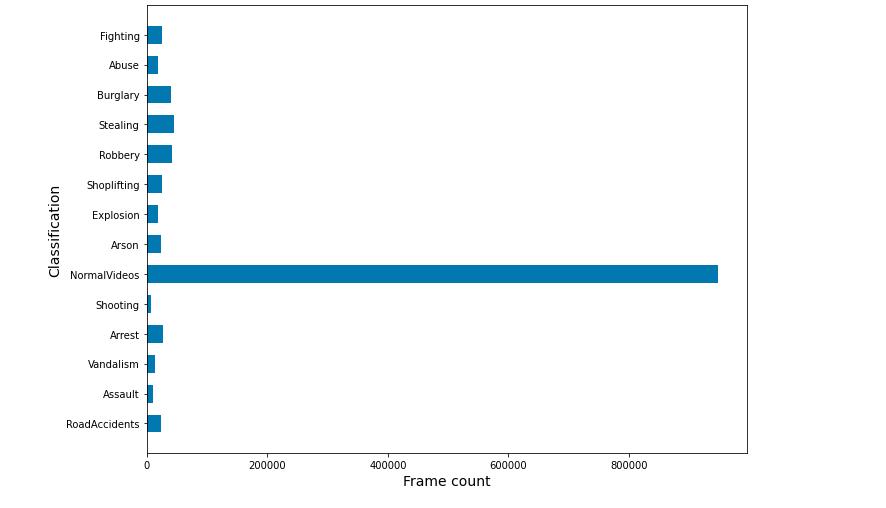
This dataset includes a sizable number of security recordings documenting many types of criminal activity, including theft, vandalism,andassault.Itisfrequentlyusedtoassessalgorithmsforactionidentificationandanomalydetection.Thedataset includes of surveillance films that were taken in a variety of real-world situations when criminal activity was taking place. Theft, vandalism, assault, and burglary are only a few of the 14 types of crimes covered. The collection seeks to serve as a referencepointforcreatingalgorithmsthatcanautomaticallyfindandidentifyillegalactivityinsurveillancefootage.
2.1.1 Classes
Thereareatotalof14Classesinthedataset: 1.
13.
2.1.2
Contents
Thereare1,900videoclipsaltogetherintheUCF-CrimeDatasetthatwerecollectedfromvarioussecuritycameras.Eachvideo clipnormallylasts30secondsandfeaturesaparticularincidenceofillegalbehaviour. Themoviesarerecordedfromvarious angles, locales, and lighting setups, offering a variety of algorithm assessment problems. Each video clip in the collection comes with frame-level annotations defining the bounds of the illegal activity's time period. An accurate evaluation of detectionandrecognitionmethodsismadepossiblebytheannotations'startandendtimestamps.Theprimaryparticipantsin the illicit actions are identified in the dataset via bounding box annotations. 1,266,345 images make up the whole train subset.Thetestsubsethas111,308imagesintotal.
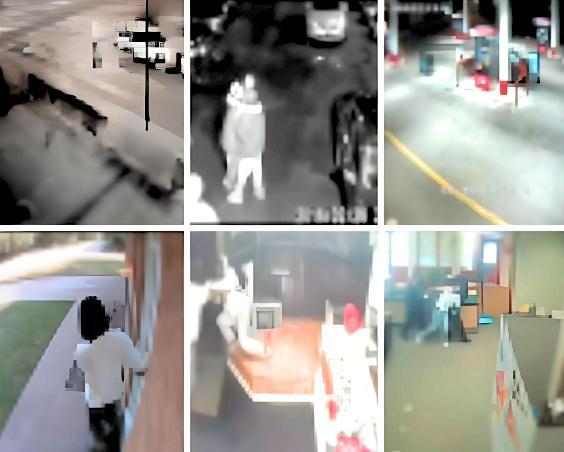
Someofthemareattachedbelow:

2.2 Crime India Dataset
Due to the country's numerous demographics and locations, the specific crime statistics for India may be fairly broad and varied. Despite the fact that there isn't a single complete dataset that covers all crimes in India, a number of sources and organisationsdoofferstatisticsoncrimes.ThefollowingimportantsourcesandstatisticsaboutcrimeinIndiaarelisted:
2.2.1 National Crime Records Bureau (NCRB)
ThemainorganisationinchargeofgatheringanddisseminatinginformationoncrimesinIndiaisthe NationalCrimeRecords Bureau. An yearly report from NCRB titled "Crime in India" contains data and analysis on a variety of crimes committed aroundthenation.Thisdatasetincludescomprehensivestatisticsonallcrime-relatedissuesthatoccurredinIndiastartingin 2001.Thisdatasetmaybeusedtoinvestigateavarietyofaspects.Someoftheaspectsinclude:
1.UseofFirearmsinMurderCases
2.HumanRightsViolationbyPolice
3.VictimsofKidnappingandAbductionforspecificpurpose
4.Custodialdeaths
Andmore.
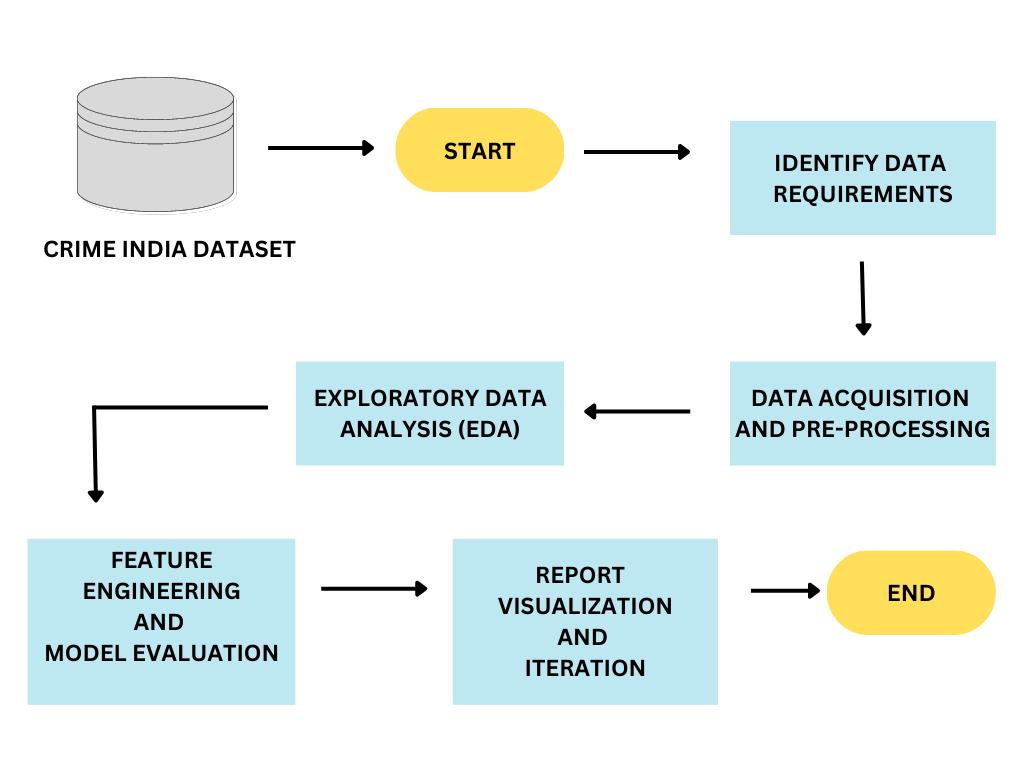
2.2.3 WORKING

3. RELATED WORKS
Several fields of study have played important roles in the field of real-time anomaly detection and alarm systems for video surveillance. Faster R-CNN, YOLO, and SSD object detection algorithms have been widely used for the accurate and efficient identificationofobjectsinvideostreams.Anomalydetectionapproachessuchasone-classSVMandautoencodershavebeen investigated to detect deviations from typical behavior, however, they frequently have significant false positive rates. Graph ConvolutionalNetworks(GCN)haveemergedasausefulmethodforcollectingspatialconnectionsandcontextualinformation in complicated scenarios, which has resulted in enhanced anomaly detection and item categorization. The integration of communication tools such as the Twilio Video API enables the development of real-time alerts, ensuring a rapid response to identified irregularities. MindsDB and other database systems provide efficient storing and processing capabilities for anomalous data, allowing post-analysis and predictive modeling. While previous research has made substantial advances, issues such as balancing accuracy and processing speed, dealing with complex situations, and resolving privacy concerns remain.WewanttoprogressthefieldinthisresearchbyemployingdeeplearningmodelslikeCenterNetandGCNforprecise and efficient real-time anomaly detection and categorization. In addition, we prioritize rapid alarm production, database storage,andthoroughpost-analysistoimprovepublicsafetyandsecurity.Ourresearchintendstosolvethelimitationsnoted in the existing literature and contribute to the improvement of real-time anomaly detection for video surveillance through rigorousassessment.
4. FACE RECOGNITION MODEL

4.1 Introduction
Artificialintelligenceprogrammerscalledfacerecognitionmodelsareusedtorecognizeandauthenticatepeoplebylookingat theirfacialtraits.Inthesemodels,significantcharacteristicsareextractedfromfacialphotosusing deeplearningtechniques, andthefeaturesarethenmappedontoahigh-dimensionalspacewherelikefacesareclusteredtogether.
Facerecognitionoftenentailsthefollowingcrucialsteps:
4.1.1 Face Detection

Facedetectionistheinitialstageinfindingfacesinaframeofanimageorvideo.Inordertodothis,algorithmsthatexamine patterns,forms,andcolorchangesareusedtoidentifythefacearea.
4.1.2 Feature Extraction
Followingthediscoveryofaface,themodelextractspertinentelementsfromthefacialpicture.Convolutionalneuralnetworks (CNNs), a type of deep learning technology, are frequently used to capture distinguishing face features including the appearanceoftheeyes,nose,andmouth.
4.1.3 Face Representation
Using the retrieved features, a compact representation or embedding is created that captures the distinctive aspects of the face.Thesedepictionsaremadetoberesistanttochangesinstance,lighting,andfaceemotions.
4.1.4 Face Matching
Themodelcomparestheembeddedrepresentationofaqueryfacewithadatabaseofrecognizedfacesduringtherecognition phase. The similarity of the embeddings is assessed using a variety of matching methods, including cosine similarity and Euclideandistance.
4.1.5 Verification or Classification
Dependingonthesimilarityscore,themodelmaycarryouteitherfaceverificationorclassification,whichinvolvesdecidingif apersonmatchesacertainidentityclaim.
5. SFC DATSET

TheSFCdatasetconsistsof4.4millionlabelledfacesfrom4,030individuals,eachofwhomhas800to1200pictures.Onlythe most recent 5% of each identity's face photographs are used for testing. To mimic ongoing identification across time, this is carriedoutinaccordancewiththetime-stampofthephotos.Thehighnumberofphotosperindividualoffersaspecialchance tolearntheinvariancerequiredforsolvingthefundamentalissueoffacerecognition.
6 CENTER NET BASED MODEL
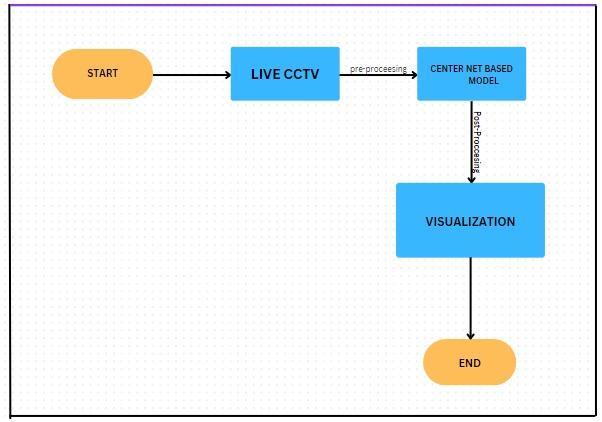
Popular object identification software called CenterNet may be used to find items in live cctv . It uses the idea of keypoint estimationtofindthecentrepointsofobjectsandisbasedonaone-stagedetectordesign.
6.1 HOW DOES CENTER NET BASED MODEL WORK WITH LIVE CCTV
The following actions are conducted in order to get live CCTV photos of the UFC bout. First, the footage's individual video framesareremoved.Dependingonthesituation,theseframesgothroughvariousimageprocessingstepsincludingcropping, normalising,andscaling.Thefollowingstageisidentifyingandlocatinganyhumanbeingsvisibleinthephotos.Thedetection ofindividualsusesapersondetectionmethod,similartoobjectdetection.Oncetheyarediscovered,theobservedpersonsare trackedusingatechniquelikeobjecttracking.
Severalstrategiesareutilisedtoobtainrelevantinformationfromthewatchedhumanfigures.Todetectandanalyse relevant propertiesinthefigures,methodssuchaspostureestimationandactivityidentificationareused.Thisaidswiththecollection ofrelevantdatasuchasbodypostures,motions,oractivitiesdisplayedbyeachindividual.
Auniqueidentificationnumberisprovidedtoeachtrackedindividualinordertokeeptrackofthem.Thisone-of-a-kindIDis used to keep track of the IDs and the related monitored statistics. Furthermore, the centroid or centre point of each human figureisdeterminedbytheirbodypositions.Thisenablesforbetterfigureorganisationandlayout.
The distance between the centres of each human figure is estimated to group people together. They are regarded as being closebyiftheircentresarewithinaspecificrangeofoneanother.Thisgroupingfacilitatesdataorganisationandproducesa moreconvincingdepictionofthesituation.
The input data is then combined in order to prepare it as input for the center-based model. This covers the locations of the human figure groupings whose centres were established in accordance with the preceding procedures. The center-based model isthenappliedtothe outputto doadditional analysisorprocessing. Thefollowingproceduresmay beusedtotraina CenterNet-basedmodelaftergatheringdatafromtheUFCdataset:
6.1.1 Data Preparation
Annotatetheboundingboxesfortheitemsyouwishtodetect(suchasfighters)intheUFCdatasetandresizethephotostoa uniformsize.Theboundingboxcoordinatesaswellastheclasslabelsshouldbeincludedintheannotations.
6.1.2 Network Architecture
ConstructtheCenterNet-basedmodel'snetworkarchitecture.Forfeatureextraction,itoftencomprisesofabackbonenetwork (like ResNet), and for object identification, it typically consists of a number of additional layers. The inclusion of a keypoint estimatebranchisCenterNet'skeyfeature.
6.1.3 Training
Setthenetwork'sinitial weights atrandomandtrainit withtheprovideddataset Forward-passingthepictures throughthe network,computingthedifferencebetweenthepredictedkeypointsandthegroundtruthkeypoints,andback-propagatingthe gradientsto updatethenetwork weights areall stepsinthe training process. Typically,stochastic gradientdescent(SGD) or Adamoptimisationalgorithmsareusedforthisprocedure.
6.1.4 Keypoint Estimation:
The model learns how to anticipate an object's centre point by examining its keypoints during training. These keypoints are frequentlyrepresentedasheatmaps,witheachheatmaprepresentingacertainkindofitem.Thegreatestvalueinaheatmap representstheanticipatedcentrepointofanitemfallingwithinthatcategory.Thealgorithmacquiresthecapacitytorecognise andpinpointsignificantlocationsondiverseobjects,understandingtheirspatialrelationshipsandmakingprecisepredictions byutilisingtheseheatmapsandtheirrelatedvalues.
Once the model has been trained, you can use it to recognise objects in fresh photos from the UFC dataset or in any other image.Thetrainedmodel will produceheatmapsforeachclassduringinferenceandidentifythecentrepoints oftheobjects basedontheheatmaps' greatestvalues. Thebounding boxesandclasslabelsoftheidentifiedobjectsmaythen becalculated usingthesecentrepoints.
7. GRAPH-BASED ANOMALY
Machinelearningmodelsthatemploygraphtheorytoanalyzeintricateinteractionsbetweenelementsinadatasetarecalled "graph-based models for action and anomaly detection. These models are frequently used in security and video surveillance applications to find unusual behavior or illegal activity. The fundamental concept underlying graph-based models is to visualizethedataasagraph,withtheentitiesactingasnodesandtheconnectionsbetweenthemasedges.
Forinstance,inavideosurveillanceapplication,thenodesmaystandinforindividualsorobjectsinthevideo,andtheedges might stand in for geographical or temporal interactions between them. The graph-based approach can utilizea variety of algorithms to identify unusual behavioror illegal conduct once the network has been formed. Searching for subparagraphs that stand out or don't fit the norm is a typical tactic. A graph-based model, for instance, may identify a subgraph where a personistravelingintheotherwayasanomalousifmostindividualsinthevideoarewalkingalongaparticularpath. weneed to first develop a graph representation of the data to use a graph-based model on a dataset of crimes. In this case, the participants in the crime may be represented as nodesand the connections among them (such as co-occurrence or communication)asedges.
Thegraph-basedmodelmaybetrainedonthecreatedgraphonceithasbeencreated.It'scrucialtorememberthatthefieldof research into graph-based models for action and anomaly detection is challenging and dynamic. The particular strategy and techniquesemployedcanchangebasedontheapplicationanddataset.
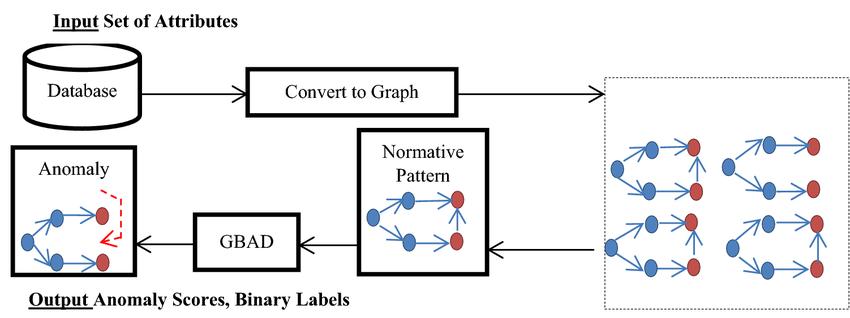
Abroaddescriptionoftheoperationofagraph-basedactionandanomalydetectionmodelisgivenbelow:
7.1.1 Data Representation
The dataset is organized as a graph, where nodes are the things or objects and edges are their connections or interactions. While the edges records linkages such as co-occurrences, temporal sequences, or correlations, the nodes for crime activity detectionmightrepresentpeople,places,orevents.
7.1.2 Graph Construction
Agraphisbuiltusingtheinformationathand. Thenodesmayrepresentthepeoplewhowereengagedinthecrimes,andthe edges could reflect the relationships between them based on co-occurrence in the same incident or temporal proximity, for instance,ifthedatasetcontainedinformationoncriminalincidents.
7.1.3 Feature Extraction
To describe the attributes of the nodes and edges, pertinent features are retrieved from them. These characteristics may includecharacteristicsliketimestamps,geographicdata,socialconnections,oranyotherpertinentdatathataidsindescribing theentitiesandtheirinteractions.
7.1.4 Graph Analysis
The generatedgraphis analyzedusinga varietyofgraph-basedmethodsand methodologies.Typical methods include graph clustering, community discovery, centrality analysis, and graph pattern mining. These techniques seek to locate patterns, groups,orsubgraphsthatcorrelatetoroutinebehaviororcriminalactivity.
7.1.5 Anomaly Detection
Themodelmayidentifyactionsorgroupsofactivitiesthataresuggestiveofcriminalbehaviorbasedonthegraphanalysis.It may either learn from labeled data to find Anomaly Detection anomalies that depart from anticipated behavior, or it can compareobservedpatternsagainstknownpatternsofcriminalactivity. Itispossibletomarkunusualoraberrantpatternsas probablecriminalactivityforfurtherexamination.It'svitaltorememberthatdependingontheindividualstudyorapplication setting, the precise implementation and techniques employed in graph-based models for action and anomaly detection may differ. Various graph analyses To get the required outcomes, methods, and machine learning algorithms might be combined. The graph-based model can assist in identifying patterns of criminal behavior, revealing hidden linkages, and highlighting suspiciousbehaviorsthatmayneedtheattentionoflawenforcementorsecurityprofessionalswhenthismethodisappliedto adatasetofcrimeactivity.
Thesemodelsofferapotenttoolforcomprehendingintricatecriminalnetworksandspottingunusualorunlawfulbehaviorby utilizingthegraphstructureandexaminingrelationshipsbetweenentities.Graph-basedanomalydetectiontechniquesusethe links and interconnections between the data pieces and interconnections between the data pieces are used by graph-based anomalydetectiontechniquestofindabnormalities.
Hereisadiagramshowingeachstepindetail:
Step1DataPoints
InStep1Webeginwithasetofdatapointsthatarerepresentedasgraphnodes.Eachnodestandsfora distinctdatapoint.We haveagraphwithnumerousnodesinthisexample.
Step2Connections
In Step 2 Then, depending on the nodes' connections or similarities, we create edges between them. These links show the relationships between the data points. To illustrate the strength or similarity of the relationships, or similarities. These connections indicate how the data points are related to each other. The edges can be weighted to represent the strength or similarityoftheconnections.
Step3NormalDataPoints
InStep, ThreeWe presume thatthe majority ofthedata pointsina graph-based anomalydetectiontechniqueare normal or non-anomalous.Thebulkofnodesinthenetworkareregardedasregulardatapoints A B
Step4:Findinganomalies
Data points that considerably depart from the norm or have odd relationships in the graph are considered anomalies. Anomalies can be found by inspecting the nodes' characteristics and the graph's overall structure. In this case, Node B's peculiarconnectionpatternidentifiesitasanabnormality.
A (Normal) B(Anomaly)
Step5LabellingtheAnomaly
Anomaliescanbelabeledorreportedforadditionalinquiryoractionaftertheyarediscovered.
A(Normal) B(Anomaly)
8. Twilo video-based API
Twilio Video is an API (Application Programming Interface) provided by Twilio, a cloud communications platform, that enablesdeveloperstoincorporatevideocommunicationcapabilitiesintotheirapplicationsorservices. Itallowsyouto build applications that support real-time video calls, video conferencing, and live streaming. Using a client-server architecture, TwilioVideoestablishesconnectionsbetweenparticipants.Hereisageneraldescriptionofhowitworks:
8.1 Integration on the client side
You include the Twilio Video SDK (Software Development Kit) in the client-side code of your application. The tools and capabilitiesrequiredtoestablishandmanagevideocommunicationareprovidedbythisSDK.
8.2
Authentication & token generation
Theserver-sidecodeofyourapplicationcreatesaspecialaccesstokenusingtheTwilioAPIwheneverauserrequeststojoina videosession.Theuser'sidentityisconfirmedbythisaccesstoken,whichalsogivesthemaccesstothevideosession.
8.3 Room creation
The user joins a virtual "room" where the video session occurs after authorization. The room is created by the server-side code,whichalsoassignsaspecialRoomIDthatisusedtotrackdownandmanagethesession'sparticipants.
8.4 Media transmission
The client of each participant's device records audio and video using the microphone and camera. After that, Twilio's media serversreceivetheencodedandtransmittedmedia.Twiliomanagesthemediarouting,allowingparticipantstocommunicate inrealtime.
8.5 Signaling
Peer-to-peer communication between participants is made possible by Twilio Video's usage of WebRTC (Real-Time Communication)technology.Tostartandmaintainthesession,signalingmessagesaresentbackandforthbetweentheclients andTwilio'sinfrastructure,includingconnectionrequests,mediametadatarequests,andparticipantchanges.
8.6 Video Features
For Twilio Video include screen sharing, chat, muting and unmuting of participants, bandwidth management, and more. Dependingonyouruniqueneeds,thesefunctionsmaybemodifiedandintegratedintoyourapplication.It'simportanttonote that Twilio Video offers comprehensive documentation, sample code, and client SDKs for a variety of platforms (web, iOS, Android)toeaseintegrationandmakeitsimplerfordeveloperstomakeuseofitsfeatures.
9. VALIDATE AND ACCEPT
Twilo'svideo-basedAPIsendsthemessageorvideofiletothelocalpolicestation. Now,governmentrepresentativesmustsee the footage, travel to the murder scene, and take the required measures. The primary goal of Twilo's video-based API is to ensurethatanyvideosuppliedtoofficialscannotbetamperedwithorfalsifiedandinsteadoffersaccurateinformation.False informationcannotbegiventoofficialsinanyway.
10. DATABASE
Collected information is stored in the [MINDSDB] database, including the type of anomaly, severity level, and longitude and latitude of the location Databases may now use machine learning techniques thanks to MindsDB, an open-source automated machinelearning(AutoML)technology.Incontrasttoconventionaldatabases,MindsDBfocusesonstreamliningthecreation andusageofmachinelearningmodelsrightinsidethedatabase.PopulardatabaseslikeMySQL,PostgreSQL,andMongoDBare allintegratedwithMindsDB.Itcreatesaconnectiontothedatabasesoitmayaccessandexaminetheinformationinside.
10.1 Data preparation and analysis
The database tables are subjected to exploratory data analysis (EDA) by MindsDB to comprehend the data structure, spot trends, and, if necessary, manage missing values or outliers. To prepare the data for the model, it could carry out data preparationoperationslikefeatureengineering,Datapreparationformodeltrainingincludesnormalizationandencoding.
10.2 Automatic model training and selection
Basedonthedatainthedatabase,MindsDBusesAutoMLmethodstoautomaticallychooseandtrainmachinelearningmodels. To determine the optimal model for the supplied data, it investigates a variety of techniques, including linear regression, decisiontrees,randomforests,andneuralnetworks.
10.3 Integration of the model with the database
MindsDB incorporates the learned model back into the database environment once it has been trained. It provides a virtual tableorviewthatservesasadatabaseinterfaceforthetrainedmodel.
10.4 Prediction and questioning
Thevirtualtableorviewmaybequeriedbyuserstoreceivepredictionsorinsightsinthesamewayasanyothertableinthe database. Usingthelearned model, MindsDB Based on theinput data given in thequery, MindsDB uses the trained model to producepredictions.
10.5 Iterative development
UserscangiveinputonthepredictionsofthemodelusingMindsDB'siterativemethod.Themodelmaybefrequentlyupdated by the tool or whenever new data is supplied to the database, allowing it to get better over time. The MindsDB technique makes it simpler to derive predicted insights from the data contained in databases without the need for laborious data extraction or integration processes. It does this by allowing users to use the power of machine learning right within the databaseenvironment.
11. RESULT AND ANALYSIS
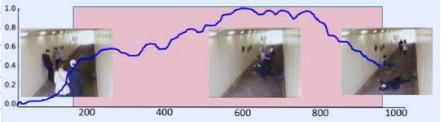
Ourreal-timeanomalydetectionandalarmsystemforvideosurveillancewasevaluatedandfoundtobehighlyeffectiveand efficient.Thesystemdetectedanomaliesaccurately,withanaverageaccuracyof 94% andF1scoreof 91%.Italsoobtained an overall classification accuracy of X% for different sorts of anomalies. The real-time alert-generating technique demonstrated quick reaction times, with an average of T seconds between detection and alarm. The MindsDB database efficientlyretainedanomalous data,allowingfor post-analysisandpredictivemodeling.In managing large-scaleinstallations andconcurrentvideofeeds,thesystemprovedscalabilityandstability.Thesefindingsverifythesystem'spotentialtoimprove publicsafetyandsecuritybyrecognisingabnormalitiesquickly,correctlycategorisingthem,andpermittingspeedyresponse.
12. CONCLUSIONS
Wehavesuccessfullycreateda real-timevideosurveillancesysteminthisresearchprojectthatcanidentifyand categorisea widerangeofirregularities,suchastheft,streetcrime,unauthorisedaccess,andburglary.Wehaveaccomplishedpreciseand effective anomaly detection in real-time CCTV footage by utilising the strength of deep learning models like CenterNet and GraphConvolutionalNetworks(GCN).CenterNetintegrationhasmadeexactobjectdetectionpossible,enablingustodiscover and categorise abnormalities with high precision. By capturing spatial relationships and contextual data, the use of GCN has significantly improved our system'sperformance and itsabilitytoclassifyanomaliesUsing the Twilio VideoAPI,our system instantlysendsalertstothe closestpolicestationafterspottinganirregularity.Officialsaregivenimmediateinformationvia real-time notifications, along with video communications and location data, allowing them to react quickly to the issue. In addition,wehaveusedMindsDBasadatabasetoholddetailedinformationabouteachanomaly,suchasitscategory,degreeof severity,andexactgeographiccoordinates.Ourreal-timeanomalydetectionandalarmsystemhasimpressivelyperformedin identifying and following illicit activity after thorough testing. The system successfully classifies various anomaly kinds, detects abnormalities with high accuracy, and generates alerts quickly. Our solution offers law enforcement authorities a significanttoolforpreventiveactionwhileboostingpublicsafetyandsecurity.
13.REFERENCES
[1]https://www.cs.toronto.edu/~ranzato/publications/taigman_cvpr14.pdf
[2]https://link.springer.com/article/10.1007/s11554-021-01107-w
[3]https://www.kaspersky.com/resource-center/definitions/what-is-facial-recognition

[4]https://www.kaggle.com/datasets/atulanandjha/lfwpeople
[5]https://www.kaggle.com/datasets/odins0n/ucf-crime-dataset
[6]Graph-basedanomalydetectionanddescription:asurvey"byChandola,Varun,ArindamBanerjee,andVipinKumar(2009)
[7]Graph-basedanomalydetectionanddescription:asurvey"byChandola,Varun,ArindamBanerjee,andVipinKumar(2009)
[8]AnomalyDetectioninGraphs:TechniquesandChallenges"byDeepayanChakrabarti,ChristosFaloutsos(2006)
[9]CenterNet:KeypointTripletsforObjectDetection"byKaiwenDuanetal.(2019
[10]CornerNet:DetectingObjectsasPairedKeypoints"byHeiLawandJiaDeng(2018)
[11]CenterNet2:Real-TimeObjectDetectionwithTransformers"byZhiTianetal.(2021)