Z.E.C.H (HYDROGEN-CAR)
Param Shah1, Chirag Joshi 2
1-Member, Science Kidz Educare, Mumbai, Maharashtra, India
2-Member, Young Engineer’s Club, Science Kidz Educare, Mumbai, Maharashtra, India
Abstract – Automotive Industry is one of the largest sectors in India with over 295.8 million cars present to date. The total number of cars amount to 1.45 billion and [6]Michael Gross Reports predicts 2 billion cars by 2030. The main fuels for these cars are Gasoline, Diesel Fuel, Ethanol, Bio-diesel, etc. According to International Energy Agency, transportation accounted for 24% of global Carbon Dioxide emissions in 2020 and this air pollution causes an estimated 385,000 premature deaths each year in the European Union alone. The economic costs of air pollution from transportation are estimated to be $1.7 trillionglobally.Yet,thereistheonlysolutionofElectronic Vehicles(E.V)whichindirectlypollutestheatmosphereas 71%ofelectricityisgeneratedbyThermalPowerPlantsin India. This Challenge can be easily surmounted with the introduction of a Combined work of Artificial photosynthesisandHydrogenfuelcell.Thispaperaimson presenting the idea of a car that has a redesigned engine thataimsatreducingthepre-existingCarbonLevelsinthe atmosphere and achievingzero harmful by-products. This willprovideamajorboostintheprogressofacleanfuture andadropinprematuredeathsbyairpollution.
Key Words: Automotive Industry, Air pollution, Electronic Vehicles, Thermal Power Plant, Artificial photosynthesis, Hydrogen fuel cell
1. INTRODUCTION
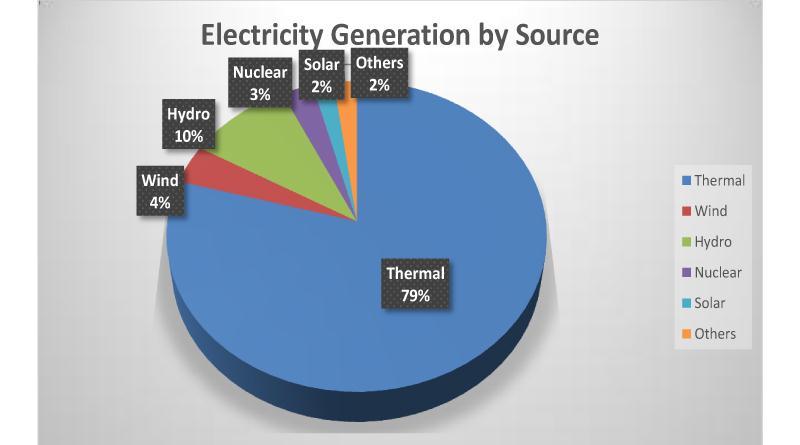
Automotive Industry is a massive business today with almost 3 billion cars running throughout the world. The $2.9 Trillion Automobile industry has been the cause of around [7]385,000 and [8]58,000 premature deaths in the European Union and United States respectively. The International Council on Clean Transportation found that if the usage of fossil fuels is not decreased, it could result inestimated174,000prematuredeathsperyearby2030. According to the WHO, air pollution is the leading environmental risk factor for disease, and exposure to particulate matter emitted by cars and other forms of transportation can lead to respiratory and cardiovascular disease, stroke and even lung cancer. The new range of “eco-friendly vehicles” which is Electronic Vehicles (E.V) hasbeenpressurizingtheenvironmentindirectly.TheU.S Energy Information Administration (EIA) has stated that fossilfuelsaccountfor62%ofelectricitygenerationinthe United States, 2020, with natural gas and coal being the two largest sources. According to the Central Electricity AuthorityofIndia,coalaccountedfor71%ofthecountry’s
totalpowergenerationcapacity,2020.Byusingtherecent processofartificialphotosynthesisandHydrogenfuelcell, wecanpreventthedirectaswellasindirectpollution.The artificial photosynthesis process produces hydrogen from carbon dioxide and water This produced hydrogen will then be used in Hydrogen fuel cell to generate electricity for powering the car. This will not only reduce the preexisting carbon levels from the atmosphere, but also providearedesigned“eco-friendly”car.
1.1 FUELS AND ENERGY FOR CARS
Thistableshowsthedirectandindirectpollutionfromcar.
Fossil Fuels (Direct Pollution from Cars):
1. Gasoline
2. Diesel
3. Liquified Petroleum Gas Sources Of Indirect Pollution:

1. Electricity for E.V
2. Liquified Petroleum Gas (LPG)
2. SOLUTION
The proposed solution is a hydrogen powered car named “Z.E.C.H” (Zero Emission Car Hub), which aims to reduce the greenhouse emissions caused due to Automotive industry. A Car installed with Carbon dioxide filters, Artificial photosynthesis chambers and Hydrogen fuel cell Theairenteredthroughthefrontventsofthecarisfiltered through the carbon nano fibrated filters which help in capturing carbon dioxide. The By-products exhausted out of the car is only water vapors. Both the processes are some of the unpopular innovations, which would greatly enhancetheeco-friendlyquotientoftoday’smodernworld. Thiswouldhelpindecreasingthepressureofdirectaswell as indirect pollution on the atmosphere. These cars could beimplementedinthemostpollutedcitiessuchasMumbai and Delhi in India, Dammam in Saudi Arabia, Oasis in California, etc. so that the greenhouse effects could get in control in these places and decrease the health risk of the peopleresidingthere.
3. METHOD
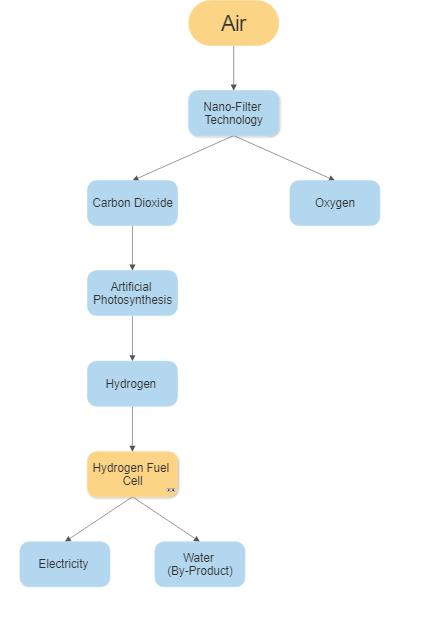
Fig –3:Methodology
The Car is built with the combined work of Artificial photosynthesis and Hydrogen fuel cell The air entered through the front vents of the car is filtered through the carbon nano fibrated filters which help in capturing carbon dioxide. This Carbon dioxide is then pumped into theArtificialphotosynthesischamber.Inthischamber,the carbondioxideandwaterinpresenceofartificialU.Vrays producing Hydrogen as the product of this looped reaction.ThisHydrogenisthenusedinthe Hydrogenfuel cell. Here the oxygen needed in the hydrogen fuel cell is againtrappedfromtheatmosphere,inalessquantity.The Hydrogen and Oxygen gases are then pumped into the FuelCell.
–4:ArtificialphotosynthesisReaction
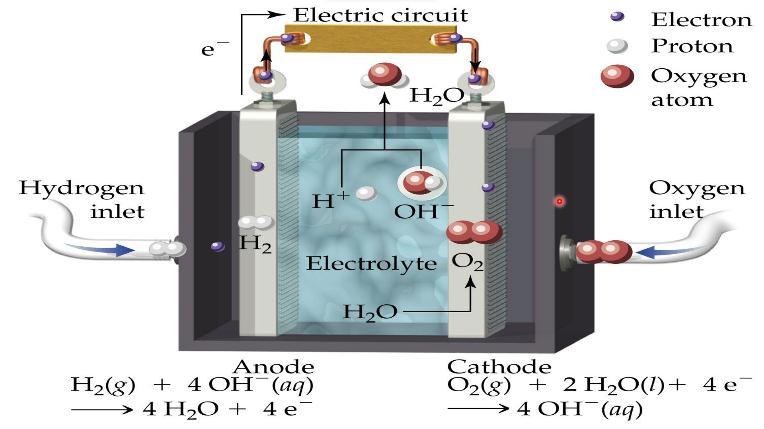
Here the fuel cell, has two chambers, one containing the hydrogen whereas other contains the oxygen gas. In betweenthesechambers is theelectrolyteanda platinum catalyst to increase the efficiency and speed of the reaction. Here the electrolyte only allows the protons of hydrogentopassthroughitandformcompoundswiththe OxygengasintheOxygenchamber.Theformedcompound is again Water which is reused in the car for artificial photosynthesis reaction. The electrons of Hydrogen are

thenattracted totheanode ofthe electriccircuitattached above the hydrogen chamber. When the electrons enter into the copper wire, it produces electricity as electrons moving all together in a specific linear direction, they produceelectricity.Thiselectricityproduced,isthenused forpoweringthecar.
4. MAJOR MACHINERY DISTINCTION
Z.E.C.H has three main machinery which is used to power thewholecar.Themachinesarecarbondioxidecapturing system, Synthesized Photosynthesis and Hydrogen fuel cell
4.1 CARBON DIOXIDE CAPTURING SYSTEM
useful production of hydrogen. In this process, Photoelectrochemicalcells(PEC)usesartificialU.Vraysto producehydrogen.Inourmodel,thesecellsusewaterand the trapped carbon dioxide to produce Hydrogen. This Hydrogen produced is then pumped into the fuel cell whereitreactswithoxygen.
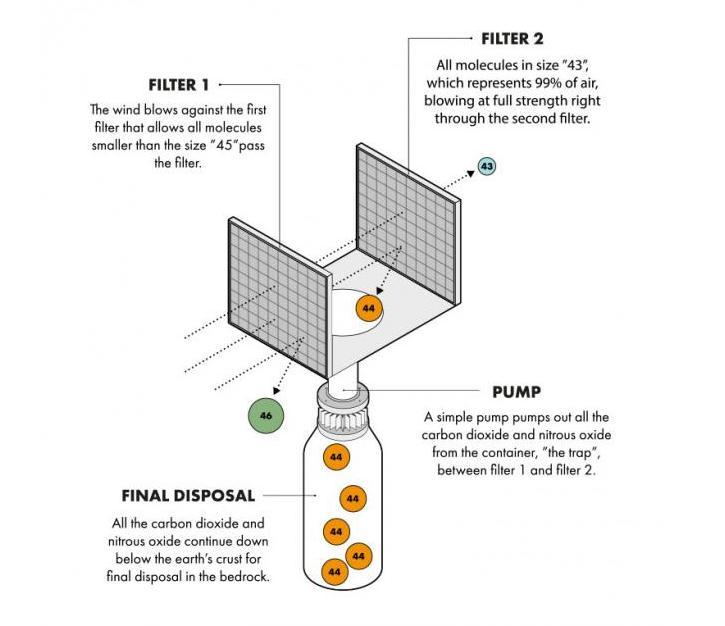
Withthelatestworldsensationofafilteringsystemwhich couldcollect/trapcarbondioxidefromair.Thiscouldhelp us in trapping the carbon dioxide molecules directly from the air. The credit of this innovation goes to the Swedish company HyMeAir that has innovated a nano-filter technologywhichcaneasilycaptureanysortofmolecules from air. This inexpensive and efficient technology could easily help us in our zero-emission car hub goal. This Nano-filter is made up of Graphene filter (GO) which is formedwhencarbonatomsareconnectedtoeachotherin a two-dimensional layer, forming a net/filter. This Graphene is the strongest material which is 200 times strongerthansteel.
4.2 ARTIFICIAL PHOTOSYNTHESIS
[4] Artificial photosynthesis is a chemical process replicating the natural photosynthesis to reduce Carbon Dioxide into fuels such as Hydrogen. Because of the Development of certain suitable technologies, we are able toperformsynthesizedphotosynthesiswhichhelpsinthe
[5] Hydrogen fuel cell is the electrochemical cell which forms a reaction between hydrogen and the oxidizing agent, Oxygen, to form electricity. Fuel cells are different from normal batteries such as lithium batteries as the normal batteries have the chemical substances already present inside them. Whereas fuel cells have a requirement of supplying fuel and oxygen until enough electricityisproduced.
In our case, the fuel cell is then filled with the gases hydrogen and oxygen. The fuel cellconsists of two chambers, one of which holds hydrogen and the other oxygen gas. The electrolyte and a platinum catalyst to quicken the process are located between these chambers. Here, the electrolyte only permits hydrogen protons to flow through it and combine with the oxygen gas in the oxygen chamber to produce compounds. Water is once againtheproducedchemical,whichisutilizedinthecar's artificial photosynthesis process. As an electric circuit is placed above the hydrogen chamber, the hydrogen's electronsaresubsequentlyattractedtowardstheanode.
5. FEATURES OF THE CAR
5.1. THE CAPACITY AND SPEED RELATION
Thelatest hydrogenfuelcellrequires1KgofHydrogento provide power for the car to cover an average distance of 99 kilometers. Our car has a storage capacity of 3Kg Hydrogen with two cylinders of 1.5kg each placed one abovetheother.
Therefore,
OneRefillOfHydrogen=Around297Km.
5.2 ECO-FRIENDLY CAR
The car produces its power from certain reactions which have their product as Water (H2O). This water is exhausted out of the car as water vapors while some amount of it is used in the production of hydrogen in the artificial photosynthesis chamber. Water vapors does not harmthehumanaswellasenvironmentasitformsclouds oncecondensedinthetroposphere.
CONCLUSION:
The target of this model of car is to decrease the greenhouse emissions and aims to be a part of the environmental fight against the fossil fuels. This would increase the lifespan of humans which was diminished by the fossil fuels. This project would also boost the popularity and the importance of these recent environment-saving innovations such as Artificial photosynthesis and Hydrogen fuel cell. This would revolutionize the whole automotive industry into an environment friendlyindustryasit wouldalsolessenand graduallyendtheprematuredeathsduetoairpollution.
REFERENCES:
[1]Fig.6Hydrogen fuel cell:https://chemistry.stackexchange.com/questions/54090/o n-what-principle-do-electric-alcohol-detectors-work
[2]Fig.5Carbon dioxide capturing system:https://www.einpresswire.com/article/411321117/worl d-sensation-collect-energy-water-and-co2-from-air-nowalso-ventilation-s-that-filters-virus-and-bacteria
[3]https://hymeair.com/#:~:text=Nano%20filter%20vent ilation%20that%20even%20filters%20out%20viruses,th e%20amount%20of%20pure%20oxygen%20in%20the% 20air.
[4]Artificial photosynthesis:https://www.sciencedirect.com/topics/engineering/artifi cial-photosynthesis
[5]Hydrogen fuel cell: https://en.wikipedia.org/wiki/Fuel_cell
[6]Aplanetwithtwobillioncars-ScienceDirect
[7]Study:Volkswagen’sexcessemissionswillleadto1,200 premature deaths in Europe | MIT News | Massachusetts InstituteofTechnology
[8]Airpollutioncauses200,000earlydeaths eachyear in theU.S.–MITLAE
BIOGRAPHIES:
1. Param Mayur Shah: Technology Enthusiast & Innovator.
2. CHIRAG JOSHI: Electronics Engineer, Technical MentorandResearcher.