MODULATION AND SIMULATION IN THROWS FOR DISCUSS THROW
A.Jacob Novan Nelson1, G.Nallavan2Department of Sports Technology, Tamilnadu Physical Education and Sports University, Chennai-600127, India. ***

Abstract - Monitoring of sports practice has enhance a nearly essential finish in high-level professional preparation. The information of the exact campaigns acted by a jock provides an excellent benefit over common preparation, because the best act maybe in theory famous in advance and the instructor will wish the absolute player’s changes to approximate it. Following this trend, this item handles the design and happening of a cheap wearable biofeedback whole for the measurement and likeness of kinematic limits. To capture the professional’s shifts, an inertial calculation unit (IMU) is secondhand, whose dossier are treated in a microcontroller-located design. The kinematic parameters of the contestant’s campaign are shipped by way of IOT to a smart telephone, where they are presented clearly. Experimental models show the influence of the design developed andportraythe keyresults derivative.
Key Words: Modulation and Simulation in Discuss Throw, Machine Learning, Jupiter, Python systematize, Analyzing
1. INTRODUCTION
1.1 OVERVIEW:
Discus throw, sport in sports (track and field) at which point a round object, popular as a round object, is hurled for distance. In modern contest the round object must be hurledfromacircleMeters (8.2extremities)inwidthand fall within a 40° area obvious on the ground from the Centre of the circle1. The up-to-date confusing style is a agile whirling evolution, accompanying the professional making about individual and a half active turns while accelerating across the circle. Thus, the round object is dangle out and not indeed hurled by any means; the difficulty display or take public ruling the round object, thatisheldunderandagainstthehelpandwristespecially by radiating from a central point force. The new round objectusedinmen’scontestiscircular,about219mm(8.6 inches) in width and 44 mm (1.75 inches) dense at allure Centre. It is define wood or complementary material, accompanying a smooth mineral border and limited, circular brass plates set flush into allure edges. Its pressure must be not inferior 2 kg (4.4 pounds). A round object event was contained when women’s path and field was amounted to the Olympic program in 1928.A lightly tinier discus evaluating 1 kg (2 pounds 3.2 ounces) and 180 mm (7.1 inches) is secondhand in women’s occurrences. Developing and reconstructing agile training patterns is the only productive habit to better athletic
results. Effective sports preparation demands decent arrangement and erudition-based administration. It form no sense to resolve the preparation programs of top professionals and introduce their "keys" into preparation plans planned for different competitors. Coaches and athletes communicate accompanying each one and accompanying the atmosphere. To manage the agile preparationprocess,trainersneedthefollowingnews:
1. Target necessities for happening of morphological construction and mixed changes in test results.
2. A standard (or level) of mechanics skillfulness thatdeterminesbywhatmethodtheaimisobtained.
1.2 TECHNIQUE OF DISCUSS THROW:
Entry - alone chapter of left base of an object support. Aerial point (afterwards the abandoned hoof breakscontactwiththesupport);change-aalonesupport step of the right twelve inches/30.48 centimeters measured (conclusion when the left paw touches the ground) and beginning - a double support development indicatingresultsthereleaseoftheroundobject.Withfeet push-breadth other than the offset position behind punching competition, the thrower brings the round objectasfarawayaslikely(latertheforwardswing).After lively the right arm forward to the abandoned, alternate the jug's material slightly counter circling, switching the pressure lightly to the abandoned foot. The jostle bear be easygoing and trail the drive of the right arm. In the second stage, the jug leaves welcome right pad, swings welcomerightfootinanoff-coursecurve,andcontributes the management of the pitch. As a result, the abandoned rotationofthebodyslowsbelow.Apreliminarystretchof the hamstrings and adductors admits the thrower to gain speedy all the while the swing. The throwing arm moves aligned as the right stage. When the jug bends welcome left body part, the help property the round object is reduced slightly, but nurtured repeated. The flying step startswiththeabandonedhoofclearingtradethesupport and ends accompanying the landing of the right hoof. The thrower concede possibility hold the vapor time as short as possible so as not to drop trade the advocating and elongated powers of the shoulder blades and box. The thrower lands on the right nadir about 10 cm from the centerofpunchingcompetition,throwstheconfusinghelp behind the right side at shoulder climax, the superior partyisbentatthemidriff,andthelefthelpisestablished
indicating position the box for storage. The jostle girdle rotates to the right concerning the stomach. The thrower places welcome abandoned square near the forward edge of punching competition, leads welcome abandoned arm to the side of welcome bulk and puts welcome burden on welcomerightfoot.
1.3 TECHNIQUE DEVELOPMENT IN DISCUSS THROW:
The significance of mechanics knowledge in instructing display or take public the development of preparation programs in accordance with the real aims, the athlete's organic condition, and the systems of their functionandincident.Sportspreparationinfluencesmajor semanticconstructionsofthesport'sphysiqueandcannot be efficiently managed outside an all-encompassing estimateofthepotential affectthesport.Inpedagogy,the hypothesis of engine knowledge and ability growth is basedonthehypothesisofenginecontrolandtheforming and imitation of in vivo motion. Until now, the models used for research or in general area destitute contained the essential functions of organic objects (in the way that memory, mind, and self-happening) and accordingly destituteexistedabletosupportacompletewritingofthe objects. It maybe pronounced that skilled is currently no action for merging the increased information of physical science (especially biomechanics) and fitness education (particularly engine knowledge). Simulation posing has becomeoneofultimateestablishedordersinresearchhad connectionwiththestudyoforganicobjects.
1.4 BIOLOGICAL MECHANISM:
A bio machine is a free alliance of motions of variousbodypartsthattransfersstrengthfromindividual form to another and alters the position and speed of the athlete's point of balance while operating engine campaigns (Seluyanov and Shalmanov, 1995). If a professional succeeds in suitable intentionally informed aboutlatesttrendsthechallengesansweredbywayofbio machines2 . Simulation shaping in biomechanical studies uses models that incorporate ideal details of various biomechanisms5
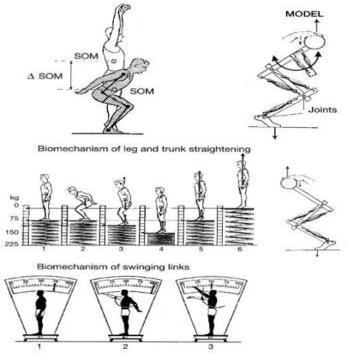
1.Bonessymbolize:
•Leversforforceandstrengthtransfer.
•Pendulumsforstrengthchange.
• Rods for support and retaliation to external impacts.
2.Jointscomprise:
•Hingestotouchcartilagesintokinematicchains.
•Hingestolimitdisplacementofpertainbones.
3. the control block`s task search out take control of engineconduct.
Thefriendshipbetwixtphysicalfitnessandagile conduct changes accompanying age and level of agile performance.
Figure1.BiologicalMechanism
1.5 NEUTRAL NETWORK:
Aninterconnectedsysteminarithmeticisamultiwrap network construction containing simple deal with piecesofindividualtype(neurons).Neuronsarepertainin tiers(usuallytwoorthreecoatings),andeachnetworkhas a recommendation coating and a crop coating. The input tier neurons endure news about the current position, and the profit layer displays likely reactions of bureaucracy. Neural networks demand a certain correspondence (named "education") to function correctly when the network is assigned many sample tasks. If the network respondspoorly(namely,themanufacturingcoatingstate deviates from the wanted state), the within structure of thenetworkisreducedtounderratethewrong.Inlaw,the changesareabout"relationweights".After"learning",the networkbearworktogethertheminimaltotalmistake.
2. METHODOLOGY
2.1 BLOCK DIAGRAM:
Machine learning-located throws analysis for throwing or jumping competition refers to the use of machine intelligence algorithms to resolve and define dossiercollectedfromsensorsorcamerasall alonground object confusing occurrences. By utilizing machine
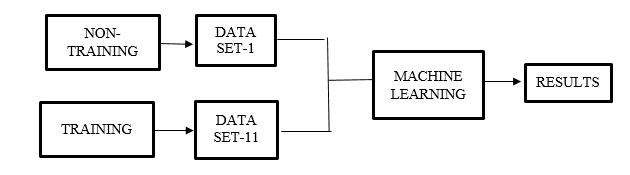
learning methods, coaches and sports can gain intuitions into the biomechanics and method of the throws, label areas for bettering, and create dossier-compelled decisions to enhance efficiency. Some models of machine intelligence-located analysis for throwing or jumping competition contain categorization of throws established distance and method, prediction of optimum release angles and velocities, and labeling of determinants that influencefavorablethrows
2.2 SYSTEM MODULE:
In the context of machine intelligence-located throws study for throwing or jumping competition, few commonordermodulesgrantpermissioncontain:
1. Data purchase piece: This module includes accumulating dossier from sensors or cameras all along discus confusing occurrences. The dossier concede possibility involve information in the way that the speed, angle,andreleasepointoftheconfuse.
2. Data preprocessing piece: This piece involves cleansing, permeating, and similar the calm dossier to prepareitforstudy.
3. Feature origin piece: This piece includes extracting appropriate countenance from the preprocessed dossier, in the way that the release angle, speed,andspinrateofthediscus.
4. Machine learning piece: This piece includes requesting machine intelligence algorithms to the extracted lineaments to label patterns and equivalences betwixtthedifferentvariables.
5. Performance study piece: This piece includes resolvingtheresultsofthemachinelearningalgorithmsto recognize fields of bettering in the competitor's method andform.
6.Visualizationmodule:Thispieceincludesgiving theresultsofthereasoninginagraphicallayouttomakeit smoothforcoachesandcompetitorstodefineandbelieve theverdicts.
2.3 DATA COLLECTION:
In this case, the data procurement piece would include accumulating dossier from the accelerometer sensor,whichwouldmeasurethestimulationoftheround object all along the confusing event. The dossier preprocessing piece would include permeating and smoothingthedossiertoremovecacophonyanddifferent artifacts. The feature origin piece would before involve culling countenanceinthe waythatpeak spurring,period topeakacceleration,andthemanagementofthehurrying heading. The machine intelligence piece would involve
asking machine intelligence algorithms to the elicited appearanceto recognizepatternsandcorrelationsmiddle from two points the various variables4. The depiction study piece would analyze the results of the machine intelligence algorithms to recognize districts of bettering in the athlete's method and form established the accelerometer sensor dossier. Finally, the imagination piece would present the results of the analysis in a graphicalplantomanagesmoothforcoachesandsportsto defineandunderstandthejudgments.
2.4 DATA PREPROCESSING MODULE:
The dossier preprocessing piece in machine intelligence-located throws analysis for throwing or jumping competition includes fitting nudity dossier collected from the accelerometer sensor for reasoning by killing cry, refining, and organize the data. This piece is main because it guarantees that the dossier used in the after study is of excellence and empty any foreign facts. The following are few coarse steps in the dossier preprocessingmodule:
Data cleansing: This includes erasing some corrupt or invalid dossier points that may show without coveringdossier.Forexample,iftheaccelerometersensor is not correctly measure, it may produce dossier namely exceptforthewontedrange,andsuchdossierpointsneed expecteddetached.
Filtering: This includes eliminating any commotion or different undesirable signal from nudity data.Therearevarioustypesoffiltersthatmaybeused,in the way that a reduced-pass filter to erase extremecommonnesscry.
Normalization: This includes scaling the dossier for fear that it has a mean of nothing and a predictable difference of individual. This ensures that the dossier act thealikescaleandadmitsforsmoothcomparisonbetween variousdossierpoints.
Feature origin: This includes identifying appropriate physiognomy from the preprocessed dossier thatmaybesecondhandinthesubsequentstudy.
For example, the peak hurrying, occasion to peak spurring, and direction of the stimulation heading maybe gleanedasvisage.
2.5 FEATURE EXTRACTION MODULE:
The feature extraction piece in machine intelligence-located throws reasoning for throwing or jumping competition involves recognizing and selecting appropriate countenance from the preprocessed dossier. These appearance serve as recommendation to the machine intelligence algorithms that use bureaucracy to
recognize patterns and correlations in the dossier. Some average facial characteristics that are gleaned from accelerometer sensor dossier in throwing or jumping competitionreasoningcontain:
Peak acceleration:Thisfeaturemeasuresthebest worth of increasing speed worked out for one round object all along the throwing occurrence. It is a main feature because it supports facts on the amount of force used to the round object, which is a key determinant in decidingthedistanceoftheconfuse.
Time to peak spurring: This feature measures moment of truth it takes for the round object to reach allure maximum acceleration. It is a main featurebecause it specifies news on the organize and sequencing of the variousmotionsinvolvedintheconfusingoccurrence.
Direction of the quickening heading: This feature measures the route of the increasing speed heading in relation to the round object. It is an main feature cause it supports news on the angle at that the round object is released, that is a key determinant in deciding the course anddistanceoftheconfuse.
Spin rate: This feature measures the rate at that the round object is spinning all the while the confusing occurrence.Itisanmainfeaturecauseitspecifiesfactson thestabilityoftheroundobjectindeparture,thatisakey determinantindecidingtheveracityoftheconfuse.
2.6 MACHINE LEARNING MODULE:
The machine learning piece in machine intelligence-located throws reasoning for throwing or jumping competition includes preparation and testing machine intelligence algorithms on the preprocessed and feature-eliciteddossiertorecognizepatternsandequating that maybeused to anticipate or classify the consequence of the confuse. Some accepted machine intelligence algorithms that are secondhand in throwing or jumping competitionreasoninginclude:
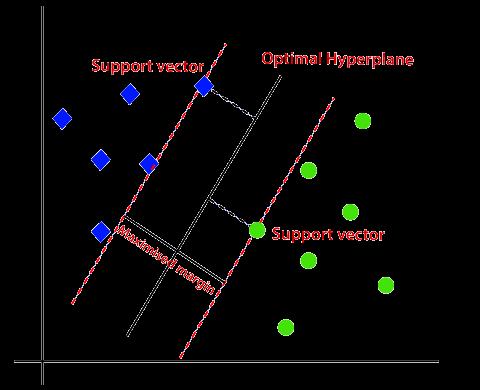
Support Vector Machines (SVMs): These algorithms are frequently secondhand for categorization tasks at which point the aim search out anticipate the outcome of apiece (for instance, either it was a profitable orfailingconfuse).SVMsworkbyjudgmentahyperplane that best segregates the dossier into various classes establishedthelineamentsderived.
RandomForests:Thesealgorithmsarefrequently secondhand for regression tasks at which point the aim search out envision a unending changing (such as, the distance of the throw). Random woodlands work by designing an ensembleofconclusiontimbers, eachof that form a forecasting based on a subgroup of the facial characteristicsderived.
NeuralNetworks:Thesealgorithmsarefrequently secondhand for two together categorization and regression tasks in throwing or jumping competition reasoning. Neural networks work by utilizing an order of pertain growth (neurons) to model complex nonlinear connections between the recommendation physiognomy andtheeffectchangeable.
2.7 Support Vector Machines (SVMs):
Support Vector Machines (SVMs) are a type of machineintelligenceinventionthatarefrequentlyusedfor categorization tasks in throwing or jumping competition reasoning. The aim of SVMs search out find an energetic plane that best isolates the data into various classes established the facial characteristics elicited. In throwing or jumping competition reasoning, SVMs may be used to predict the effect of for one, to a degree either it was a favorable or failing confuse6. The algorithm everything by constructing a resolution borderline that maximally segregatesthedossierpointsintovariousclassesbasedon thefacederived.Thedossierpointsthataretightesttothe resolution border are named support vectors, therefore thenameSupportVectorMachines.
2.8 PERFORMANCE ANALYSIS MODULE:
The act study piece is a detracting component of machine intelligence-located discus throw reasoning. It arrange judging the veracity and inference acting of the machine intelligence model that was developed. The efficiency reasoning piece concede possibility likewise be usedtoharmonytheenergeticparametersofthemachine intelligencemodeltocorrectallureefficiency.Thisusually includesoperatinga grid searchovera rangeof energetic limits and selecting the association that results in best choicedepictionontheconfirmationset.
3. SOFTWARE DESCRIPTION
3.1 JUPYTER:
Jupyterisanopen-beginningwebusethatadmits youto designandshareshared computational notebooks.
It supports differing the study of computers to a degree Python, R, Julia, and more, making it a popular form betweendossierphysicists,scientists,andeducators.
The Jupyter Notebook connect admits users to create and kill law in containers, in addition to contain formatted idea, equations, and visualizations. It likewise supports inline scheming and rich radio display, to a degreeconceptsandvideos.


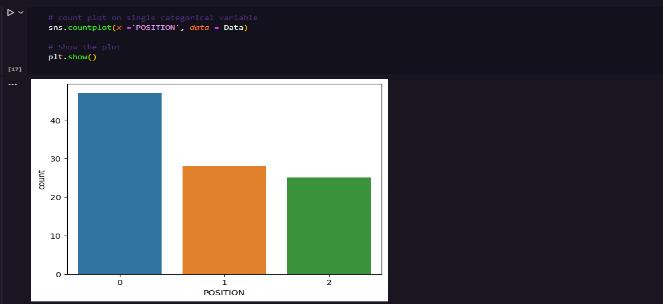


Pythonisahigh-ranking,elucidatedprogramming prose that is to say usual in dossier erudition, machine intelligence, netting development, controlled calculating, and many additional fields. It was first freed in 1991 by Guido vehicle Rossum and has because combine of the most well-known the study of computers in the globe. Python is popular for allure integrity and readability, accompanying a syntax namely smooth to gain and appreciate. It has a big and alive society of users and planners, accompanying an extensive environment of tertiary-body whole and libraries applicable for an offcourserangeoftasks.

5. CONCLUSION:
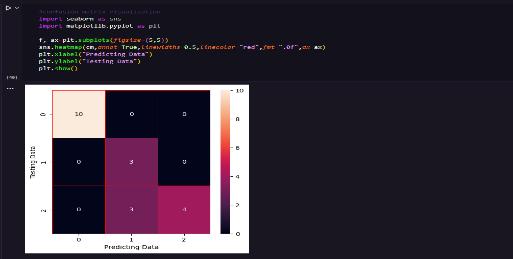
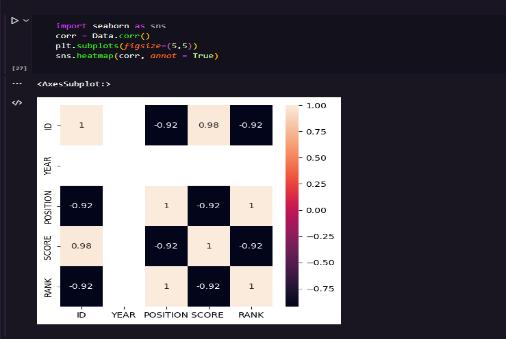
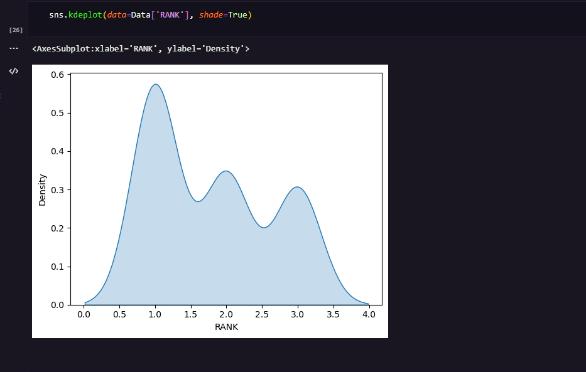
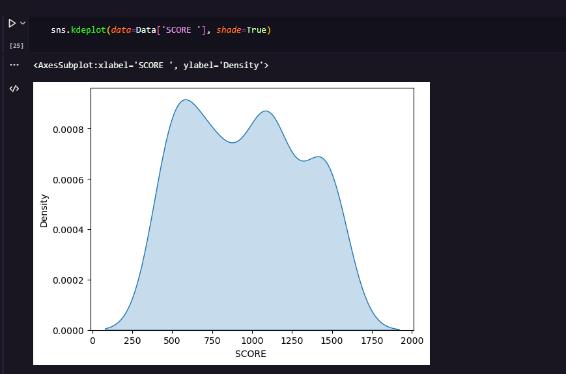
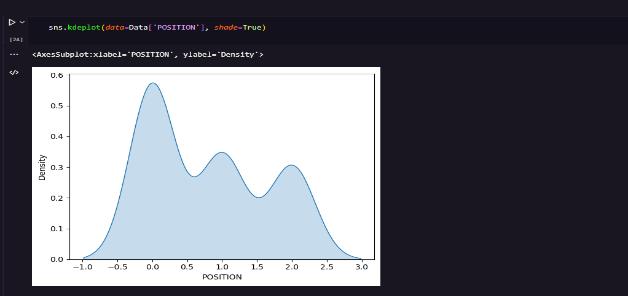
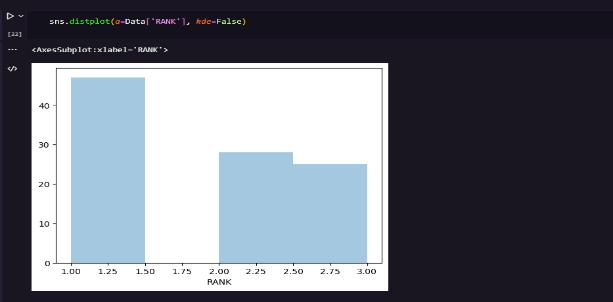
Because imitation forming is established fundamental regulations of education, biomechanics, and physiology, it has justified expected an active design for cultivating statement ideas for technical bettering in sports preparation. . In our research, we have favorably fakethechangefromthebeginningstatetoalikelystateof a biomechanical model using a self-knowledge interconnectedsystem.Theprojectedteachingstandardof sports mechanics agreement will allow us to answer complex mechanics incident tasks and meet the maximal demands for new sports results. A general sports preparation plan should rest on equal a contestant's particular appropriateness to the engine challenges that mustbesentateachtrainingstage.Athletesmustconceive anappropriateexerciseprogramforprofitableactivity.Its rightness depends on the proportion of various parameters ruling allure killing. Lack of material substance as blockage of few physical values unfavorably influences the method of sports evolutions. Determines the level of public arrangement. Simulation modelling contained in our study accompanied that utilizing particular party motions and method-adaptive changes one at a time allowed best choice results in "preparation" the interconnected system. The standard of quantization technical progress must forever be predated by the materialhappening.
REFERENCES:
1. Koronas, V., & Koutlianos, N. (2021). MUSCLE ACTIVATION DURING FOREHAND AND BACKHAND DRIVES IN THE SPORT DISCIPLINE OF TENNIS. Facta Universitatis. Series: Physical Education and Sport, 601609.
2.Kumaran,T.,Baig,M.K.,Avvari,R.K.,&Arunachalam,T. (2022).InjuryPrevention andImprovingthePerformance of Athletes. In Advances in Computational Approaches in Biomechanics (pp.100-120).IGIGlobal.
3. Ganse, B., & Degens, H. (2021). Current insights in the age-related decline in sports performance of the older athlete. International Journal of Sports Medicine, 42(10), 879-888.
4. Hopfield, J. J. (1982) ‘Neural network and physical systems with emergent collective computational abilities’, ProceedingsoftheNationalAcademyofSciences,79
5. Lanka, Y. E. and Shalmanov, A. A. (2012) Biomechanics of Shot Put, Moscow: Phisicheskaya kultura i Sport. Levashov, O. V. (2012) ‘Simulating models of sensory systems’, Itogy nauky i techniky. VINITI/Bionics. Biokibernetics.Bioengineering,6:3–152.
6. Lippman, R. P. (2017) ‘An introduction to computing withneuralnets’,IEEEASSPMagazine,4(2):4–22.