Energy-Efficient Retrofitting with Kinetic Shading Device in Tropical Climate
 Ar. A. Mohamed Abu Bakker 1, Ar. Z. Fathima Taskeen2 , Ar. K. Indra Priya3
1 Post Graduate Student, M. Arch - Construction Project Management, Faculty of Architecture, Dr MGR Educational and Research Institute, Maduravoyal, Chennai
2 Additional HOD, Faculty of Architecture, Dr MGR Educational and Research Institute, Maduravoyal, Chennai
3Deputy HOD, Faculty of Architecture, Dr MGR Educational and Research Institute, Maduravoyal, Chennai ***
Abstract - The purpose of this study is to examine the potentialofkineticenvelopesforthedevelopmentofoptimal, daylight-efficient facades. The research covers an extensive study on building façade journals and case studies. The retrofitting study involves the identification of commercial buildings in a hot and humid climatic region and perform daylight analysis on the building models. A commercial buildingwasselectedinChennaiandmodelledthroughRhino and daylight analysis was simulated in Climate Studio. The simulation was done with 3 cases: Varying Glazing Type & WWR(40%&60%),AddingKineticLouvers&AddingKinetic LouversonWWR40%.BasecasewasanenvelopewithSingle GlazedBlueTintedGlass.Theresultswereanalyzedbasedon LEEDratingsystemwithASEandSDAvalues.Resultsshowed that Kinetic louvers with Single Glazed Blue Tinted glass outperformedalltheothercases.ThebestcasedecreasedASE by65% andSDA by30% fromthe base case. With increasing necessity for sustainable buildings and uncertainty of nature manifests, dynamic envelope retrofits for existing buildings likethebestcasediscussedherecanbeseenasbetteroptions thanrelying on demolishing andre-constructing.
Key Words: Kineticlouvers,retrofitting,daylight-efficient,
SDA-SpatialDaylightAutonomy
ASE–AnnualSunlightExposure
LEED-LeadershipinEnergyandEnvironmentalDesign
WWR–WindowWallRatio
ECBC–EnergyConservationBuildingCode
1.INTRODUCTION
A kinetic facade is a building facade that has the abilitytomoveorchangeshape.Thesefacadesaredesigned to respond to environmental conditions such as temperature,humidity,wind,andlight.Themovementcan be triggered automatically through sensors or manually throughuserinput.Benefitsoffaçadeincludetemperature regulation & natural ventilation by opening and closing, reduce need for artificial lighting, visual dynamic appearance, aesthetic appeal, etc. They are made up of shape-memory alloys, hydraulic systems, flexible membranes,etc.
Nature manifests through climate changes are inevitable.Adaptationtosuchmanifestsisthebestsolution. The building sector accounts for a significant portion of globalenergyconsumption,underscoringtheimportanceof raising awareness about the energy efficiency of existing structures.Commercialbuildingsareamajorcontributorto thisenergyconsumption,withofficebuildingsstandingout as having the highest energy usage rates within the commercialsector.
1.1 BACKGROUND OF THE STUDY
Theenergyperformanceofabuildingisinfluenced by several factors, such as the design of the building envelope, the behaviour of occupants, and the heating, ventilation, and air-conditioning (HVAC) system. Building facades are responsible for almost half of the energy consumptioninbuildings,eitherdirectlyorindirectly.The building facade is a critical element in regulating the microclimatearounda building,andcanplaya significant roleinreducingenergyconsumptionandmitigatingnegative environmentalimpacts.
Due to the longer operating hours and the substantial energy demands for lighting and temperature regulation, there is great potential for reducing energy consumptioninoffice buildingsbyimprovingthedaylight performance of their building envelopes. Retrofitting existing buildings can be an effective way to achieve this goal. The practice of retrofitting buildings for improved energyefficiencyisstillrelativelynew,andtherehasbeen limitedfocusonretrofittingbuildingfacadesspecifically.In fact, only 17% of retrofit projects conducted by Energy SavingsCompanies(ESCOs)involveupgradestothebuilding envelope. This research involves venturing into this new retrofitdomainwithkineticfacades.
1.2 AIM, OBJECTIVE AND SCOPE OF THE STUDY
Theaimofthisresearchistoanalysehowkinetic shadingsystemreducesenergyconsumption,identifylow performance commercial buildings in Chennai city and improveitsdaylightperformanceusingkineticfaçade.
Theobjectiveofthestudyistoanalysethedaylight performance of structures with kinetic shading systems. Fromthefindingsoftheanalysis,implementkineticfaçade suitable for retrofitting in the site and simulate the implementation. Derive the daylight performance of the simulatedstructure.Comparetheimplementationwithbase caseandevaluatetheenergyefficiencymetrics.
The scope of the study is to identify the role of shading system in reducing energy consumption, find out waysforimprovingbuilding'senvironmentalperformance anddemonstratethewaystousenaturallightingeffectively.
2. METHODOLOGY
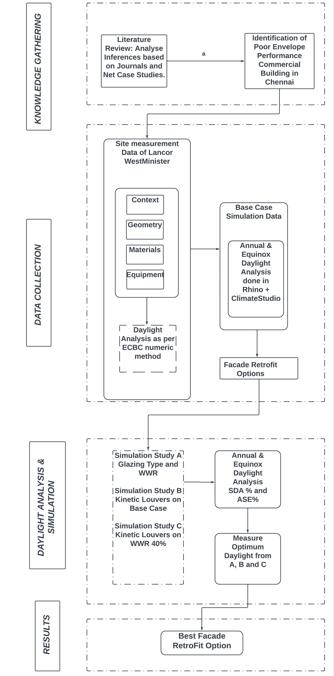
In this research, case studies on kinetic shading systems, energy performance, and relevant design and controlstrategieswereanalysed.Collectionofdataonthe energy performance of existing structures with kinetic shadingsystemsindifferentclimaticconditions.Analysisof thecollecteddatatoidentifythefactorsthatinfluencethe energyperformanceofkineticshadingsystems.Simulatethe bestshadingsystemimplementationfromtheanalysisand derive the daylight performance of the structure. Recommend the inferences gained from the analysis and simulation. Chart-
1: Methodology
3. LITERATURE REVIEW
Appropriate journals related to kinetic shading systempublishedbetween2014and2022werereviewed.
In a study by Hosseini et al., 2019, a kinetic interactive façade was developed in order to meet visual comfort. The simulation results showed that the kinetic interactivefacadesoutperformedthebasecaseintermsof improvingvisualcomfort.Contrarytothebasemodel,the majorityofthescenariosforthepredictedriskofglarearein theimperceptibleandperceptibleranges,withpercentages of63.9%and22.2%forthe2D-SCF(ShapeChangeFaçade), respectively.The3D-SCF,however,exhibitsanexceptional performance. Precisely, 86.1% of the scenarios locate in imperceptibleand13.9%inperceptiblerangewithoutany scenariosinthedisturbingandintolerablearea.
On applying different computational models of kinetic façade patterns to a generic building, it can be inferredthatthekineticfacadesystemcanbeusedtocreate andprovidecompletelydarkspacesaccordingtotheuser's request, while it can be used in a completely open configurationaftersunset.Asaresult,theproposedsystem andmethodwereeffectiveindaylightcontrolandresultedin muchbetterresultsthantheinitialmodel. (Kizilörenli et al., 2022)
A kinetic shading system was created with independentunitsparametricallyinresponsetosunlightvia 3D rotation (around the centre of the units) and 2D movement(ontheshadingsystem'ssurface).Intheresearch by Samadi et al., 2020, 4D configuration of the shader systemwasthemostimportantonethatenabledittohave verypreciseandefficientadjustmentsbasedonsunposition in the sky. Further enhancing the accuracy of system performancewastheindependentconfigurationofeachunit of the system based on the position of the sun and the desired point on the ceiling. Limitless options were made possiblebythevarietyofshadeshapes,3Drotation,and4D performance,whichissignificantforthearchitecturaldesign ofshadersbysupplyingtheproperaestheticsandfunctions in the designs they create. One way to achieve the goal of developingintelligentbuildingequipmentwastocontrolthe shadingsystemdependingontheenvironmentalconditions.
ThegreenfacadereducesHVACloadandgivesthe oxygen by the process of photosynthesis, a vertical vegetation cover could lower the temperature of a facade wall and buffered its fluctuation with time, leading to reduced power loading air-conditioning. The use of vegetation and Dynamic Facade, can be a useful tool for passive and active thermal control of buildings with the consequentenergysaving.Thiscanhappeninfourwaysthat arefrequentlyconnected:thermalinsulation,solarradiation interaction,shade,evaporativecooling,andvariationsinthe wind'sforceonthebuilding (Mansoor et al., 2018).
The experimental results analyzing the thermal performance of residential building coupled with smart kineticshadingsystemindicatedthatthesystemdecreased indoor air temperature by 2-3°C in the summer season. Consequently, it reduced thermal load that led to saving energyby20%.Therefore,itcanbeinferredthatelectricity consumption in summer months after installing the proposed system was lower than the consumption under actualoperationconditions (Ahmed et al., 2016).
In a study by Bacha et al., 2016, the impact and effectiveness of smart façades on indoor thermal comfort and energy efficiency were assessed. The findings demonstrated that the integration of a dynamic sun protectionsystemreducedtheexposuretodirectradiation by17.9%,actingasa secondskinand directlyinfluencing thelevels of thermal and visual comfort. The energy consumption is significantly decreased by this dynamic shadingsystem,reachingareductionof43%,andindoorair temperatureisdecreasedby4.0C°to4.8C°.Additionally, theincorporationofsolarenergycellsintothekineticfaçade contributesfavorablytothegenerationofelectricity.
Theuseofkineticfacadesallowsforefficientenergy maximizationinbuildingsandcompleteclimateadaptation, givingresidentstheutmostcomfortastheseasonschange. Thebuildingwherekineticfaçadeshouldbeimplemented needstoberesponsivetotheclimatecontext,andsincethe building envelope is the boundary between the external atmosphere and the interior, the layout of the envelope becomesakeyfactorinthedevelopmentofsustainableand energy-efficientbuildings (Ibrahim et al., 2019)
Shen et al., 2019, proposeda“ParametricAdaptive SkinSystem”(PASS)basedonBIMaidedcomputation.The interactionofPASScansatisfybothimmediatechanges in microclimateandongoingseasonalconstraintsthroughthe combinationofphysicalandvirtualsunlightparameters.The PASS prototype shows that the process is successful in drivingtheinteractionbetweenthevirtualRevitsimulation and the actual PASS model by using a real light detector alongwithsimulatedsolarterms.
By integrating photovoltaic modules into an adaptiveshadingsystem,thefacadeisabletogenerateits own electricity in addition tosolarshading. In addition to adaptablebiomimeticfacades,adaptivesolarfacadescanbe usedtosaveanadditional25%ofenergy.KineticFacades have the potential to integrate all the following functions together:thermalandvisualcomfort,reducingartificiallight, sun tracking and reducing electricity. The blade size and louvre spacing are discovered to be the most significant factorsinfluencingtheobjectiveperformanceforlouvretype facades.
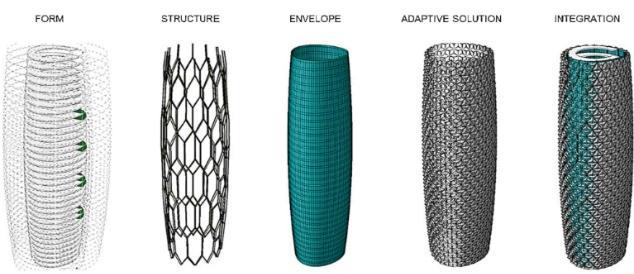
Ali et al., 2019 foundthatthedoubleskinfaçade seemstobewellresponsivetotheclimaticissuesbutwill onlybeefficientforwarmandhumidclimateifthebuilding design orientation and room placement are appropriately
placedforoptimalresponsetosunandwind&willprovide protectionfromsolarradiationwhererequired.
4. NET CASE STUDIES
4.1 Al-Bahr Towers, Abu Dhabi
Location and climate:
Abu Dhabi is familiar with its hot desert climate where the average temperatures during the summer and winter months are above 38 °C and around 18°C. The average annual hours of sunshine per year is 3609 hours withanaverageof9.9hoursofsunshineperday.
Concept & description:
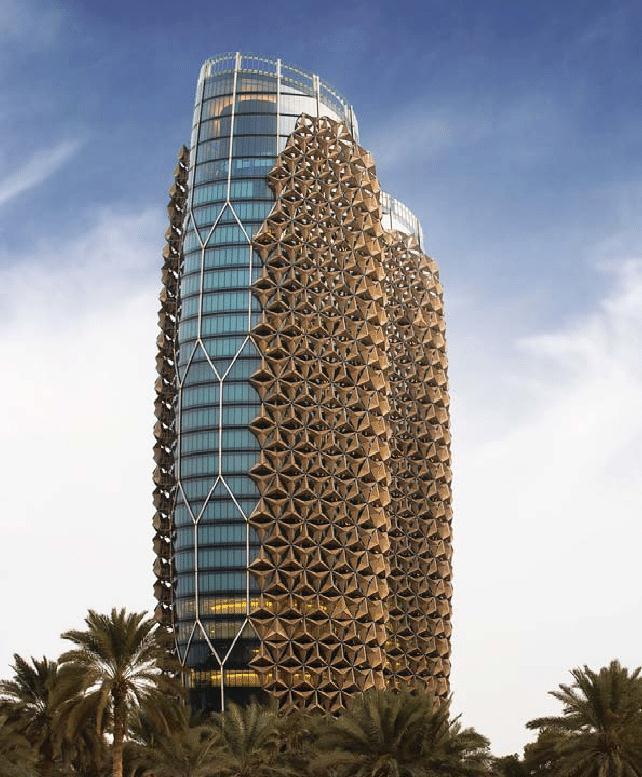
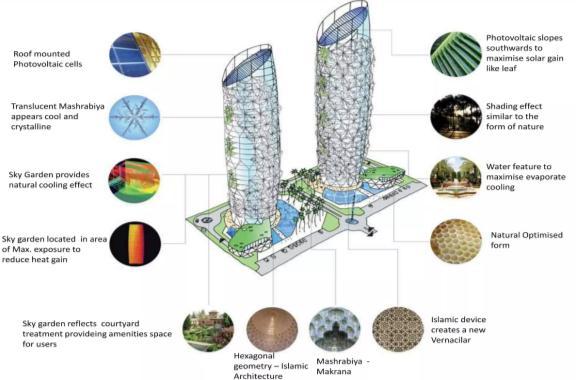
Dynamic mashrabiya refers to an unfolding and folding concept that is inspired by historical events and adaptable natural systems. This façade has three kinetic states:totallyclosed,mid-openandfullyopen.
Eachshadingdeviceconsistsofamicrofiber-coated triangle-shapedscreen.Thissolarshadingisdynamicand modular,with1049modulesforeachtower.Itisactuatedby suntrackingsoftwarethatcontrolsthefoldingandunfolding movementoftheelementsaccordingtothesunposition.
Control Mechanism:
Alinearscrew-jackactuatorandanelectricmotor with triangular facets that fold into the centre, work accordingtoapre-programmedsequence.Sunmovementis simulatedbyanembeddedpre-setprogramme.Theactuator exerts its own self-equilibrating forces, which are not transferredtothesupportstructure.AutomaticallybyBMS, whichcomputesthestateofeachmoduleinresponsetodata sent by light & anemometer sensor for measuring wind speed.
Concept and description:
Important objective of the design was to achieve energy efficiency and sustainable use of resource The sunshade elements have been manufactured byusing a chromium-nickel-molybdenumstainlesssteel.Itconsistsof 3150verticaltwistingfins.Eachofthetwistingfinscantwist independentlyandreachthepositionbetween0°and90°.
Benefits of the façade: 50% energy savings-office spaces alone, & up to 20% for the building overall; 20% reduction in carbon emission with up to 50% for office spaces use alone (reductioninAC&lightingusage);15%reductioninoverall plantsizeandcapitalcost;20%reductioninmaterialsand overallweightduetothehighlyfluid,rationalandoptimized Design.
Inference:
Throughtheuseofthisinnovativekineticsystem,it was found that heat gains and glare occurrence were reduced by 50% whereas the daylight penetration was improved leading to less dependence on artificial lighting whichresultedinCO2emissionsreductionby1,750tonsper year.
4.2 Thyssenkrupp Quarter Essen, Germany
Location and Climate:
Essenhasagenerallytemperateclimatewithmild wintersandcoolsummers.Thewarmestmonthshavehigh temperature of 22.3°C while the coldest months are with averagelowtemperatureof2°C.Essenhaveanaverageof 1454hoursofsunshineperyear.
Embedded Computation:
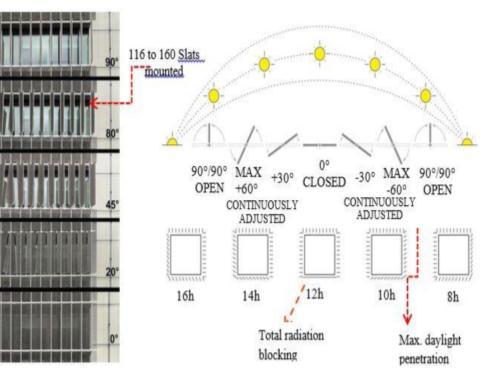
In accordance with the movement of the sun, enginesareusedtocentrallycontrolallofthesecomponents. The control panel not only recognizes the changing sun positionbutalsoknowsthecurrentweatherconditions.
Control Mechanism:
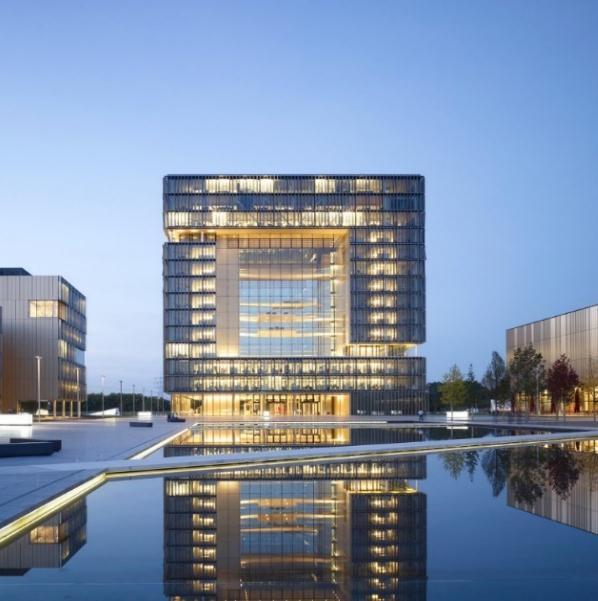
A linear motor powers the dual axle to which the woodenslatsareattached.Slatsrotateonaverticalaxisand move with the position of the sun. There are 1,280 motorised elements in total, 3,150 routed stainless steel movablestalks,and400,000metal"Feathers"anchoredto them.Twofactorsinfluencemovement:Seasonalmovement
Sun. Real time measurement
Roof which sends data to Meteorologicalstation
Inferences:
Tracking the sun position in addition to real-time measurementsofweatherconditionsisbasisoftheshading systemadaptiveness,thusthefaçadecanbeconsideredasa solarandheatadaptivekineticfaçade.
Inferences:
Kiefer showroom façade is also a solar and heat adaptable kinetic façade as the kinetic panels control the amountoflightandheatthatentersthespace.Thefaçadeis more a showcase for the company products than a responsiveshadingsystem.
5. PROPOSED SITE STUDY & ANALYSIS:
Location and Climate:
The climate is warm and temperate with average temperature between -1 in winter and 20 degrees in summer. The average annual sunshine hours are around 1820hoursperyear.
Concept and description:
Dynamic façade that adapts and change its configurationdependingontheoutsidechangingconditions and the user needs. The south façade of the building is composedoftwolayers:innerstaticonemadeofglassand anouterdynamicskin.The122aluminiumpanelsthatmake up the façade are that which is moving the most. These panels fold and unfolds by sliding up and down when convertingbetweendifferentstatesofopenness.Thus,the façadebecomesakineticsculpturecalled“dancingfaçade”.
Rotating Panels Façade:
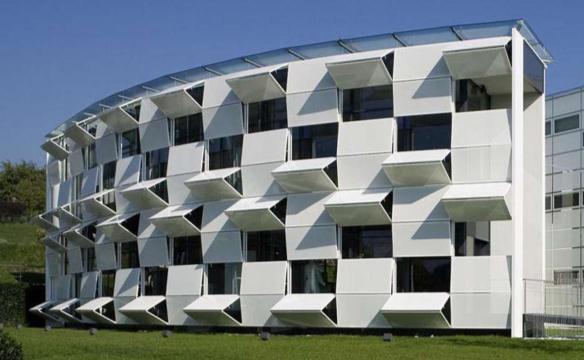
The building was exposed and sealed using 122 rotating panels. Motors set at each bay are connected to panels,whichallowthemtorotateinavarietyofpatterns.
Control Mechanism:
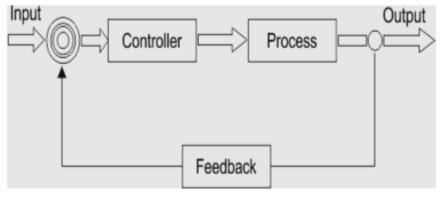
An intricate network of hinges, guide rails, and electricmotorsisusedtomovethealuminiumpanelsthat makeupthedynamicfaçade.Itcanbesetuptomoveeither automaticallyormanually.
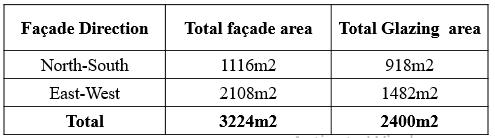
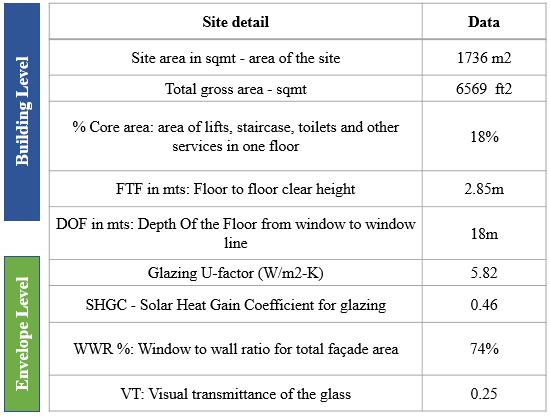
LancorWestMinister,locatedinRKSalai,Chennai. West Minister is an office building located in Mylapore, Chennai. It is G+9 Structure of total height 31m. It has a rectangular plan with the longer side-oriented east-west direction. It has a fully glazed façade with a curtain wall systemofgridsize1524x1030mmofaluminiumframeand 6mmsinglereflectiveglass
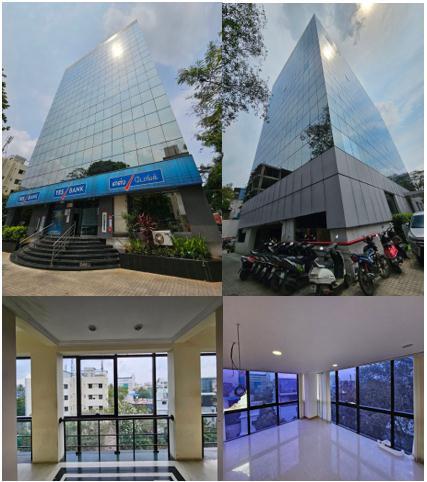
This building’s envelope is single glazed in all 4 directions.EastandWestdirectionsreceiveharshdaylight& high glare probability as it is fully glazed with Window to WallRatio(WWR)as75%whereasECBCnormsrecommend 40%only.
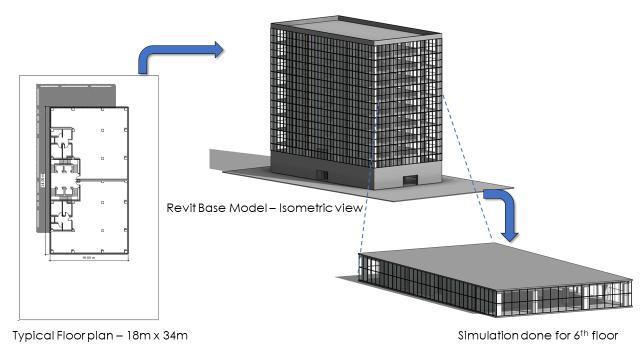
Simulation Parameters: Reference plane at 30 inchesfromthefloor(0.762m).Internalpartitions,blinds, and shades are not included in the model. Lighting thresholds as specified by the standard (sDA: 100 lux for 50% of the time and ASE:1000 lux for more than 250 occupiedhoursperyear).Analysisgridis0.6×0.6m.8amto 6pm–atotalof3650hours.
LEED V4.1 DAYLIGHT - It simulates daylight availability throughouttheentireyear.
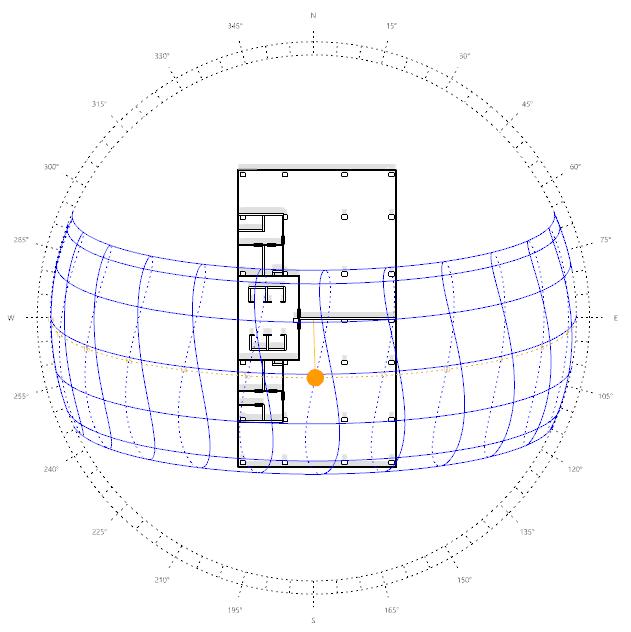
LEEDV4.0DAYLIGHT-Ontheequinox,at9a.m.and3p.m., it simulates the presence of daylight. Every time, the sky conditionisbasedonthedaythatisbrightestintheweather filethatiswithin15daysofeitherMarch21orSeptember 21.
Simulationisdonewith3cases:
VaryingGlazingTypeandWWR
ApplyingKineticLouversonBaseCase
ApplyingKineticLouversonWWR40%
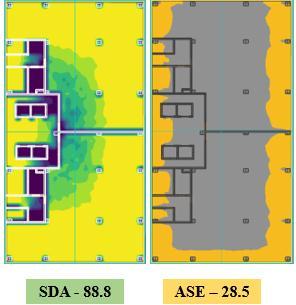
The simulation results are analysed based on SDA –Spatial Daylight Autonomy and ASE – Annual Sunlight Exposure. Every year, SDA evaluates whether a space acquiresenoughnaturallightonaworkplanethroughout normalbusinesshours.Thegoalis300luxfor50%ofthe timethatisspentinuse.
Surfacesthatreceiveexcessdirectsunlightmayresultin eyediscomfort(glare)orhighercoolingcosts,accordingto ASE. For LEED v4.1, no more than 10% of a space should havedirectsunlight.WWR–WindowtoWallRatio40%and 60%wereutilizedforsimulationcases.
IND_Chennai-
DaylightSimulation&AnalysisisdoneinRhinoand ClimateStudio.
ClimateZoneof Koeppen TropicalSavanna, DryWinter(Aw)
ASHRAEclimatezone Extremelyhot
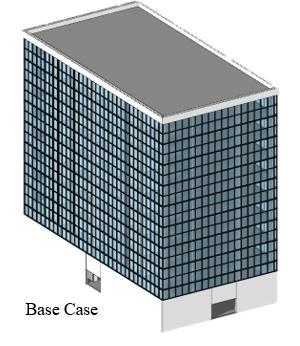
ThebasecaseenvelopeisSingleGlazedBlueTinted. Figure 11 shows the model of the base case envelope implementedinRhino.TheASEandSDAforthebasecase are88.8and28.5respectively.Thevaluesshowthatdaylight performanceofthebuildingispoorasperLEEDandECBC standards.

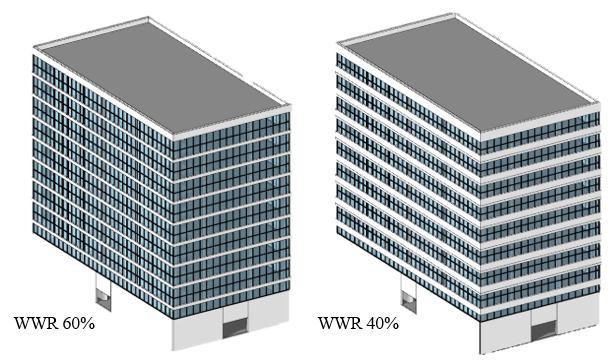
Twokindsof glasseswereanalysed:Tinted(base case)andReflective.SingleandDoubleglazingwereapplied to these 2 glasses. These test cases were then varied with WindowtoWallRatioof40%and60%.
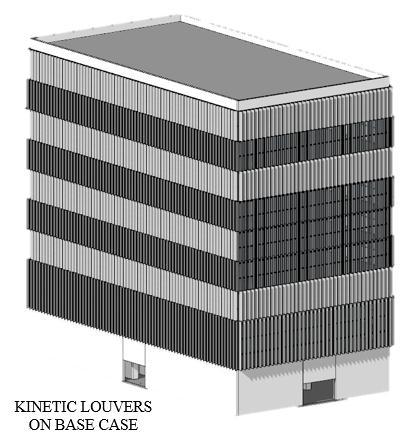
Kineticlouverssimulatedinthisstudyarevertically framed and made of lightweight aluminium composite panelswithadepthoffinsofnotmorethan0.6mand30% light reflectance. The curtain panels already in place are integrated with the shading elements. These louvers are controlledbypneumaticactuators/motorswhichconvertair to mechanical motion. These louvers can be easily maintainedandcomparativelylessercostthanothershading devices.
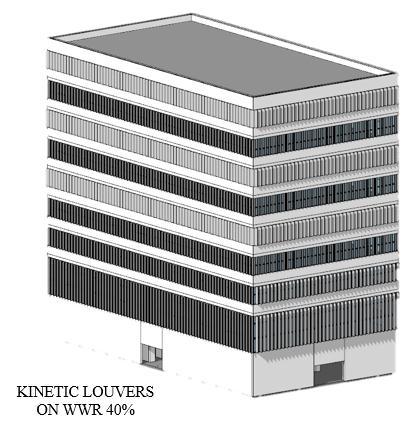
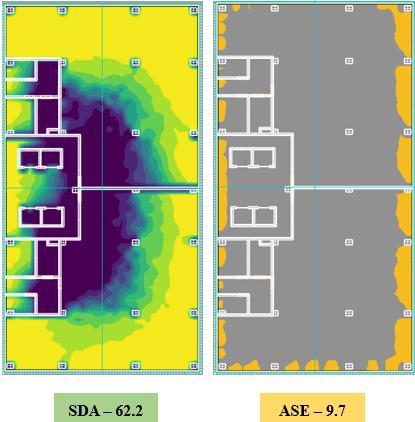

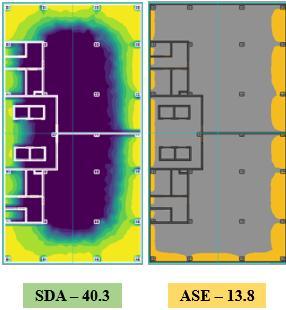
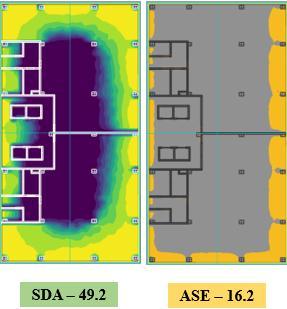
KineticLouverswithWWR 40%wereappliedfor Single-&Double-GlazedGlasses.Twokindsofglasseswere analysed: Tinted (base case) and Reflective. Single and Doubleglazingwereappliedtothese2glasses.Thesetest caseswerethenvariedwithWindowtoWallRatioof40% and60%.
WithKineticfacades,normalSingleGlazedTinted envelope gives the best ASE and SDA pair. Single Glazed TintedKineticEnvelopehasdecreasedASEby65%andSDA by30%fromthebasecase.AsperECBCnorms,WWR40% is required. So Kinetic façade on Blue Tinted Glass with WWR40%isbestwhichdecreasesASEby68%andSDAby 37%.
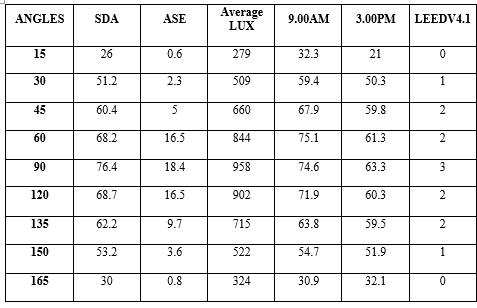
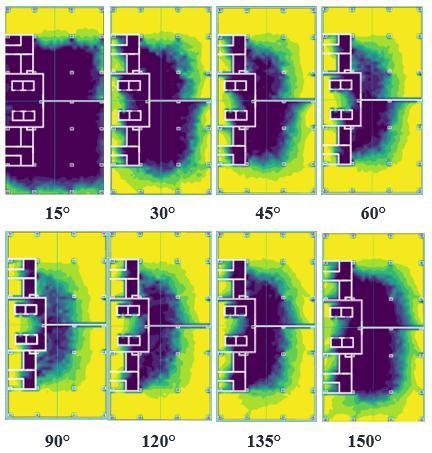
The above figure represents the daylight performance when the kinetic louver turns in different angles.Duetocostconstraintissues,ifitisnot feasible to implement kinetic louvers, then these angles can be fixed andlouverscanbeimplementedasstatic.Amongtheangles, 135⁰givesthebestdaylightperformance.

7. CONCLUSIONS
Achieving a balance between natural lighting and occupantcomfortiscrucialtooptimizeenergyconsumption
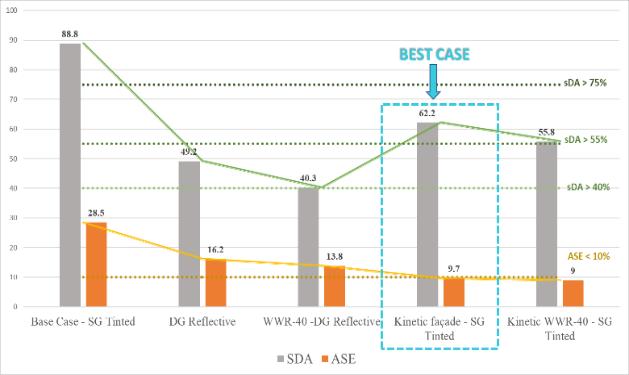
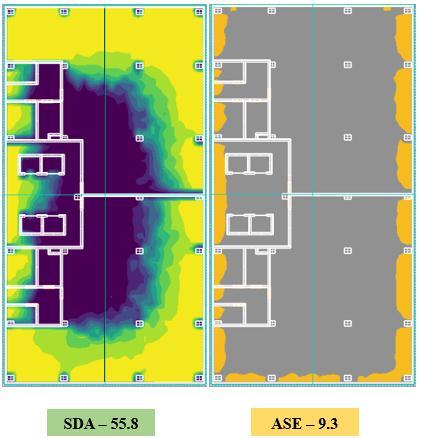
and ensure a sustainable workspace. Low SDA and ASE values can result in higher energy consumption and costs associatedwithlighting.HighSDAandASEvaluescancause discomfortforoccupants,requiringadditionalcoolingand shadingstrategies.Implementingakineticfacadesystemcan improve SDA and ASE values, resulting in reduced energy consumptionandcostsassociatedwithlightingandcooling. Tomaximizenaturaldaylightpenetrationandreducesolar heat gain and energy consumption, glazing systems with high VLT and low SHGC and U-value values should be selected.SingleglazedglasstypicallyhashigherSHGCthan double glazed glass, negatively impacting SDA and ASE. Tinted glass allows maximum daylight but increases the probabilityofglare,whilereflectiveglassreducesglarebut haspoordaylightperformance.Accordingtothesimulation results, it is inferenced that when SDA values increase/decrease,ASEvaluesalsoincrease/decreaseand vice-versa.Threesimulationstudiesshowedthatretrofitting existingspacescanimproveenergyefficiency.Doubleglazed systems performed well in the base case but poorly with WWR/kineticlouvers.Singleglazedsystemsoutperformed doubleglazedwithWWR/kineticlouvers.Thissuggeststhat singleglazedspacesinsimilarweatherconditions/direction as the study site can improve energy efficiency by retrofitting the best cases from this study based on their ecologicalandeconomicalrequirements.
The utilization of natural daylight is an essential aspectofbuildingdesignthatenhancesthespatialqualities, sustainability,andenergyefficiencyobjectivesofastructure. The emerging concept of kinetic architecture aligns with thesegoalsbypromotingtheuseofbuildingelementsthat areadaptabletodynamicallyresponsivefacades.Retrofitting optimal and energy efficient envelopes for existing nonsustainable buildings are crucial. The findings from this study can also apply for buildings in construction phase. Most of the commercial buildings have blinds to prevent glarefromdaylight.Theseblindswillnotbenecessaryasthe louvers itself will prevent harsh light. Visual comfort will alsobeatitsbest.Islandcoolingandheatingeffectcanbe achievedautomaticallywithkineticfacades.
REFERENCES
1. Ahmed,M.M.S.,Abdel-Rahman,A.K.,Bady,M.,& Mahrous,E.K.(2016).Thethermalperformanceof residentialbuildingintegratedwithadaptivekinetic shadingsystem. InternationalEnergyJournal, 16(3).
2. Al-Shafaey,N.,Abdelkader,M.,Sabry,H.,&Nessim, A. (2020). DOUBLE-SKIN FACADES IN HEALING ENVIRONMENTS:ANAPPROACHFORENHANCING DAYLIGHTING PERFORMANCE IN SOUTHORIENTED PATIENT ROOMS IN CAIRO, EGYPT. Engineering Research Journal, 165(0). https://doi.org/10.21608/erj.2020.131829
3. BenBacha,C.,&Bourbia,F.(2016).Effectofkinetic facadesonenergyefficiencyinofficebuildings-hot dryclimates. 11thConferenceonAdvancedBuilding Skins, 1
4. Besbas,S.,Nocera,F.,Zemmouri,N.,Khadraoui,M. A., & Besbas, A. (2022). Parametric-Based MultiObjective Optimization Workflow: Daylight and EnergyPerformanceStudyofHospitalBuildingin Algeria. Sustainability (Switzerland), 14(19). https://doi.org/10.3390/su141912652
5. Elghazi, Y., Wagdy, A., Mohamed, S., & Hassan, A. (2014). Daylighting Driven Design: Optimizing Kaleidocycle Facade for Hot Arid Climate. Fifth German-Austrian IBPSA Conference RWTH Aachen University, September 2018
6. Hosseini,S.M.,Fadli,F.,&Mohammadi,M.(2021). Biomimetickineticshadingfacadeinspiredbytree morphology for improving occupant’s daylight performance. Journal of Daylighting, 8(1). https://doi.org/10.15627/jd.2021.5
7. Hosseini,S.M.,Mohammadi,M.,&Guerra-Santin,O. (2019).Interactivekineticfaçade:Improvingvisual comfortbasedondynamicdaylightandoccupant’s positionsby2Dand3Dshapechanges. Buildingand Environment, 165. https://doi.org/10.1016/j.buildenv.2019.106396
8. Hosseini, S. M., Mohammadi, M., Rosemann, A., Schröder, T., & Lichtenberg, J. (2019). A morphological approach for kinetic façade design process to improve visual and thermal comfort: Review. In Building and Environment (Vol. 153). https://doi.org/10.1016/j.buildenv.2019.02.040
9. Ibrahim,J.A.,&Alibaba,H.Z.(2019).KineticFaçade AsaToolforEnergyEfficiency. InternationalJournal ofEngineeringResearch and Reviews, 7(7).
10. Khidmat,R.P.,Fukuda,H.,Paramita,B.,Koerniawan, M. D., & Kustiani. (2022). The optimization of louversshadingdevicesandroomorientationunder three different sky conditions. Journal of Daylighting, 9(2). https://doi.org/10.15627/jd.2022.11
11. Kim, J. H., & Han, S. H. (2022). Indoor Daylight Performances of Optimized Transmittances with Electrochromic-AppliedKineticLouvers. Buildings, 12(3).https://doi.org/10.3390/buildings12030263
12. Planas,C.,Cuerva,E.,&Alavedra,P.(2018).Effects ofthetypeoffacadeontheenergyperformanceof office buildings representative of the city of
Barcelona. Ain Shams Engineering Journal, 9(4). https://doi.org/10.1016/j.asej.2017.04.009
13. Rajiv, M., & Salaimanimagudam, M. P. (2018). Sustainable building envelope bydynamicfacade. International Research Journal of Advanced EngineeringandScience, 3(1).
14. Roumie.J,(2021).AnalyticalandComparativeStudy ontheDesignofKineticFacadesandtheirDaylight Performance in Buildings. Journal of Manara University,(Vol1)
15. Samadi, S., Noorzai, E., Beltrán, L. O., & Abbasi, S. (2020). A computational approach for achieving optimum daylight inside buildings through automated kinetic shading systems. Frontiers of Architectural Research, 9(2). https://doi.org/10.1016/j.foar.2019.10.004
16. Sheikh, W. T., & Asghar, Q. (2019). Adaptive biomimeticfacades:Enhancingenergyefficiencyof highly glazed buildings. Frontiers of Architectural Research, 8(3). https://doi.org/10.1016/j.foar.2019.06.001
17. Shen,Y.T.,&Lu,P.W.(2016).Thedevelopmentof kineticfaçadeunitswithBIM-basedactivecontrol system for the adaptive building energy performance service. CAADRIA 2016, 21st International Conference on Computer-Aided Architectural Design Research in Asia - Living Systems and Micro-Utopias: Towards Continuous Designing
https://doi.org/10.52842/conf.caadria.2016.517
18. Wanas,A.,Aly,S.S.,Fargal,A.A.,&El-Dabaa,R.B. (2015).Useofkineticfacadestoenhancedaylight performance in office buildingswith emphasison Egyptclimates. Journal of Engineering and Applied Science, 62(4).
19. Yan, H., Zhang, Y., Liu, S., Cheung, K. M., & Ji, G. (2022). Optimization of Daylight and Thermal Performance of Building Façade: A Case Study of Office Buildings in Nanjing. In Proceedings of the 2021 DigitalFUTURES
https://doi.org/10.1007/978-981-16-5983-6_16