International Research Journal of Engineering and Technology (IRJET) e-ISSN:2395-0056

Volume: 10 Issue: 05 | May 2023 www.irjet.net p-ISSN:2395-0072
International Research Journal of Engineering and Technology (IRJET) e-ISSN:2395-0056
Volume: 10 Issue: 05 | May 2023 www.irjet.net p-ISSN:2395-0072
1M.Tech student, Environmental Engineering in the Department of Civil Engineering
2M-Dasan Institute of Technology Ulliyeri, Kerala, India
3Assistant professor, Department of Civil Engineering, M- Dasan Institute of Technology Ulliyeri, Kerala, India ***
Abstract – The main aim of this experimental study is to compare the efficiency of saw dust activated carbon in treating dairy wastewater in both batch and column adsorption method. The parameters like turbidity, Total suspended solids, Total dissolved solids, Chloride, Biochemical oxygen demand(BOD), Chemical oxygen demand (COD) are effectively reducing in both batch and column adsorption method using saw dust activated carbon as an adsorbent. Batch study was conducted by taking adsorbent dosage as a variable parameter. Saw dust activated carbon was added into the dairy wastewater in the order of 20g, 40g, 60g, 80g and 100g respectively for a contact time of 60 min in the batch adsorption study. Column adsorption study was performed by taking flow rate and contact time as a variable parameter. Flow rate was varied in the order of 10 ml/min, 8 ml/min, 6 ml/min, 4 ml/min and 2 ml/min respectively Contact time was varied in the order of 20 min, 40 min, 60 min, 80 min and 100 min. The maximum removal efficiency was obtained at 60 g adsorbent dosage for 60 min contact time in batch adsorption study. The maximum removal efficiency was obtained at a flow rate of 6 ml/min for a contact time of 60 min in column adsorption study. Saw dust activated carbon showed a maximum removal efficiency of 76 %, 72 %, 65.8 %, 72.9 %, 62.9 % and 57.7 % for turbidity, total dissolved solids, total suspended solids, Chloride, Biochemical oxygen demand and Chemical oxygen demand respectively in batch adsorption study and 68.6 %, 64.5 %, 60.7 %, 67.2 %, 53.8 %, 57.9 % for turbidity, total dissolved solids, total suspended solids, chloride, biochemical oxygen demand and chemical oxygen demand respectively in column adsorption study This work shows sawdust activated carbon as an effectiveadsorbentintreating dairy wastewater
Key Words: Dairy wastewater, Saw dust activated carbon, Adsorbents, Batch adsorption study, Column adsorptionstudy
Water pollution has become one of the most serious problems in our society. Water is the most important resource and due to increased concern for the futureoftoday’swatersupplieshumanshavebeenforced
to develop new technologies to protect these bodies of water from contamination. Nowadays industrial growth creates environmental pollution and generates hazardous wastewater which is one of the major concerns for the mankind.Thebiggestproblemduetothedairyindustryis the disposal of wastewater which is not meeting the standards (Bharati.S. Shete et al.,2013) Thedairyindustry wastewater contains high concentrations of organic matter and therefore proper treatment prior to discharge is required. The dairy industry wastewater is generated primarilyfromthecleaningandwashingoperationsinthe milk processing plant which includes recovering product residues from the system, pre- rinse, detergent cycle, rinse, disinfectant cycle, potable water rinse. (N.P.Shinkar et al.,2013).Dairyprocessequipmentcleaning is an essential aspect of dairy production. The milk collected through cooperatives goes through many channel containers and thus is highly susceptible to bacterial as well as dirt contamination. The present study focuses on the effect of saw dust activated carbon in treatingdairywastewaterbyconductingbatchadsorption andcolumnadsorptionstudy
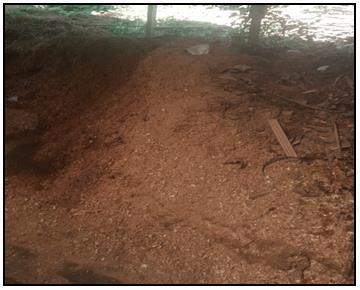
Sawdustisthewastematerialgeneratedbywood based industries. It is formed as small irregular chips or small trash of wood during chopping of logs of wood into different sizes (Adeosun Jhonson et al.,2018).The dimension of saw dust depend on the varieties of wood anddimensionofsawteeth.Dumpingofsawdustonopen land is posing threat to the environment. Therefore saw dust can be used as an adsorbent material to make water samples safe against almost all the physicochemical parametersbutunsafeagainstbacteriologicalparameters. Though the saw dust adsorbent bring about the slight increase in the level of some elements in the water samples the contaminant level of those elements is still within the water quality guidelines. The surface charge of the sawdust and the electrostatic force between the adsorbent and the impurities may be responsible for the adsorption efficiency. Sawdust as a bio-waste of industry and agriculture has lots of applications in vast areas A wood dust allergy can be characterized by sneezing,
irritationofthenoseandlungsanditchyskin.Exposureto excessive amounts of wood dust may irritate the eyes, nose, and throat. Workers may also experience shortness of breath, dryness and sore throat, conjunctivitis and rhinitis. Dermatitisis common and may be caused by the chemicals in the wood. For dermatitis, the skin may become red, itchy, dry, or blister.Allergic contact dermatitismay also develop. Respiratory system effects include decreased lung capacity, and allergic reactions in the lungs such as hypersensitivity pneumonitis, andoccupational asthma. Hypersensitivity pneumonitis maydevelopwithinhoursordaysfollowingexposureand is often confused with cold or flu symptoms because it begins with headaches, chills, sweating, nausea, breathlessness, etc. Tightness of the chest and breathlessness can be severe, and the condition can worsen with continued exposure. Some hypersensitivity pneumonitis conditions may be caused by moulds that growonthewood.Occupationalasthmamayalsodevelop. Western red cedar is a wood that has a clear association with the development of asthma (Ednei Bruce Da Silva et al., 2019).
activation with chemicals like phosphoric acid the char developsmorepores..Sawdustdoesnotdissolveinwater but very small particles of sawdust can create a colloidal suspensionandchangethecolourofwater.
Saw dust is burned in a furnace to obtain carbon from them. Saw dust ash obtained from carbonization is then ground for 5 minutes. The required amount of sawdust ash is mixed with 1M H3PO4 such that ratio of mass of saw dust ash to acid concentration is 1:1.The solution is then boiled at 80℃ for 2 hours. After this second activation, the sample is dried for 24 hours at 100℃ in an oven. Adsorbent is activated both thermally and chemically to improve the surface properties of adsorbentstoincreasethetreatmentefficiency.
Saw dust char contain more than 50% of ash which creates problem for pore development in the activated carbon. After removing the ash from the husk char the porosity of char is increased significantly. After
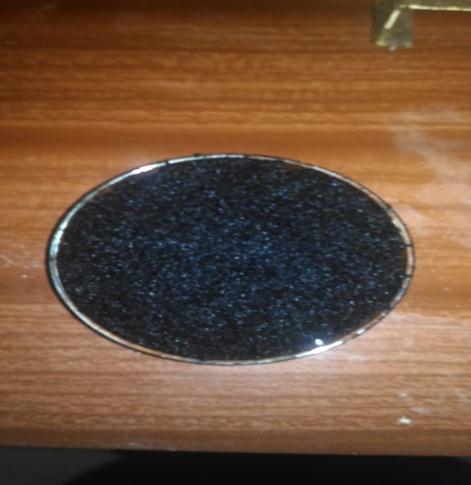
Phosphoric acid rapidly oxidize the organic carrier, split off water and CO2 from the organic material and oxidizethesubstratetoforma scorchedbrowntoa black charcoallikepowderwhichremainsinthemix
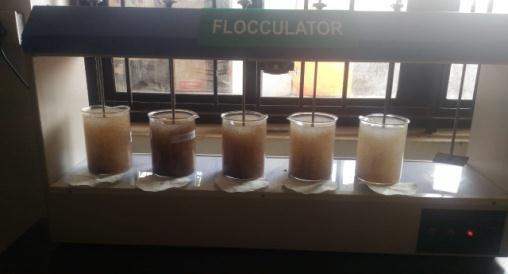
A batch adsorption experiment from the liquid phase,alsoknownasimmersion experiment, isoneofthe most common tests used to measure adsorption equilibrium and kinetics from solutions. It consists of the addition of a known mass of sample to a fixed volume of
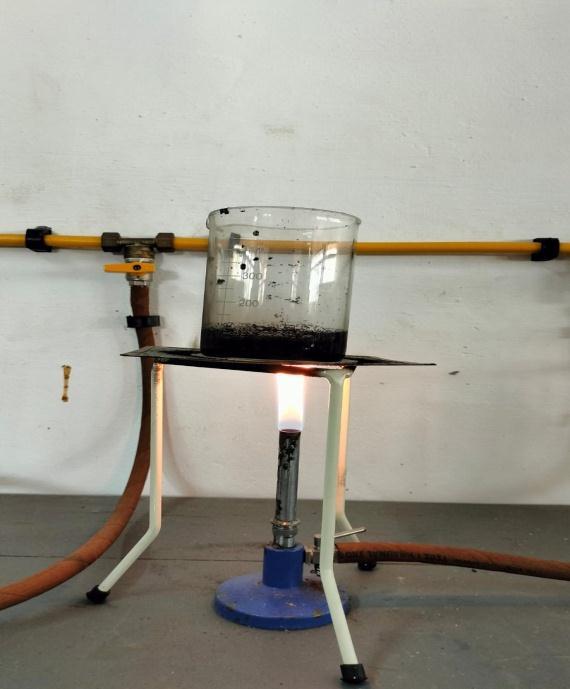
liquid at an initial concentration. The dairy wastewater wastreatedwithsawdustactivatedcarbonbyvaryingits dosageas20g,40g,60g,80g,100gforaperiodofonehour by agitating it under the jar test apparatus. Sawdust has usuallylow bulk density, high water porosity, low air porosity, and low cation exchange capacity. The main chemical components of saw dust are carbon 60.8 %, hydrogen 5.19 %, oxygen 33.83 % and nitrogen 0.90 %. Thespecific gravity of saw dust ash is 2.03 and loss in ignitionis4.27%.
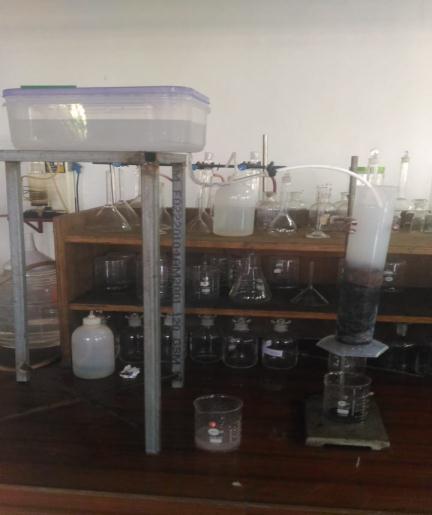
cloggingfilteraidsareused. Filteraidsarethesubstances usedtopreventthefiltermediumfrombecomingblocked and to form an open, porous cake, hence reducing the resistanceto flowofthe filtrate.Filteraid formsa surface depositwhichscreensoutthesolidsandalsopreventsthe plugging of the supporting filter medium. Usually cotton balls,diatomaceousearth,sawdustandricehuskareused asfilteraids.
The dairy wastewater was treated with saw dust activatedcarbonbyvaryingtherateofflowofwastewater as 10 ml/min, 8 ml/min, 6 ml/min, 4 ml/min and 2 ml/min respectively. The time of collection of dairy wastewaterthroughthecolumnsetupafterfiltrationwas varied in the order of 20min, 40min, 60 min, 80 min and 100 min respectively. The dosage of adsorbents was kept constant as 60g since the optimum dosage of adsorbents were 60 g in the batch adsorption study performed by takingadsorbentdosageasavariableparameter.
For batch adsorption study optimum results were obtainedat60gofadsorbentdosage.Sawdustishavinga maximum removal efficiency of 76% for turbidity. After treating with saw dust, the sample is still in the alkaline range.Sawdustishavingamaximumremovalefficiencyof total dissolved solids upto 72% Saw dust is having a maximum removal efficiency of total suspended solids upto 65.8%.Saw dust is having a maximum removal efficiency of chloride upto 72.9 % . Saw dust is having a maximum removal efficiency of biochemical oxygen demand upto 62.9 %. Saw dust is having a maximum removal efficiency of chemical oxygen demand upto 57.7%.
Ashingofsawdusteliminates highcarboncontent,and creates charged centres on its structure capable of removing specific water pollutants While performing the columnadsorptionstudyusingtheseadsorbents,thereisa chance for the filter to get clogged. As a result to prevent
Adsorption study was performed with saw dust activated carbon by the column adsorption method by varying the rate of flow of wastewater and time of collection of treated water through the column set up to find out the best suited conditions to get maximum removal efficiency of impurities from aqueous media. For column adsorption study optimum results were obtained at 6 ml/min flow rate and contact time of 60 min. Taking flow rate as a variable parameter, saw dust is having a maximumremovalefficiencyof68.6%forturbidity.pHof dairy wastewater is still in the alkaline range. The saw dustishavingamaximumremovalefficiencyof64.5%for total dissolved solids and a maximum removal efficiency
of 60.7fortotalsuspendedsolids.Thesawdustishaving amaximumremovalefficiencyof64.5%fortotaldissolved solids. The saw dust is having a maximum removal efficiency of 67.2 %, respectively for chloride and a maximum removal efficiency of 53.8 % for biochemical oxygen demand. The saw dust is having a maximum removalefficiencyof57.9%forchemicaloxygendemand
Taking contact time as a variable parameter, saw dustishavingamaximumremovalefficiencyof55.6%for turbidity. Sawdust is able to keep the pH of dairy wastewater still in the alkaline range. The saw dust is having a maximum removal efficiency of 65.4 % for total dissolvedsolidsandamaximumremovalefficiencyof64.2 % for total suspended solids. The saw is having a maximum removal efficiency of 64.6 % for chloride and a maximum removal efficiency of 63.3 % for biochemical oxygen demand. The saw dust is having a maximum removalefficiencyof65.9%forchemicaloxygendemand. Optimum results were obtained at a contact time of 60 min.
In batch adsorption method, saw dust showed a maximum removal efficiency of 76% for turbidity. Saw dust is able to keep the pH of wastewater still in the alkaline range. Sawdust is having a maximum removal efficiency of 72 % for total dissolved solids and a maximumremovalefficiencyof65.8%fortotalsuspended solids.Sawdustisshowingamaximumremovalefficiency of 72.9 % for chloride and a maximum removal efficiency of62.9%forbiochemicaloxygendemand.Thesawdustis having a maximum removal efficiency of 57.7% for chemicaloxygendemand.Optimumresultswereobtained at60gofadsorbentdosageforacontactperiodof60min. In column adsorption method the rate of flow of wastewaterandthetimeofcontactofwastewaterwiththe sawdust activated carbon filled in the column study apparatuswasvaried.Whiletakingflowrateasavariable parameter, saw dust is having a maximum removal efficiency of 68.6 % for turbidity. Sawdust is able to keep thepHofdairywastewaterinthealkalinerange.Sawdust ishavingamaximumremovalefficiencyof64.5%fortotal dissolvedsolidsandamaximumremovalefficiencyof60.7 % for total suspended solids. The saw dust is having a maximum removal efficiency of 67.2 % for chloride and a maximum removal efficiency of 53.8 % for biochemical oxygen demand. The saw dust is having a maximum removalefficiencyof57.9%forchemicaloxygendemand.
While taking time of contact as a variable parameter, saw dust is having a maximum removal efficiency of 55.6 % for turbidity. Sawdust is able to keep the pH of wastewater still in the alkaline range. The saw dust is having a maximum removal efficiency 65.4 % for total dissolved solids and a maximum removal efficiency of 64.2 % for total suspended solids The saw dust is having a maximum removal efficiency of 64.6 % for chloride and a maximum removal efficiency of 63.3 % for biochemical oxygen demand. The saw dust is having a maximum removal efficiency of 65.9 % for chemical oxygendemand.Optimumresultswereobtainedataflow rateof6ml/minandcontacttimeof60min.
[1] Sunny,N.,Krishna,S.,Ghosh,D.,George,D.andKumar, A.M.S.(2019)“Filtrationofwastewaterusingnatural adsorbents”, International Research Journal of EngineeringandTechnology (IRJET), Vol:06Issue:04.
[2] Kasmuril, N., Dzulkifli, N. F. M., Ismail, N. A., Zaini, N. andYaacob.Z.(2022)“Aninvestigationofamixtureof coconut husk and rice husk as activated carbon for treatment of wastewater”, Earth and Environmental Science, 1019-012048.
[3] Islamuddin. and Ahmad, I. (2016) “ Domestic wastewater treatment by low-cost natural adsorbents”, International Journal for Scientific ResearchandDevelopment , PP-641-645.
[4] Bhusari, A. and Bhusari, S. (2015) “Investigation of feasibility of rice husk ash for effluent treatment of waste water.” International Journal Of Emerging Trends In Engineering And Basic Science, Vol. No. 2 Issue:02.