Handwritten Text Recognition Using Machine Learning
Erram Aishwarya Reddy1 , Kasireddy Raghuvardhan Reddy2 , Mohammad Irshad31Student & Sreenidhi Institute of Science and Technology, Ghatkesar

2Student & Sreenidhi Institute of Science and Technology, Ghatkesar
3Professor, Dept. of Computer Science and Engineering, Sreenidhi Institute of Scinence and Technology, Telangana, India
***
Abstract - The objective of HTR is to automate the process of converting handwritten documents into digital text, which is much easier to store, edit, and search. HTR is used in various applications, including digitizing historical documents, recognizing handwriting in online forms, and improving accessibility for people with visual impairments. We propose a system that uses both the CNN and RNN neural networking algorithms to predict the Handwritten text recognition.
Key Words: CNNs, HTR, RNNs, CER, Accuracy, Recognition, Training
1. INTRODUCTION
Handwritten text recognition(HTR) isanarea ofartificial intelligencethatdealswiththedevelopmentofalgorithms capable of recognizing and interpreting handwritten text. HTRaimstoautomatetheprocessofturninghandwritten papersintoeditable,searchable,andreadilystoreddigital text. HTR can be used for a variety of things, such as digitizingolddocuments,readinghandwritingonthescreen, and enhancing accessibility for those with visual impairments. Preprocessing, feature extraction, and classification are some of the processes that make up a typicalHTRsystem.Theinputimageisimproveduponand prepared for future processing during the preprocessing stage. The neural network extracts feature from the preprocessedimageduringthefeatureextractionstagethat areimportantforreadingthehandwrittentext.
2. LITERATURE SURVEY
2.1 Existing System:
Using CNN’s: Handwritten Text Recognition (HT) using Convolutional Neural Networks (CNNs) has become increasinglypopularinrecentyears.Theprimarybenefitof CNNs is their capacity to automatically extract pertinent characteristics from the input picture, which makes them especiallywell-suitedforHTRandotherimageidentification tasks.
Using RNN’s: TherearevariousHTRsystemsinusetoday thatexclusivelyuseRNNstorecognizehandwrittentext.The LongShort-TermMemory(LSTM)network,akindofRNN thatisintendedtobettercapturelong-termdependenciesin thedata,isonewell-knownexample.
Using both CNN’s and RNN’s: TherearefewHTRsystems whicharebuiltusingcombinationoftheCNN'sandRNN's where the data is loaded into the training model is first passedintothesetofCNNlayersandthentheoutcomeof theCNNlayersispassedthroughtheRNNlayerstotrainthe modelandpreparethemodel.
2.2. Proposed System:
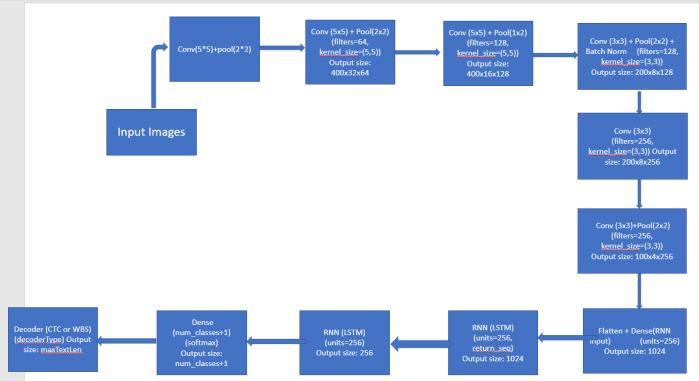
ProposedsystemcontainsasetofCNNlayerswhichwould take the inputs from the dataset that is given to train the model and that would load the data into 7 layers of CNN (ContinuousNeuralNetworks)andgivetheoutputtotheset of RNNs (Recurrent Neural Networks) then the output of both CNNs and RNNs are given to CTC a model of Tensor flow.
2.3 Proposed system Architecture:
Thearchitecturedepictedinthediagramisadeeplearning modelusedfortextrecognition.Themodeltakesinabatch ofimageswhereeachimagehasdimensionsof(batchSize, imgSize[0], imgSize[1]), where imgSize is a tuple that specifiestheheightandwidthoftheimage,andbatchSizeis thenumberofimagesfedintothemodelatonce.
Fig -1:DesignoftheModel
3. UML DIAGRAMS
3.1 Use case Diagram
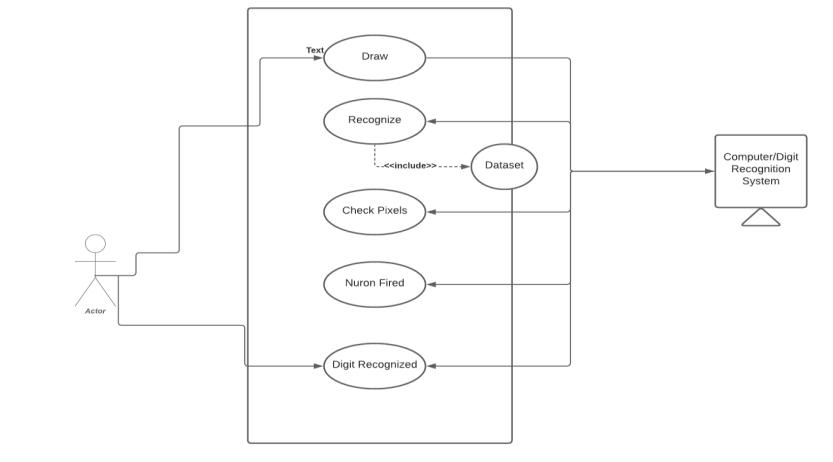
IntheUnifiedModellingLanguage(UML),ausecasediagram isaparticularkindofbehavioraldiagramthatshowshowa systeminteractswithusersorotherentities.Thisdiagram
provides a simple-to-understand representation of a system'sfunctioningandpotentialapplications.Itismadeup ofactors,usecases,andtheconnectionsamongthem.Use casesdefinehowthesystembehavesfromtheperspectiveof theuser,whereasactorsrepresentthevarioususertypesor outsideentitiesthatinteractwiththesystem.Usecasesand actors may be linked together by straightforward associationsormoreintricatelinkageslikegeneralizations, extends,andincludes.
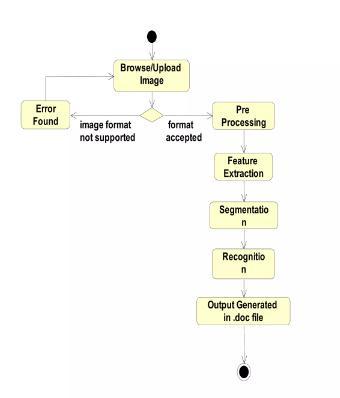
AsortofbehavioraldiagraminUnifiedModellingLanguage (UML) called an activity diagram shows how activities or actionsmovethroughasystem.Itoffersavisualdepictionof theproceduresoractionsnecessarytofinishaparticularjob or use case within the system. The nodes in the activity diagramstandinforthevariousactivitiesoractions,while theedgesshowtheorderinwhichthoseactivitiesoractions arecarriedout.Thenodesmightrepresentstraightforward processes,likesendingamessageormakingachoice,orthey can be more intricate processes with several phases. The boundariesmightbesolidlinestodenoteapredetermined order of events or dotted lines to denote other routes or conditionalbranching.
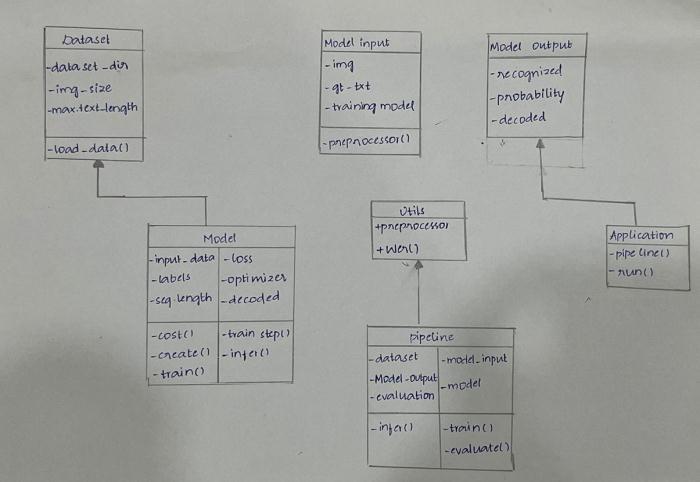
A class diagram is a type of UML diagram that is used to representthestructureofasystembyillustratingitsclasses, attributes,methods,andtherelationshipsbetweenthem.It is a graphical representation that enables developers to visualizethedifferentcomponentsofasystemandhowthey interactwithone another.Theprimary purposeof a class diagram is to describe the classes in a system and their relationshipswitheachother.Theclassdiagramcanbeused duringvariousstagesofsoftwaredevelopment,fromdesign toimplementationandmaintenance
4. REQUIREMENTS
4.1
Hardware Requirements
Processor:IntelCorei5andabove
RAM:8GBandabove
Memory:512GBSSDandabove
4.2 Software Requirements
WindowsormacOS
VisualStudio
Python3.6
5. METHODS USED
5.1.
Data Collection:
Datacollectingisacrucialcomponentofmachinelearning, and the caliber of the data has a direct bearing on the precisionofthemodelsthatareproduced.Thepracticeof acquiring information about user access to and activity inside the systems and applications of an organization is referredtoasdatacollectioninthecontextofidentityand accessmanagement(IAM).Timestampsforloginandlogout attempts, unsuccessful login attempts, access requests, permissions,andotherinformationcanbeincludedinthis data.Ingeneral,gatheringdataisacrucialstepinutilizing machine learning to improve IAM capabilities inside an organization.Theaccuracyanduseofthedataobtainedmay be ensured by careful planning, execution, and preprocessing,resultinginmoreefficientmachinelearning modelsandabettersecurityposture.
5.2. Data Preprocessing:
A crucial step in every machine learning project is data preprocessing, which involves a number of methods and proceduresusedtoconvertrawdataintoaformatthatcan be utilized for training a model. This step comprises extensivelycleaningandpre-processingtheobtaineddata, whichentailslocatingandfixingproblemsincludingmissing data, outliers, inaccurate values, and duplicate characteristics.Thenextstepistochangethedata'sformat so that it is acceptable for analysis. This may require normalizing,standardizing, scalingfeatures,and encoding categoricaldata.Byminimizingmistakesandinconsistencies in the data, this stage helps the model function more accuratelyandproducefindingsthatcanbetrusted.Overall, datapreparationisacrucialpartofmachinelearning,and theprecisionandsuccessofthefinalmodelmaybegreatly influencedbythecaliberoftheinputdataandtheefficiency ofthepreprocessingmethodsused.
5.3. Training the model:
Itisalsoessentialtoselecttherightalgorithmforthejobat hand.Machinelearningalgorithmscomeinmanydifferent varieties, such as supervised learning, unsupervised learning, and reinforcement learning. When a labelled dataset is available, supervised learning techniques are applied;thesystemistrainedontheinputandoutputdatato predictfutureoutput.Whentherearenolabelsonthedata andthecomputermustfigureoutpatternsandconnections onitsown,unsupervisedlearningapproachesareutilized. Models are taught to make decisions based on input from their surroundings through reinforcement learning. The efficacy and precision of the trained model are evaluated usingatestdataset.Themodelmayalsobeappliedtofresh data if it successfully predicts the test data.In conclusion, thereareseveralstepsinvolvedinusingmachinelearning algorithmstotrainamodel.Amongtheseprocessesaredata preparation, picking the best strategy, and model optimization.Thesemethodsmaybeusedtocreateprecise and potent machine learning models for a range of applications.
5.4. Recognition:
Themodelmayoccasionallyneedtobetweakedorretrained withnewdatatoimproveperformance.Theapproachmay beappliedindifferentcircumstancestoidentifytrends or makepredictionsinreal-timeapplications.Atrainedimage recognitionmodelmaybeusedtoidentifyobjectsinimages orvideos,incontrasttoataughtlanguagemodel,whichcan be used to generate text or make language-based predictions.Overall,theabilitytoanalyzedataquicklyand accuratelycanleadtosignificantimprovementsinefficiency and decision-making, which is why the use of trained machine learning models for prediction and recognition taskshasawiderangeofreal-worldapplicationsinsectors likemanufacturing,healthcare,andfinance.
5.5. Output Generation:
AfewcriticalcomponentsarerequiredforHandwrittenText Recognition output creation on an intuitive interface to guarantee an effective and user-friendly process. The recognitionsystem'saccuracyshouldbeconsideredinitially. A highly precise system will generate output that is more dependable,whichwillboostuserhappinessandconfidence. Users want the result to be created promptly and in realtime,thereforespeedofthesystemisequallyimportantto accuracy.Theuserinterfaceitselfisanothercrucialfactor for output production. The user should be provided with clearinstructionsandfeedbackviaanintuitiveandsimpleto-useinterface.The result mustbepresentedclearlyand succinctly,ideallywithformattingchoicessothattheuser may adjust it to their own requirements. A few critical componentsarerequiredforHandwrittenTextRecognition
output creation on an intuitive interface to guarantee an effectiveanduser-friendlyprocess.Therecognitionsystem's accuracy should be considered initially. A highly precise systemwillgenerateoutputthatismoredependable,which will boost user happiness and confidence. Users want the result to be created promptly and in real-time, therefore speed of the system is equally important to accuracy. The user interface itself is another crucial factor for output production. The user should be provided with clear instructionsandfeedbackviaanintuitiveandsimple-to-use interface. The result must be presented clearly and succinctly,ideallywithformattingchoicessothattheuser mayadjustittotheirownrequirements.
7. CONCLUSION
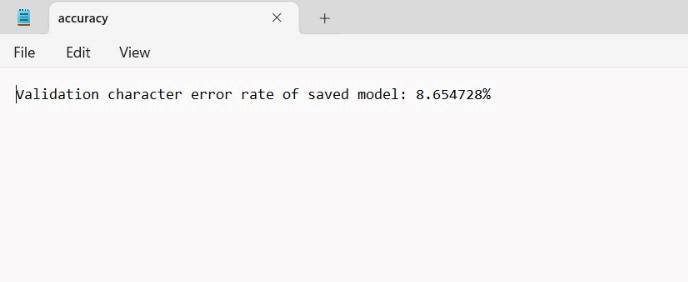
HandwrittenTextRecognitionisanimportantapplicationof machine learning that has the potential to significantly improve productivity and efficiency in various industries. The use of Convolutional Neural Networks and Recurrent NeuralNetworkshasprovedtobeaneffectiveapproachto achievehighaccuracyinrecognizinghandwrittentext.CNNs are used for feature extraction from images of text, while RNNs are used to model the sequential nature of handwriting.Nowthatseveralneuralnetworkdesignshave beenmerged,itisfeasibletodevelopsophisticatedmodels thathaveahighdegreeofhandwritingrecognitionaccuracy. However,thequalityofthetrainingdataandthetuningof thehyperparametershaveasignificantimpactonhowwell theHandwrittenTextRecognitionsystemperforms,justlike with any machine learning model. Itis essential to
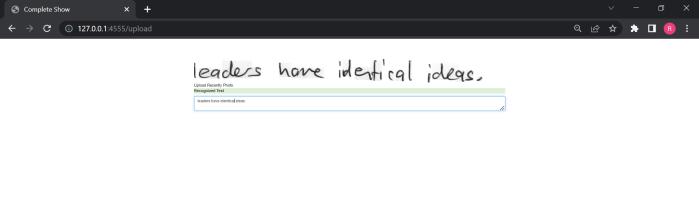
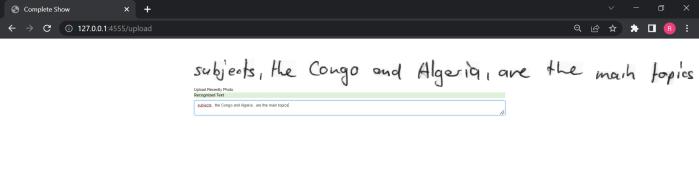
thoroughly test and assess the model to ensure that it performs well with a variety of handwriting inputs and styles. Planning and executing tests for handwritten text recognition should consider the unique qualities and challengesofthisapplicationaswellastheneedtotestfor accuracy,robustness,andscalability.
8. FUTURE SCOPE
With the use of CNNs and RNNs, handwritten text recognitionhasadvancedsignificantlyinrecentyearsand may continue to do so. The accuracy and effectiveness of handwritingrecognitionmodelsmaybeincreasedinafew ways with the development of deep learning techniques. Convolutionalandrecurrentneuralnetworkhybridmodels, whichcancapturebothspatialandsequentialinformationin theinput,areonefieldofresearch.Enhancingthemodels' capacity to recognize handwriting patterns from many languages and cultures is another area of emphasis, since doingsomayopenthedoortoamoreall-encompassingand universalmethodoftextidentification.
REFERENCES
[1] "Handwritten Text Recognition: An Introduction" by StefanJaeger,StephanRusinolandErnestValveny.
[2] "Handwriting Recognition: Soft Computing and ProbabilisticApproaches"bySargurN.Srihari.
[3] "HandwritingRecognition:AComprehensiveGuide"by SargurN.Srihari.
[4] "Deep Learning for Computer Vision" by Adrian Rosebrock.
[5] "PythonMachineLearning"bySebastianRaschka.
[6] "TensorFlowforDeepLearning"byBharathRamsundar andRezaBosaghZadeh.
[7] "PyTorchDeepLearningHands-On"bySherinThomas andSudhanshuPassi.
[8] The TensorFlow website (https://www.tensorflow.org/) and PyTorch website (https://pytorch.org/) offer a wealth of tutorials and documentationfordeeplearning,includinghandwriting recognitionusingCNNsandRNNs.