Volume: 10 Issue: 05 | May 2023 www.irjet.net p-ISSN:2395-0072


Volume: 10 Issue: 05 | May 2023 www.irjet.net p-ISSN:2395-0072
1,2,3,4,5 Department of Mechanical Engineering, PDEA College Of Engineering Pune, India. 6 Assistant Professor of Department of Mechanical Engineering PDEA College Of Engineering Pune, India.
Abstract
The globe is dealing with several issues like energy security, climate change, and economic sustainability. Though conventional energy sources are worldwide for the generation of energy, they have certain limitations like limited storage and pollution problems, Transportation issues so nowadays the world is looking for alternatives to conventional fuels. Renewable Energy sources are eco-friendly, and they are easily & abundantly available in nature. Solar and wind power are two examples of renewable energy sources that have been cited as important answers to these problems. It is challenging to produce a dependable and consistent power supply since these energy sources are unstable and irregular. Hybrid energy systems that mix solar and wind power have become an appealing answer to this problem. The design, functionality, and possible advantages of hybrid solar-wind energy systems are all covered in detail in this study.
Keywords: - Hybrid, Solar, Wind, Renewable, Windmill, Turbine, etc.
Introduction
Theglobeisnowexperiencingadevelopingenergycrisisasaresultoftheworld'srisingenergyneedsandtheexhaustion of conventional energy sources like oil, gas, and coal. An increasing interest in sustainable, eco-friendly, and economical renewableenergysourcesis theresultof this.The potential for generating electricityfrom solarand wind energymakes themtwoofthemostattractiverenewableenergysources.Eachsourcedoes,however,havesomedrawbacksthatahybrid systemmaygetaround.Theneedforrenewableenergysourceshasbecomeincreasinglyurgentinrecentyearsduetothe effects of climate change. Global temperatures have been steadily rising, leading to more frequent and severe weather events such as hurricanes, floods, and droughts. The burning of fossil fuels for energy is one of the main contributors to greenhousegasemissions,whicharetheprimarycauseofclimatechange.Therefore,itiscrucialtotransitiontorenewable energysourcesthatdonotemitgreenhousegasesanddonotcontributetoclimatechange
Arenewableenergysystemthatproduceselectricityusingbothsolarpanelsandwindturbinesisknownasahybridtype ofsolarandwindpower.Thecombinationofthesetwosourcesresultsinamoredependableandstablepowersupplyby overcomingtheshortcomingsofeachsourcealone. Thehybridsystemisapotentialapproachtosupplyingcontemporary society'senergyneedswhileloweringgreenhousegasemissions
Solarenergyisthemostabundantrenewableenergysourceontheplanet,potentiallygeneratinganestimated5,000times moreenergythantheworld'scurrentenergyconsumption.Solarenergyisproducedbyconvertingsunlightintoelectricity through the use of solar panels. The process of converting sunlight into electricity involves using photovoltaic (PV) cells, whicharemadeofsemiconductormaterials capableof absorbingphotonsofsunlightandconvertingtheminto electrical energy.
Windenergyisanotherpromisingrenewableenergysource,whichisgeneratedbyharnessingthepowerofwindturbines. Wind turbines convert the kinetic energy of the wind into electrical energy, which can be used to power homes and businesses. Wind turbines consist of a rotor, which is mounted on a tall tower, and a generator, which converts the mechanicalenergyoftherotorintoelectricalenergy
The concept of combining solar and wind power in a hybrid renewable energy system is not new, and there has been extensiveresearchonthistopicovertheyears.Several studieshaveinvestigatedthetechnicalandeconomicfeasibilityof hybridsystems,andhaveidentifiedthepotentialbenefitsofsuchsystems.
1. In a study conducted by Kumar et al. (2016), a hybrid solar-wind energy system was proposed for off-grid electrificationinaruralareainIndia.Thestudyfoundthatahybridsystemcouldprovideamorereliablesourceof electricitythanastand-alonesolarorwindsystem,andcouldreducethecapitalcostofthesystem
2. Another study conducted by Li et al. (2017) investigated the optimal sizing of a hybrid solar-wind system for a remote island in China. The study found that a hybrid system could reduce the cost of energy by up to 30% comparedtoastand-alonesolarorwindsystem,andcouldprovideamorestablesourceofelectricity
3. InastudyconductedbyRizketal.(2019),a hybridsolar-windsystemwasproposedforaresidentialbuildingin Lebanon. The study found that a hybrid system could provide a more reliable source of electricity than a standalonesolarorwindsystem,andcouldreducethepaybackperiodofthesystem.
4. Analysing the literaturereview on the design and development of vertical axis wind turbine blades was done by D.A.Nikam.Thisessayillustrateshowwindturbines,suchasverticalandhorizontalones,arefrequentlyusedto produce electricity. The horizontal windmill is extensively utilised for large-scale applications that need more roomandsignificantfinancialoutlay.Theverticalwind turbine,however,isinexpensiveandsuitedforhousehold use.Thewindturbine'sbladedesignandorientationhaveanimpactonhowmuchpowerisproduced.Settingthe appropriateparameterforthebladedesignwilloptimisethis.Theexperimentalfindingsuggeststhattheturbine's performanceandenergyoutputaresignificantlyimpactedbytheblade.
5. Altab Hossain looked into the creation of a 1/3 size vertical axis wind turbine for the production of electrical power. In this study, wind energy and a belt power transmission system are used to generate electricity from a windturbine.Thewindturbineisbuiltwithablade-to-dragdeviceratioof1:3.Differentwindspeedsareusedfor theexperiment,andthepowergeneratedbythewindmillisdetermined. Thetestingfindingsshowthatalthough 709Wofpowerwascreatedataspeedof25m/s,567Wwasproducedataspeedof20m/s.Duetothis,whenthe velocityishigh,thepowergenerationwillincrease.
1. Toevaluatethebenefitsandchallengesofahybridsolar-windenergysystemforrenewableenergyproduction.
2. Todevelopamathematicalmodelforoptimizingthedesignofahybridsolar-windenergysystembasedonsystem parameterssuchassolarpanelarea,windturbinecapacity,andbatterycapacity.
3. Toinvestigatetheimpactofsystemparametersonenergyproductionandcost.
4. To compare the performance of a hybrid solar-wind energy system with standalone solar and wind energy systemsintermsofenergyproduction,reliability,andcost.
5. To provide insights into the design and optimization of hybrid solar-wind energy systems for renewable energy productionthatcanbeappliedinpracticalsettings.
The need for sustainable and dependable renewable energy sources is the issue this research study seeks to address to lessen the environmental effect of conventional energy sourcesandattain energysecurity. Although bothsolar and wind energy are potential renewable energy sources, each has specific benefits and drawbacks. These restrictions can be overcome with a hybrid solar-wind energy system, which combines the two energy sources to increase system dependabilityandefficiency.
However,tobuildandoptimiseahybridsolar-windenergysystem,itisnecessarytocomprehendthesystem'sadvantages and disadvantages as well as the effects of system parameters on energy output and cost. By creating a mathematical
model to optimise the design of a hybrid solar-wind energy system for maximum energy output and minimal cost, this researcharticletriestoaddressthesedifficulties.
Thisresearchpaperusesamathematicalmodeltooptimizethedesignofthehybridsolar-windenergysystem.Themodel isbasedontheenergybalanceequation,whichconsiderstheenergyinputandoutputofthesystem.Themodelalsotakes into account the system parameters such as solar panel area, wind turbine capacity, and battery capacity. The model is solvedusingsimulationsoftwaretooptimizethesystemdesignformaximumenergyproductionandminimumcost.
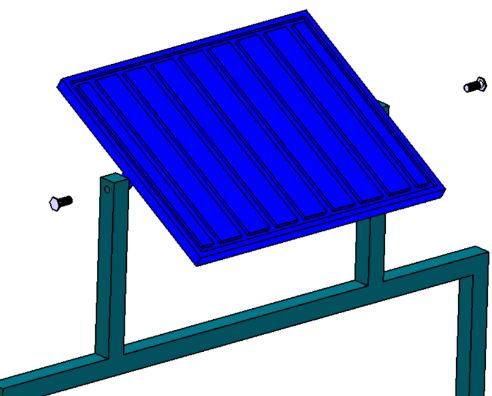
Hybrid solar-wind systems can be designed in various configurations, depending on the specific application and site conditions.Generally,thesesystemsconsistofasolararray,awindturbine,apowerconditioningunit,andabatterybank. Thepowerconditioningunitconvertsthe DCpowergenerated bythesolararrayandwindturbine intoACpower,which canbeusedtosupplytheloadorfedintothegrid.Thebatterybankisusedtostoreexcessenergygeneratedbythesystem, whichcanbeusedduringperiodsoflowsolarandwindavailability.
The design of a hybrid solar-wind system depends on various factors, including the site location, the load requirements, and the availability of solar and wind resources. The optimal design should consider the specific characteristics of both solar and wind energy and ensure that the system operates efficiently and reliably. The operation of a hybrid solar-wind systemistypicallycontrolledbya central controllerthatmanagesthepowerflow between the solararray, windturbine, andbatterybank.Thecontrolleralsoensuresthatthesystemoperateswithinsafeandefficientoperatinglimits.
Construction: - The choice of material is crucial for the design of blades. since the material we choose should be lighter and able to endure high air pressure. A particular grade of aluminium metal or PVC can be used for this since it is lightweightandresilienttohighairpressure.Selectingabladeformisthefollowingcrucialstep.
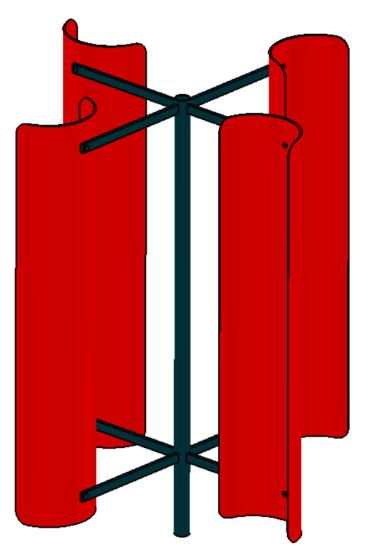
Theverticalaxishighwaywindmill(VAHW)canusec-typeblades.Becauseofthewayitisdesigned,itcancollectthemost airpressureandshiftthemostenergypossiblefromdrivenwindtorotatingmechanicalenergy.
In vertical axis highway windmills normally have four c-type blades that are placed in the vertical direction. These four blades have normally separated by a 90-degree angle from each other. So that on highways when a vehicle passes the VAHW will rotate in a clockwise direction. The wind turbine blade design has been decided and now the blades must be fixedtobuildtheturbinethearrangementofbladesandtheirrotatingdirections.
Component Specification: -
COMPONENT SPECIFICATION DIMENSIONS
ElectricDynamo Speed-60RPM
Torque–3Nm
Current0.1Amp
BladeSize PVCPipe
SolarPanel Power–5W
Current–1.14Amp
Battery 4VDC,DryCell,1.14Amp
Design Calculation: -
1. Capacityofthebatterycanbecalculatedby=������ = ���������� ������������ (��)
L=load(w)
Cbb=Capacityofbattery
Dd=Discharge
Vb=voltageofthebattery
a=Numberofdaysbackup
tap=minimumbackuptime
Length–45cm
Diameter–10cm
Length-29cm
Width-18.5cm
Weight–0.7kg
2. TotalPowerOutput=TotalAreaxSolarIrradiancexConversionEfficiency
AreaofSolarPanel(A)=Lxb
(A) =29x18.5=536.5sqcm
SolarIrradiance(AprilforPune)=6.97kWh/m2
ConversionEfficiency(For5WSolarPanel) =18%
Totalpoweroutput=536.5x6.97x0.18 =673.09Wh
3. Sweepareaoftheturbine(A)=DxH
D=Diameter
H=Heightofturbine
(A)=45x10=450sqcm
4. TocalculateWindPower
Pwind=0.5xρx v 3xA
ρ=Densityofair(1.225kg/m3)
v=windspeed(6m/sec)
A=Areaofturbine
Pwind =0.5x1.2253x6x4.5
Pwind =16.537m/sec
Working:
Adevicethatconvertswindenergyintoelectricityiscalledawindturbine.Thebatterychargingcircuitsandthenmassive utility grids are linked to the generators. In windmills, the air flows across the airfoil area of the blades, creating lift and torquethatarebothconvertedintopowerinthegenerator.Itinvolvesconvertingwindenergyintomechanicalenergyfor theturbine,whichisultimatelyconvertedintoelectricity.Thewindturbine'sproductioniserraticandunpredictablesince it is reliant on the presence of winds. They may, however, be employed in a big grid alongside traditional generators to lessen the demands placed on those generators while they are generating. The choice is to store power in storage mechanismslikebatteriesandthendischargeitevenly.
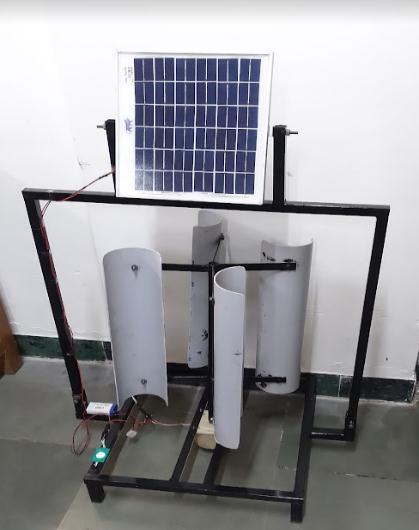
They may, however, be employed in a big grid alongside traditional generators to lessen the demands placed on those generatorswhiletheyaregenerating.Thechoiceistostorepowerinstoragemechanismslikebatteriesandthendischarge itevenly.
Theformoftheaerodynamicairfoiliswhatgivesthebladesaliftasthewindflowsthroughthem,andthisishowitworks. Thebladesmoveandbegintorotateasaresultoftheliftcreated.Whenthewinddirectionchanges,theyawunitpositions it in the incoming wind direction. The gear train and couplings transport the blades' spinning to the generator, which producesenergy.Theelectricityissubsequentlysentacrossthelinestothegridorthestoragebatteries.
1) Hybrid solar-wind systems offer improved efficiency over standalone solar or wind systems. This is because the two sourcesofenergycomplement eachother,withwindturbinesproducingenergyduringtimeswhensolarpanelsmaynot beaseffective,andviceversa.
2) The reliability of hybrid solar-wind systems is higher than standalone solar or wind systems. This is because the two sourcesofenergycomplementeachother,reducingthelikelihoodofpoweroutagesordipsinenergyoutput.Thesystem canalsostoreenergyinbatteriesforuseduringtimeswhenneithersolarnorwindenergyisbeinggenerated.
3)Hybridsolar-windsystemscanoffercostsavingsoverstandalonesolarorwindsystems.Thisisbecausethesystemcan be optimized to use the most cost-effective source of energy at any given time, reducing the need for backup systems or energystorage.
4) Hybrid solar-wind systems are environmentally friendly and emit no greenhouse gases or other pollutants. By using renewableenergysources,hybridsystemshelptoreducethecarbonfootprintandcontributetoamoresustainablefuture.
Future Scope:
The future scope of hybrid solar-wind systems is vast, with increasing demand for renewable energy and the need to reducecarbonemissions
One area of growth for hybrid solar-wind systems is the integration with energy storage technologies such as batteries, hydrogen storage, or compressed air energy storage. This will allow for better management and use of excess energy generatedduringpeaktimes,increasingthesystem’soverallefficiency.
As smart grid technology advances, hybrid solar-wind systems can be integrated into the grid, allowing for better managementanddistributionofenergy.Thiscanalsoenablethesystemtosell excessenergybacktothegrid,increasing thesystem’sfinancialviability.
Advancesintechnologycanleadtoimprovementsintheefficiencyandcost-effectivenessofhybridsolar-windsystems.For example, advancements in wind turbine design or solar panel technology can lead to higher energy output, while advancementsincontrolsystemscanleadtobettermanagementofthesystem
Conclusion:
Hybrid solar-wind systems have emerged as a promising solution for meeting the growing demand for clean and sustainable energy. These systems offer several advantages over standalone solar or wind systems, including improved efficiency,increasedreliability,costsavings,environmentalbenefits,versatility,andscalability.
Furthermore, as technology advances and the need for renewable energy continues to grow, hybrid solar-wind systems offersignificantpotentialforgrowthandinnovation.Integrationwithenergystoragetechnologies,smartgridintegration, andadvancementsintechnologyarejustsomeofthepotentialareasofgrowthforthesesystems.
Overall, hybrid solar-wind systems have a bright future, and their role in meeting the world's energy needs is likely to continuetogrowinthecomingyears.Asmorecountriesandorganizationscommittoreducingtheircarbonemissionsand transitioning to clean energy sources, hybrid solar-wind systems will play an increasingly important role in building a sustainablefuture.
Wewouldliketoextendourheartfeltappreciationtoeveryonewhohelpedfinishtheresearch work.Firstofall,wewould liketoexpressourgratitudetoourprojectGuideProf.A.V.Dumbreforadviceandassistanceoverthecourseoftheproject. Wealsowanttoexpressourgratitudetoalloftheresearchers,specialists,andprofessionalswhohavecontributedtothe bodyofknowledgeonhybridsystemsandrenewableenergy.Theirworkhasbeencrucialin guidingourinvestigationand offeringamorecomprehensiveknowledgeofthetopic.
[1] Kumar,A.,Gupta,M.,&Singh,S.(2016).Areviewonhybridsolar-windenergysystem:Technologicalaspectsand challenges.RenewableandSustainableEnergyReviews,58,23-30.
[2] Li, X., Wang, Z., & Zhang, B (2017) Optimal sizing of a hybrid solar-wind system for a remote island in China AppliedEnergy,185,1848-1860.
[3] Rizk, A., Harik, R. F., & Abou-Elanwar, N. E. (2019). Design of a hybrid solar-wind system for residential applications:AcasestudyinLebanon.RenewableEnergy,139,664-676.
[4] D A Nikam, S. M Kherde, Literature review on design and development of vertical axis wind turbine blade InternationalJournalofEngineeringResearchandApplications(IJERA)ISSN:2248-9622NationalConferenceon EmergingResearchTrendsinEngineeringandTechnology(NCERT-02nd&03rdNovember2015)
[5] MochamadChoifin, AchmadFathoniRodli, AnitaKartikaSari,AStudyOf RenewableEnergyAndSolarPanel Literature Through Bibliometric Positioning During Three Decades, DigitalCommons@University of Nebraska –Lincoln,July2021
[6] J.Jurasz, F.A. Canales, A. Kies, M. Guezgouz, A. Beluco A review on the complementarity of renewable energy sources:Concept,metrics,applicationandfutureresearchdirections,atScienceDirect21October2019
[7] Dirk Jan van de Ven, The potential land requirements and related land use change emissions of solar energy, NaturePortfolio,(2021)11:2907.