BIM as a Design and Safety Tool for Construction Projects
1Post Graduate Student, M. Arch - Construction Project Management, Faculty of Architecture, Dr MGR Educational and Research Institute, Maduravoyal, Chennai, India
2Additional HOD, Faculty of Architecture, Dr MGR Educational and Research Institute, Maduravoyal, Chennai

3Deputy HOD, Faculty of Architecture, Dr MGR Educational and Research Institute, Maduravoyal, Chennai
Abstract - Building information modelling (BIM) has gained prominence in the construction sector in recent years, notably in the fields of design, scheduling, and costing. The purpose of this study is to examine how traditional health and safety practices may be used in conjunction with BIM technology and digitalization to enhance safety management in the construction environment. The study starts with an extensive review and analysis of the available literature and live case studies. A questionnaire survey was undertaken among construction professionals to examine the adoptionof BIM as a design and safety tool in the Indian construction sector. The research finishes with findings about the software involved in using BIM as a design tool and the challenges and barriers to implementing BIM as a safety tool for construction, as well as recommendations for the proper applicationofthe BIM-based theoretical model, which acts as a design and safety management tool used throughout the whole project duration for construction projects.
Key Words: BIM
BuildingInformationModelling,OHSOccupational Health and Safety, Design Tool, Safety Tool, BIMSoftware
1.INTRODUCTION
Building information modelling (BIM) is a potential breakthrough in the fields of design, engineering, and construction. It is transforming the way contractors and engineersconductbusiness,butitisstillinitsearlystages BIMwasestablishedmorethanadecadeago,primarilyto separatearchitectural3Dfromtraditional2Ddrawings.Itis alifesaverforcomplexprojectsduetoitscapacitytodetect problems early in the design stage. BIM is primarily composedof3Dmodellingprinciplesaswellasinformation databasetechnologyandcompatiblesoftwareinadesktop computer environment that architects, engineers, and contractorsmayusetoplanandsimulatethebuildingofa project. With the aid of this technology, project team membersmaycreateavirtual3Dmodelofthestructureand everysystemwithinitandshareitwithoneanother
1.1 Background of the study
TheconstructionsectorinIndiacontributessignificantly totheeconomicgrowthofthenation.Itisoneofthelargest contribution factors in India after agriculture. Standard recordingandnotificationproceduresforbuildingaccidents
arelackingincertainnations,whiletheydoexistinothers, like India, although their implementation is problematic. Occupationalillnessandaccidentsatworkareglobalissues. Nationalpreventiveeffortsrequirestatisticsandinformation onworkplaceaccidents.Dueattentionisnotgiventosafety since statistics on construction accidents are either nonexistentorgrosslyunderreported.Safetyprecautionsmust betakenintoaccountfromthebeginningoftheprojectuntil its conclusion. Safe working conditions need proper coordinationbetweencontractorsandemployees,whichis oftenmissinginIndianconstructionareas.Regardlessofsex, religion,location,age,orotherfactors,occupationalhealth andsafety(OHS)isanareathatisconcernedwiththehealth and safety of people working in any occupation and it is essentialforbothemployeeandemployerwellbeing.Inorder to promote OHS in the workplace and protect worker interests and health, the government of India periodically passesvariouslaws,rules,andrequirements.Construction hasbeensignificantlyimpactedbytheOccupationalSafety andHealthAct(OSHA)anditsrules.
1.2 Problem Statement
Construction-relatedoccupationalfatalities,injuries,and diseasescausesignificanthumansuffering,affectingnotonly those directly involved in the construction but also their families and communities, as well as contributing to the national expense of medical treatment and rehabilitation. Thereisaneedtoinvestigatevariouslabour-relatedissues; theremustbeawelfarejobplanandasafetyplaninplace, and contractors must adhere to various rules. Different activitiesmustbeconsideredthroughoutthedesignstage, andasafedesignmustbeprovidedtoreduceaccidents.BIM is fundamentally altering the way construction is approached, from design to scheduling and budgeting to facilitymanagement.AutomationthroughBIMisthekeyto improvingtheefficacyandefficiencyofsafetymanagement
1.3 Aim and Scope of the Study
The major aim ofthisstudy isto analysethe potentials of BIM as a design tool and a safety management tool The scopeofthisresearchistounderstandOccupationalSafety andHealthAdministration(OSHA)regulation,collectsafety management best practises, and identify the challenges involved in implementing the use of BIM for safety management
1.4 Objectives of the Study
TheobjectiveoftheresearchistoanalysetheuseofBIMasa safety and design tool and the methodologies involved in integratingsafetymanagementtechniquesintoBIMsoftware forconstructionprojects
2. METHODOLOGY
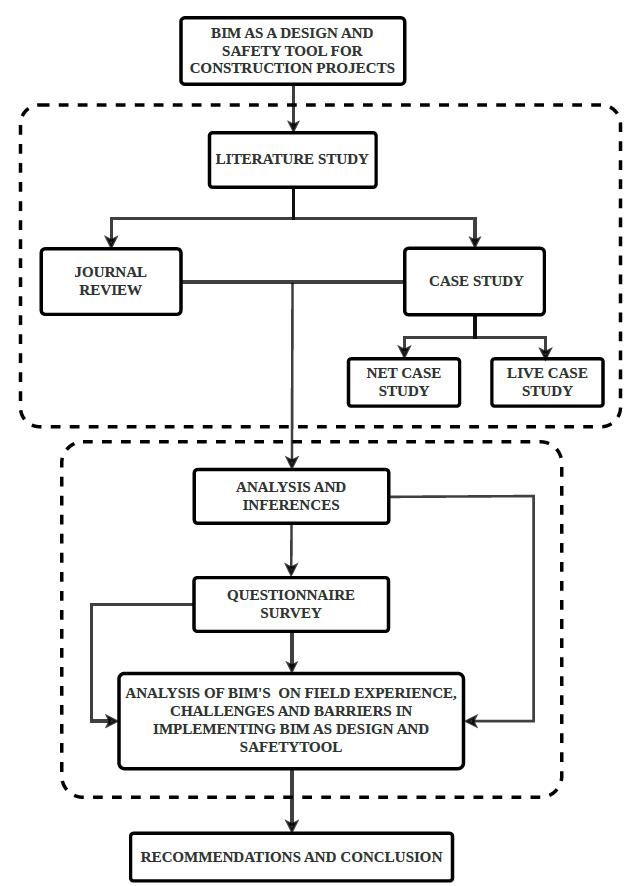
ThisresearchwasperformedtoanalyzethepotentialofBIM as a design and safety tool for construction projects. The research was divided into various stages starting from literaturestudytorecommendations,asshowninFigure1. AquestionnairesurveywasdonetodeterminetheuseofBIM asadesignandsafetytoolintheconstructionindustry
selected: 1. Safety Management; 2. Causes and Effects of ConstructionAccidents;3.AccidentPrevention;4.BIMand Safety;5.BIMTrendsandAdvancements.
EffectiveSafetyManagementinConstructionProjectscanbe achieved if the top five most important factors affecting construction site safety, such as safety training and awareness, worker attitude towards safety, availability of safety equipment, safety inspections, and organizational safety policy, are addressed and closely monitored. Safety affectsalllevelsoftheconstructionorganization,including the government (Othman et al., 2018). Some of the top rankedcausesofaccidentsarefailuretofollowsafetyrules, ignorance of PPE, space congestion, and improper use of safety equipment. The top-ranked effects of accidents are: cost of medical expenses, time loss of project execution, productivity loss, distrust of the firm, and cost of training giventonewworkers(Sakthietal.,2017).Theagegroupof less than 30 was more prone to accidents, and the most commonbodypartsexposedtoinjuryweretheupperlimb, lower leg, head, and neck. Construction workers lack PPE (JeslineSerrao,2020).Themajorpreventivetechniquesto reduce construction site accidents are following the safety clauses, conducting safety audits, safety training programmes, safety drills, safety education, and pre-job meetings(DheerajBenny,2017).
TheAcciMaptechnique,BIM-basedfallhazardidentification approach, safety management real-time location system, fuzzyanalytichierarchyapproach,videocameratechnique, multi-criteriadecisionmaking(MCDM)technique,BIM-based 4D integrated technique, safety-based model, RFID (Radio Frequencyidentification)-basedlocatingsystem,aresomeof the safety prevention techniques for high-rise building constructionthrough emerging technology(Bilal Mansoor, 2021).
Chart -1:Methodology
3. LITERATURE REVIEW
The literaturereview consists of the most relevant papers related to emerging BIM-based safety management and conventional safety practices in the construction industry. Atotalof16journalspublishedbetween2016to2022were takenintoconsiderationandreviewed.Theliteraturereview wasthenclassifiedintofivepartsbasedonthetypeofjournal
LinkingtheprofessionalmodelwiththeBIM5Dplatformthat isdevelopedwithhazardidentification,collisiondetection, andreal-timemonitoringoftheunsafestatesoftheobjects results in better safety model development and effective safety management planning for the construction site (Zhihong,2021).BIMandsafety(SIM)technologywillcreate a huge revolution since it will be very helpful for all constructionworkerstoreviewthesafetymeasuresineach andeverystageofconstruction.Incorporatingsafetyrules into BIM will not only help the designersdo proper safety planning, but it will also be helpful in educating the construction workers about health and safety practices, which in turn will develop a good working environment (IsabelleYSChanetal.,2016).Tobuildapropersafetyrule system,onemustfirstcategorizesafetyrulesandthenextract thebasicandrequiredinformation.Eachandeveryrulemust be formulated, and each component must be assigned a uniquecomponentcodethatcorrespondstoitsproperties andparameters.Componentinformationshouldbecollected from BIM, and each component should be matched with a
safety rule by matching the IDs of the safety rule and the component.Throughthisprocess,unsafedesignfactorsare identified and corrected by comparing component parametersandtheirrelatedinformationinsafetyrules(Guo Honglingetal.,2016).Thedemonstrationofsafetycultureat differentmaturitylevelswillleadtoaproperunderstanding ofsafetycultureandpracticesamongworkers.Thismodel canbeincludedinsafetytrainingandpracticedforeffective outcomes and achieving safety goals on construction sites (OluseyeOlugboyega,2016).BIMusageshallnotbelimitedto designpurposes;itshallbeextendedtovariousscopesinthe management of construction projects. Awareness programmes and training sessions can be conducted to divergetheknowledgeofBIMinIndia(ShalakaHire,2021). Thesuitabletoolsfor3DBIMareRevit,AutoCAD,Sketchup, andPartBuilderincivil3D,andtodevelop4DSimulationfor safety management, the suitable tools with 3D BIM are Google Sketchup, ArchiCAD, Tekla Structures, Tekla Construction Management, Navisworks, Solibri Model Checker,etc.ThesetoolscanalsobeincludedwithVRandAR to make effective safety management in construction (NguyenQuocToanetal.,2021).
BIM technology with AR can be used to establish a constructionsafetyindexandrealizereal-timeandeffective monitoringofconstructionsite-relatedinformation.Through therelevant3DmodeldataandprogresslinkingusingBIM, 4Dsimulationcanbedone,whichresultsinorderlinessand improvedsafetyinconstructionactivities(ZhenxianHuang, 2021). Integration of BIM and IOT will enhance effective safety management planning. Early investment in safety planningenableszeroaccidentsinconstruction.Algorithm developmentforeffectivecomputergraphicsenhancesBIM andIOTsystemseffectively.Aremotemonitoringsystemby comparisonofIOT+BIMandon-siteactivitieswithCCTVwill havepropertrackingandmonitoringofconstructionsafety, whichinturnwillreducethecauseofaccidents(HaiyangYu etal.,2022).Thechallengesthatrestricttheapplicationof BIMtoconstructionsafetyarelegalissues,technology,cost, management,andhumanresources.
4. CASE STUDY
Thecasestudieschapterhasbeendividedintotwocategories accordingto theusageofBIM:casestudiesusingBIMasa safetytoolandcasestudiesusingBIMasadesigntool.The casestudieswereconductedintheformofanetcasestudy andalivecasestudy.Atotalofthreecasestudiesweretaken into consideration and studied. Two case studies were reviewed, and inferences were drawn utilizing BIM as a safetytool.Onelivecasestudyhasbeenstudiedandinferred usingBIMasadesigntool.
Case Studies on Using BIM as a Safety Tool:
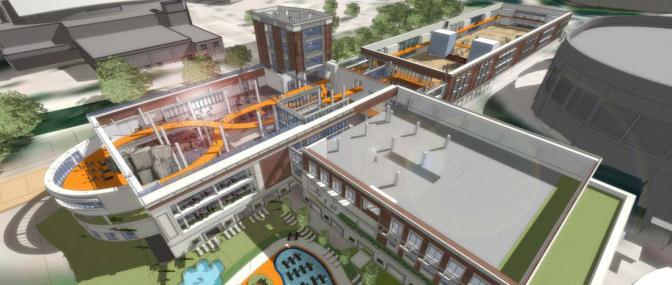
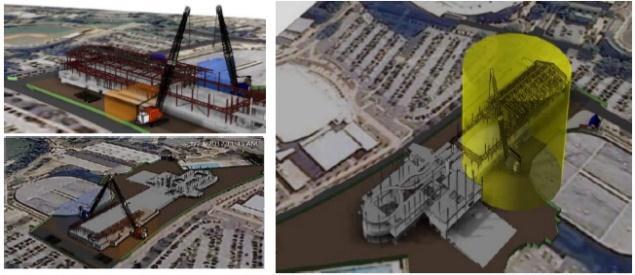
ThelocationoftheprojectisAuburn,Alabama,USA.Thetotal costoftheprojectis$50,000,000,andthetotalareaofthe projectis2,40,000sq.ft.Theproject'sstartdateisOctober 2011,anditscompletiondateisMay2013.
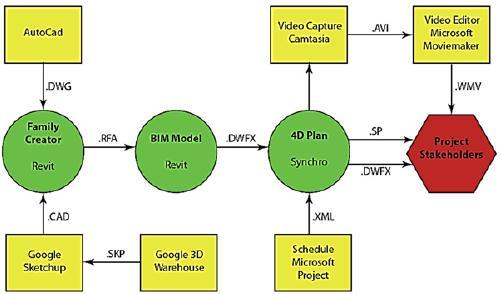
Thelistofsoftwareusedforthisprojectincludes:Autodesk Revit for modelling; Google Sketchup for creating 3D equipment,characters,andrelatedfamilies;Synchrofor4D phasingsimulations;MSProjectforscheduling;Camtasiaand MSMovieMakerforproducingvideos.Inthiscasestudy,a safetyplanisdevelopedthroughBIMtechnologytoaddress the "fatal four" construction fatalities and injuries: falls, electrocutions,beingstruckbyanobject,andbeingcaughtin or between. The workflow followed in this project by the teamfordevelopingBIM-basedsafetyplans,simulations,and videosisshowninFigure3.
Thecranemanagementplanisdonetoidentifythecrane's swingradiustoensureitssafedistancefromthepowerlines and nearby temporary and permanent structures, and to identifythecrane'susagetimebythecrew.Theexcavation risk management plan is done to coordinate with jobsite equipment used for earthwork phase operations to avoid cave-ins and accidents while installing sheet piles. A fall protection plan for leadingedges is prepared accordingto OSHASubpartM:FallProtectionStandards.Twotypesoffall protectionrailingsaremodelledandplacedonthestructural BIM model. Using the 3D view, the developers identify multiplefallingrisksthatwillnotbefoundwiththe2Dplan view. They are exported to Synchro for developing 4D simulations.The4Dsimulationprovidesthecontractorwith completedetails,includinglocationanddate.Afallprotection plan for roofers is done as the roof is constructed in two phases, consisting of decking the roof and then fusing membrane sheeting on top of the decking with rigid insulation.Theentireoperationissimulatedtoidentifysafety issuesrelatedtothatactivity.Theseanimationswereusedto briefworkerswhoareexposedtofallprotectionhazardsby workingonaconstantlychangingroofstructure.
Ithasbeeninferredthroughthecasestudythatsitesafety planning using BIM will enable designers, engineers, and projectmanagerstoformulatesafetyplansforconstruction sites.BIM3Dand4Dcanvisualizetheprocessofconstruction activityonaday-to-daybasis,andpossiblesite-relatedrisks canbeobserved.BIMalsovisualizeswhichhazardprevention andsafetycontrolmeasuresaretobeimplementedduring eachandeveryconstructionactivity.Thesevisualizationswill help the construction workers with effective safety managementandsafeguardthemfromhazards
[6]:
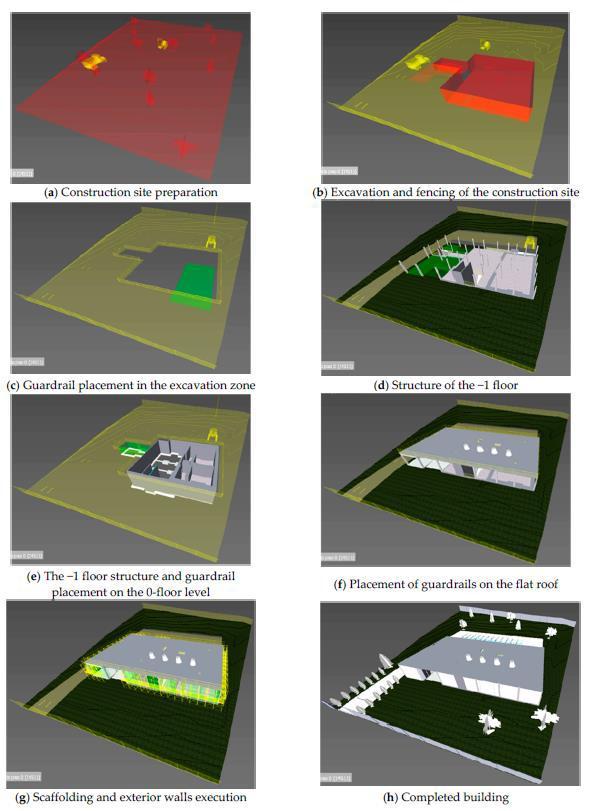
The location ofthe projectisMadeira,Portugal. Thelistof softwareusedforthisprojectincludes:AutodeskAUTOCAD; GoogleSketchupforcreating3Dequipment,characters,and relatedfamilies;AutodeskNavisworks;andAutodeskRevit. ThebuildingplansweredevelopedinAutoCAD.Itconsistsof twofloors:abasementandagroundfloor.Inaddition,the BIM 4D model also contains safety documents for the construction phase linked to it. The safety files focus on
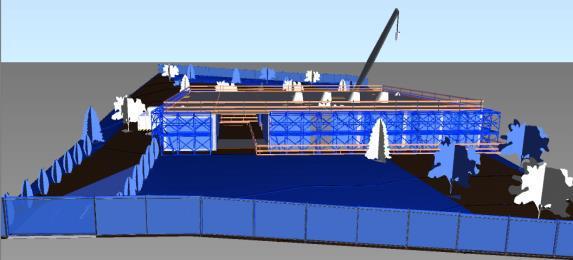
preventingrisksindifferentactivities,suchasassemblyand disassemblyoftemporaryelements,formwork,scaffoldings, andthepouringofconcreteinstructuralelements.
Thedesignersusedarchitecturalandstructural3Dmodels developedinRevit.Theyencouragedtheuseoftemporary construction while allowing the use of safety precautions. Scaffolding, platforms, and construction fences were imported using external web libraries (Revit City.com, Bimstore.co,BIMobjects,andBIM&CO). Thedesigners developedavarietyofguardrailfamilies,suchasthosewitha clamping mechanism, guardrails with spikes, and hole coverings. In Navisworks, the two 3D models were finally overlappedtocreateafederatedmodel.Byincludingthetime factorintheNavisworksfederatedmodel,a4Dmodelwas produced.TheactivityschedulecreatedinMicrosoftProject servedasthebasisforthegenerationofthetimecomponent. Inordertopreventfallsfromheight,thisscheduletookinto account both the primary construction operations and the temporary tasks, which correspond to the employment of safety mechanisms and the planned starting and finishing timesforeachactivity.Additionally,safetyfileswerecreated. Toolswereaddedtothe4Dmodel,suchascommentsand linkstothesesafetyfiles,topromotesafety.Thesedocuments includethoroughexplanationsofguardrailandscaffoldsetup and disassembly, as well as of dangers, risks, and preventativeactions.ByusingtheNavisworkssimulationtool
on the 4D model, it was possible to visually follow the evolution of the workplace through time and identify the management and safety actions that were required at any giventime.Eachcoloronacolor-codedgraphiccreatedby Navisworks simulation represents a different sort of task, suchasconstruction,demolition,oratemporarytask.This case study gave extra consideration to the scheduling of temporarysafetyequipmentforreducingrisksduetofalling from heights and its proper sequence of disassembly and assemblyfromtheexcavationtothefinishingworks.
Ithasbeeninferredthroughthecasestudythatincorporating safetymeasures,includingdocuments,inthesafetystructural modelandcombiningitwiththeexistingmodelgivesaclear pictureofwhenandwheresafetyistobeimplemented.
Case Studies on Using BIM as a Design Tool:
4.3 Statue of Unity, Gujrat
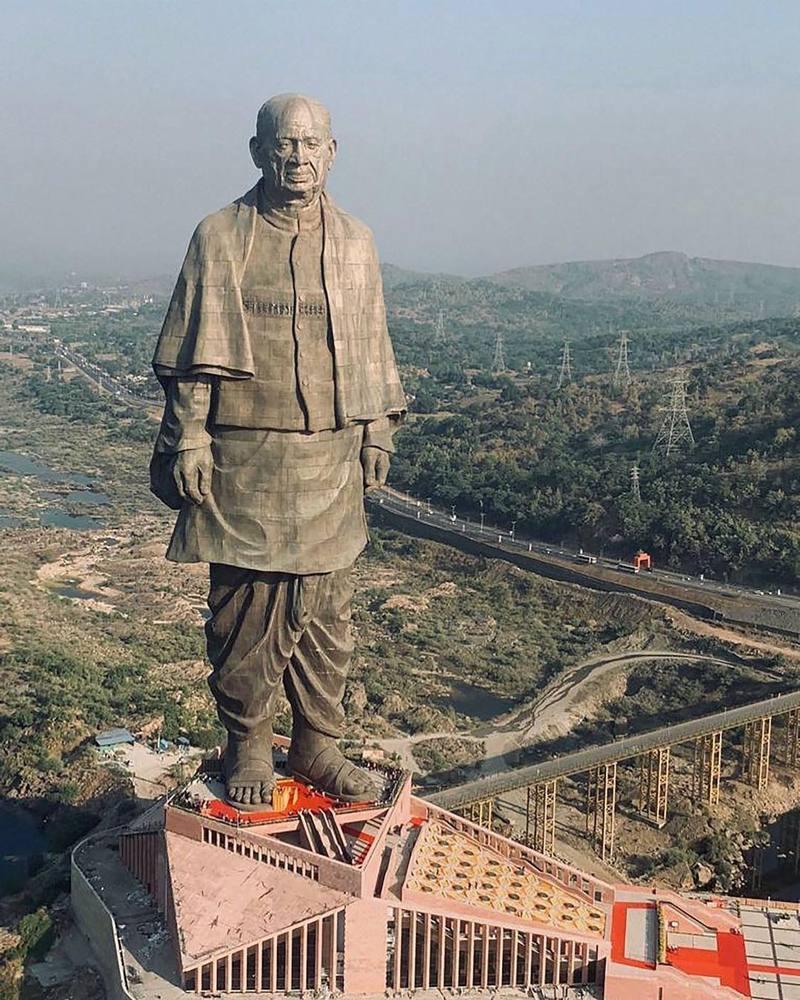
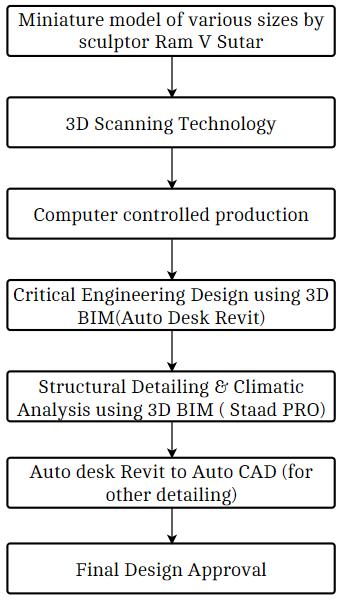
This project is located at Sadhu Bet, Sardar Sarovar Dam, Gujarat.ThetotalcostoftheprojectisRs3000crores,and thetotalbuilt-upareais20,000sq.m.Theheightofthestatue is 182 m (597 ft) from the road entry, or 240 m with an overall base. The total project duration is 56 months (15 months for planning, 40 months for construction, and 2 months for handover). The sculptor Ram V. Sutar created handmademodelsfortheproject,andthedigitalconceptual sculptorwasJosephMenna.Thelistofsoftwareusedforthis project includes: Autodesk Revit; Stadd Pro; AutoCAD; Sketchup;Navisworks;andRhino
TheStatueofUnityisabronzereplicaofIndia'sfirstdeputy primeminister,SardarVallabhbhaiPatel.Themodelswere createdinvarioussizes:3ft,18ft,and30ft.
Design Process:
Chart -3:DesignProcessofStatueofUnity
ItisinferredthroughthestudythatBIMactsasaneffective toolforcriticalengineeringdesign.3DBIManditstoolshelp find design errors and improve designs. The accurate calculation of the number of resources required for the projectby3DBIMwillhelptoreducewastageofresources. ThetraditionalsafetymanagementmethodincludedHIRA for all activities and ways to avoid accidents. Proper monitoring and following the dos and don'ts will help in humanerrorreductionandaccidentprevention.Assessing eachandeveryhazardintheactivitiesforvariouscategories andrangeswillhelpinunderstandingtheseverityofriskin each category. Conducting a training programme for the workers based on the risk assessment will improve their awareness of the importance of safety in construction. Educationaboutthe problemanditssolutionwill remove the fear of working at heights or in other accident-prone zones.Thesafetyplanningforthisprojecttooktwomonths to complete. Though SOU is a very successful project that utilizesBIMasacompletedesigntool,incorporatingsafety management into BIM during the design phase will help reducethetimeconsumedbytraditionalsafetymanagement methods.
5. QUESTIONNAIRE SURVEY
The survey has been divided up into five parts, and professionalsintheconstructionindustryrespondedto18 questions:PartA:GeneralQuestions;PartB:BIMAwareness; PartC:BIMasa DesignTool;PartD:BIMasa SafetyTool; PartE:BarrierstotheDevelopmentofBIMasaSafetyTool. Thequestionnairesurveywascirculatedto150professionals throughonlinemode.Atotalof120replieswerereceivedin responseto150inquiries.30replieswereconsideredinvalid due to missing or irrelevant information. 90 replies were evaluated,analyzedandthefindingshasbeendiscussed
Someofthemajorquestionsthatweremarkedmandatoryto answerandcirculatedamongtheprofessionalswere:Listof BIMsoftwareusedbytheorganizationorfirmfordesigning projects;usageofBIMasadesigntool;benefitsofusingBIM asadesigntool;challengesfacedbytheorganizationorfirm for implementing BIM as an integrated tool for safety management; factorsaffectingtheupgradationofBIMusage toahigherlevelintheorganizationorfirm;andtypeofsafety managementpracticefollowedbytheorganizationorfirm. Thereceivedresponsesarelistedanddiscussedbelow
5.1 Questionnaire Analysis:
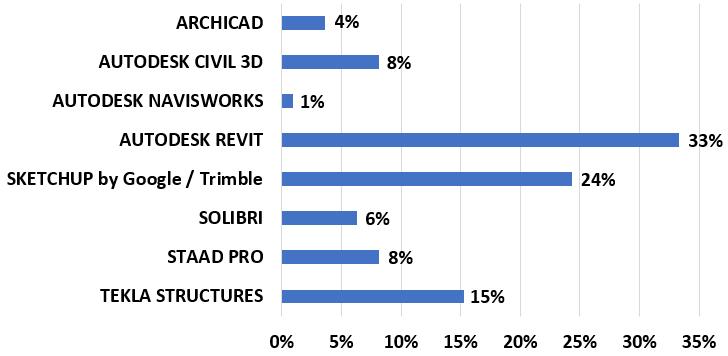
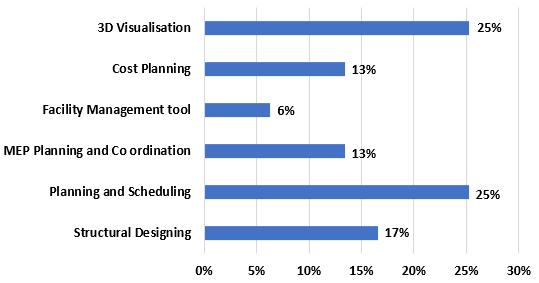
Thequestionnairesurveyanalysisrevealedthatawarenessof BIMandunderstandingofimplementingBIMasasafetytool intheconstructionsectorisstillinsufficient.Approximately 51.1% of firms/organizations have been using BIM for designing projects. Some of the most essential and widely usedsoftwarefordesigningprojectsincludeRevit,SketchUp, andTeklaStructures.BIMismostoftenutilizedasadesign toolforschedulingandplanning,3Dvisualization,structural design, MEP design, cost estimating, and planning. BIM is
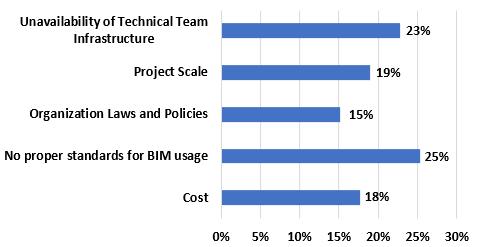
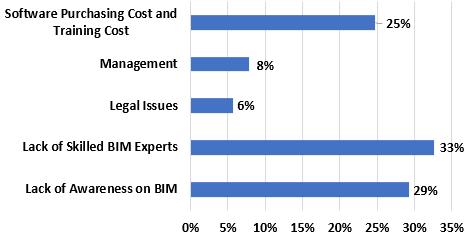
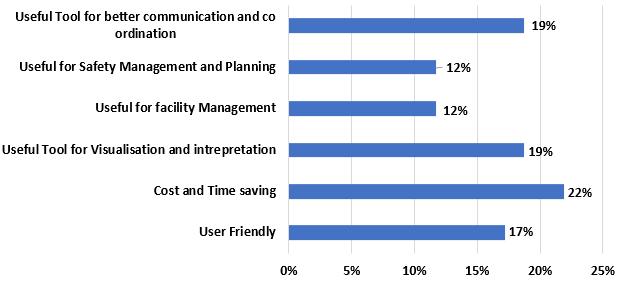
usedasadesigntoolforapproximately10to50projectsin anorganization/firm.Accordingtothesurvey,thebenefits ofusingBIMasadesigntoolincludecostandtimesavings,a helpful tool for visualization, a valuable tool for interpretation, a useful tool for improved communication, anditisuser-friendly.Itisalsodiscoveredthat,ingeneral, BIMhasn'tbeenusedasasafetytooluntilnow,and68.4%of respondentssupporttheuseofBIMasasafetytool.Themain challengesinimplementingBIMasasafetytoolincludealack of experienced BIM experts, a lack of BIM awareness, softwarepurchase,training,andcost.Themainconstraintsto the advancement ofBIM in firmsare a lack ofappropriate standards, the scale and cost of the project, the lack of technicalstaff,andorganizationalregulationsandpolicies.It hasbeenfoundthatmostoftherespondentsusetraditional methods for risk management and safety management for theirprojects.
6. FINDINGS AND DISCUSSIONS:
Failuretofollowsafetystandards,ignoranceofPPE,space congestion,andimproperuseofsafetyitemsandequipment aresomeofthemajorcausesofaccidents.Accidentshavea significant impact on the cost of medical expenses, project executiontime,productivityloss,firmdistrust,andthecostof trainingofferedtonewworkers.Thestudydiscoveredthat thoseundertheageof30weremorelikelytobevictimsofan accident. Safety training and awareness, worker attitude towards safety, availability of safety equipment, safety inspections,andorganizationalsafetypolicyarethetopfive mostsignificantelementsimpactingconstructionsitesafety. Over the last decade, BIM has grown tremendously. The growthofBIManditsfeatureswillpropeltheconstruction sectortonewheights.IntegrationofBIMwithAR,VR,and IOTwillmakeBIM-basedsafetymanagementmoreefficient. ComponentinformationshouldbeobtainedfromBIM,and each component should be linked with a safety rule by matching the IDs of the safety rule and the component. Throughthisprocess,unsafedesignproblemsarefoundand addressedusingBIMautomationbycomparingcomponent parametersandassociatedinformationinsafetystandards. BIMismostcommonlyusedasadesigntoolforplanningand scheduling,3Dvisualization,structuraldesign,MEPdesign, cost and planning. According to the survey, the most significantadvantagesofadoptingBIMasadesigntoolare cost and time savings, a useful tool for visualization, interpretation, and user friendliness. The main challenges observedwhileusingBIMasasafetytoolarealackofskilled BIMexperts,alackofunderstandingaboutBIM,thepurchase of software, training, and the cost. The main factors influencingBIMadoptioninfirmsincludealackofadequate standards,projectscale,cost,technicalteamavailability,and organizationalrulesandpolicies.
7. CONCLUSION:
InordertopreventconstructionsiteaccidentsSafetyclauses shouldbefollowed,andsafetyaudits,trainingprogrammes, and pre-job meetings should be conducted. Linking the professionalmodelwiththeBIM5Dplatform,whichisbuilt withhazardidentification,collisiondetection,andreal-time monitoring of the unsafe states of the objects, results in enhancedsafetymodellingandeffectivesafetymanagement planning for the construction site. The potential of BIM shouldbespread,anditsusageshouldbeincreased.
REFERENCES
[1] AbdulkadirGanah,GodfaurdA.John,2014,Integrating BuildingInformationModelling andHealthandSafety for Onsite Construction, UK, https://doi.org/10.1016/j.asej.2022.101723
[2] AliSaad,SaheedO.Ajayi&HafizA.Alaka,2022,Trends In Bim-based Plugins Development For Construction Activities: A Systematic Review, UK, https://doi.org/10.1080/15623599.2022.2093815
[3] AnitaJeslineSerrao,2020,OccupationalInjuriesAmong BuildingConstructionWorkersInMangalore,India:A Cross sectional Study, India, DOI:10.4103/ijhas.IJHAS_44_19, https://www.ijhas.in/text.asp2020/9/2/116/282136
[4] Bilal Mansoor,2021, Accidental Safety Factors And PreventionTechniquesForHigh-riseBuildingProjects–A Review, Malaysia, https://doi.org/10.1016/j.asej.2022.101723
[5] DheerajBenny,2017,ConstructionSafetyManagement AndAccidentControlMeasures, Volume8,Issue4,April 2017,pp.611–617ArticleID:IJCIET_08_04_069
[6] Fernanda Rodrigues João Santos Baptista and Débora Pinto, 2022, BIM Approach in Construction Safety A Case Study on Preventing Falls from Height, Portugal, https://doi.org/10.3390/buildings12010073
[7] GuoHongling,YuYantao,ZhangWeisheng,LiYan,2016, BimAndSafetyRulesBasedAutomatedIdentificationOf Unsafe Design Factors In Construction, China, https://doi.org/10.1016/j.proeng.2016.11.646
[8] Haiyang Yu, Feng Liu, And Yujin Wang, 2022, Construction And Evaluation Of Construction Safety Management System Based On Bim And Internet Of Things,China,https://doi.org/10.1155/2022/1541241
[9] IsabelleYsChan,HyLeung,2016,HowCanBimSupport ConstructionSafetyManagement?DevelopmentOfSim, Hongkong,China,MATECWebofConferences66,00018 (2016),DOI:10.1051/matecconf/20166600018
[10] NguyenQuocToan,thiTuyetDung,thiMyHanh,2021, 3d-bim And 4d-bim Models In Construction Safety Management, Vietnam, https://doi.org/10.1051/e3sconf/202126302005
[11] Oluseye Olugboyega And Abimbola Windapo, 2019, BuildingInformationModeling enabledConstruction SafetyCultureAndMaturityModel:AGroundedTheory Approach,2019,SouthAfrica,Front.BuiltEnviron.5:35. doi:10.3389/fbuil.2019.00035
[12] Othman,i1, Nasir Shafiq1, Nuruddin,m.F1, Effective SafetyManagementInConstructionProject,2018,IOP Conf. Series: Materials Science and Engineering 291 (2017) 012018, doi:10.1088/1757899X/291/1/012018
[13] M.Ramya,2017, AnalysisOnCausesForAccidentsIn Construction And Its Safety Measures, India, InternationalJournalofModerntrendsinEngineering andScience.03.127-132.
[14] SakthiGanesh.G,Rajesh.M,AStudyOnIdentificationOf Causes And Effects Of Accidents In Construction Industry- Indian Scenario, India, https://doi.org/10.14445/23488352/IJCE-V4I6P108
[15] SalmanAzhar,2016,RoleofVisualizationTechnologies InSafetyPlanningAndManagementAtConstructionJob Sites, USA, https://doi.org/10.1016/j.proeng.2017.01.329
[16] Singaram.A,PriscilNidhu,2019,InvestigationOfCauses Of Accidents In Construction Industry, India, http://www.aasmr.org/jsms/Vol8/Vol.8_No.3_4.pdf
[17] ShalakaHire,SayaliSandbhor,2021,bimUsageBenefts And Challenges For Site Safety Application In Indian Construction Sector, India, https://doi.org/10.1007/s42107-021-00379-8
[18] ZhenxianHuang,2020,ApplicationResearchOnBim+ar TechnologyInConstructionSafetyManagement,China, ZhenxianHuang2020J.Phys.:Conf.Ser.1648042019, doi:10.1088/1742-6596/1648/4/042019
[19] ZhihongYu,2021,ResearchOnSafetyManagementOf ConstructionSiteBasedOnBim,Beijing,China,Zhihong Yu2021IOPConf.Ser.:EarthEnviron.Sci.719032012, doi:10.1088/1755-1315/719/3/032012