Application of Biophilic Design in Architecture
Abstract
Application of Natural elements in designing is need of today’s planning. These green planning not only enhances beauty of spaces but also provide healthy environment. Green spaces improve productivity of work and reduce carbon footprint. The study explains Evolution of Biophilic design, its principles and pattern. Application of Biophilic design in sustainable architecture is also part of this research paper. The aim of the paper is to asses awareness ofBiophilicarchitecture.
Keywords: Biophilic design, Patterns, Healthy atmosphere, Sustainablearchitecture

1.INTRODUCTION

In today’s scenario, construction is backbone of the economy of city. while doing this, concrete jungles are spreading vigorously neglecting existence of green spaces and its importance in urbanization. Though vegetation is observed while planning any structure, we should even giveanattentiontowardsuseof othernaturalelementsto improvequalityofspaces.Thispaperisfocusingonuseof natural elements like Air, Light, Water as well as Landscaping used in construction through case studies. PaperalsoexplainsLinkbetweenhumanandnatureusing principlesandelementsofBiophilicdesign.Ourinstinctual responses to the natural world form the basis of human psychology.Ourbrainshaveevolvedtonaturallyseekout environments that promote our physical and emotional wellness. Many psychologists and researchers did researchonthisandderivedwithBiophilicPrinciplesand attributes. Paper gives comparative analysis to study evolutionofbiophilia.
METHODOLOGY

To derive with the design strategies of Biophilic design, evolution of Biophilic design is studied. For that theories andPrinciplesarecomparedforperiodoftime.Casestudy of Biophilic structures gave existing design strategies. Biophilic design is quantified by Biophilic Scorecard, CertificationandPublicSurveys.
A. Evolution of Biophilic Design
Erich Fromm first described the human personality trait known as biophilia, which was later elaborated by E.O.
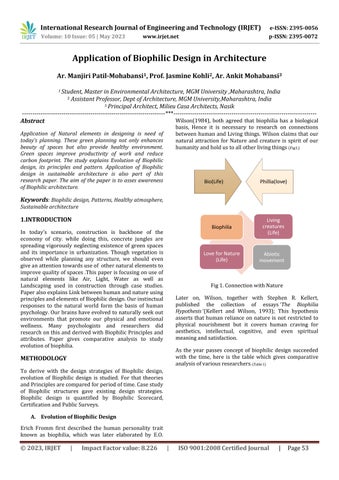
Wilson(1984), both agreed that biophilia has a biological basis, Hence it is necessary to research on connections between human and Living things. Wilson claims that our natural attraction for Nature and creature is spirit of our humanityandholdustoallotherlivingthings (Fig1.)
Fig1.ConnectionwithNature
Later on, Wilson, together with Stephen R. Kellert, published the collection of essays‘The Biophilia Hypothesis ‘(Kellert and Wilson, 1993); This hypothesis asserts that human reliance on nature is not restricted to physical nourishment but it covers human craving for aesthetics, intellectual, cognitive, and even spiritual meaningandsatisfaction.
As the year passes concept of biophilic design succeeded with the time, here is the table which gives comparative analysisofvariousresearchers.(Table1)
Year Philosophy By Concept Outcome
1973 ErichFromm Biophilia Lovetolife
1984 Edward O. Wilson theinnatetendencyto focus on life and lifelike processes
1993 Wilson Biophilia hypothesis
1996 StephenKellert Dependenceon‘nature’ wasalsoexpounded
2008a Kellert The inherent human inclination to affiliate with natural systems andprocesses
2008b Kellert Ecosystem & Fire as well as Attraction, exploration and Discoveryadded
2015 Kellert and Calabrese Simplified framework entitledBiophilic Experiences & Attributes
2020 Browning & Ryan Framework for biophilic design that is reflective of the naturehealth relationships most important in the built environment
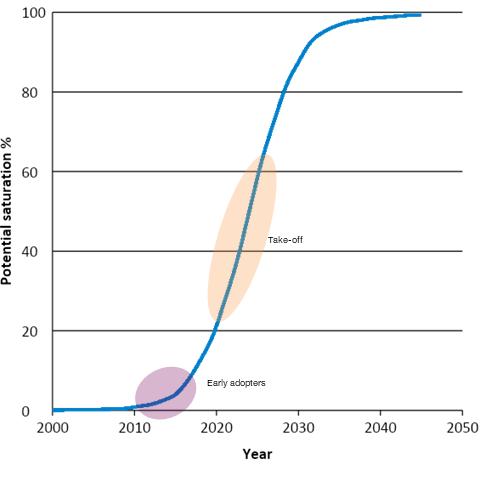
At the beginning of the 21st century, the notion of biophilia was developed and adapted within the architectural drawings(chart1)Designers started to give special attention to connection of emotional aspect of humanswiththenature.
link with nature is not only physiological buthasageneticbasis.
The innately emotional affiliation of humanbeingstootherlivingorganisms
Ninevaluesofbiophilia
Biophilia theory have shifted from its initial focusonlifeorlivingorganisms to exploring the relationship between humansandthenaturalenvironment.
Aesthetic attraction towards nature is one of the strongest inclinations of humanspecies
The frameworks have different emphases,strengths,andlimitations
Flexible and adaptive, allowing for project-appropriateimplementation
The evolutionary dependence on ‘nature’ was also expounded by social ecologist Stephen Kellert by identifying nine values of biophilia: ‘utilitarian, naturalistic, scientific, aesthetic, symbolic, humanistic, moralistic, dominionistic, and negativistic’. These values wereinstrumentalinpromotingthehealthandwell-being ofourforefather.(Table2)
Value
1.Utilitarian
Description
Practical and materialexploitation ofnature
2.Naturalistic Satisfaction from direct experience and exploration of nature
3.EcologisticScientific
4.Aesthetic
Chart1:EvolutionofBiophilia
Systematic study of Nature (Forms, functions, interrelationships)
Function
Physical sustenance and security
Curiosity, discovery, recreation
Knowledge, understanding, observational skills
Physical appeal and beautyofnature Inspiration, harmony, security
5.Symbolic Use of nature for expression in language and thought
6.Humanistic Strong emotional attachment and “love” for aspects of nature
7.Moralistic Spiritual reverence andethnicalconcern fornature
8.Dominionistic Mastery, physical control, dominance ofnature
9.Negativistic Fear, aversion, alienation from nature
Communication, mental development
Bonding,sharing, co-operation, companionship
Order, meaning, kinship,altruism
Physical skills and prowess, abilitytosubdue
Physical skills and prowess, abilitytosubdue
The hierarchy and intensity of these values changes individually as well as within human communities but their healthy and adaptive expression belongs to each individual of our species. Further in 2008. Kellert argue that biophilic design takes advantage of an intrinsic human affinity to incorporate natural and local systems and processes into the design of the built environment.Kellert(2008)delineatessixitems/elements (Fig2) and attributes that go from natural looks to friendly friendships in metropolises. These elements consist of environmentalfeatures,naturalshapesandforms,natural patterns and processes, light and space, place-based relationships,andevolvedhuman-naturerelationships.
Organic or Natural dimension of Biophilic Design defines as shapes and Forms in the built environment that directly, indirectly or symbolically reflect the inherent human affinity for nature, While Places or Vernacular dimension defines buildings and landscaping which connects to existing ecology and geographic area. Using sunlight, air, water can make healthier and wellbeing, Forms can make space more workable and allow to take benefit of natural elements (e.g. air ventilation and sunlight penetration angle can be depend on shape of roofing).Similarly existing ecology make space more beautiful (e.g. backdrop of mountains or waterfall in hilly areas,contourscanbeusedaslandscapeelement)
Moving ahead Kellert and Calabrese (2015) introduced revised framework for Biophilic design, it framed in 24 elements which were categories under 3 main heads(Table3) The frameworks have different importance, assets, and Boundaries. This framework was a guideline for designing a structure as all planning aspects are consideredinit.Followingfigexplainsthisframework.
Table3.RevisedframeworkforBDbyKellertand Calabrese(2015)
Direct Experience of Nature
Indirect
Experience of Nature
Light ImageofNature
Air
Plants
Water
Natural Landscape
Organic or Naturalistic
Forms
Biophilia EvolvedHuman naturerelationship
Fig2.BD
Experience of spaceandplace
Prospect&Refuge
Natural Material & Colour Organized complexity
NaturalGeometry
TransitionalSpaces
Naturalistic shapes andForms Mobility & Wayfinding
Simulating natural Light&air
Weather Biomimicry
Animal Age,Change,Patina ofTime
Fire Information richness
EvokingNature
Cultural & Ecological attachmenttoplace
Integration of parts towholes
NatureinSpace NaturalAnalogues Natureofthe Space
Visualconnection withNature BiomorphicForms andPatterns Prospect
Nonvisual connectionwith Nature
Nonrhythmic SensoryStimuli
Materialconnection withNature Refuse
Complexityand Order Mystery
Thermal&Airflow Variability Risk/Peril
PresenceofWater Awe
Dynamic&Diffuse light
Connectionwith NaturalSystems
(Note : Terrapin added a fifteenth pattern entitled “Awe” in 2020.which was absent in 2014 ),It Is not considered in category for green certificationofUSGBC.
Nature in the Space addresses the direct, physical and ephemeralpresenceofnatureinaspaceorplace.Example of elements are water, animal, Potted plants ,breezes, waterfeature,Greenwalls,courtyards.
Nature Analogues man-made elements that mimic nature. Examples of organic analogues include affected plants,continued moss divider,graphicartwork,patterns, and structural designs that stimulate elements of character.
Nature of the Space: This idea refers to the physiologic hole or door in vessel which scope preparation and structural design influence our human reactions and feelingsQuantifyingBiophilicdesign
B. Quantifying Biophilic Design
Thoughtherearenoofpatternsandelementsofbiophilic design to improve productivity of work it is always necessary to quantify BD with some measures to find out its impact. Let us see under which measures it can be simplified.
1. Biophilic Design Scorecard:
The Biophilic Design Scorecard is a tool developed by TerrapinBrightGreenthat quantifiesthedegreeto which a building incorporates biophilic design features. It assesses seven categories of biophilic design: visual
connection with nature, non-visual connection with nature, natural shapes and forms, natural patterns and processes,lightandspace,biomorphicformsandpatterns, andmaterialconnectionwithnature.
2. Green Building Certification:
Green building certifications, such as LEED (it incorporates biophilicdesignprinciplesintotheircriteria. Forthese14patternsof BD developed by Terrapin Bright Green and framework of Kellert’s framework of elements and attributes is followed) certifies Buildings that achieve higher levels of certification are more likely to have biophilicdesignelements.
3. User Surveys:
User surveys can be used to quantify the perceived benefits of biophilic design. Surveys can ask questions about user satisfaction, productivity, and health and wellbeinginspacesthatincorporatebiophilicdesignelements comparedtothosethatdonot.
C . Green Certification tools to asses Biophilic Design
Earlier GBRTs tools were focusing only on Energy efficiency, whereas now it is incorporating health and well-being. Here is the comparative analysis to explain weightage of Quantitate and Qualitative evolution across theworld’sGreencertificationstandards.
1.Nature incorporation (Environmental elements, lighting, spacelayout)
1. Outdoor Biophilia
2. (25%ofthe site area with landscapedgrounds or rooftop gardens, and 70%plantings including tree canopies)
2.Pattern incorporation(Na ture’s pattern throughout the design)
2.IndoorBiophilia (potted plants or planted beds>1%offloor areaperfloor,and covering awallarea2%of thefloorarea)
3.Nature interaction(withi n the building,
3.WaterFeature (atleastonewater
withintheproject boundary, external to the building)
featurefor every9290m2 [100,000ft2]in projectslarger than9290m2 [100,000ft2],each one>1.8min heightor4m2 intheareaand withtechnology to address water safety)
2. Biomimicry designs
4.Naturalshapes and forms, or ecological attachmenttothe place
RB 2016 4.02 c Wellbeing - (i)
Biophilic
Design:
Building Standards Qualitative Evaluation of BiophilicDesign
BREEAMNL
V1.0(NC) - HEA 10
BiophilicDesign: Browning et al.‘s 14 patterns of biophilic design in 3 categories:
1. Direct Experience of Nature
2. Indirect Experience of Nature
3. Experience of SpaceandPlace
Quantitative Evaluationof BiophilicDesign
Health-HEA10 BiophilicDesign (standard): FromBrowning etal.‘s3categories and14 patternsofbiophilic design
1.Min1ofthe3 categories are included
2.Min7ofthe14 patterns areincluded
3.In80%ofthe livingspaces,at least2patterns can be directly experiencedwhilethe other5 patterns can be experienced on the samefloors
4. No significant negativeeffectonthe main healthaspects
5.Atleast3measures (patterns) are not typical for the building and user function in whichthey areapplied
1. Nature in commonareas
2. Indirect experience of nature
3. Experience of spaceandplace
GM (NRB andRB)
NRB 2015 4.2c Wellbeing - (i)
Biophilic Design:
1. Accessible sky Gardens, sky Terrace, internal courtyards and rooftop gardens as areas for respite
NRB 2015 4.2c Wellbeing - (i)
BiophilicDesign:
3. 5 % of the common areas or functionalspaces fixindoorplanting
5. Images of nature for 5 % of common areas
Health D HappinessAccesstoNature:
1. Sufficient and frequent humannature interactions in both the interior andthe exterior
2.Post-occupancy evaluation regarding daylight,freshair and access to nature
Beauty-BeautyD Biophilia:
1. Environmental features,lightand space, and natural shapesandforms
4. Space in common areas forlifestyle wellbeing LBC4.0
2. Natural patterns and processesand evolved humannature Relationships
3. Place-based relationships (place, climate, and culture)
4.Humandelight, and culture, spirit,and place
LEEDV4 (BDþCNC) Pilot Credits EQpc123Designingwith Nature, Biophilic Design for the Indoor Environment:
1. Nature in the space (or environmental features,lightand space, natural patterns andprocesses)
2. Natural analogues (or natural shapes and forms)
3. Nature of the space(orevolved HumanNature relationships)
4. Place-based relationships
5. Opportunities forhuman-nature interactions
Table5
.GreenCertificationtoolstoassesBiophilicdesign
D. Case studies to understand Biophilic Design elements in Green certified buildings
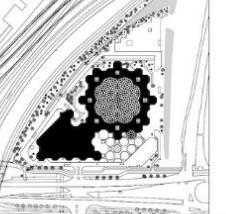
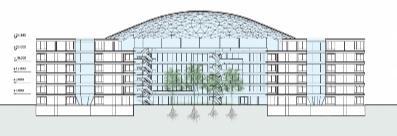
Case study 1 : TheEdge,Amsterdam
EDGE Amsterdam West :48,000 sqm redevelopment of anofficebuilding
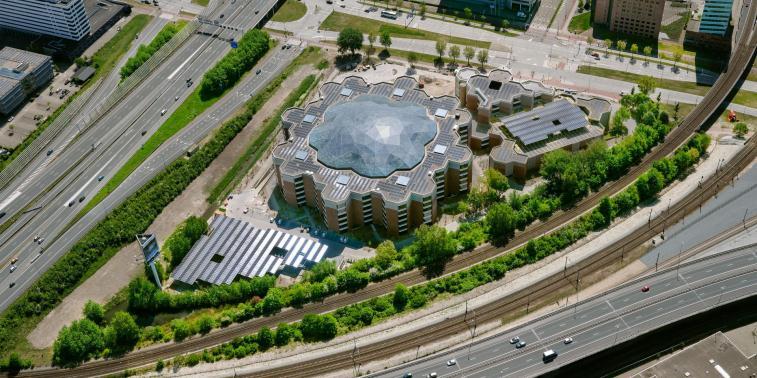
Designed by: formerdeArchitektenCiearchitect
key tenants : APGandAlliander.
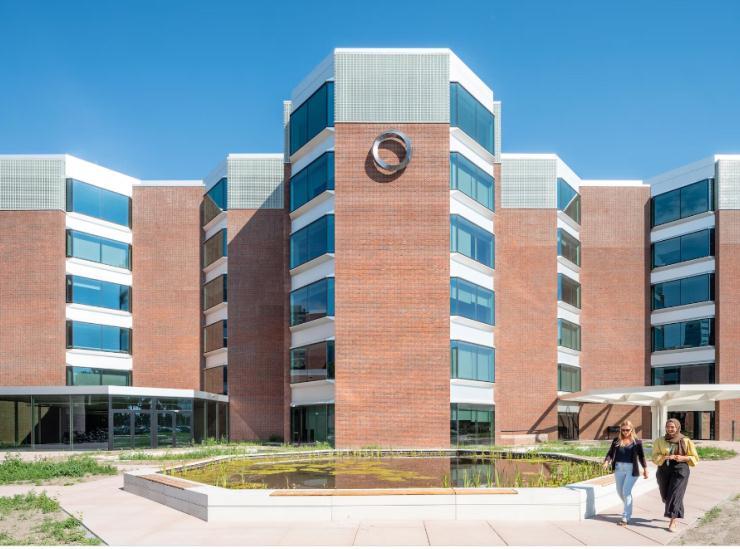
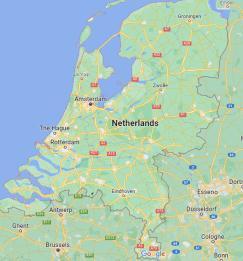
Reviewing Dutch design projects from the ending of 1980 to 2000, the decision maybe tense that Biophilic design only easily begun coming into practice following in positionortimetheperiod2000
In the Netherlands, Biophilic design in the 21st of one hundred years is principally executed on the city- and community scale, place large projects, design by political bodies,aimtosupport
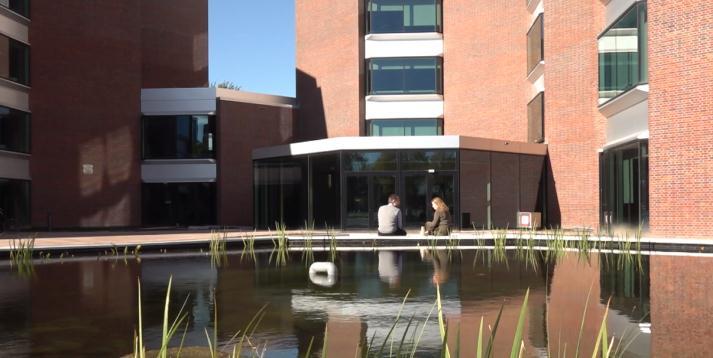
Water body at Entrance
Requirements for BREEAM Certification :
Qualitative Evaluation :
Measures have been included in the building for 14 patternsofbiophilicdesignin3categories.
Quantitative Evaluation :
At least one component from all 3 categories of Biophilic Designisincludedinthebuilding.
Measures relate to the entire building and in 80% of the occupied areas at least 2 components of Biophilic Design canbeexperienceddirectly,whiletheother5components canbeexperiencedonthesamefloors.
The applied measures for Biophilic Design have no significant negative effect on the most important health aspects.
TheAssessoruseshisprofessionaljudgmenttodetermine that:
The measures have been applied in line with the purpose ofthecredit.
Atleast3measuresarenottypicalforthebuildinganduse functioninwhichtheyareapplied.
Measures included for BREEAM Certification :
The building has been upgraded to become an advanced and sustainable office space, meeting the highest requirements in terms of sustainability, technology and officehealth.
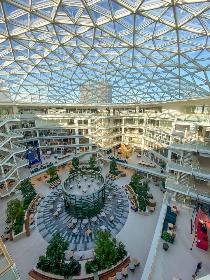
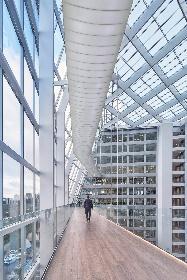
Design strategies for Qualitative Evaluation :
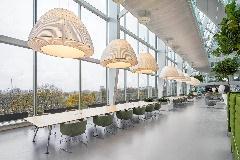
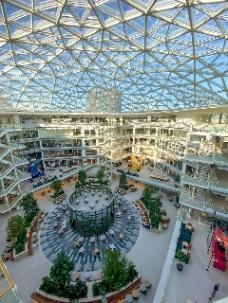
FullyglazedAtrium:Natural daylighttoreachesthedeep officefloors.


Toblowuptheeverydaydawnintotheoccupiedspaces, theeightroundshaftsforestablishments,situated everywheretheconstruction,areoutsideofandhaving anotherinone'splacebynewsatisfiedlightshaftsthat revealthefloorsfrombottomtotheroof.












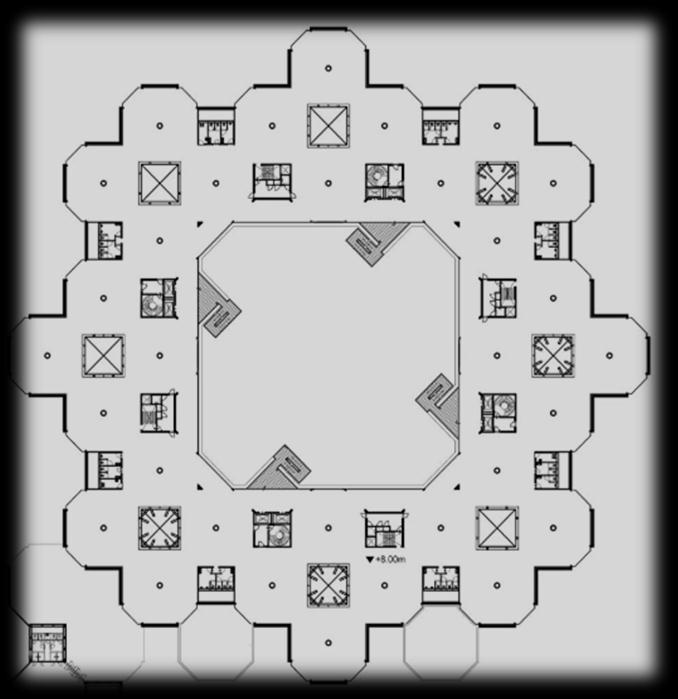
Indirect Experience of nature :
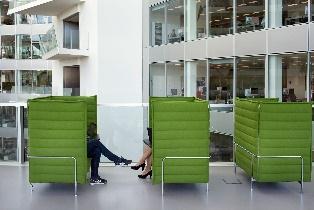
ThisAttributeisnothingbutNaturalAnalogues,whichare materials and patterns that evoke nature and are characterized by four broad types: representational artwork,ornamentation,biomorphicforms,andtheuseof naturalmaterials.
Age,Change,
Naturalistic shapes











EvokingNature
TransitionalSpaces-OverlookingTerraces
Naturalshape-Curves Natureinatrium
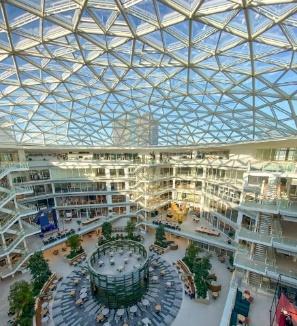
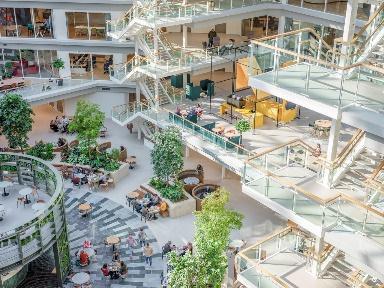
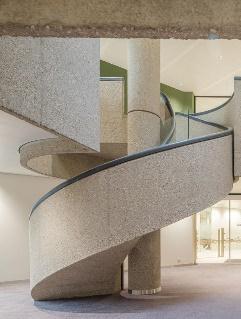
Experienc e of Space and Place


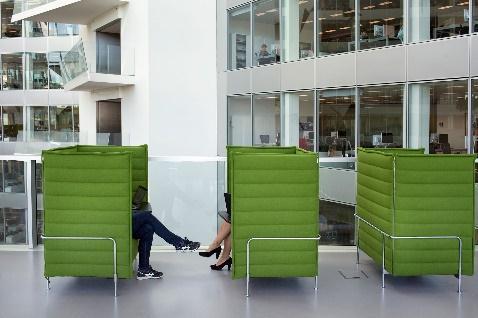
Prospect andRefuge
Organized Complexity
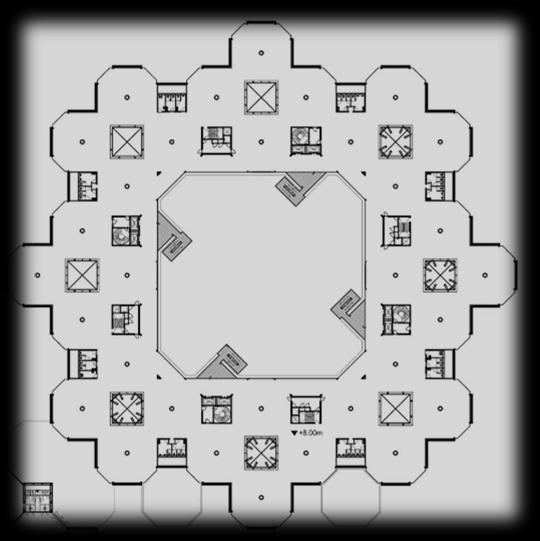
Transitiona lspaces
Mobilityand Wayfinding
Integration of Parts to wholes









Cultural and Ecological attachment to Place
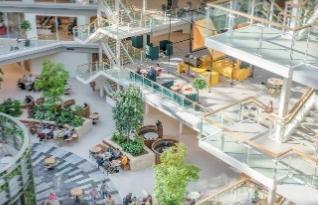
OrganizedComplexity
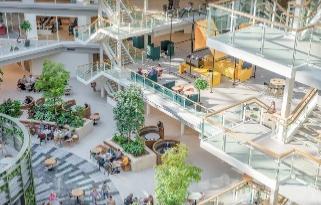
Mobility&wayfinding
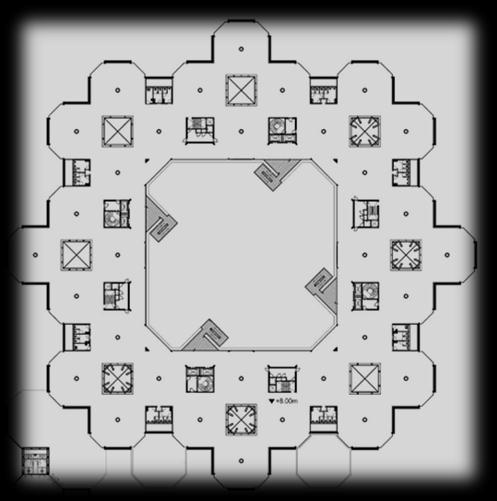
Sequential and successional linking of spaces/integration of space can be enhanced by a central focal point that occurs either functionally or thematically
Quantitative Evaluation
(1) 1 out of 3 Categories are included
- ExperienceofSpaceandPlace

(2) 7 Patterns included
- Light. Air, Water, Plants, Biomimicry, NaturalColours,NaturalGeometry

(3) Light & Air-2 Patterns is experienced 80% on Ground Floor
5 Patterns on the same floor are :
1.Plant
2.Biomimicry
3.Naturalcolours




4.NaturalGeometry






5.Water
(4) No significance negative effect on the main health aspect
(5) 3 patterns which are not typical
-Prospect
-Refuge
-Risk&Peril
Biomimicry
Case study 2 : TheTitanIntegrityPlus,Bengaluru,
Area : 390000sq.ft.
Designed by: MindscapeArchitects
Building that integrates with nature : Enhancing Productivity of Employees in Workplaces through BiophilicDesignStrategies
Introduction :
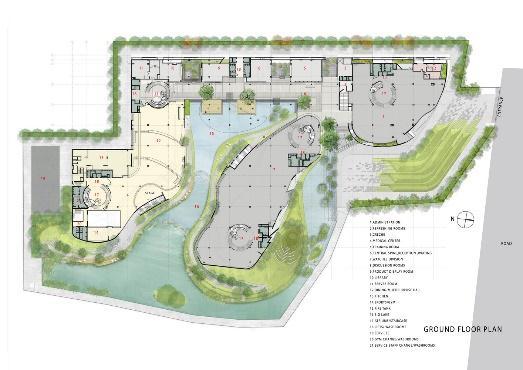
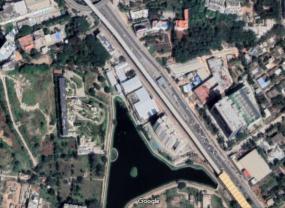
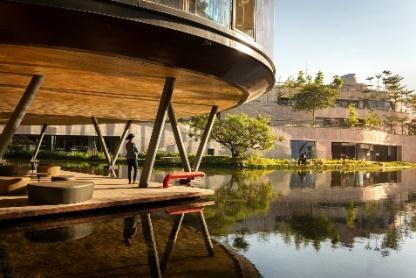
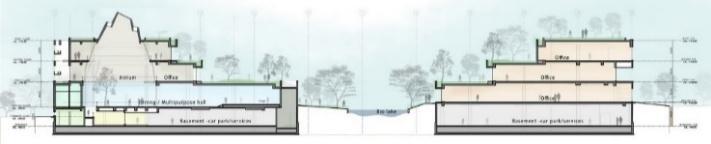
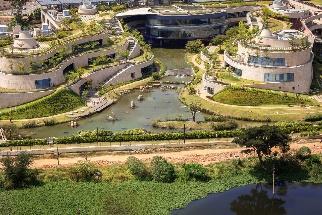
Corporate commission construction is situated on a 6.5acresectionwhichhasareservoirontheeastwardside andexpresswaytowardsnorthward.
Thedesignhasaveryspecialconnectwiththesiteandthe adjoininglake.Theplanisofexploitingeachviewlikelyto the lakeside form some user a observer concerning this serenebackground.
Additionally, design procedures can involve fostering human-character interplays, or providing adequate opportunities for human-character interplays inside the buildingandinsidetheproject borderline,extrinsictothe building, constituting an atmosphere that ties the landscapeandinteriorenvironmentstogether.
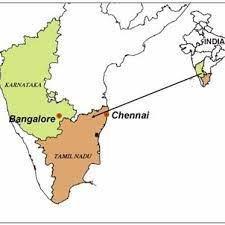
LocationplanofTitanIntegrityPlus,Bangalore
Requirements for LEED Certification:
Engageintheexplorationofthebiophilicdesignpotential for the project and implement a minimum of five design strategieswhichincorporatebiophilicdesignelements.
Each design planning must address not completely individual particular biophilic design idea as assign to source from either 14 Patterns of Biophilic Design, from Terrapin Bright Green (visualize Table 1), or Biophilic Design: The Theory, Science and Practice of Bringing BuildingstoLife,byKellert,Heerwagen,andMador(Table 2).OneofthebiophilicdesignideasmustbefromTable1 ORfromthePlaceBasedRelationshipsdivisionfromTable 2.
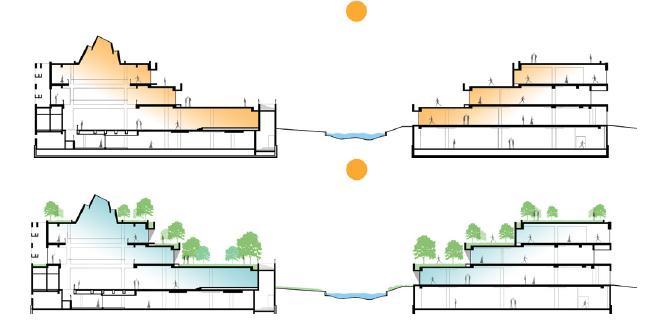
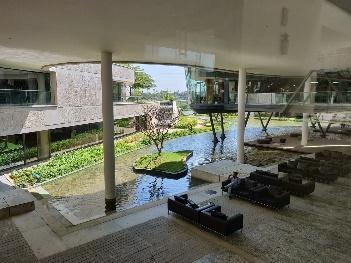
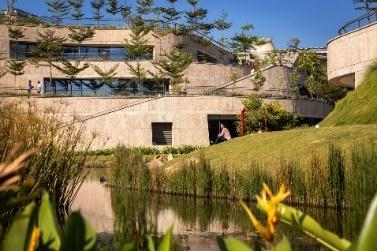
Terracesprovideinsulation
Water Body Enhances the experience of a place through seeing, hearing or touching water
individual built space opens up onto a greened terrace
A green divider on the west side of the constructionshieldstheavailablescopesfromthe roughsituatedortowardthewestsunlight.
Presence of water : balances microclimate by evaporatingcooling
Selected Category to comply Green Certification: Nature Analogue
NaturalAnaloguesencompasses Followingthreepatterns ofbiophilicdesign:
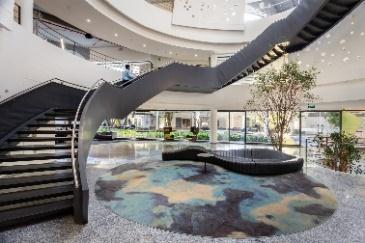
1.Biomorphic Forms & Patterns
Symbolic remarks to contoured, decorated, add up to or numericalplansthatpersistintype.


2.Material Connection with NatureMaterials and elements from nature that, through minimal processing, reflect the local ecology or geology and create a distinct senseofplace
3.Complexity & Order
Richauralfactsthatadherestoarelatingtospaceranking identicaltothoseencounteredintype
Five
Bringing nature inside through design strategies:
The lengthier parts of the building face northward, that acquiresglare-freeinstinctivelight
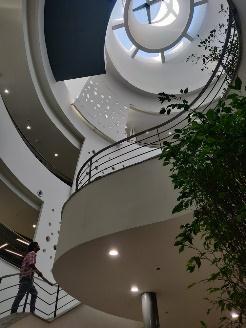
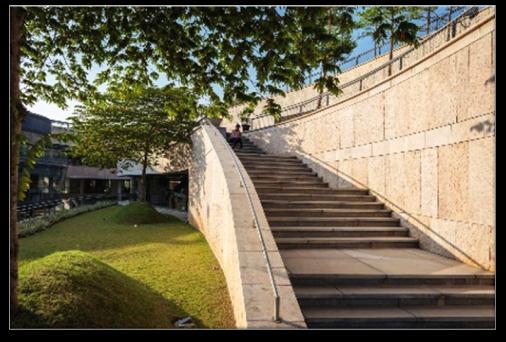
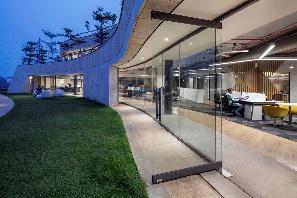
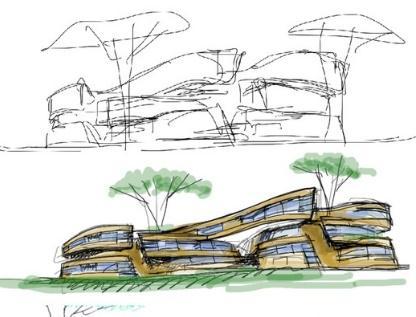
To interrupt the situated or toward the west sun, green obstruction and green safeguard rooms are created for a non-hinderingsystem
Porosity in preparation and form admits constant activity ofbreezeaompanyingwindtunnelsconstructingventuriy effect.
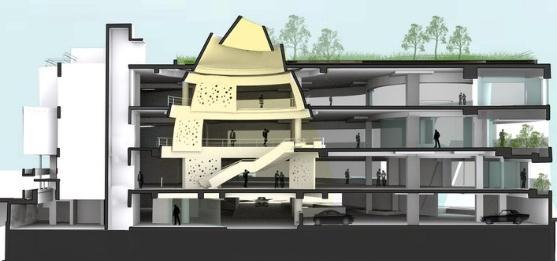
Free abounding Cascading green plateaus that is redolent ofediblegrainfields,isrelatedthroughoutsidestaircases gives a impression of inflated ground at each of these floors.
Voluminous atriums admit light and escape hot air. Also formssense ofindividual community,affectionandbright interactionbetweenvariousareas.
Every campaign of the water’s beat can be visualized on the maximum. The landscaped terraces covered in grass, insulate the building, thereby reducing the heat load and creating comfortable conditions, in the immediate atmosphere, and large trees provide natural shading, which make the outdoors suitable for usage, even during thehotIndiansummers.
E. Biophilic design for sustainable architecture
Itisnecessary toreduce energyconsumptionbyadopting sustainability in planning. Though we follow Passive techniques to achieving this, there are various challenges are observed. ImplementationofBiophilicdesignhelpsto minimize such challenges by using natural element in effective way. Here we can see comparison of sustainable and Biophilic Design that how both can be beneficial in theirownway.
Difference between sustainable design and Biophilic Design
Biophilic design offers any of approaches for upholding sustainabilityinconstruction
Conclusion :
About conserving energy and leavingasmall
footprintontheearth
Designapproaches physicalandmaterialorientedtothenatural processesrequiredby
people.
Focuses on reducing the consumptionof
Thetenable facet of biophilic design is a important aspect for living houses and atmospheres Creating green spaces, water features, plants and natural materials brings a range of benefits such as reducing carbon footprint and regulating temperaturesofbuildings.
Results :
Kellert and Calabrese (2008) Elements & Attributes specifies a healthy list of potential methods across design affairs and scales. while Terrapin’s (2014)14/15 Patterns supplies a curated list of biophilic materials that are abandonedtothecreatortodefine
Conclusion:
ThestudyofBiophilicdesignfocusesonhumanreworking tothethingsastheyarethatovermutativeoccasionhave progressive people’s strength, appropriateness and wellbeing.
References:
- Kellert, S., & Calabrese, E. (2015). The practiceofbiophilicdesign.
- Kellert,S.Heerwagen.JMador,M.(2011),Bio philicDesign,Wilky
Kellert,S,Wilson,E.(1993),TheBiophilia Hypothesis,IslandPress
- Browning,W.D.,Ryan,C.O.,Clancy,J.O. (2014).14PatternsofBiophilic.Design.New York:TerrapinBrightGreen,LLC
- Boya Jiang, Yifan Song, Hong Xian Li, Stephen Siu-Yu Lau, Qinghua Lei,Incorporating biophilic criteria into green building rating tools: Case study of Green Mark and LEED,Environmental Impact Assessment Review,Volume82,2020
- Ar.Mohe S.” Water, greens & corporate meetings”Antarya,24Mar2020,Issue24, https://www.antarya.org/
- https://verdeprofilo.com/en/the-valuesof-biophilia-9-fundamental-ways-by-which-weattribute-meaning-and-benefit-from-nature/
- Hidalgo, Ana. (2014). Biophilic Design, Restorative Environments ad Well-Being. 9th International Conference on Design and Emotion 2014:TheColorsofCare.
- https://www.usgbc.org/credits/innovati oncatalog/biophilicdesign?return=/credits/New %20Construction/v2009
- https://standard.wellcertified.com/mind /biophilia-ii-quantitative
- https://richtlijn-breeamnl.translate.goog/credit/biophilic-design1092?_x_tr_sl=nl&_x_tr_tl=en&_x_tr_hl=en&_x_tr_p to=sc
- https://biophilicdesign.umn.edu/sites/bi ophilic-net-positive.umn.edu/files/202008/pdf%2008%20biophilia%20in%20greenmark .pdf
- https://harmtilman.nl/blog/nieuwnormaal-kantoorgebouw-edge-west-inamsterdam-door-de-architecten-cie/
- https://archello.com/project/edgeamsterdam-west
- https://architizer.com/projects/edgewest/
- https://archestudy.com/titan-integritycampus-bangalore/
- https://www.frontiersin.org/articles/10. 3389/fpsyg.2021.700709/full#ref182
- Freeman Kenneth “ What’sthedifference betweenaspacefullofprettyplantsandbiophilic design?
“purposefulplaces.co.uk,21sept2021,https://purp osefulplaces.co.uk/2020/09/21/whats-thedifference-between-a-space-full-of-pretty-plantsand-biophilic-design/
-
BIOGRAPHIES
Ar.Manjiri Patil-Mohabansi
-Student,MasterinEnvironmental Architecture, MGMUniversity,Maharshtra,India
-PostGraduationinConstruction Management,NICMAR,Pune, Maharshtra,India
Prof.Jasmine Kohli


AssistantProfessor, DeptofArchitecture. MGMUniversity,Maharshtra,India
Ar. Ankit A. Mohabansi Milieu Casa Architects (External Guide) Regd.Architect, Govt.Regd.Valuers,Urban Designer,InteriorDesigner,