International Research Journal of Engineering and Technology (IRJET) e-ISSN:2395-0056

Volume: 10 Issue: 04 | Apr 2023 www.irjet.net
International Research Journal of Engineering and Technology (IRJET) e-ISSN:2395-0056
Volume: 10 Issue: 04 | Apr 2023 www.irjet.net
Dinesh kumar R1, Dineshraj B1 , Prashanth P2
1undergraduate scholar, Kumaraguru college of technology, Coimbatore, India, 641006
2Associate Professor I, Kumaraguru college of technology, Coimbatore, India, 641006
Chrome plating is one of the conventional methods to prevent rust formation on mild steel but the problem with that it is a carcinogenicagent.AlternatematerialsforthechromiumwereNickel,Magnesium,Zinc,Cobalt,andTungsten.Oneofthemain applicationsofmildsteel wasChainandchaindriveswhichareused inshipanchors,crane lifting,andheavyloadlifting. To preventtheoccurrenceofcorrosiononthechainthesurfaceiscoated withNi-Mg-Znalloyusingelectro-deposition.Suitable sourcematerialsforthealloycoatingwereidentifiedandtheirelectrolyteoptimizationparameterswerefound.Comparative studies of the coating were done at three different temperatures 30oC, 50oC, and 70oC. Surface characterization of thin films was done with the help of SEM (Scanning Electron Microscopy), EDS (Energy dispersive spectroscopy), and XRD (X-Ray Diffraction), Hardness, Surface roughness, and Wear (Pin on Disc Method). The corrosion behavior of the coated chain is studiedwiththehelpofEIS(Electrochemicalimpedancespectroscopy).
Key Words: Chainrusting,Alloycoating,Electrodeposition,Corrosionprevention,Nanotechnology.
Materials selected for the coating are Nickel, Zinc, and Magnesium. The properties of each of the materials were discussed below.Nickelhasgoodductileandmalleableproperties.ThemeltingpointofNickelis1453oCandtheboilingpointis2913oC. Duetoitshighthermalstabilityandpoorreactiontoacids,itiswidelyusedinthemanufacturingofstainlesssteelandcarbon steel.AstudyonNi-Znmultilayeredalloycoatingfrom anaqueous bathatdifferentcurrentdensities2.0,3.0,4.0,5.0A/dm2 revealsthatthecorrosionpropertyofthematerialincreasestotheoptimallayerofdepositionandthendecreases[1].Zincis mainlyusedasthegalvanizingagentformildsteeltopreventitssurfacefromcorrosionandrustformation.Itisawidely used elementintheelectrogalvanizingprocessanddiescastingprocess. Zincalongwithoxideplaysakeyroleinsemiconductors and fluorescent lamps. The melting point of Zinc is 420oC. Steel is used to build the majority of maritime and offshore constructions, which increases the risk of accidents. corrosion deterioration causes The main cause of corrosion is electrochemical processes that lead to the degradation of metals Making a protective barrier is one method of reducing the impact of corrosion application of a barrier creates a defense between the metal and corrosive surroundings metal finishes electroplated.Zinc-basedmetallicpaints Tosafeguardsteelcomponentsandstructures,cadmium(Cd)andzinc(Zn)areused. viarusting.ButanysortofCdcoating,includingbeingacarcinogenandbasedoncyanideandCdcompoundstheusageofCdis anincreasingproblemfortheenvironmentandhealth. Therearelimitstocoating. Thekeymetalforgalvanicconversionis zincpreventingrustinindustrial steel buildingapplications.Therearenumerous ways togetzinc.Chainshave beenusedin shippingandoffshorestructuresprimarilyfordirectmooringofvessels,suchaswhentheyareattachedtoanchors,andalso as dampers in cable mooring, where the chain is primarily at rest on the seabed but acts as a restraint through weight and inertiaasthecableisloaded.Mostofthetime,chainswerevulnerabletoabrasionfrombottomsediments,wearbetweenlinks andadjacentrestraints,andwearbetweenlinks.Theywerealsosusceptibletocorrosion,whichwasknowntobeparticularly badforchainlinkcomponentsthatweresubjectedtoabrasionandwear.Poorlydocumenteddataexistsregardingchainwear underdifferentconditionsandindifferentclimates.
.
International Research Journal of Engineering and Technology (IRJET) e-ISSN:2395-0056
Volume: 10 Issue: 04 | Apr 2023 www.irjet.net p-ISSN:2395-0072
2.1 PROBLEM STATEMENT:
• Theprocessofasubstancedeterioratingduetoachemicalreactionwithitssurroundingsiscalledcorrosion
• Metal corrodes when an exposed surface makes contact with a gas or liquid; exposure to warm temperatures, acids,andsaltsspeeduptheprocess.
• Forexample:ThesteelusedforShipanchoringCorrodesfasterduetothesaltcontentsofocean
Theproposedsampleisusefultoincreasethecorrosionresistancebehaviourofmildsteel.Thisprocessisalsousefulto increasethelifespanofthemildsteelmaterial. Theyprotectagainstcorrosion,wear,thermalstressanditcanwithstand abrasive conditions, but are not always applicable. The truth is, Zn-Ni coatings offer manufacturers valuable options for meeting ever-increasing regulatory,warranty,andperformance requirements thataffecttheirproducts. In reality,Zn-Ni coatings give manufacturers useful choices for satisfying the ever-increasing performance, warranty, and regulatory criteriathatarerelevanttotheirgoods.
Tomakethemildsteelcorrosionresistant
Toincreasethelifetimeofthesteel
Goodperformanceinwear
YuwanTian,ChaofangDong,GuiWang,XuequnCheng,XiaogangLi“Theeffectofnickeloncorrosionbehaviour ofhigh-strengthlowalloy
Steel rebar in a concrete-pore-simulating solution: Zinc is a key component in both the electro galvanising and die-castingprocesses.
ThemeltingpointofZincis 420oC.Tosafeguardsteelcomponentsand structures,cadmium(Cd)andzinc(Zn) areused. viarusting.
ButanysortofCdcoating,includingbeingacarcinogenandbasedoncyanideandCdcompoundstheusageofCd isanincreasingproblemfortheenvironmentandhealth
R.S. Bhat and V.B. Shet, Development and Characterization of Zn-Ni, Zn-Co and Zn-Ni-Co Coatings, Surf. Eng., 2020-A study on Ni-Zn multi-layered alloy coating from an aqueous bath at different current densities 2.0, 3.0, 4.0, 5.0 A/dm2 reveals that the corrosion property of the material increases to the optimal layer of deposition andthendecreases.
Zinc along with oxide plays a key role in semiconductors and fluorescent lamps. Zinc is mainly used as the galvanizingagentformildsteeltopreventitssurfacefromcorrosionandrustformation
Properties of Electrochemically Deposited Nano-sized Zn-Ni Alloy - Zinc is a widely used element in the electro galvanizingprocessanddiescastingprocess.Themeltingpoint ofZincis 420oC.Tosafeguardsteelcomponents and structures, cadmium (Cd) and zinc (Zn) are used. via rusting. But any sort of Cd coating, including being a carcinogen and based on cyanide and Cd compounds the usage of Cd is an increasing problem for the environmentandhealth.
International Research Journal
of Engineering and Technology (IRJET)
• R.S. Bhat and V.B. Shet, Development and Characterization of Zn-Ni, ZnCo and Zn-Ni-Co Coatings-layered alloy coating from an aqueous bath at different current densities 2.0, 3.0, 4.0, 5.0 A/dm2 reveals that the corrosion propertyofthematerialincreasestotheoptimallayerofdepositionandthendecreases. Zinc along with oxide plays a key role in semiconductors and fluorescent lamps. Zinc is mainly used as the galvanizingagentformildsteeltopreventitssurfacefromcorrosionandrustformation
• C.Muller,M.SarretandM.Benballa,SomePeculiaritiesintheCodepositionofZinc–NickelAlloys-Thekeymetal forgalvanicconversioniszincpreventingrustinindustrialsteelbuildingapplications.Zinc-basedmetallicpaints isusedtosafeguardsteelcomponentsandstructures.
• Corrosion of working chains continuously immersed in seawater Robert E. Melchers · Torgeir Moan · Zhen GaoThe chain is primarily at rest on the seabed but acts as a restraint through weight and inertia as the cable is loaded. Most of the time, chains were vulnerable to abrasion from bottom sediments, wear between links and adjacent restraints, and wear between links. They were also susceptible to corrosion, which was known to be particularlybadforchainlinkcomponentsthatweresubjectedtoabrasionandwear.
• S.Rashmi,L.Elias,andA.ChitharanjanHegde,“MultilayeredZn-Nialloycoatingsforbettercorrosionprotectionof mild steel,”- Nickel has good ductile and malleable properties. The melting point of Nickel is 1453oC and the boilingpointis2913oC.
Duetoitshighthermalstabilityandpoorreactiontoacids,itiswidelyusedinthemanufacturingofstainlesssteel andcarbonsteel.
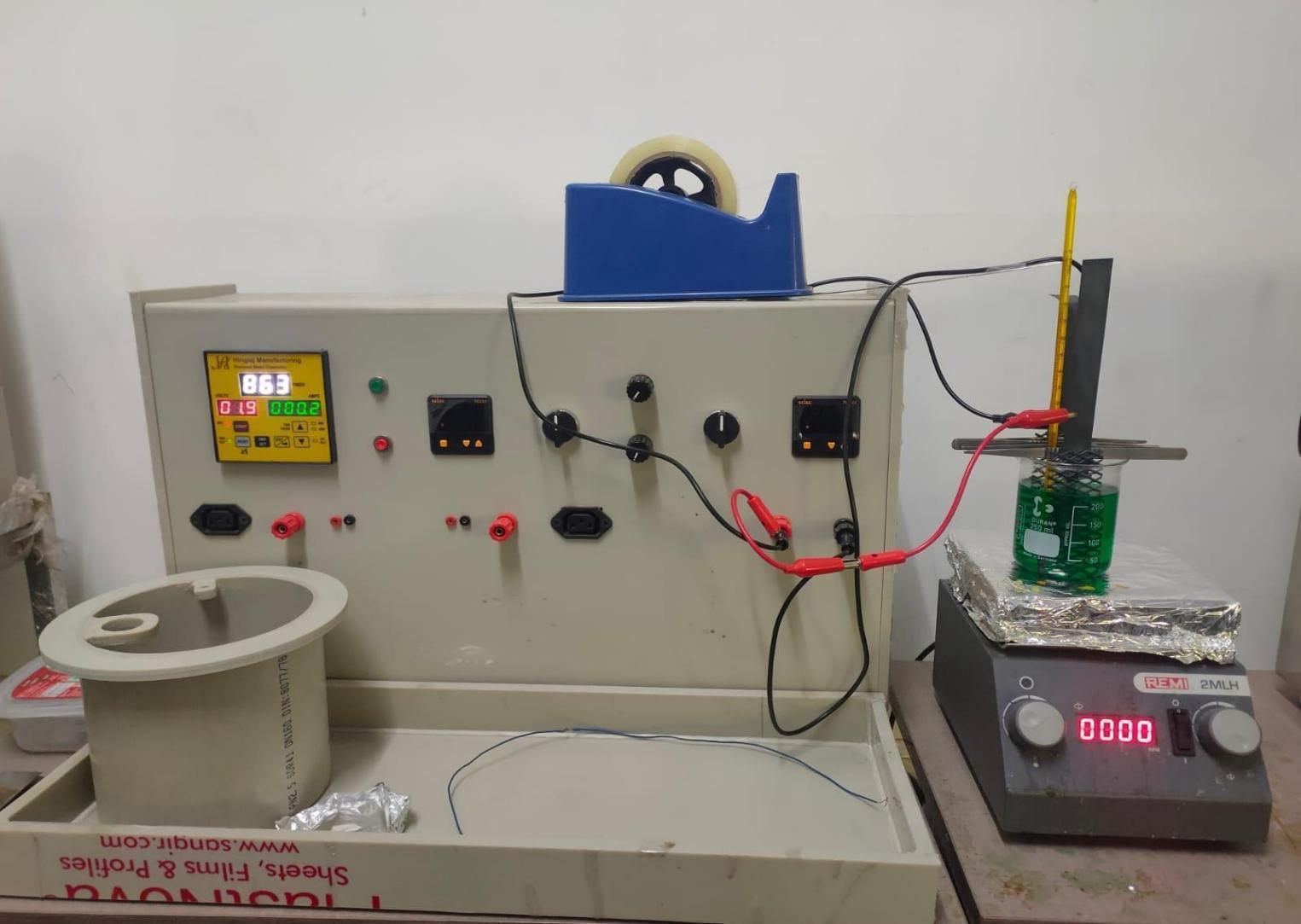
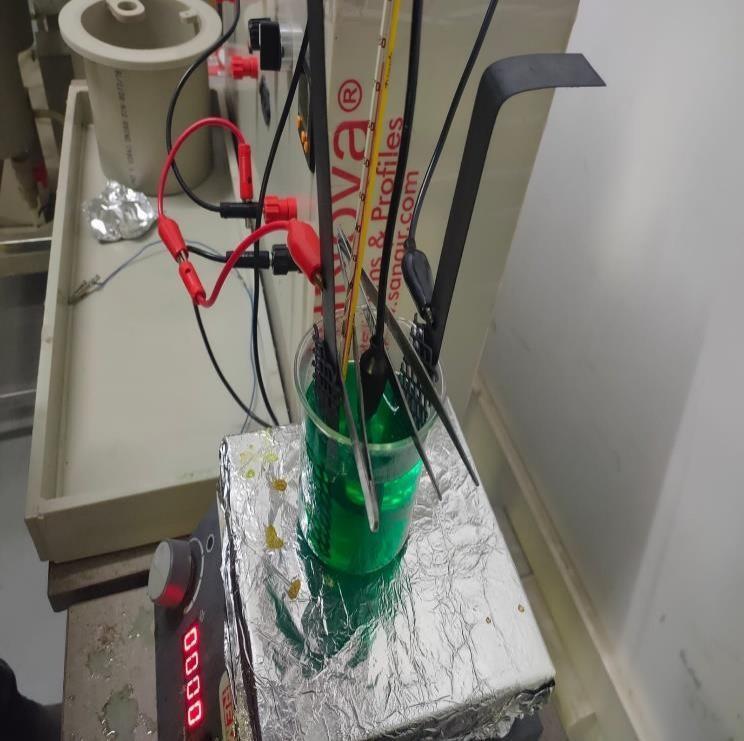
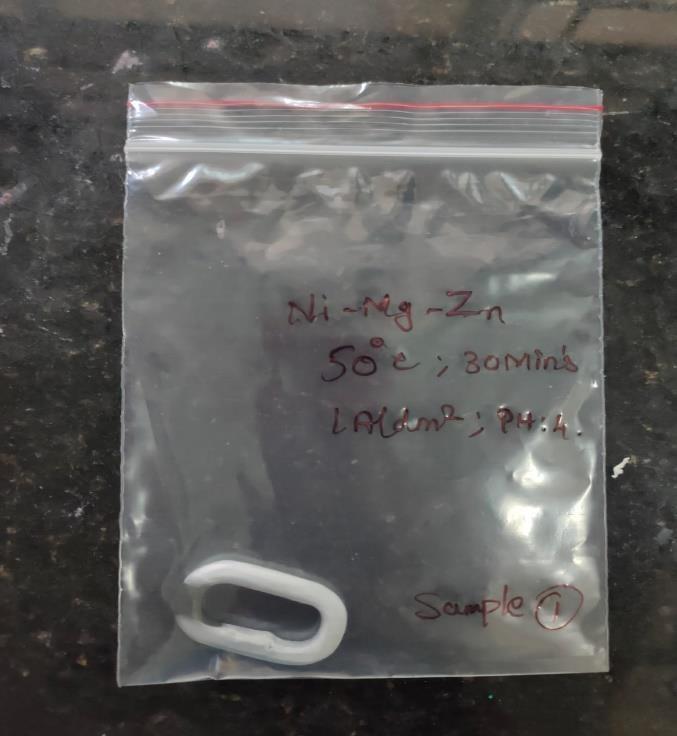
A mild steel chain of diameter 6mm and height of 2.5cm is used as the base substrate. A standard 200ml beaker is used for electrolytepreparation.Initially,thechainsampleiswellcleaned withthehelpofde-ionizedwaterandthen treated withan ultrasoniccleaneratdifferentfrequenciestoremoverustandsurfaceimpurities.Thesamplesaretreatedwithacetonebefore andafterexposuretoultrasoniccleaner.Thesampleisthendippedin10%dilutedHClsolutionfor2minutesto activatethe surface for effective coating. The chain acts as the anode while the stainless steel acts as the anode. The standard current densityof1A/dm2 ismaintainedforcoating.Table-1givestheelectrolyticcompositionofNi-Mg-Znthinfilm,
Table-1: ElectrolyticBathCompositionofNi-Mg-Zn.
International Research Journal of Engineering and Technology (IRJET) e-ISSN:2395-0056
Volume: 10 Issue: 04 | Apr 2023 www.irjet.net p-ISSN:2395-0072
The corrosion behaviour of the thin films coated at different temperatures was studied with the help of the EIS technique. Sodium chloride solution is used as a corrosion medium. Equivalent circuit of resistance 106Ω, 11.7Ω, 17.3Ω, 2.34Ω and capacitanceof7.72μF,57.9μF,249μF,65.4μFismaintainedforsample1,2,3,4respectively.
TheX-Raydiffractionpatternisoneofthepopulartechniquesusedtofindthecrystalsizeofthesample.XRDmachinetypeof Goniometer is used for analysis. X-rays of wavelength 1.54060Ả with continuous scanning mode are used to find the crystal parameters.Currentandvoltageof30mAand45kVaresetfortheanodematerialwhichiscopper.Atemperatureof 25oCis maintainedthroughouttheprocessofscanning.Ni-Mg-Zncoatedat30oCand 50oCishavingacrystalstructureofcubicwhile the sample coated at 70oC is having orthorhombic crystal. XRD peaks of Ni-Mg-Zn coated at 30oC and 50oC is having miller indicesof(411),(712),(701)whilethesamplecoatedat70oCishavingmillerindicesof(1210)and(2108).
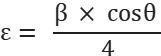
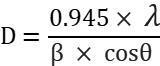
Thesizeofthecrystalisfoundusingthefollowingrelation, Micro-strain(ε)ofthecrystalisfoundusingtherelationgivenbelow, Dislocationdensity(δ)isfoundbythefollowingrelation,

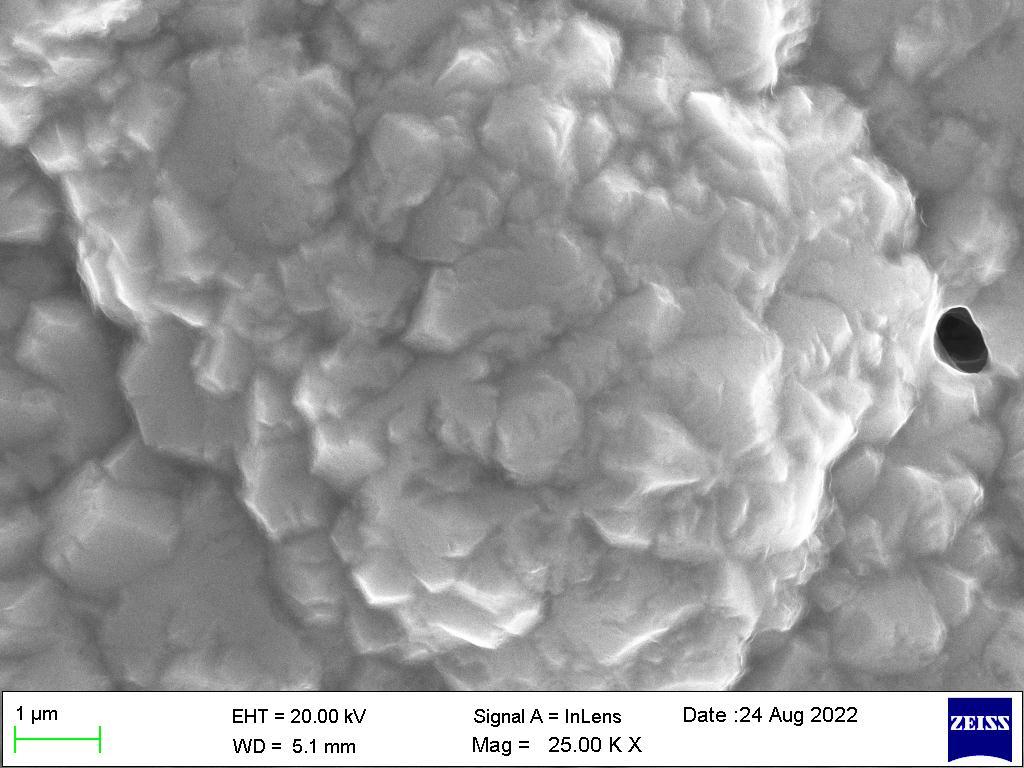
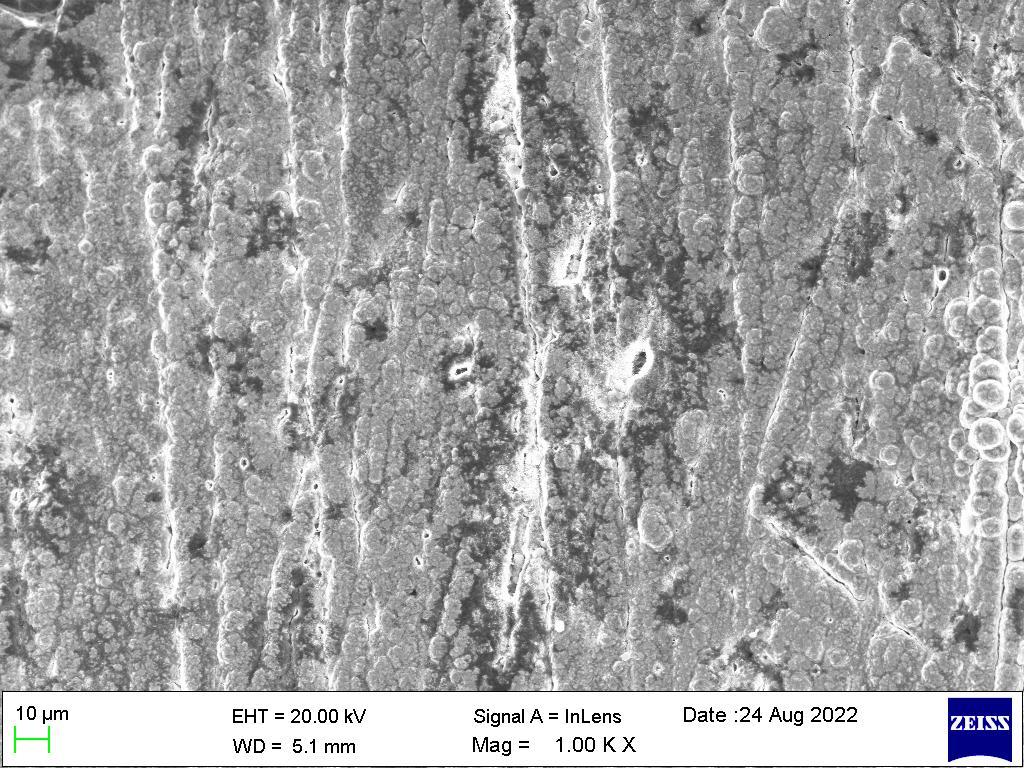
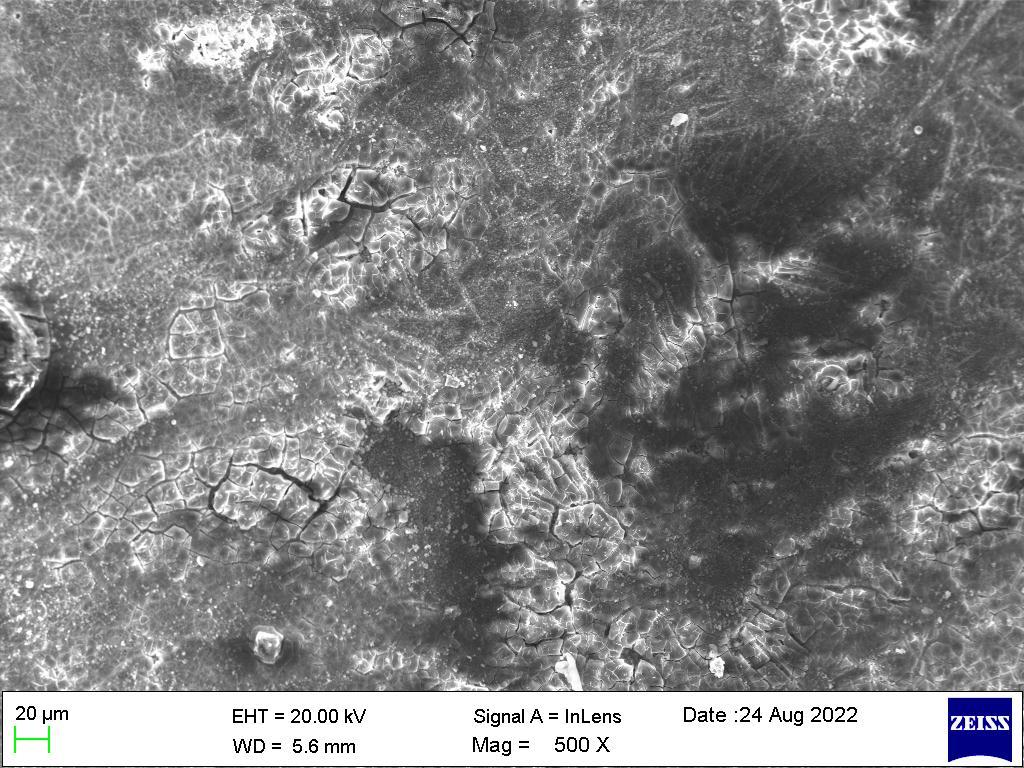
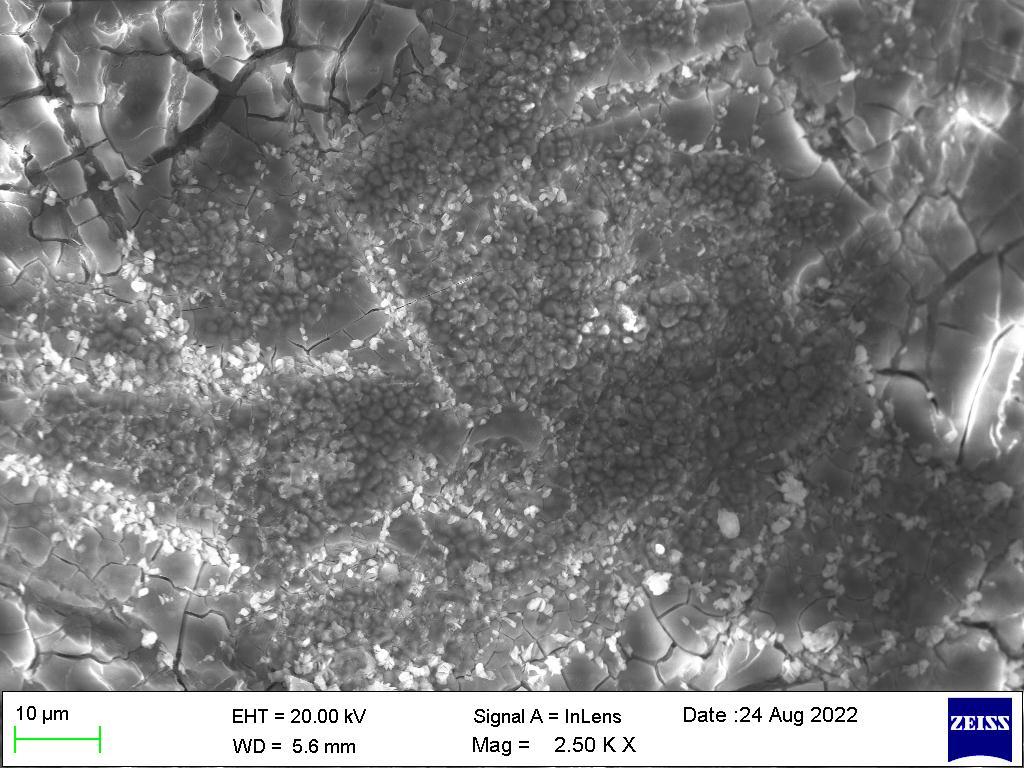
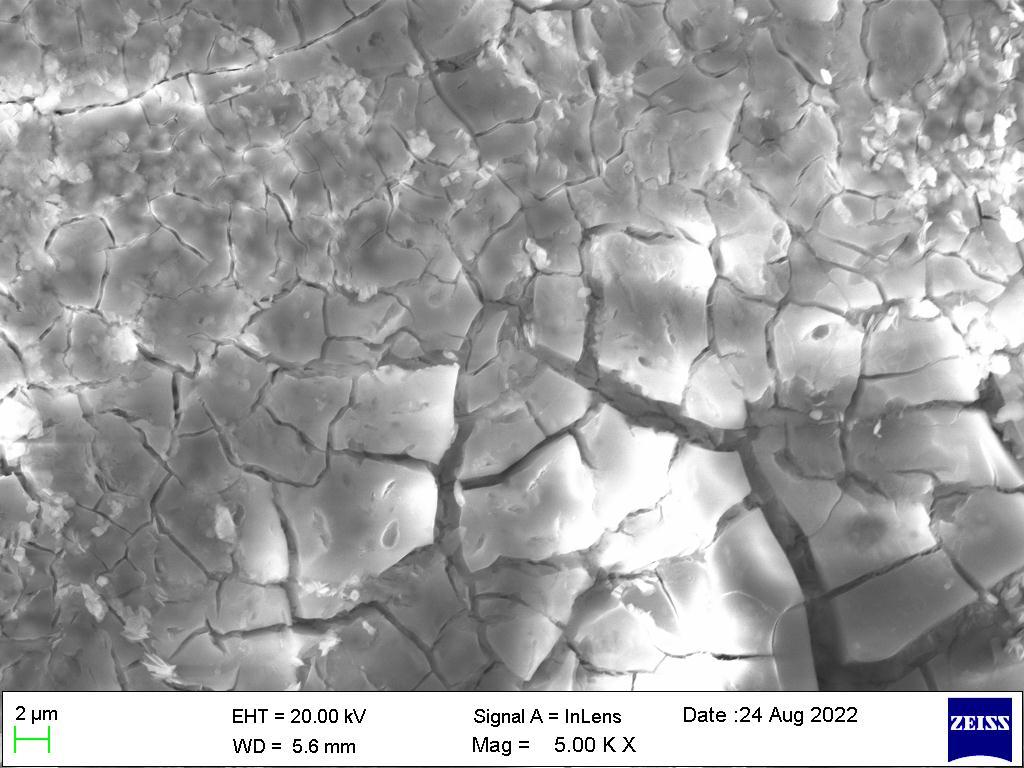
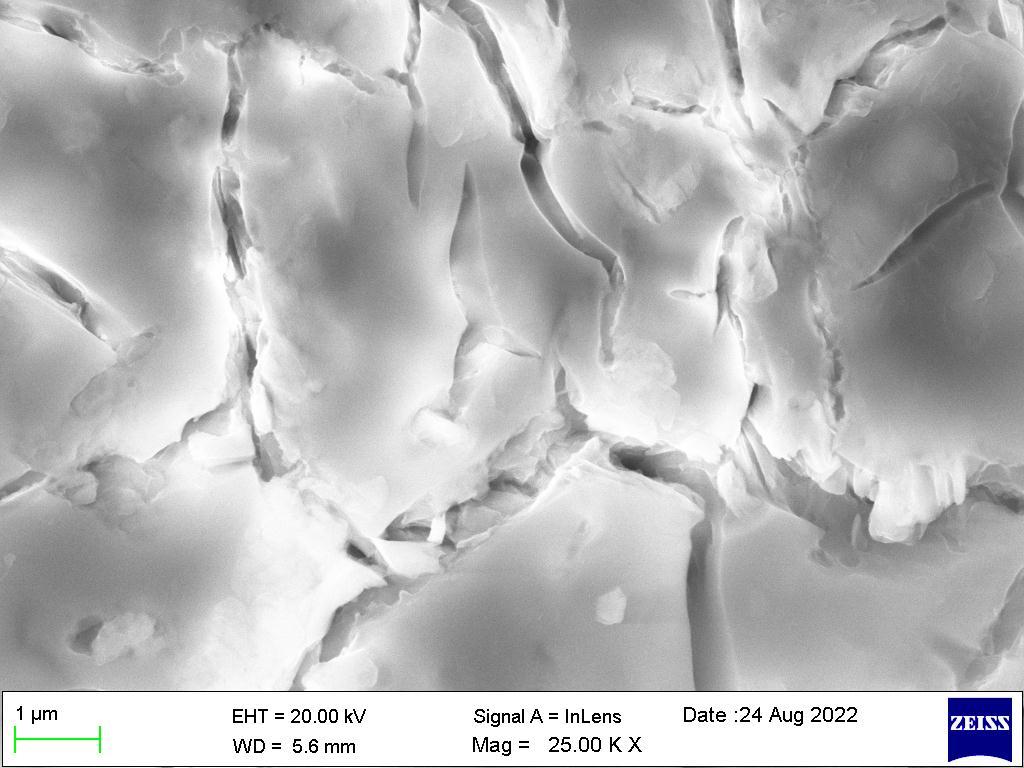
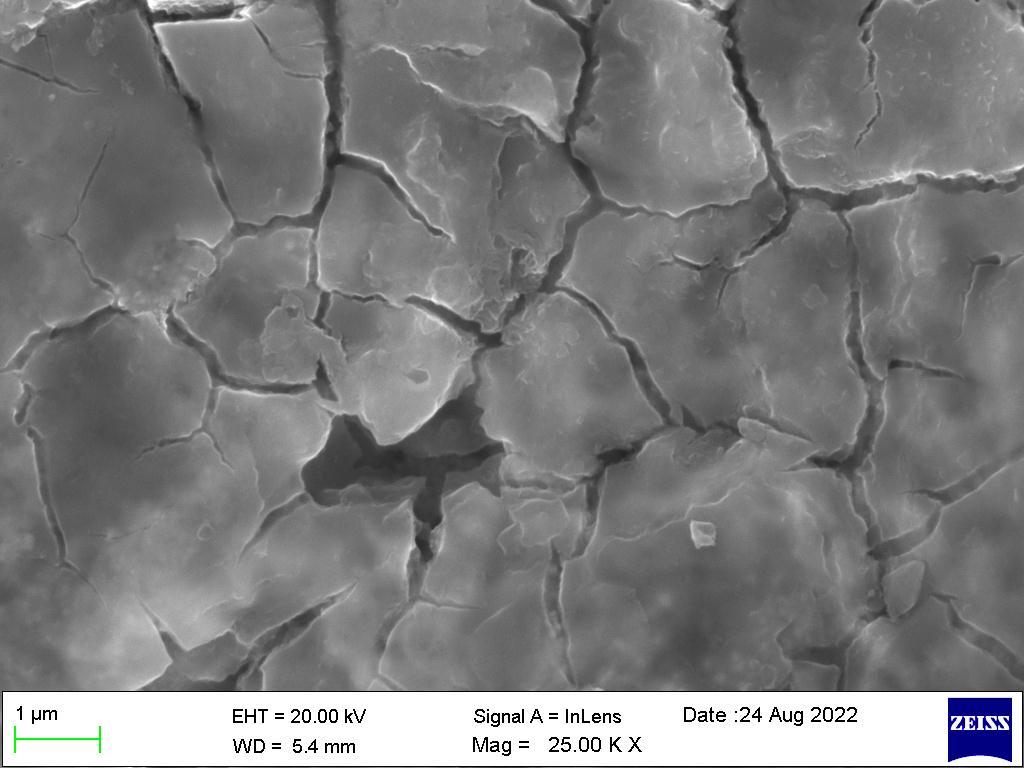
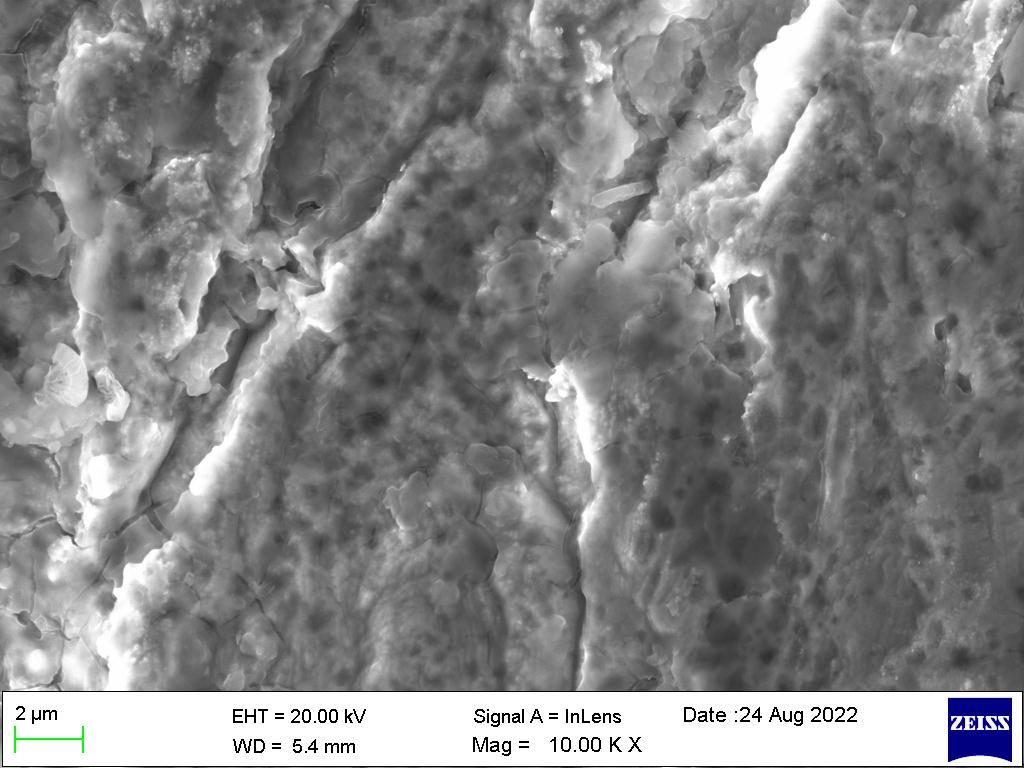
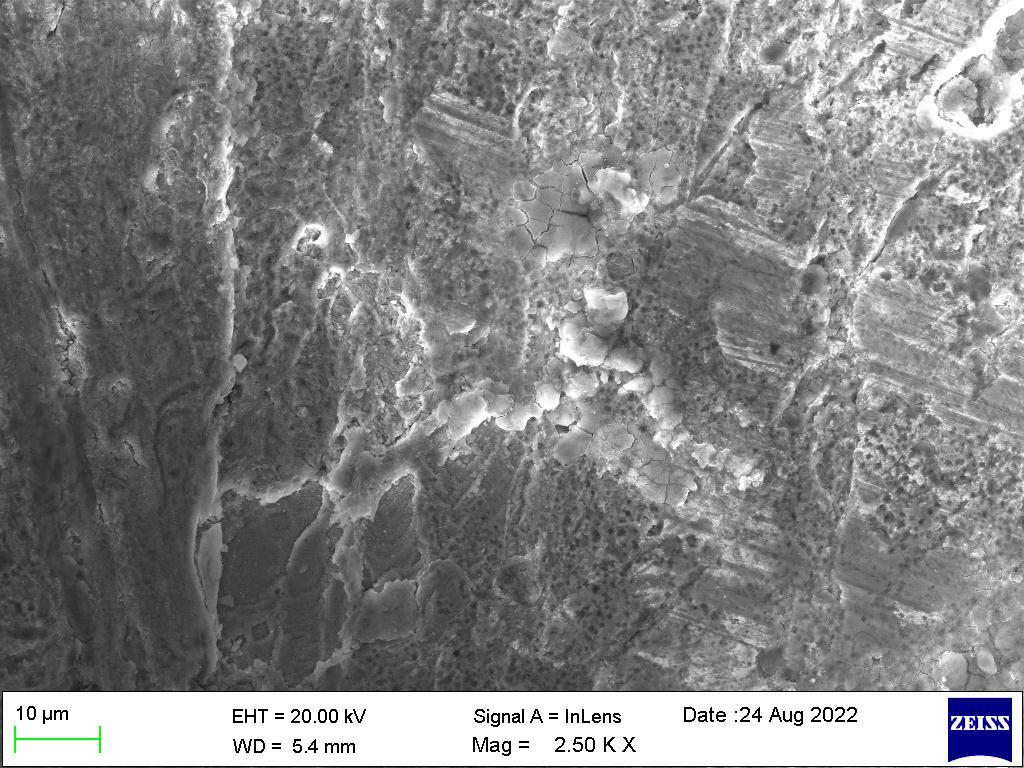
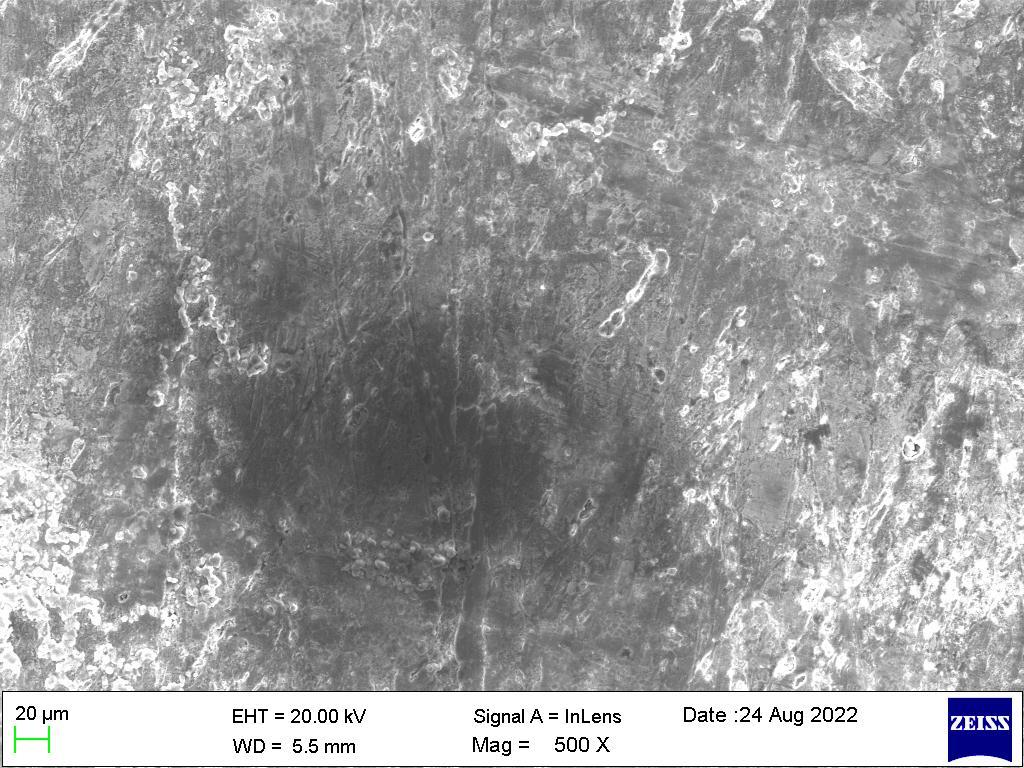
Ascanningelectronmicroscope(SEM)projectsandscansafocusedstreamofelectronsoverasurfacetocreateanimage.The electronsinthebeaminteractwiththesample,therebyproducingvarioussignalsthatcanbeusedtoobtaininformationabout thesurface’stopographyandcomposition.
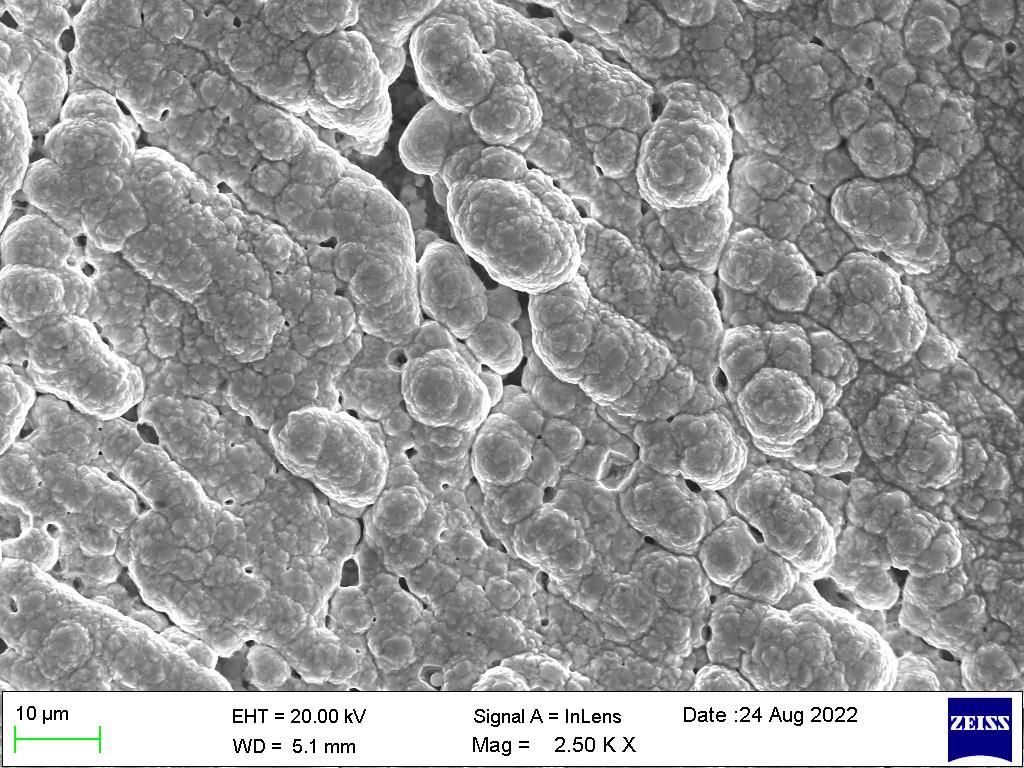
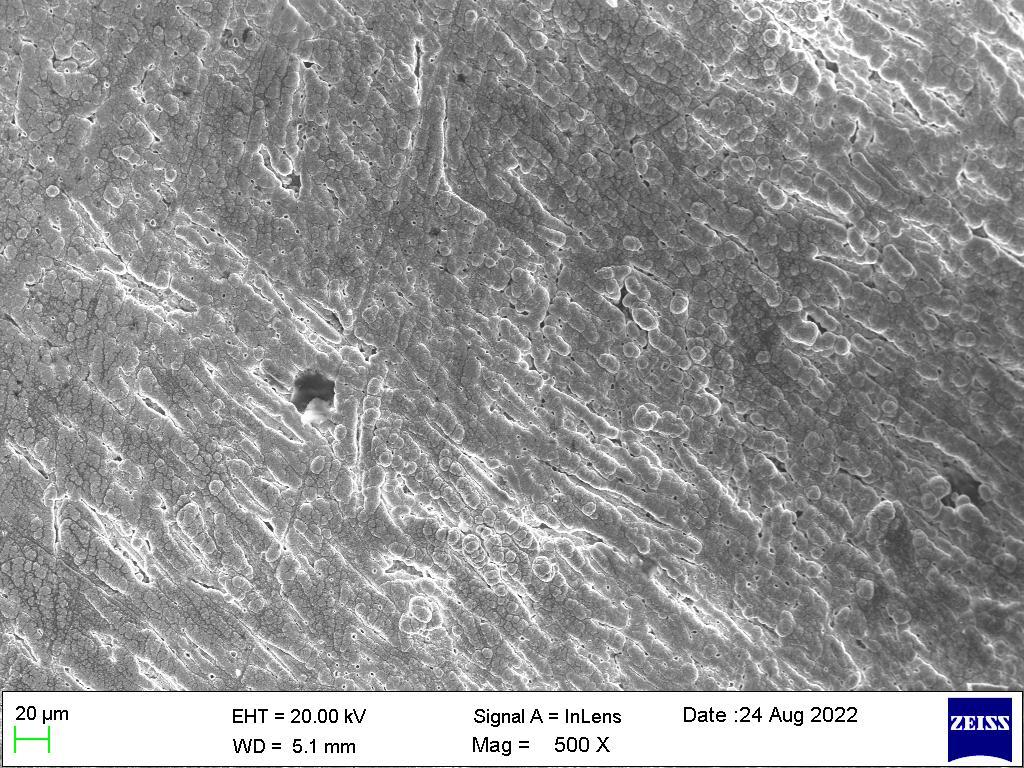
Figure1showstheSEMimagesoftheNi-Mg-Znalloycoatingsacquiredatc.d.Itshouldbeobservedthatthemicro-structure of the coatings closely correlates with the deposition c.d., and the surface appearance significantly changes with c.d., going from a flaky pyramidal structure at 1.0 A dm-2 to a smooth porous structure at high deposition c.d. The anti-corrosive propertiesandaestheticappealofthealloycoatingswithc.d.werereflectedinthevarianceinsurfacetopography.
Sample 1:
International Research Journal of Engineering and Technology (IRJET) e-ISSN:2395-0056
Volume: 10 Issue: 04 | Apr 2023 www.irjet.net p-ISSN:2395-0072
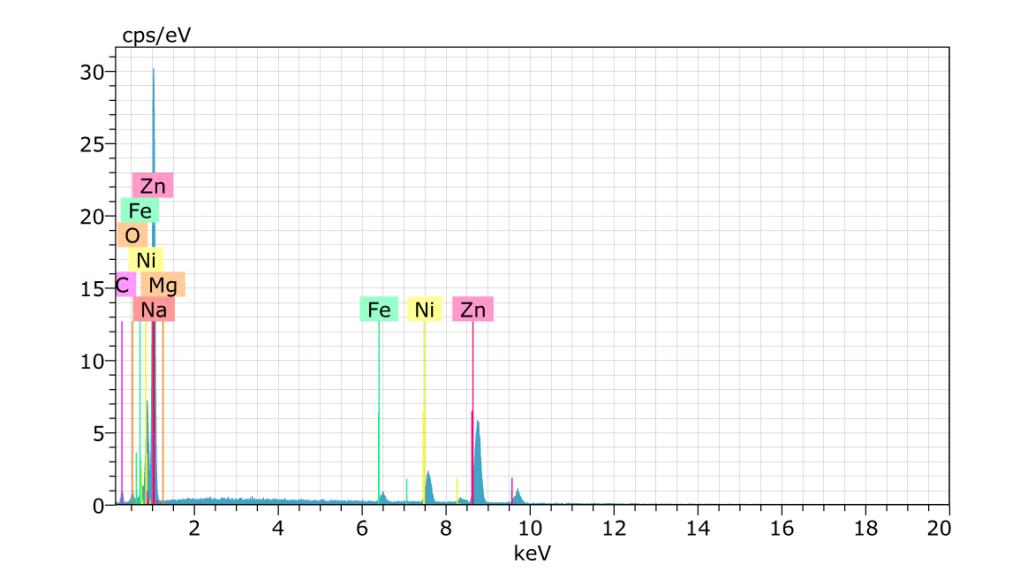
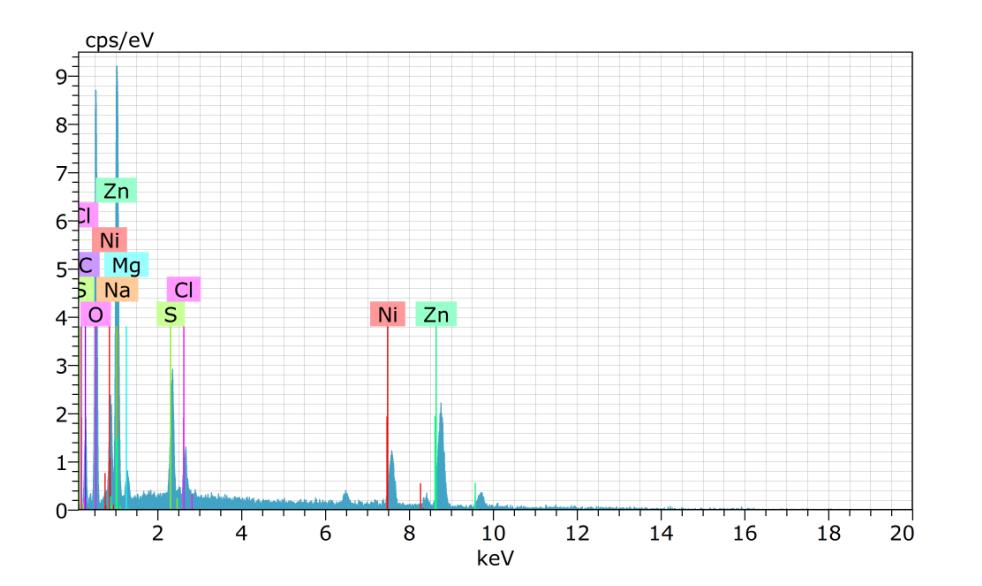
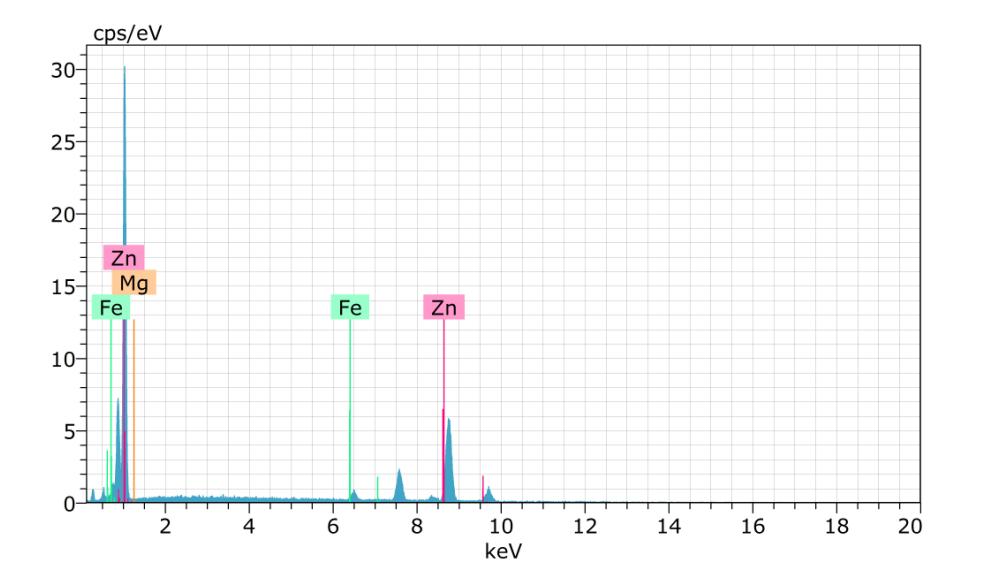
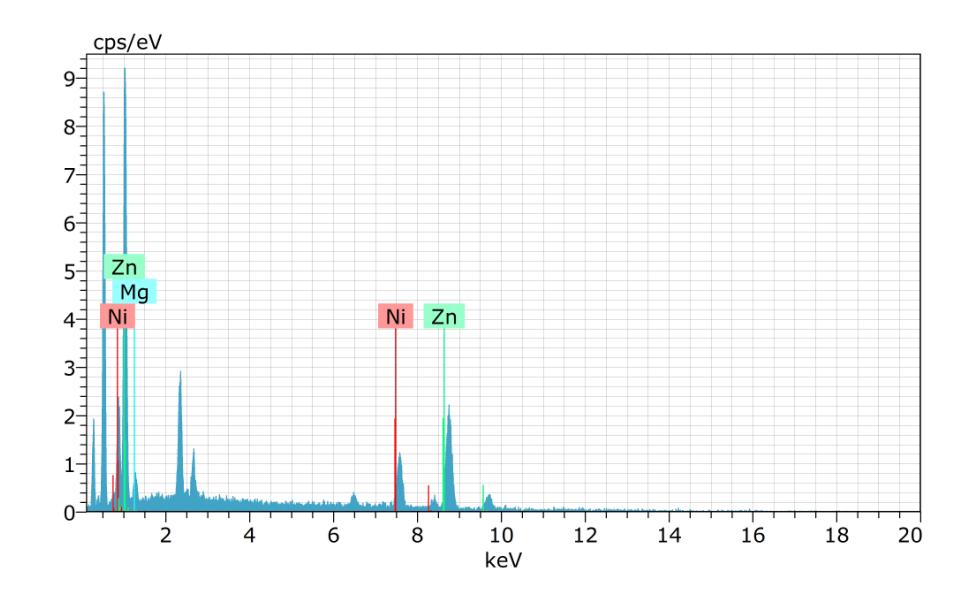
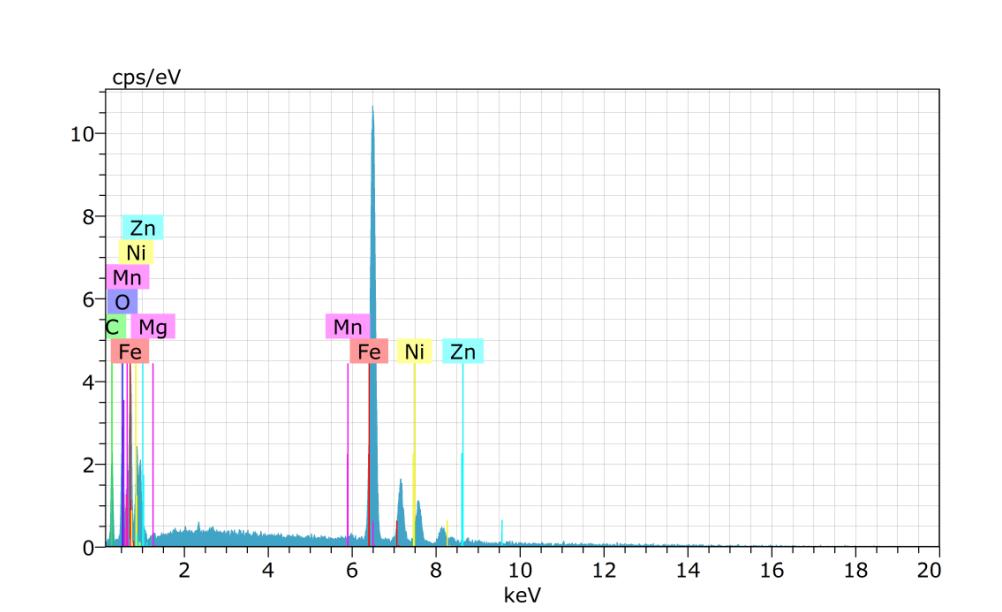
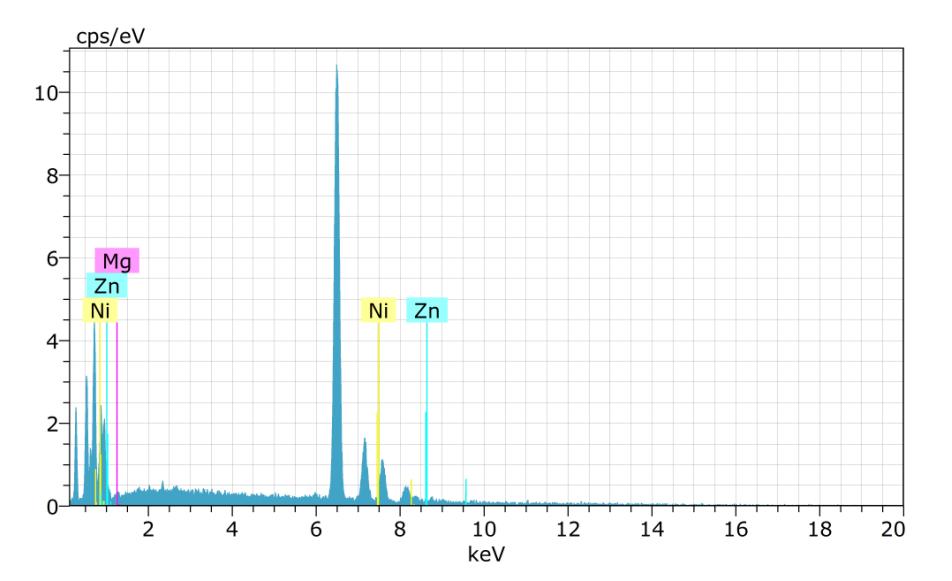
The qualitative and semi-quantitative X-ray micro-analytical technique known as Energy Dispersive X-ray Spectroscopy (EDXS), sometimes referred to as EDX Analysis and EDS Analysis, can reveal information on the elemental composition of a sample.Metalsandspecifickindsofpolymericmaterialswithdistinctiveelementalfingerprintscanbeidentifiedusingit.
TheinformationgeneratedbyEnergyDispersiveX-rayAnalysiscanalsohelpinidentifyingcoatingspresentinthematerial.
Sample 1:
Spectrum:BM1562
ElANSeriesunn.Cnorm.CAtom.CError(1Sigma)
International Research Journal of Engineering and Technology (IRJET) e-ISSN:2395-0056
Volume: 10 Issue: 04 | Apr 2023 www.irjet.net
2395-0072
Spectrum:BM1562
ElANSeriesunn.Cnorm.CAtom.CError(1Sigma) [wt.%][wt.%][at.%][wt.%]
Spectrum:BM1563
ElANSeriesunn.Cnorm.CAtom.CError(1Sigma)
[wt.%][at.%][wt.%]
Total:72.83100.00100.00
Spectrum:BM1563
ElANSeriesunn.Cnorm.CAtom.CError(1Sigma)
[wt.%][at.%][wt.%]
24.74100.00100.00
Sample-3:
Spectrum:BM1564
ElANSeriesunn.Cnorm.CAtom.CError(1Sigma)
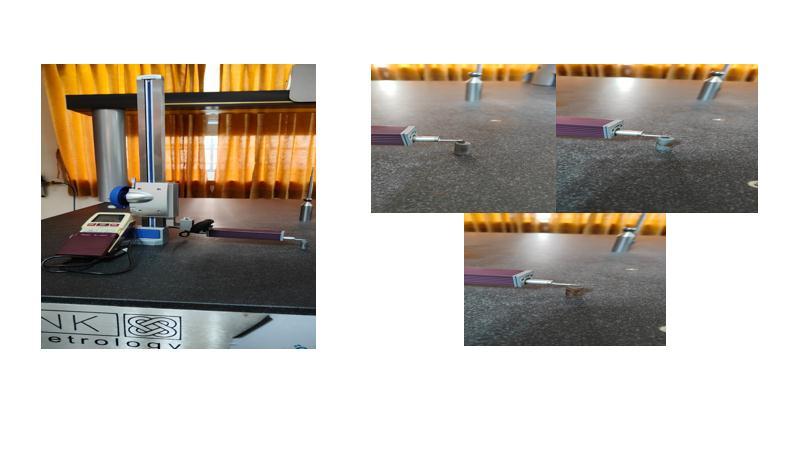
To quickly and precisely determine a material's surface texture or surface roughness, a roughness tester is utilized. A roughnesstesterdisplaysthemeanroughnessvalue(Ra)andthemeasuredroughnessdepth(Rz)inmicrons(m).
Thegreaterthecorrosionresistance,thelowertheroughnessvalues.
International Research Journal of Engineering and Technology (IRJET) e-ISSN:2395-0056
Volume: 10 Issue: 04 | Apr 2023
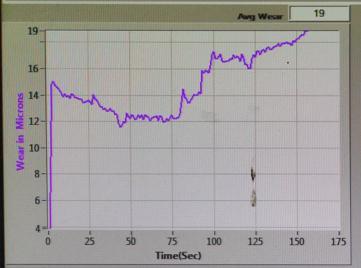
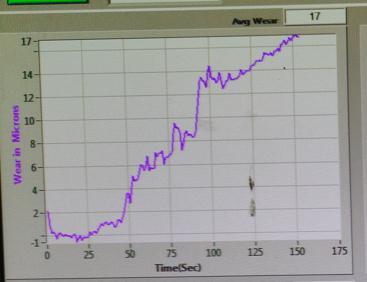
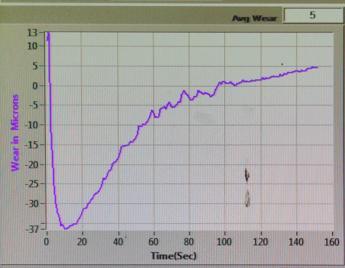
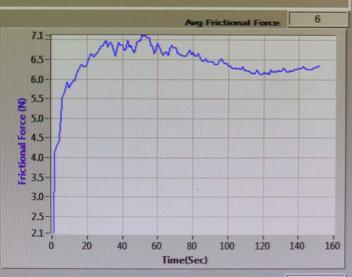
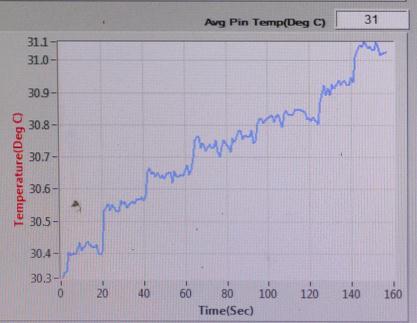
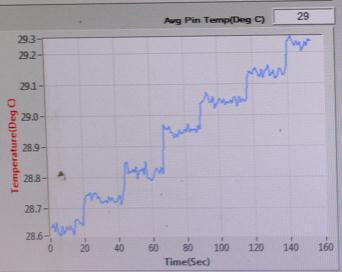
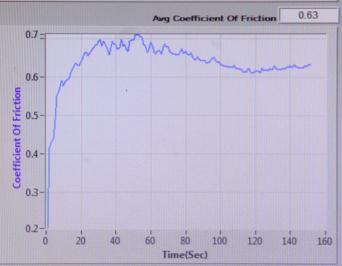
6.6-Wear:
Sample-1:
Sample-2:
Sample-3:
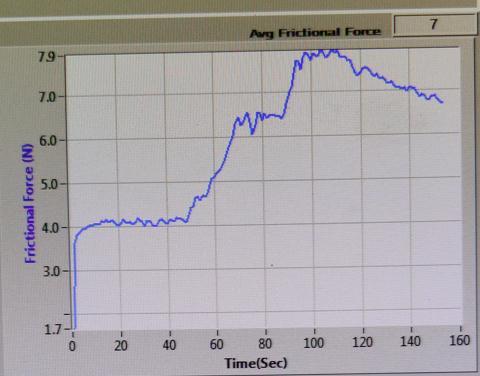
FRICTIONAL FORCE (N) vs TIME (sec)
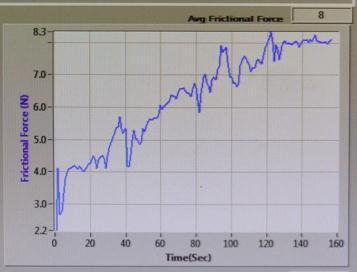
Sample-1:
Sample-2:
Sample-3:
Fig-17 : FRICTIONALFORCE(N)vsTIME(sec)
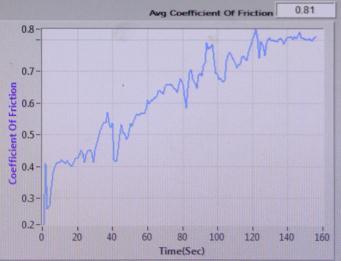
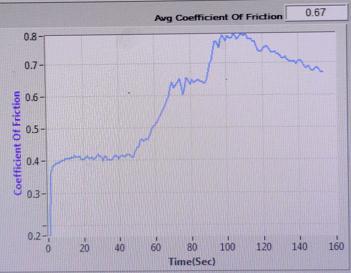
COEFFICIENT OF FRICTION vs TIME (sec)
Sample-1:
Sample-2:
: COEFFICIENTOFFRICTIONvsTIME(sec)of
: COEFFICIENTOFFRICTIONvsTIME(sec)ofSample2
Sample-3:
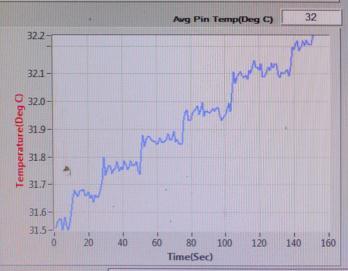
TEMPERATURE(℃) vs TIME(sec)
Sample-1:
Sample-2:
International Research Journal of Engineering and Technology (IRJET) e-ISSN:2395-0056
Volume: 10 Issue: 04 | Apr 2023 www.irjet.net p-ISSN:2395-0072
Sample-3:
CONCLUSION:
A stable bath has been developed for electroplating of Zn-Ni-Mg alloy coatings on mild steel using the dip method. Experimentalinvestigationswereperformedwiththefollowingresults.
TheEIS(ElectronImpedanceSpectroscopy)resultsindicatedthatsample1(at30)andsample2(at70)give bettercorrosionresistancewhilecomparedwithothersamples.
The XRD results indicated that the intensity of peak Zn was the prominent step responsible for improved corrosionresistanceofMildsteelchain.
Thewearresultindicatesthatsample-3performsbetterwearresistance.
[1] S. Rashmi, L. Elias, and A. Chitharanjan Hegde, “Multilayered Zn- Ni alloy coatings for stronger mild steel corrosion resistance,” Eng. Sci. Technol. an Int. J.,vol.20,no.3,pp.1227–1232,2017,doi: 10.1016/j.jestch.2016.10.005.
[2]ShamsAnwar,FaisalKhan,*YahuiZhangandSusanCaines, “OptimizationofZinc‐NickelFilmElectrodepositionforBetter CorrosionResistantCharacteristics
[3]S.K.Rajagopalan,“CharacterizationofElectrodepositedZn‐Ni AlloyCoatingsasareplacementforElectrodepositedZnand andCdCoatings”,PhDthesis,McGillUniversity,Montréal2012.
[4]J.R.Garcia,D.C.B.doLago,L.F.deSenna,MaterialsResearch2014,17,947.
[5]Y.Zhang,D.G.Ivey,Chem.Mater.2004,16,1189.
[6]F.H.Assaf,S.S.AbdElRehim,A.S.Mohamed,A.M.Zaky, IndianJ.Chem.Techn.1995,2,147.
[7]“corrosionofworkingchainsexposedtoseawatercontinually” RobertE.Melchers·TorgeirMoan·ZhenGao
[8] “Corrosion Resistance of Mg-Zn Alloy Covered by Chitosan-Based Coatings” Halina Krawiec, Maria Starowicz, Iryna Kozina,HalinaKozina,andMagdalenaKawalec
[9]"Zinc-Nickel Film Electrodeposition Optimisation for Better Corrosion Resistant Characteristics" Yahui Zhang, Shams Anwar,FaisalKhan,SusanCaines